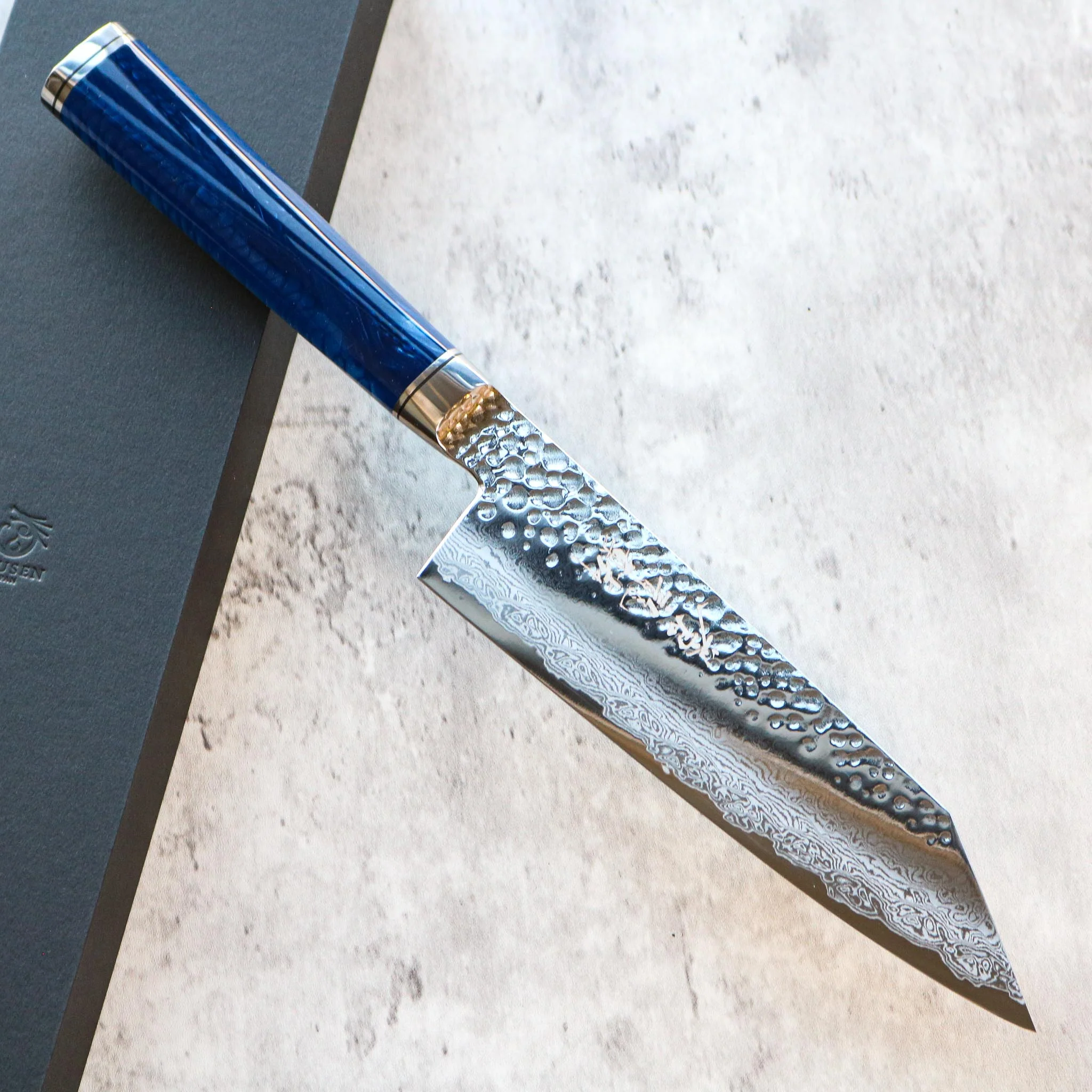
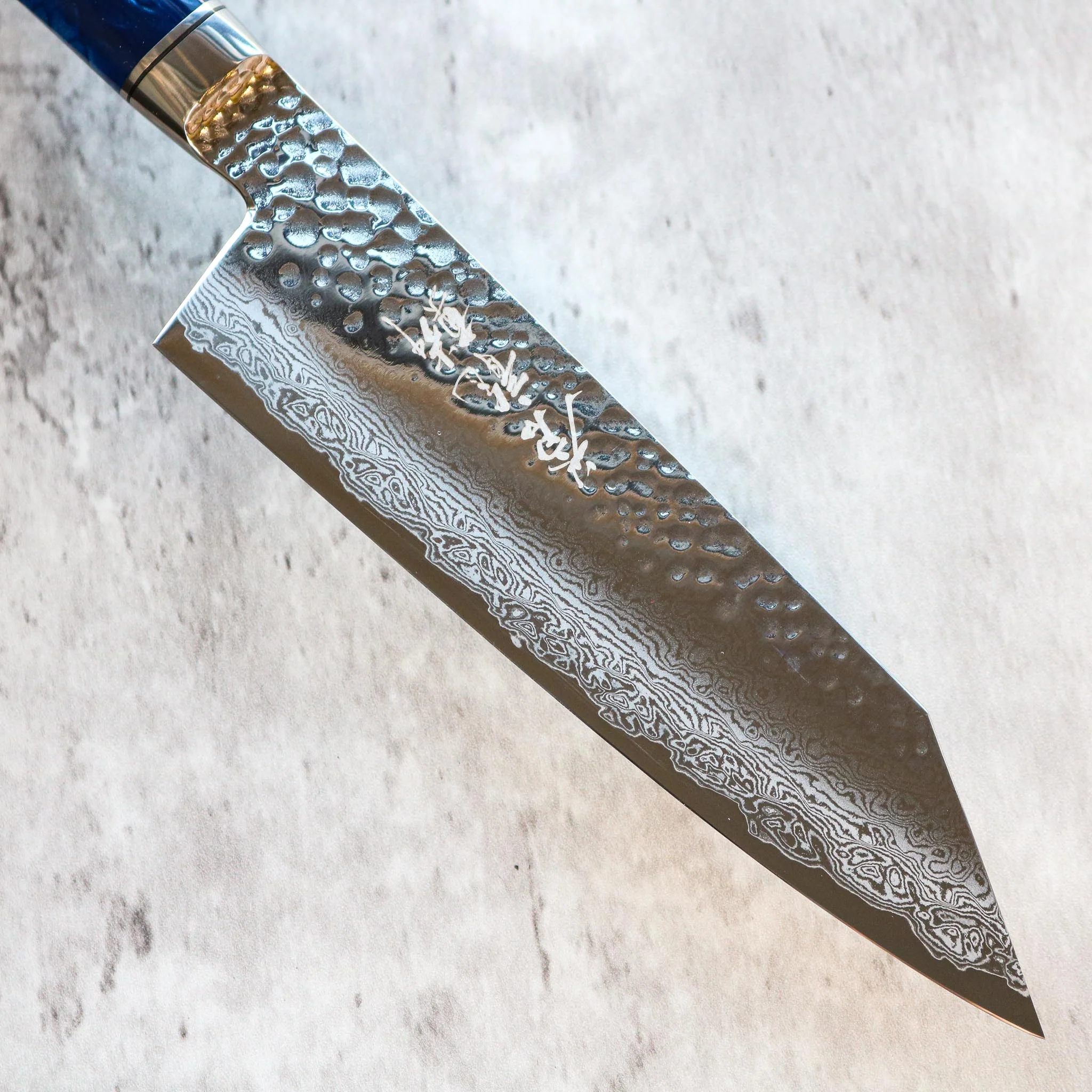
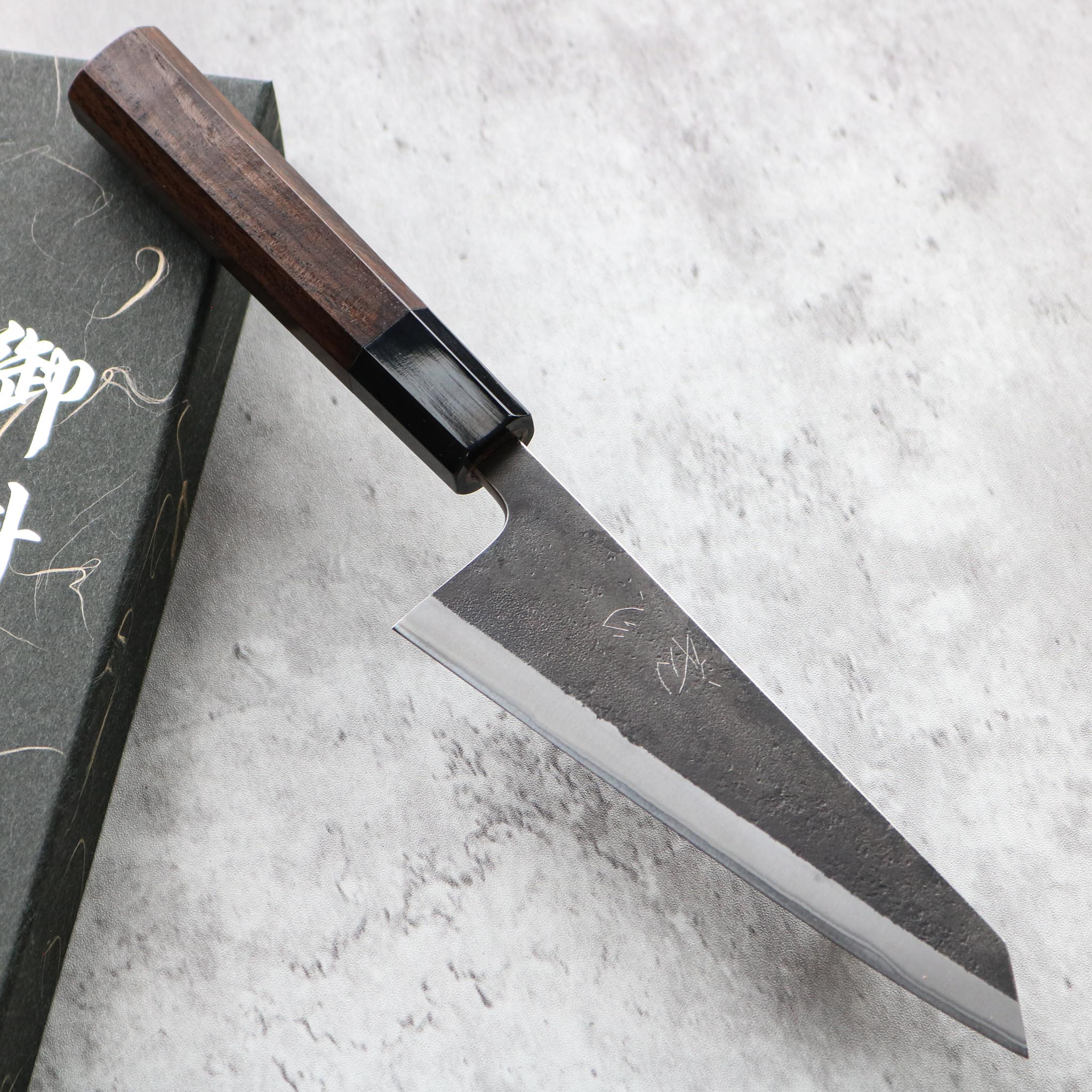
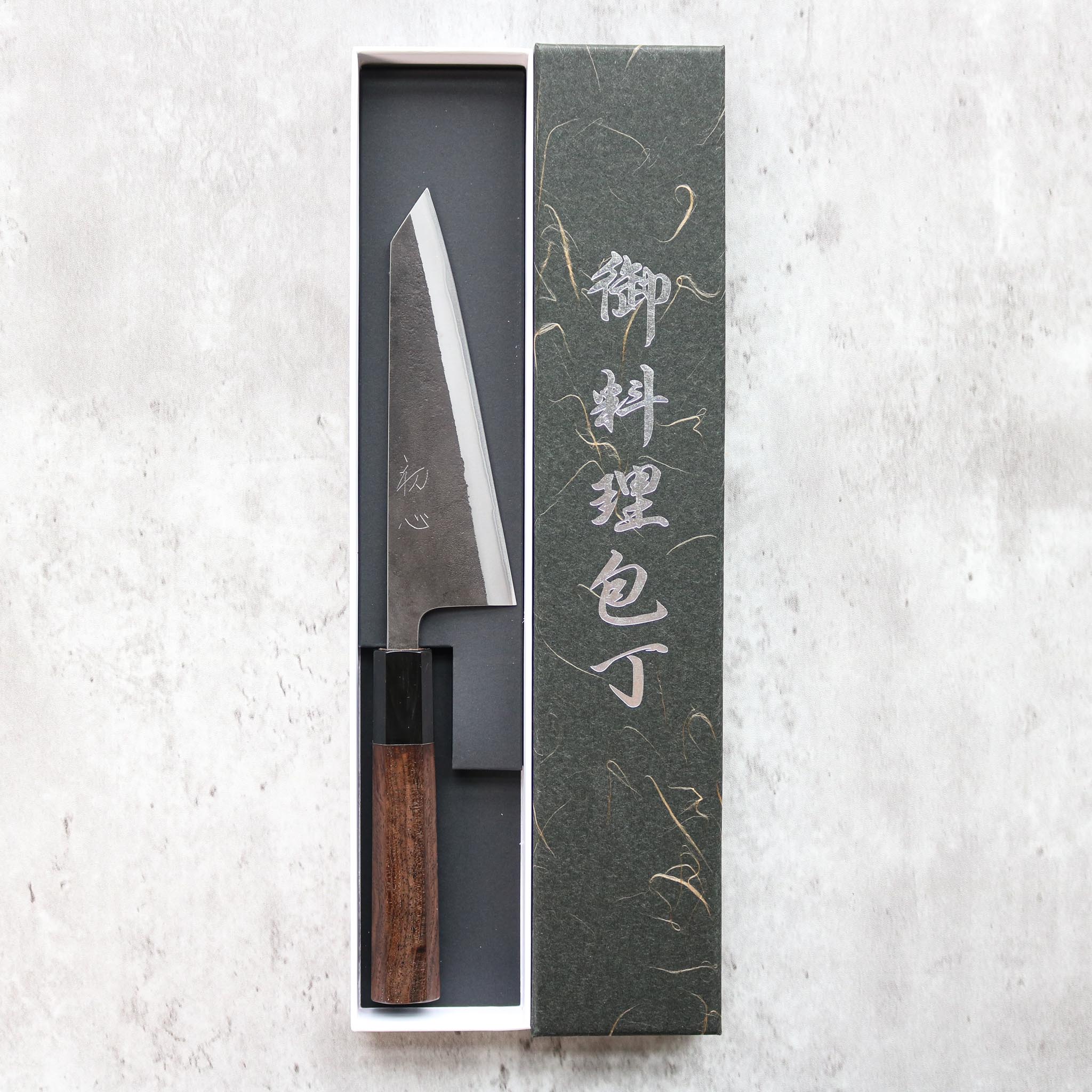
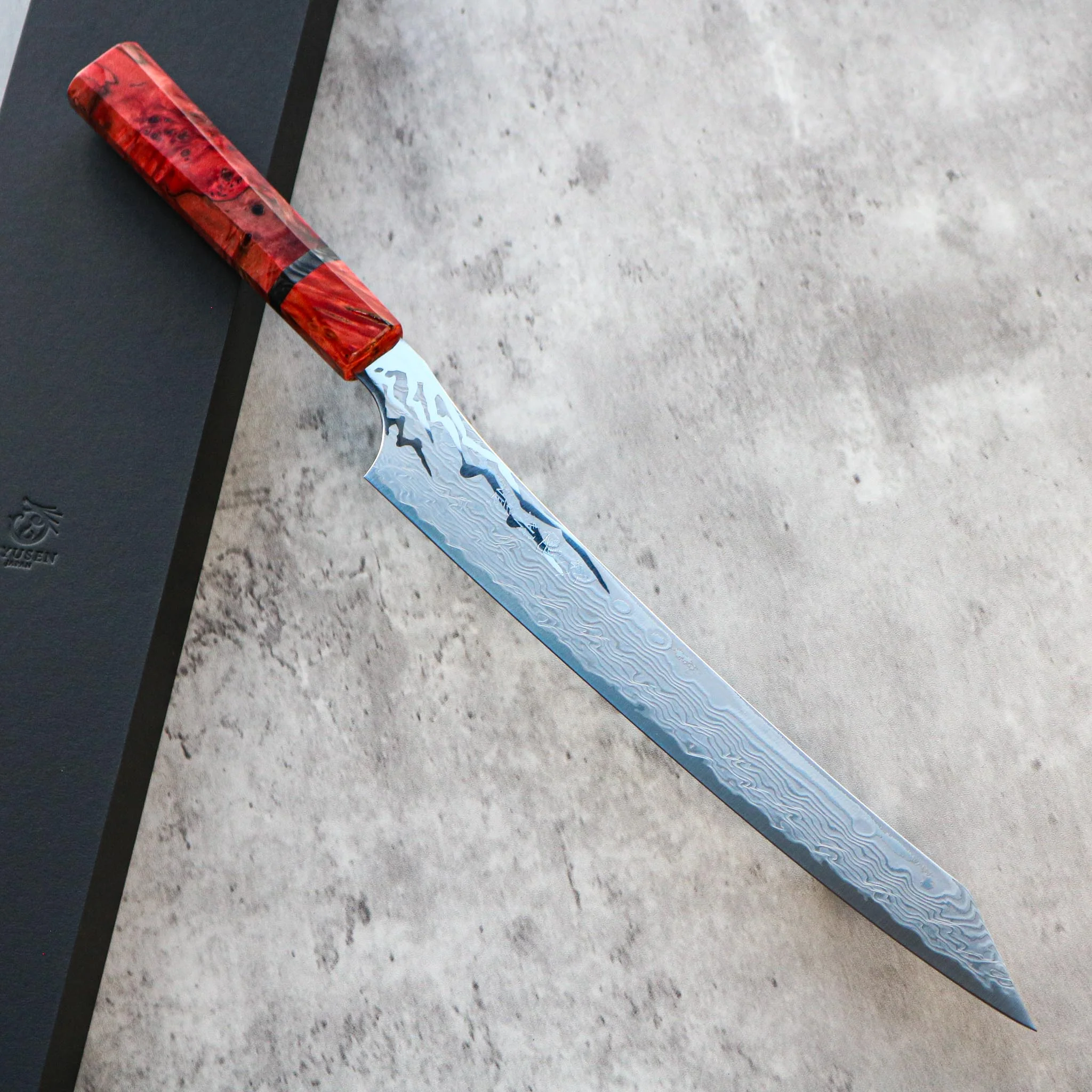
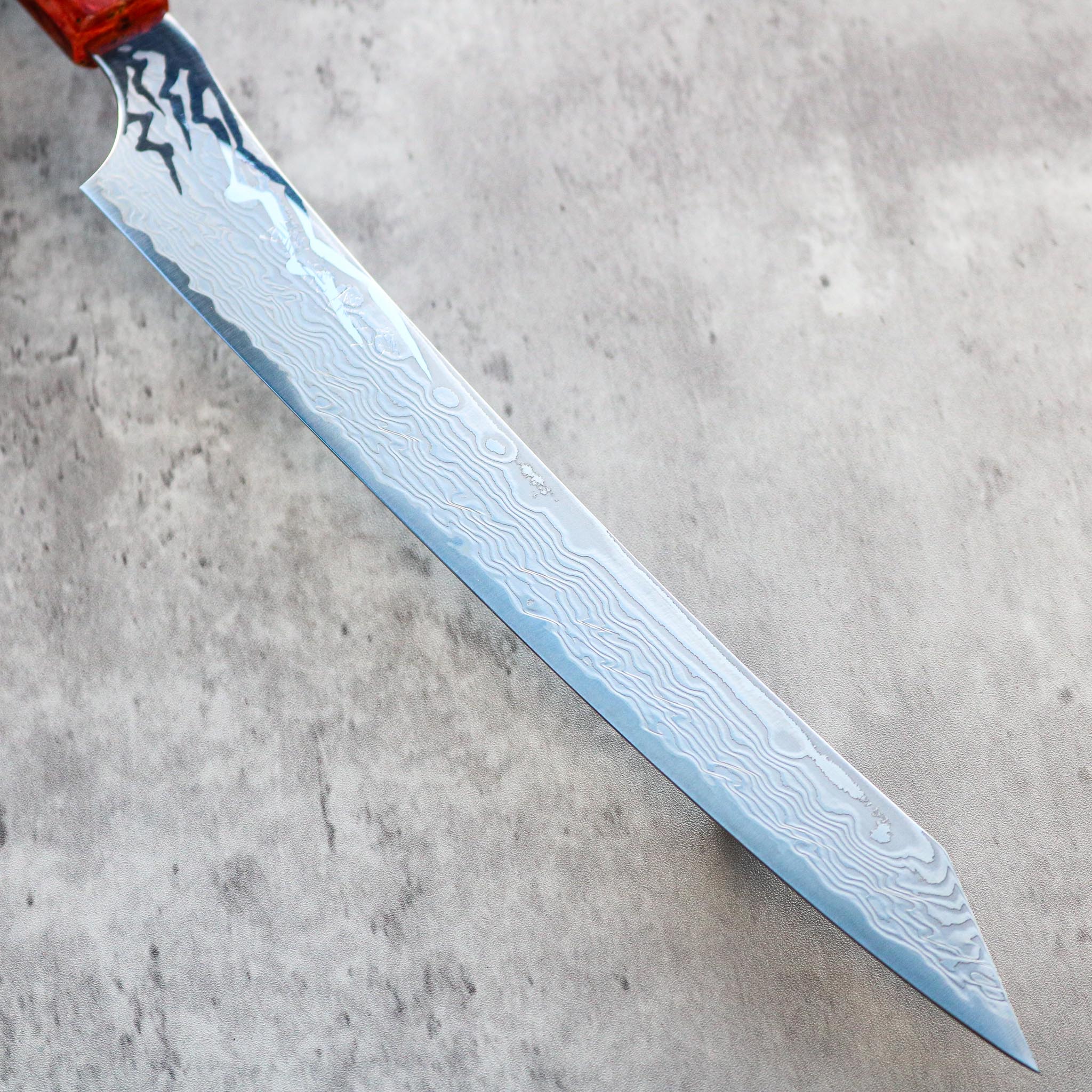
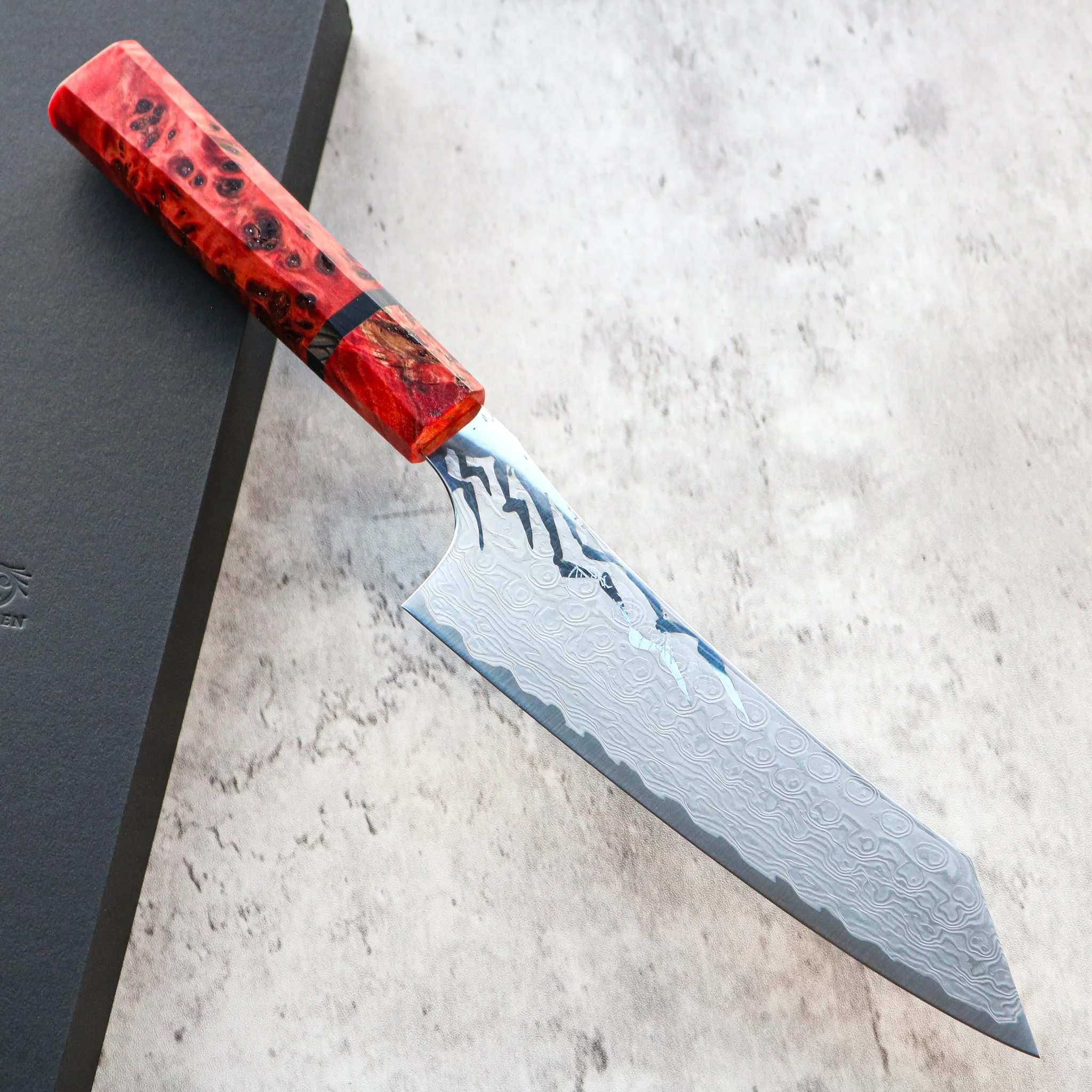
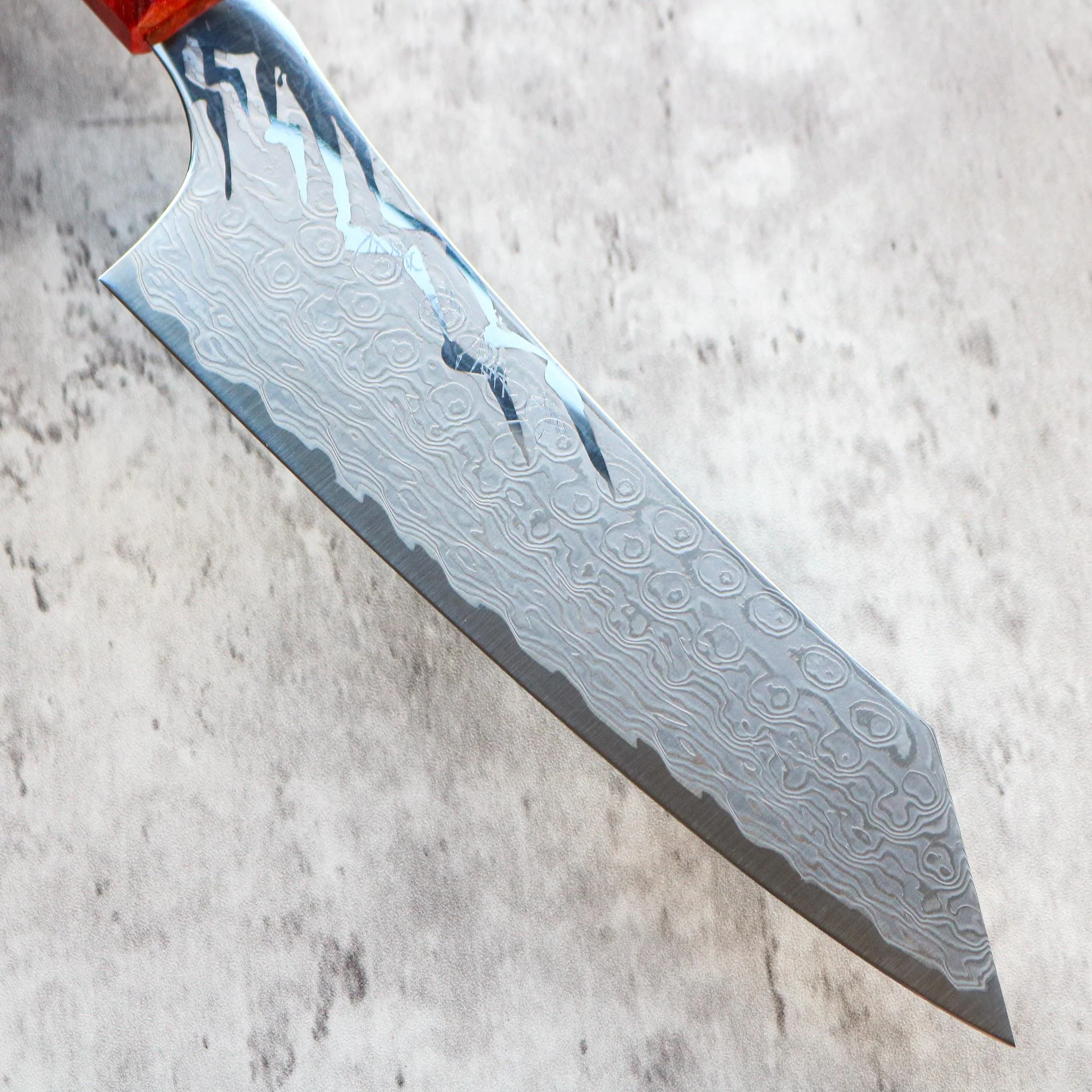
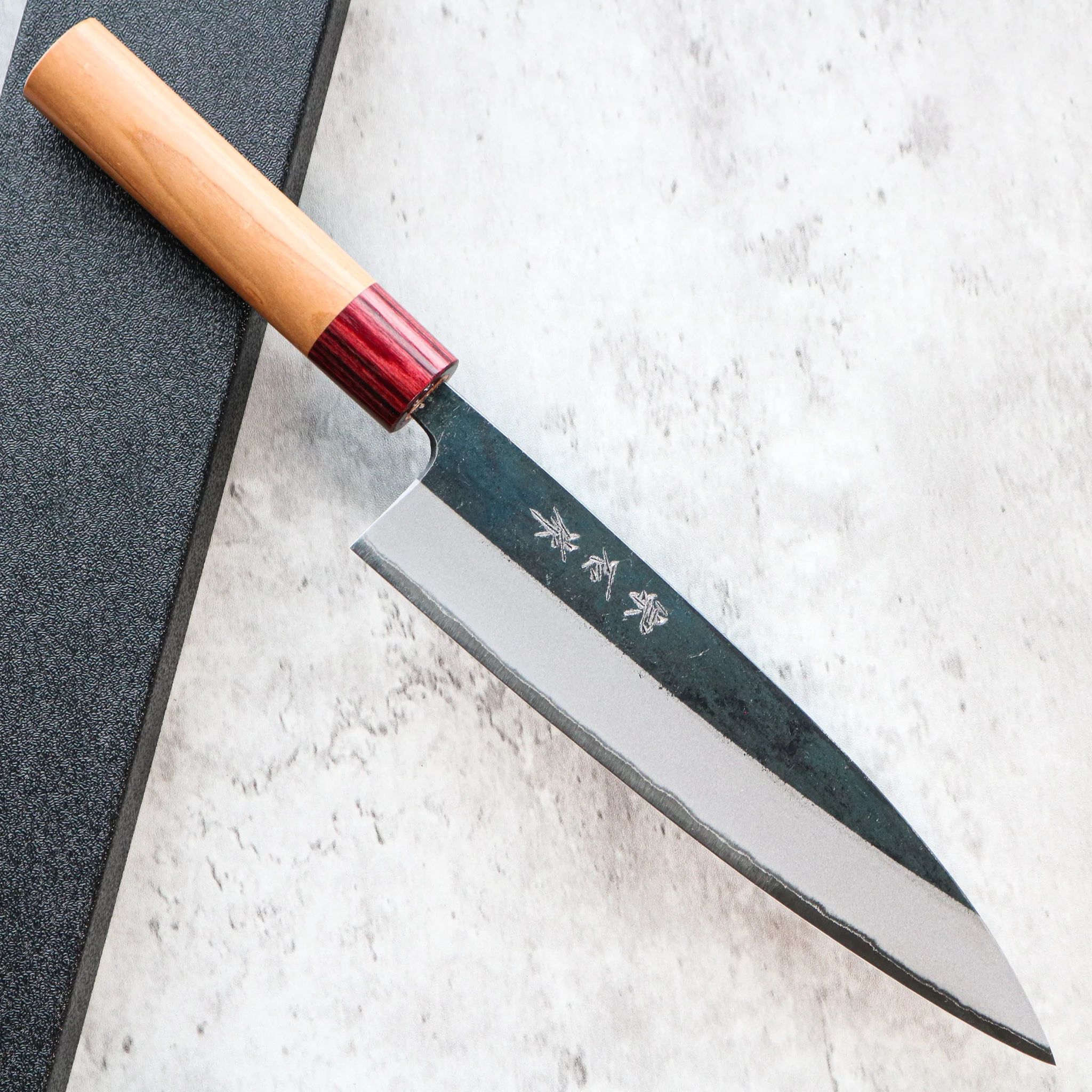
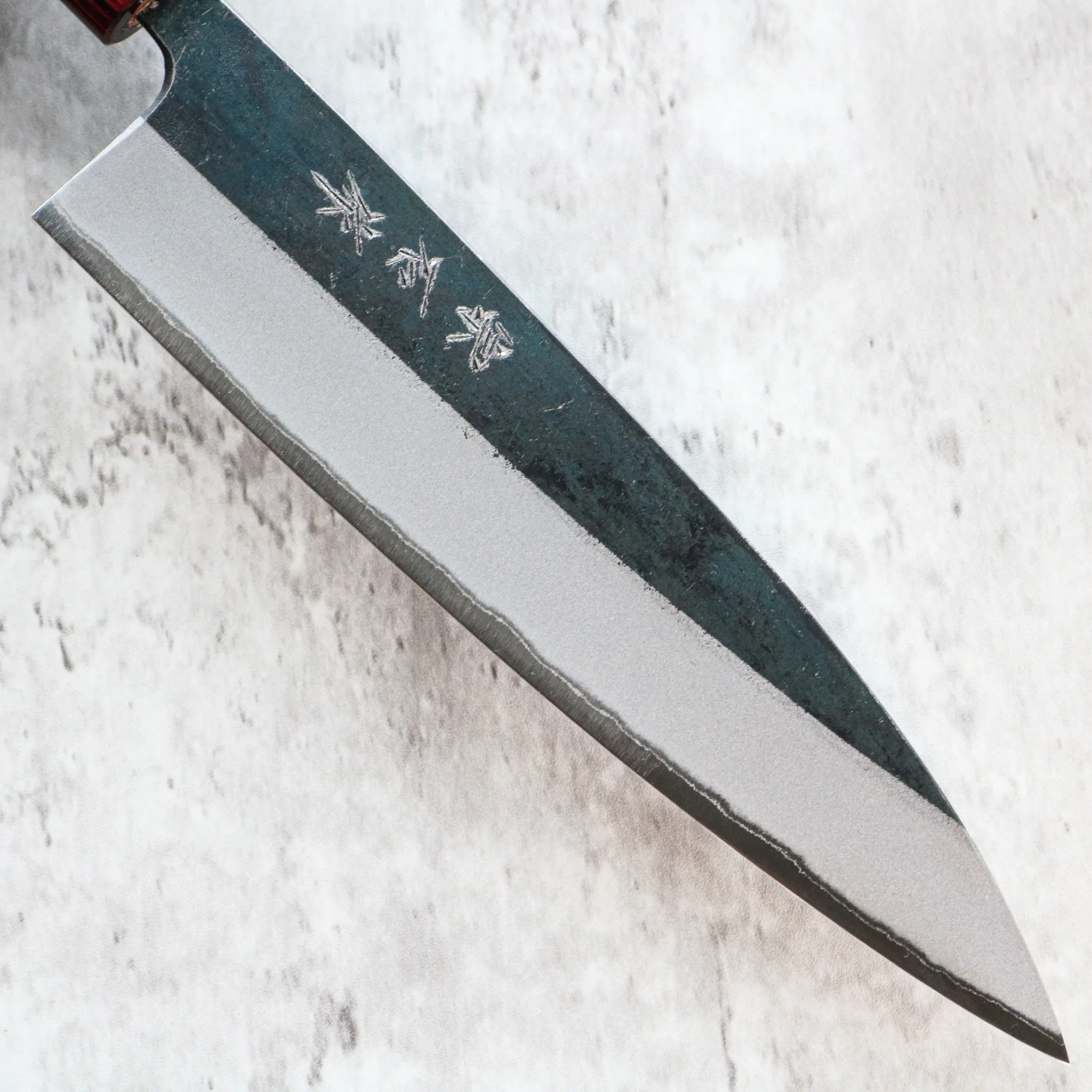
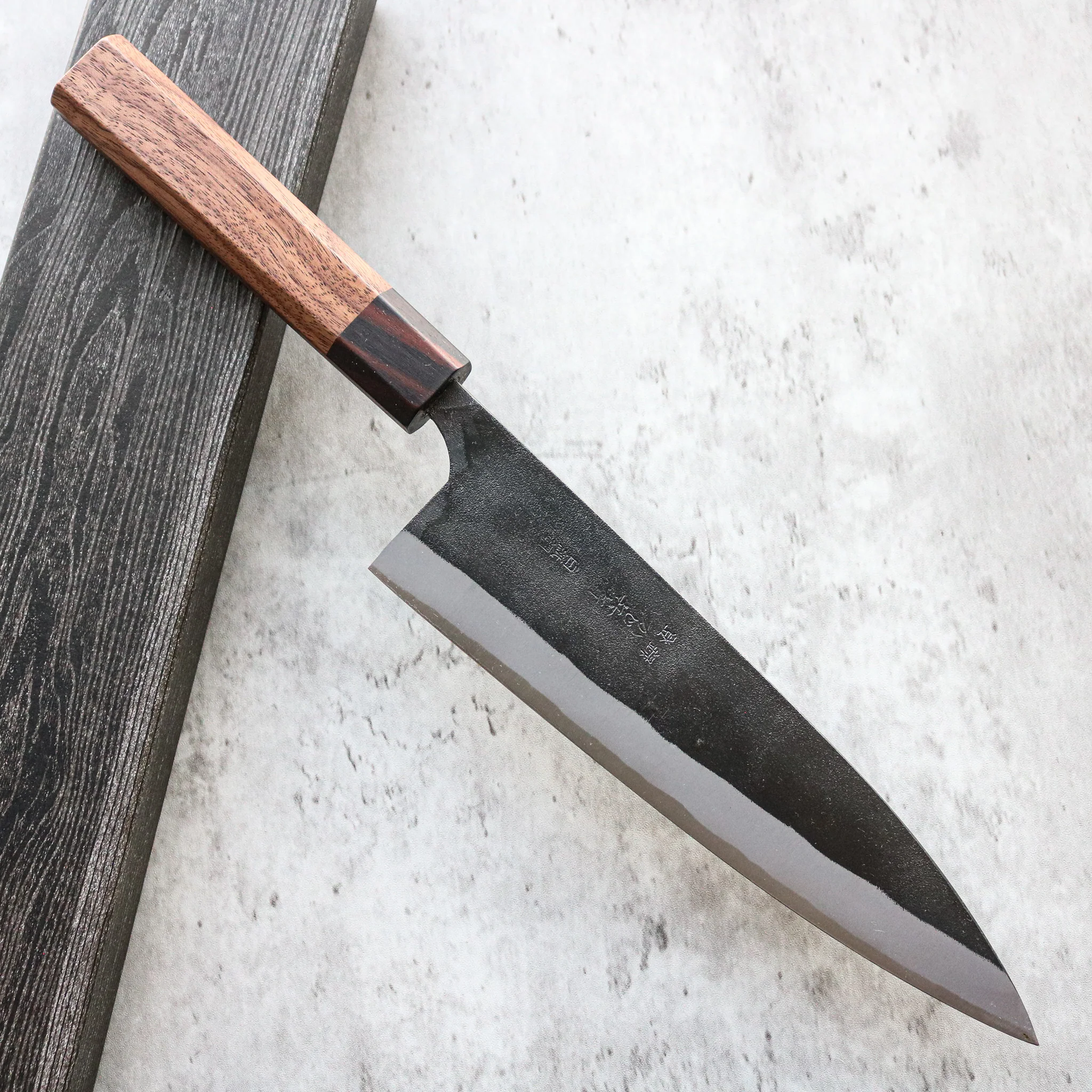
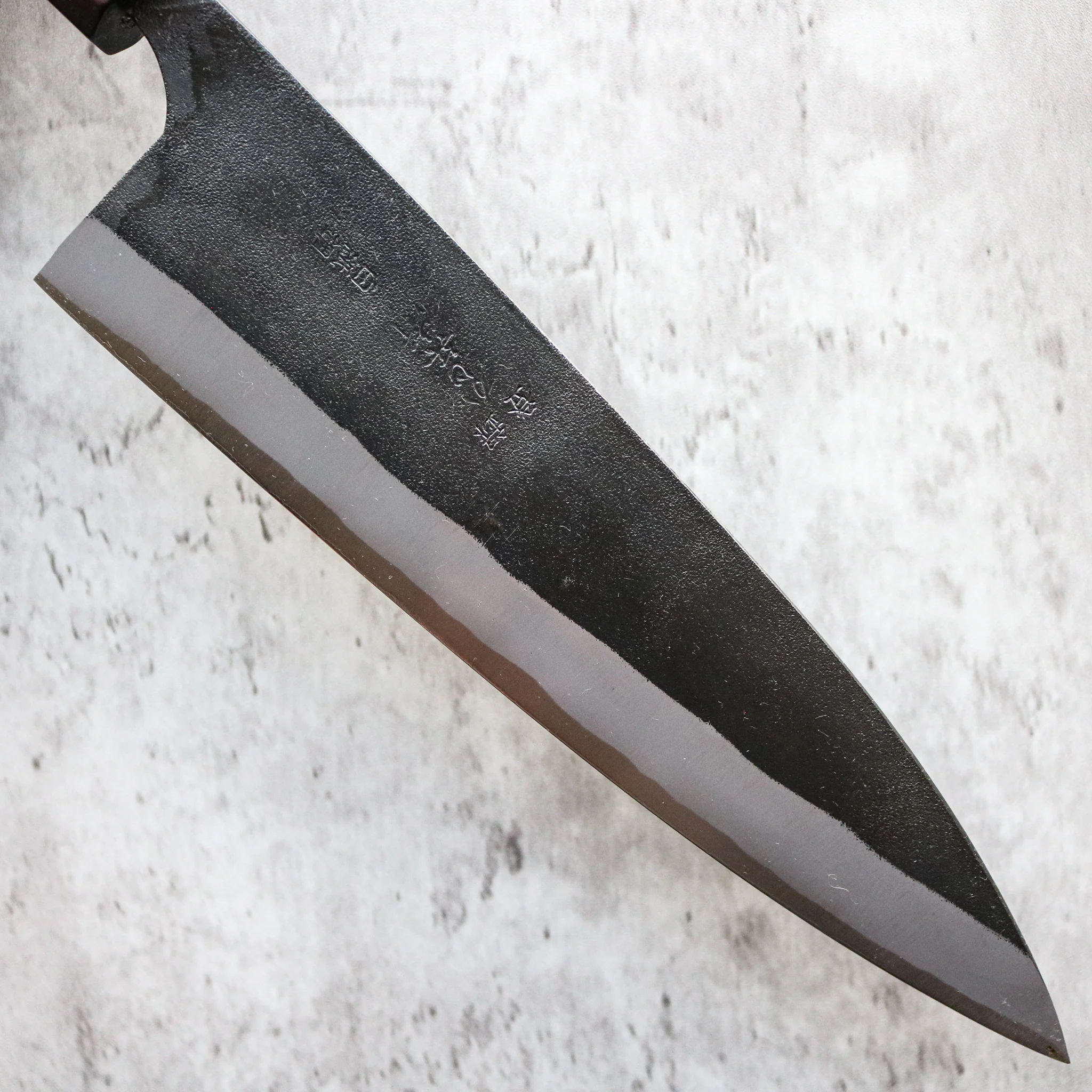
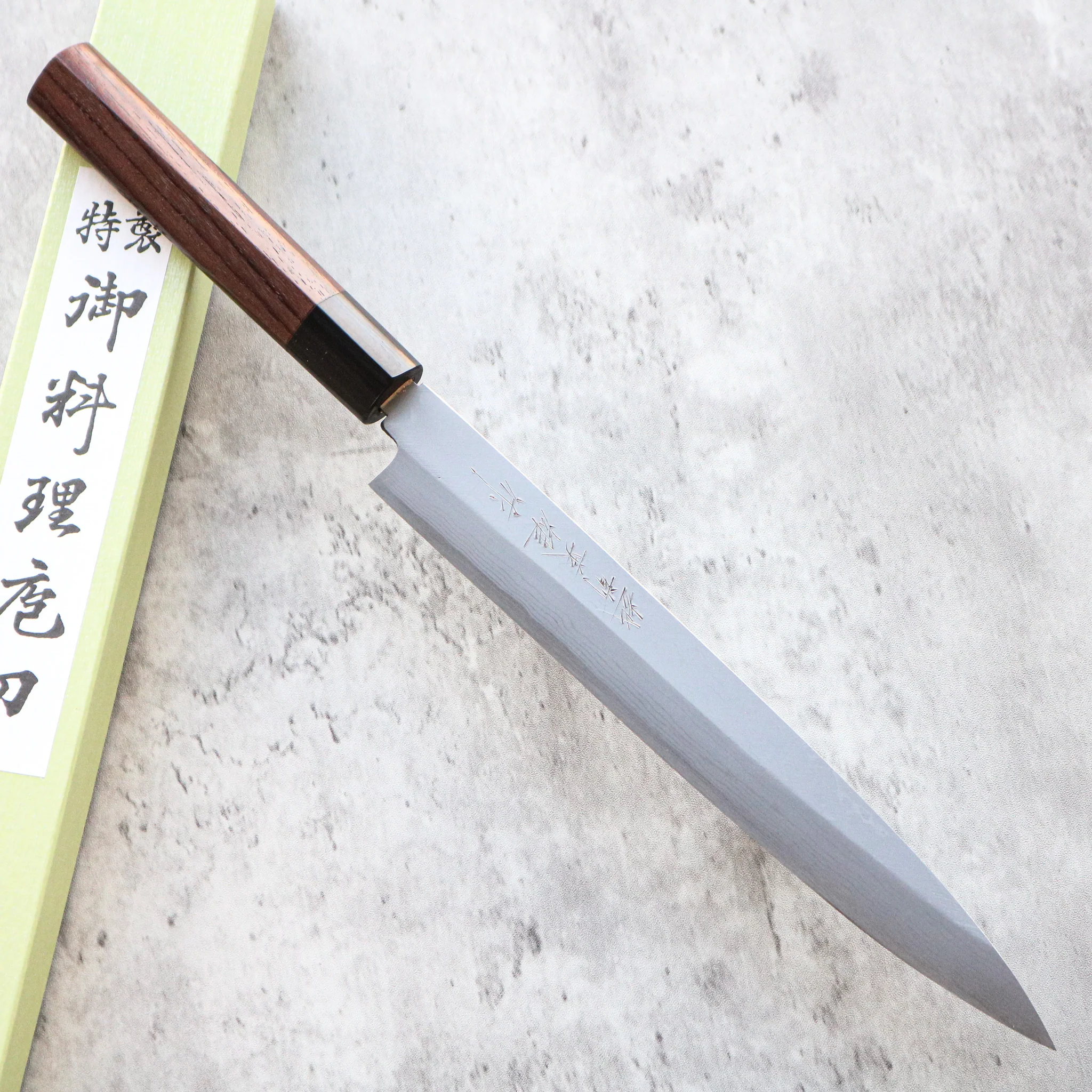
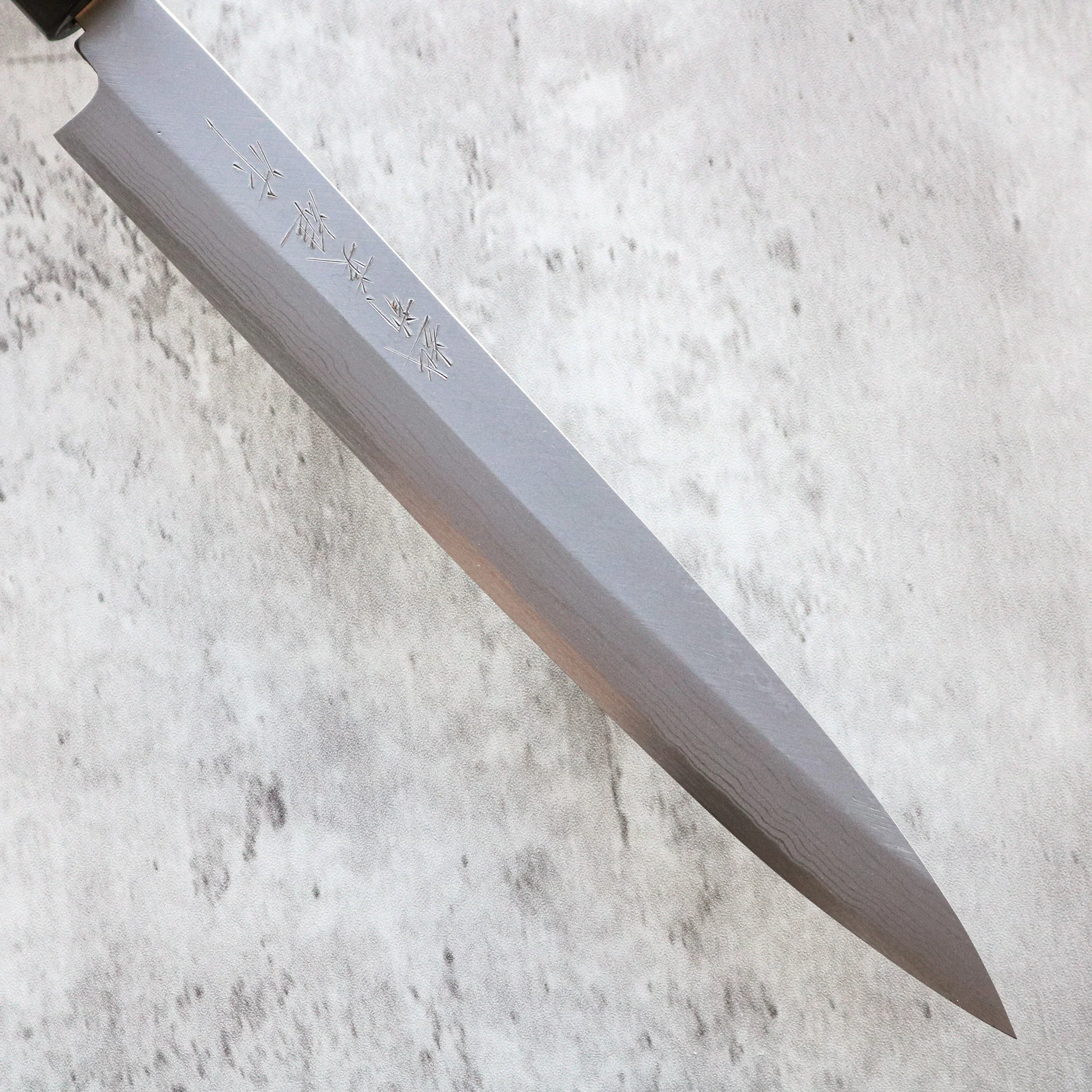
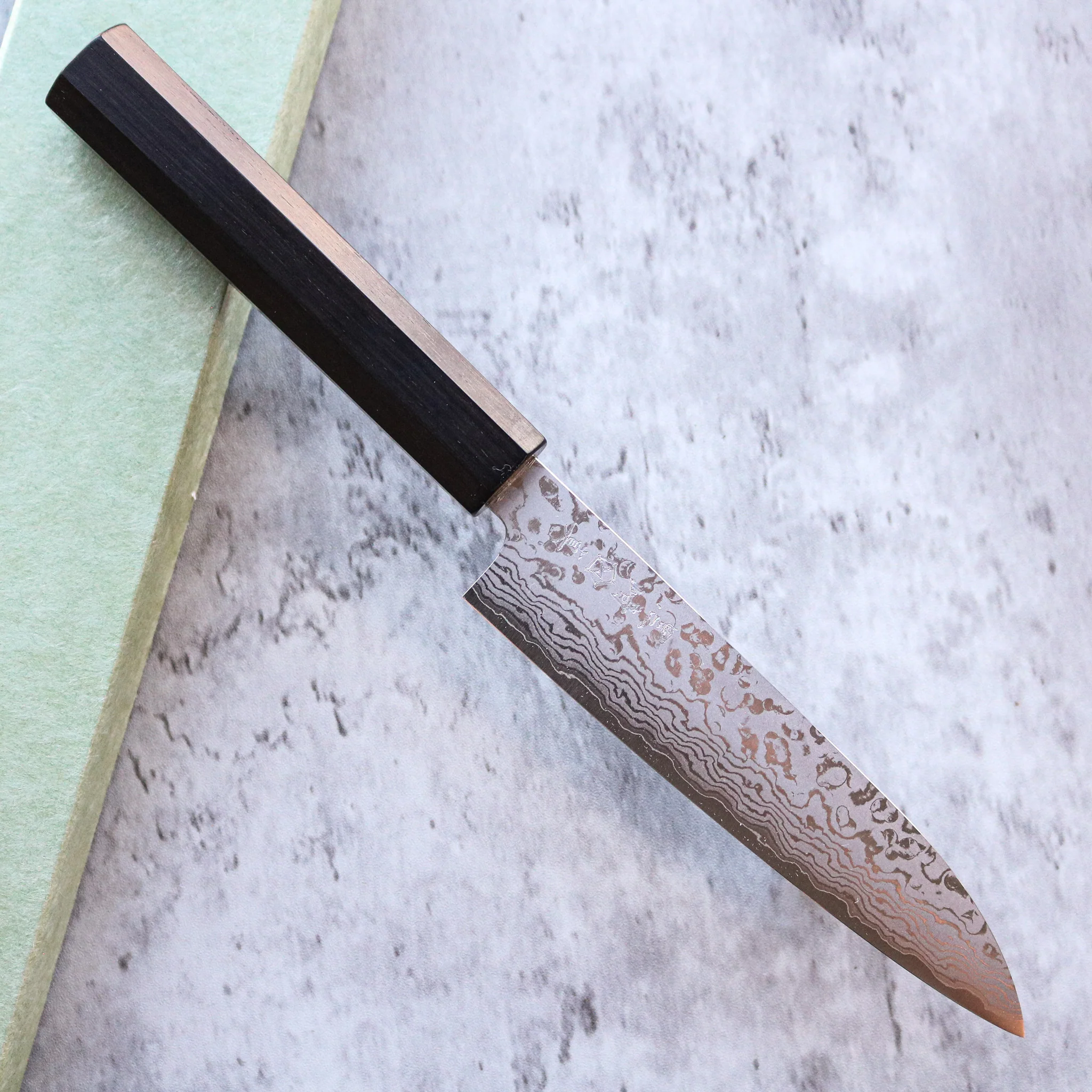
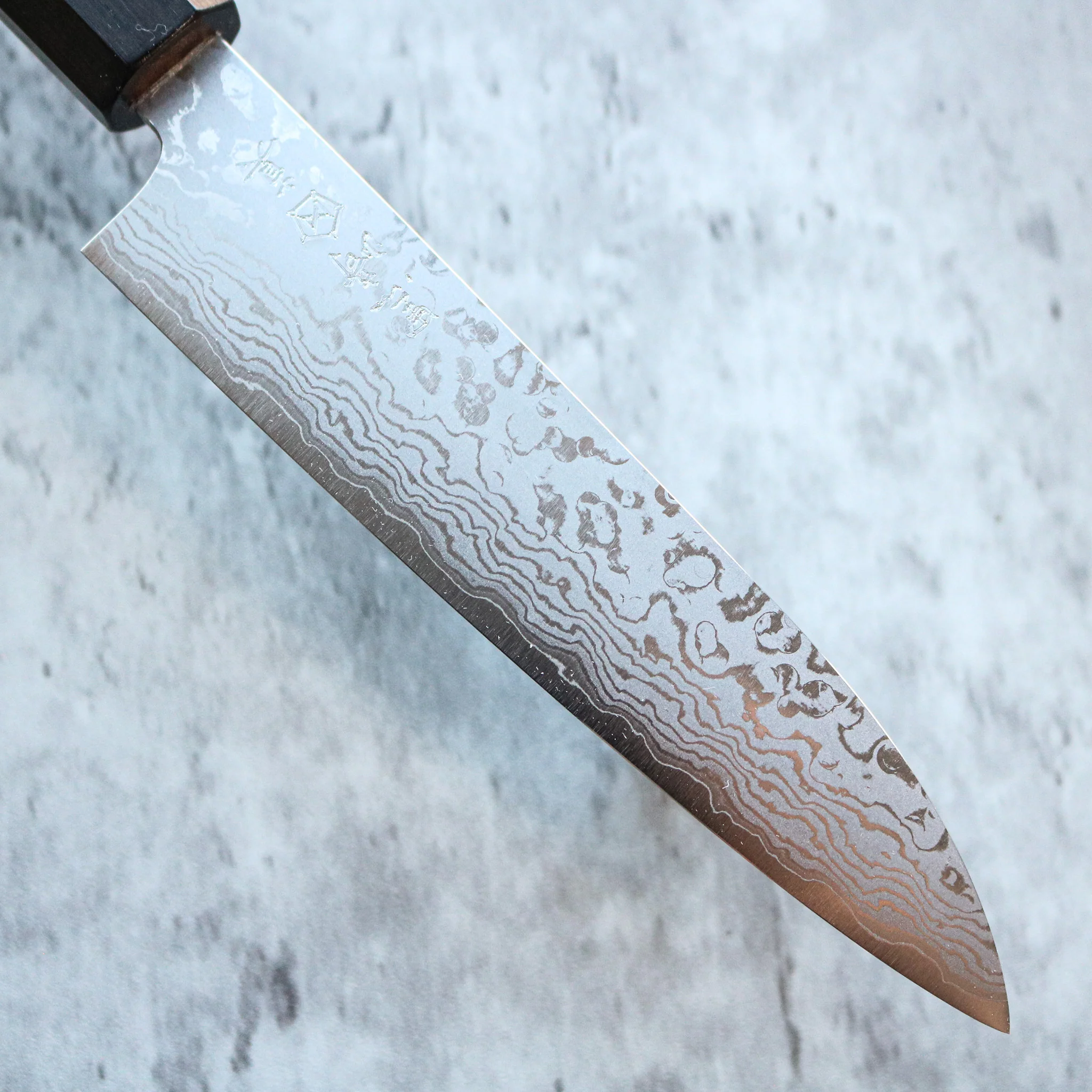
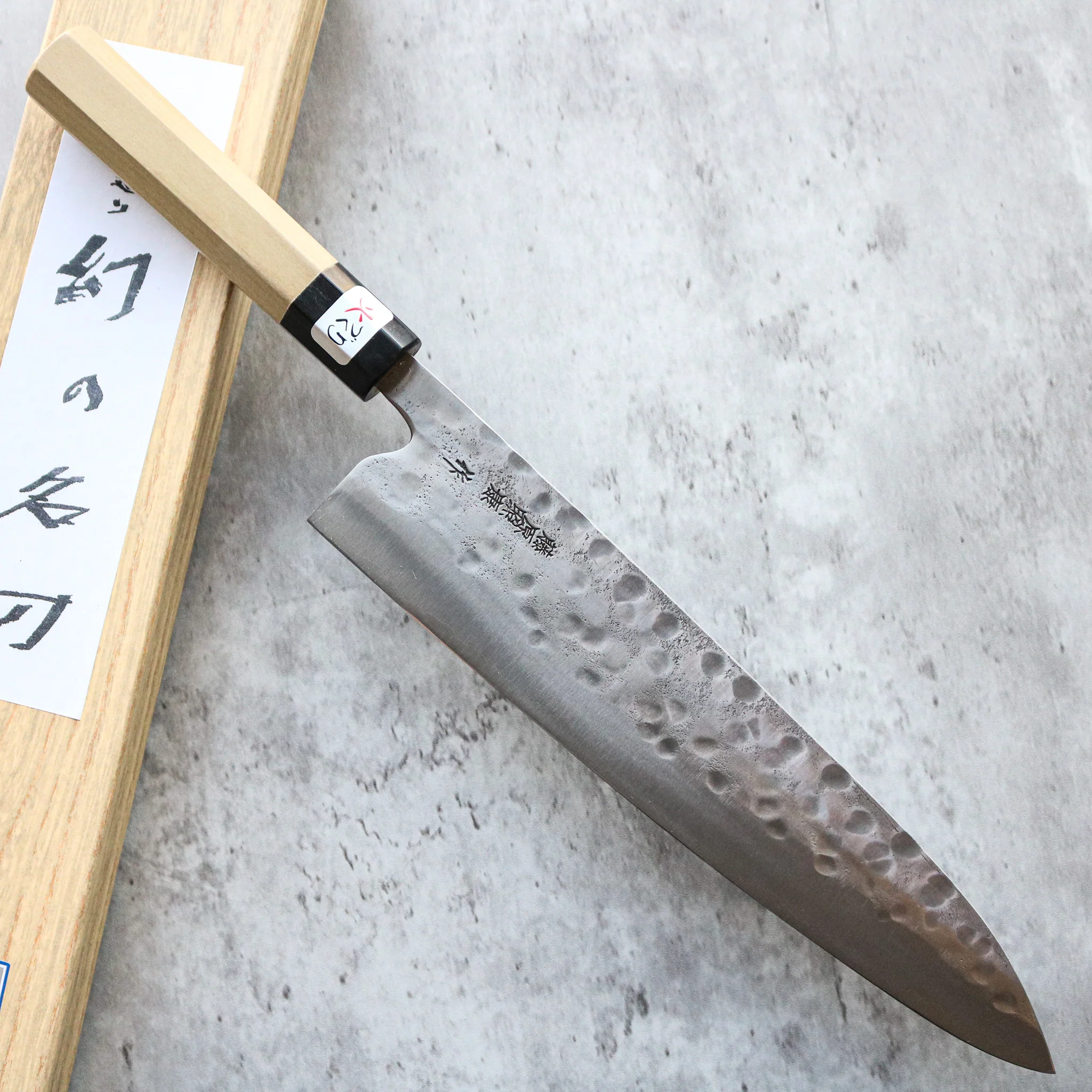
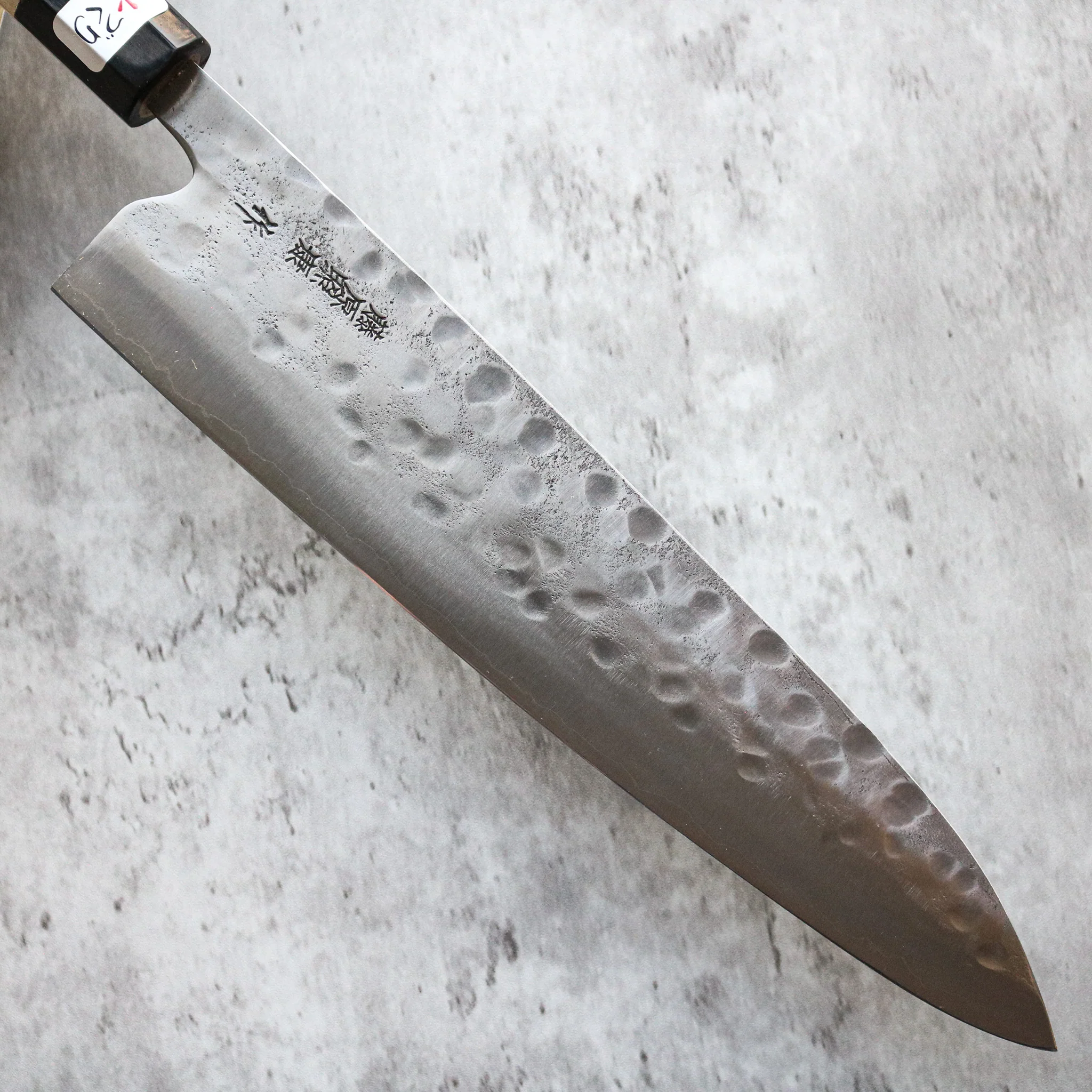
Hatsukokoro Hayabusa AO Migaki Gyuto 210 mm
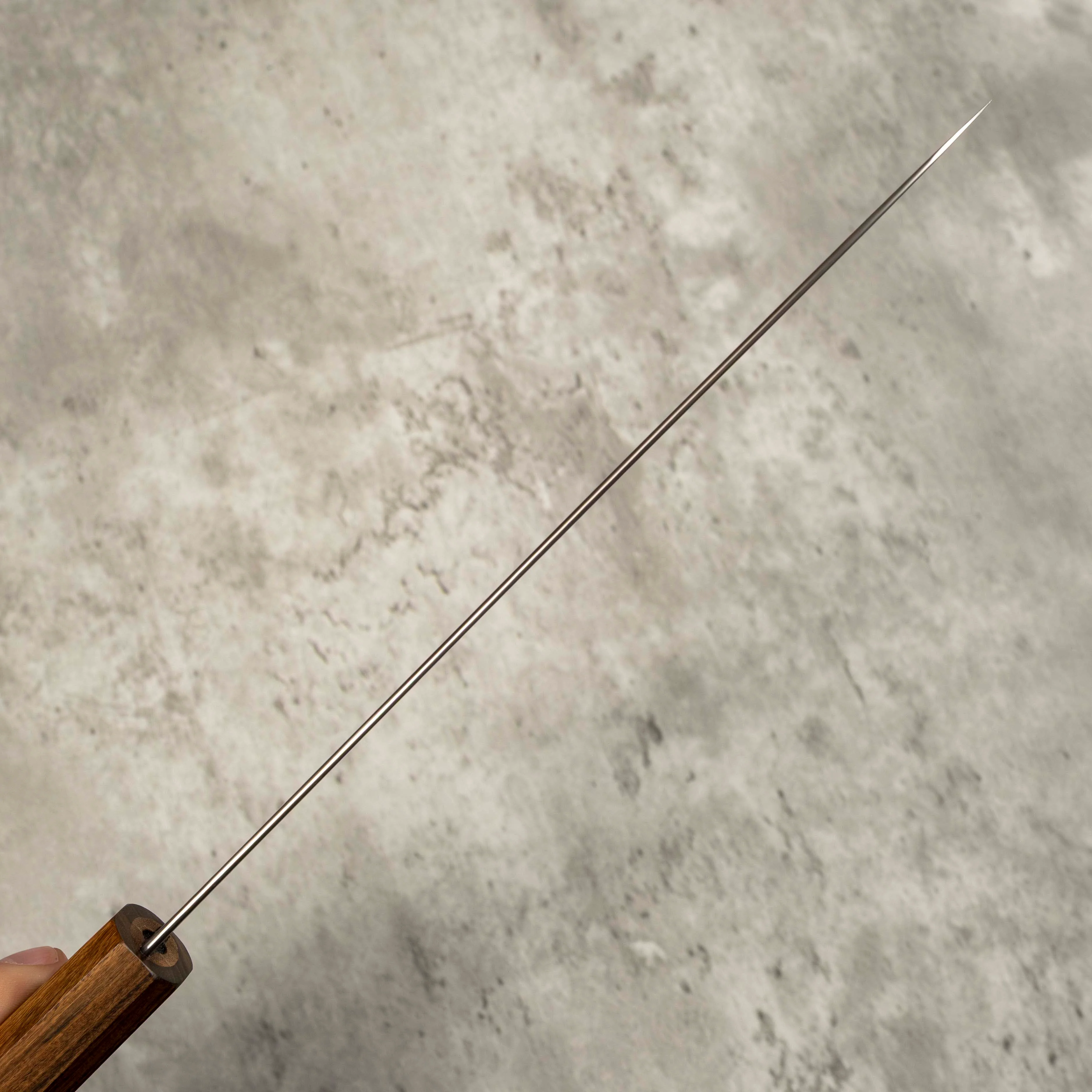
| Blade Length | 211 mm |
| Total Length | 366 mm |
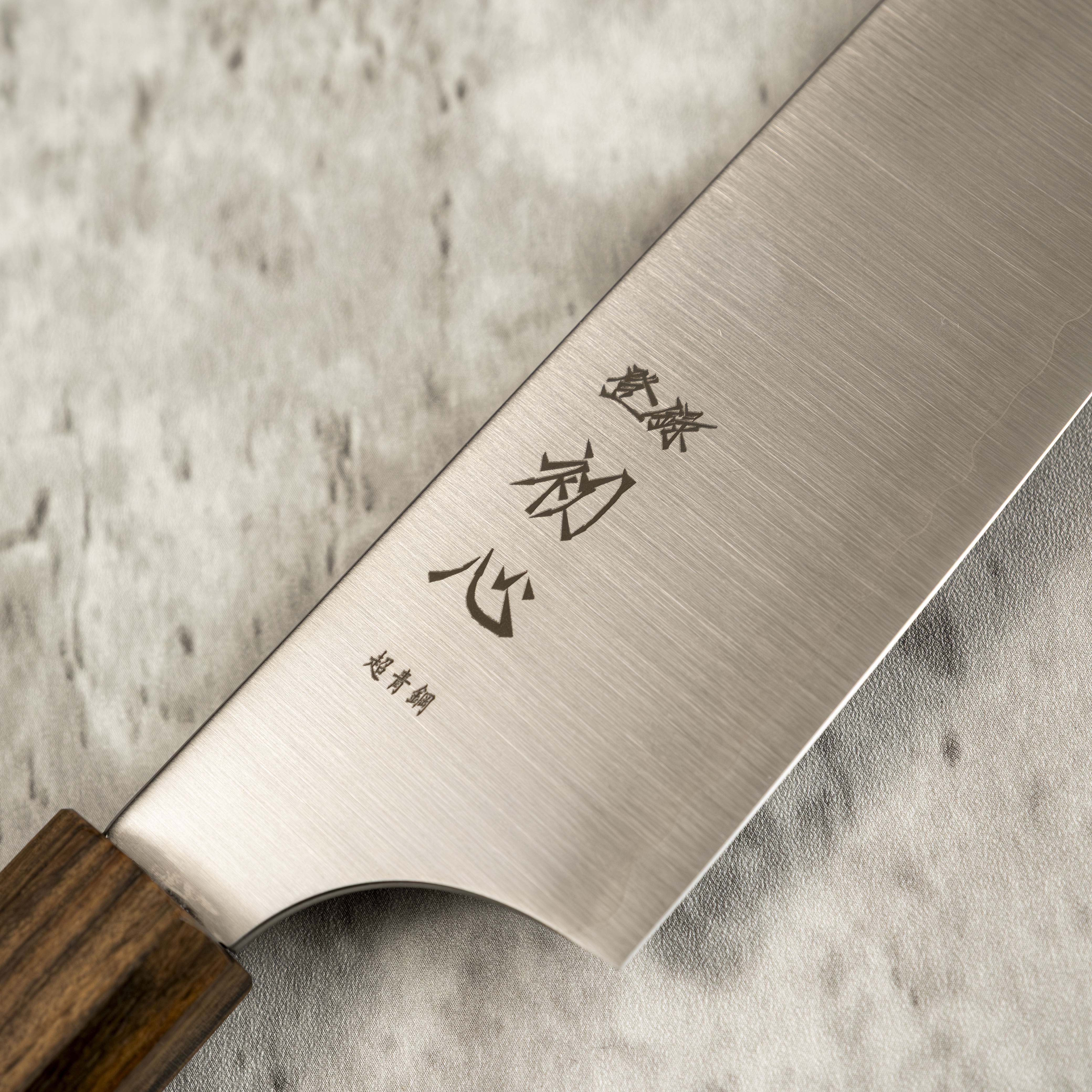
| Steel | Aogami (Blue Super) |
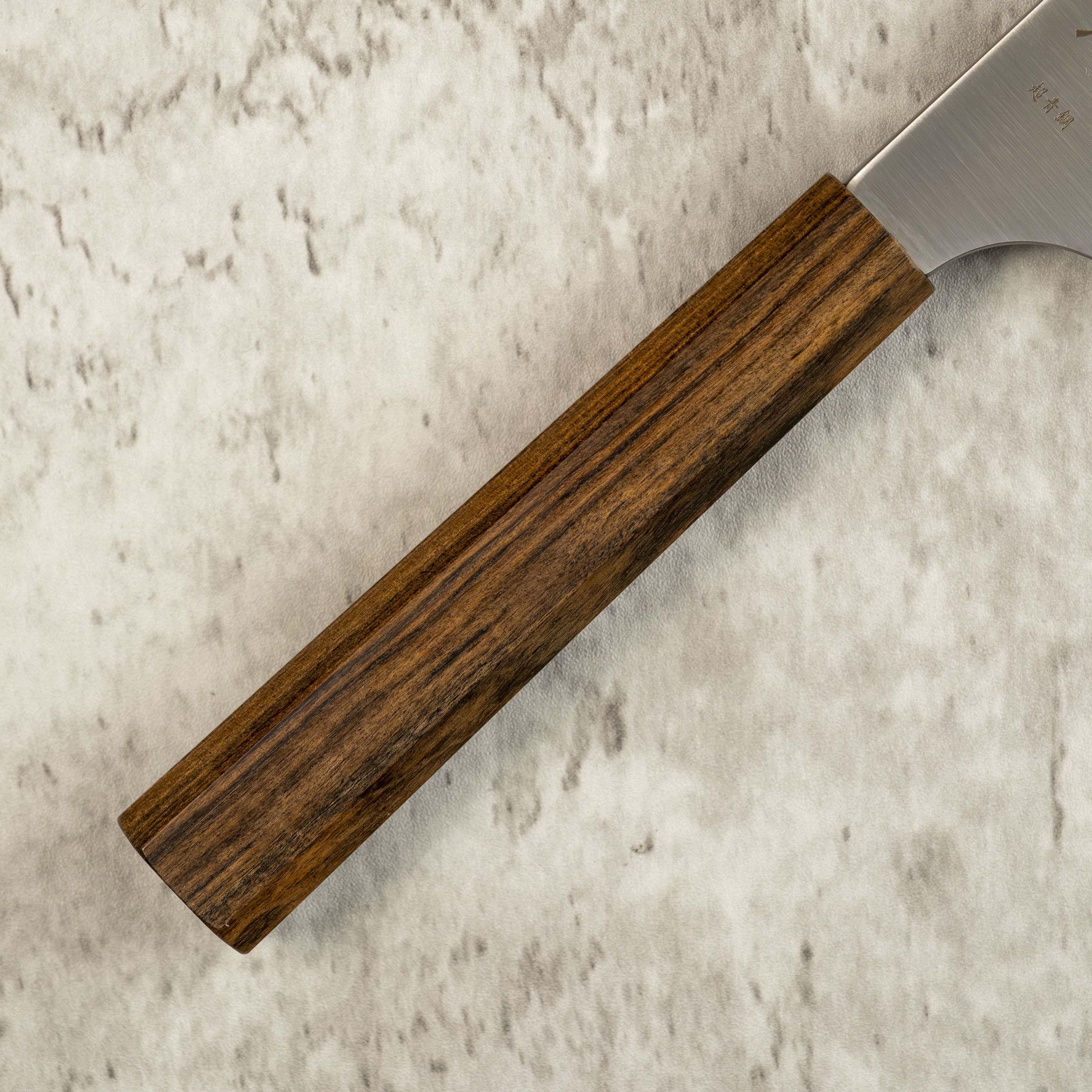
| Handle | Bubinga |
| Ferrule | n/a |
| Rockwell | 62-63 |
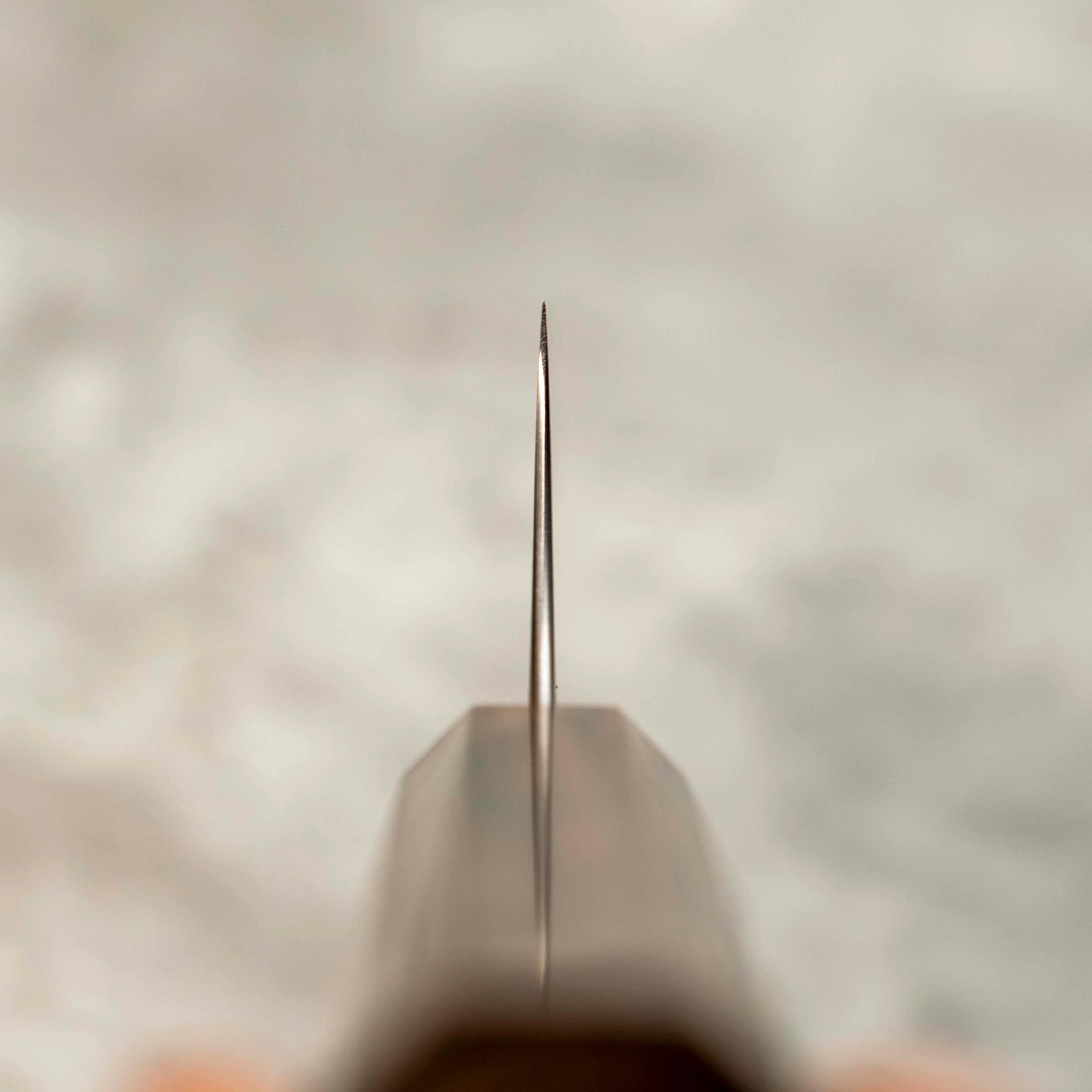
| Height Spine to heel | 45 mm |
| Width at Spine | 2.2 mm |
| Weight | 160 g |
| Bevel | Double (50/50) |
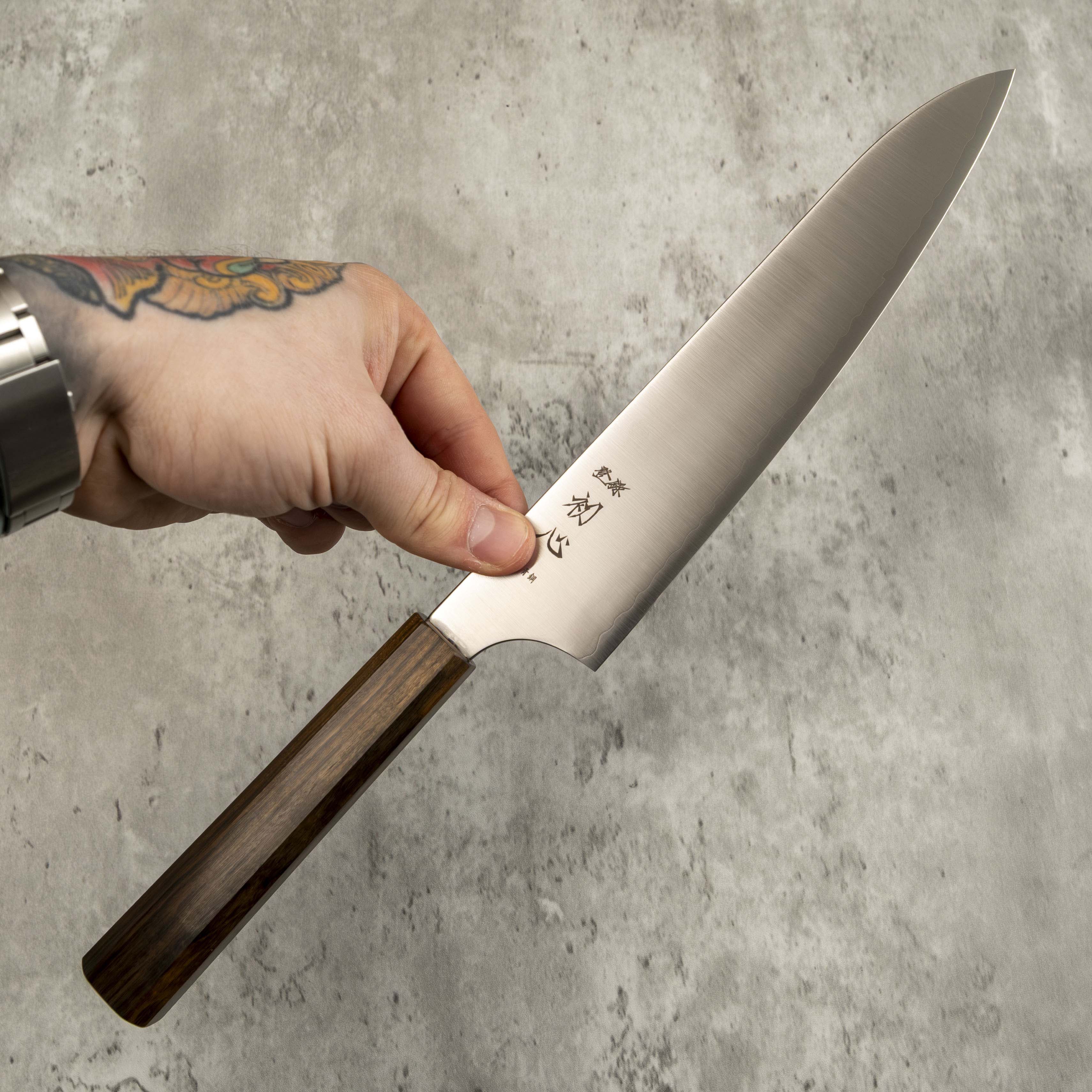
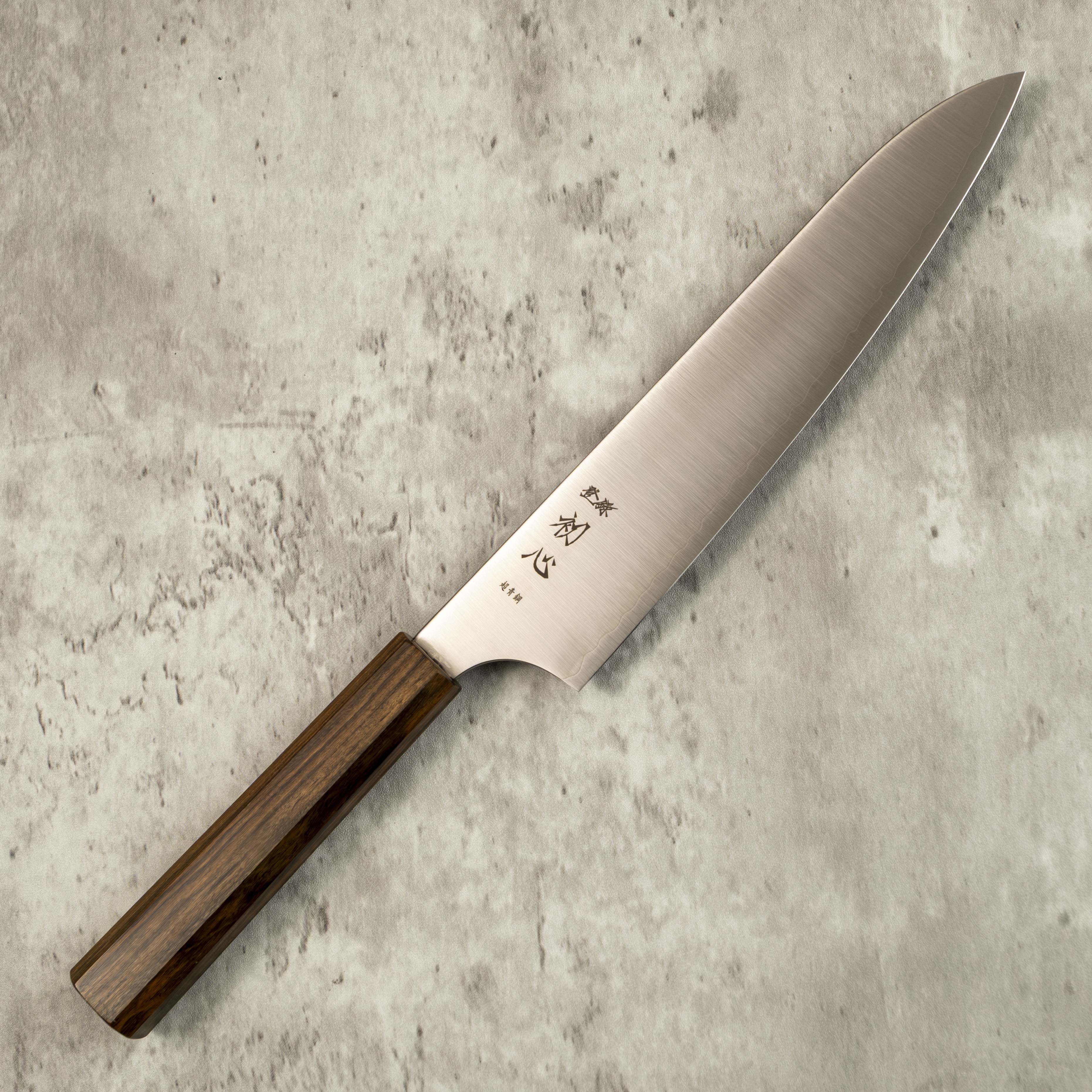
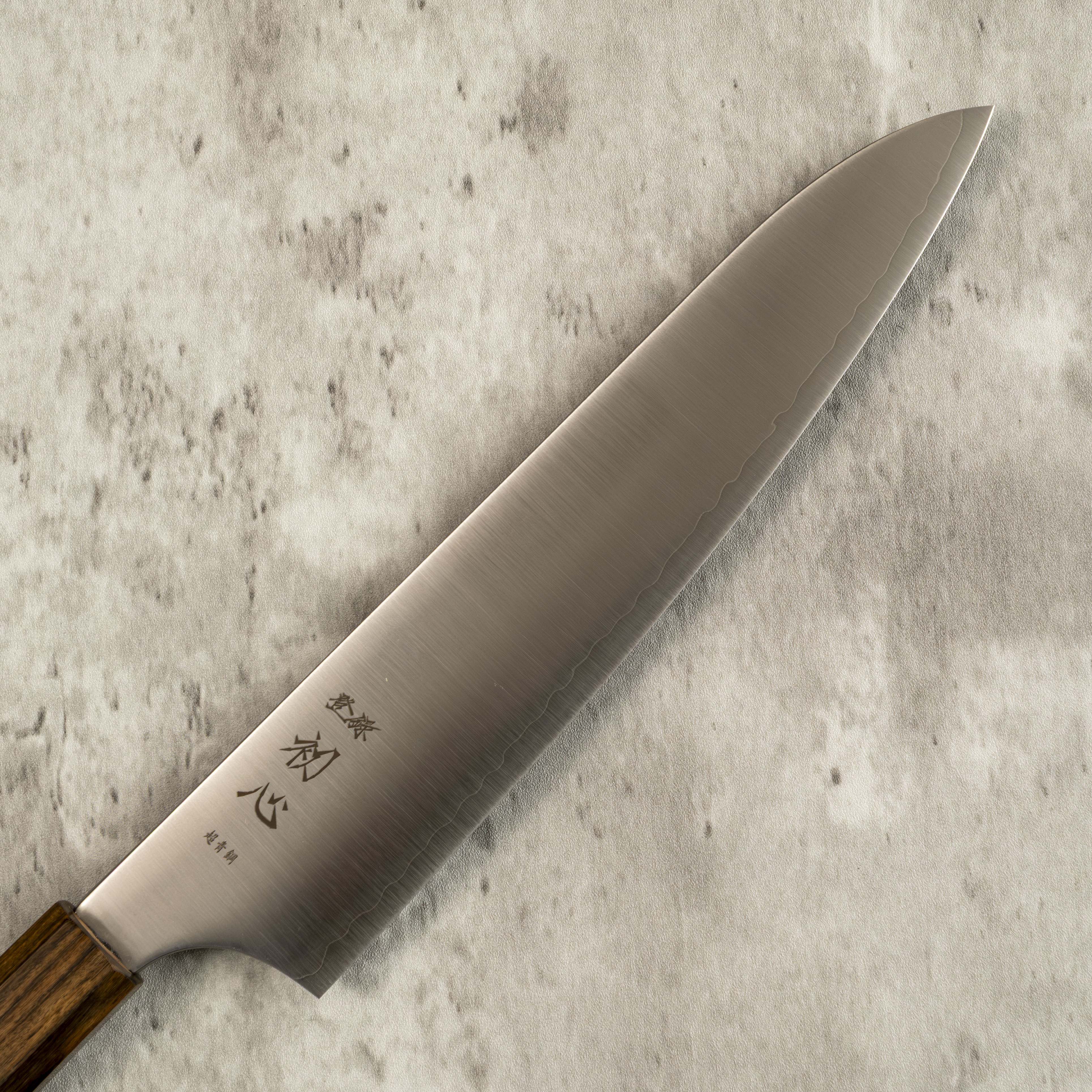
The gyuto is an all purpose knife and the Japanese equivalent to the western chef's knife, and 210mm is the equivalent of the standard 8 inch variation of that knife. From slicing, dicing, chopping, and carving the gyuto can do it all, and this one in particular has a hybrid profile that has enough sweep to rock and a big enough flat spot on the heel to chop comfortably. The Blue core steel is incredibly easy to sharpen to hair popping levels, and being a touch thicker with more of a workhorse grind you don't need to be super worried about chipping, and with the stainless cladding you get all that performance with minimal exposed carbon to worry about rusting on you!
Knife Care (Stainless Clad)
- This knife is made from 3 layers of steel using a technique called Sanmai (Forge welding). It involves laminating a piece of Carbon steel with two pieces of Stainless steel giving the knife all the benefits of the carbon steel (Edge retention, ease of sharpening, cutting feel) and the Ease of Maintenance from Stainless steel. 2-3 millimeters of the carbon steel is exposed at the edge of the knife and is susceptible to rust and discouloration if not properly maintained.
- Simply Wipe the knife with a damp cloth immediately after use to keep it from rusting or discouloring.
- Wash with regular dish soap and warm water using a none abrasive sponge or cloth.
- Never put your knife in the Dishwasher. The extreme heat will ruin the wooden handle.
- Highly acidic ingredients (Onions, Tomatoes, Citrus) Will cause rust and oxidation to happen faster, thus the user must ensure the knife is wiped clean immediately after working with such an ingredient.
- Should any rust form it can be removed using a rust eraser or a mixture of Baking soda and water to simply scrub it clean.
- Avoid Bones, Frozen foods, nuts and hard candies, parmesan rinds, woody stems or anything other than fruits, vegetables and proteins.
Product Information
Product Information
Shipping & Returns
Shipping & Returns
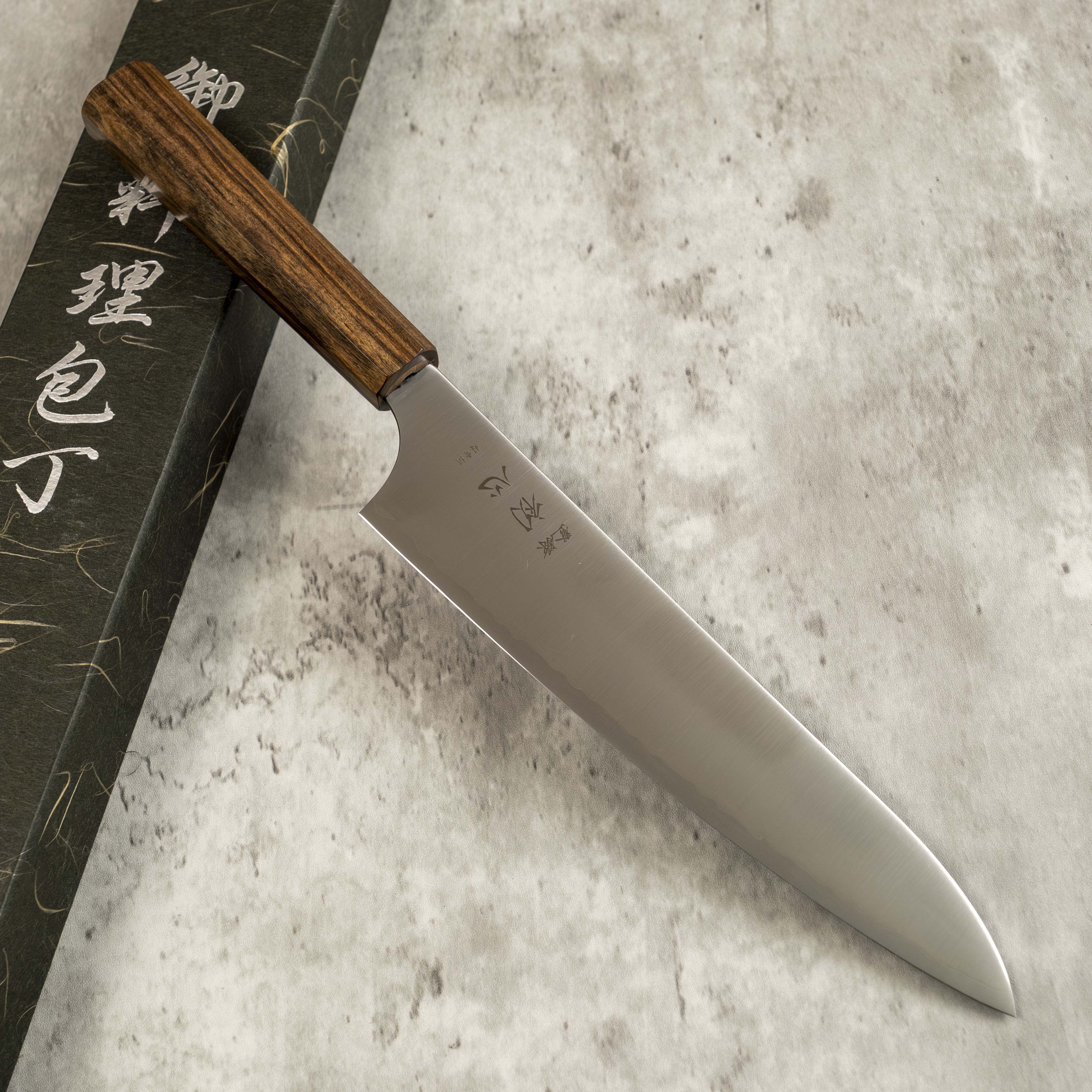
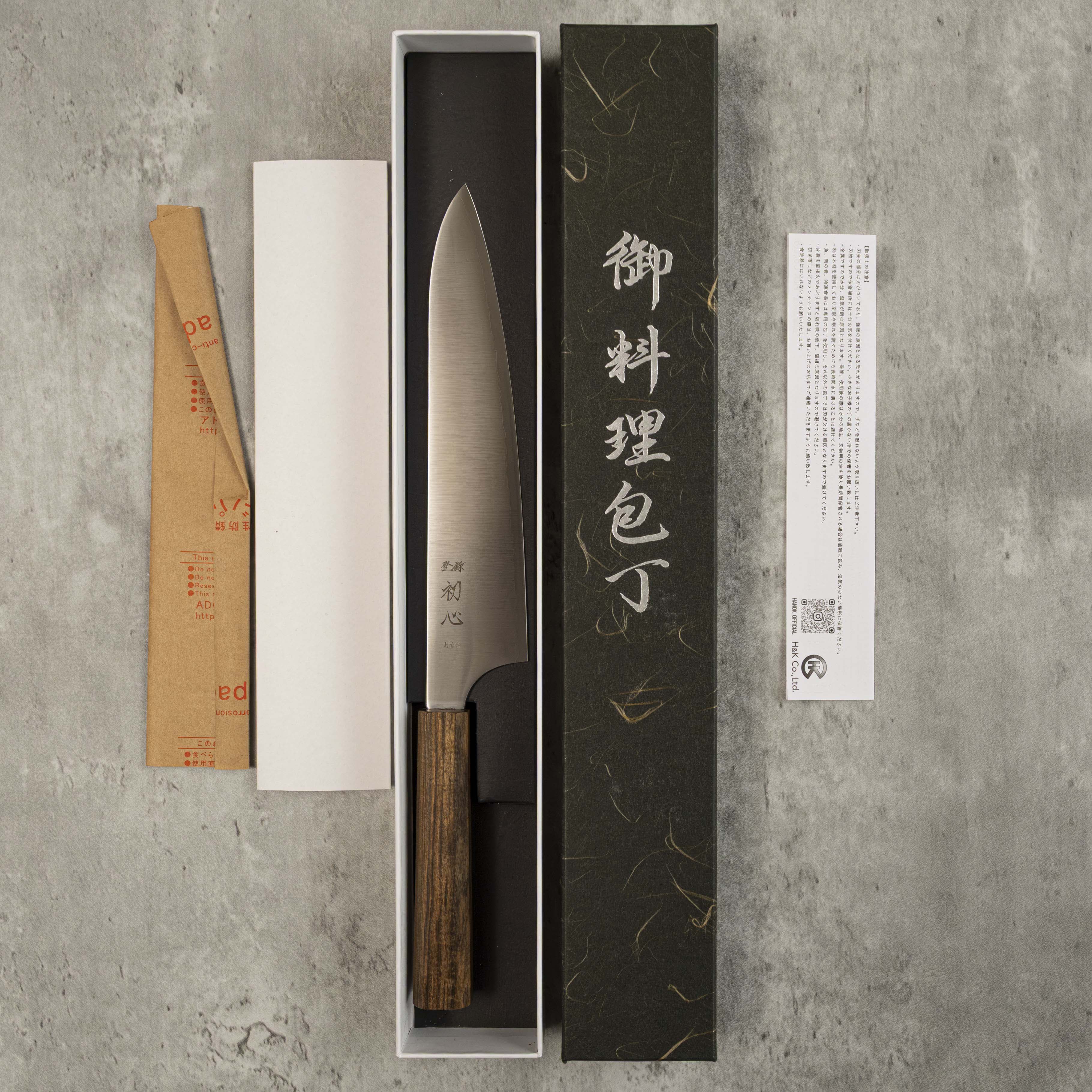
Hatsukokoro Hayabusa AO Migaki Gyuto 210 mm
Hatsukokoro Hayabusa AO Migaki Gyuto 210 mm
| Blade Length | 211 mm |
| Total Length | 366 mm |
| Steel | Aogami (Blue Super) |
| Handle | Bubinga |
| Ferrule | n/a |
| Rockwell | 62-63 |
| Height Spine to heel | 45 mm |
| Width at Spine | 2.2 mm |
| Weight | 160 g |
| Bevel | Double (50/50) |
The gyuto is an all purpose knife and the Japanese equivalent to the western chef's knife, and 210mm is the equivalent of the standard 8 inch variation of that knife. From slicing, dicing, chopping, and carving the gyuto can do it all, and this one in particular has a hybrid profile that has enough sweep to rock and a big enough flat spot on the heel to chop comfortably. The Blue core steel is incredibly easy to sharpen to hair popping levels, and being a touch thicker with more of a workhorse grind you don't need to be super worried about chipping, and with the stainless cladding you get all that performance with minimal exposed carbon to worry about rusting on you!
Knife Care (Stainless Clad)
- This knife is made from 3 layers of steel using a technique called Sanmai (Forge welding). It involves laminating a piece of Carbon steel with two pieces of Stainless steel giving the knife all the benefits of the carbon steel (Edge retention, ease of sharpening, cutting feel) and the Ease of Maintenance from Stainless steel. 2-3 millimeters of the carbon steel is exposed at the edge of the knife and is susceptible to rust and discouloration if not properly maintained.
- Simply Wipe the knife with a damp cloth immediately after use to keep it from rusting or discouloring.
- Wash with regular dish soap and warm water using a none abrasive sponge or cloth.
- Never put your knife in the Dishwasher. The extreme heat will ruin the wooden handle.
- Highly acidic ingredients (Onions, Tomatoes, Citrus) Will cause rust and oxidation to happen faster, thus the user must ensure the knife is wiped clean immediately after working with such an ingredient.
- Should any rust form it can be removed using a rust eraser or a mixture of Baking soda and water to simply scrub it clean.
- Avoid Bones, Frozen foods, nuts and hard candies, parmesan rinds, woody stems or anything other than fruits, vegetables and proteins.
Original: $159.74
-65%$159.74
$55.91Product Information
Product Information
Shipping & Returns
Shipping & Returns
Description
| Blade Length | 211 mm |
| Total Length | 366 mm |
| Steel | Aogami (Blue Super) |
| Handle | Bubinga |
| Ferrule | n/a |
| Rockwell | 62-63 |
| Height Spine to heel | 45 mm |
| Width at Spine | 2.2 mm |
| Weight | 160 g |
| Bevel | Double (50/50) |
The gyuto is an all purpose knife and the Japanese equivalent to the western chef's knife, and 210mm is the equivalent of the standard 8 inch variation of that knife. From slicing, dicing, chopping, and carving the gyuto can do it all, and this one in particular has a hybrid profile that has enough sweep to rock and a big enough flat spot on the heel to chop comfortably. The Blue core steel is incredibly easy to sharpen to hair popping levels, and being a touch thicker with more of a workhorse grind you don't need to be super worried about chipping, and with the stainless cladding you get all that performance with minimal exposed carbon to worry about rusting on you!
Knife Care (Stainless Clad)
- This knife is made from 3 layers of steel using a technique called Sanmai (Forge welding). It involves laminating a piece of Carbon steel with two pieces of Stainless steel giving the knife all the benefits of the carbon steel (Edge retention, ease of sharpening, cutting feel) and the Ease of Maintenance from Stainless steel. 2-3 millimeters of the carbon steel is exposed at the edge of the knife and is susceptible to rust and discouloration if not properly maintained.
- Simply Wipe the knife with a damp cloth immediately after use to keep it from rusting or discouloring.
- Wash with regular dish soap and warm water using a none abrasive sponge or cloth.
- Never put your knife in the Dishwasher. The extreme heat will ruin the wooden handle.
- Highly acidic ingredients (Onions, Tomatoes, Citrus) Will cause rust and oxidation to happen faster, thus the user must ensure the knife is wiped clean immediately after working with such an ingredient.
- Should any rust form it can be removed using a rust eraser or a mixture of Baking soda and water to simply scrub it clean.
- Avoid Bones, Frozen foods, nuts and hard candies, parmesan rinds, woody stems or anything other than fruits, vegetables and proteins.