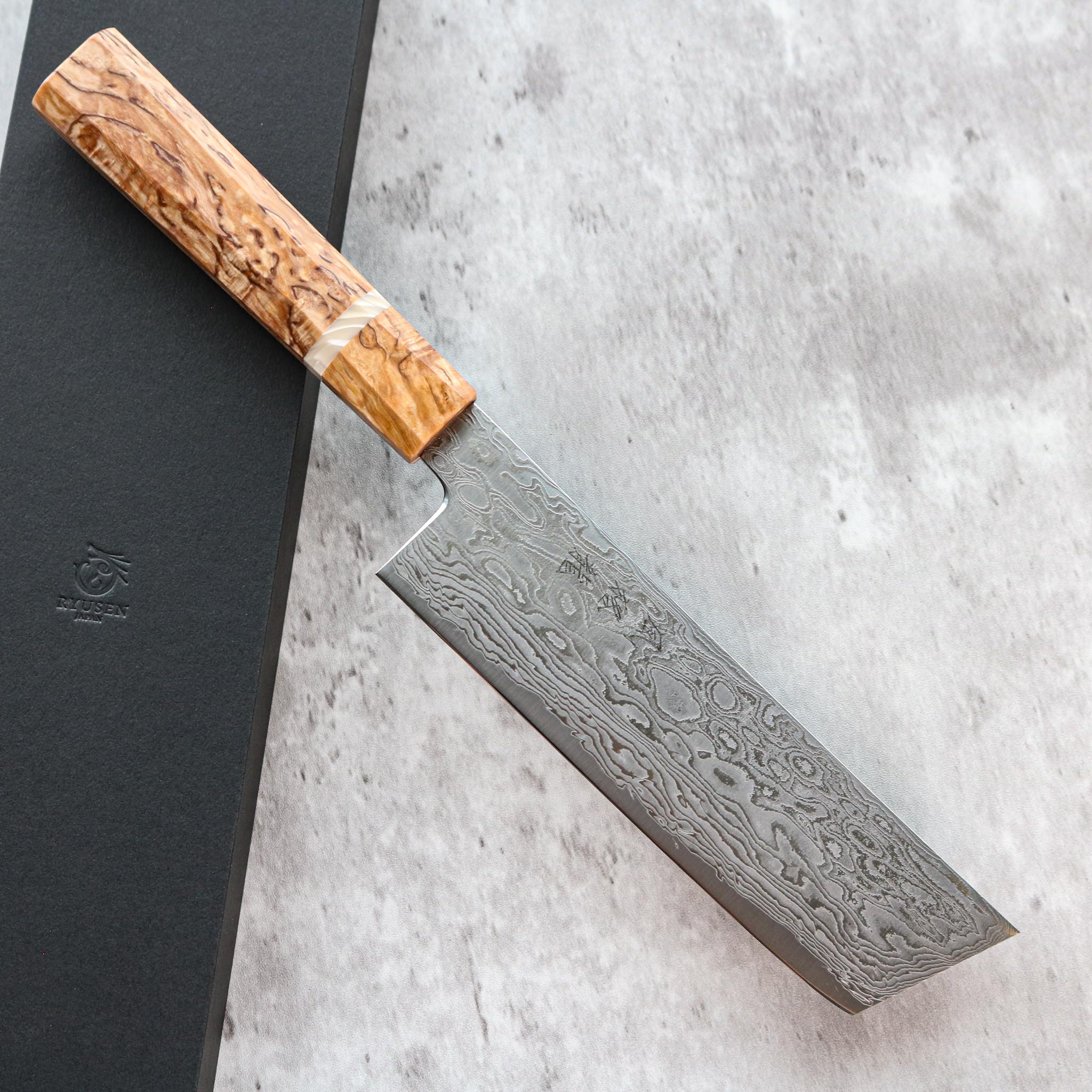
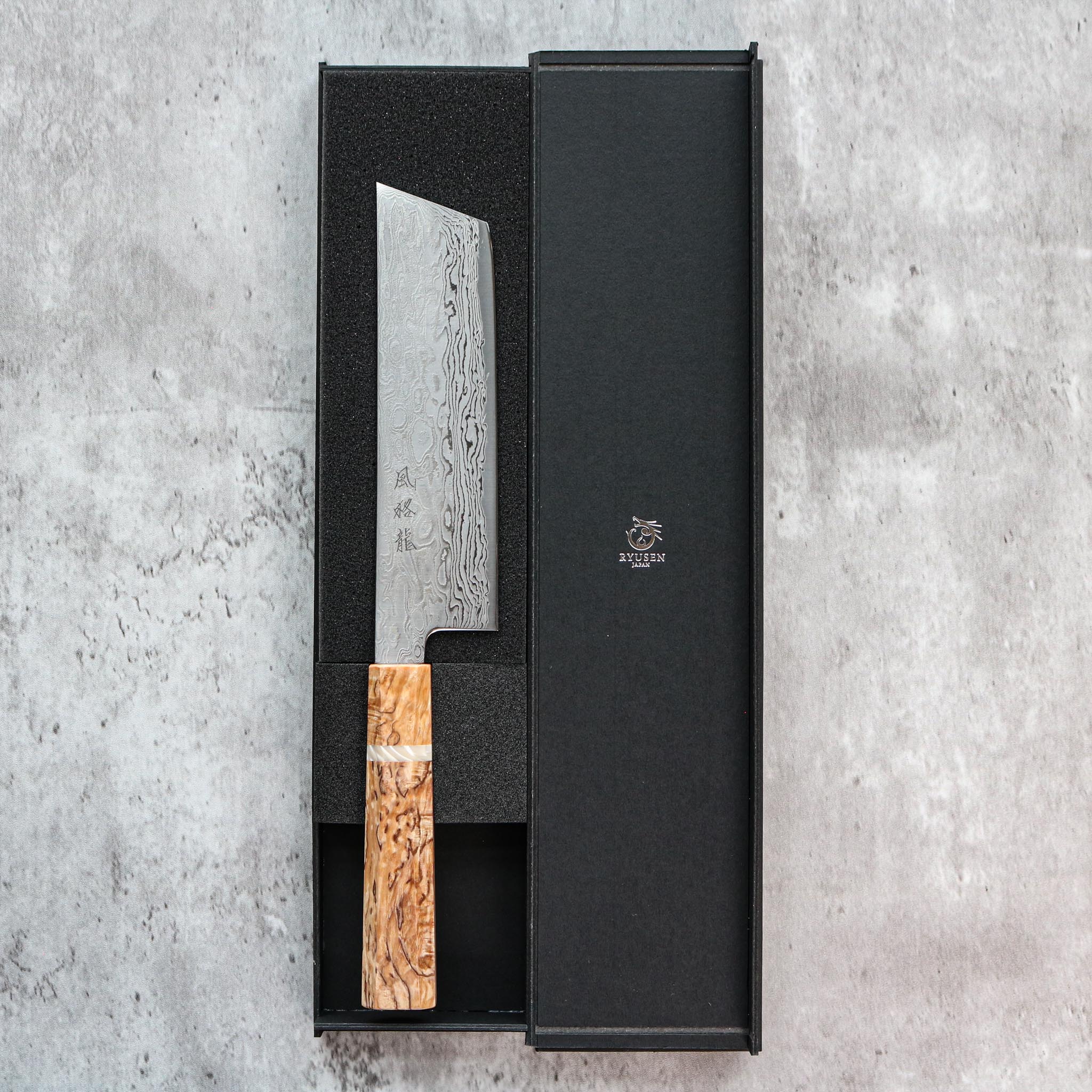
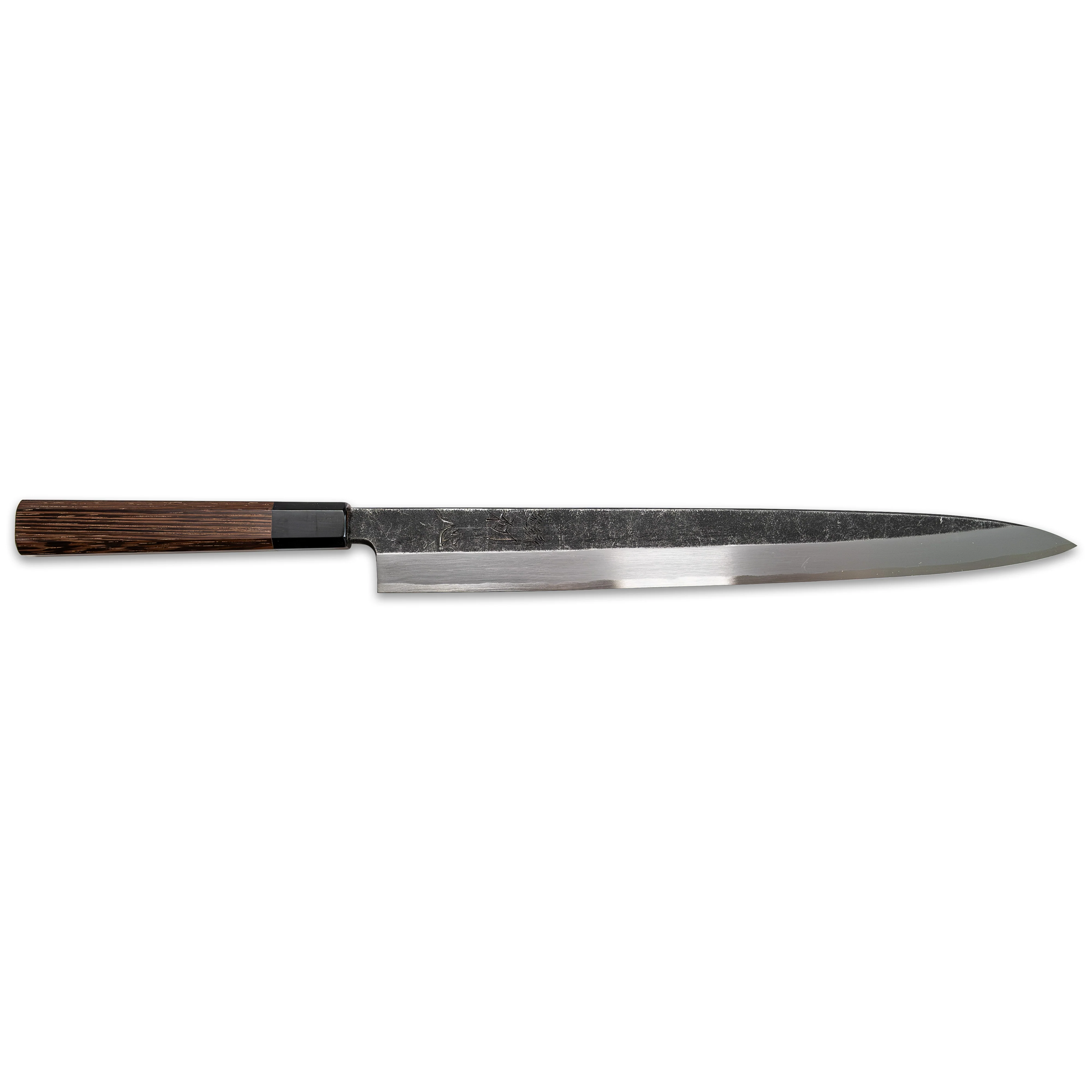
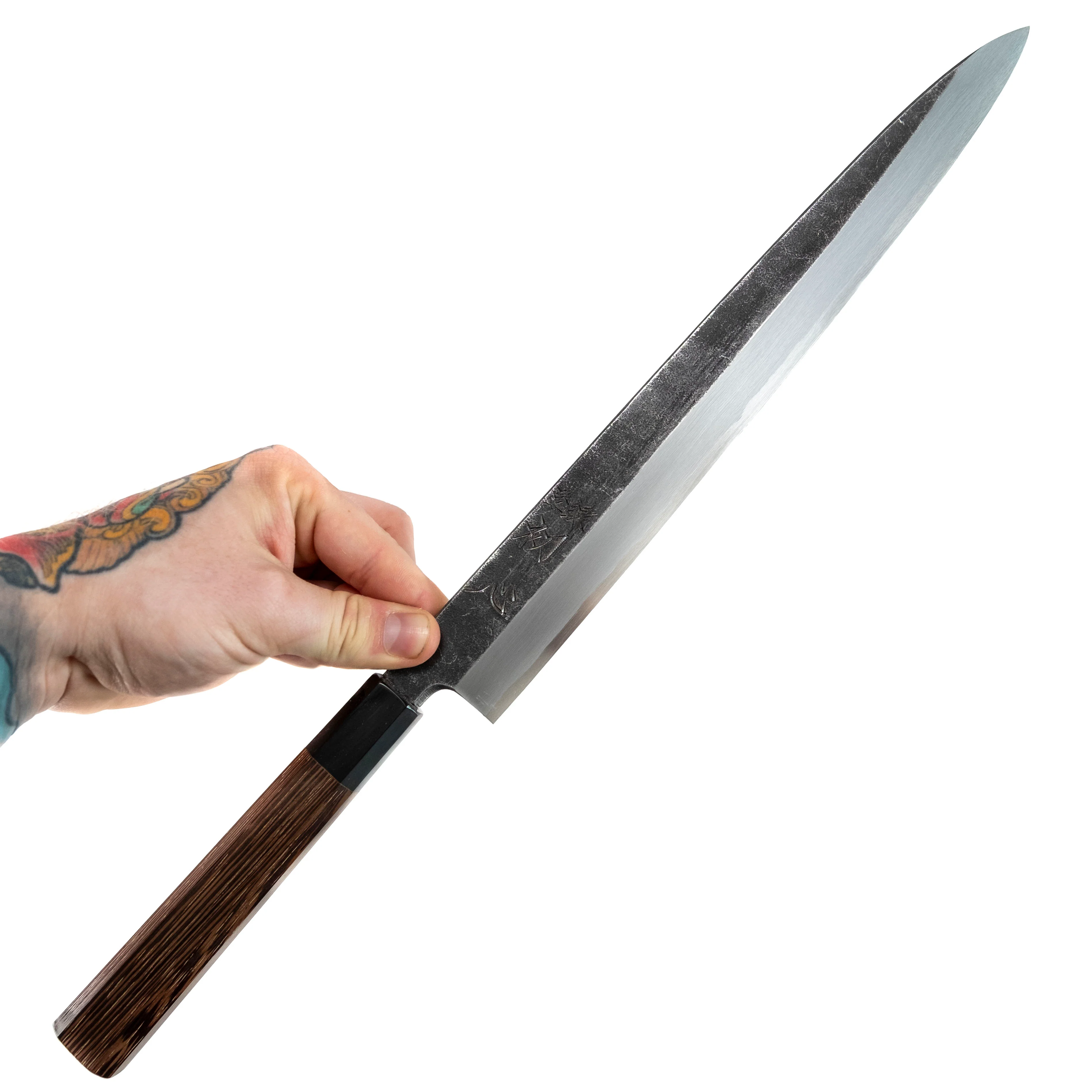
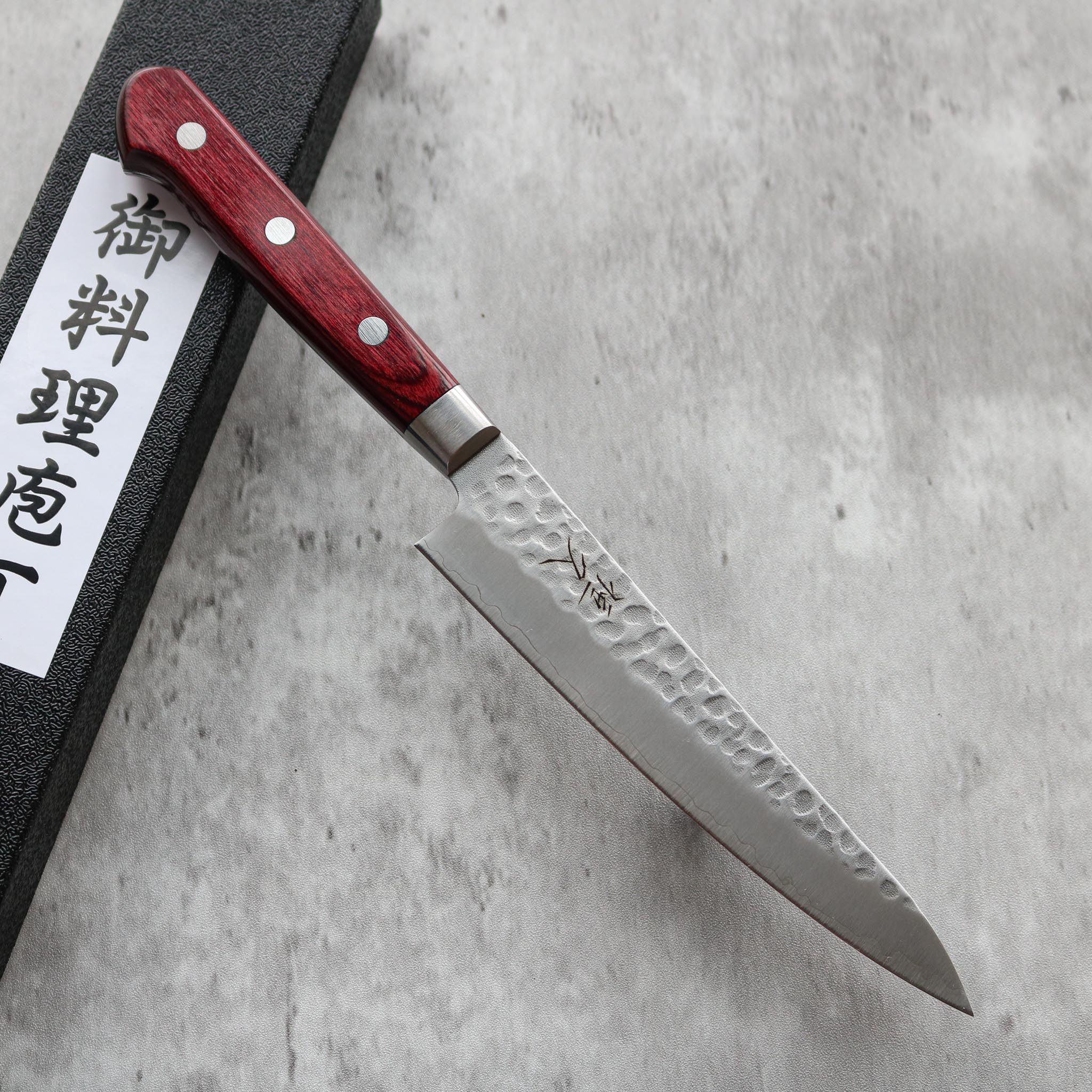
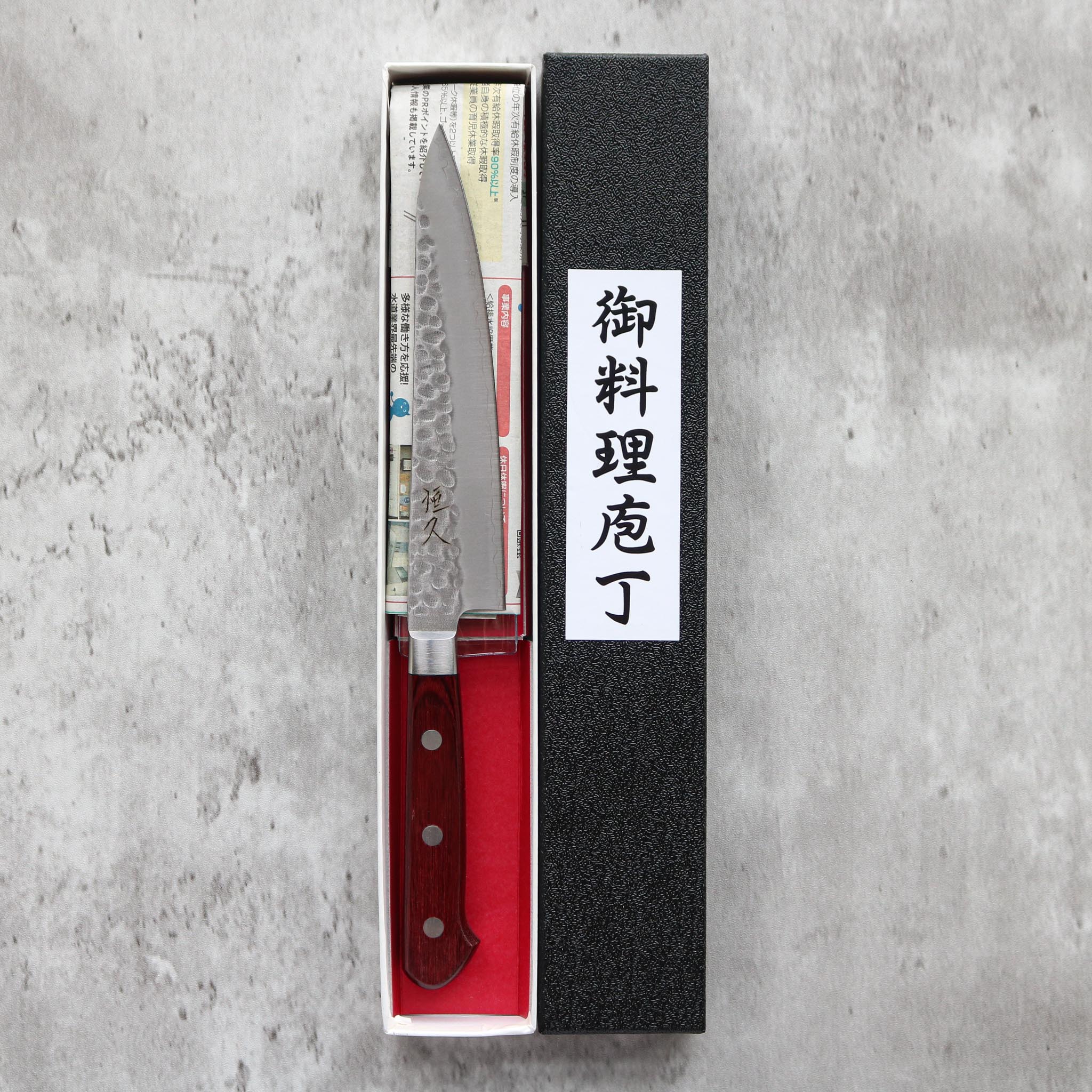
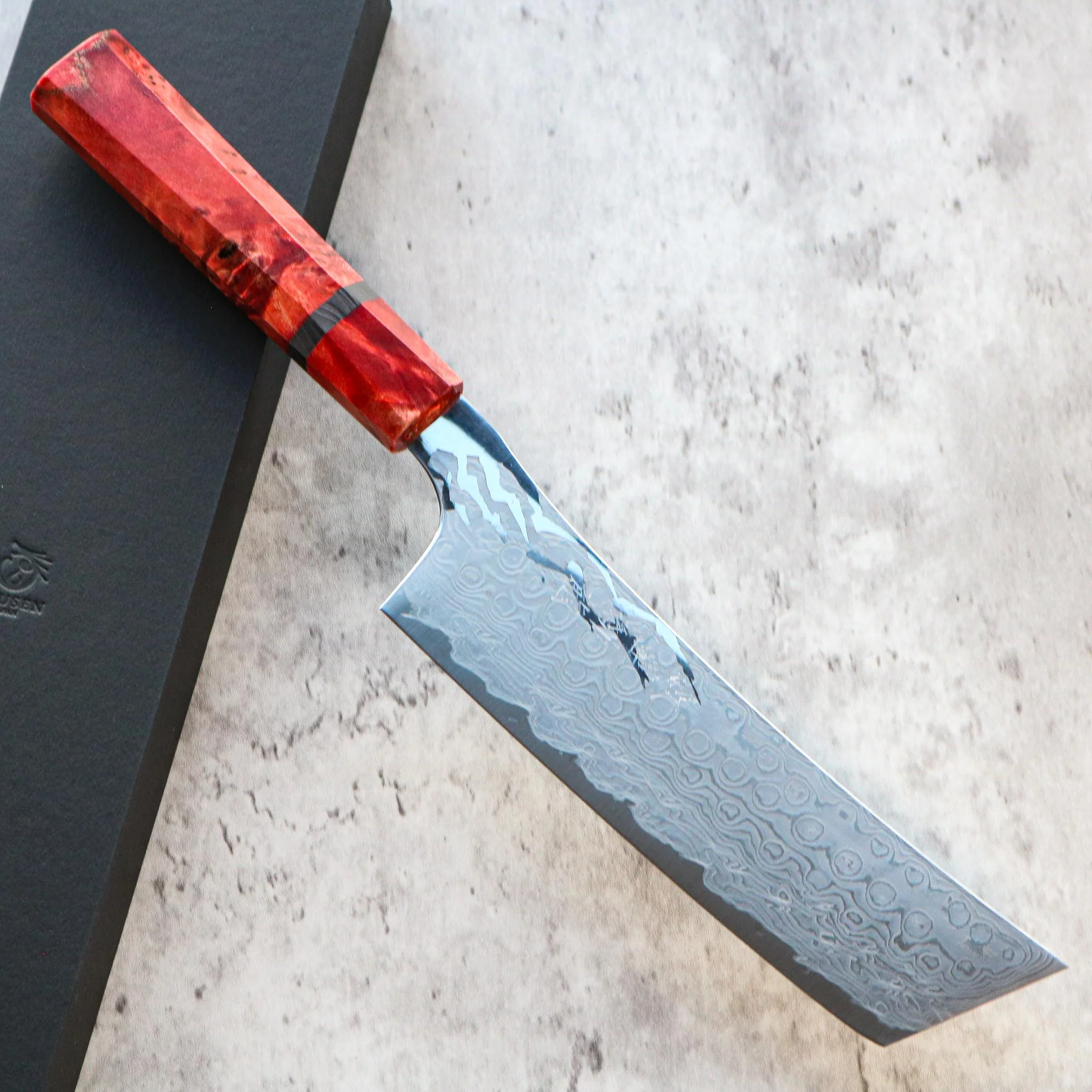
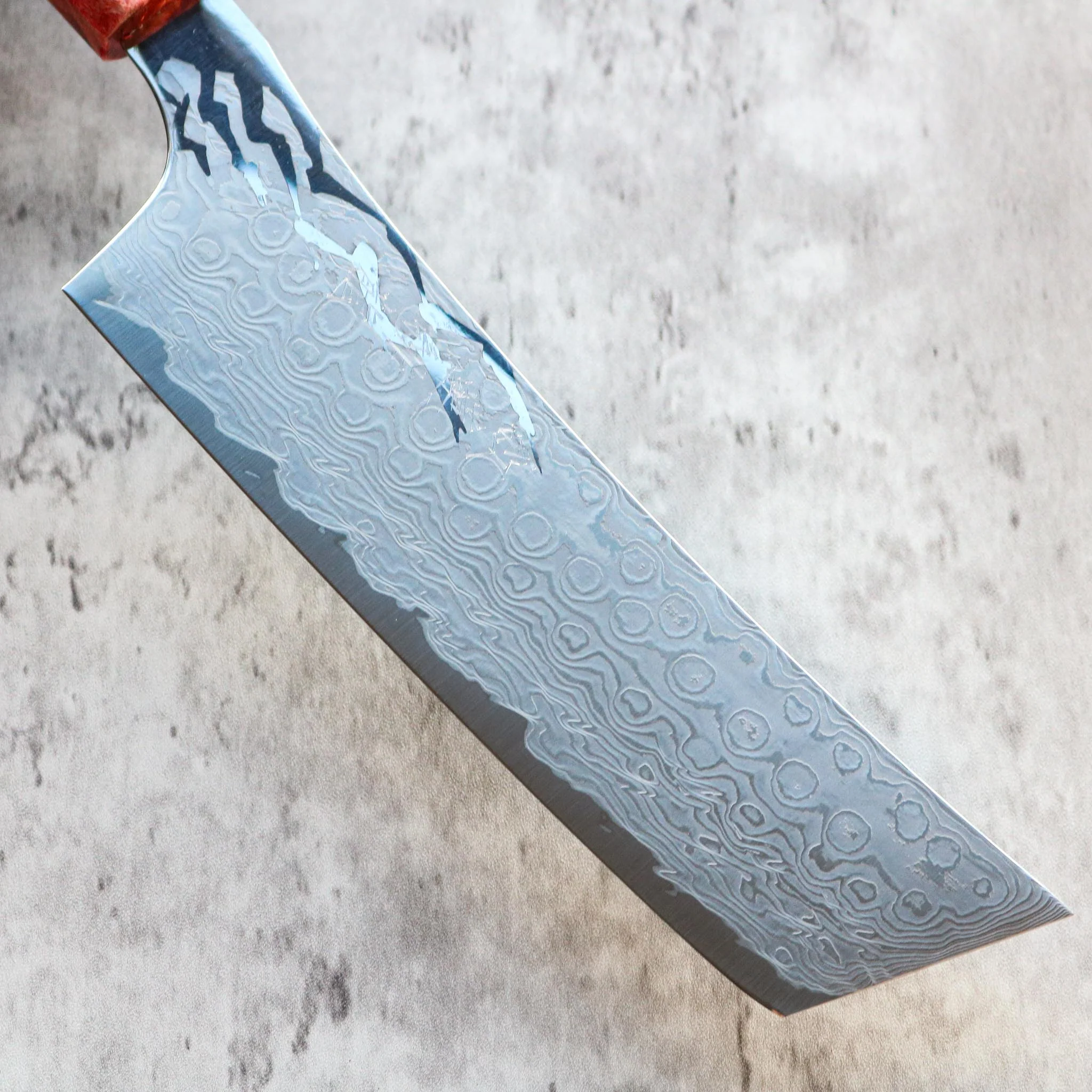
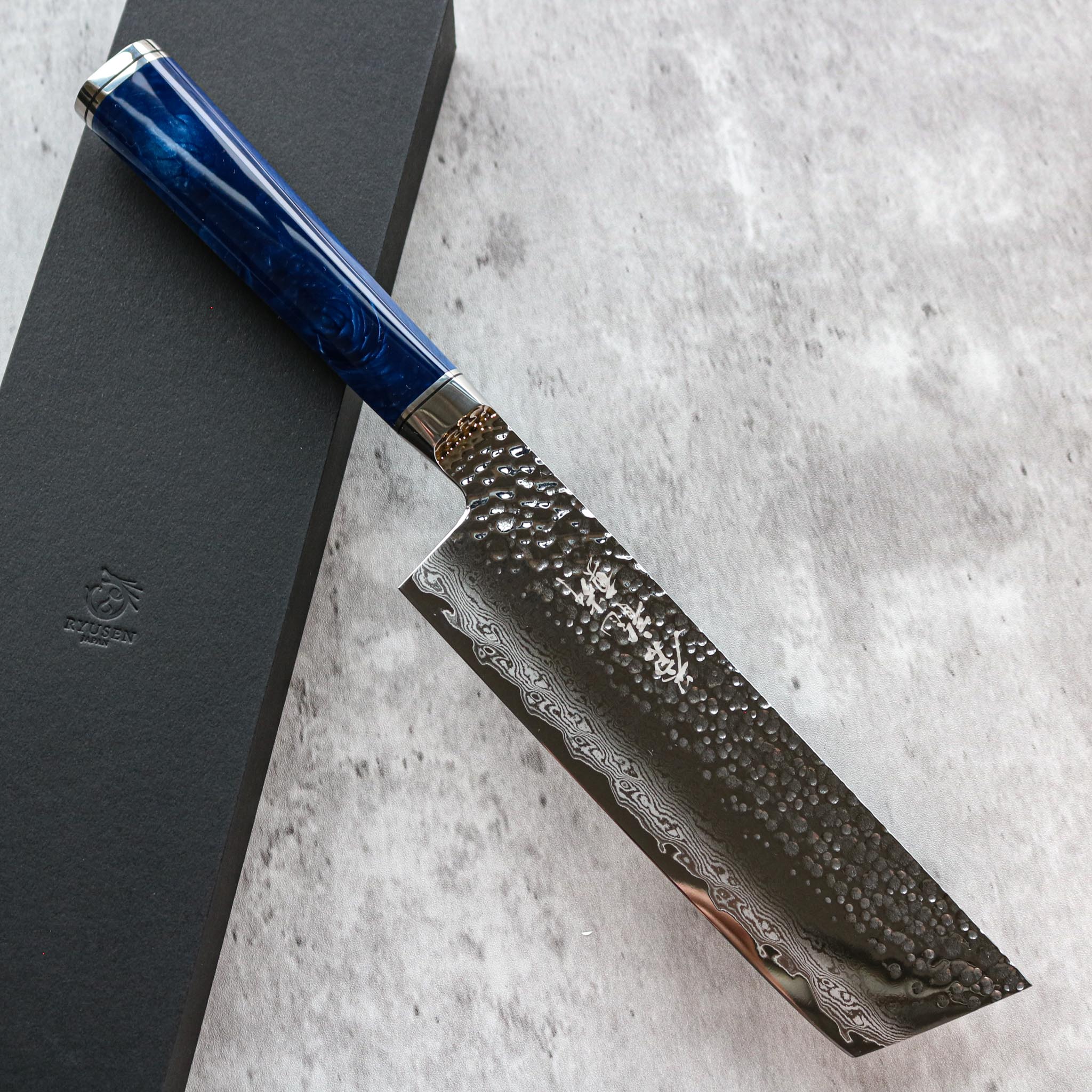
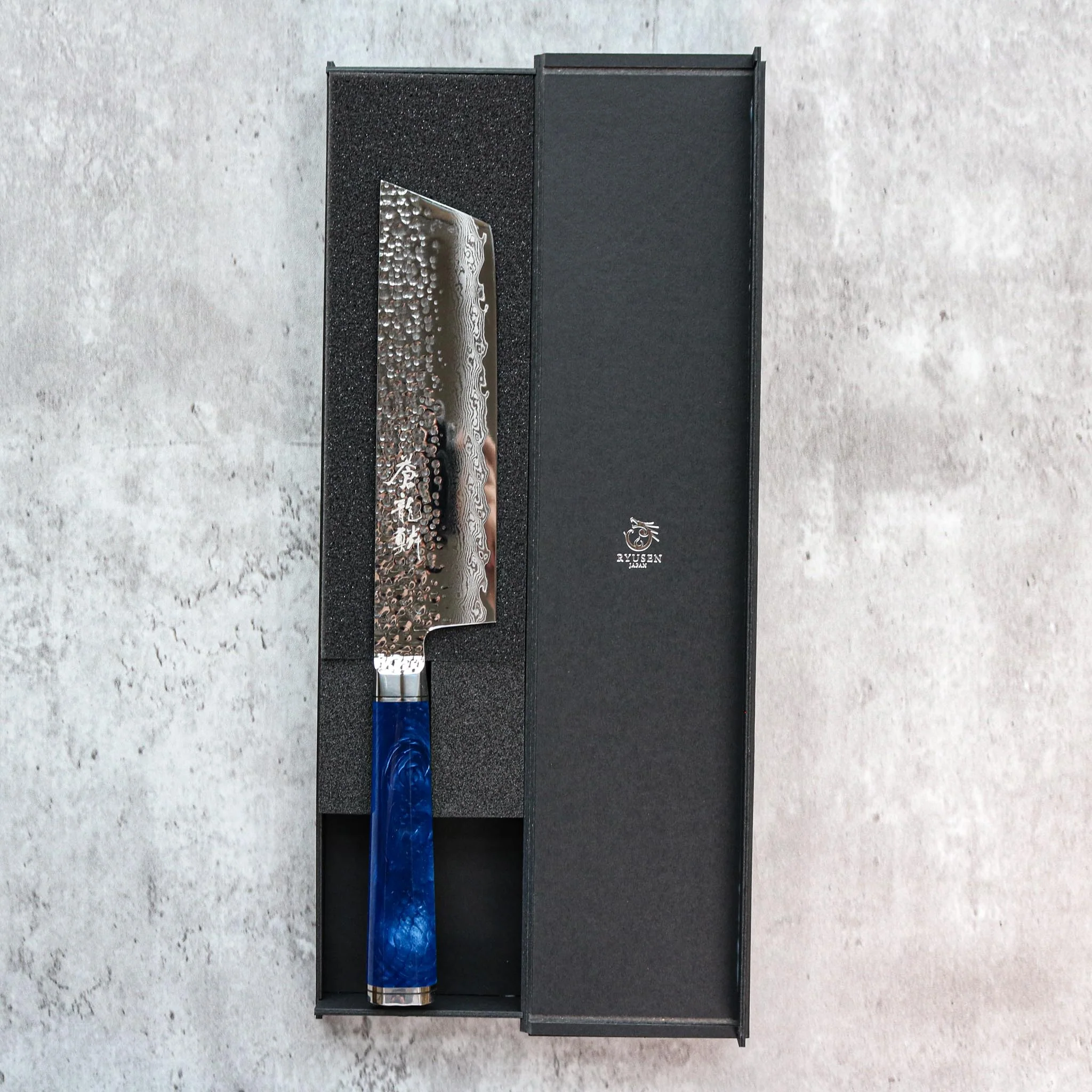
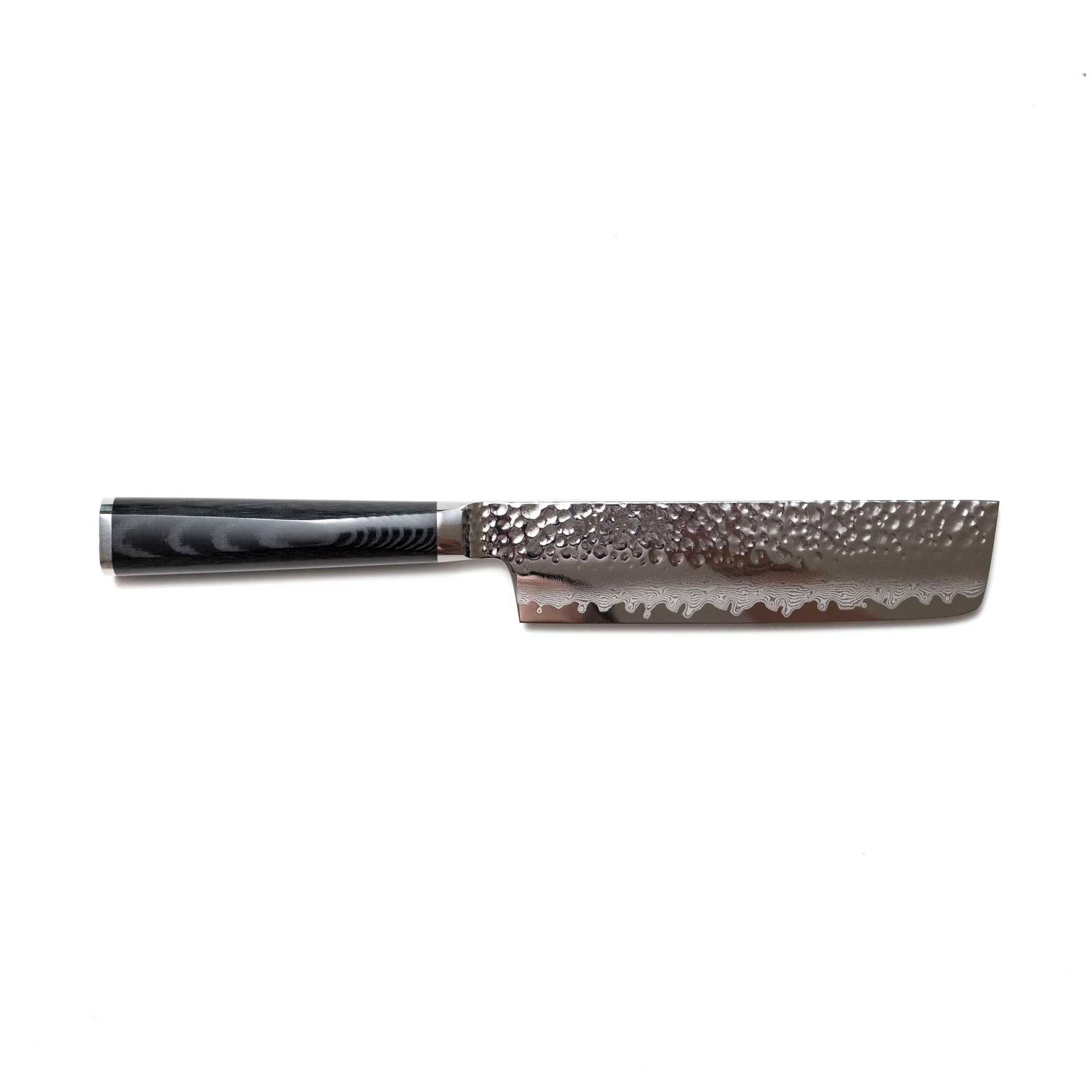
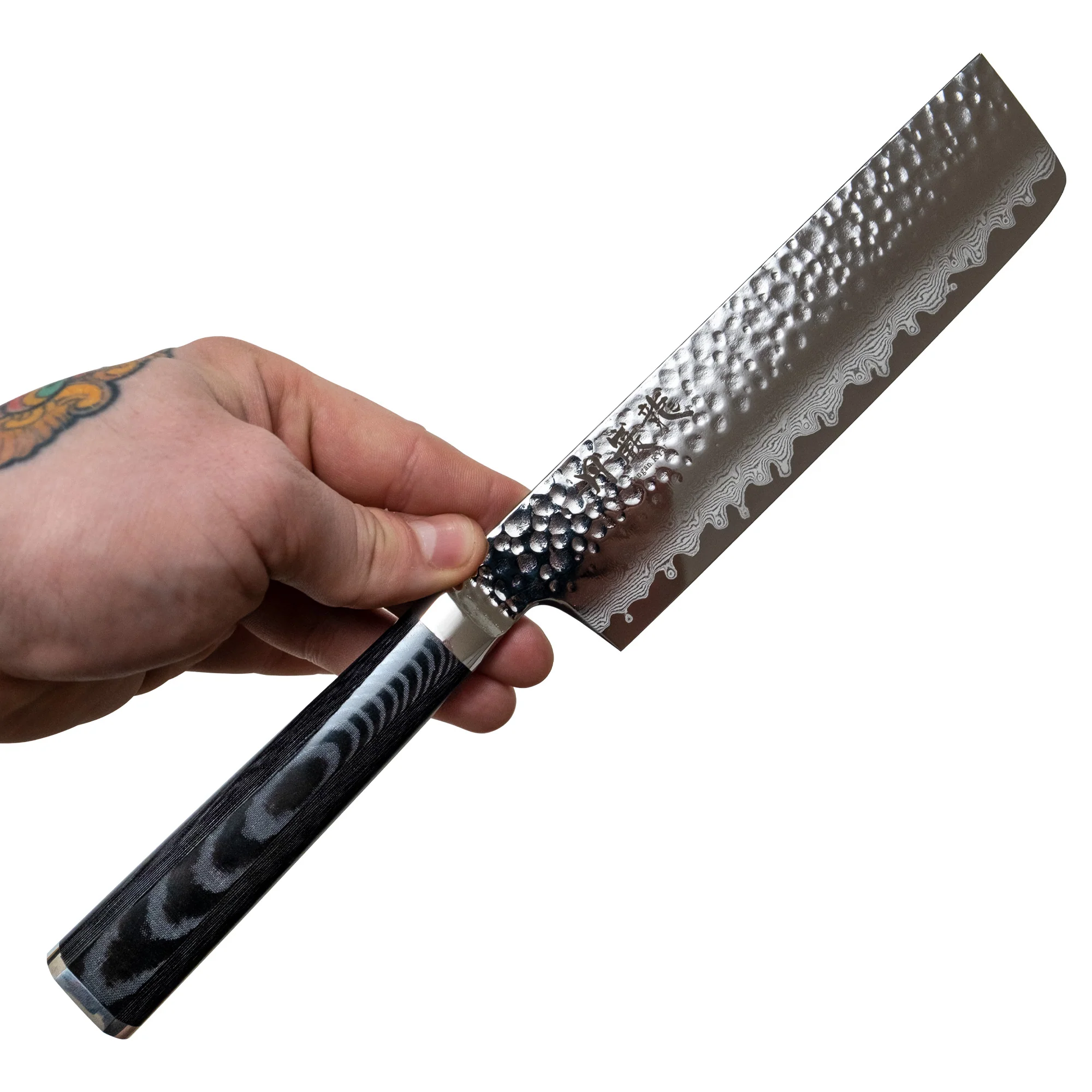
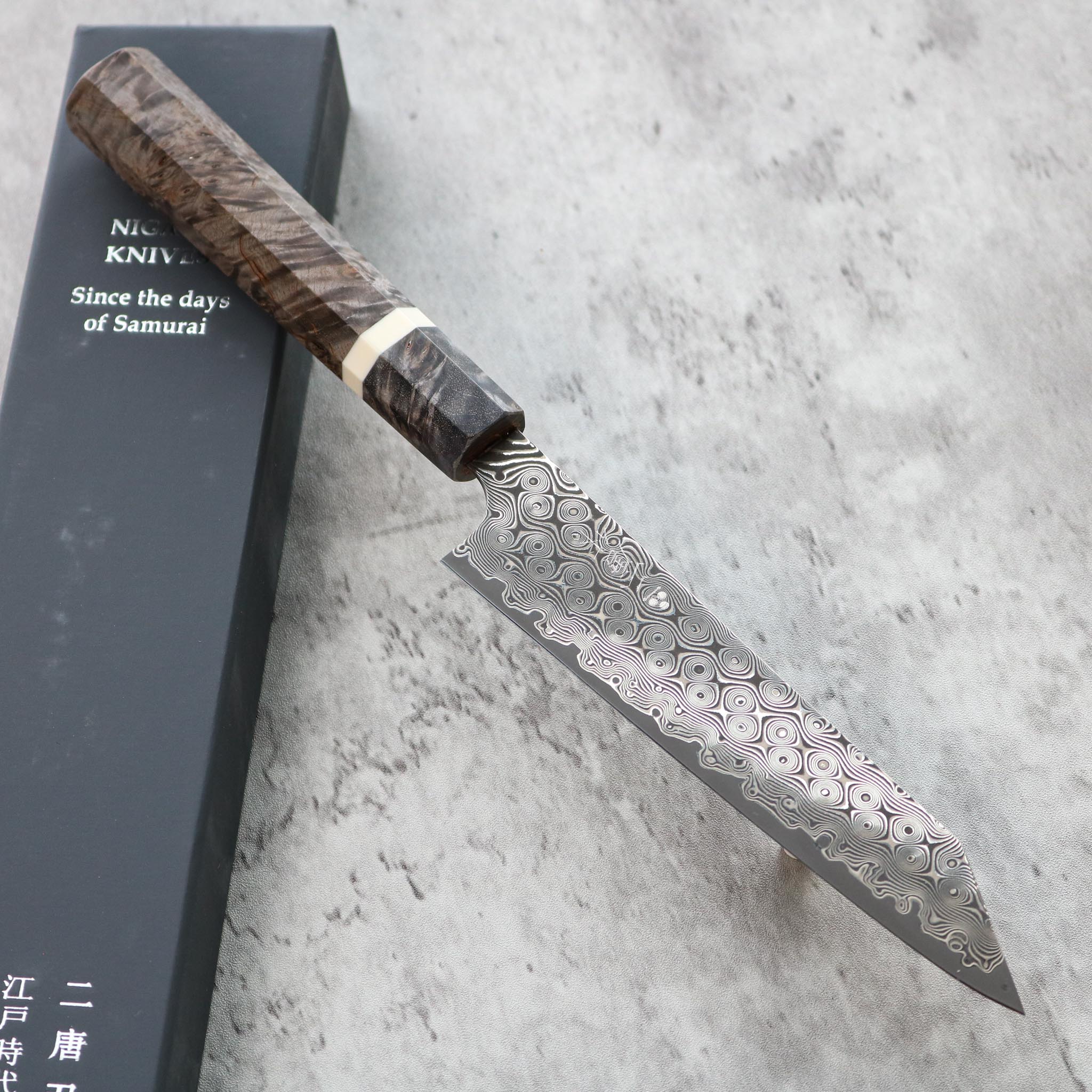
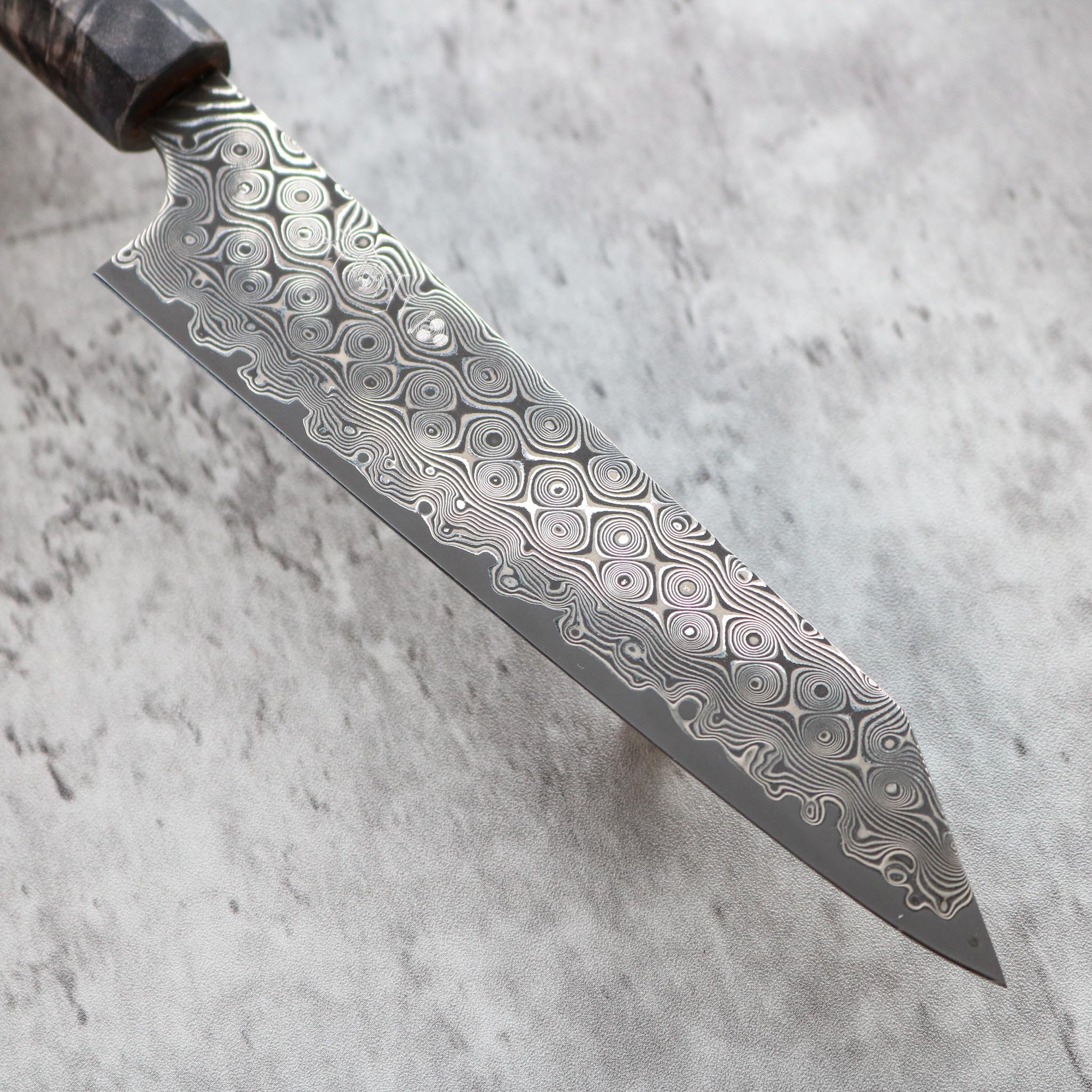
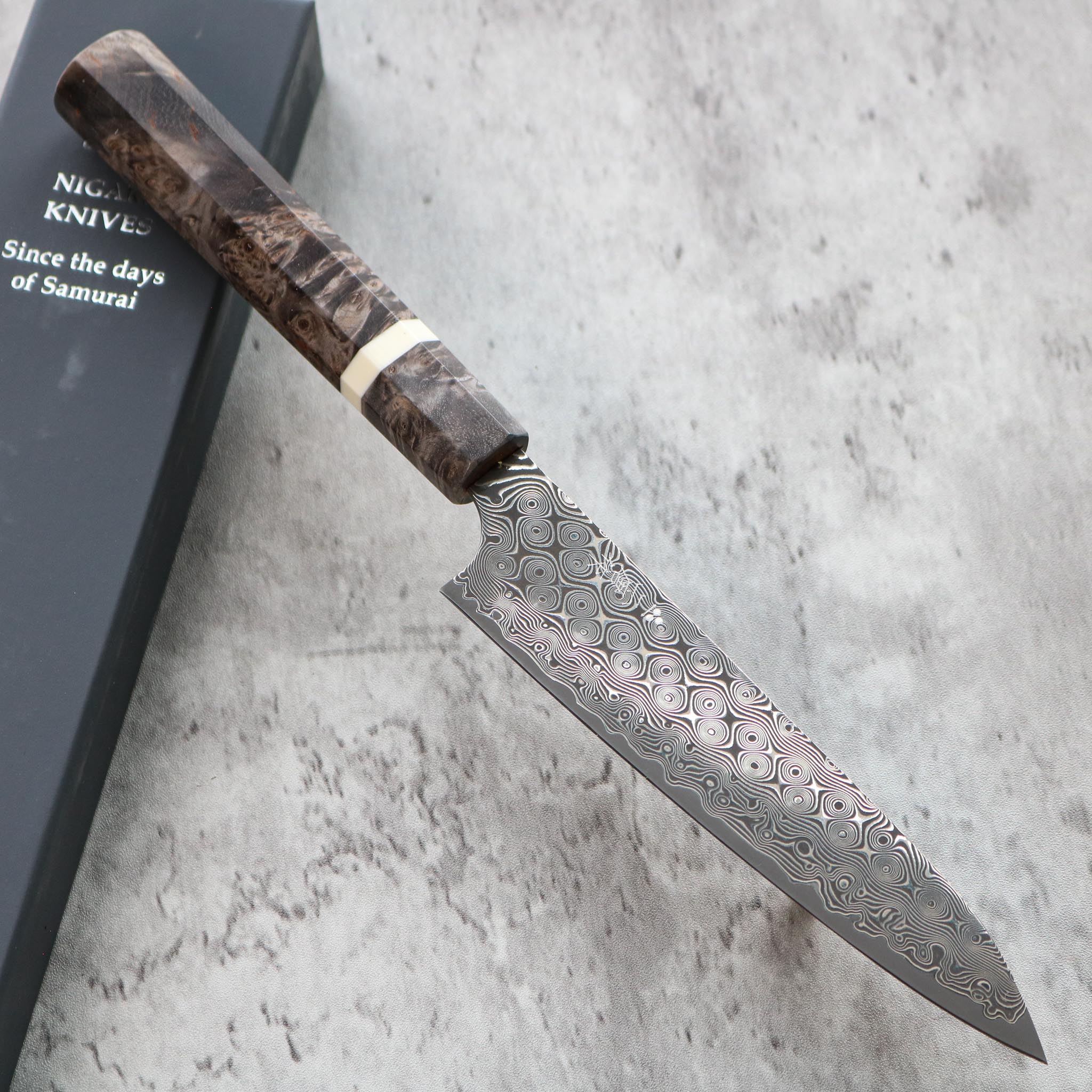
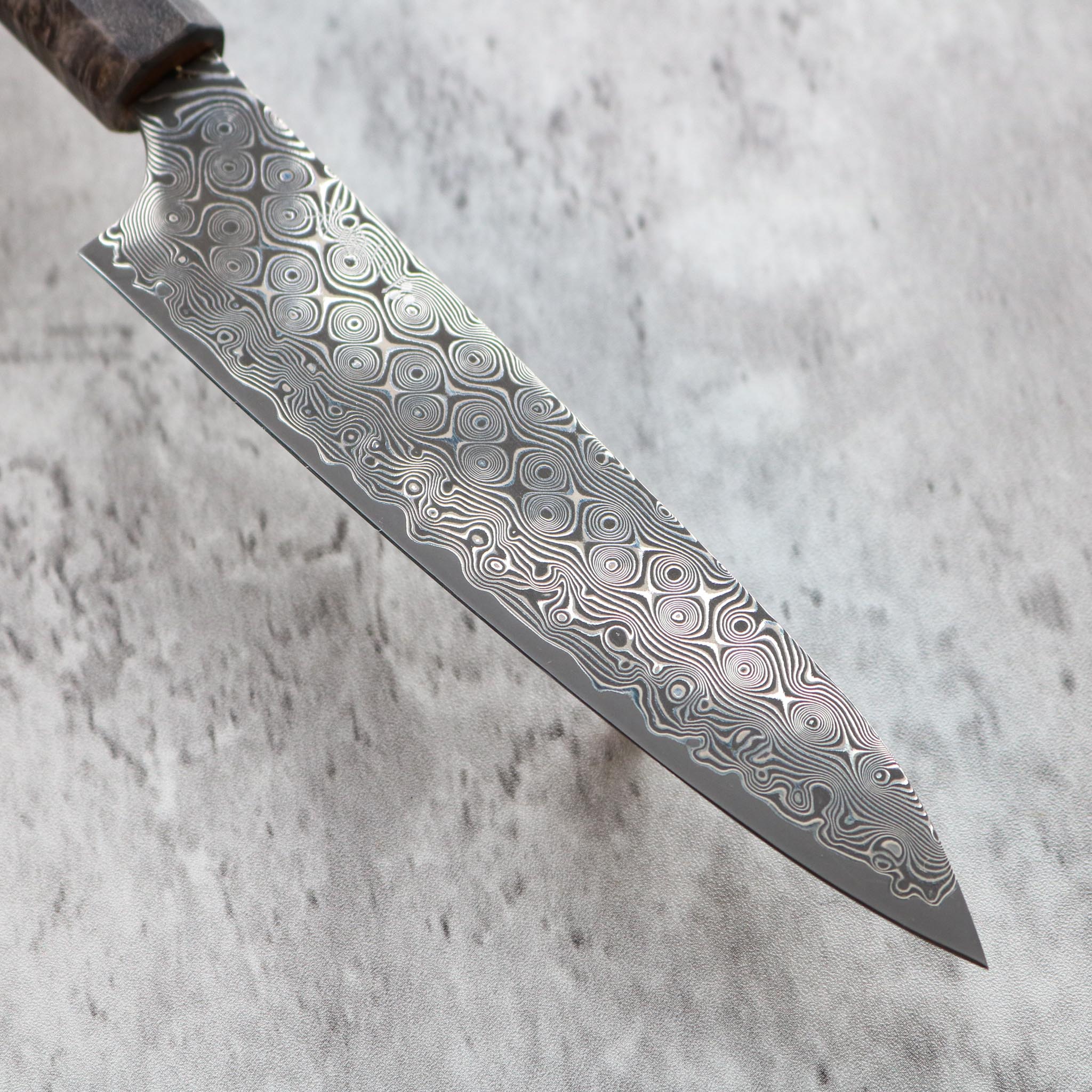
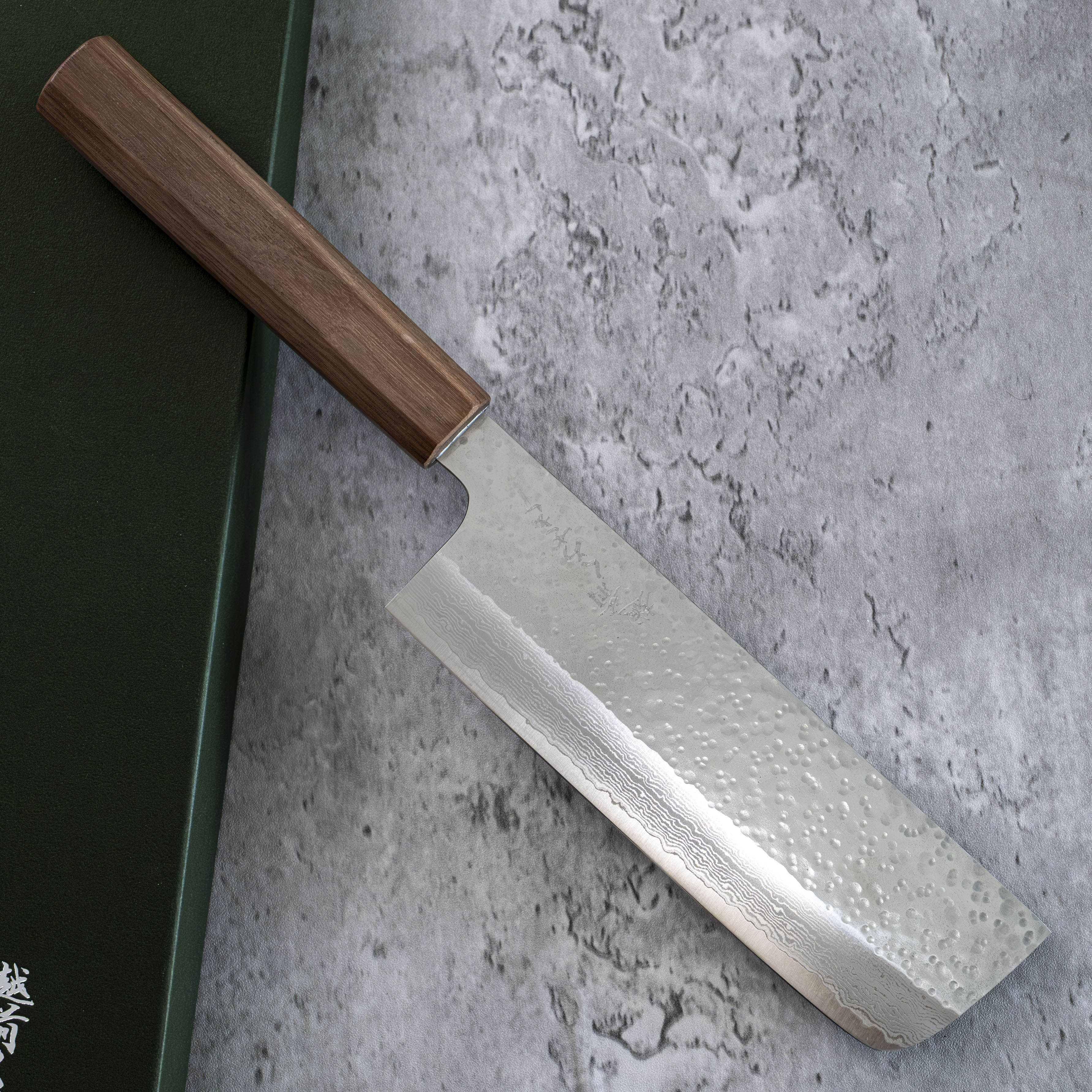
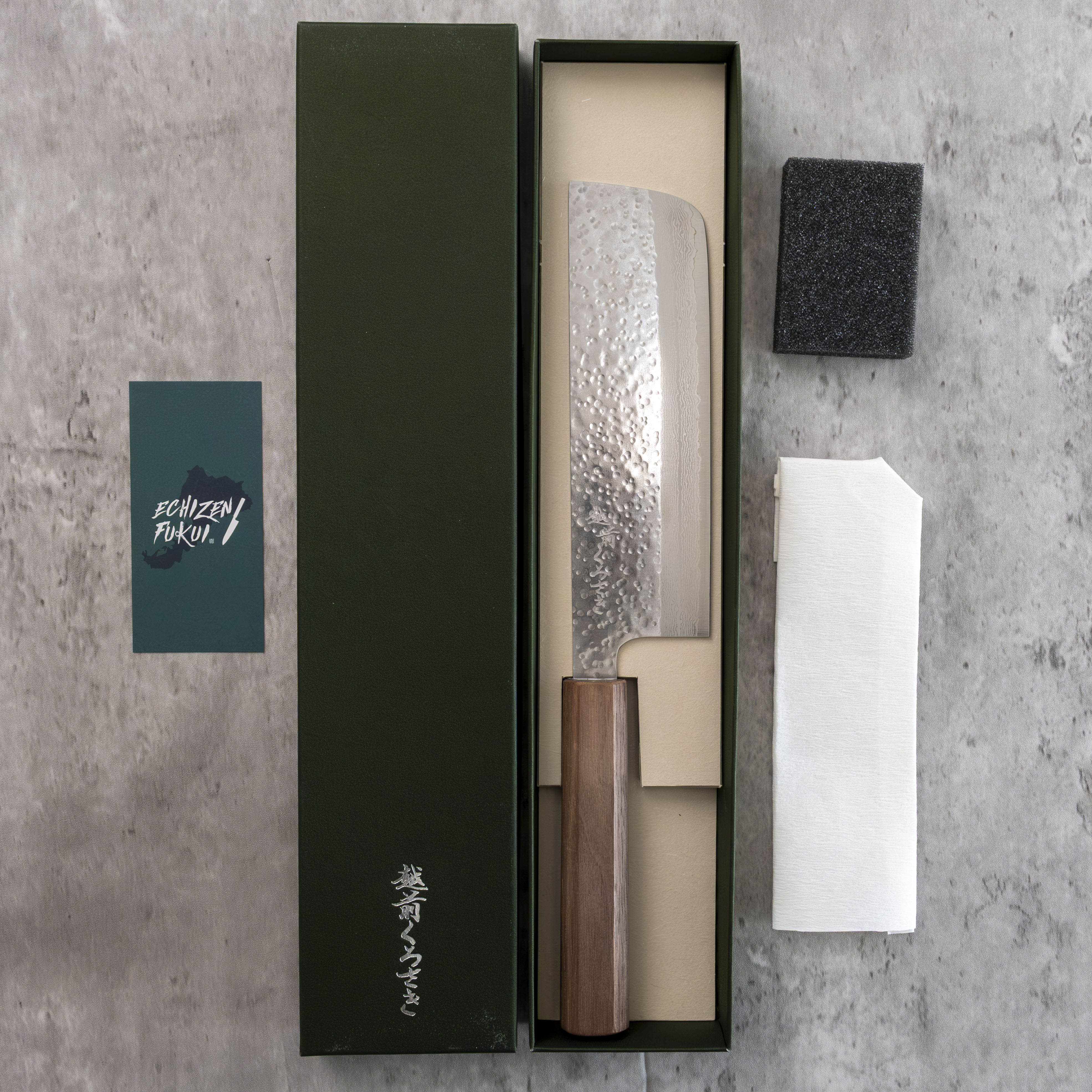
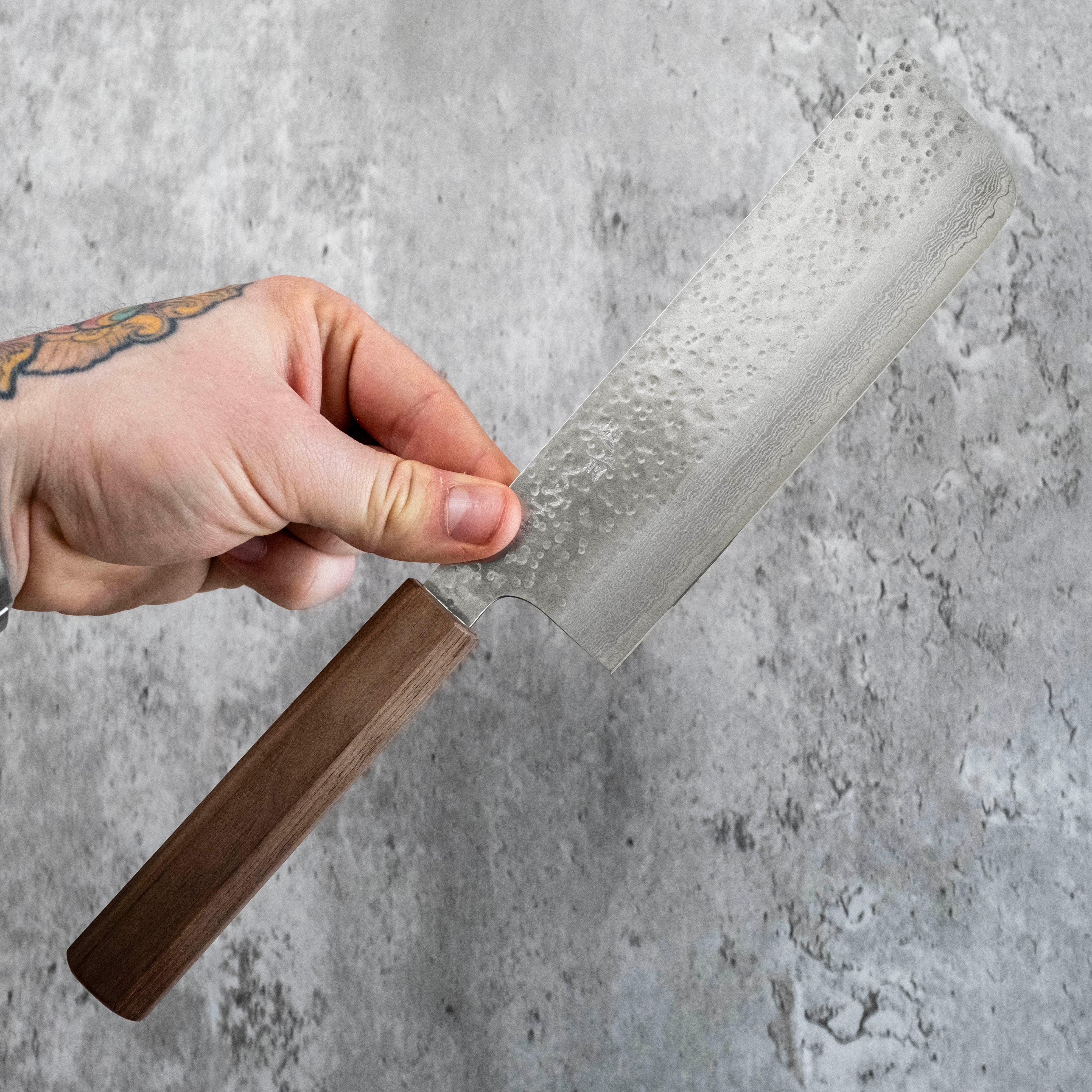
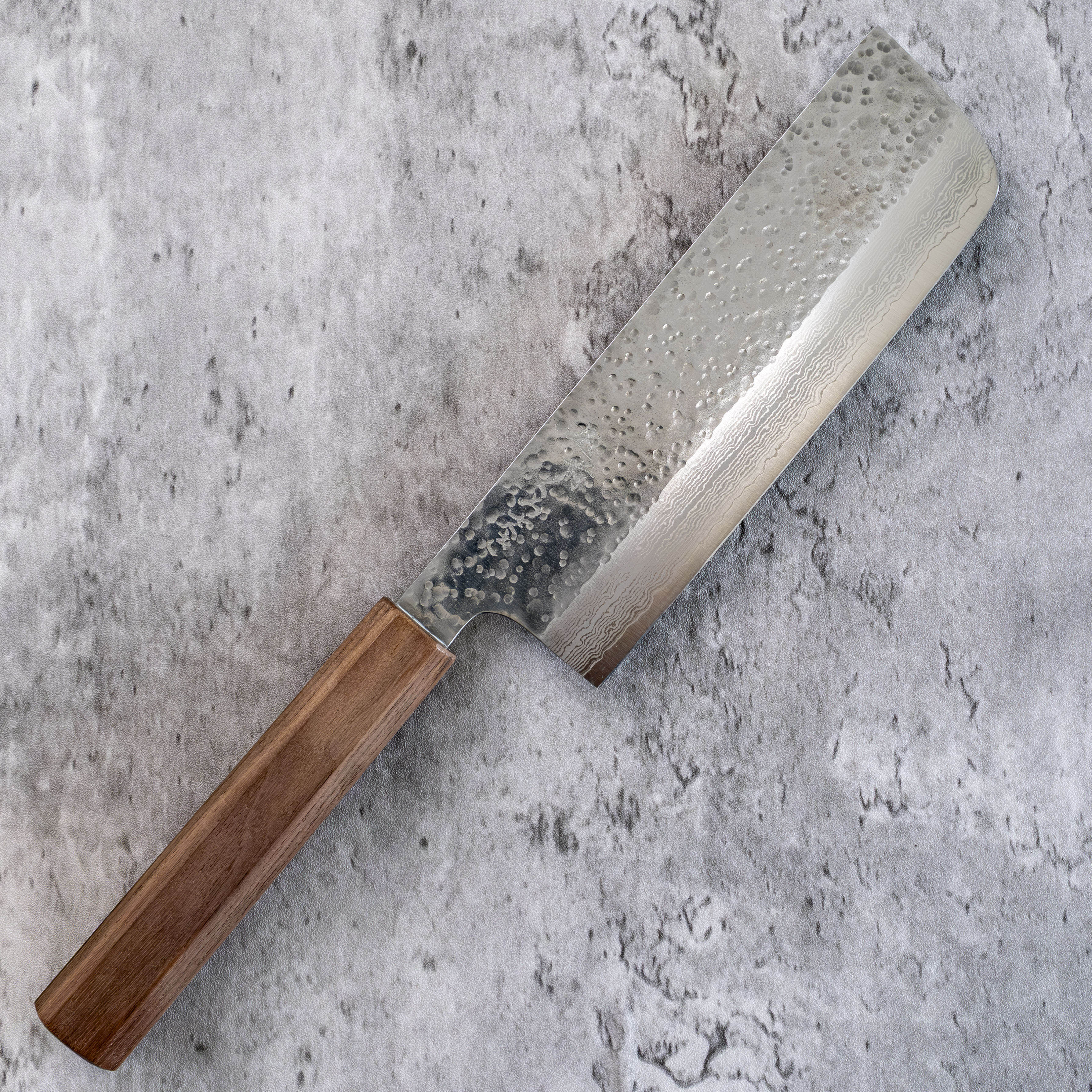
Makoto Kurosaki Damascus Tsuchime Nakiri 165 mm
| Blade Length | 168 mm |
| Total Length | 310 mm |
| Steel | VG-7 Stainless |
| Handle | Walnut |
| Ferrule | N/A |
| Rockwell | 61 |
| Height Spine to heel | 51 mm |
| Width at Spine | 2.1 mm |
| Weight | 153 grams |
| Bevel | Double (50/50) |
Makoto Kurosaki
We're excited to have these knives in made by Makoto Kurosaki. Makoto Kurosaki trained as a sharpener and apprenticed under Hiroshi Kato-san, as part of Takefu Knife Village, based in Echizen city, Fukui prefecture, Japan. While Makoto is Yu Kurosaki’s older brother, he has his own shop separate from Yu's, and has sharpened several different lines from knife makers such as Yoshimi Kato and Takumi Ikeda, as well as Yu Kurosaki.
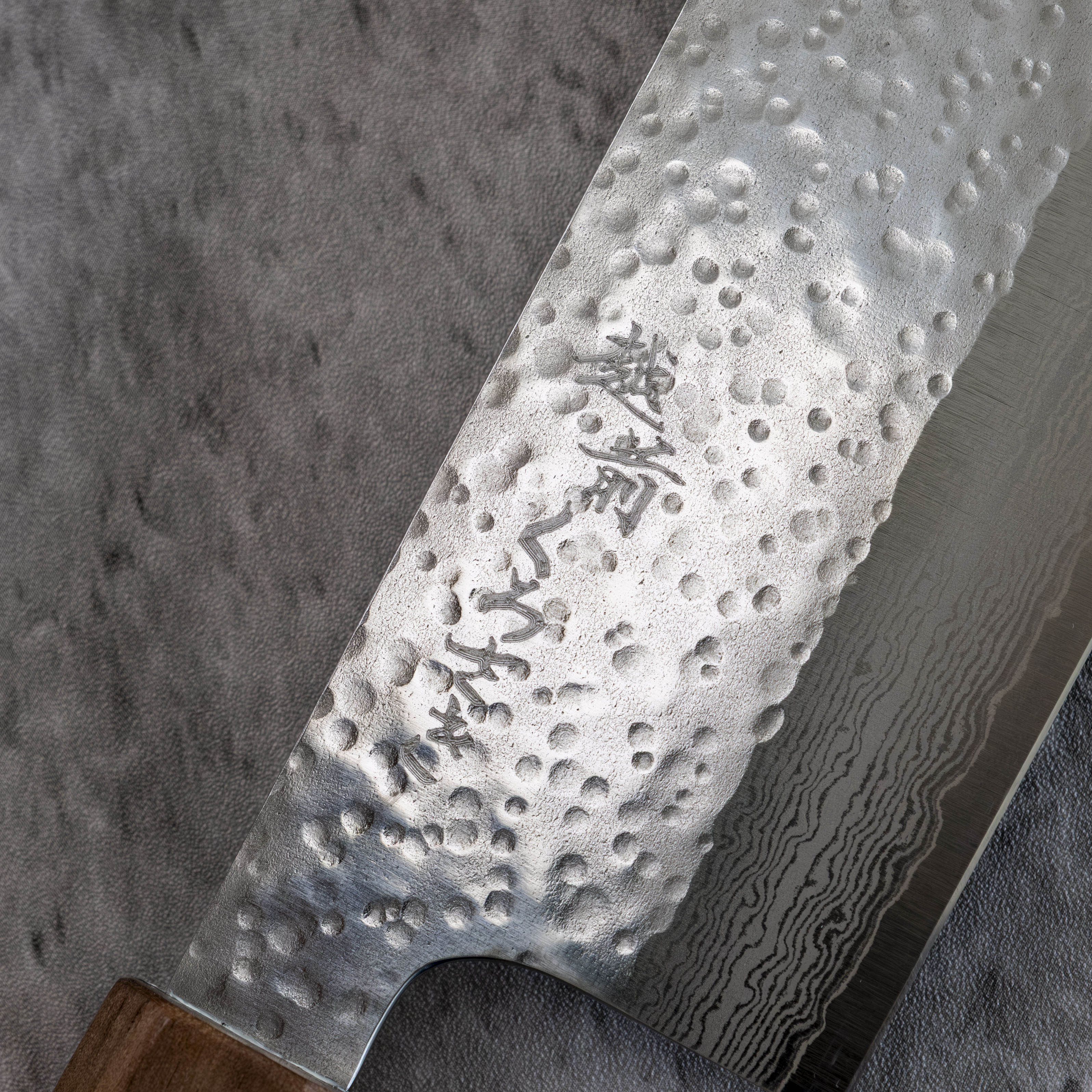
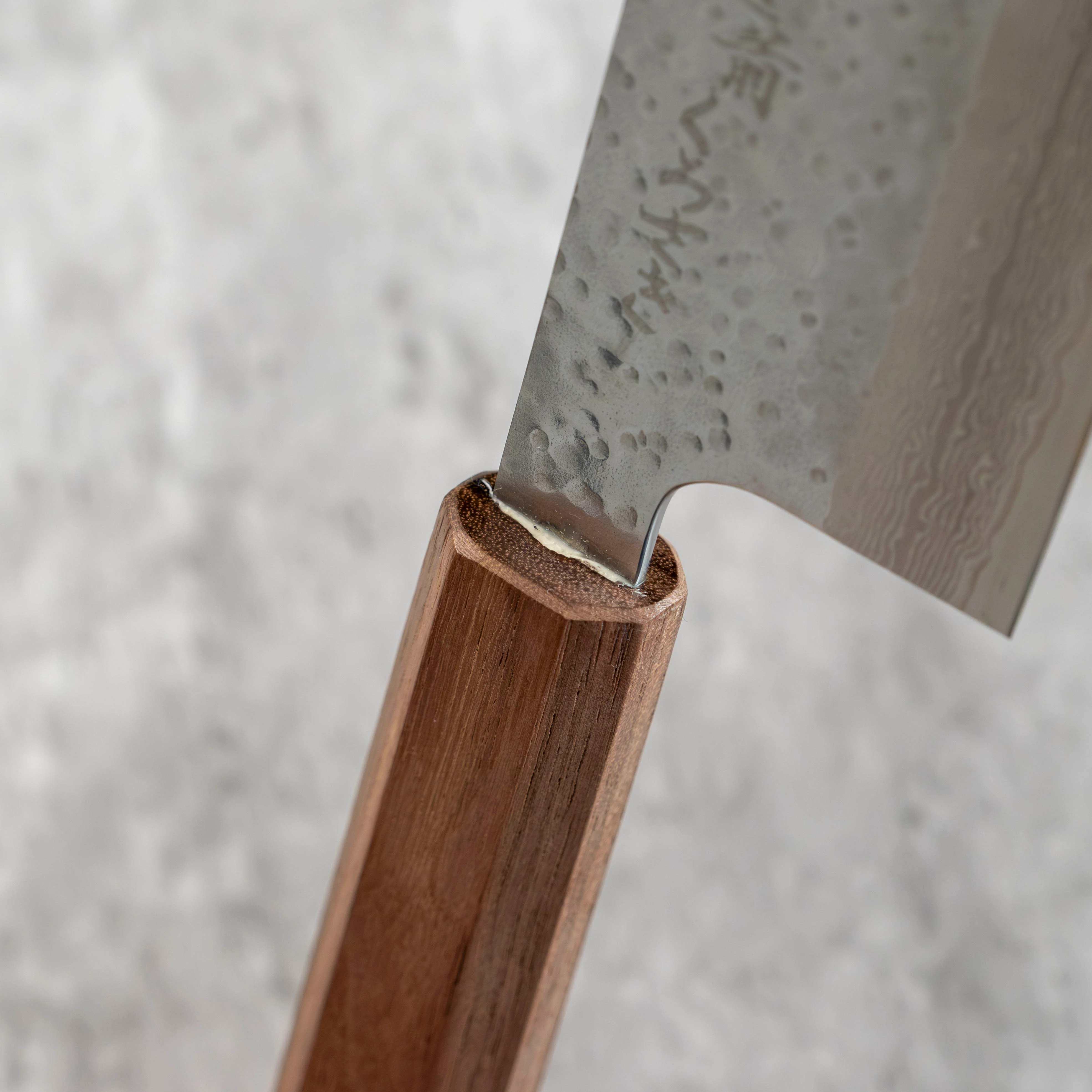
The “Style-K” line knives still have a great grind and geometry to them, they are slightly more robust than Yu's knives on the spine making them slightly less delicate. The fit and finish on these knives is also of a very high level with a perfectly smooth joint between the tang and handle, and the rounding and polishing on the spine and choil.
The Takefu Knife Village is a cooperative workshop in the Echizen region of Japan. It is the home to a long list of blacksmiths that we work with and many young and upcoming apprentices learning the trade. The area has a 700 year long history of smithing with roots in agricultural tools turned cutlery powerhouse. is a cooperative workshop in the Echizen region of Japan. It is the home to a long list of blacksmiths that we work with and many young and upcoming apprentices learning the trade. The area has a 700 year long history of smithing with roots in agricultural tools turned cutlery powerhouse.
The Knife
The Nakiri is designed to be a vegetable chopping knife. It's edge has less curve which makes it very effective when used in an up and down chopping motion. The flatter blade means the majority of the edge contacts the cutting board helping to avoid those accordion pieces where ingredients aren't cut all the way through. The tall blade also provides lots of travel for the guide fingers further adding to the desirability of the up and down chopping motion.
Knife Care (Stainless Steel)
- Although this knife is made from stainless steel we do still encourage our customers to keep their knives as dry and clean as possible.
- NO DISHWASHER - the high heat will ruin the wooden handle.
- Wash and dry by hand using regular dish soap and warm water using a none abrasive sponge or cloth.
- Ensure the knife is dry before being put away for storage and ensure the edge of the knife is protected to avoid any unnecessary dulling.
- Avoid Bones, Frozen foods, nuts and hard candies or anything other than fruits, vegetables and proteins.
Product Information
Product Information
Shipping & Returns
Shipping & Returns
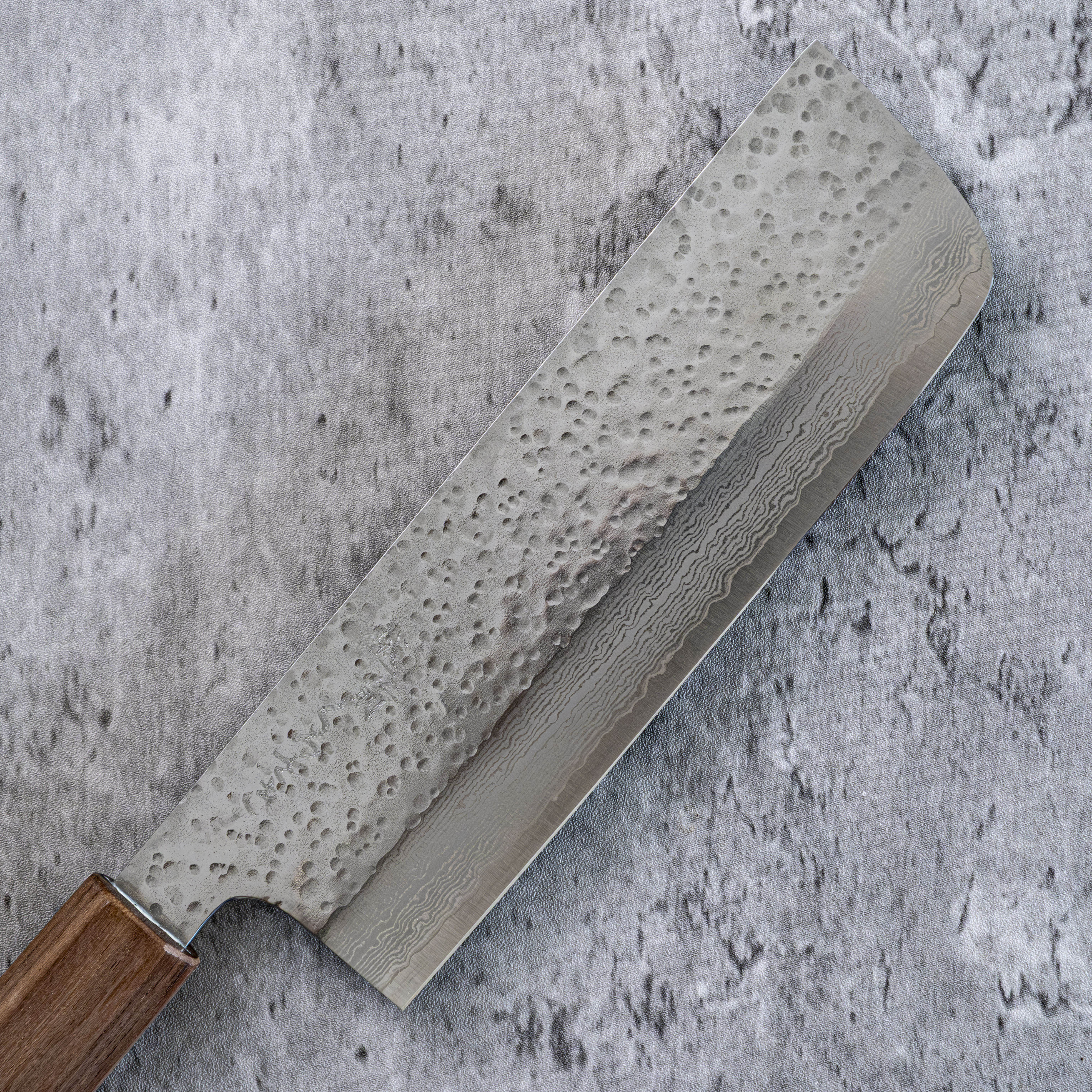
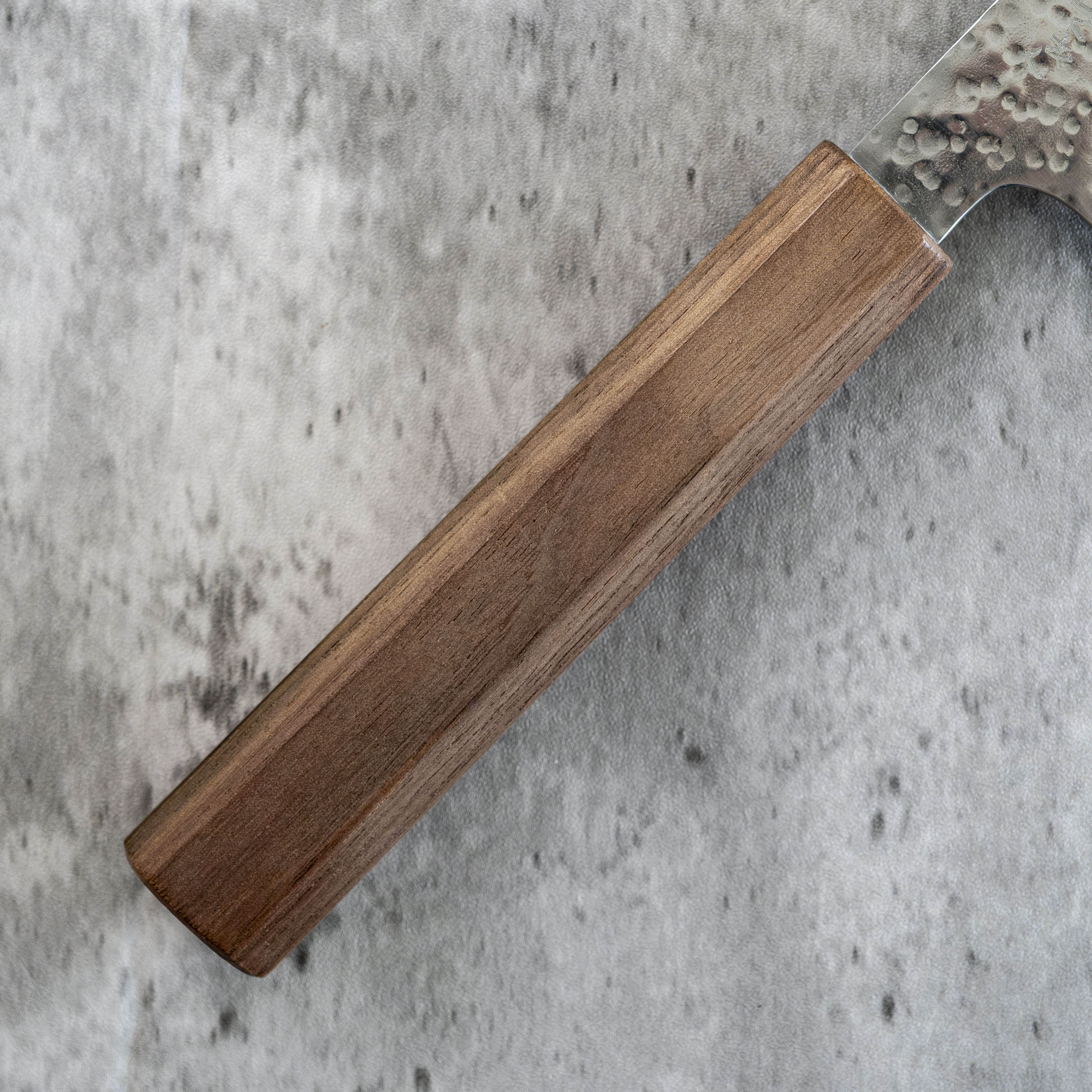
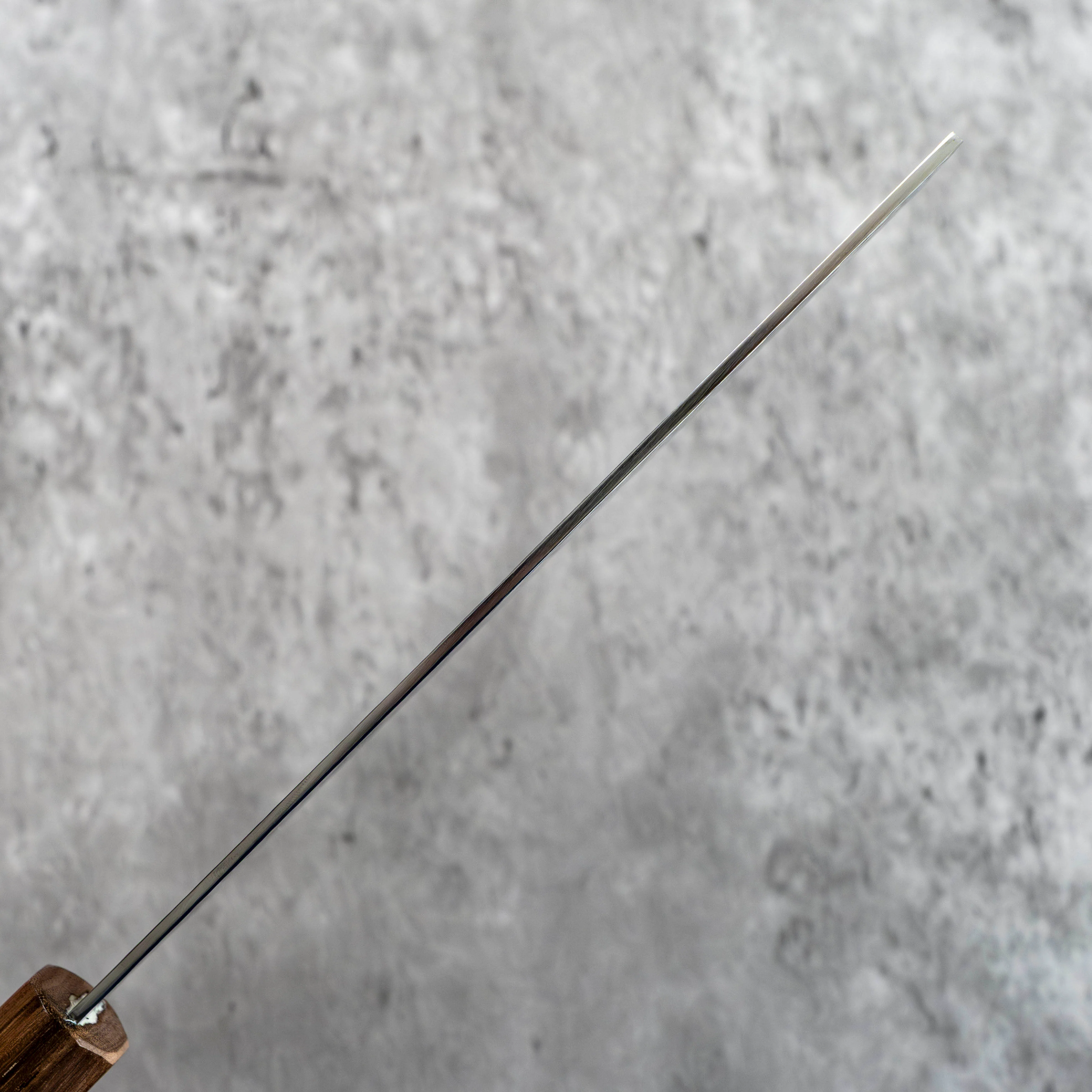
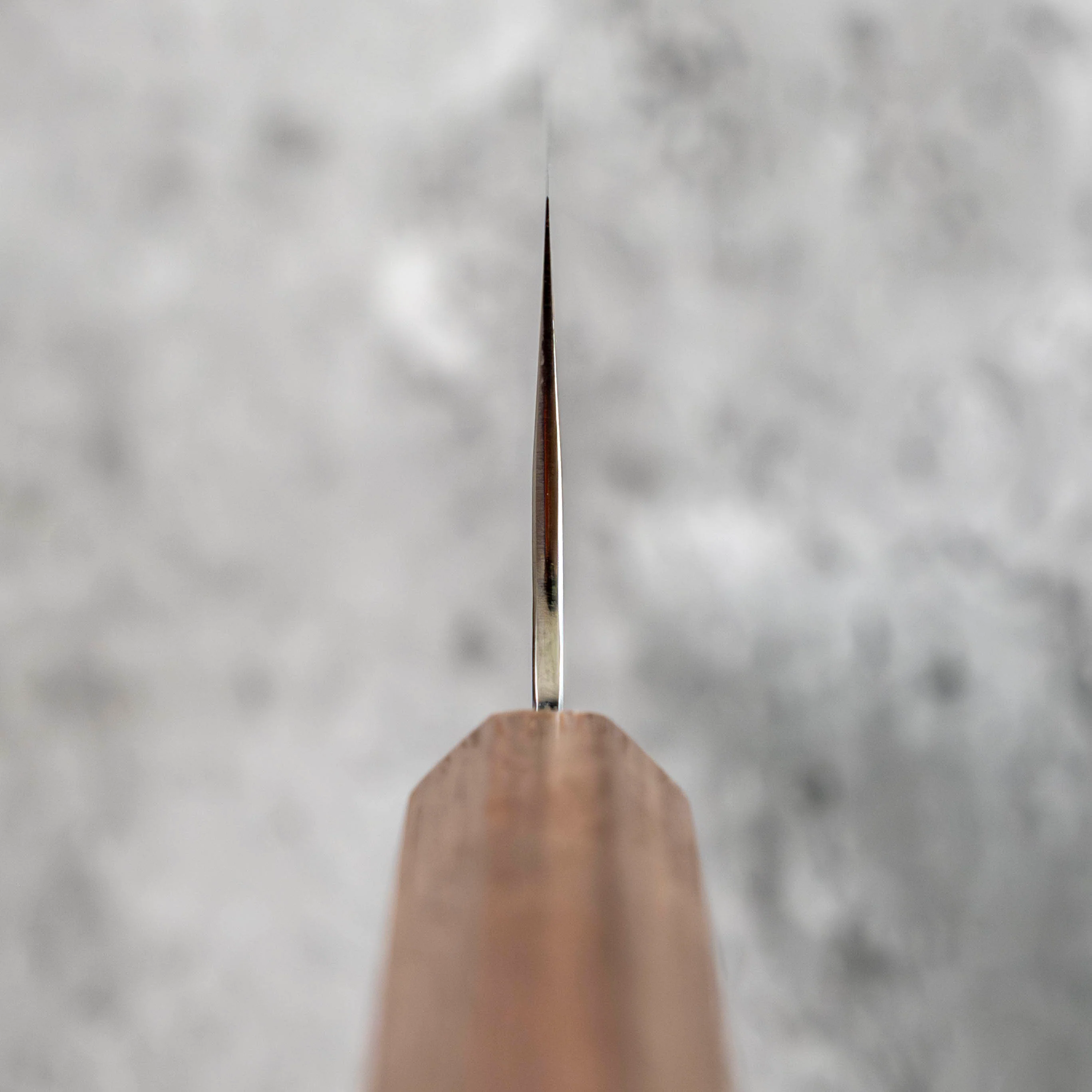
Makoto Kurosaki Damascus Tsuchime Nakiri 165 mm
Makoto Kurosaki Damascus Tsuchime Nakiri 165 mm
| Blade Length | 168 mm |
| Total Length | 310 mm |
| Steel | VG-7 Stainless |
| Handle | Walnut |
| Ferrule | N/A |
| Rockwell | 61 |
| Height Spine to heel | 51 mm |
| Width at Spine | 2.1 mm |
| Weight | 153 grams |
| Bevel | Double (50/50) |
Makoto Kurosaki
We're excited to have these knives in made by Makoto Kurosaki. Makoto Kurosaki trained as a sharpener and apprenticed under Hiroshi Kato-san, as part of Takefu Knife Village, based in Echizen city, Fukui prefecture, Japan. While Makoto is Yu Kurosaki’s older brother, he has his own shop separate from Yu's, and has sharpened several different lines from knife makers such as Yoshimi Kato and Takumi Ikeda, as well as Yu Kurosaki.
The “Style-K” line knives still have a great grind and geometry to them, they are slightly more robust than Yu's knives on the spine making them slightly less delicate. The fit and finish on these knives is also of a very high level with a perfectly smooth joint between the tang and handle, and the rounding and polishing on the spine and choil.
The Takefu Knife Village is a cooperative workshop in the Echizen region of Japan. It is the home to a long list of blacksmiths that we work with and many young and upcoming apprentices learning the trade. The area has a 700 year long history of smithing with roots in agricultural tools turned cutlery powerhouse. is a cooperative workshop in the Echizen region of Japan. It is the home to a long list of blacksmiths that we work with and many young and upcoming apprentices learning the trade. The area has a 700 year long history of smithing with roots in agricultural tools turned cutlery powerhouse.
The Knife
The Nakiri is designed to be a vegetable chopping knife. It's edge has less curve which makes it very effective when used in an up and down chopping motion. The flatter blade means the majority of the edge contacts the cutting board helping to avoid those accordion pieces where ingredients aren't cut all the way through. The tall blade also provides lots of travel for the guide fingers further adding to the desirability of the up and down chopping motion.
Knife Care (Stainless Steel)
- Although this knife is made from stainless steel we do still encourage our customers to keep their knives as dry and clean as possible.
- NO DISHWASHER - the high heat will ruin the wooden handle.
- Wash and dry by hand using regular dish soap and warm water using a none abrasive sponge or cloth.
- Ensure the knife is dry before being put away for storage and ensure the edge of the knife is protected to avoid any unnecessary dulling.
- Avoid Bones, Frozen foods, nuts and hard candies or anything other than fruits, vegetables and proteins.
Original: $163.07
-65%$163.07
$57.07Product Information
Product Information
Shipping & Returns
Shipping & Returns
Description
| Blade Length | 168 mm |
| Total Length | 310 mm |
| Steel | VG-7 Stainless |
| Handle | Walnut |
| Ferrule | N/A |
| Rockwell | 61 |
| Height Spine to heel | 51 mm |
| Width at Spine | 2.1 mm |
| Weight | 153 grams |
| Bevel | Double (50/50) |
Makoto Kurosaki
We're excited to have these knives in made by Makoto Kurosaki. Makoto Kurosaki trained as a sharpener and apprenticed under Hiroshi Kato-san, as part of Takefu Knife Village, based in Echizen city, Fukui prefecture, Japan. While Makoto is Yu Kurosaki’s older brother, he has his own shop separate from Yu's, and has sharpened several different lines from knife makers such as Yoshimi Kato and Takumi Ikeda, as well as Yu Kurosaki.
The “Style-K” line knives still have a great grind and geometry to them, they are slightly more robust than Yu's knives on the spine making them slightly less delicate. The fit and finish on these knives is also of a very high level with a perfectly smooth joint between the tang and handle, and the rounding and polishing on the spine and choil.
The Takefu Knife Village is a cooperative workshop in the Echizen region of Japan. It is the home to a long list of blacksmiths that we work with and many young and upcoming apprentices learning the trade. The area has a 700 year long history of smithing with roots in agricultural tools turned cutlery powerhouse. is a cooperative workshop in the Echizen region of Japan. It is the home to a long list of blacksmiths that we work with and many young and upcoming apprentices learning the trade. The area has a 700 year long history of smithing with roots in agricultural tools turned cutlery powerhouse.
The Knife
The Nakiri is designed to be a vegetable chopping knife. It's edge has less curve which makes it very effective when used in an up and down chopping motion. The flatter blade means the majority of the edge contacts the cutting board helping to avoid those accordion pieces where ingredients aren't cut all the way through. The tall blade also provides lots of travel for the guide fingers further adding to the desirability of the up and down chopping motion.
Knife Care (Stainless Steel)
- Although this knife is made from stainless steel we do still encourage our customers to keep their knives as dry and clean as possible.
- NO DISHWASHER - the high heat will ruin the wooden handle.
- Wash and dry by hand using regular dish soap and warm water using a none abrasive sponge or cloth.
- Ensure the knife is dry before being put away for storage and ensure the edge of the knife is protected to avoid any unnecessary dulling.
- Avoid Bones, Frozen foods, nuts and hard candies or anything other than fruits, vegetables and proteins.