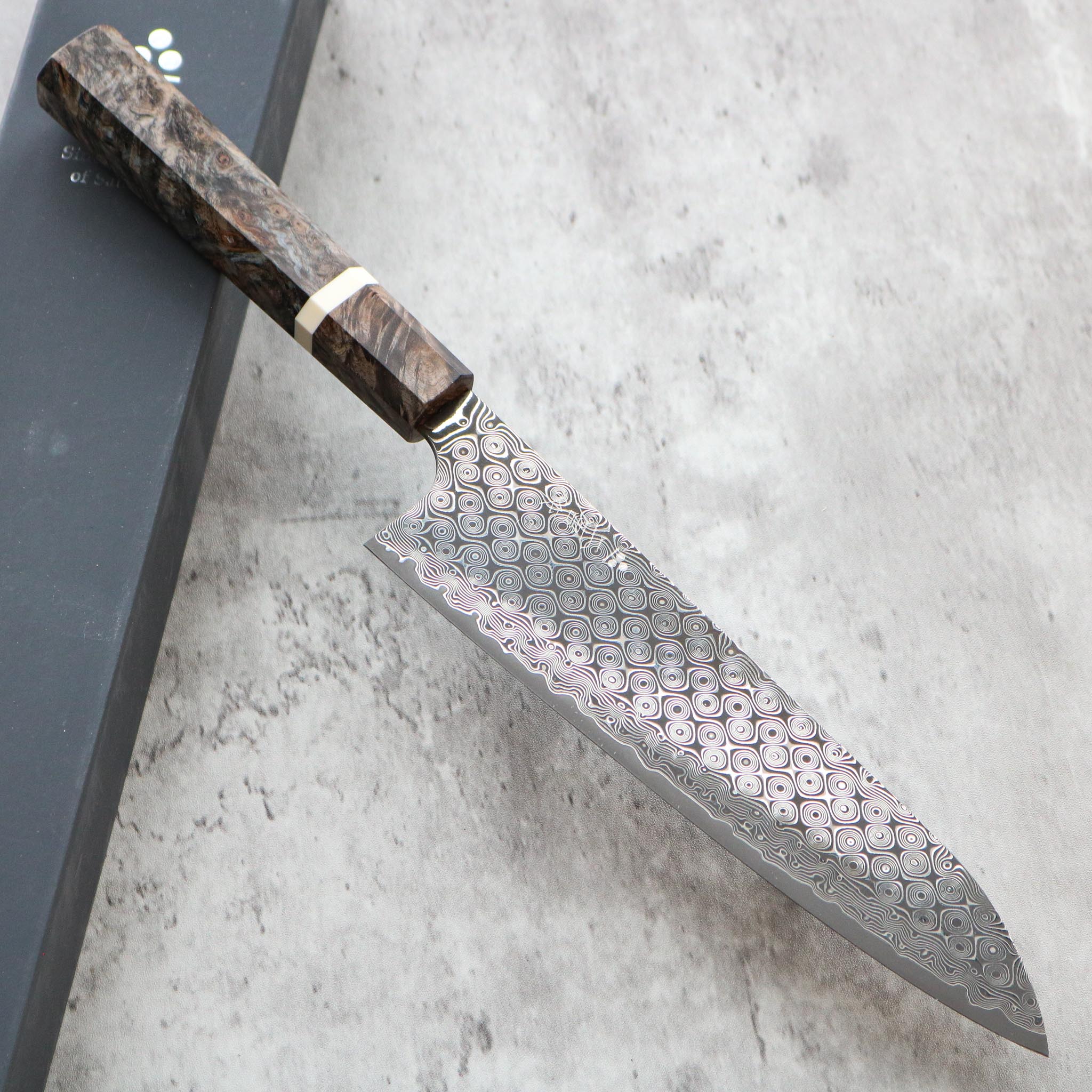
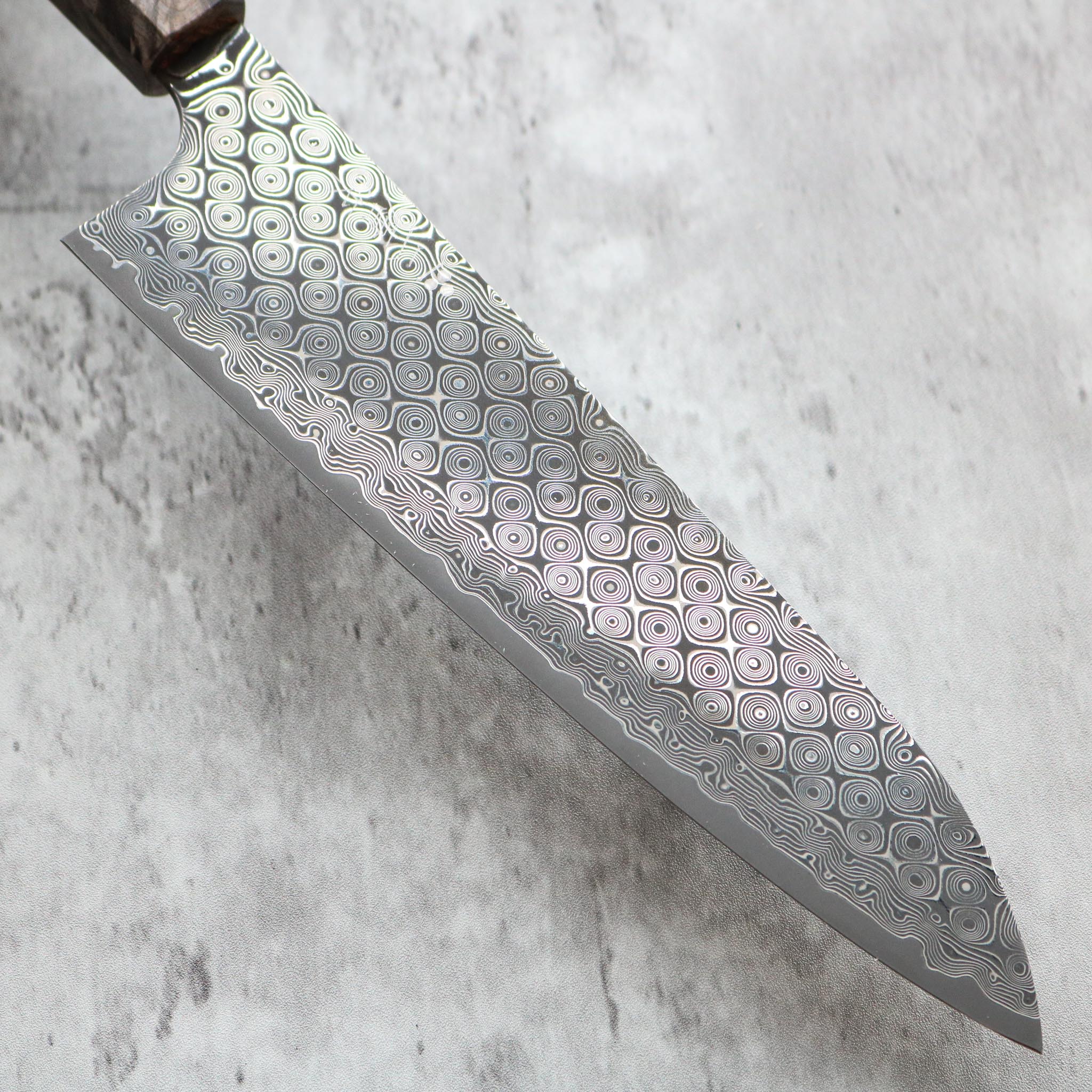
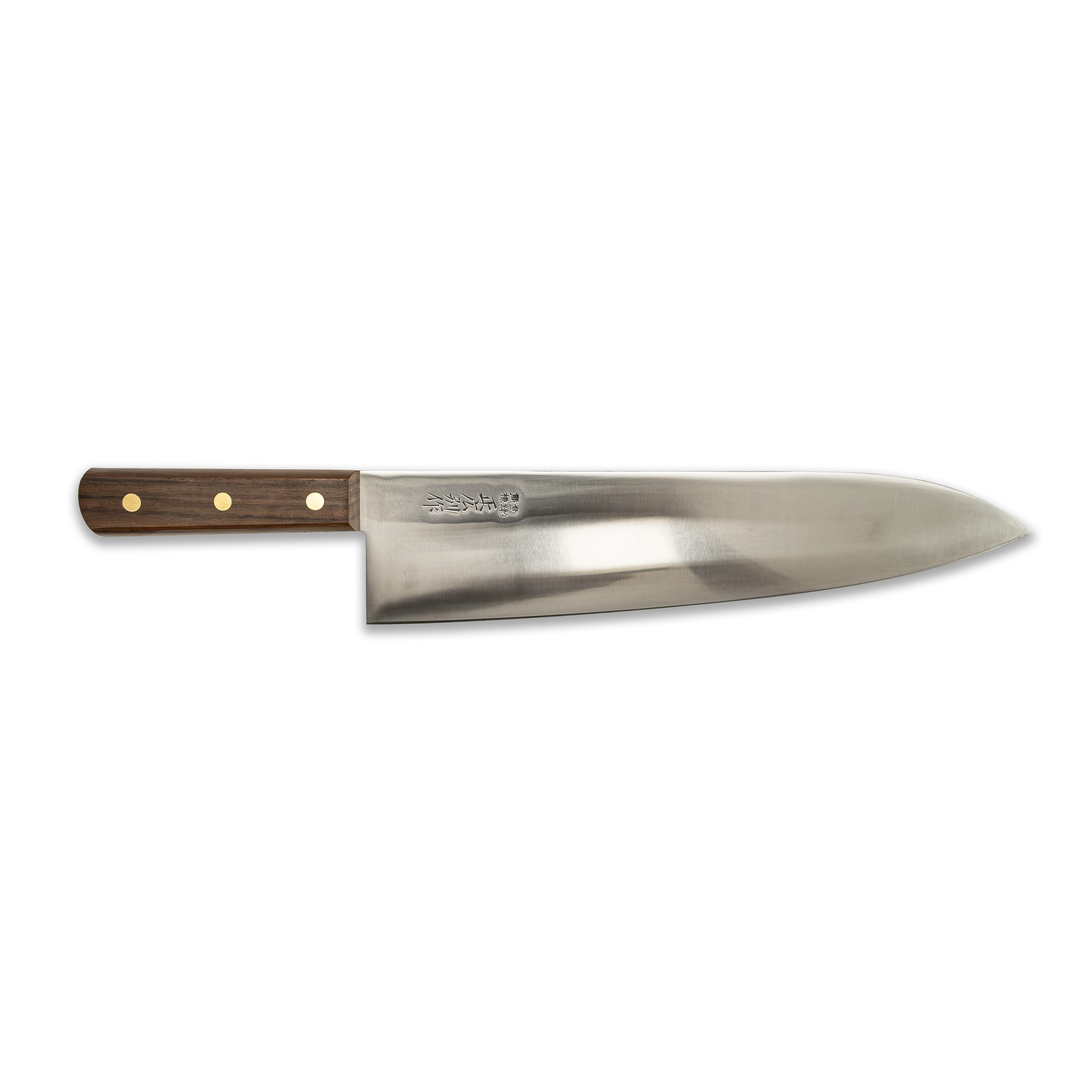
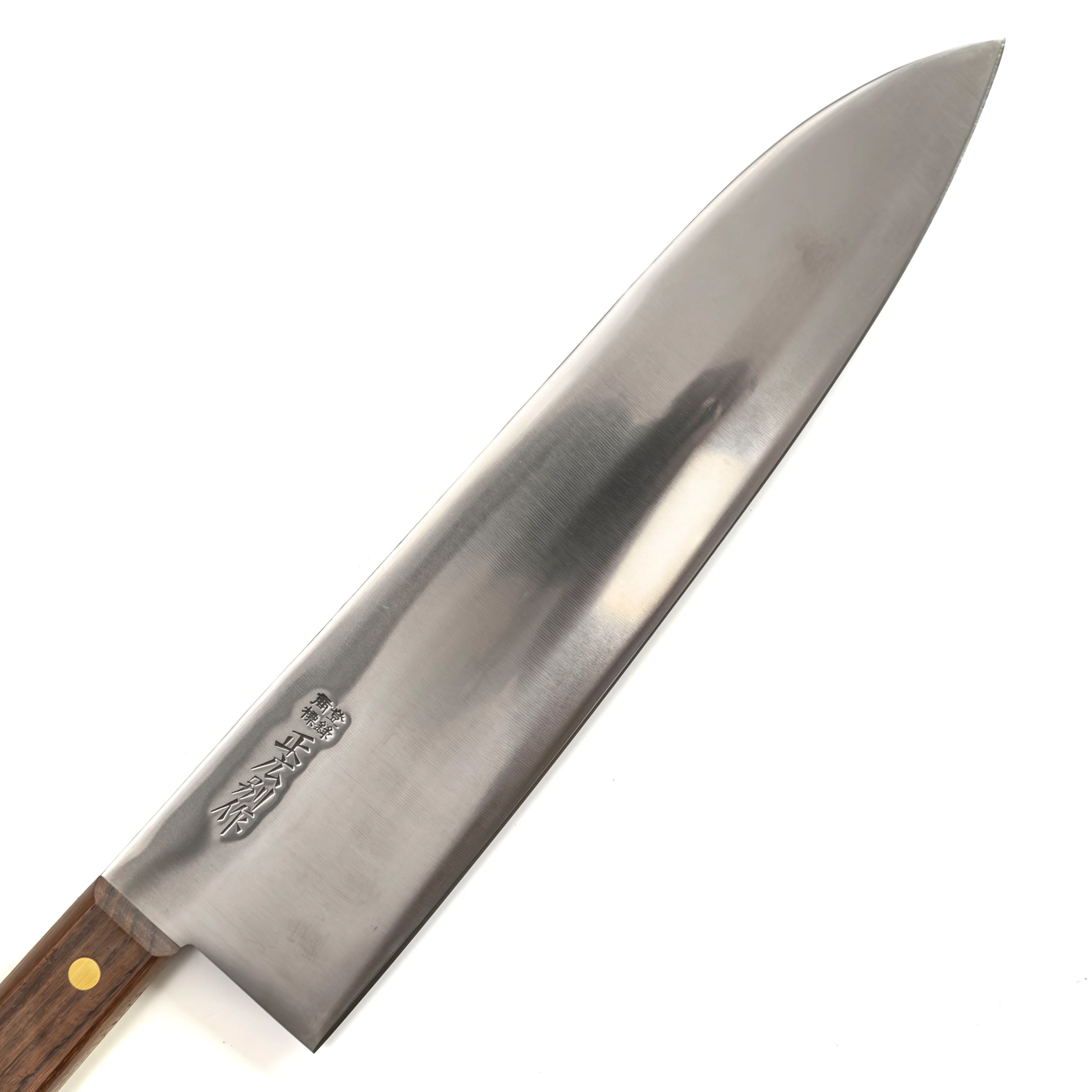
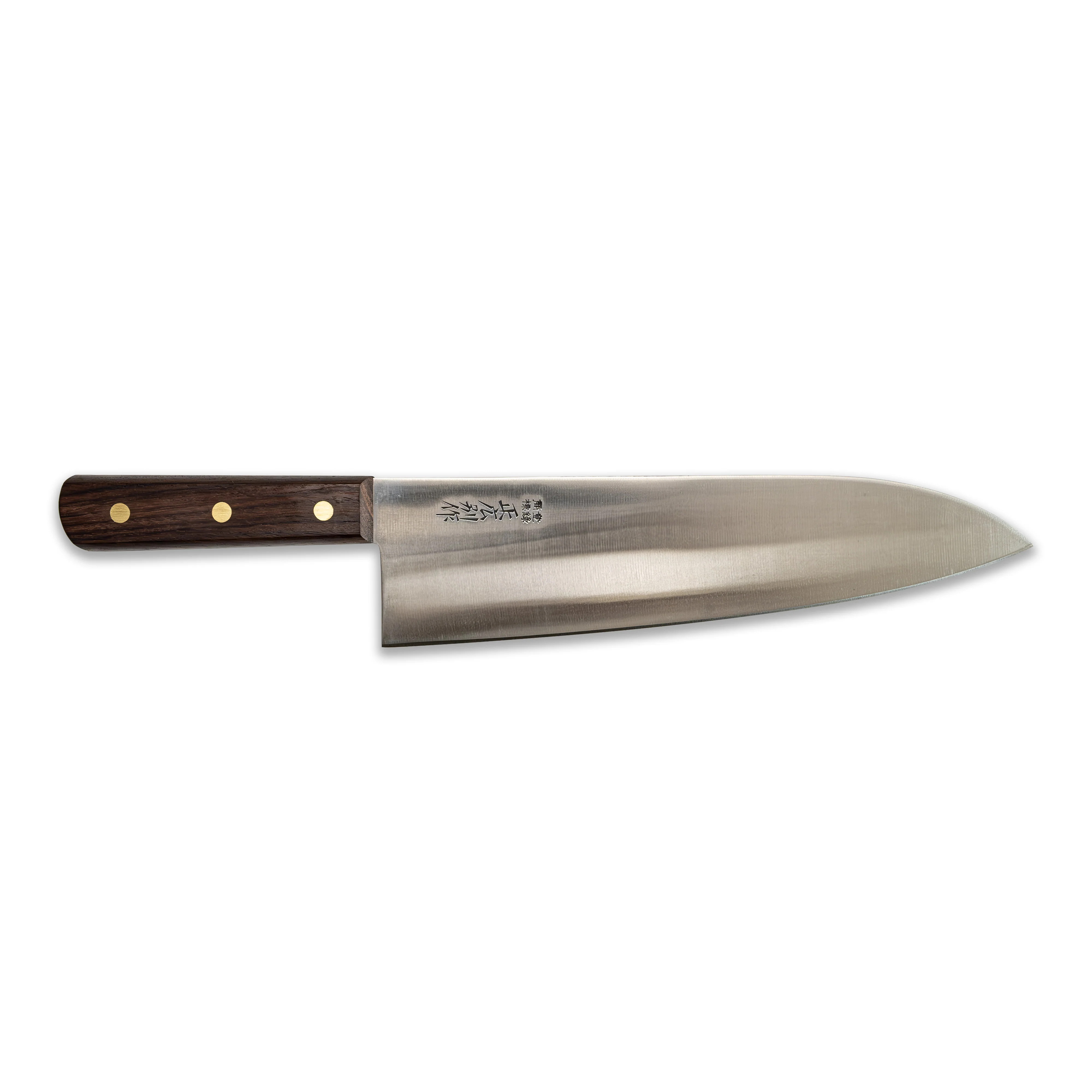
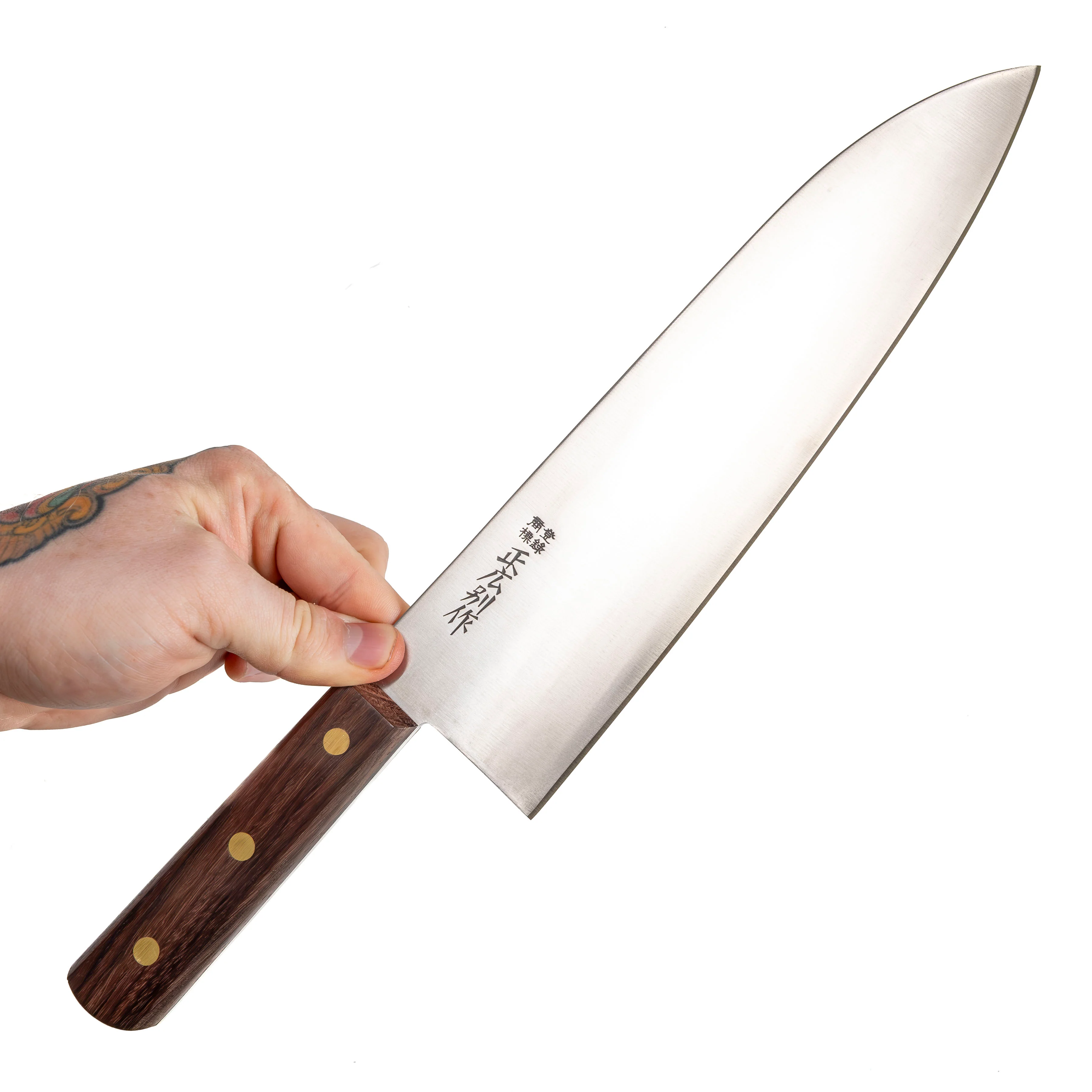
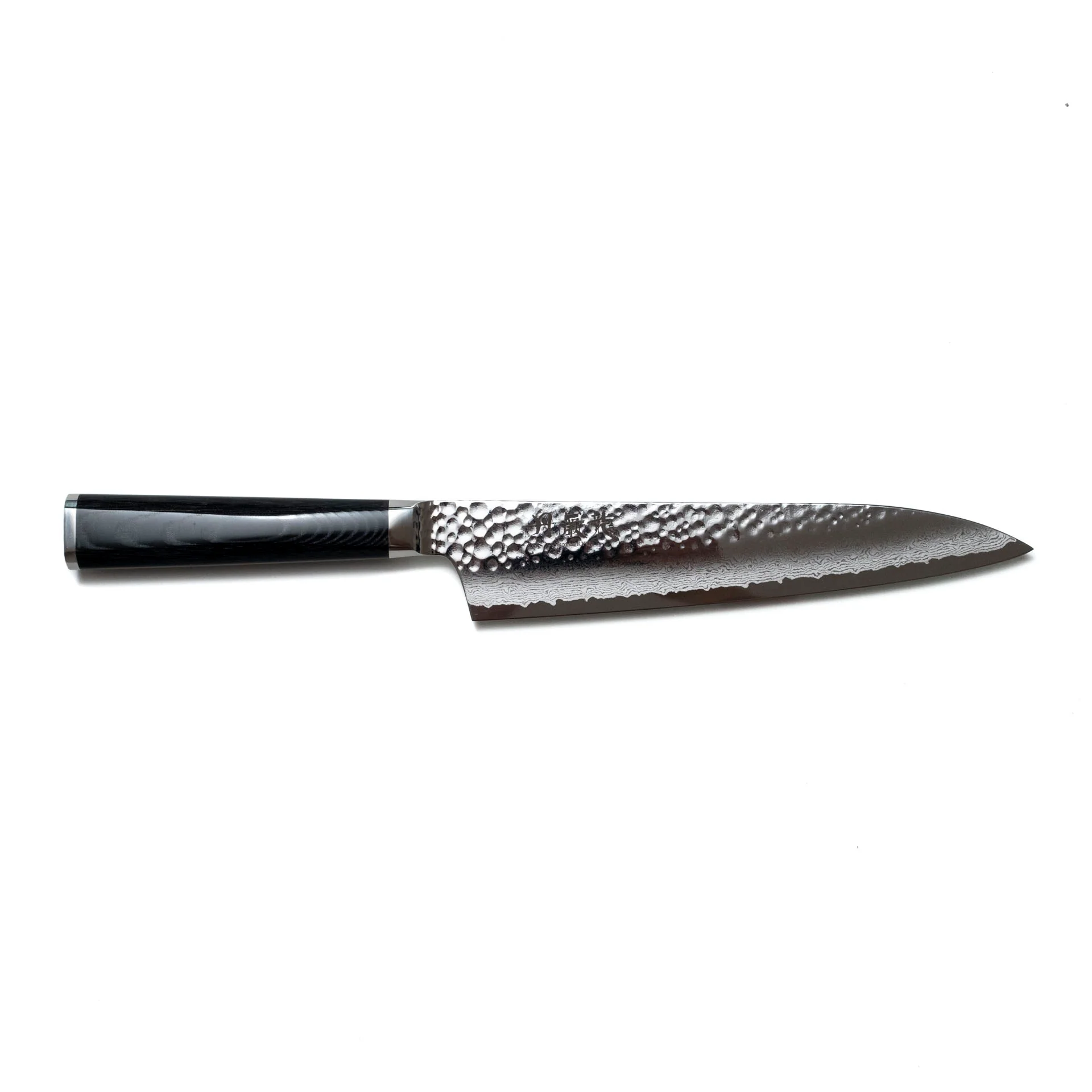
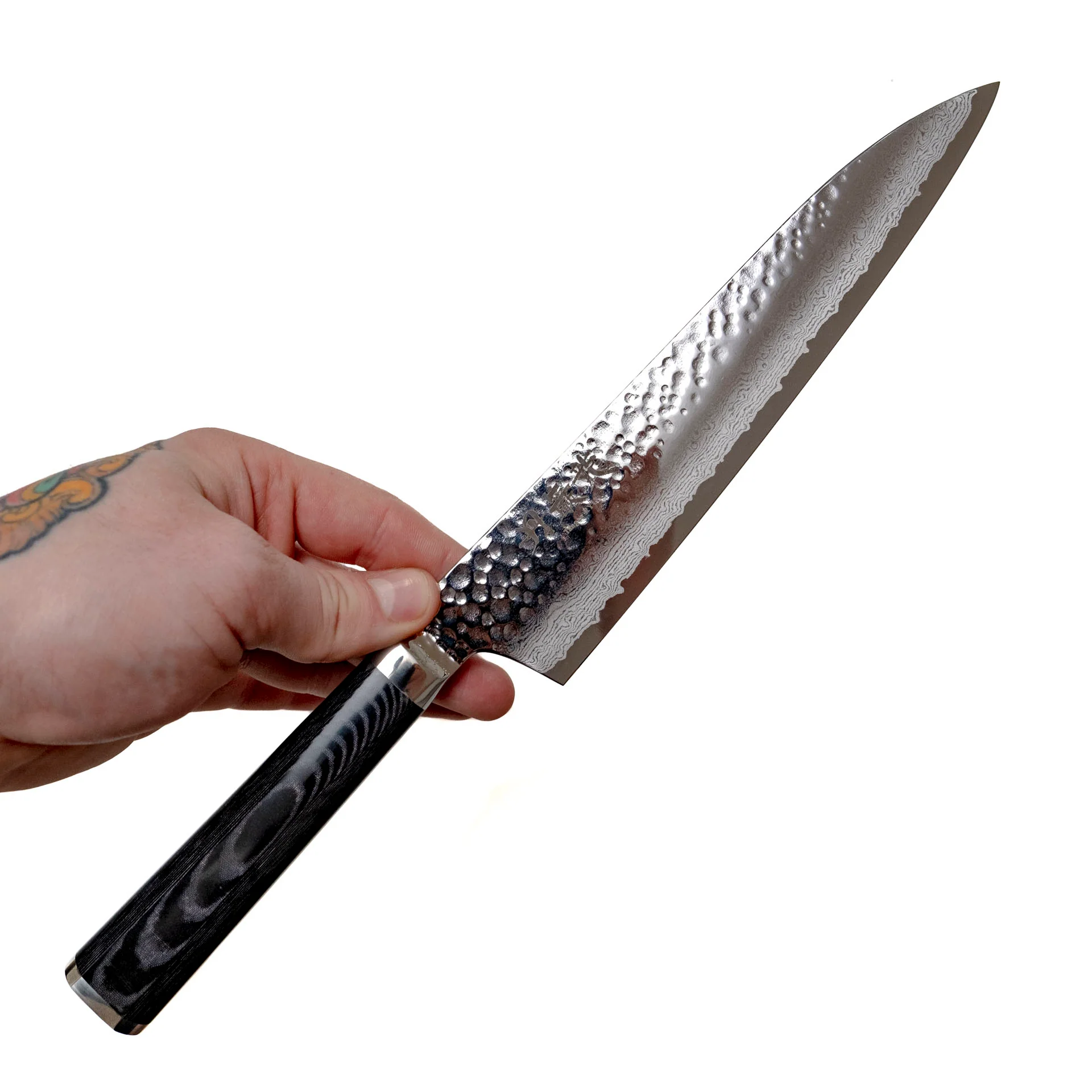
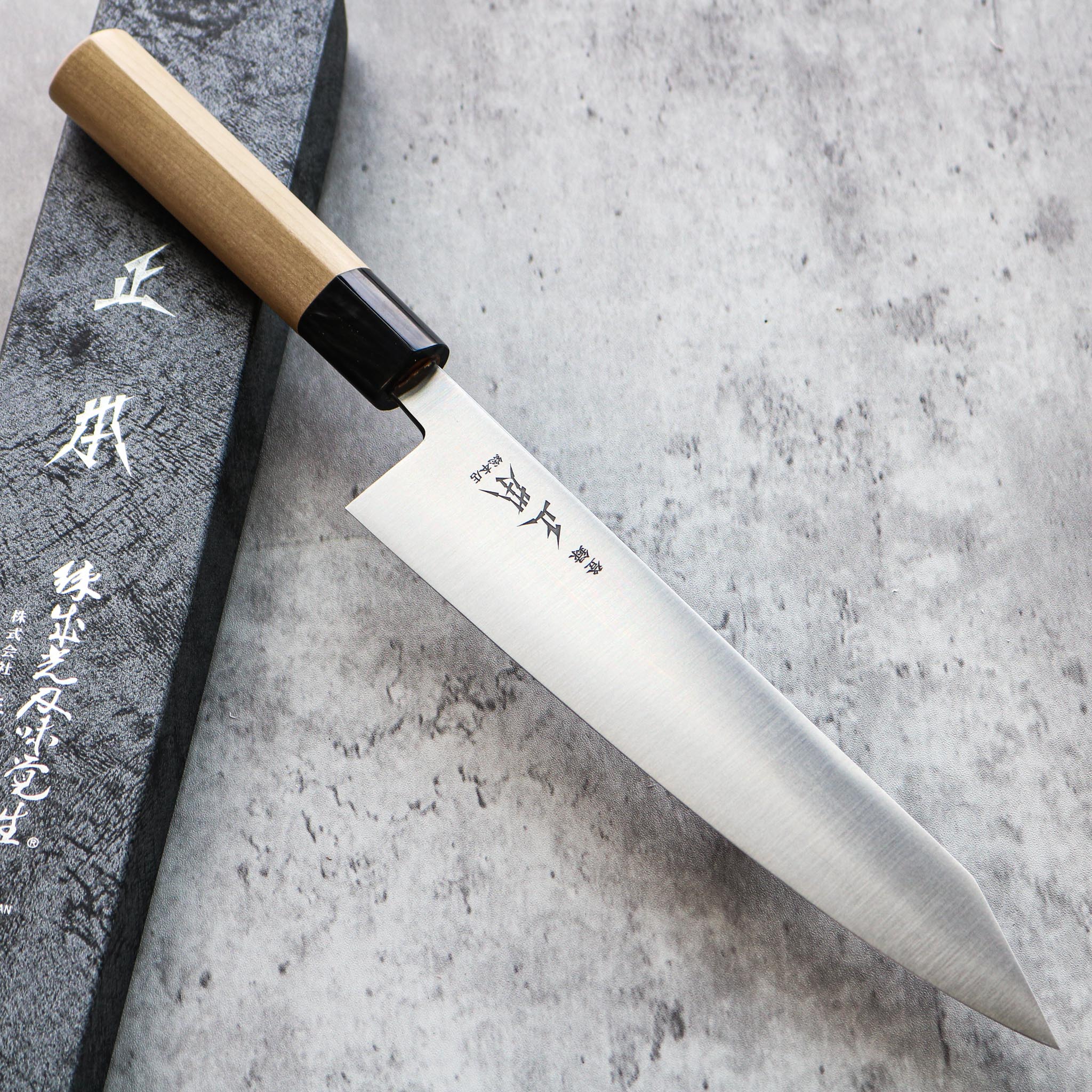
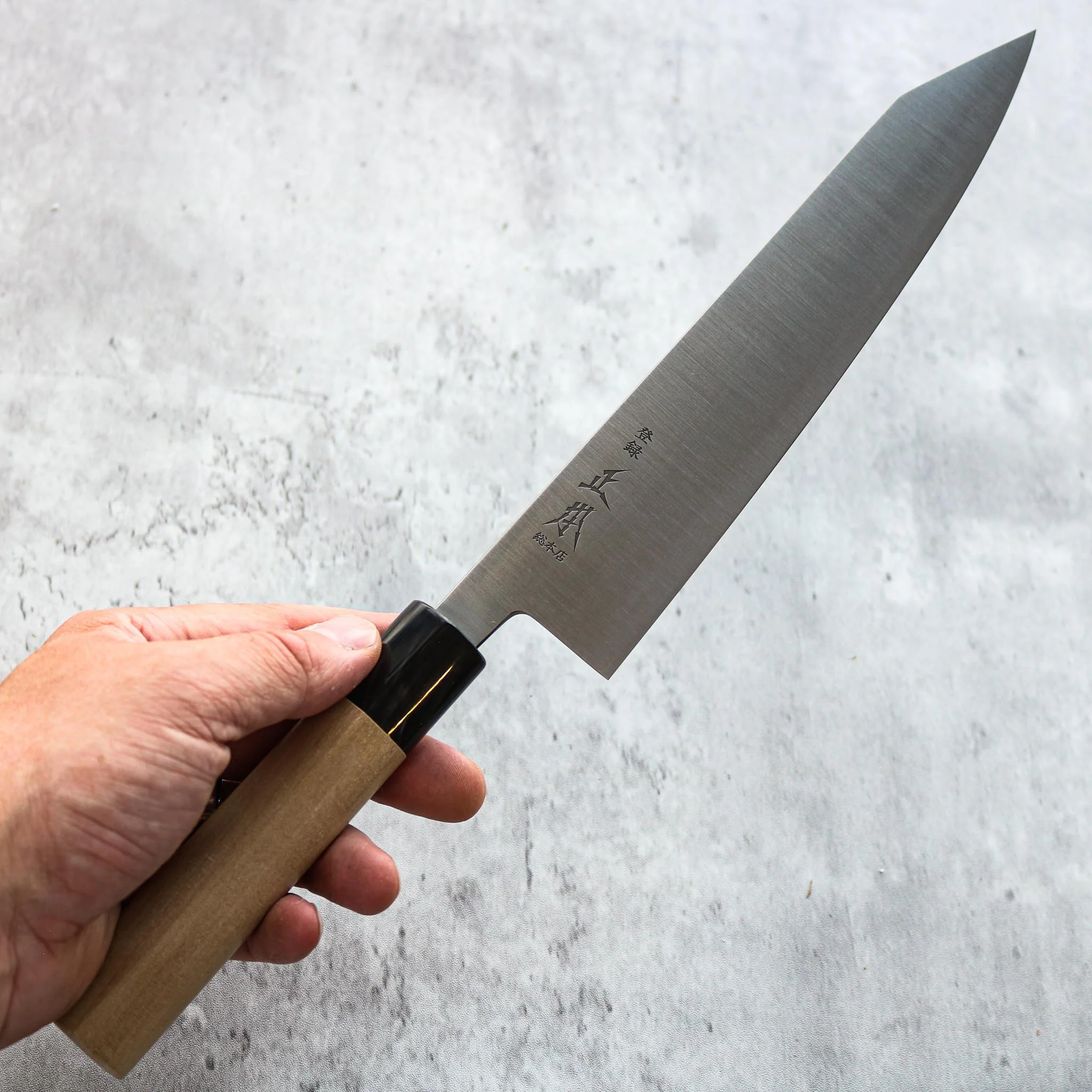
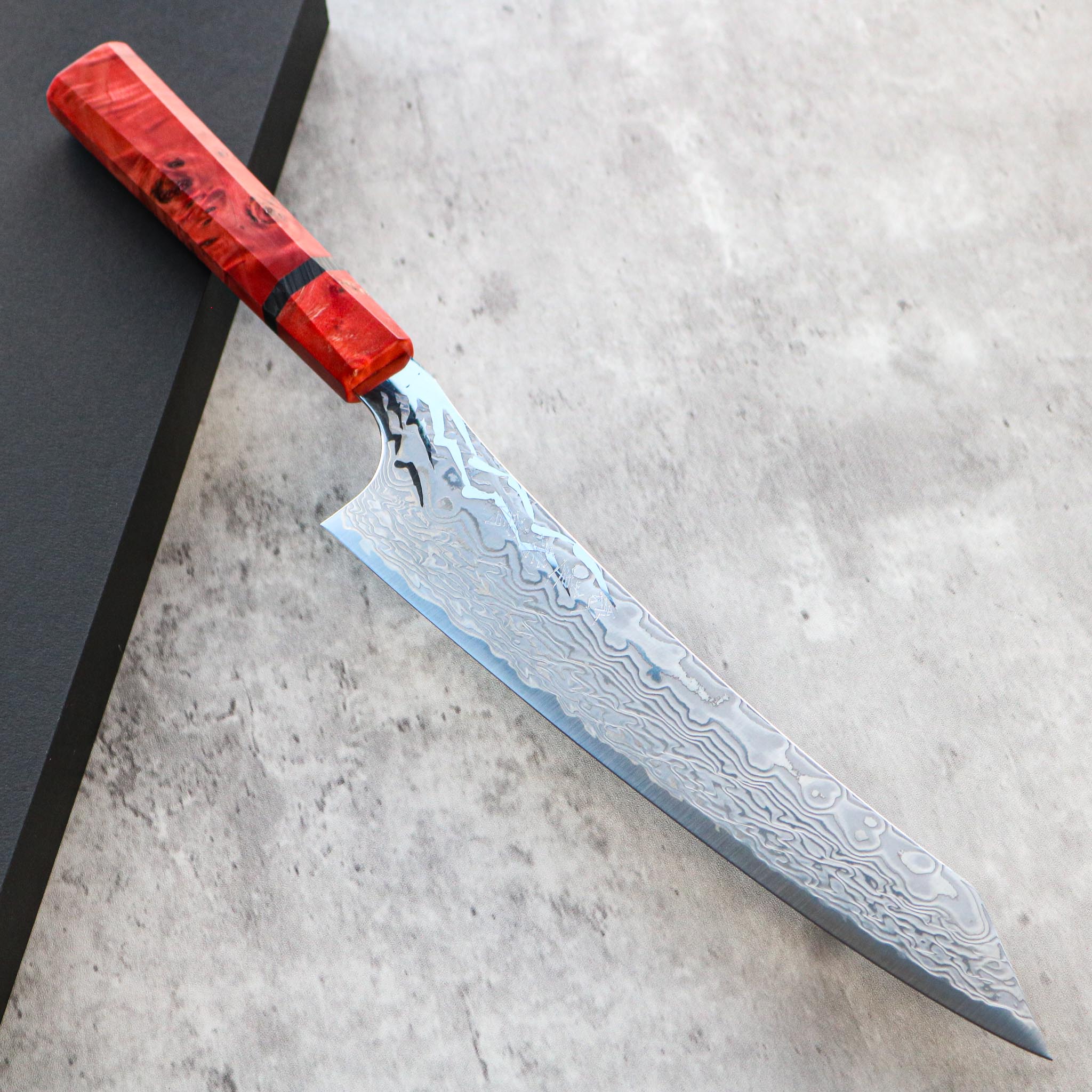
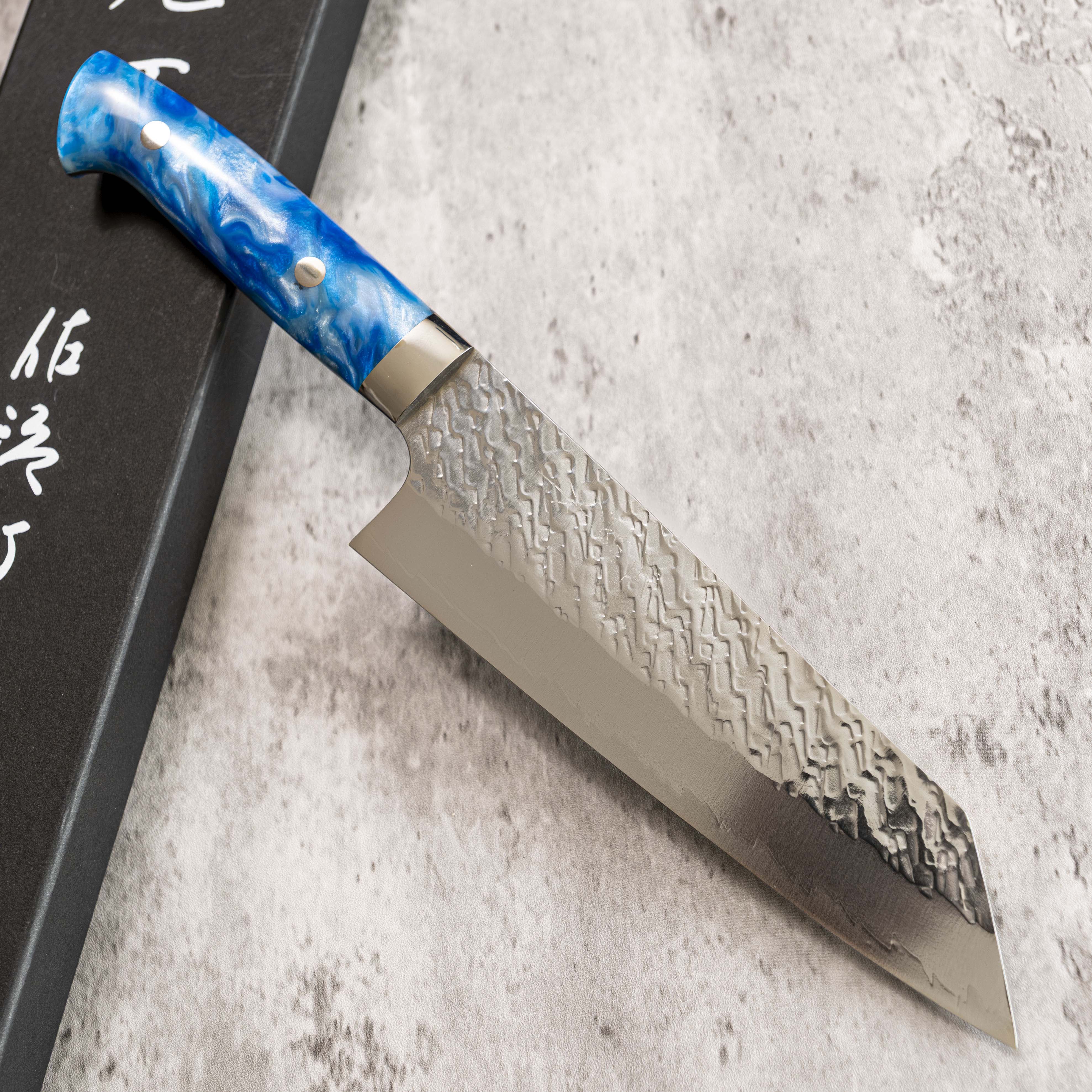
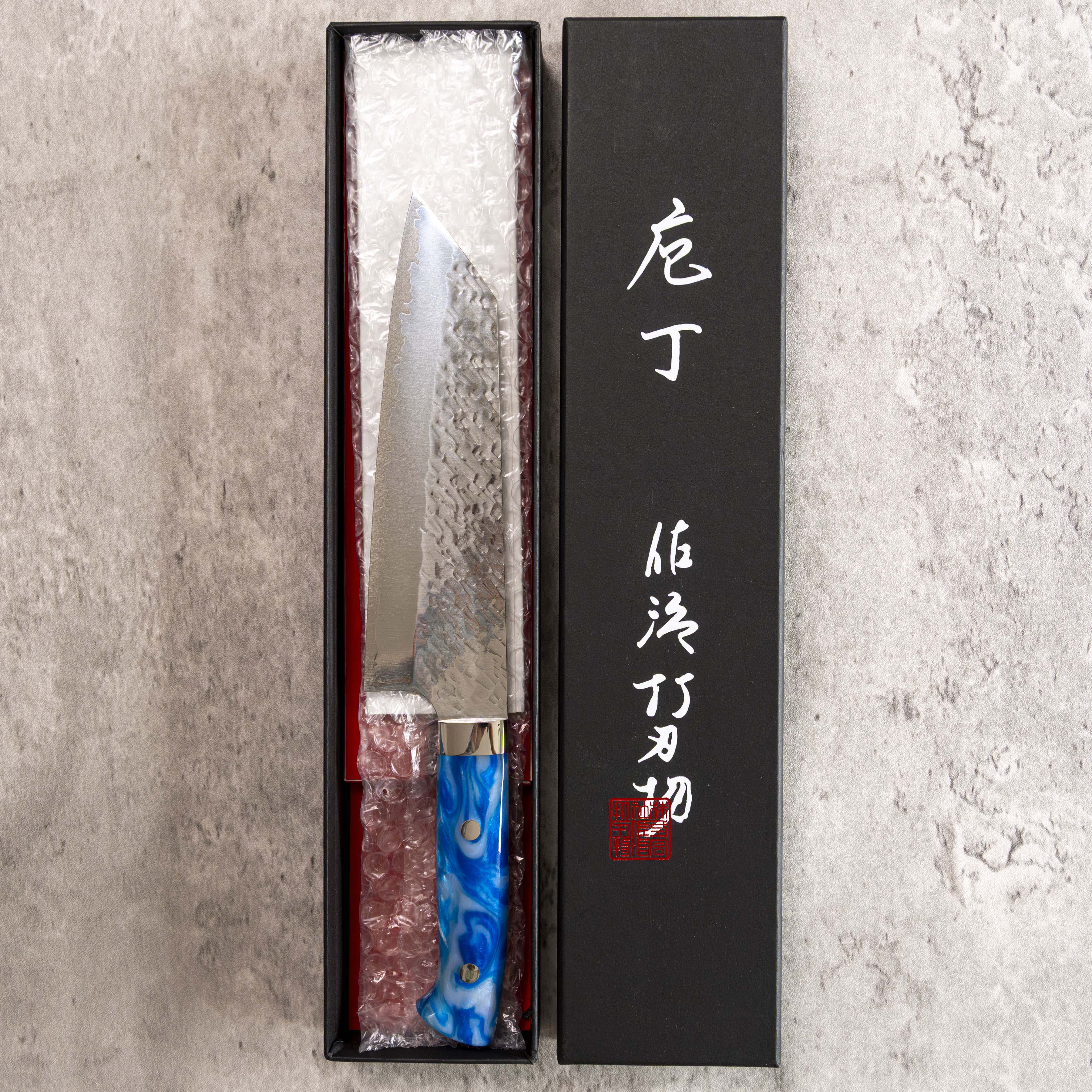
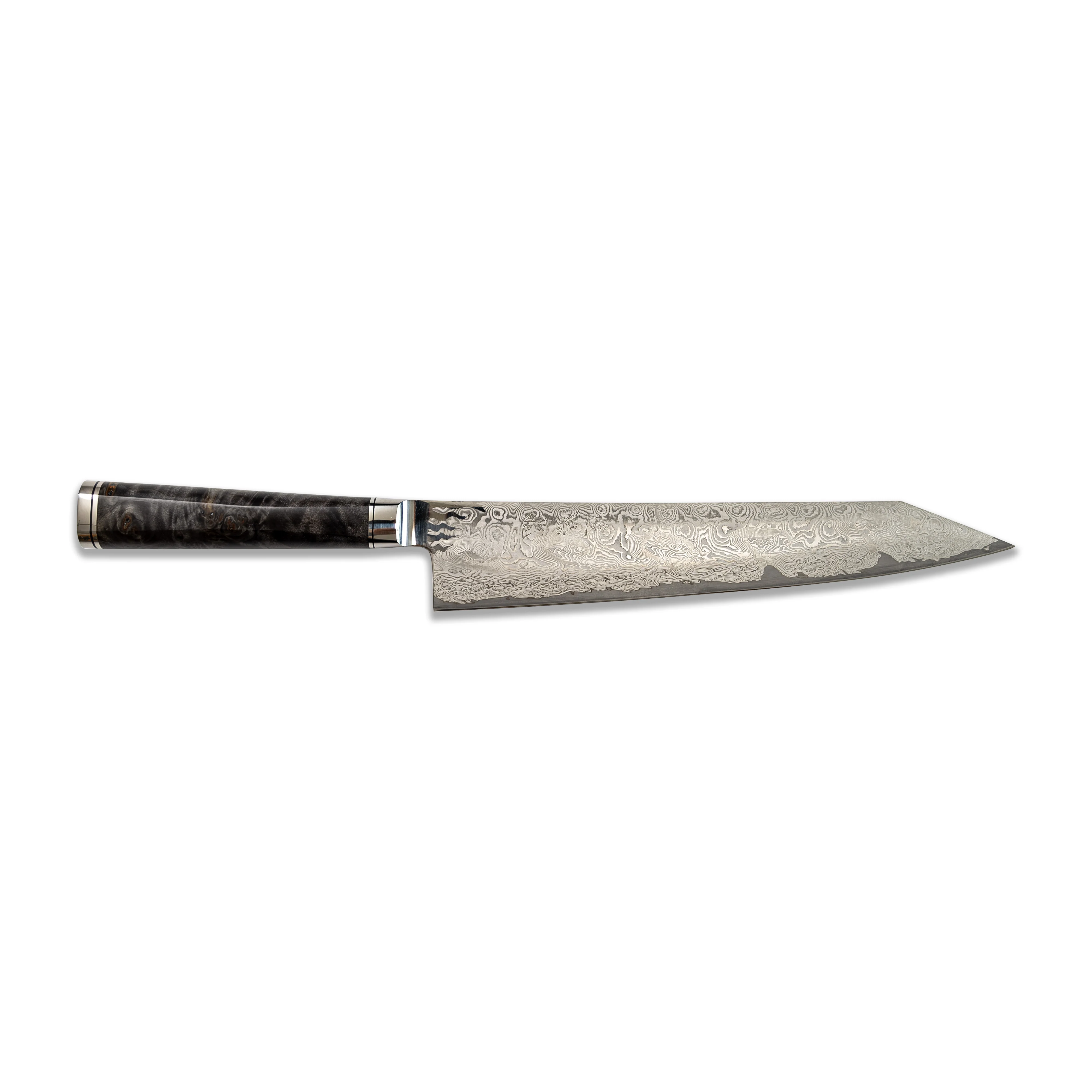
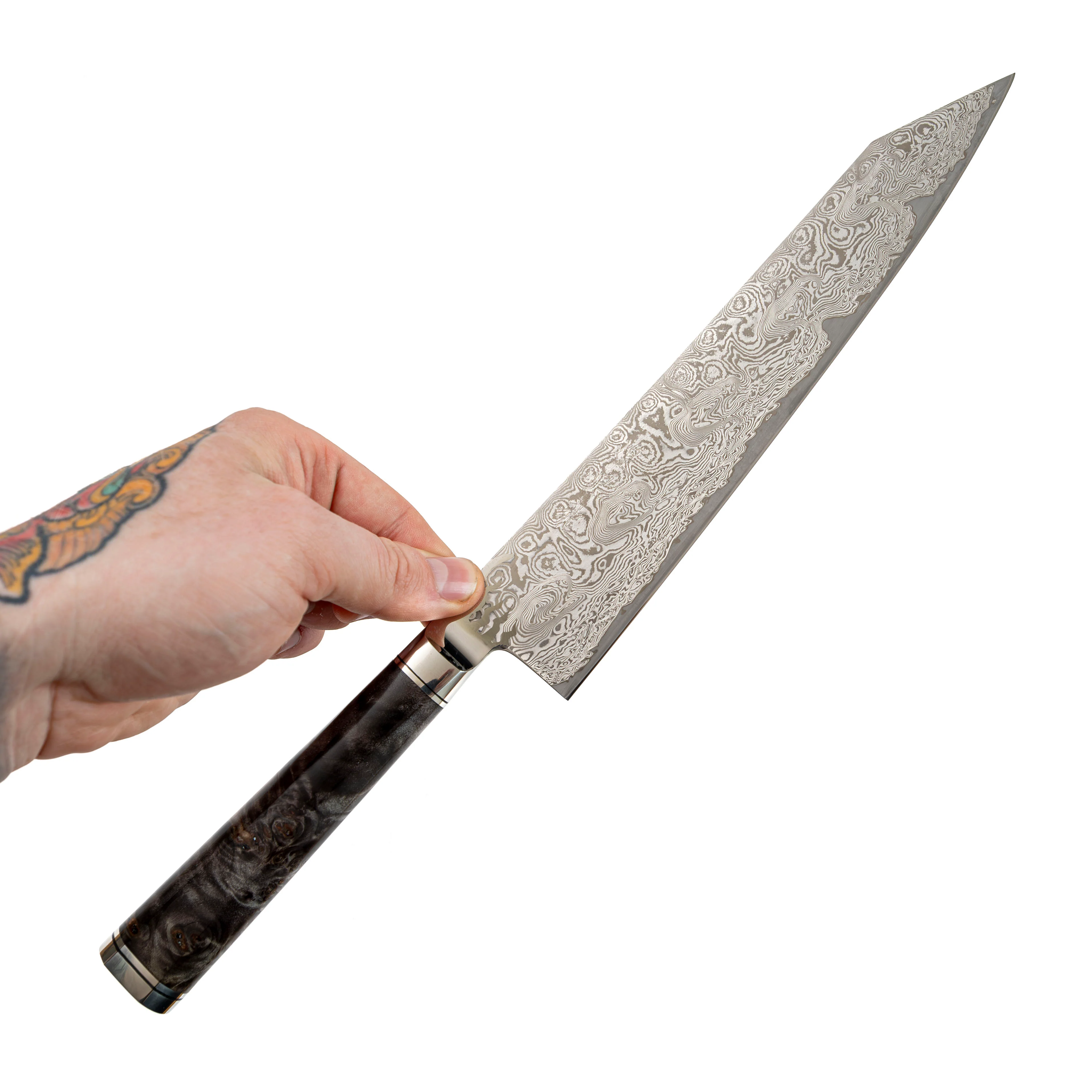
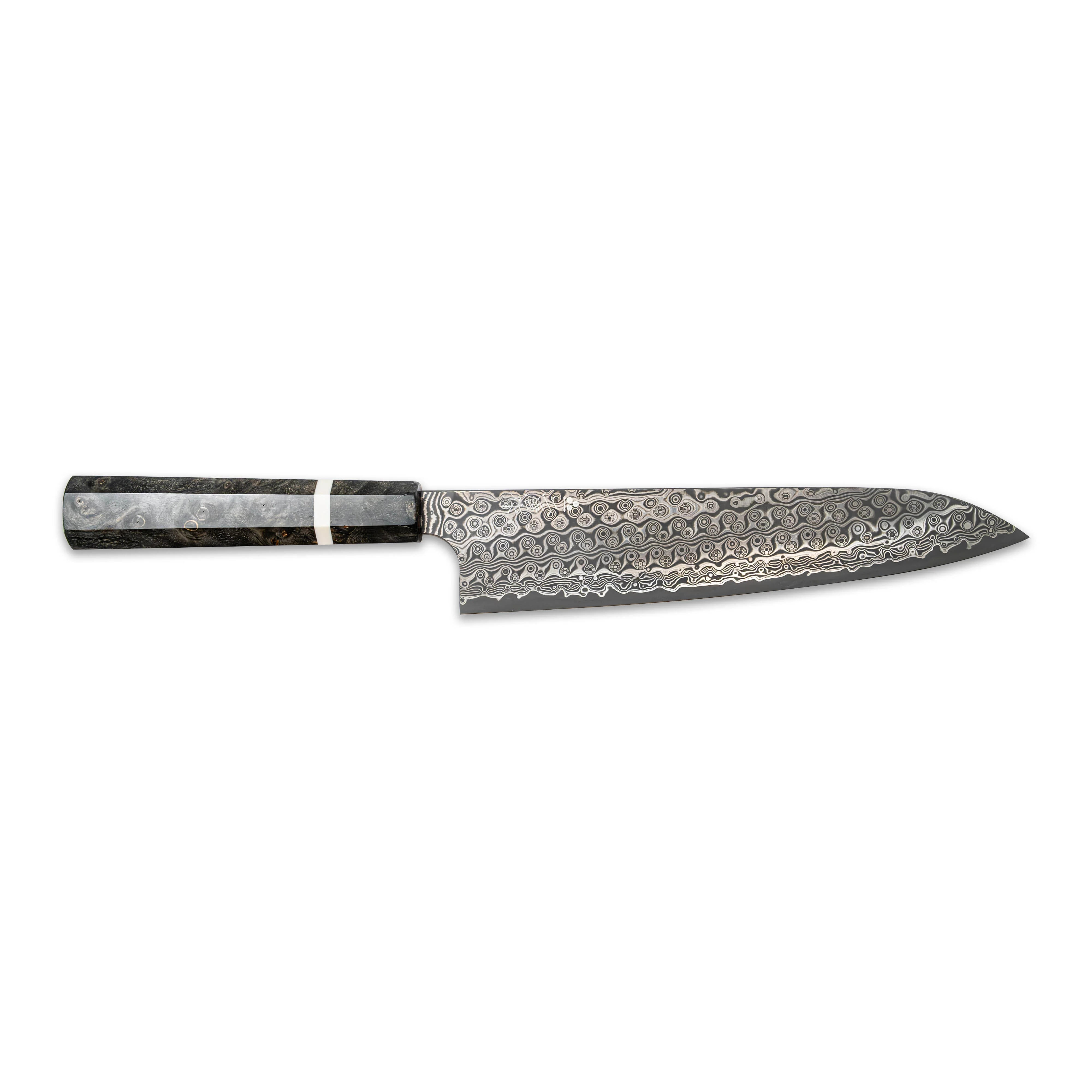
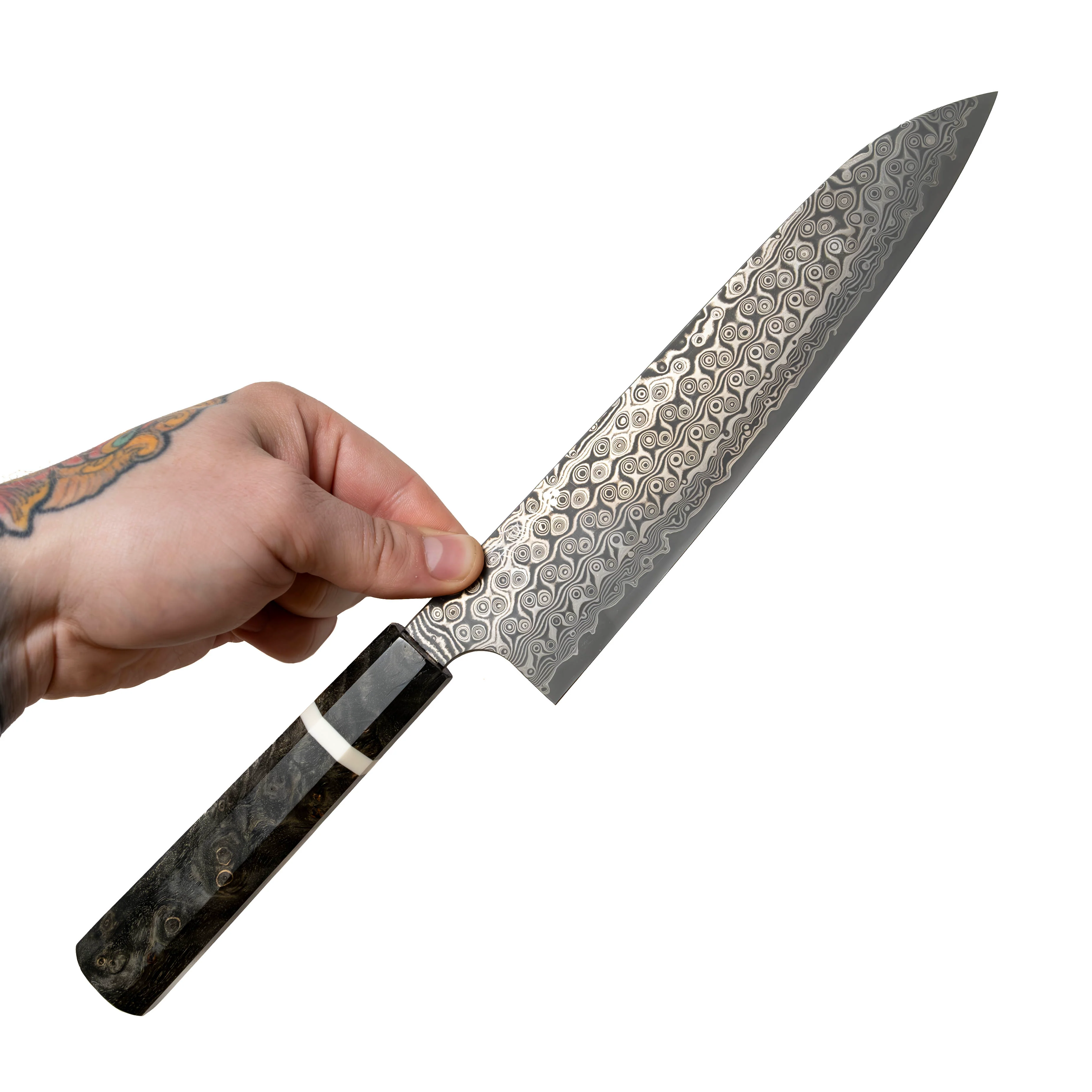
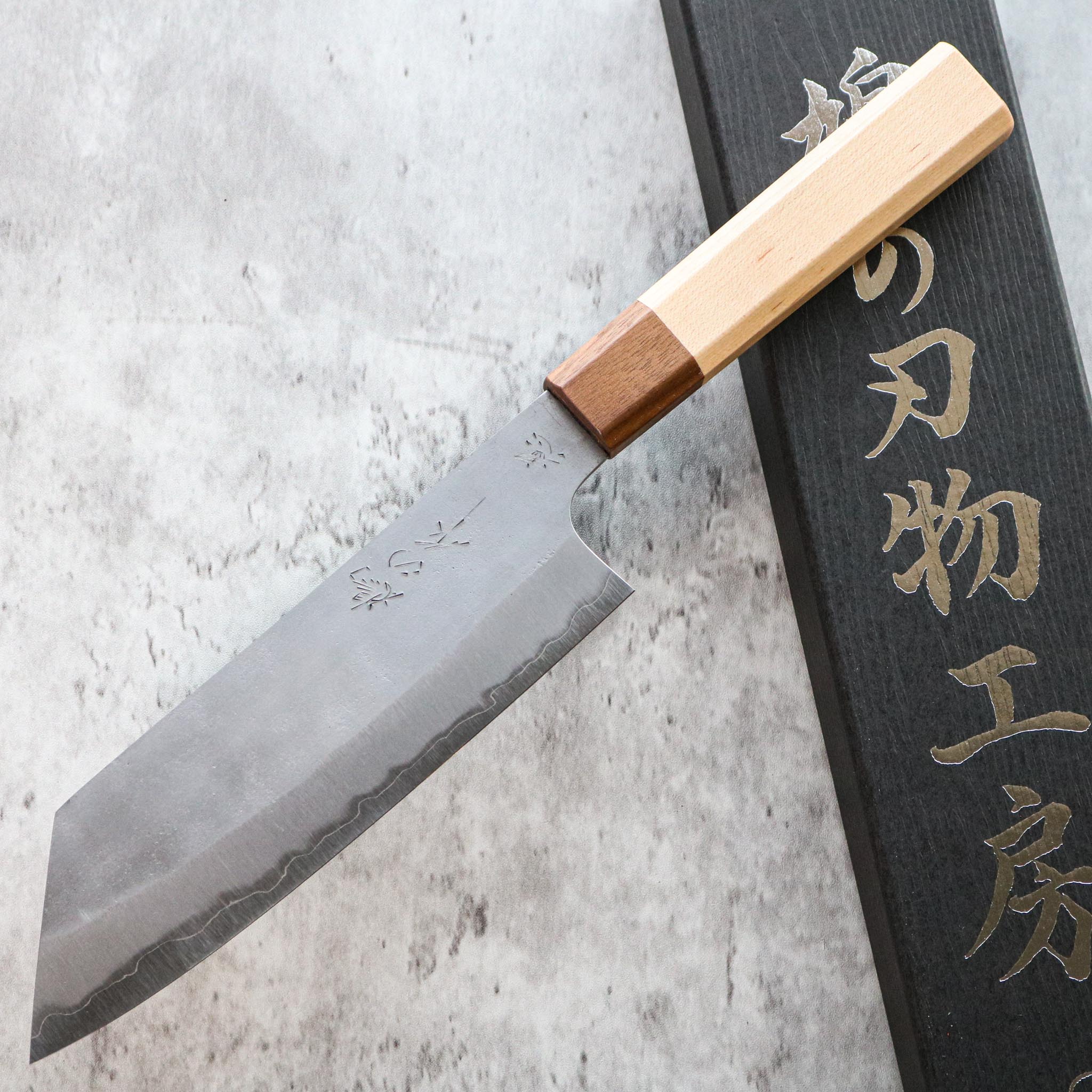
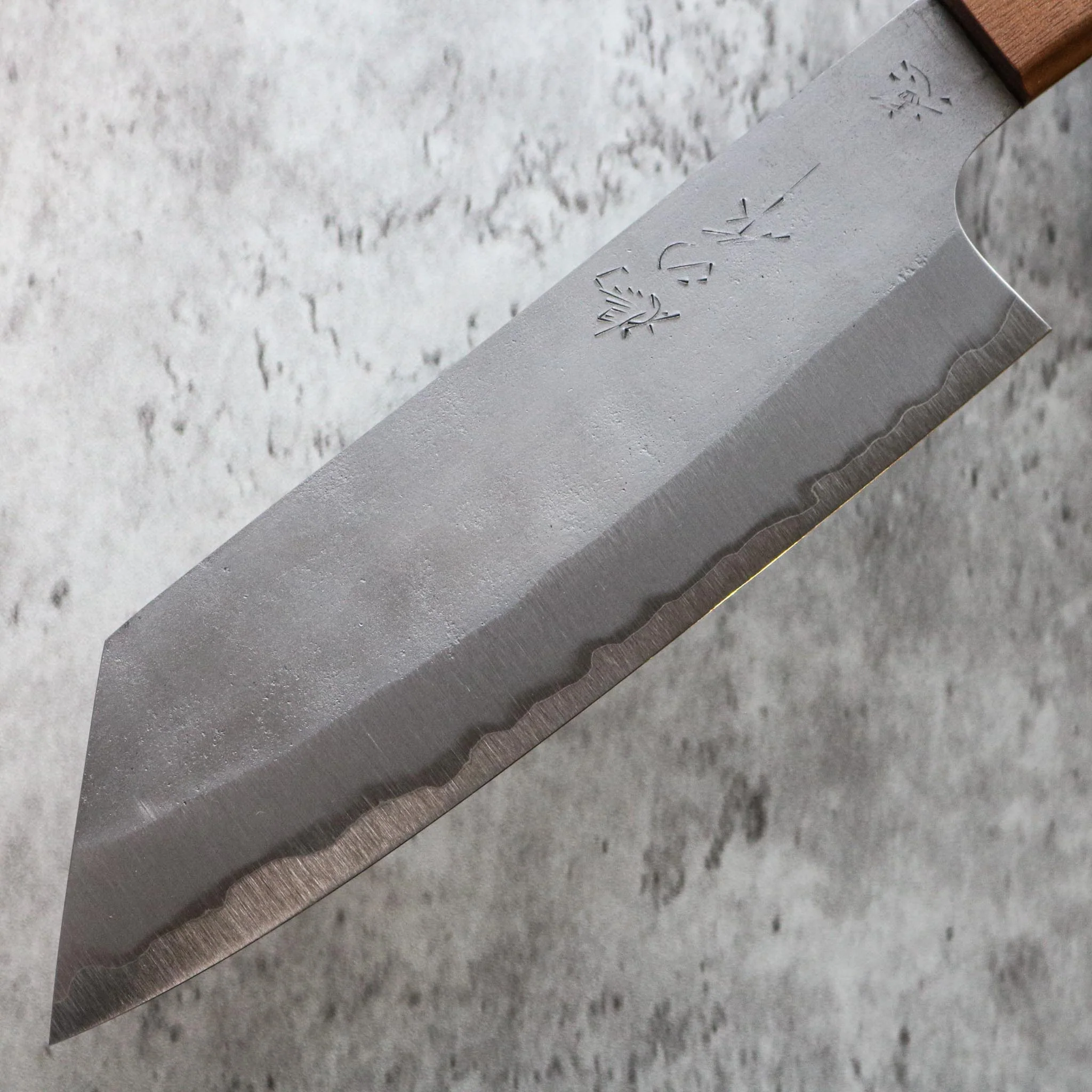
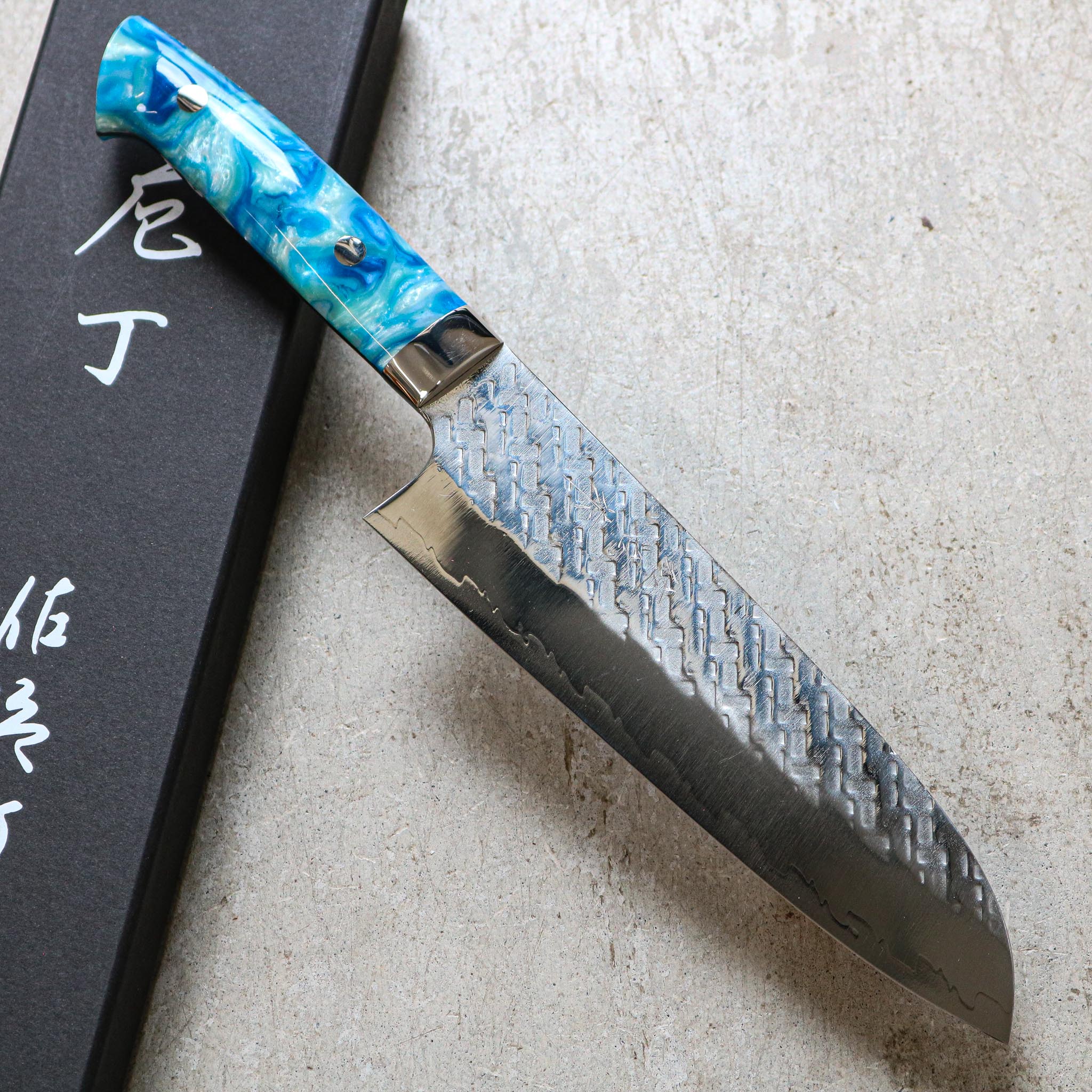
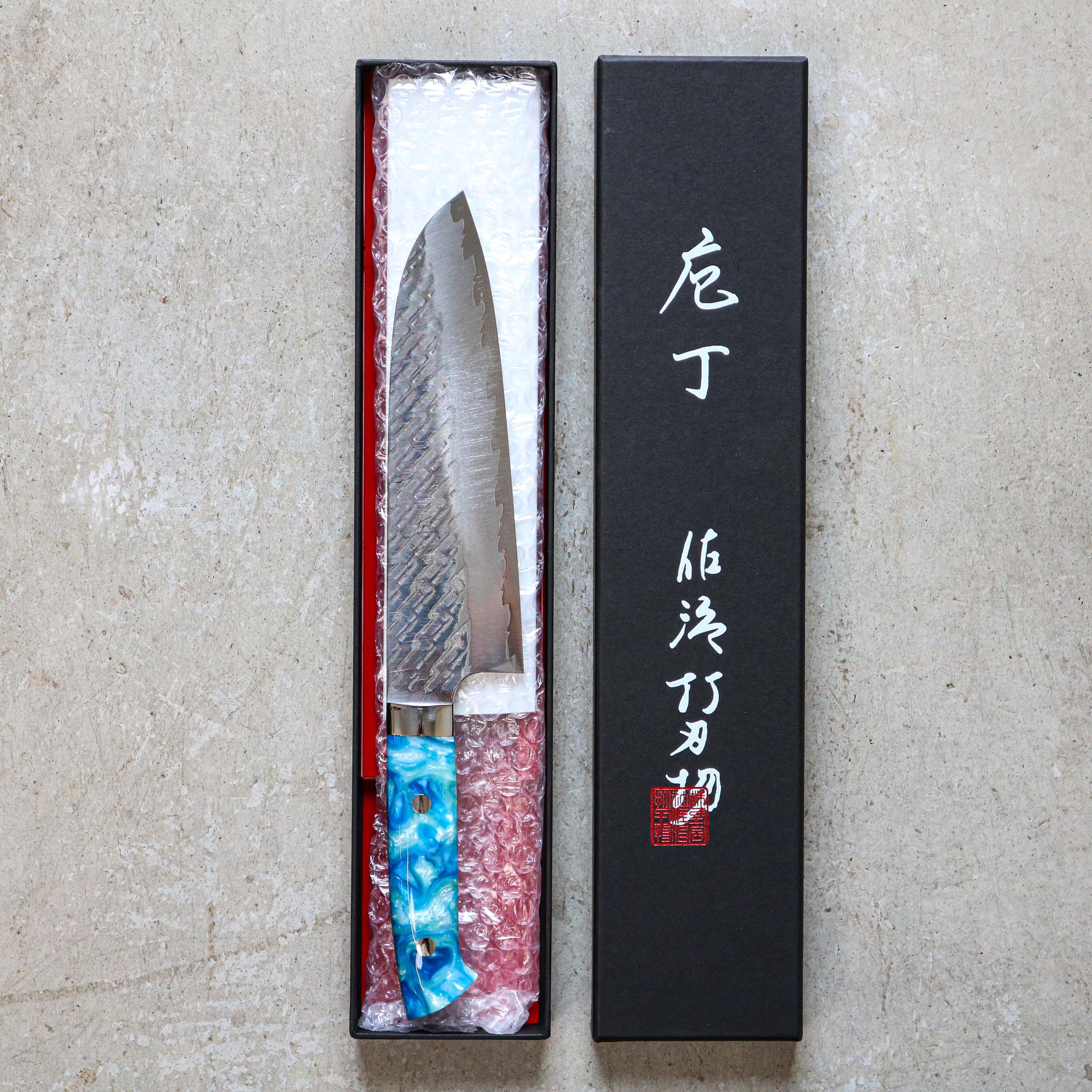
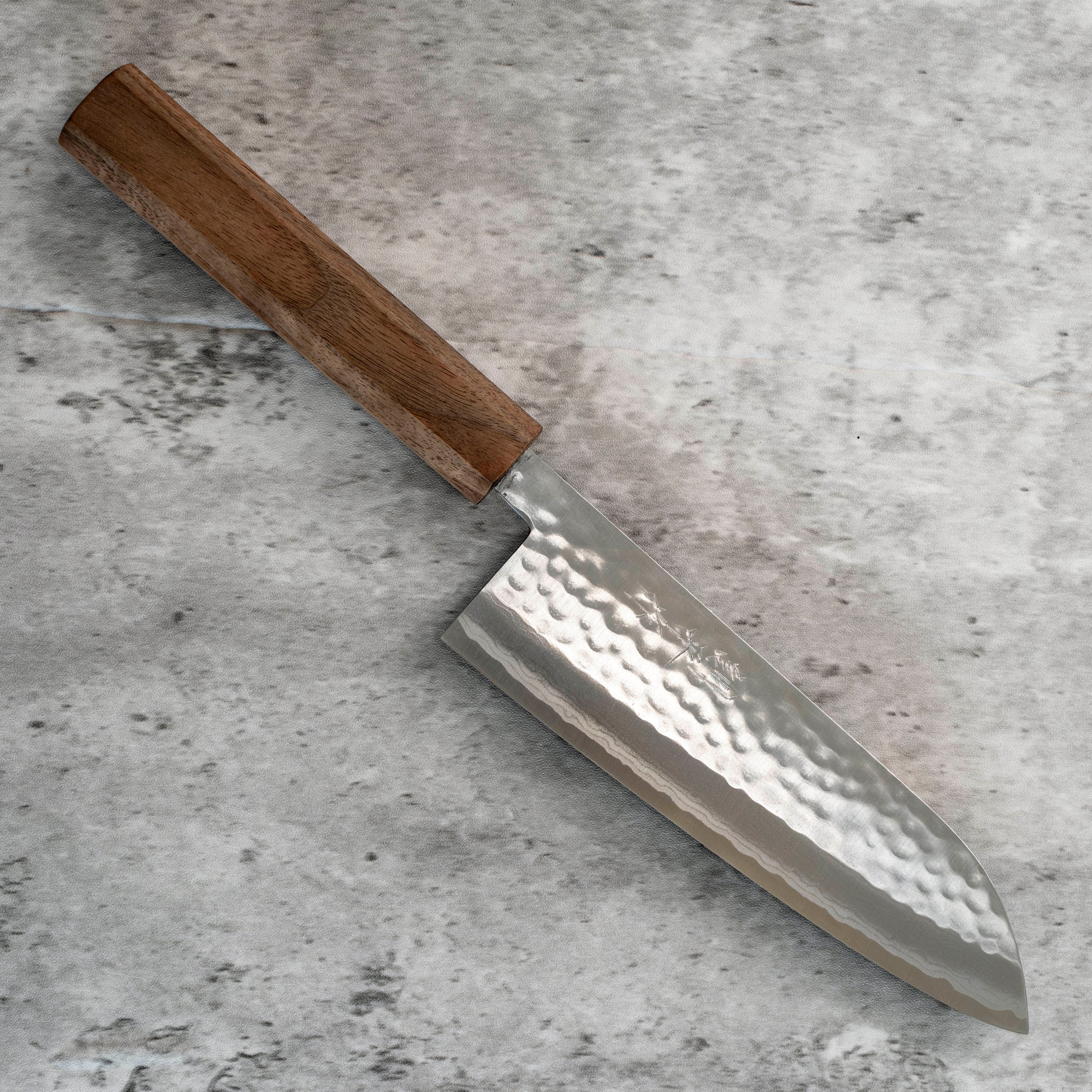
Masutani Damascus Santoku 170 mm
| Blade Length | 170 mm |
| Total Length | 315 mm |
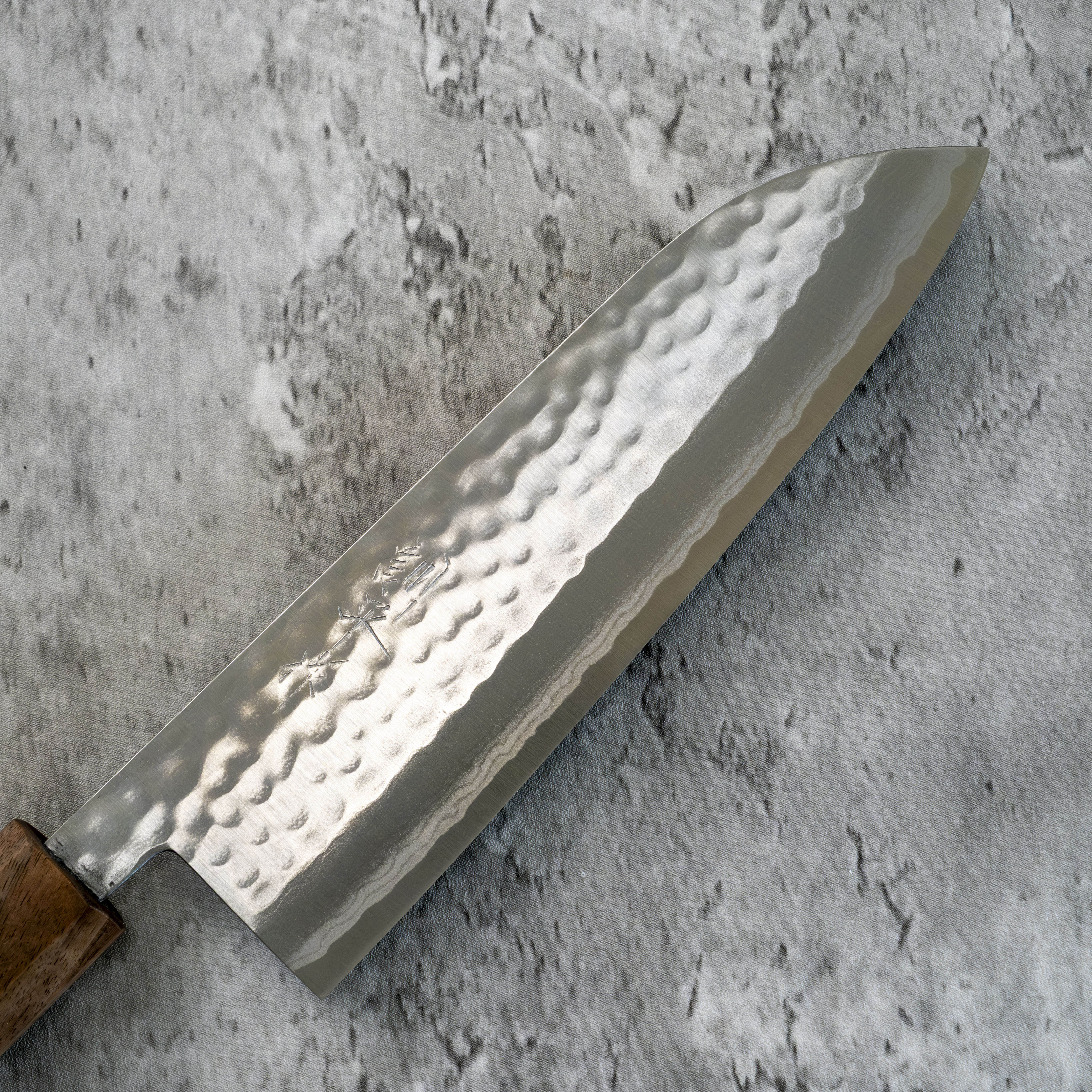
| Steel | VG-10 |
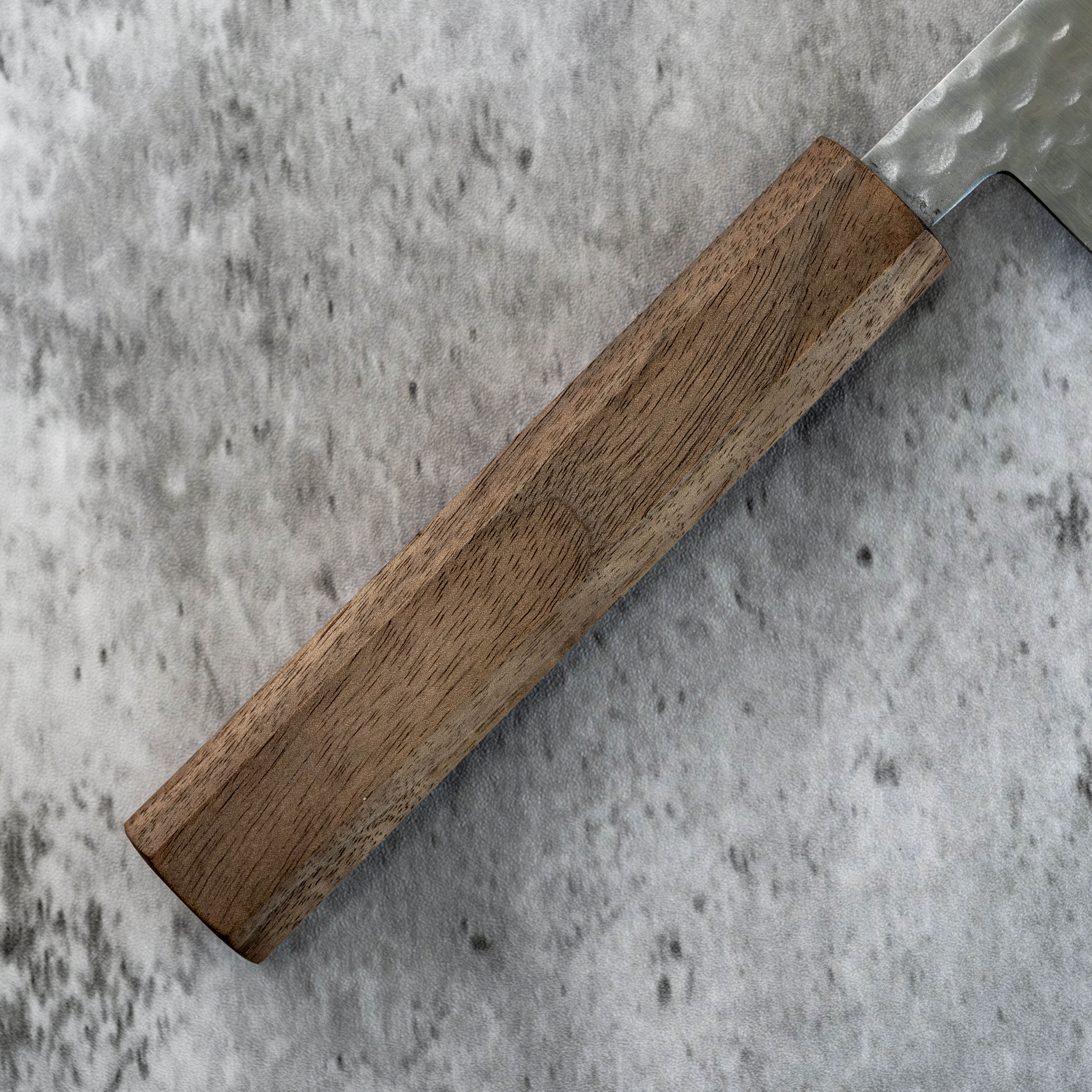
| Handle | Mono Walnut |
| Ferrule | N/A |
| Rockwell | 61 |
| Height Spine to heel | 47 mm |
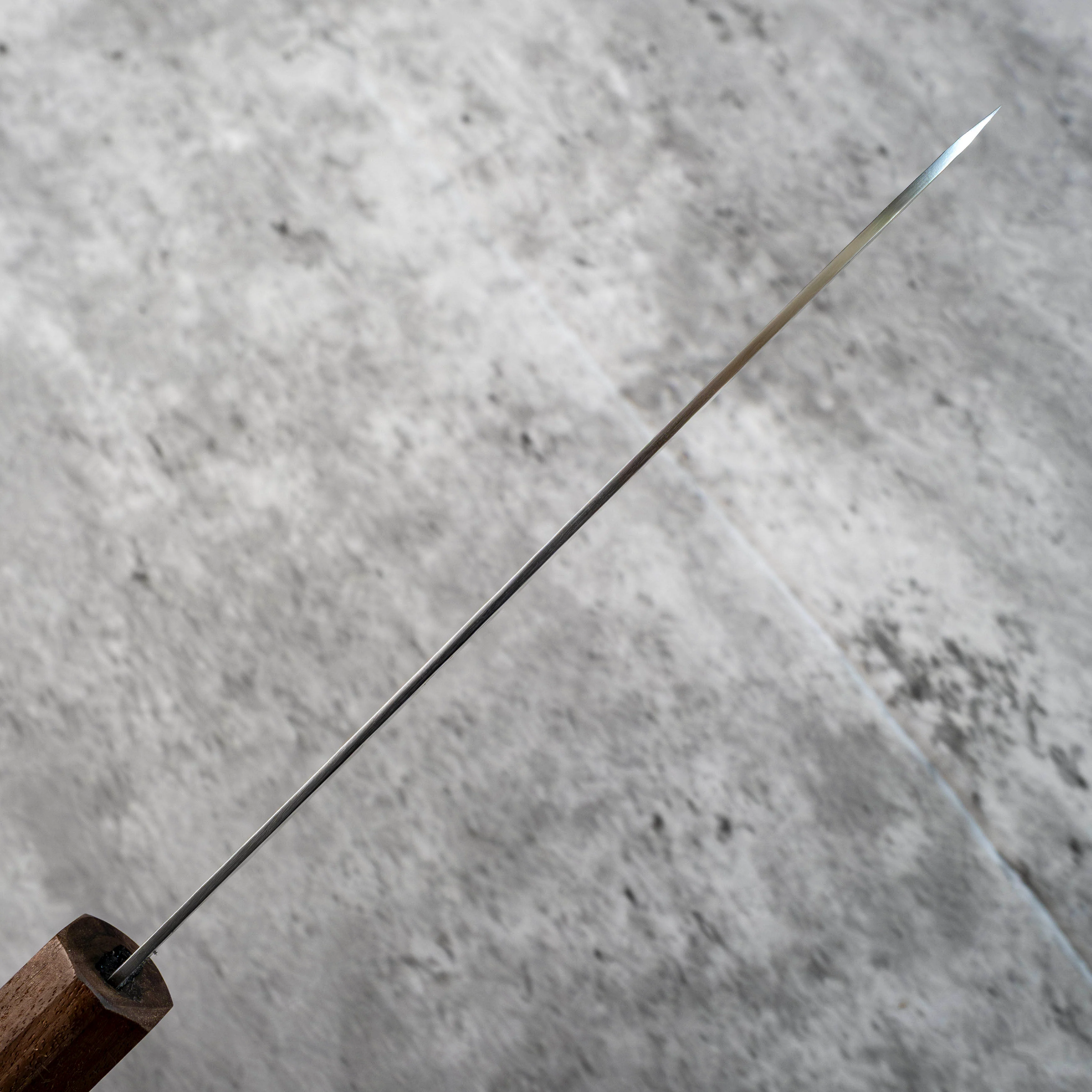
| Width at Spine | 1.8 mm |
| Weight | 113 grams |
| Bevel | Double (50/50) |
Masutani Hamono
Masutani-san works in a small shop behind his house located in the famous Takefu Knife village. He primarily works on his own but gets help from his two grandson's on the weekends and his Son in law who he would like to take over the business when he retires. He is a master sharpener and takes great pride in making sure every knife that leaves his shop is razor sharp. He makes beautiful and affordable knives that we highly recommend to home users looking for something that performs well, won't break the bank and is easy to maintain.
Takefu Knife Village
The Takefu Knife Village is a cooperative workshop in the Echizen region of Japan. It is the home to a long list of blacksmiths that we work with and many young and upcoming apprentices learning the trade. The area has a 700 year long history of smithing with roots in agricultural tools turned cutlery powerhouse.
The Knife
Santoku translates to three virtues. Meat, fish, and vegetables, or slicing, dicing, and chopping. No matter what way you look at it, it implies the versatility of the knife. While you sacrifice some of the slicing capability of a larger gyuto, don't be fooled by its size, the santoku can get 99% of your kitchen tasks done without breaking a sweat, which is probably why its the most popular shape in Japanese home kitchens.
Knife Care (Stainless Steel)
- Although this knife is made from stainless steel we do still encourage our customers to keep their knives as dry and clean as possible.
- NO DISHWASHER - the high heat will ruin the wooden handle.
- Wash and dry by hand using regular dish soap and warm water using a none abrasive sponge or cloth.
- Ensure the knife is dry before being put away for storage and ensure the edge of the knife is protected to avoid any unnecessary dulling.
- Avoid Bones, Frozen foods, nuts and hard candies or anything other than fruits, vegetables and proteins.
Product Information
Product Information
Shipping & Returns
Shipping & Returns
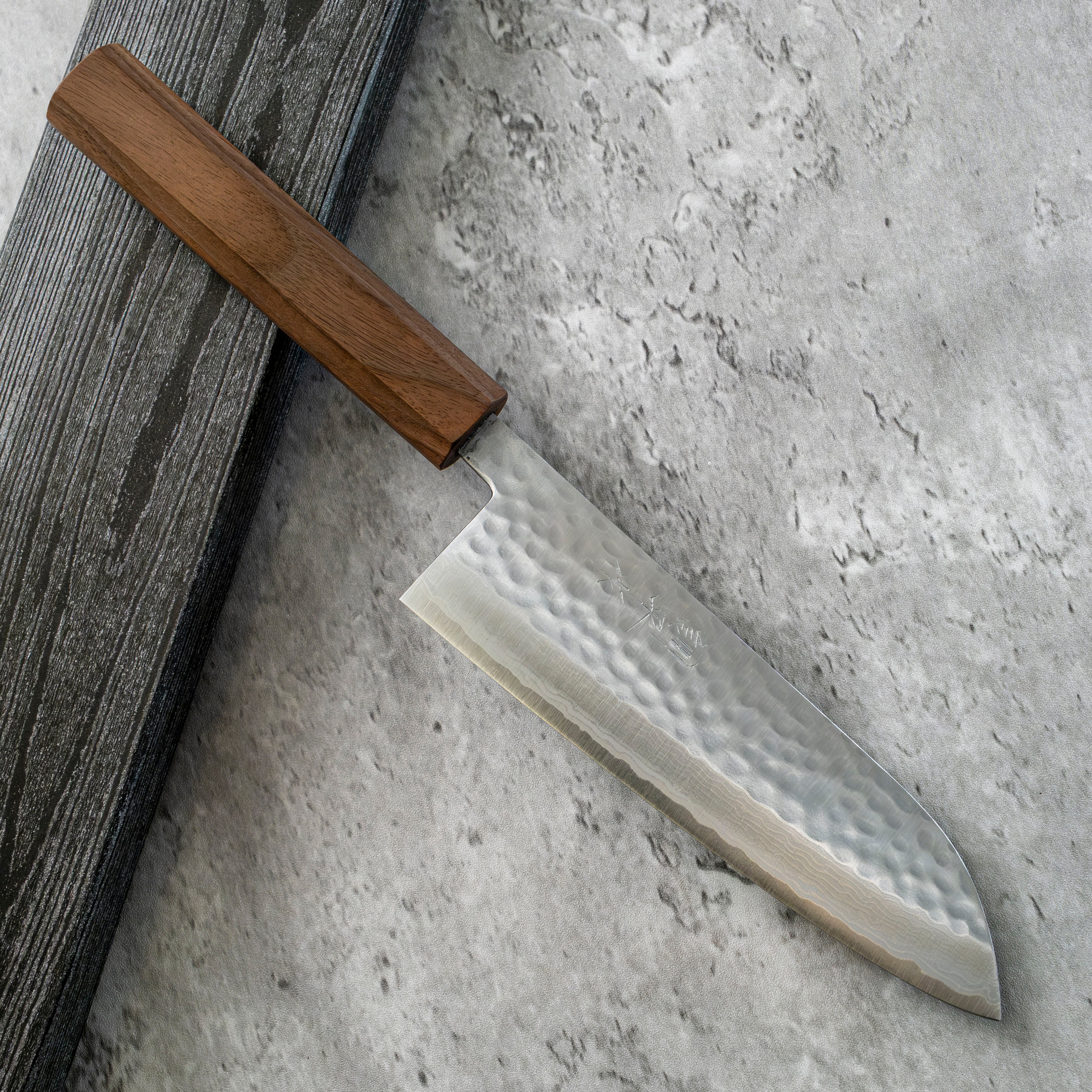

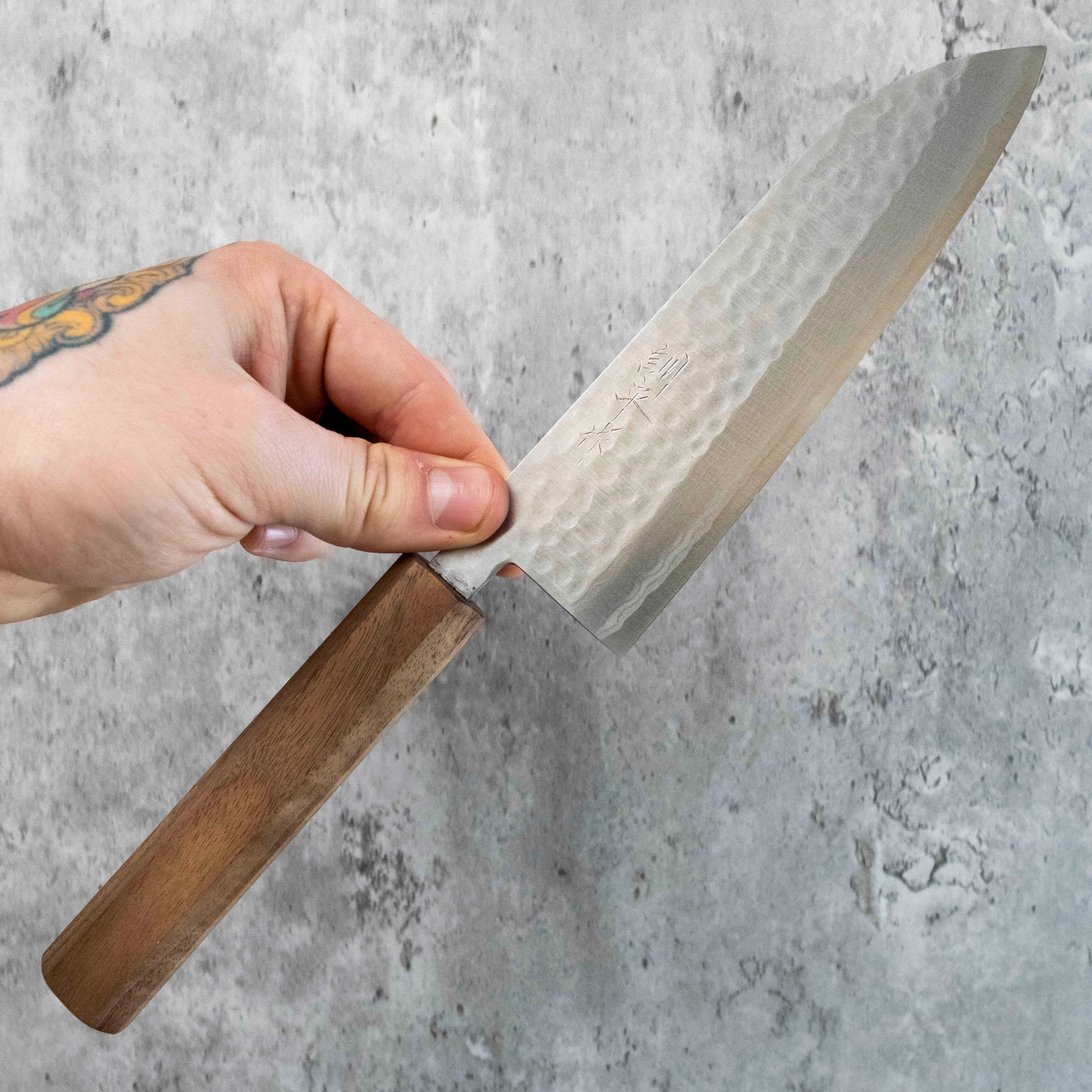
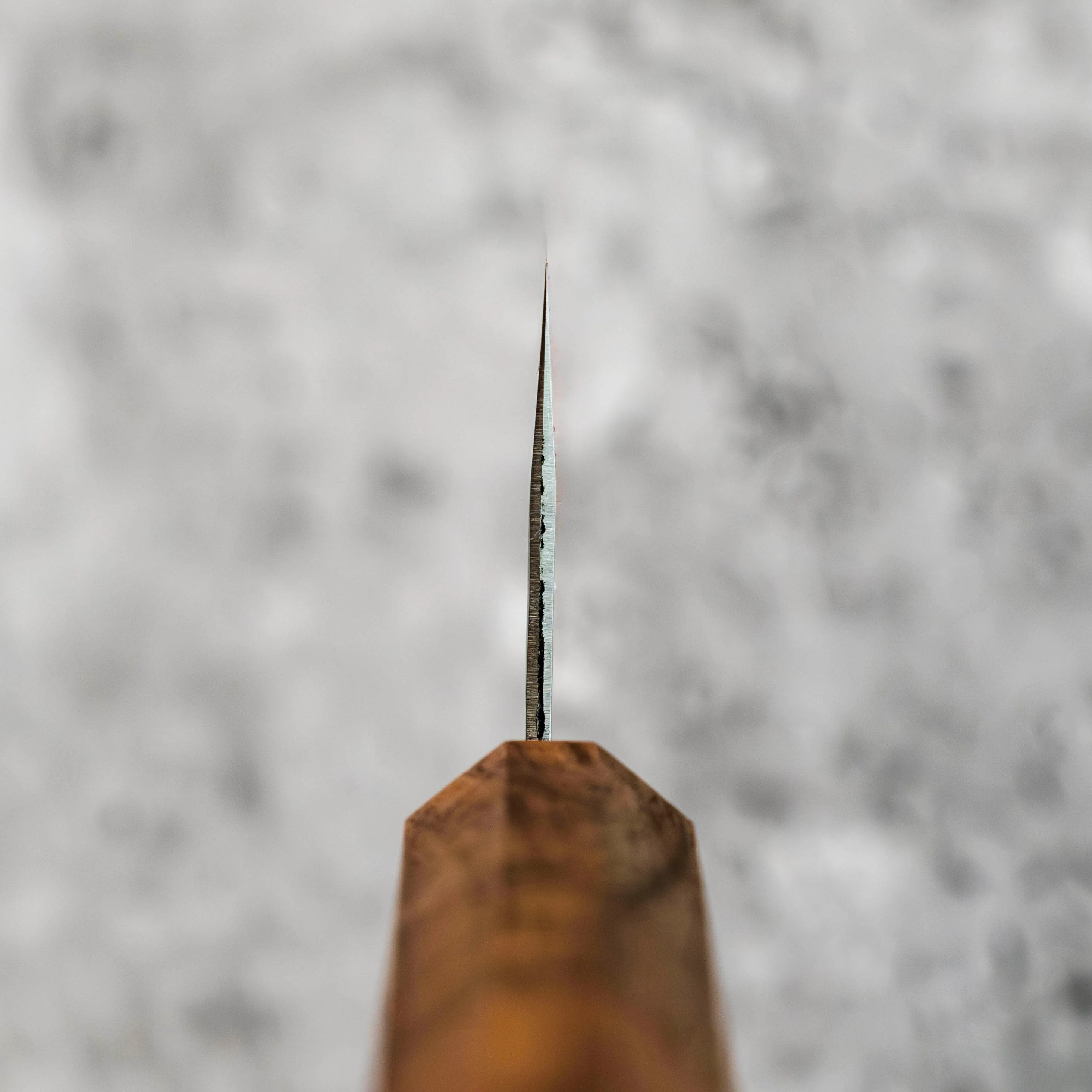
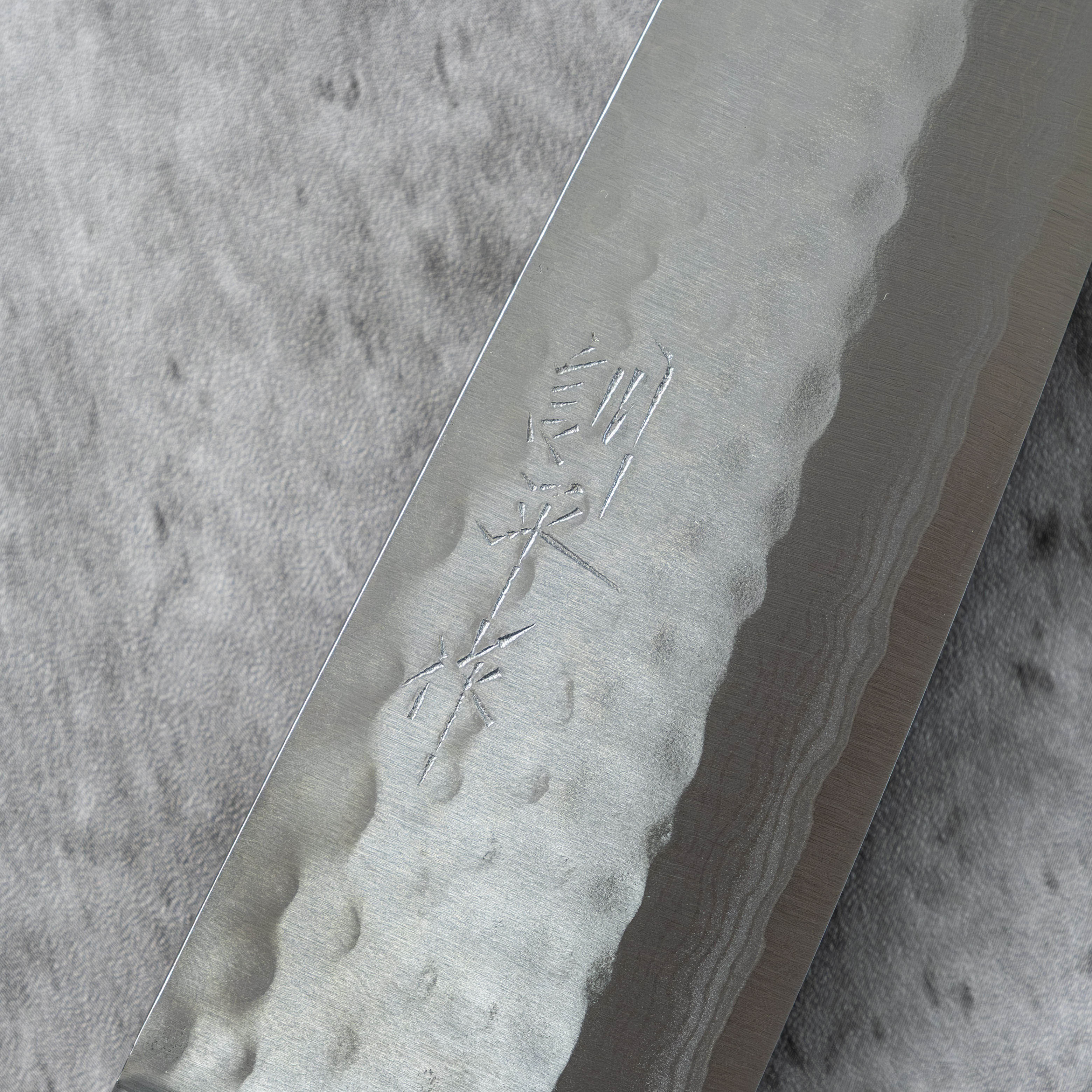
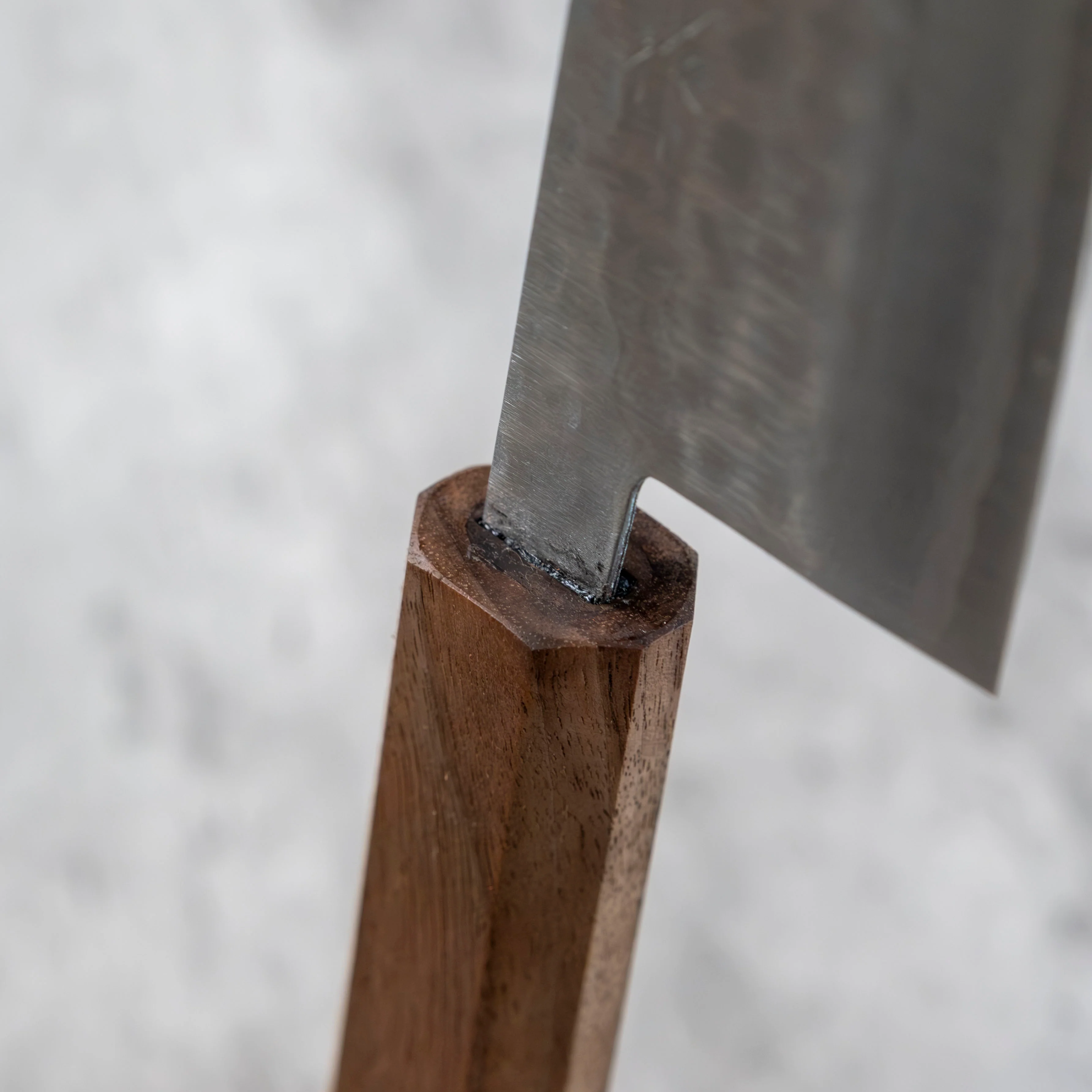
Masutani Damascus Santoku 170 mm
Masutani Damascus Santoku 170 mm
| Blade Length | 170 mm |
| Total Length | 315 mm |
| Steel | VG-10 |
| Handle | Mono Walnut |
| Ferrule | N/A |
| Rockwell | 61 |
| Height Spine to heel | 47 mm |
| Width at Spine | 1.8 mm |
| Weight | 113 grams |
| Bevel | Double (50/50) |
Masutani Hamono
Masutani-san works in a small shop behind his house located in the famous Takefu Knife village. He primarily works on his own but gets help from his two grandson's on the weekends and his Son in law who he would like to take over the business when he retires. He is a master sharpener and takes great pride in making sure every knife that leaves his shop is razor sharp. He makes beautiful and affordable knives that we highly recommend to home users looking for something that performs well, won't break the bank and is easy to maintain.
Takefu Knife Village
The Takefu Knife Village is a cooperative workshop in the Echizen region of Japan. It is the home to a long list of blacksmiths that we work with and many young and upcoming apprentices learning the trade. The area has a 700 year long history of smithing with roots in agricultural tools turned cutlery powerhouse.
The Knife
Santoku translates to three virtues. Meat, fish, and vegetables, or slicing, dicing, and chopping. No matter what way you look at it, it implies the versatility of the knife. While you sacrifice some of the slicing capability of a larger gyuto, don't be fooled by its size, the santoku can get 99% of your kitchen tasks done without breaking a sweat, which is probably why its the most popular shape in Japanese home kitchens.
Knife Care (Stainless Steel)
- Although this knife is made from stainless steel we do still encourage our customers to keep their knives as dry and clean as possible.
- NO DISHWASHER - the high heat will ruin the wooden handle.
- Wash and dry by hand using regular dish soap and warm water using a none abrasive sponge or cloth.
- Ensure the knife is dry before being put away for storage and ensure the edge of the knife is protected to avoid any unnecessary dulling.
- Avoid Bones, Frozen foods, nuts and hard candies or anything other than fruits, vegetables and proteins.
Original: $104.65
-65%$104.65
$36.63Product Information
Product Information
Shipping & Returns
Shipping & Returns
Description
| Blade Length | 170 mm |
| Total Length | 315 mm |
| Steel | VG-10 |
| Handle | Mono Walnut |
| Ferrule | N/A |
| Rockwell | 61 |
| Height Spine to heel | 47 mm |
| Width at Spine | 1.8 mm |
| Weight | 113 grams |
| Bevel | Double (50/50) |
Masutani Hamono
Masutani-san works in a small shop behind his house located in the famous Takefu Knife village. He primarily works on his own but gets help from his two grandson's on the weekends and his Son in law who he would like to take over the business when he retires. He is a master sharpener and takes great pride in making sure every knife that leaves his shop is razor sharp. He makes beautiful and affordable knives that we highly recommend to home users looking for something that performs well, won't break the bank and is easy to maintain.
Takefu Knife Village
The Takefu Knife Village is a cooperative workshop in the Echizen region of Japan. It is the home to a long list of blacksmiths that we work with and many young and upcoming apprentices learning the trade. The area has a 700 year long history of smithing with roots in agricultural tools turned cutlery powerhouse.
The Knife
Santoku translates to three virtues. Meat, fish, and vegetables, or slicing, dicing, and chopping. No matter what way you look at it, it implies the versatility of the knife. While you sacrifice some of the slicing capability of a larger gyuto, don't be fooled by its size, the santoku can get 99% of your kitchen tasks done without breaking a sweat, which is probably why its the most popular shape in Japanese home kitchens.
Knife Care (Stainless Steel)
- Although this knife is made from stainless steel we do still encourage our customers to keep their knives as dry and clean as possible.
- NO DISHWASHER - the high heat will ruin the wooden handle.
- Wash and dry by hand using regular dish soap and warm water using a none abrasive sponge or cloth.
- Ensure the knife is dry before being put away for storage and ensure the edge of the knife is protected to avoid any unnecessary dulling.
- Avoid Bones, Frozen foods, nuts and hard candies or anything other than fruits, vegetables and proteins.