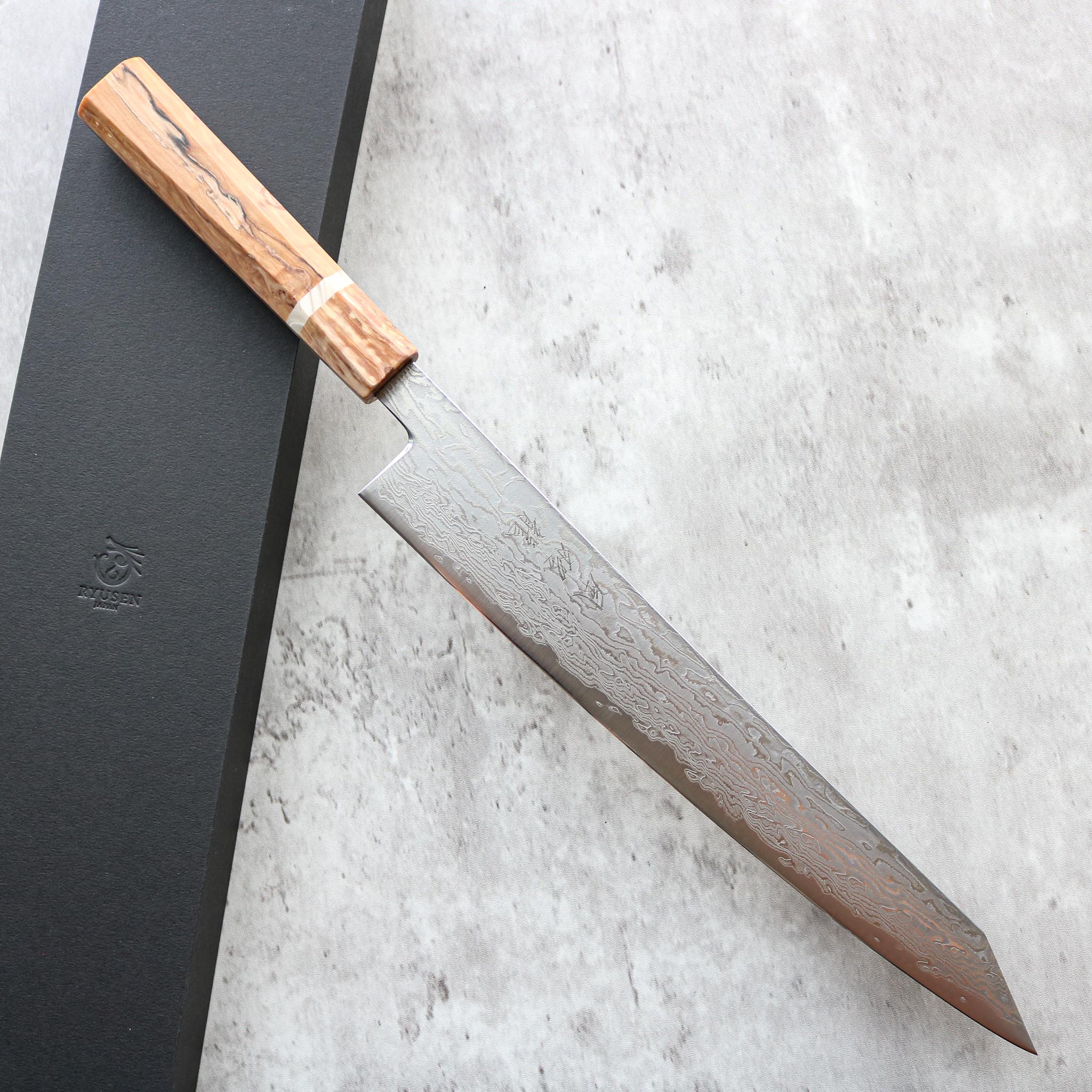
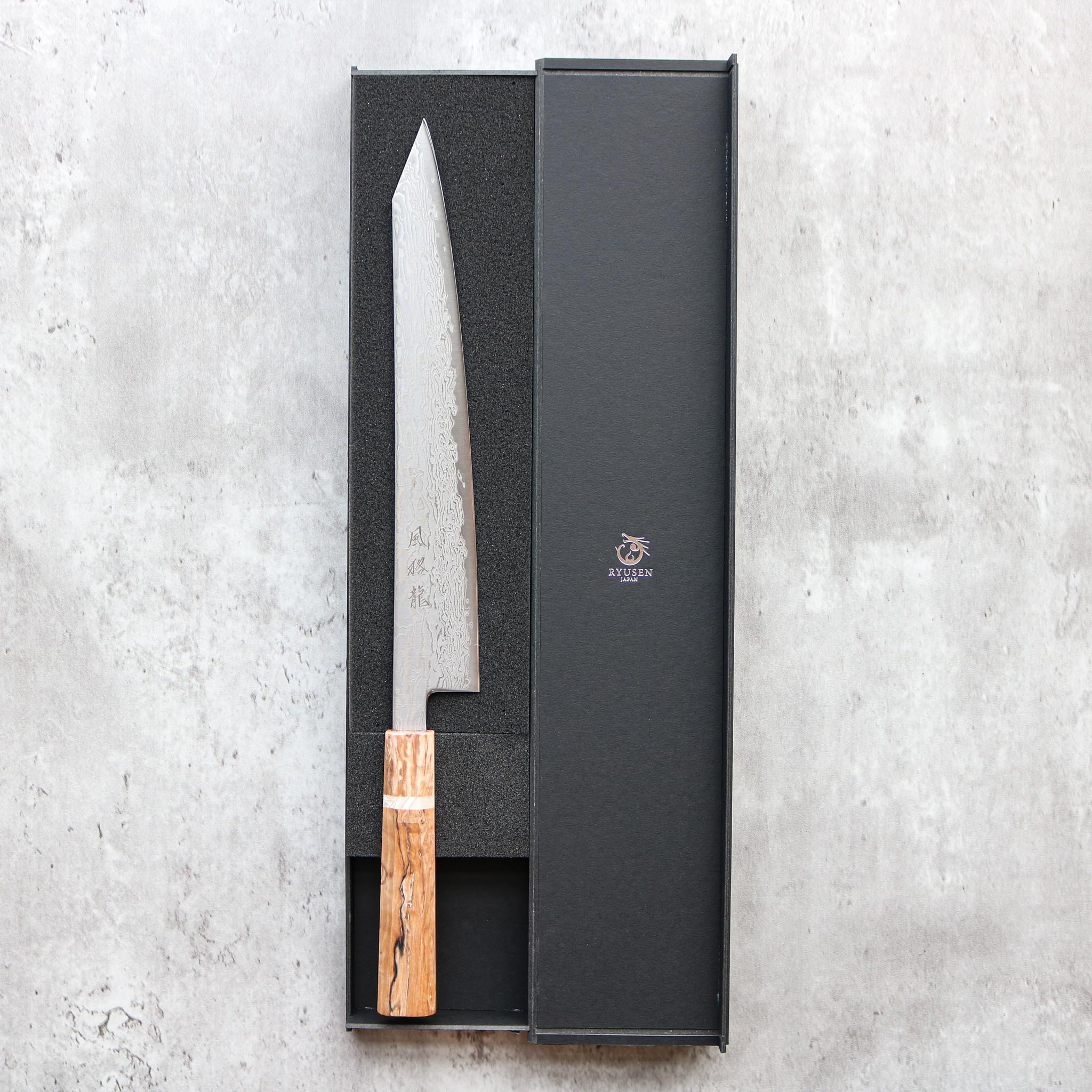
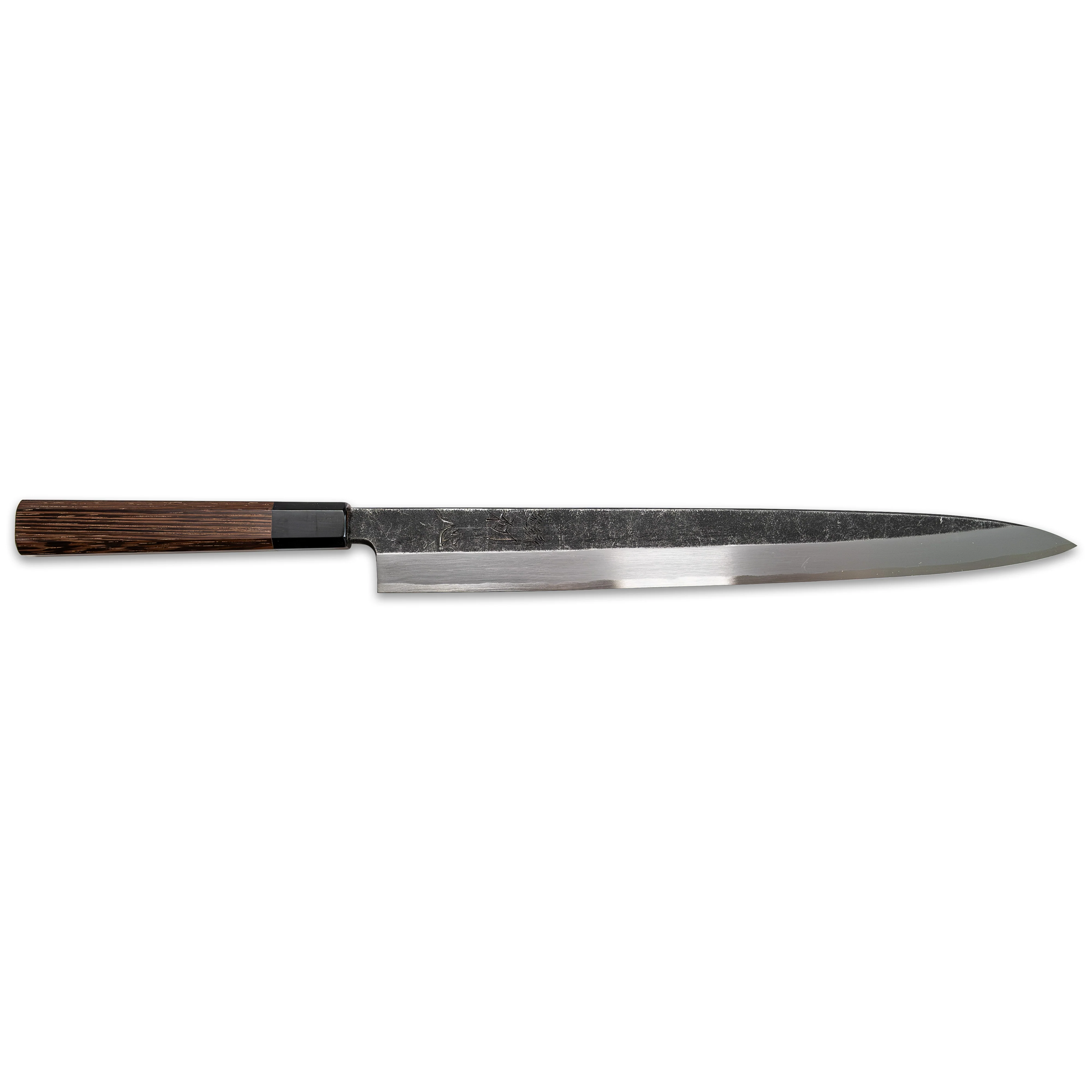
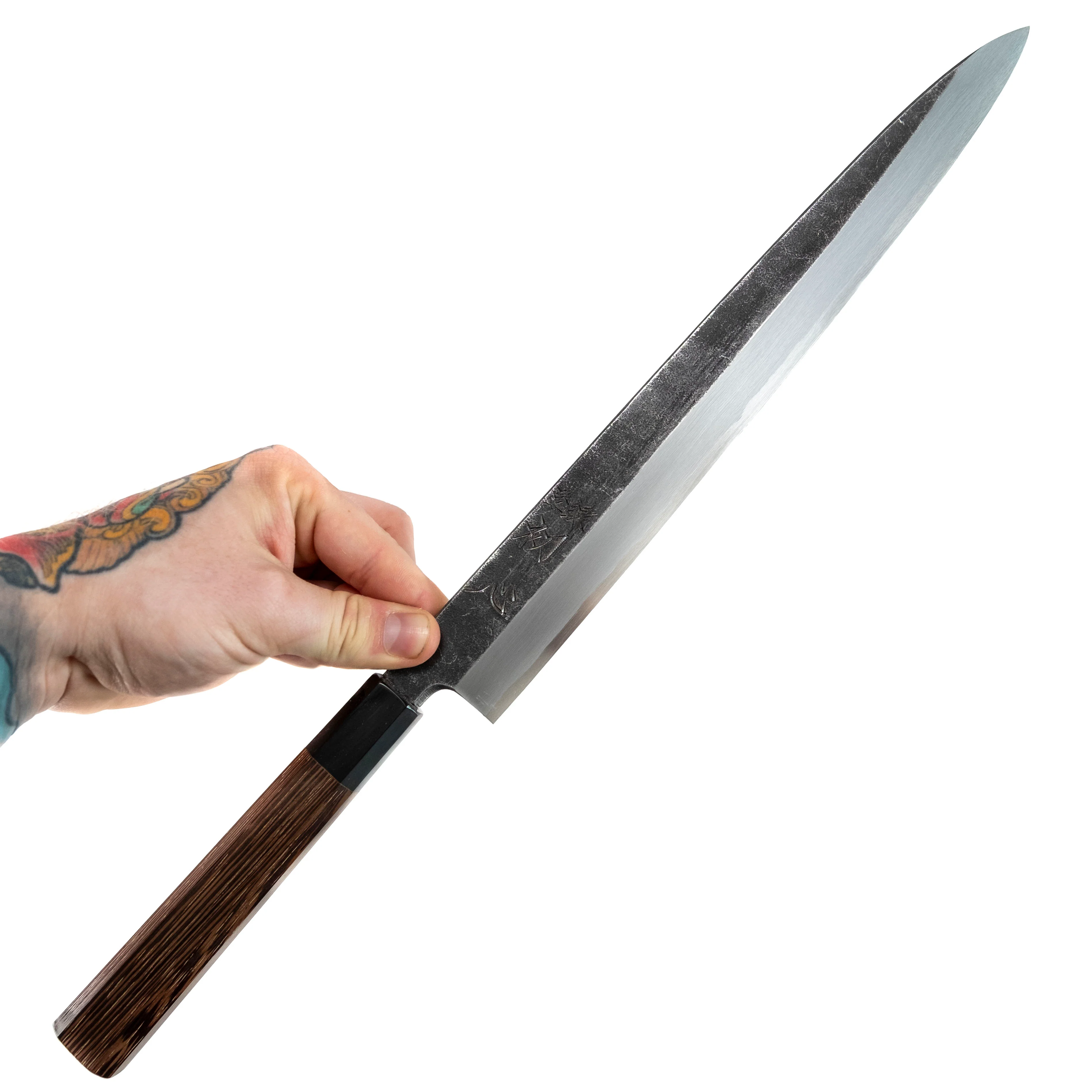
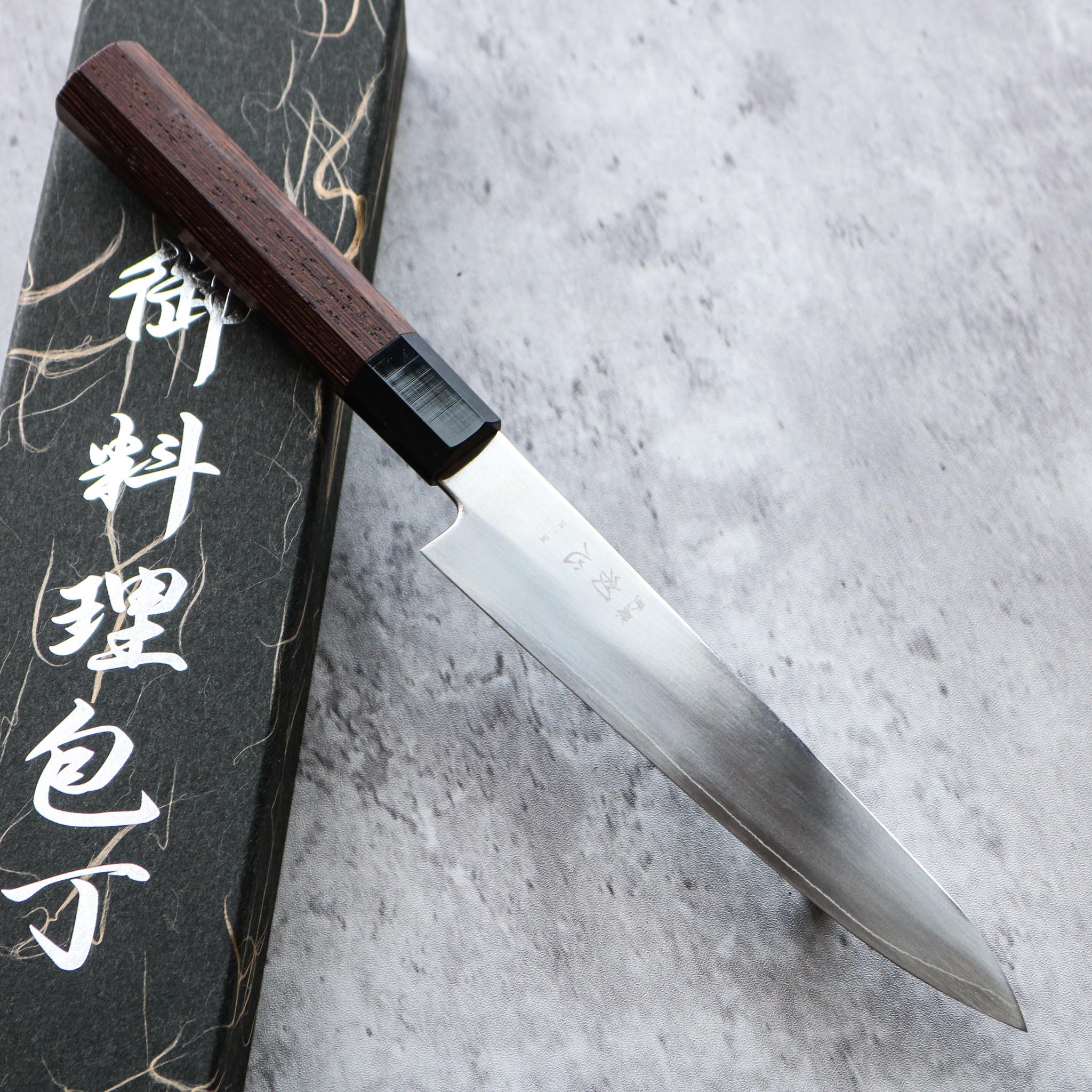
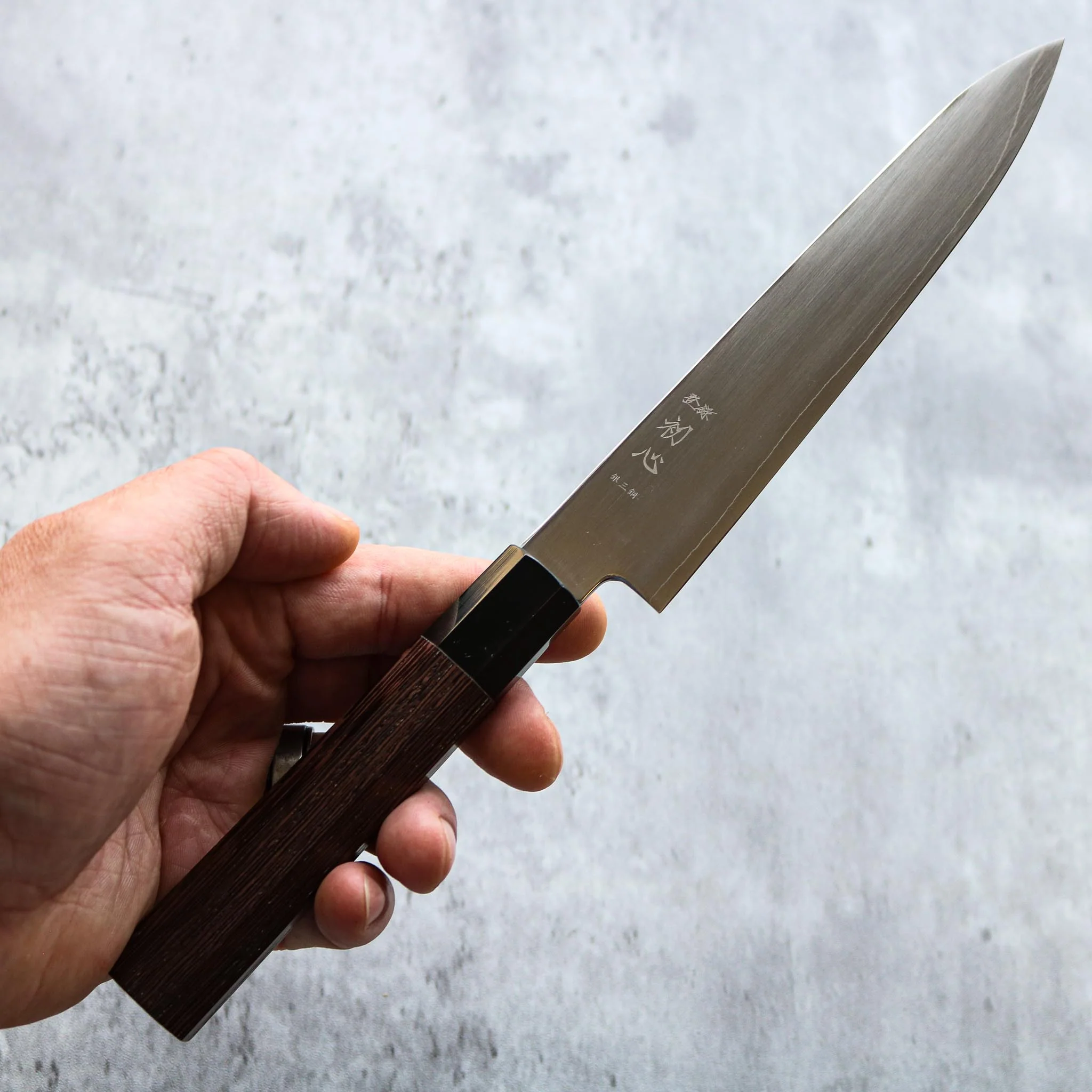
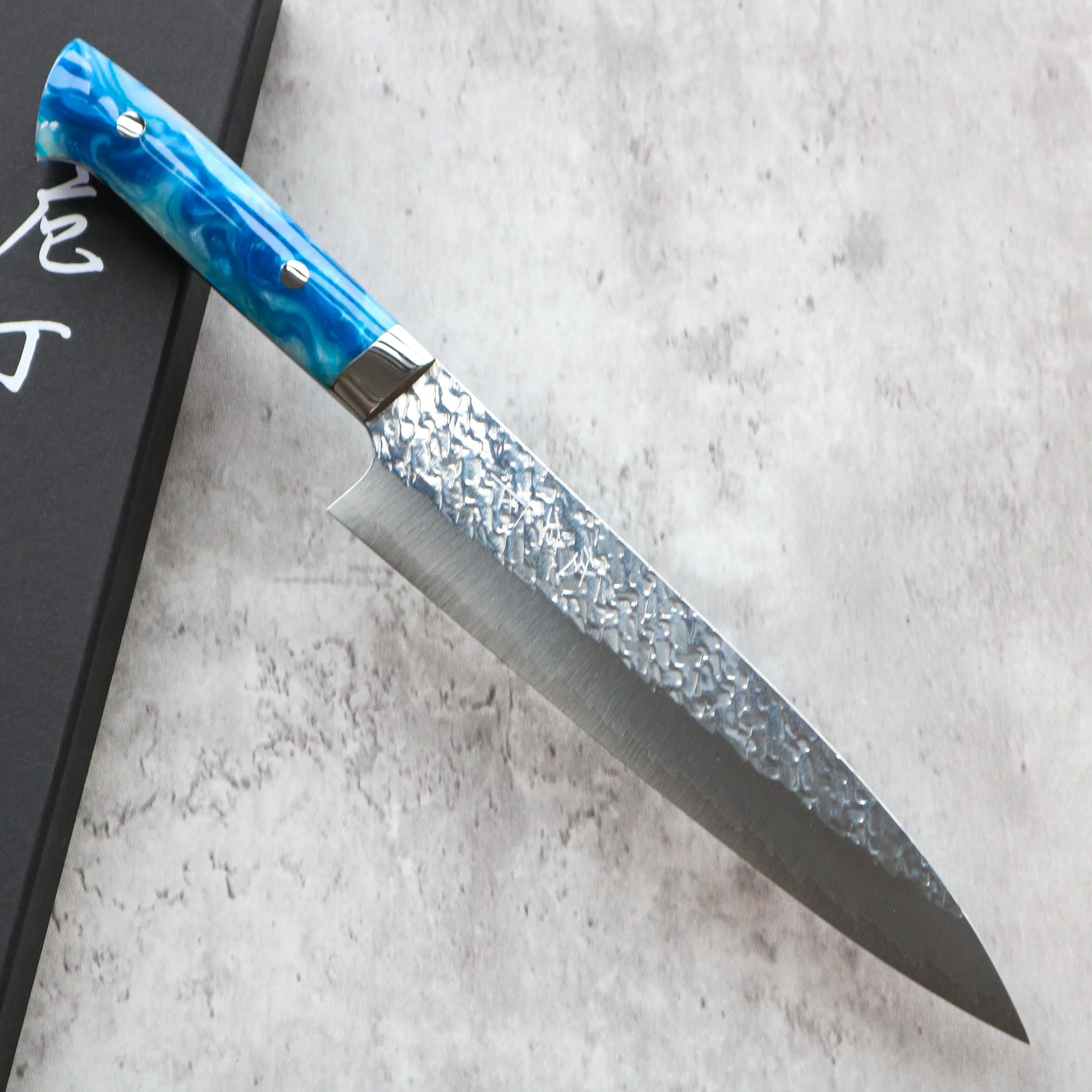
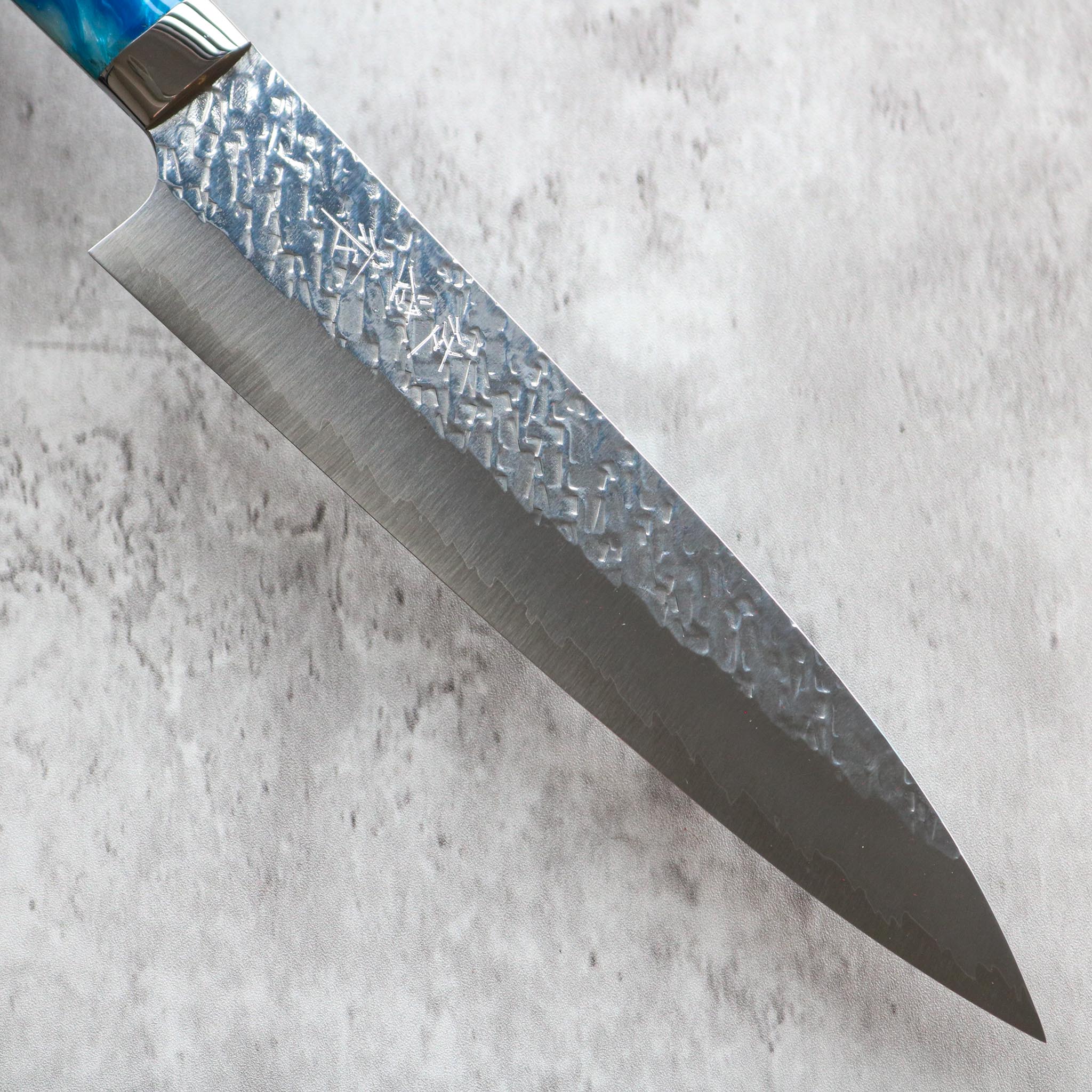
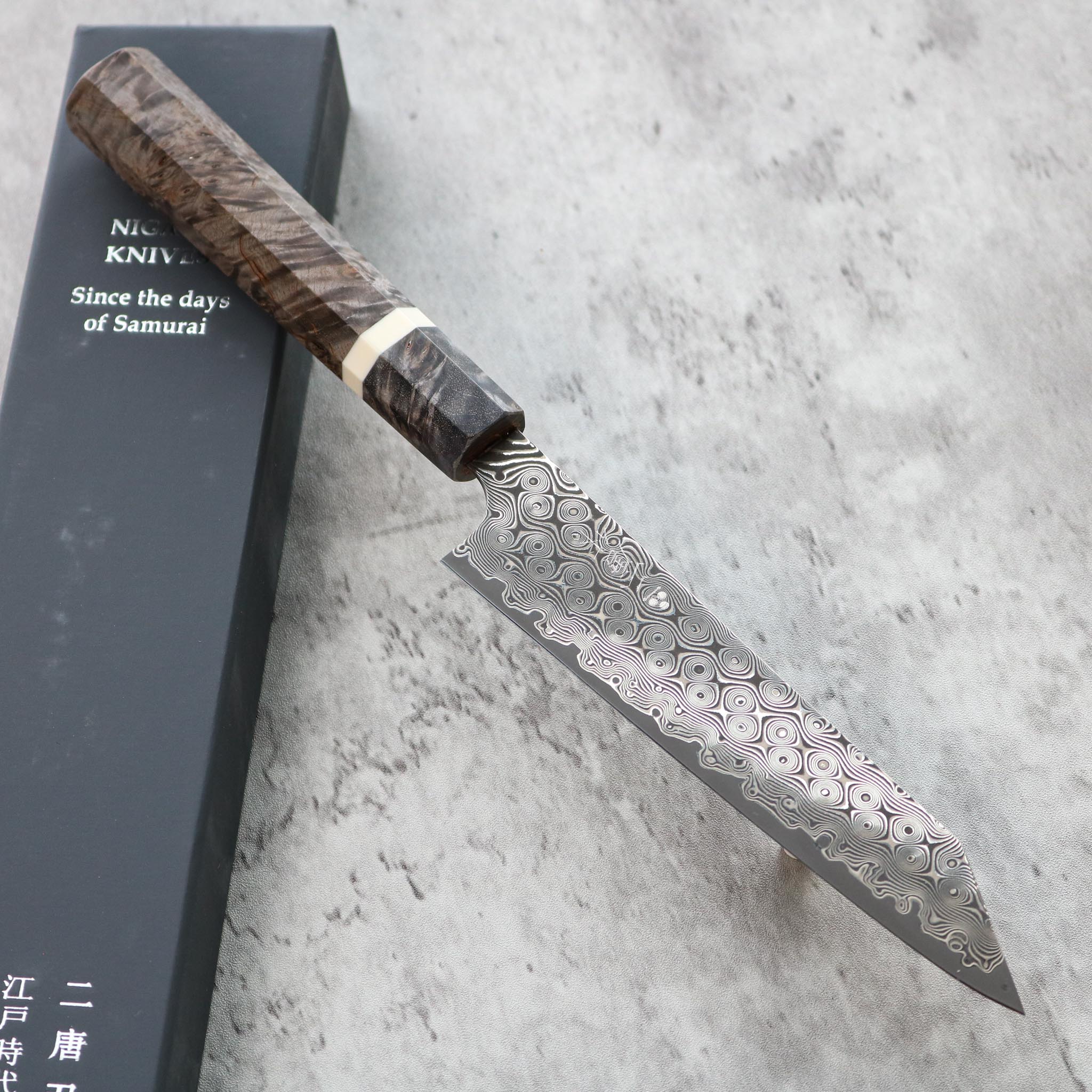
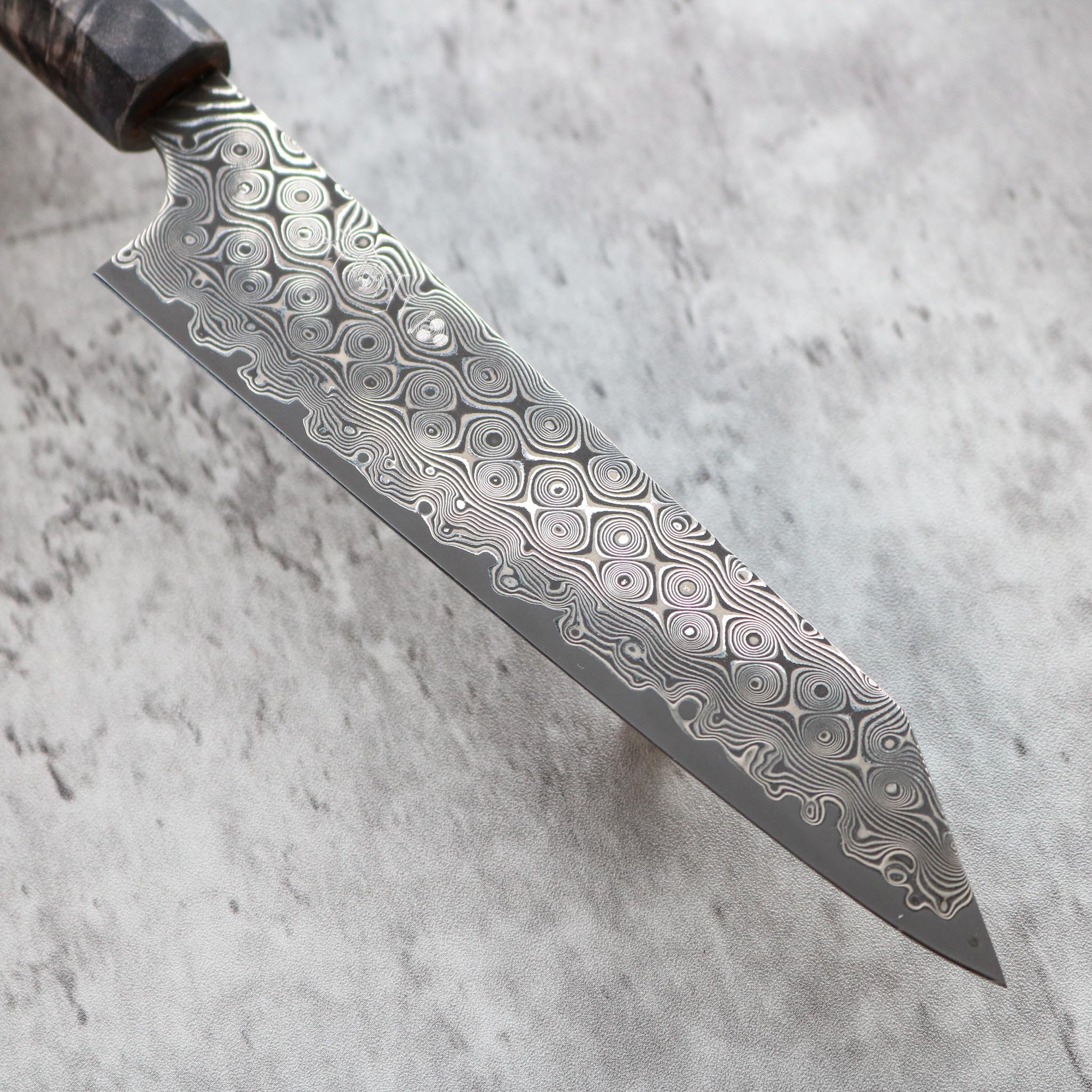
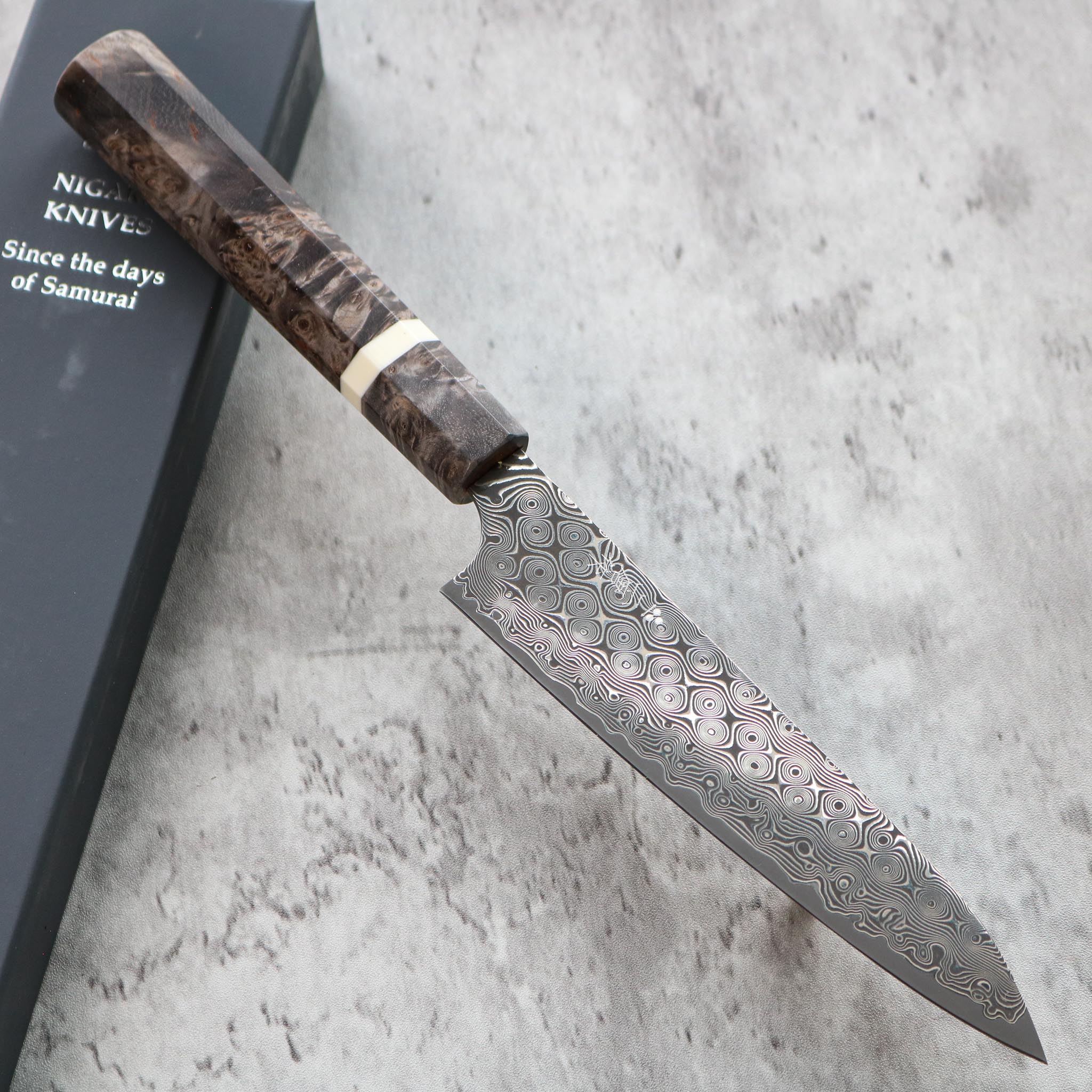
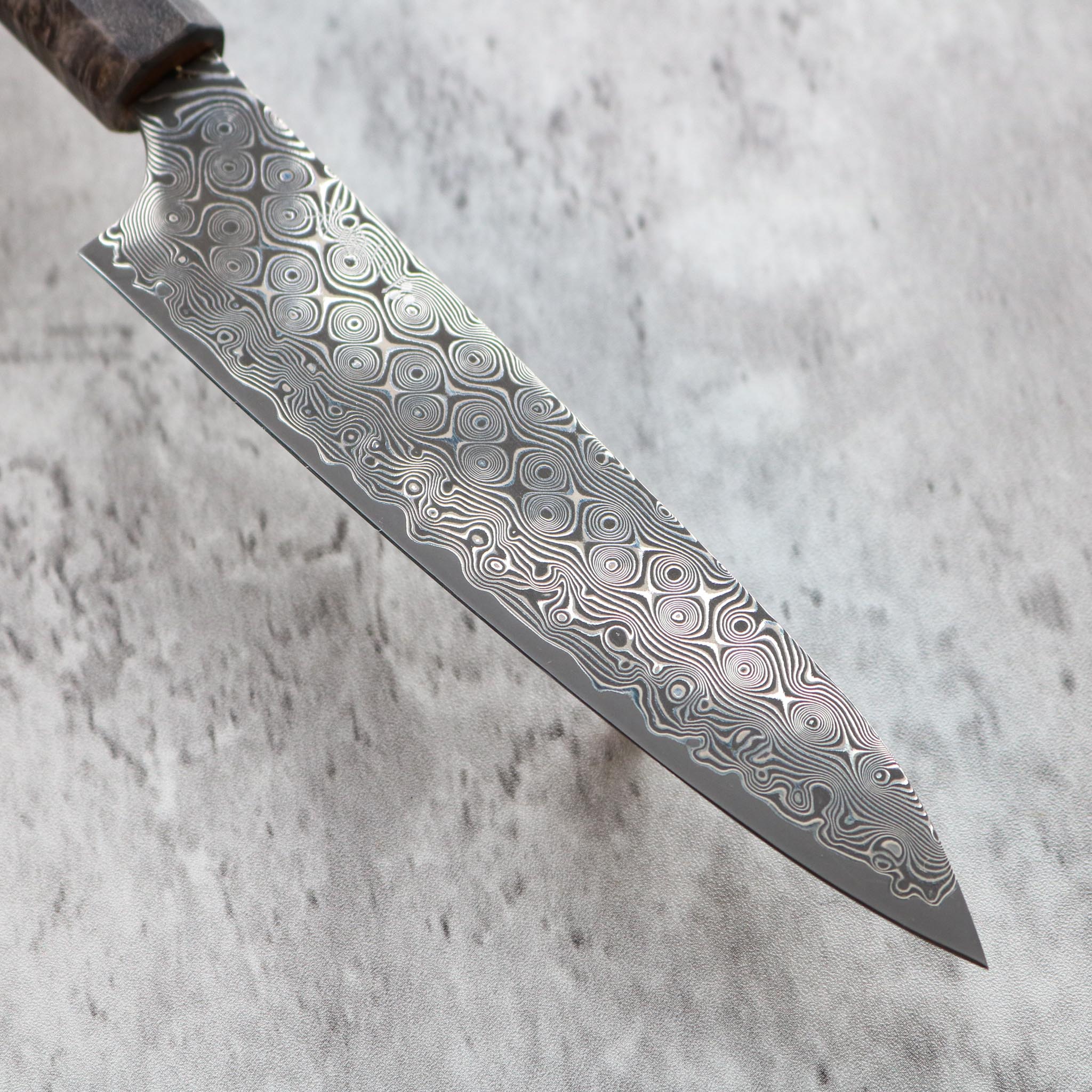
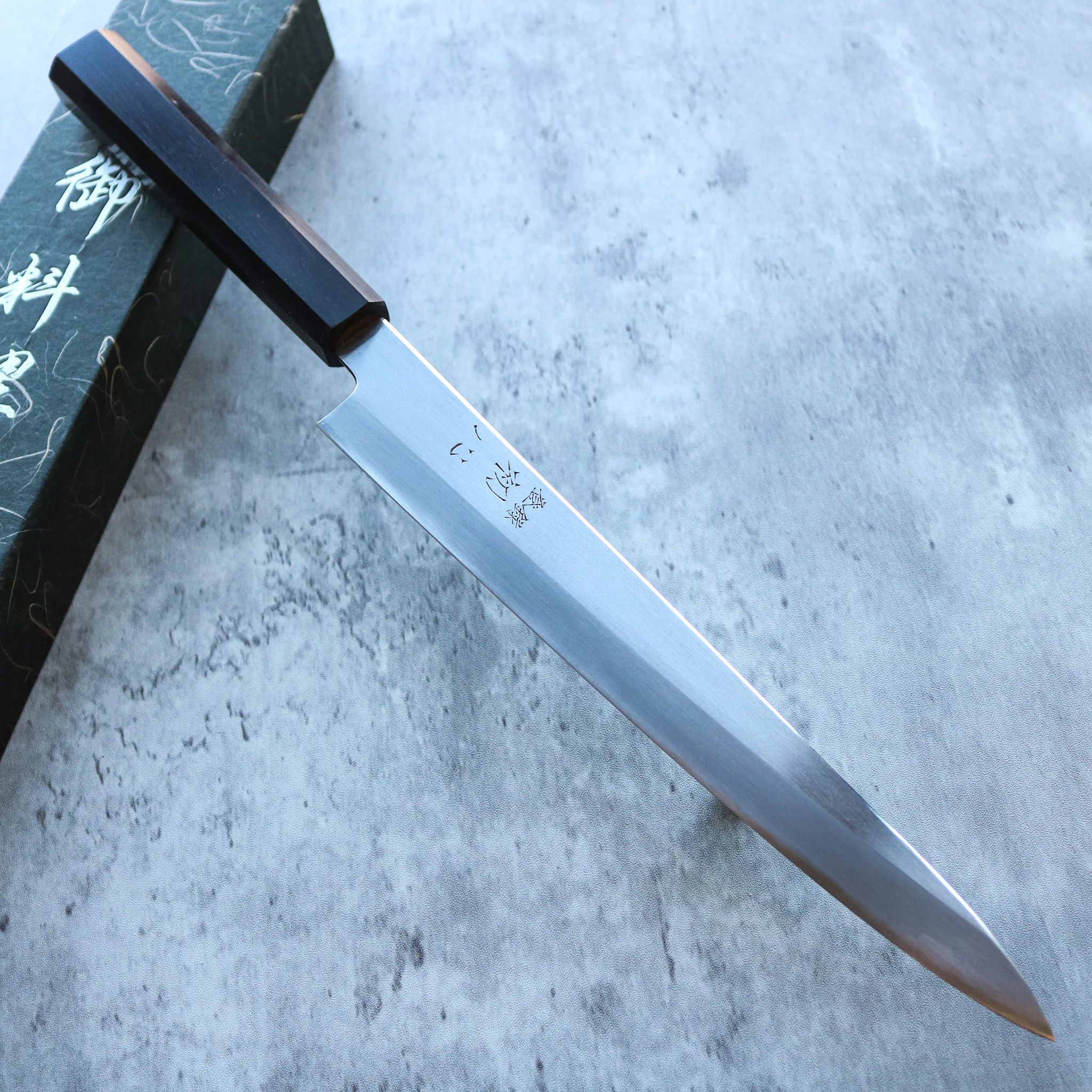
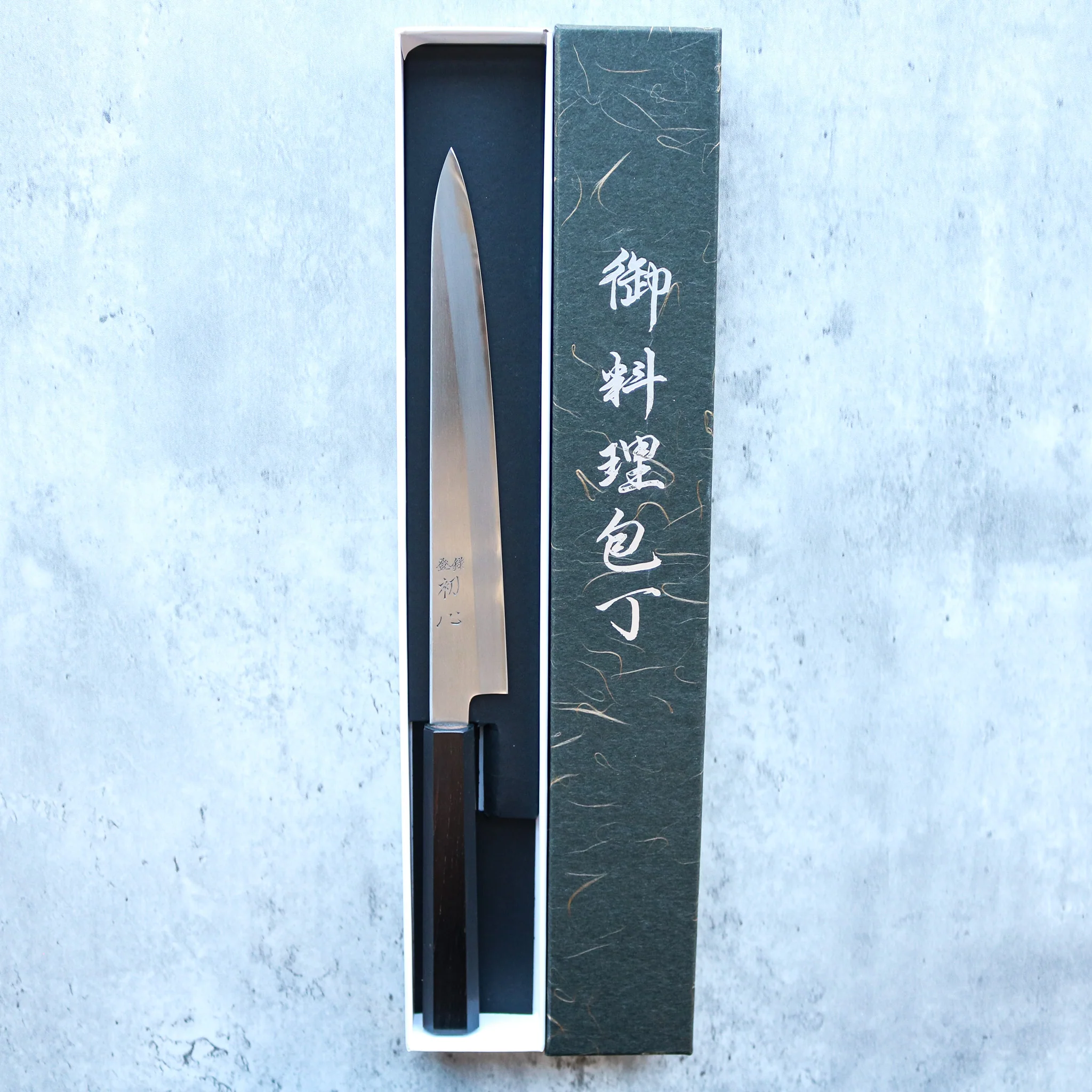
Nakagawa Satoshi B1 Sujihiki 230 mm
| Blade Length | 232mm |
| Total Length | 390 mm |
| Steel | Aogami (Blue #1) |
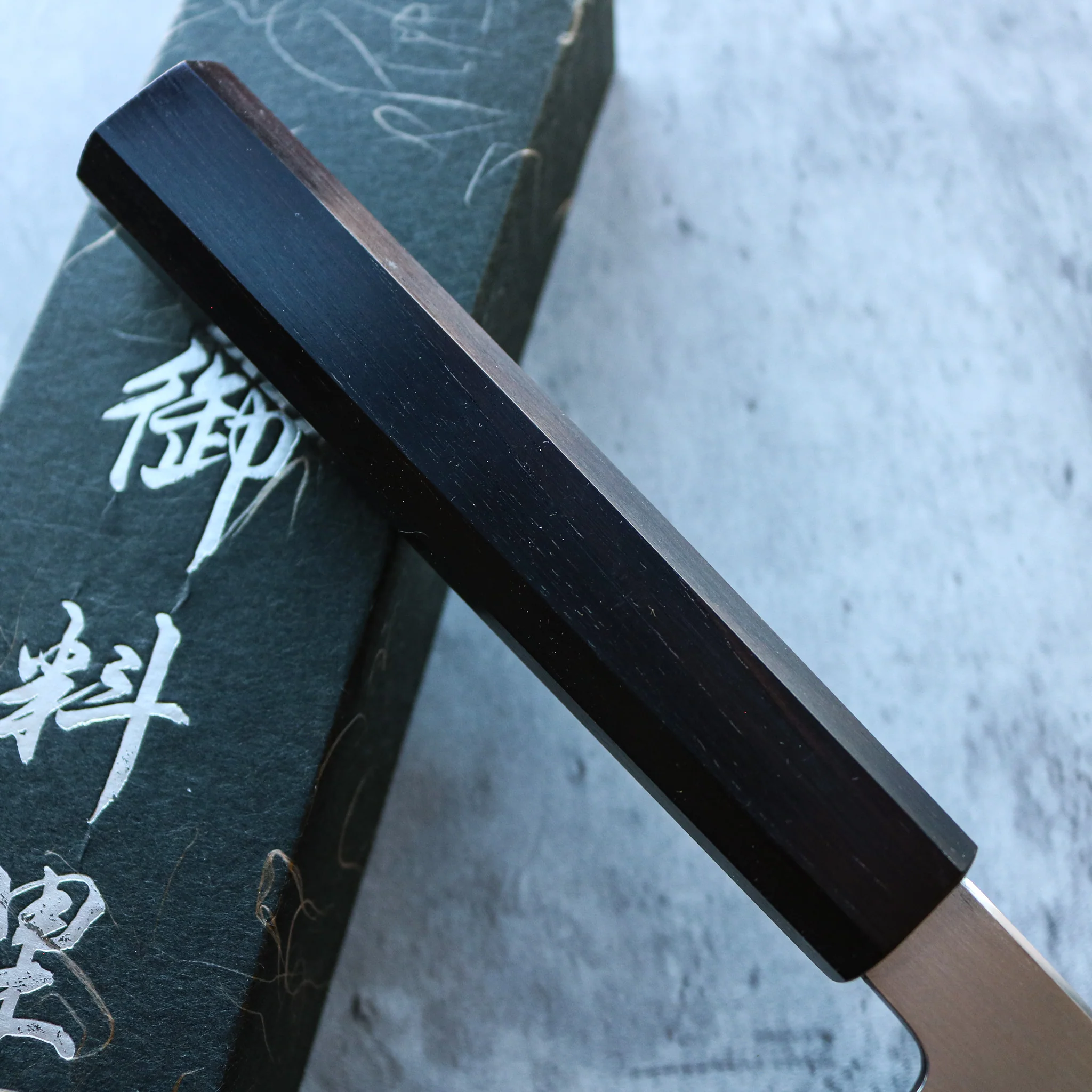
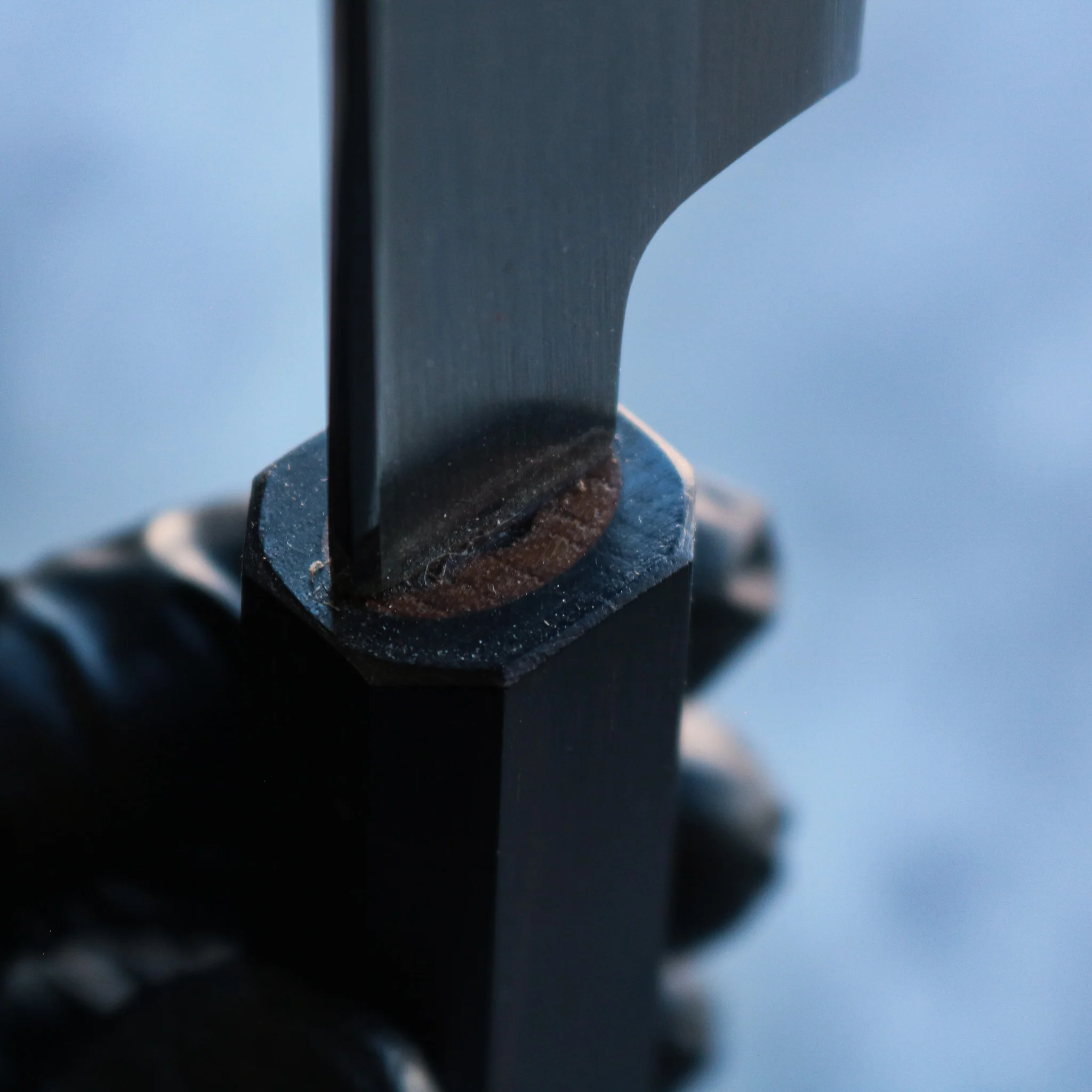
| Handle | Mono Ebony |
| Ferrule | N/A |
| Rockwell | 63-64 |
| Height Spine to heel | 33 mm |
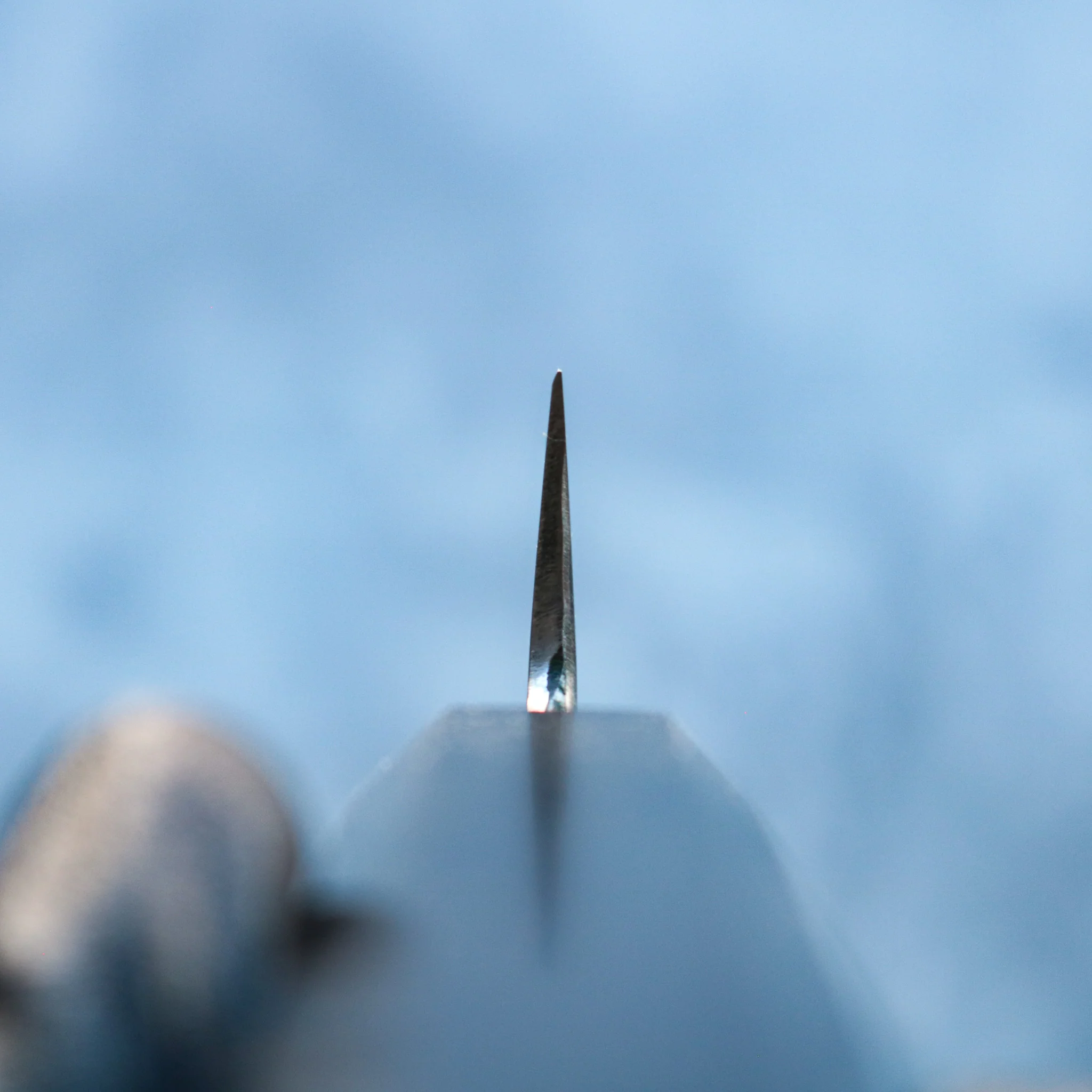
| Width at Spine | 2.8 mm |
| Weight | 164 grams |
| Bevel |
Double (50/50) |
The Blacksmith
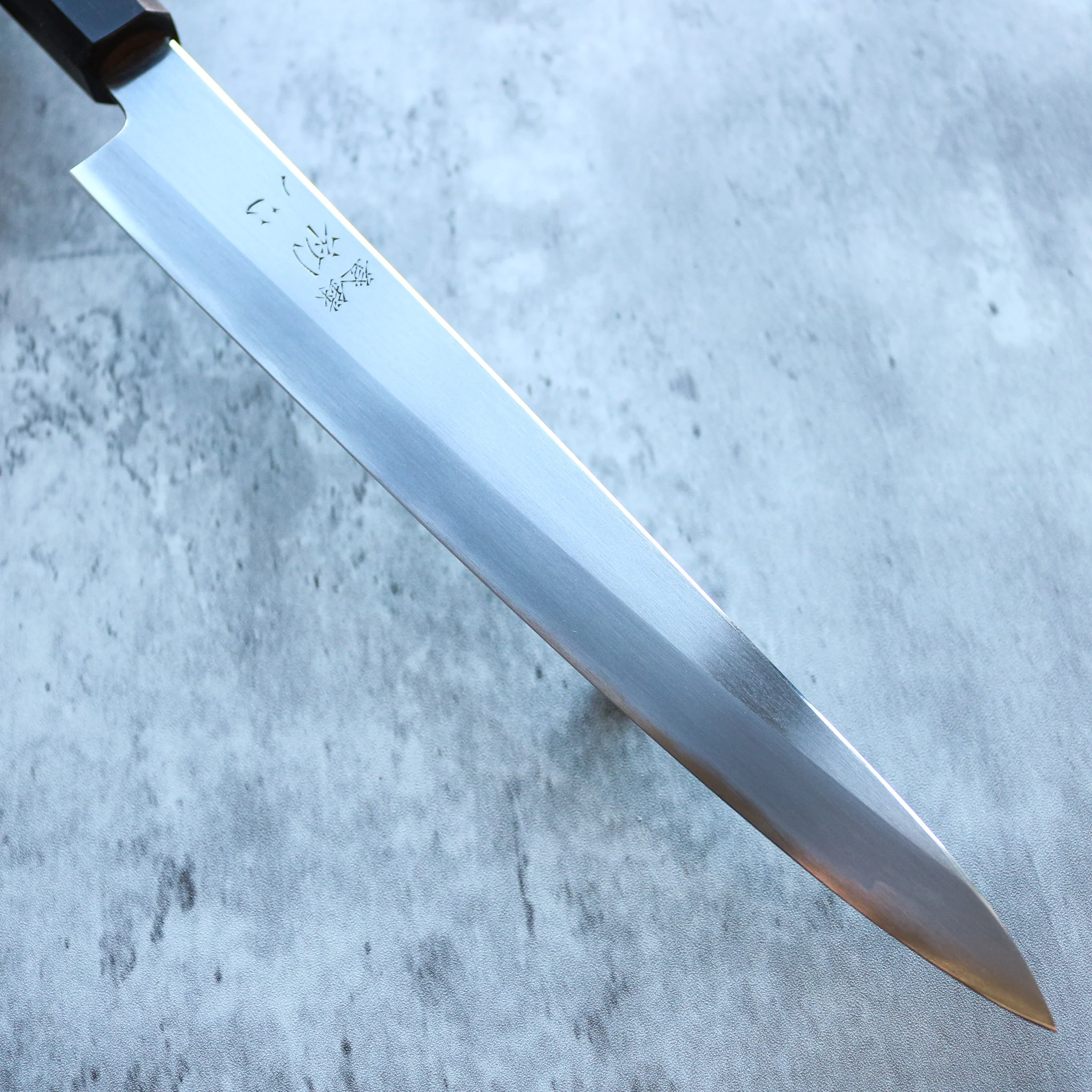
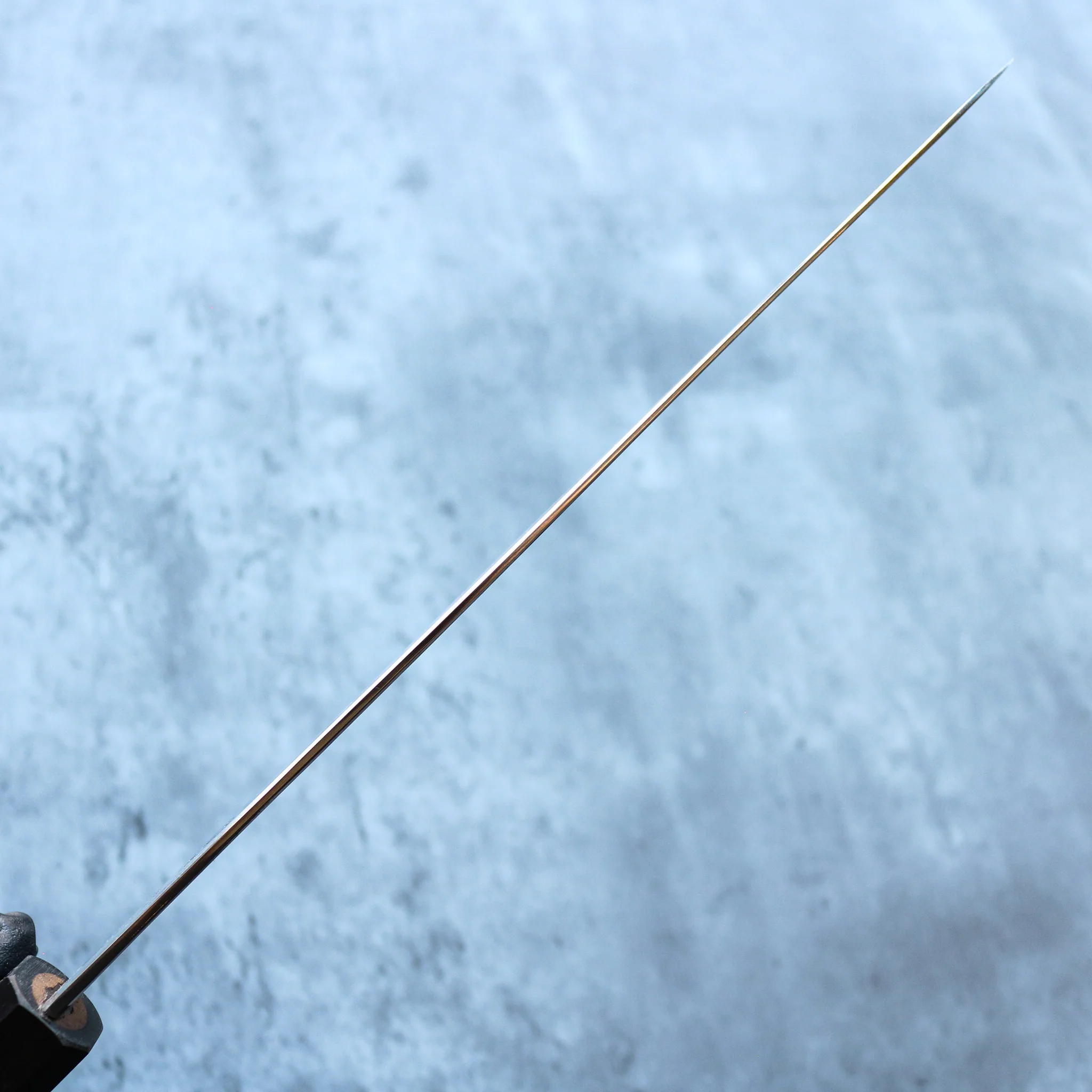
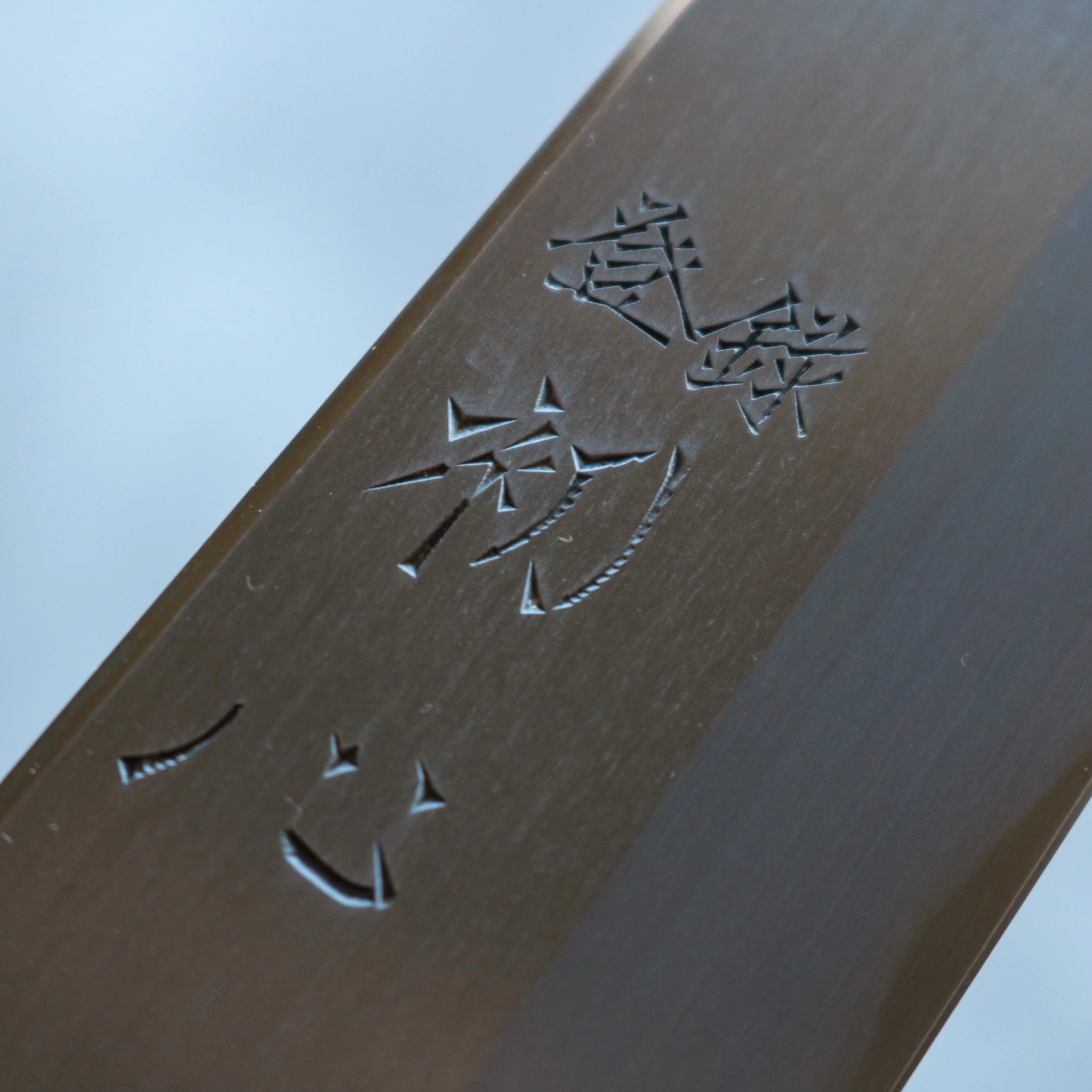
Satoshi Nakagawa is an up and coming blacksmith based out of Sakai City, Osaka Prefecture, Japan. Before launching his own workshop in 2021, Nakagawa-san trained under Kenichi Shiraki, who was a master craftsman, known for his Honyaki knives. Although Nakagawa-san works primarily with Ginsan, and Blue # 1 / 2, he has a wide breadth, given sixteen years of training at Shiraki hamono, he too, possesses the coveted skill of producing Honyaki knives, now under his own name. Nakagawa-san’s blades are characterized by their clearly defined bevels, thinness behind the edge, thin tip, nice balance/weight in hand, and smooth fit/finish (chamfered spine, smooth choil). These knives are quite versatile profile wise, with a nice flat spot, and a gentle curve towards the k-tip, making them great for precise detail work!
The Knife
The word "Sujihiki" translates to "flesh slicer". The long, slender blade allows the user to make long drawing strokes, which makes it incredibly adept at slicing and reduces the amount of sawing needed to get through ingredients. They are most commonly in the 240 mm (10 inches) to 300 mm (12 inches) range. The Sujihiki has a very specific use case, so if you're looking for a knife that is capable of slicing and chopping vegetables, we would recommend a Gyuto or Kiritsuke.
Knife Care (Iron Clad)
- This Knife is made from 3 layers of material; A layer of iron on each side protecting a layer of carbon steel at the core, in a process referred to as Sanmai or forge welding. Iron and carbon steel are both susceptible to rust and must be kept dry and clean at all time’s to avoid oxidation and discolouration.
- Simply wipe the knife with a damp cloth immediately after use.
- Wash with regular dish soap and warm water using a none abrasive sponge or cloth.
- Never put your knife in the dishwasher! The extreme heat will ruin the wooden handle.
- Highly acidic ingredients (Onions, Tomatoes, Citrus) Will cause rust and oxidation to happen faster, thus the user must ensure the knife is wiped clean immediately after working with such an ingredient.
- Should any rust form it can be removed using a rust eraser or a mixture of Baking soda and water to simply scrub it clean.
- Avoid Bones, Frozen foods, nuts and hard candies or anything other than fruits, vegetables and proteins.
Product Information
Product Information
Shipping & Returns
Shipping & Returns
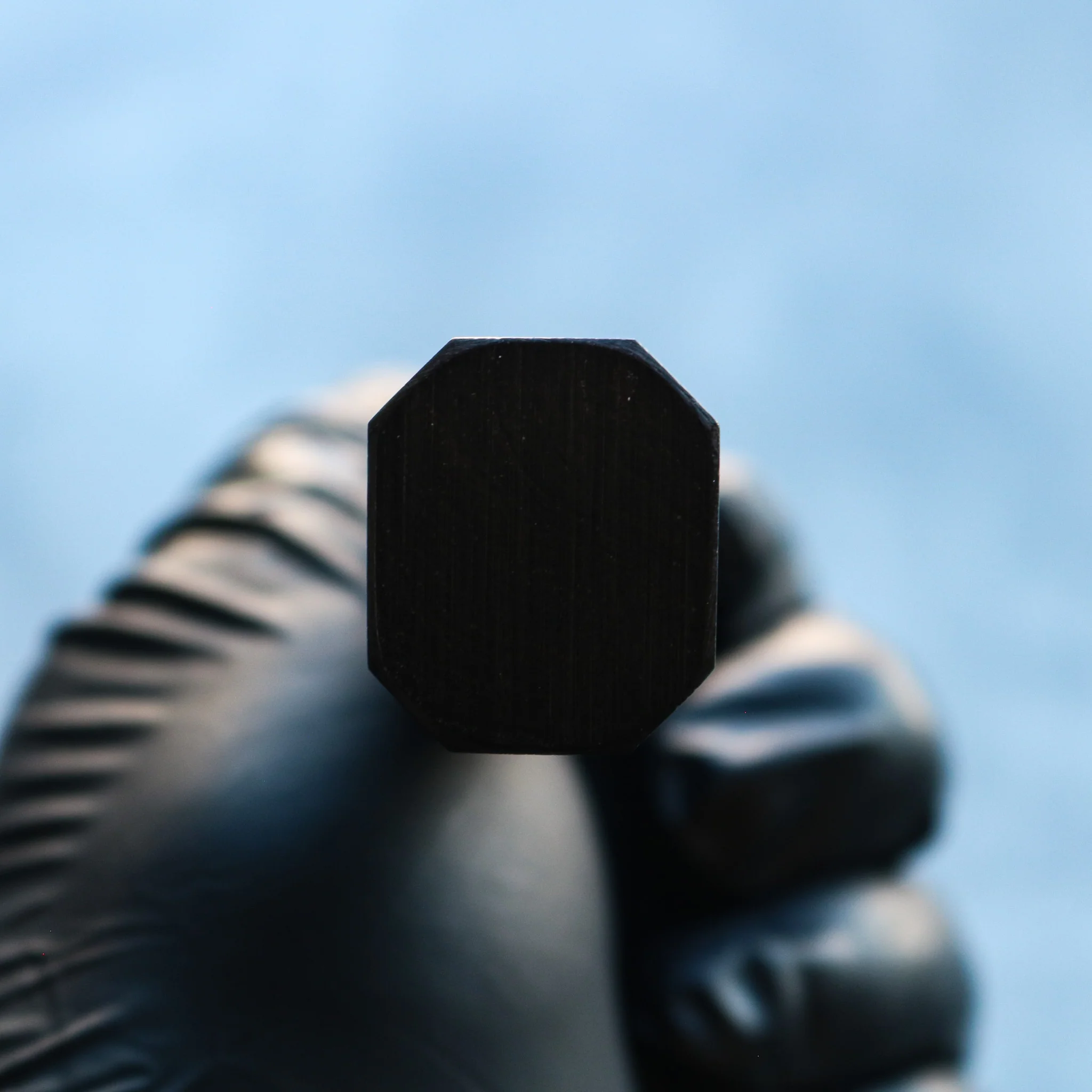
Nakagawa Satoshi B1 Sujihiki 230 mm
Nakagawa Satoshi B1 Sujihiki 230 mm
| Blade Length | 232mm |
| Total Length | 390 mm |
| Steel | Aogami (Blue #1) |
| Handle | Mono Ebony |
| Ferrule | N/A |
| Rockwell | 63-64 |
| Height Spine to heel | 33 mm |
| Width at Spine | 2.8 mm |
| Weight | 164 grams |
| Bevel |
Double (50/50) |
The Blacksmith
Satoshi Nakagawa is an up and coming blacksmith based out of Sakai City, Osaka Prefecture, Japan. Before launching his own workshop in 2021, Nakagawa-san trained under Kenichi Shiraki, who was a master craftsman, known for his Honyaki knives. Although Nakagawa-san works primarily with Ginsan, and Blue # 1 / 2, he has a wide breadth, given sixteen years of training at Shiraki hamono, he too, possesses the coveted skill of producing Honyaki knives, now under his own name. Nakagawa-san’s blades are characterized by their clearly defined bevels, thinness behind the edge, thin tip, nice balance/weight in hand, and smooth fit/finish (chamfered spine, smooth choil). These knives are quite versatile profile wise, with a nice flat spot, and a gentle curve towards the k-tip, making them great for precise detail work!
The Knife
The word "Sujihiki" translates to "flesh slicer". The long, slender blade allows the user to make long drawing strokes, which makes it incredibly adept at slicing and reduces the amount of sawing needed to get through ingredients. They are most commonly in the 240 mm (10 inches) to 300 mm (12 inches) range. The Sujihiki has a very specific use case, so if you're looking for a knife that is capable of slicing and chopping vegetables, we would recommend a Gyuto or Kiritsuke.
Knife Care (Iron Clad)
- This Knife is made from 3 layers of material; A layer of iron on each side protecting a layer of carbon steel at the core, in a process referred to as Sanmai or forge welding. Iron and carbon steel are both susceptible to rust and must be kept dry and clean at all time’s to avoid oxidation and discolouration.
- Simply wipe the knife with a damp cloth immediately after use.
- Wash with regular dish soap and warm water using a none abrasive sponge or cloth.
- Never put your knife in the dishwasher! The extreme heat will ruin the wooden handle.
- Highly acidic ingredients (Onions, Tomatoes, Citrus) Will cause rust and oxidation to happen faster, thus the user must ensure the knife is wiped clean immediately after working with such an ingredient.
- Should any rust form it can be removed using a rust eraser or a mixture of Baking soda and water to simply scrub it clean.
- Avoid Bones, Frozen foods, nuts and hard candies or anything other than fruits, vegetables and proteins.
Original: $309.52
-65%$309.52
$108.33Product Information
Product Information
Shipping & Returns
Shipping & Returns
Description
| Blade Length | 232mm |
| Total Length | 390 mm |
| Steel | Aogami (Blue #1) |
| Handle | Mono Ebony |
| Ferrule | N/A |
| Rockwell | 63-64 |
| Height Spine to heel | 33 mm |
| Width at Spine | 2.8 mm |
| Weight | 164 grams |
| Bevel |
Double (50/50) |
The Blacksmith
Satoshi Nakagawa is an up and coming blacksmith based out of Sakai City, Osaka Prefecture, Japan. Before launching his own workshop in 2021, Nakagawa-san trained under Kenichi Shiraki, who was a master craftsman, known for his Honyaki knives. Although Nakagawa-san works primarily with Ginsan, and Blue # 1 / 2, he has a wide breadth, given sixteen years of training at Shiraki hamono, he too, possesses the coveted skill of producing Honyaki knives, now under his own name. Nakagawa-san’s blades are characterized by their clearly defined bevels, thinness behind the edge, thin tip, nice balance/weight in hand, and smooth fit/finish (chamfered spine, smooth choil). These knives are quite versatile profile wise, with a nice flat spot, and a gentle curve towards the k-tip, making them great for precise detail work!
The Knife
The word "Sujihiki" translates to "flesh slicer". The long, slender blade allows the user to make long drawing strokes, which makes it incredibly adept at slicing and reduces the amount of sawing needed to get through ingredients. They are most commonly in the 240 mm (10 inches) to 300 mm (12 inches) range. The Sujihiki has a very specific use case, so if you're looking for a knife that is capable of slicing and chopping vegetables, we would recommend a Gyuto or Kiritsuke.
Knife Care (Iron Clad)
- This Knife is made from 3 layers of material; A layer of iron on each side protecting a layer of carbon steel at the core, in a process referred to as Sanmai or forge welding. Iron and carbon steel are both susceptible to rust and must be kept dry and clean at all time’s to avoid oxidation and discolouration.
- Simply wipe the knife with a damp cloth immediately after use.
- Wash with regular dish soap and warm water using a none abrasive sponge or cloth.
- Never put your knife in the dishwasher! The extreme heat will ruin the wooden handle.
- Highly acidic ingredients (Onions, Tomatoes, Citrus) Will cause rust and oxidation to happen faster, thus the user must ensure the knife is wiped clean immediately after working with such an ingredient.
- Should any rust form it can be removed using a rust eraser or a mixture of Baking soda and water to simply scrub it clean.
- Avoid Bones, Frozen foods, nuts and hard candies or anything other than fruits, vegetables and proteins.