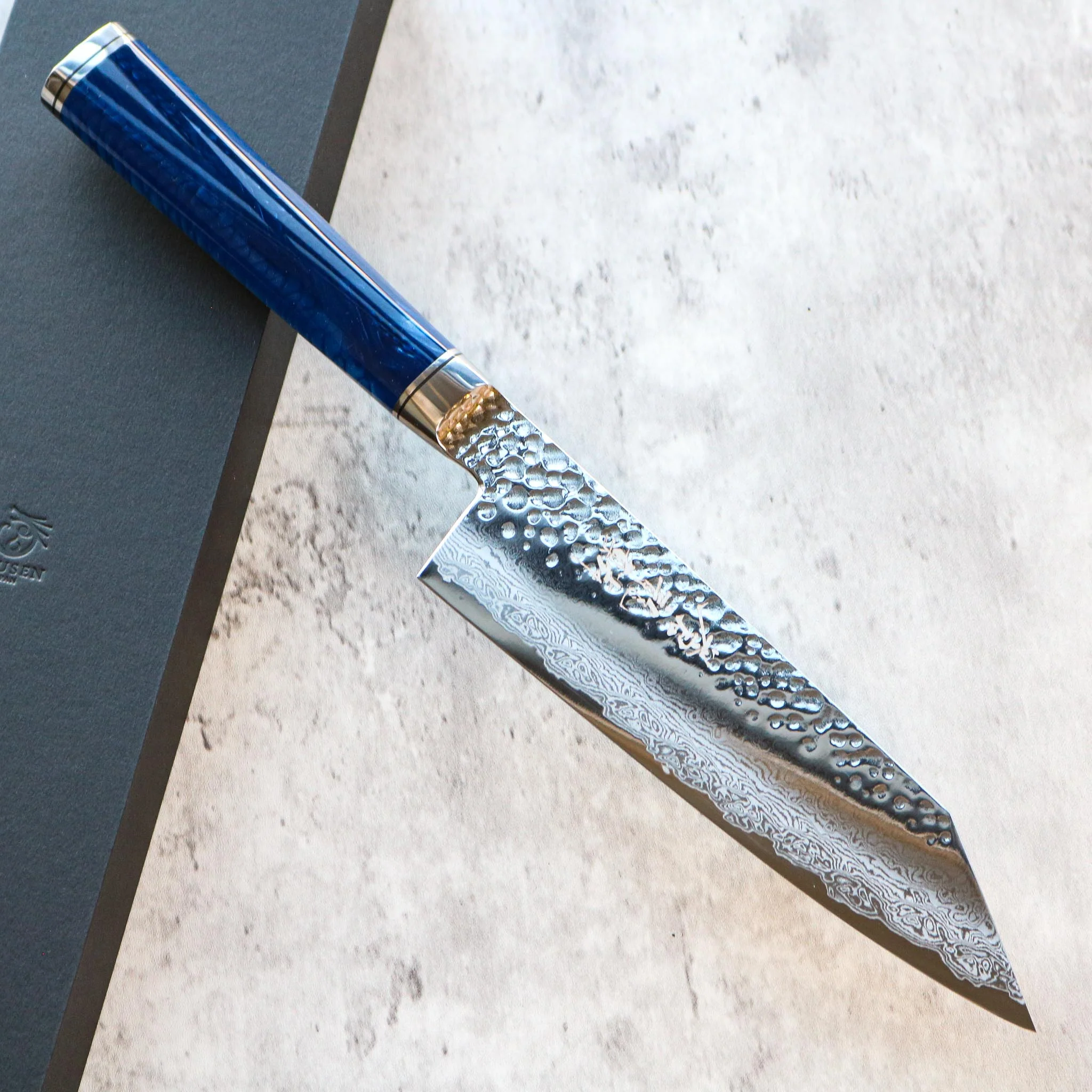
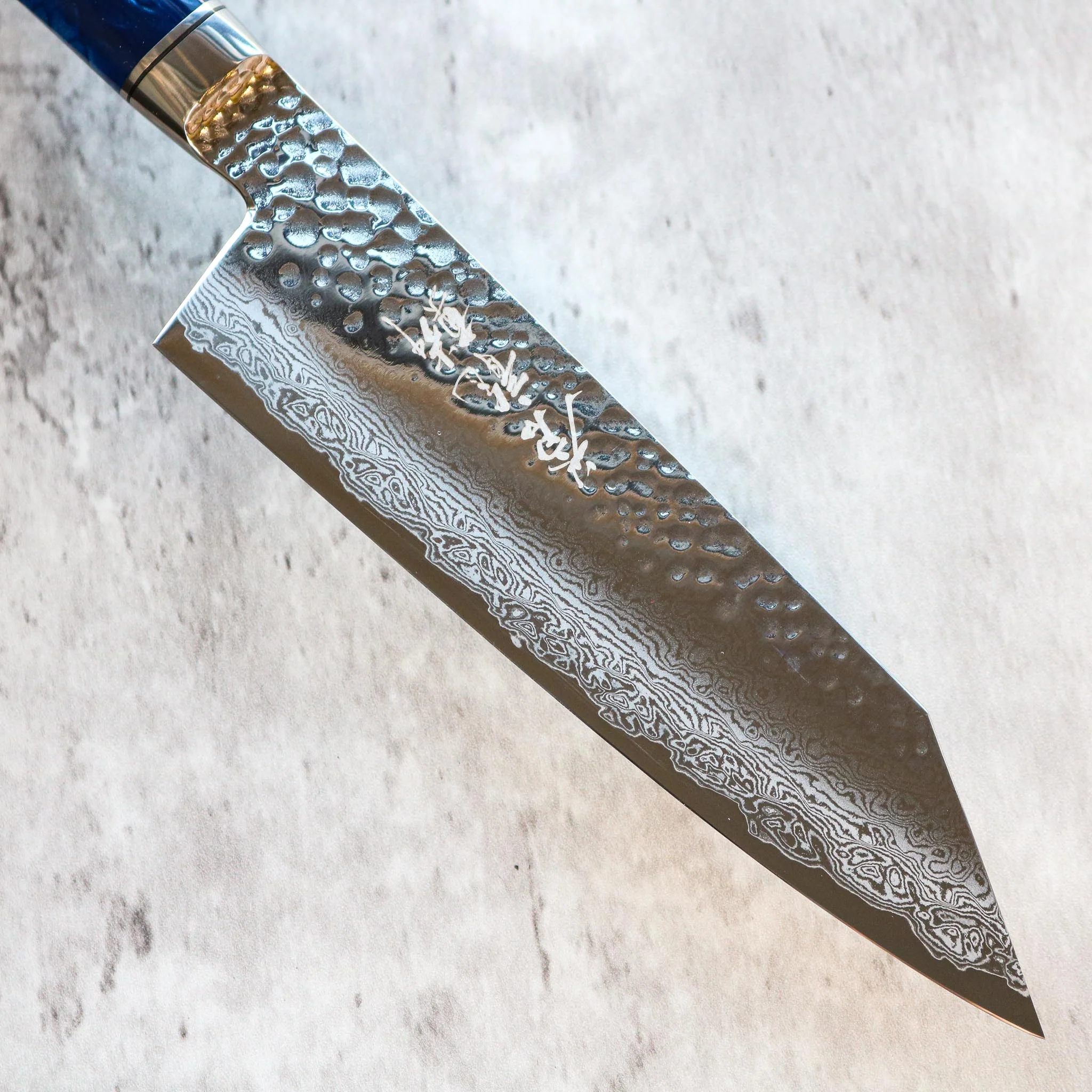
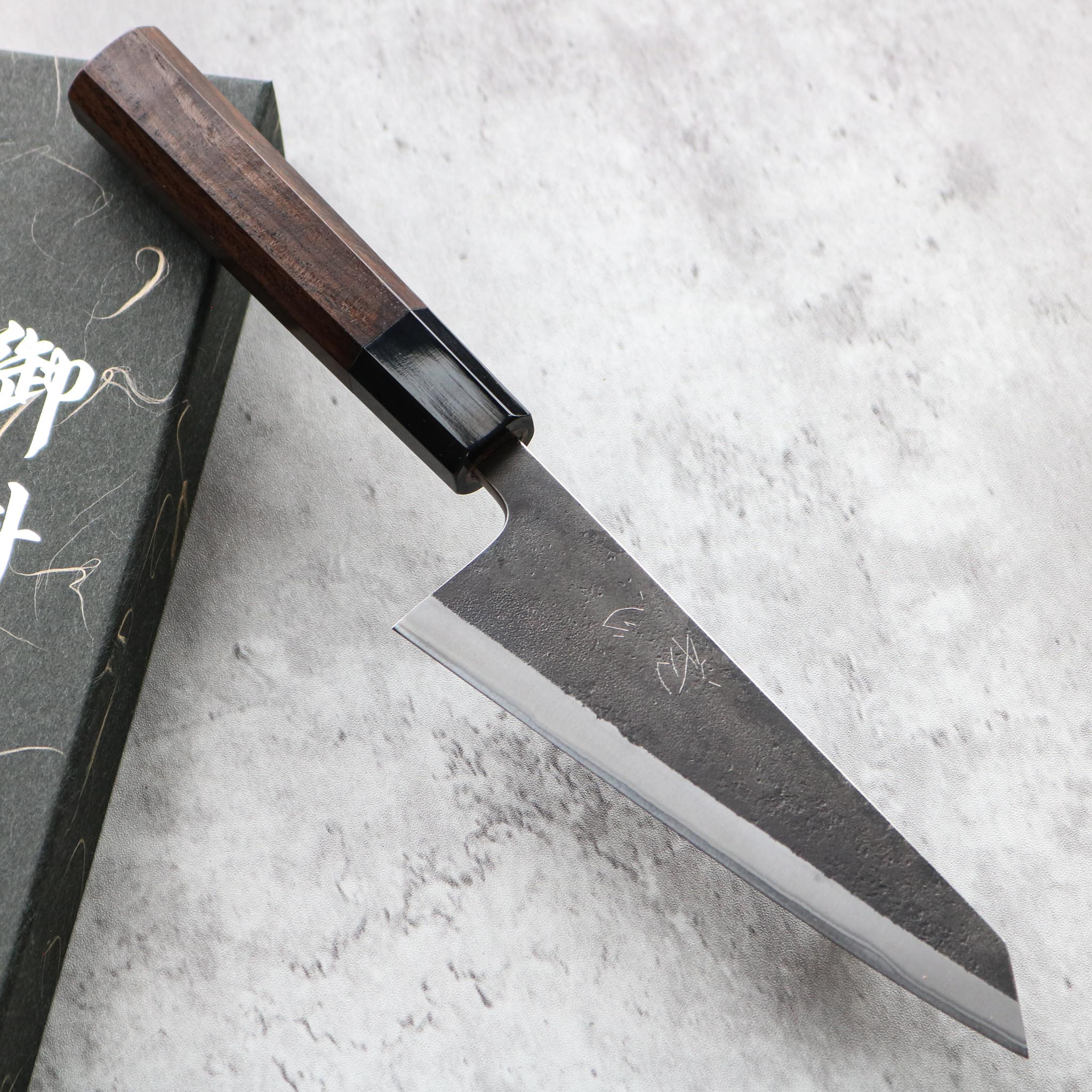
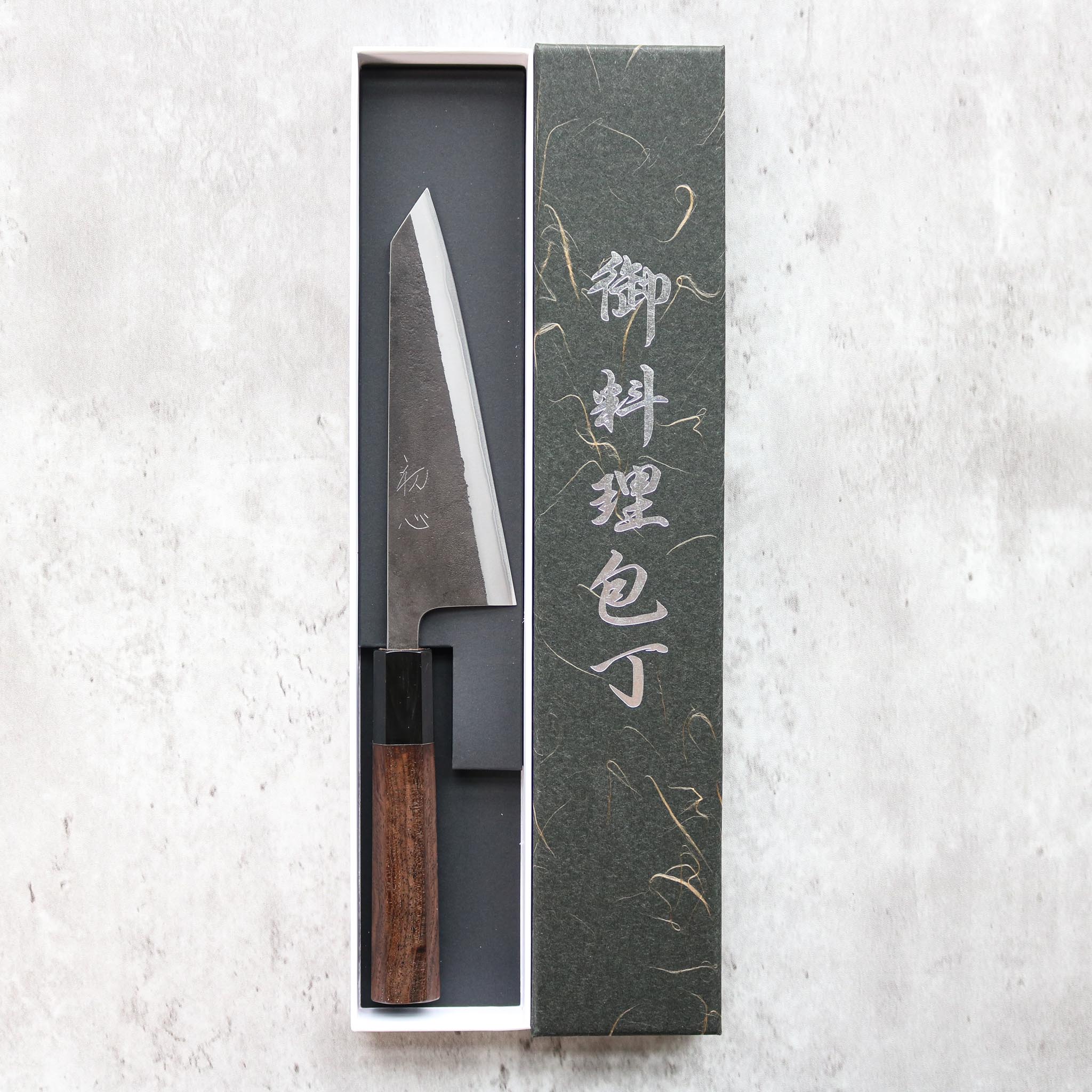
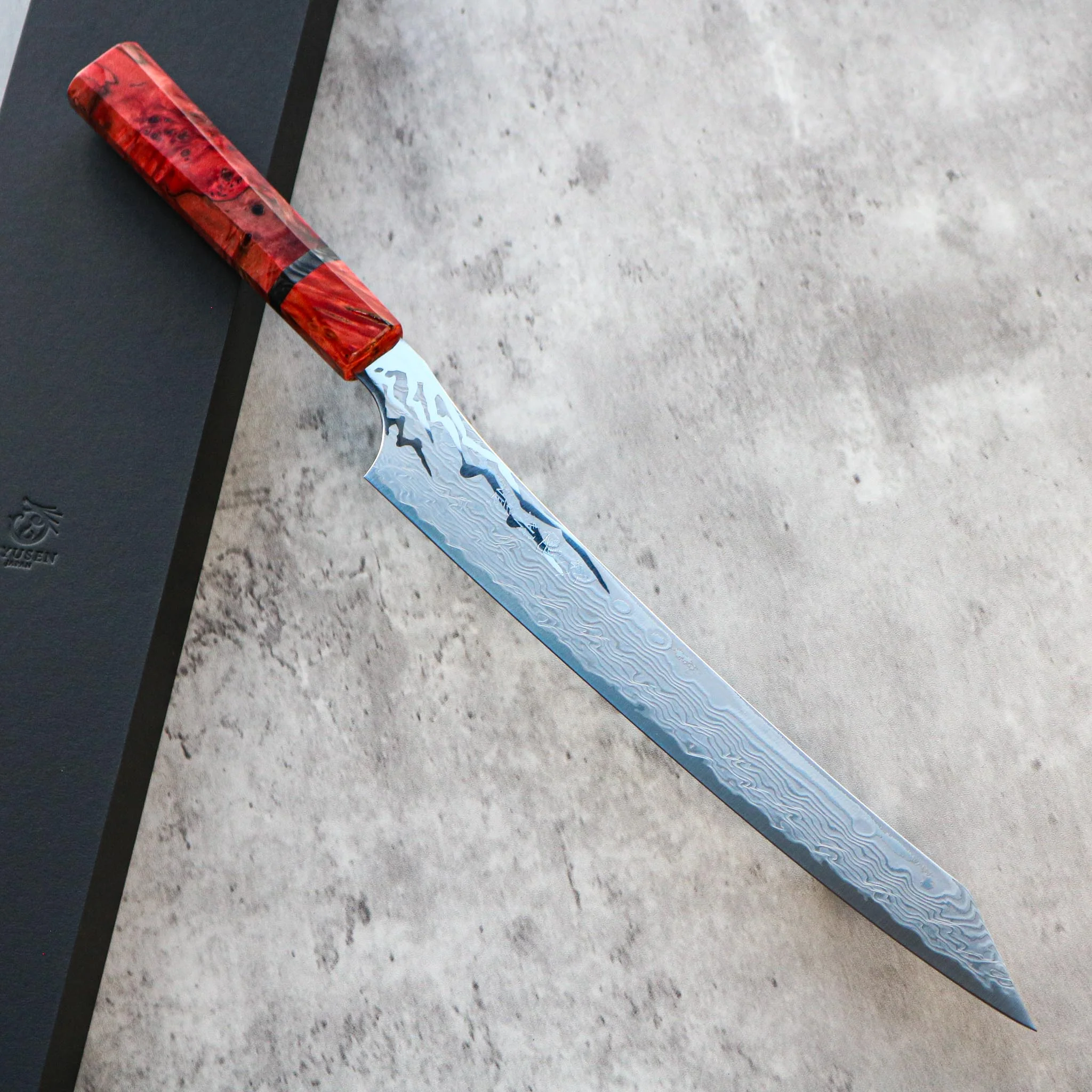
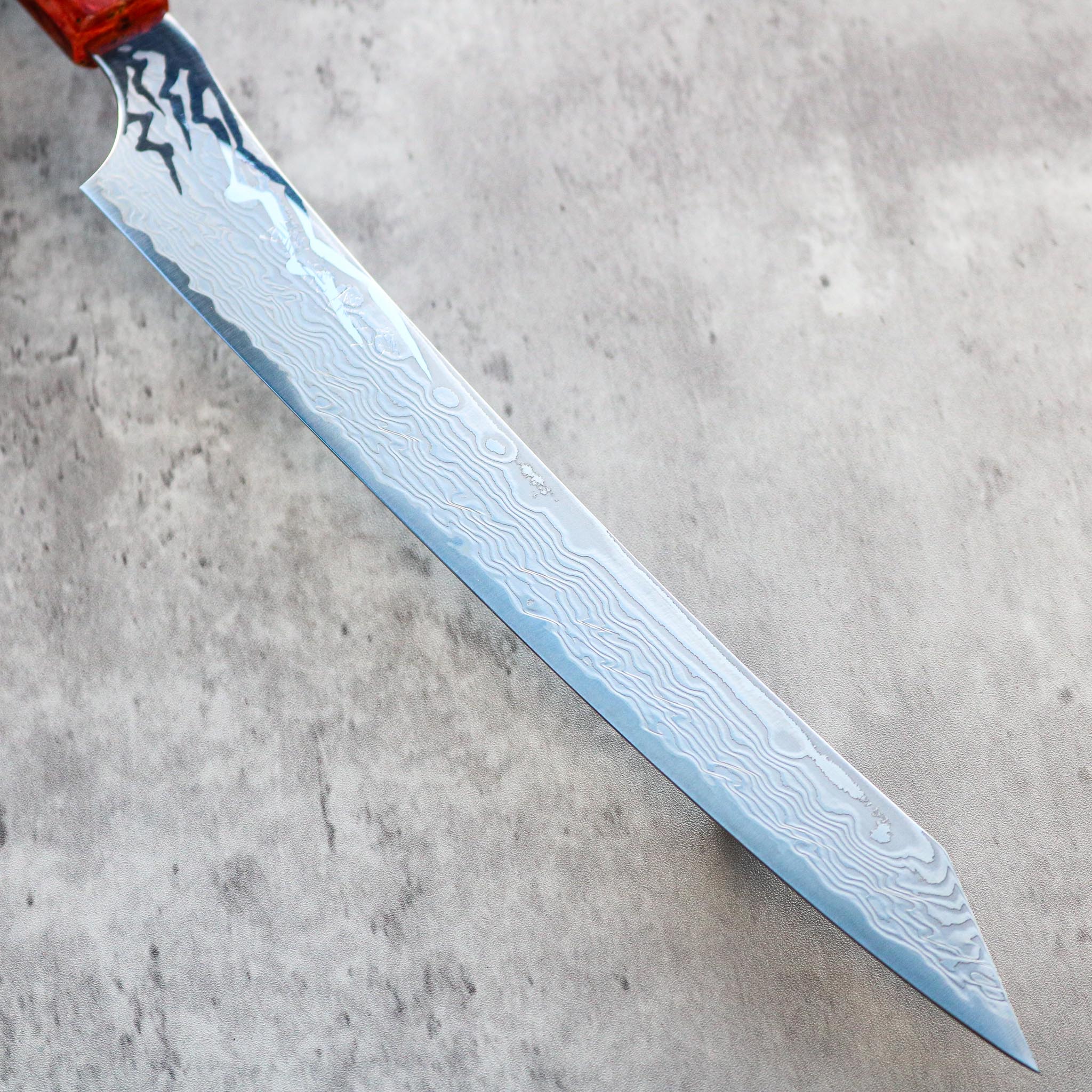
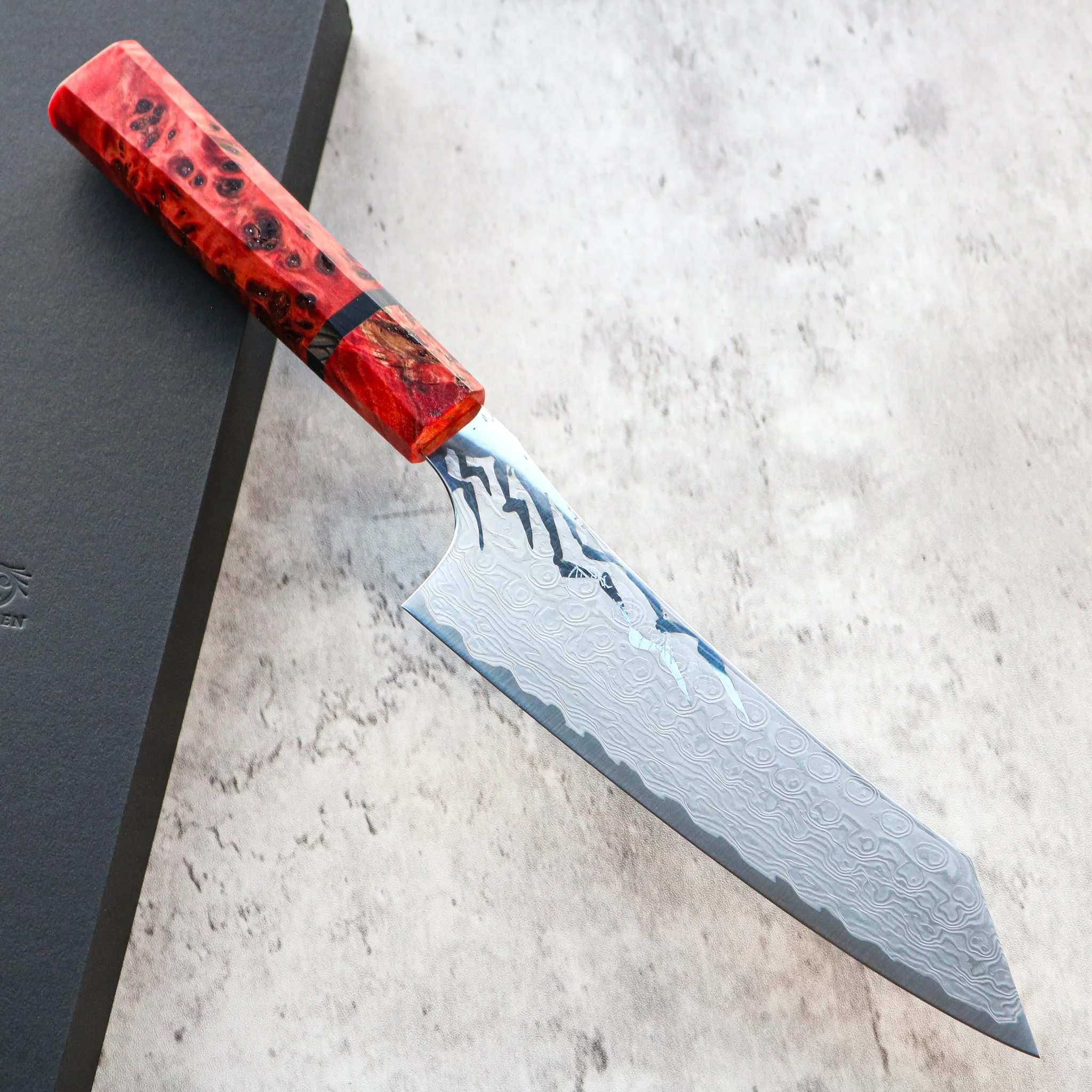
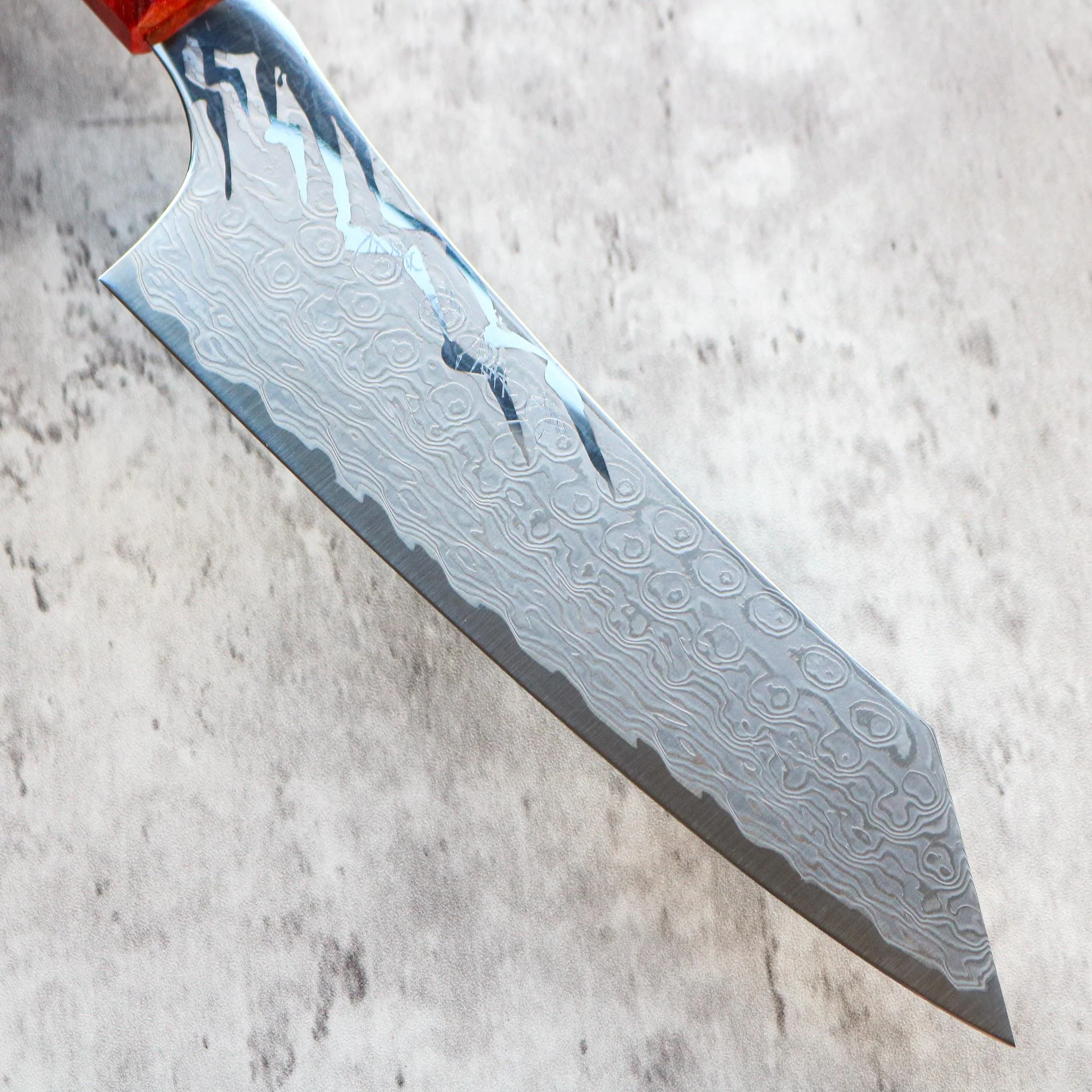
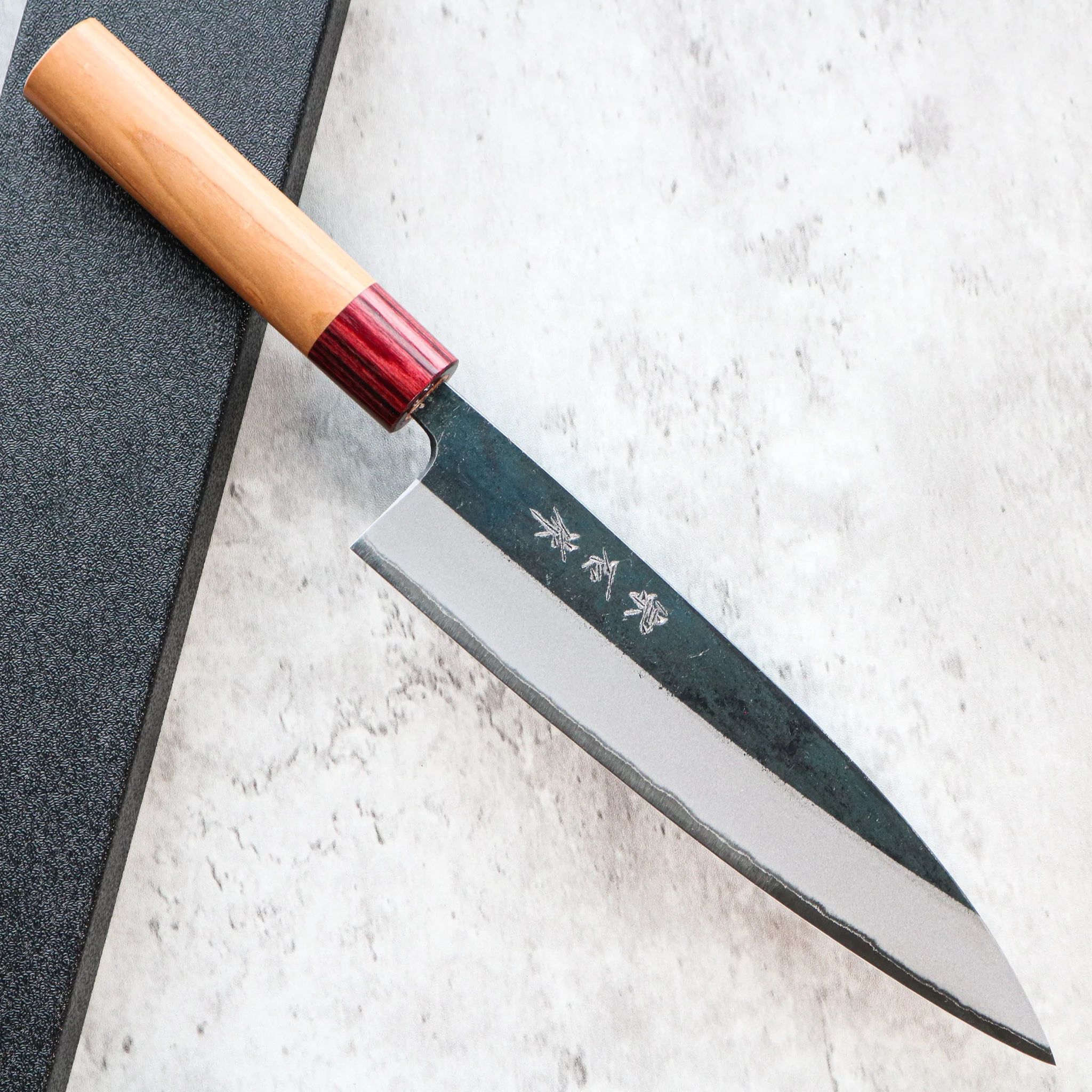
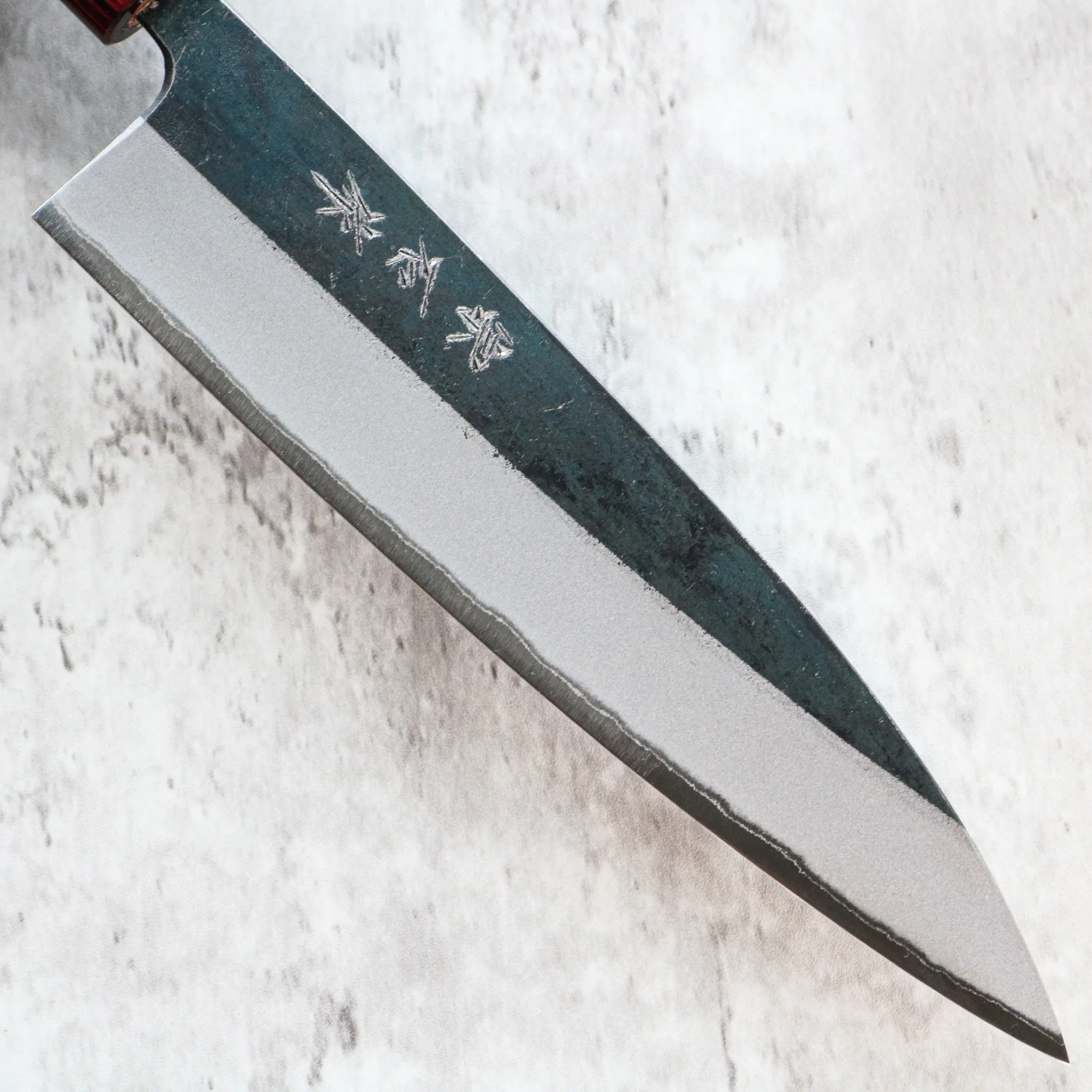
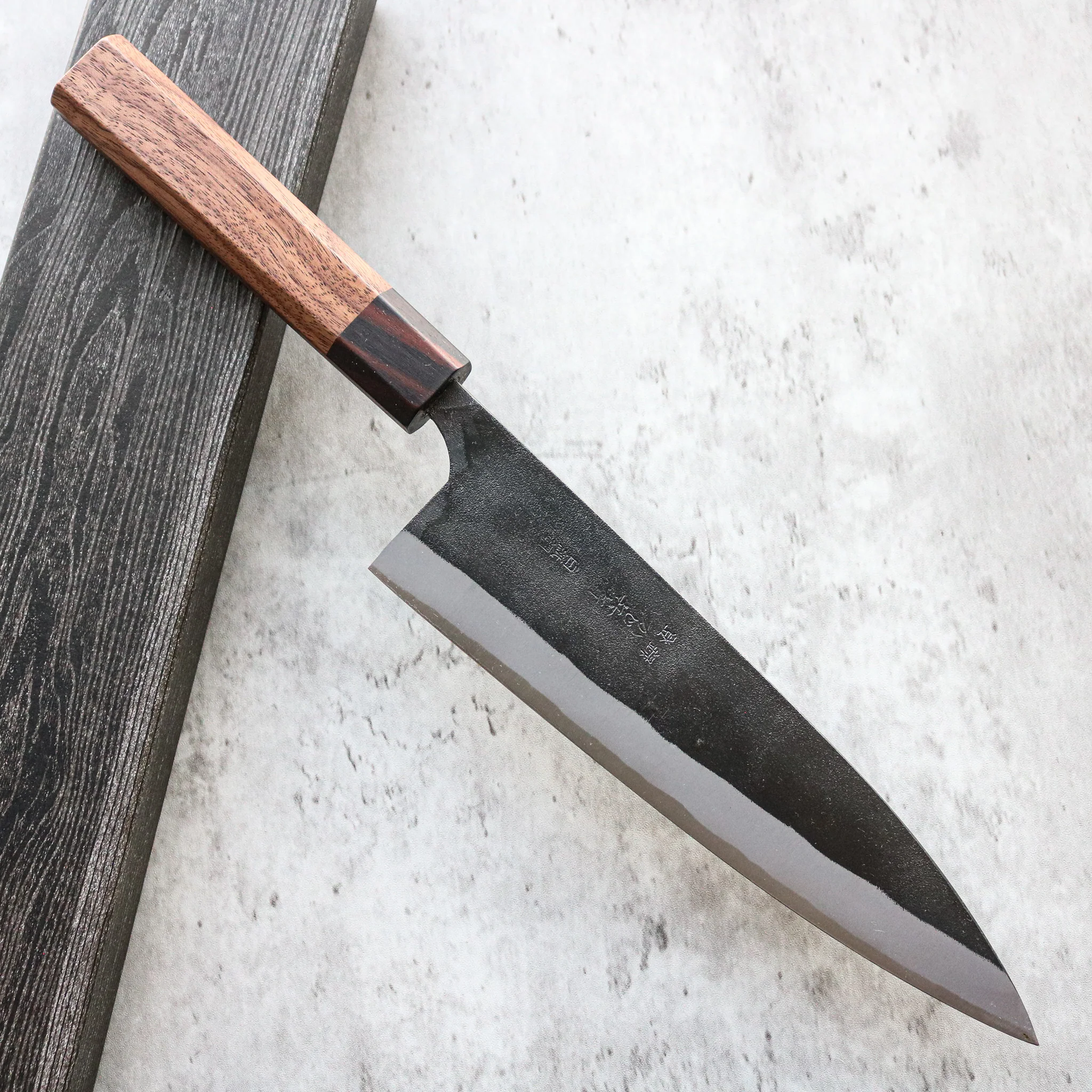
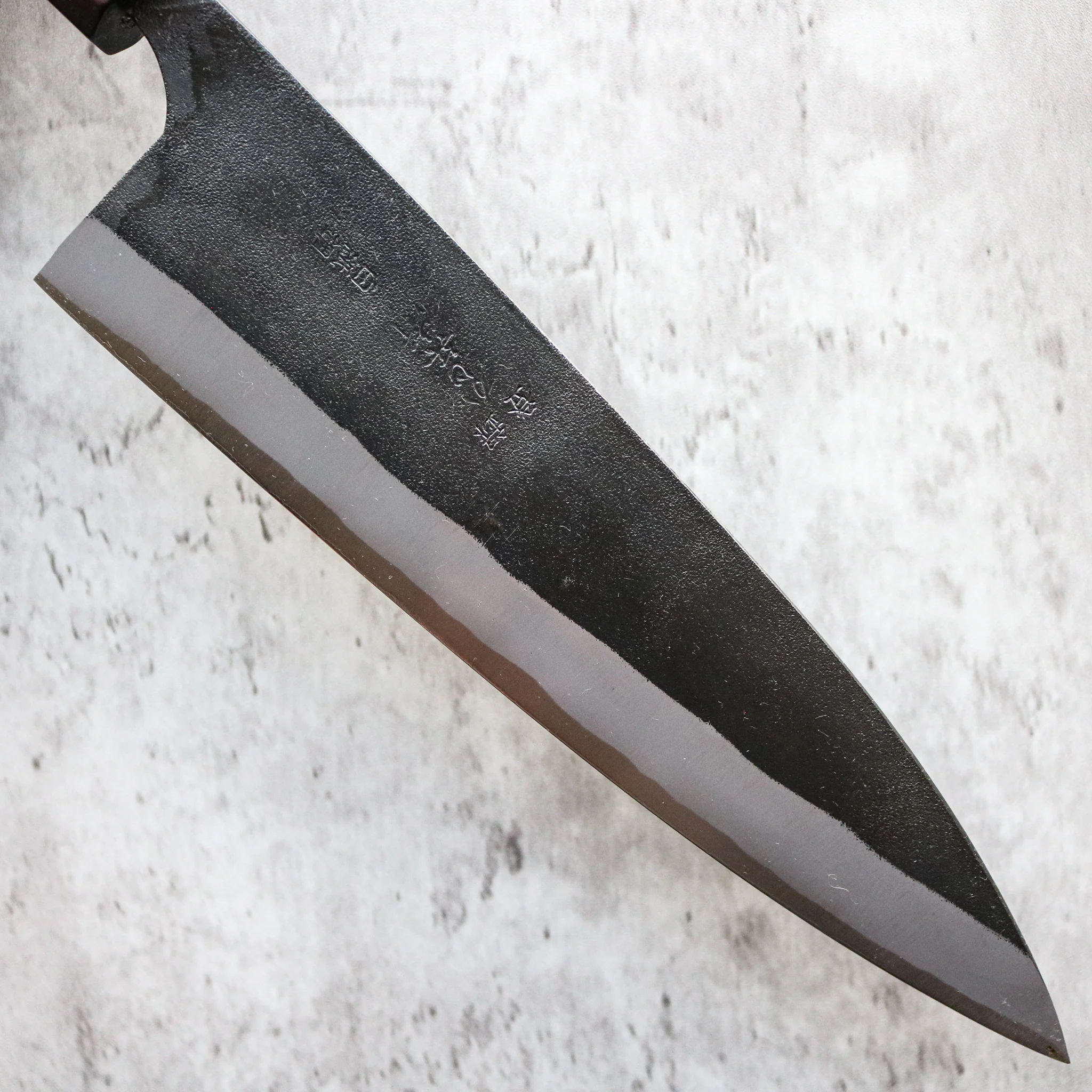
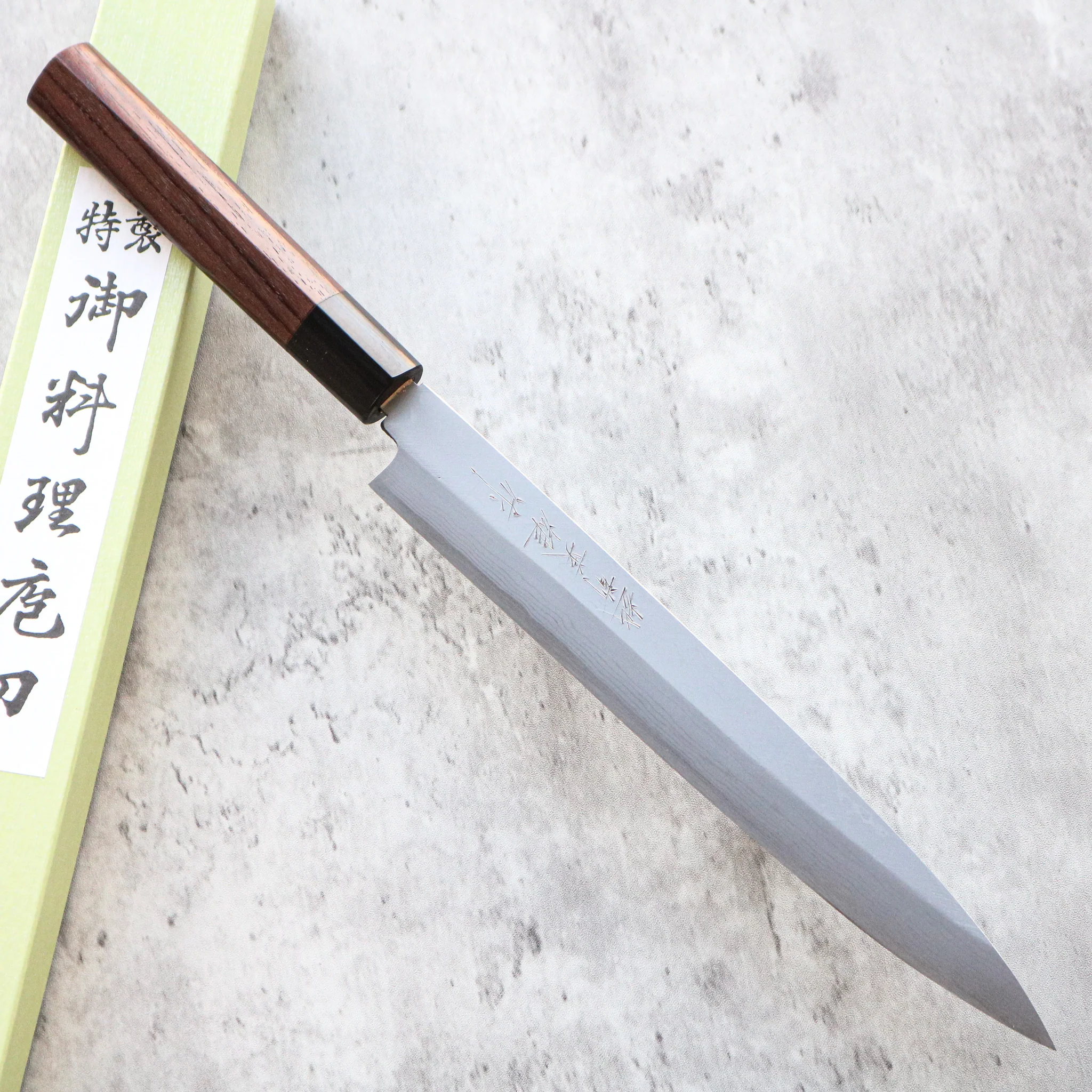
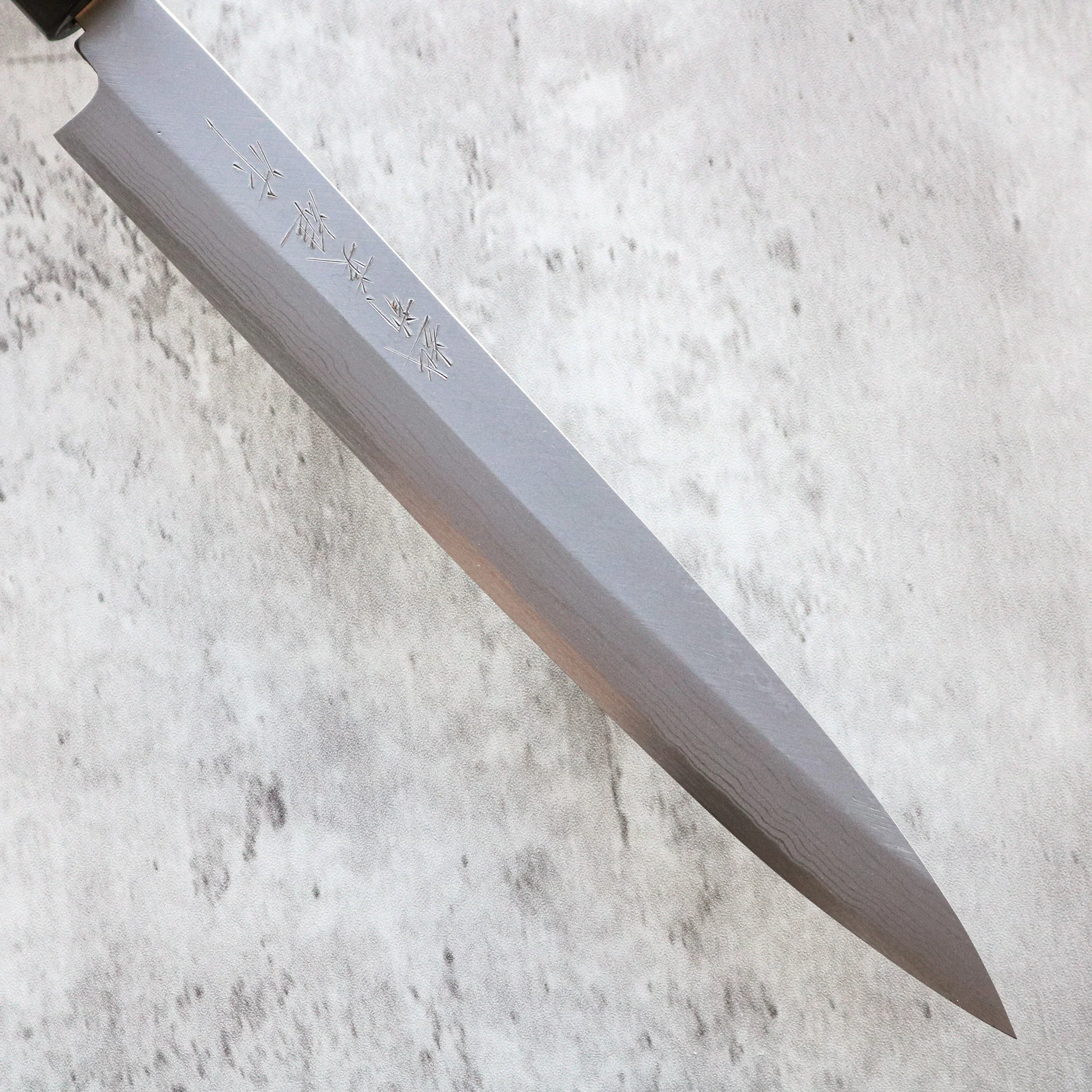
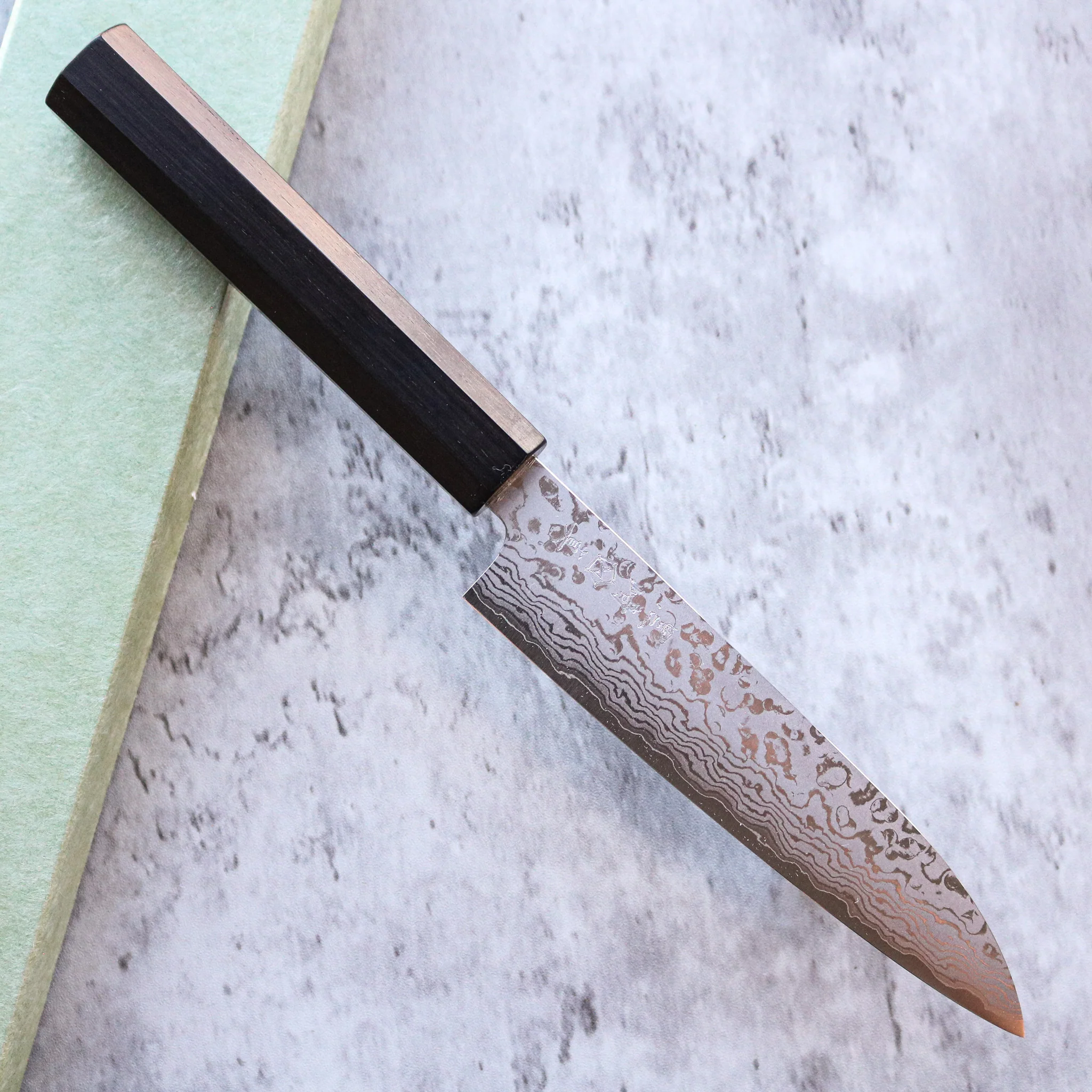
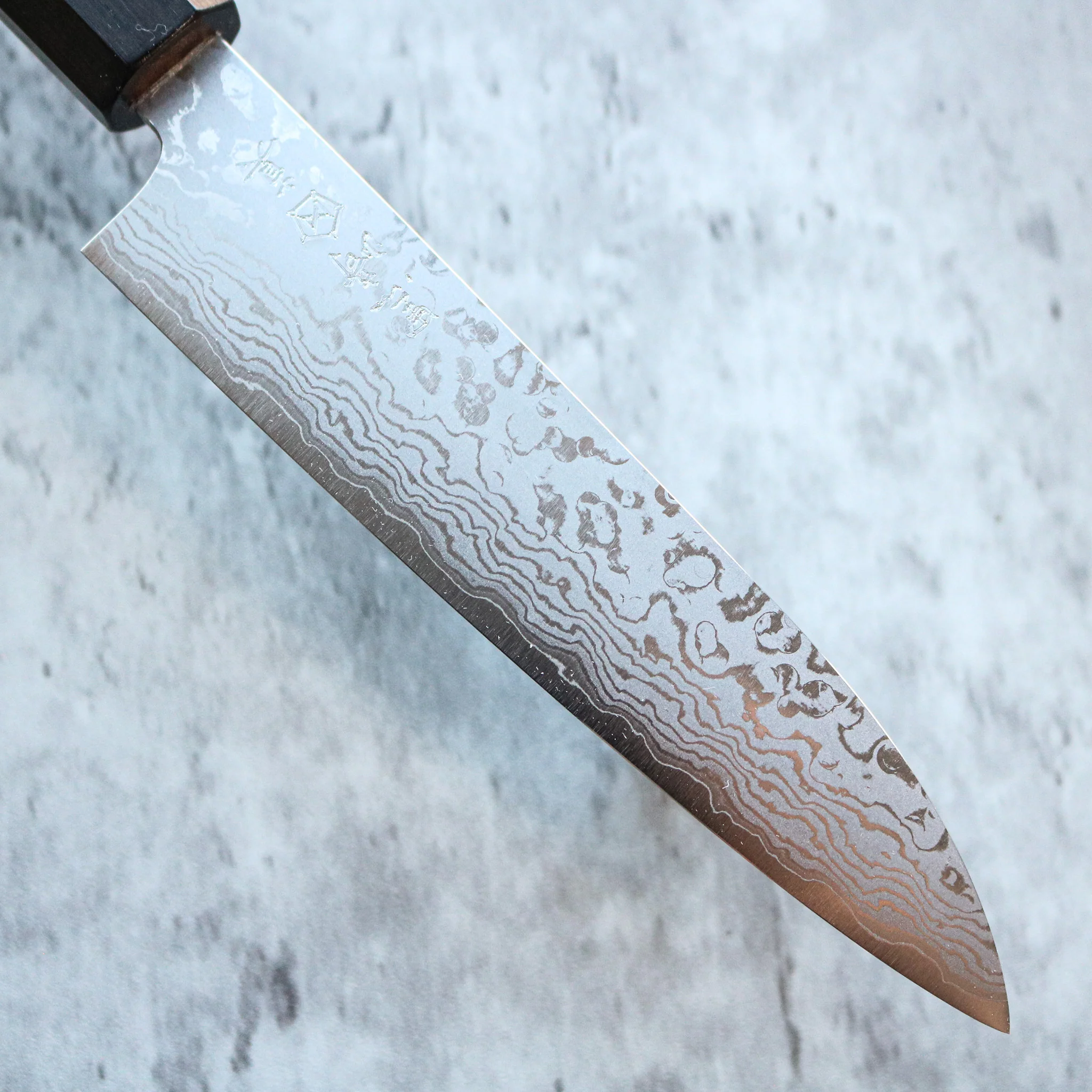
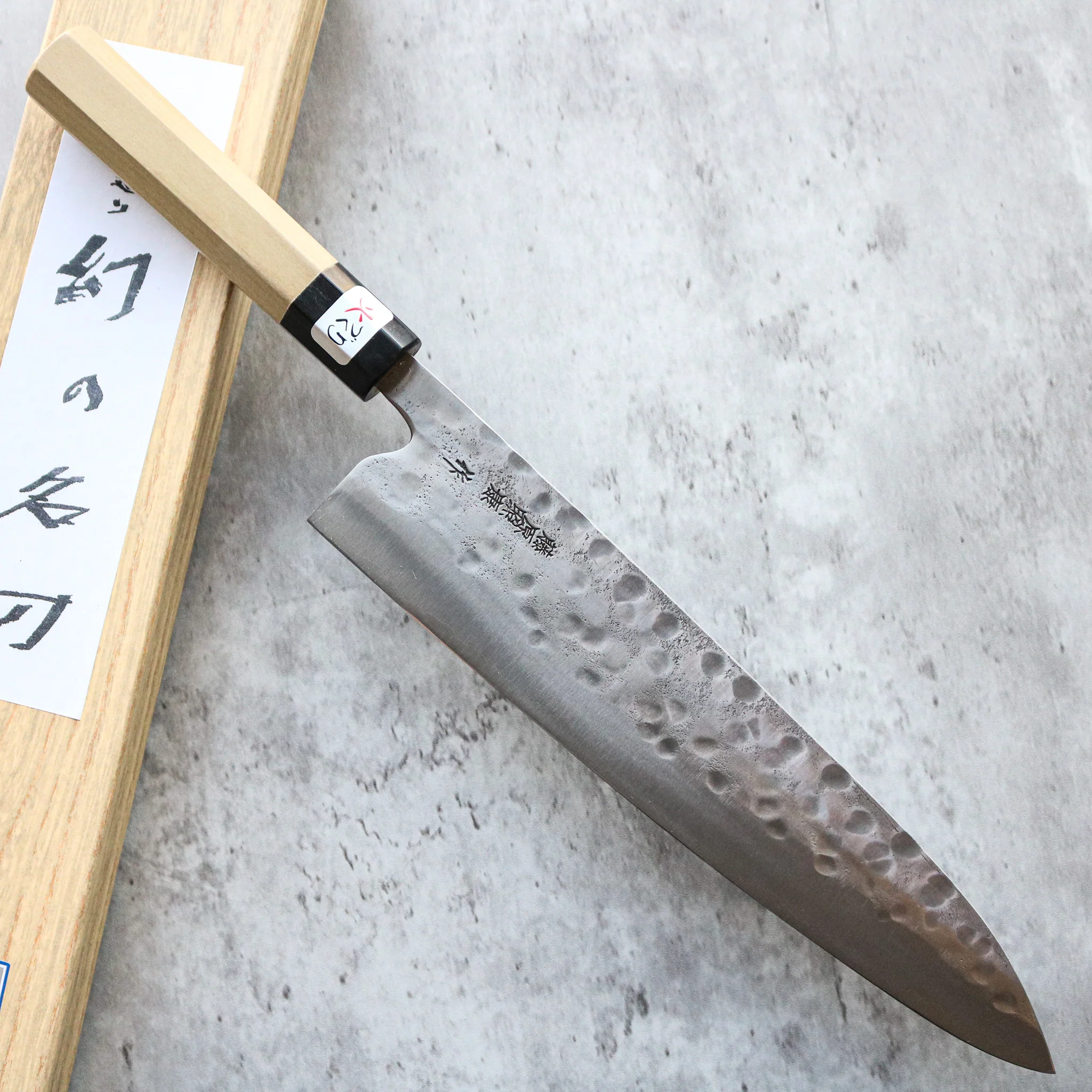
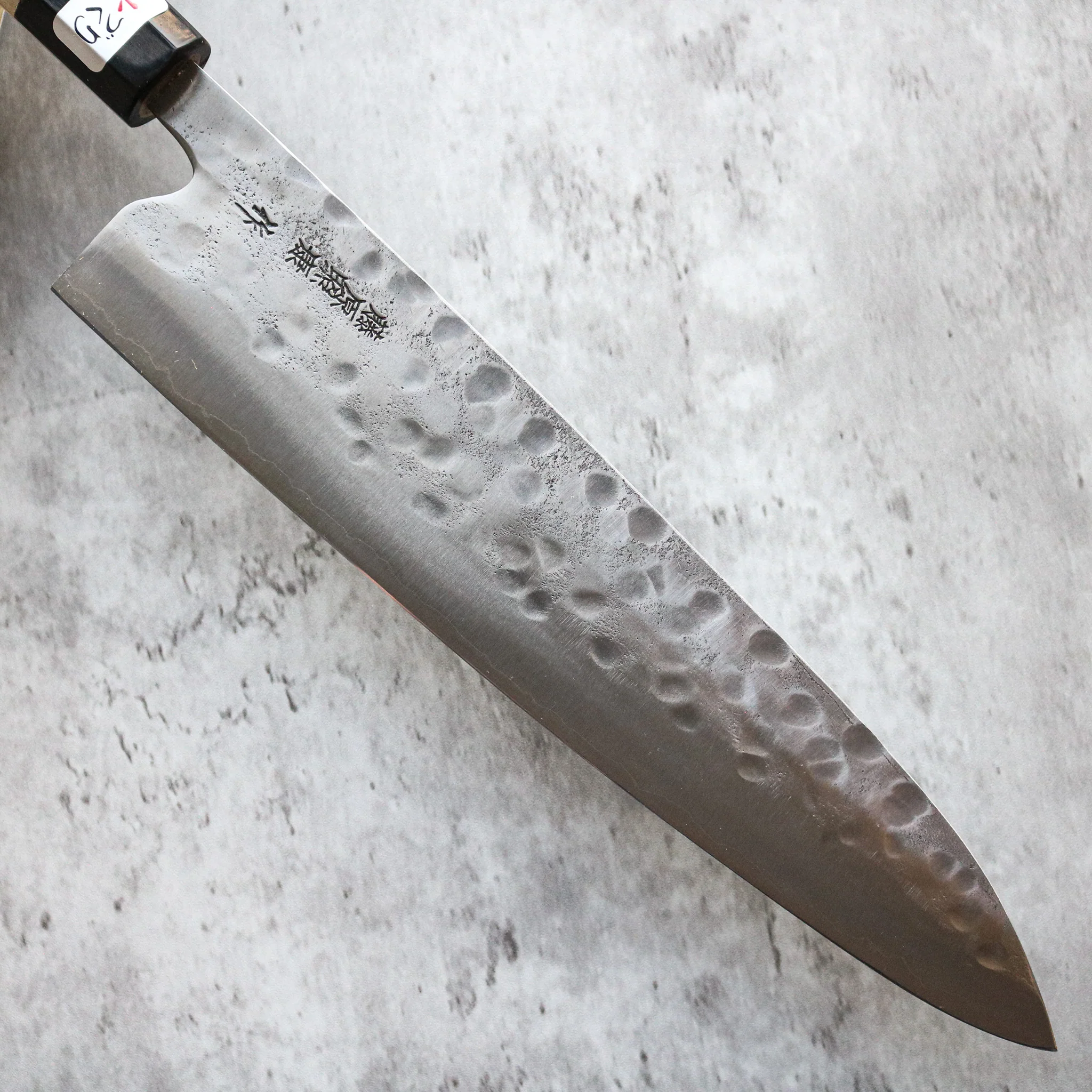
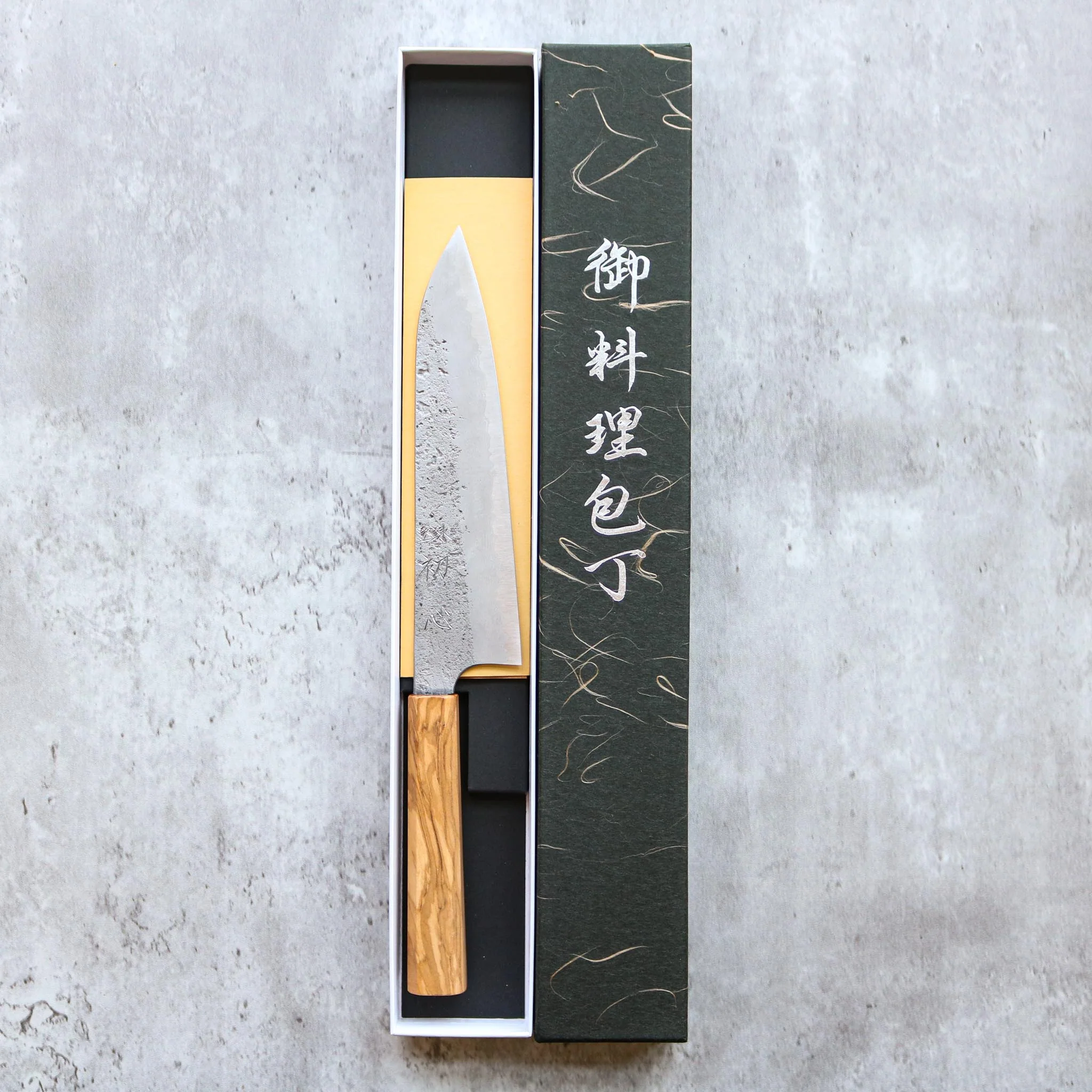
Nigara Hamono Ryusui Blue2 Gyuto 200 mm
| Blade Length | 200 mm |
| Total Length | 345 mm |
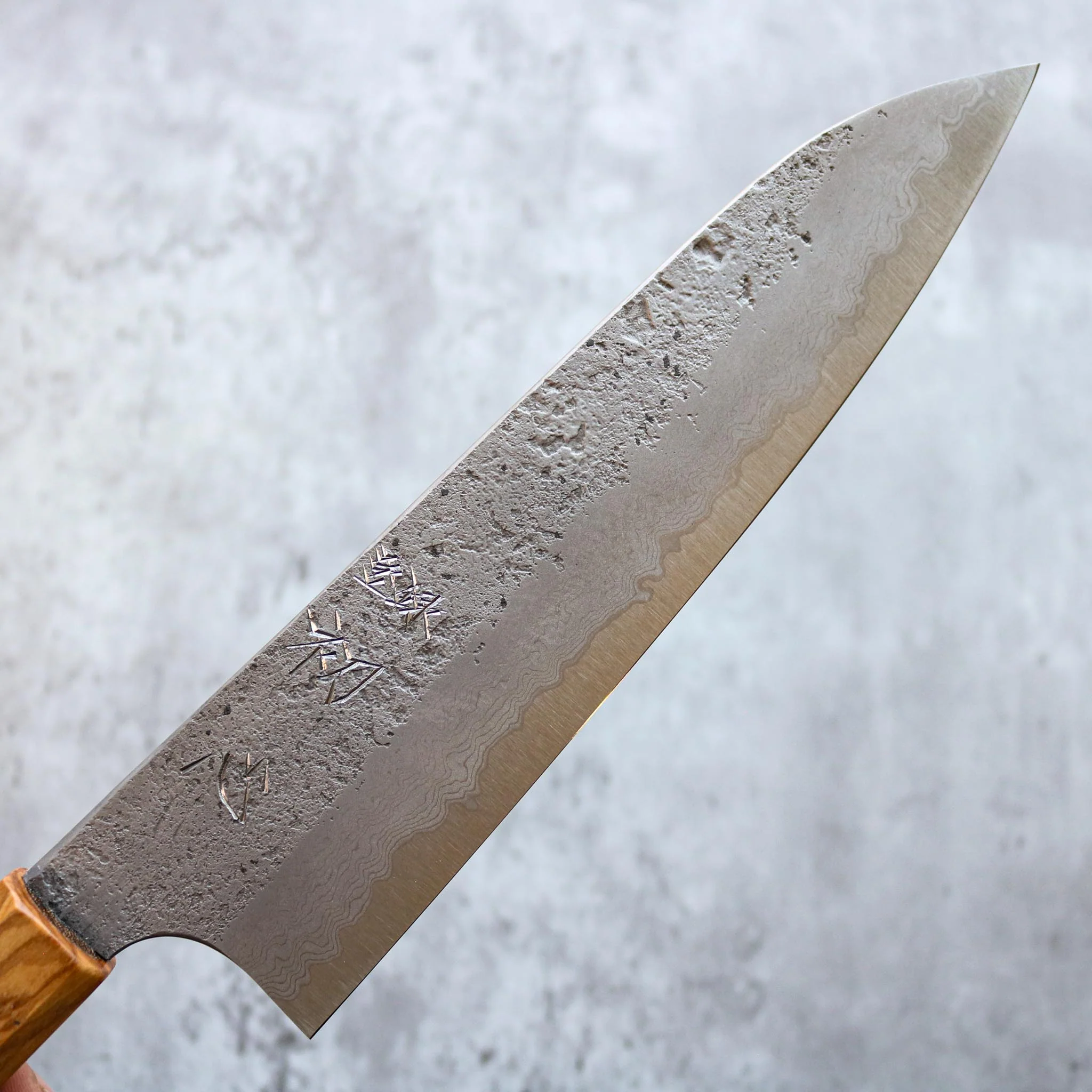
| Steel | Aogami (Blue#2) |
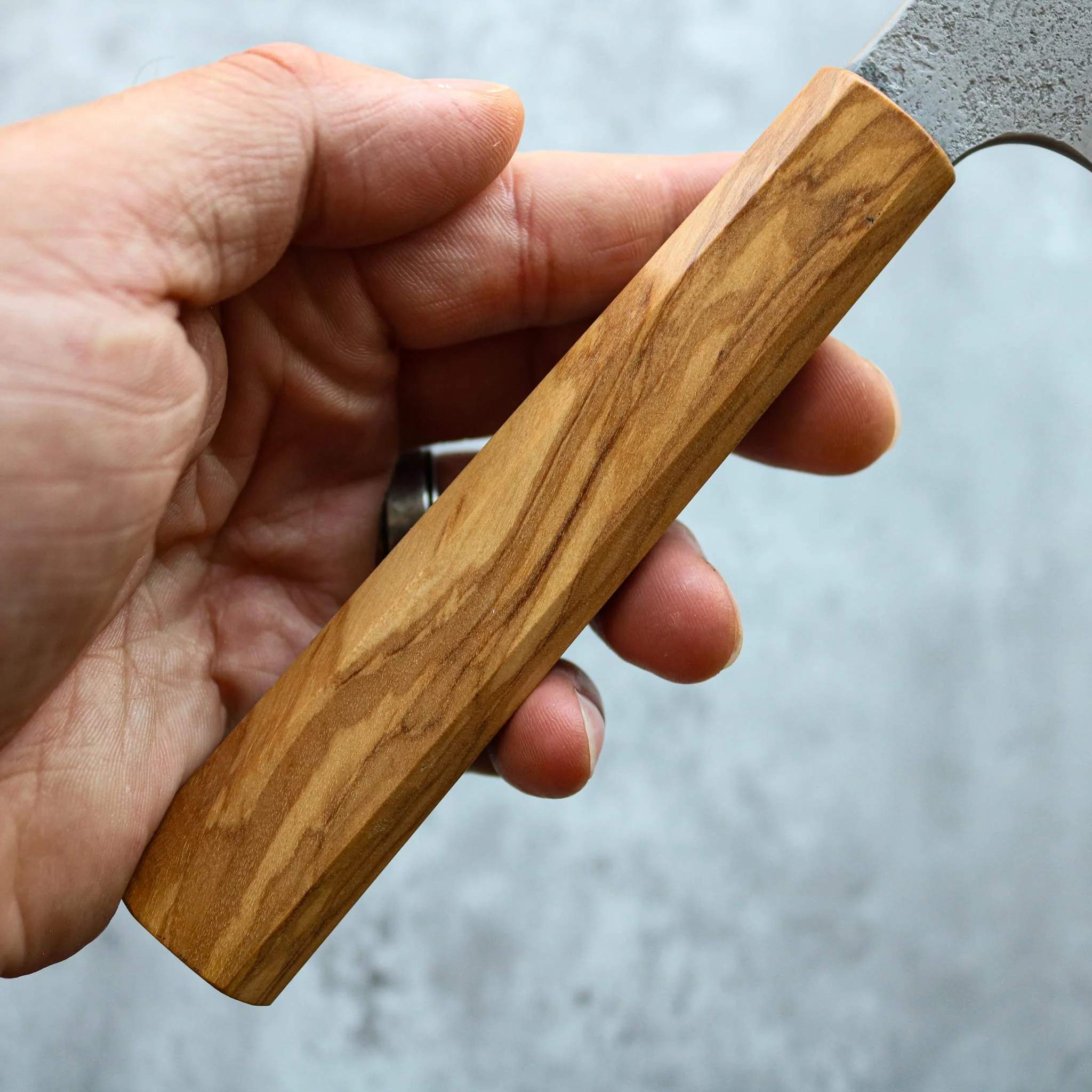
| Handle | Olive Wood |
| Ferrule | N/A |
| Rockwell | 62 |
| Height Spine to heel | 49 mm |
| Width at Spine | 3.45 mm |
| Weight | 163 grams |
| Bevel | Double (50/50) |
The Blacksmith
Nigara Hamono is located in Hirosaki city, Aomori Prefecture, on the west coast of the very northern tip of the main island of Honshu, Japan. Their family has a 350 year old history of making knives and swords and more recently has expanded into structural steel beams for use in construction. Tsuyoshi Yoshizawa stands as the 8th generation smith in the lineage of blacksmiths at Nigara Hamono and creates knives with his younger brother and two other craftsmen.
The Knife
The Gyuto is an all purpose knife and the Japanese equivalent to the western chef's knife; 210mm is the equivalent of the standard 8 inch variation of that knife. From slicing, dicing, chopping, and carving the Gyuto can do it all. It is without question, the most versatile knife shape available and a great choice for both home cooks and professionals.
Knife Care (Iron Clad)
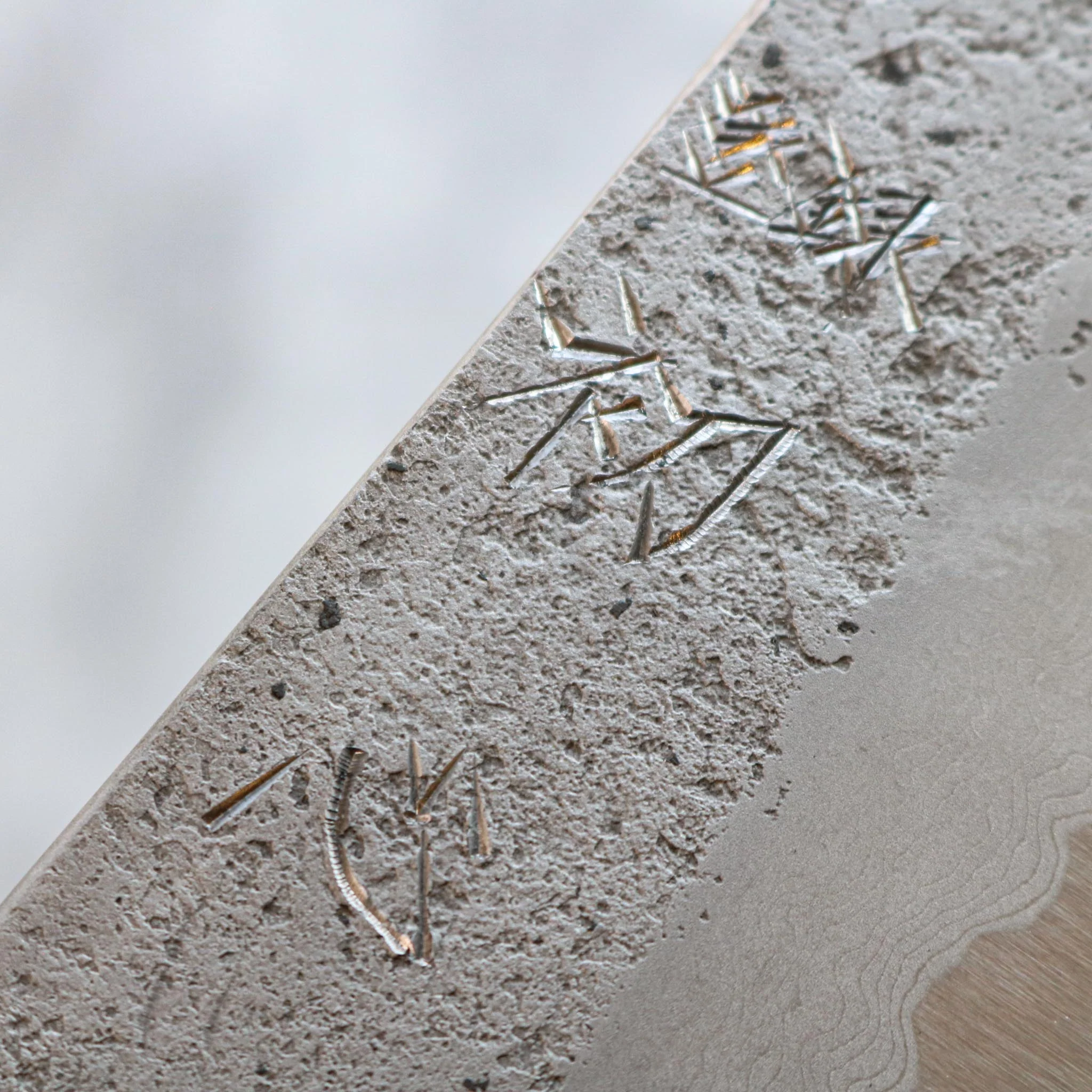
- This Knife is made from 3 layers of material; A layer of iron on each side protecting a layer of carbon steel at the core, in a process referred to as Sanmai or forge welding. Iron and carbon steel are both susceptible to rust and must be kept dry and clean at all time’s to avoid oxidation and discolouration.
- Simply wipe the knife with a damp cloth immediately after use.
- Wash with regular dish soap and warm water using a none abrasive sponge or cloth.
- Never put your knife in the dishwasher! The extreme heat will ruin the wooden handle.
- Highly acidic ingredients (Onions, Tomatoes, Citrus) Will cause rust and oxidation to happen faster, thus the user must ensure the knife is wiped clean immediately after working with such an ingredient.
- Should any rust form it can be removed using a rust eraser or a mixture of Baking soda and water to simply scrub it clean.
- Avoid Bones, Frozen foods, nuts and hard candies or anything other than fruits, vegetables and proteins.
Product Information
Product Information
Shipping & Returns
Shipping & Returns
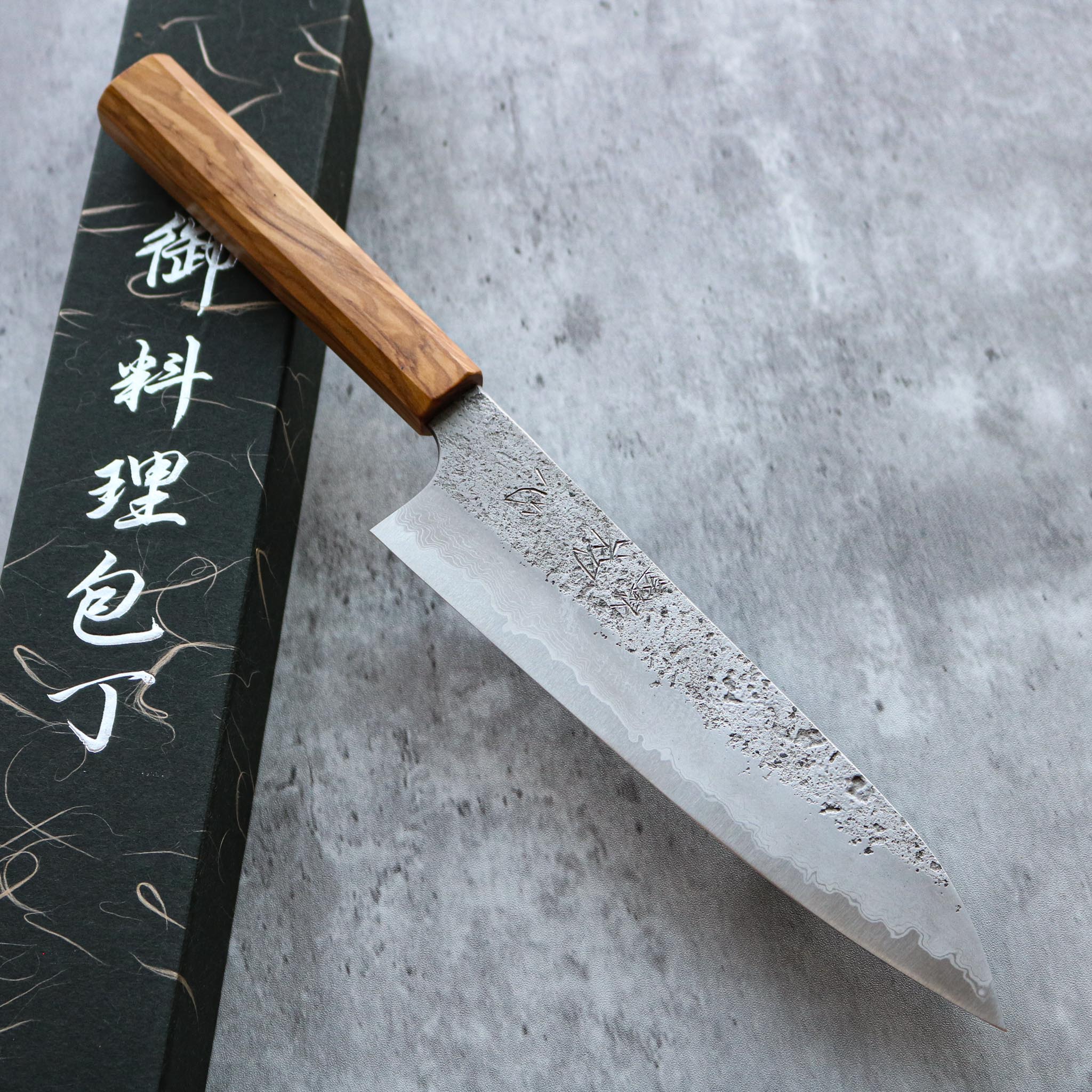


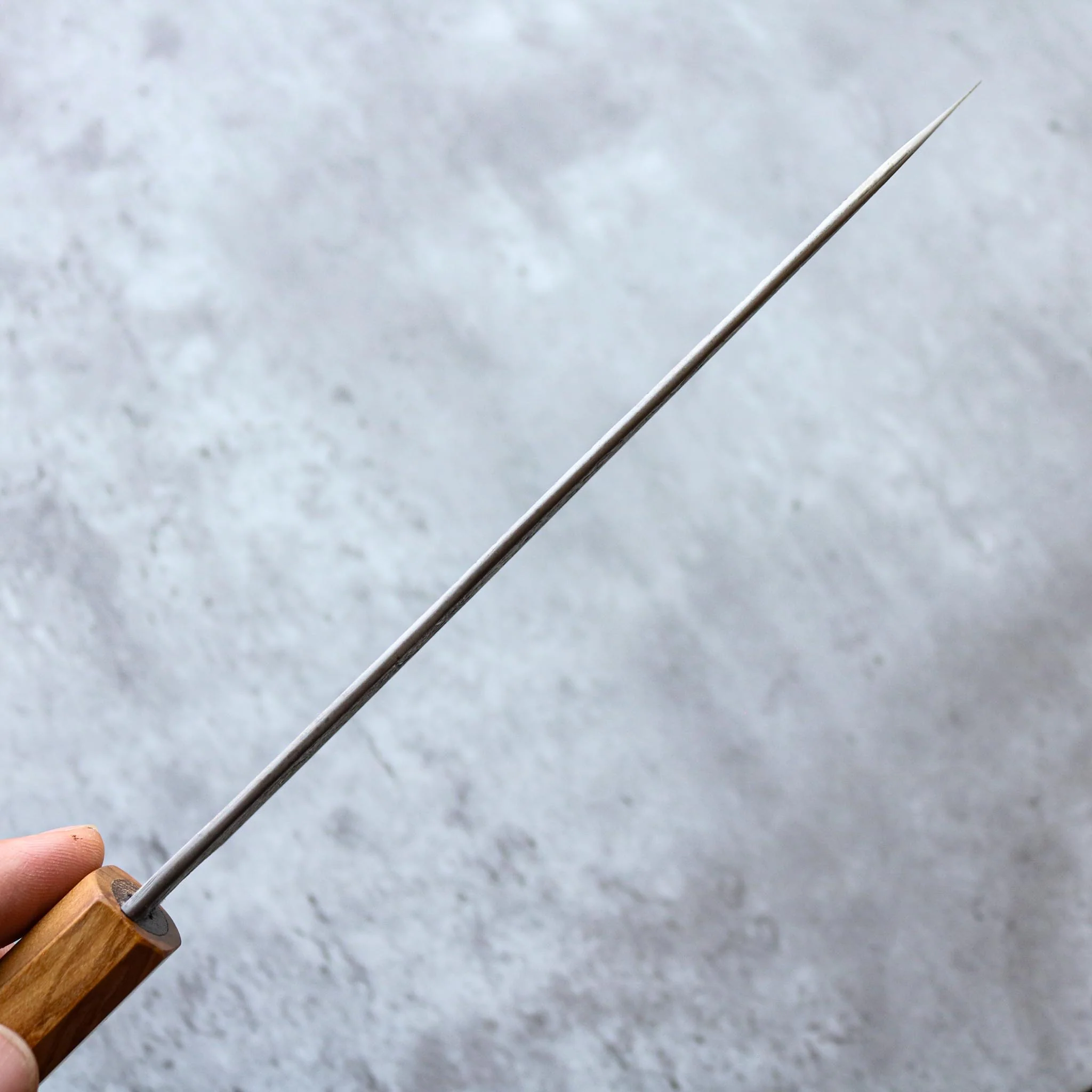

Nigara Hamono Ryusui Blue2 Gyuto 200 mm
Nigara Hamono Ryusui Blue2 Gyuto 200 mm
| Blade Length | 200 mm |
| Total Length | 345 mm |
| Steel | Aogami (Blue#2) |
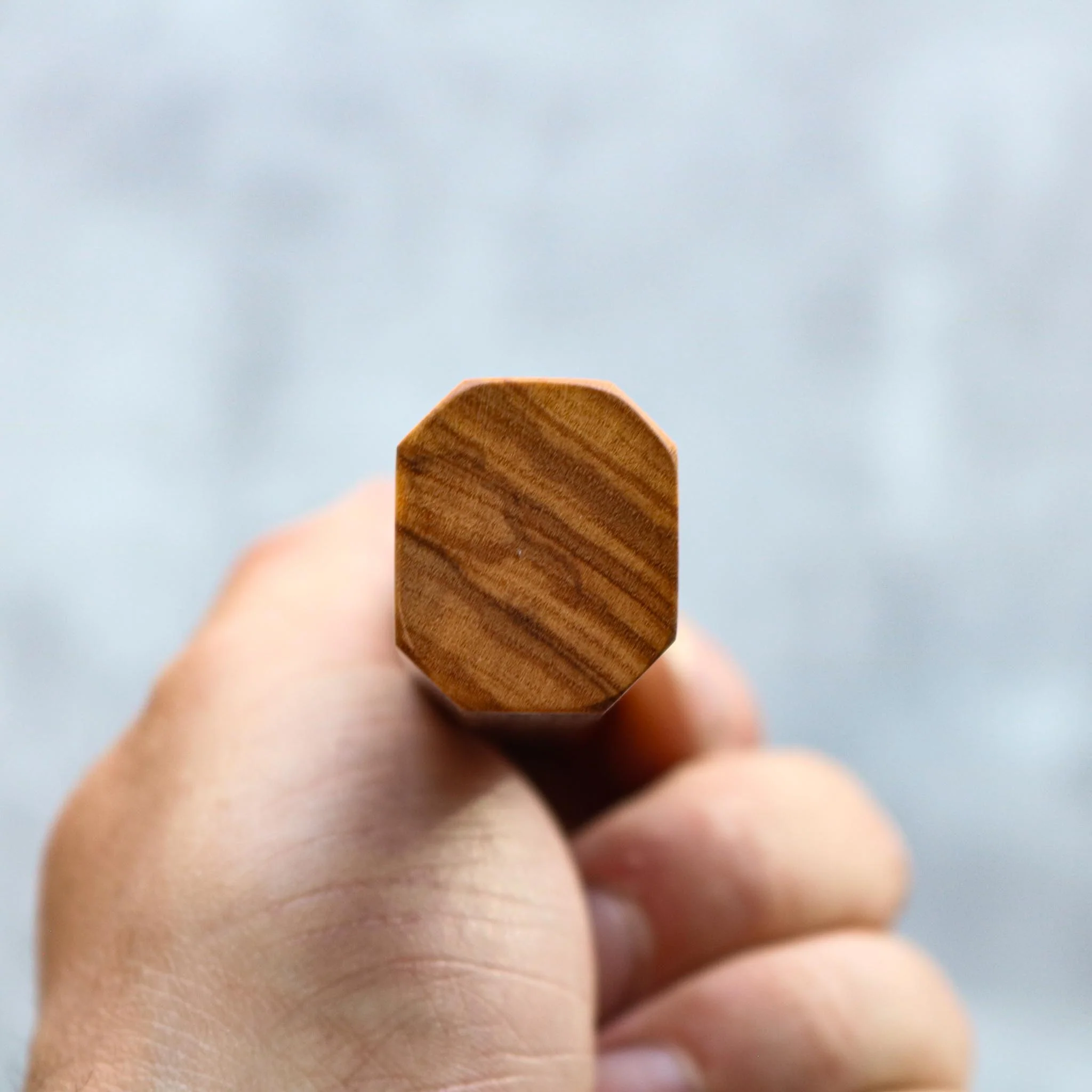
| Handle | Olive Wood |
| Ferrule | N/A |
| Rockwell | 62 |
| Height Spine to heel | 49 mm |
| Width at Spine | 3.45 mm |
| Weight | 163 grams |
| Bevel | Double (50/50) |
The Blacksmith
Nigara Hamono is located in Hirosaki city, Aomori Prefecture, on the west coast of the very northern tip of the main island of Honshu, Japan. Their family has a 350 year old history of making knives and swords and more recently has expanded into structural steel beams for use in construction. Tsuyoshi Yoshizawa stands as the 8th generation smith in the lineage of blacksmiths at Nigara Hamono and creates knives with his younger brother and two other craftsmen.
The Knife
The Gyuto is an all purpose knife and the Japanese equivalent to the western chef's knife; 210mm is the equivalent of the standard 8 inch variation of that knife. From slicing, dicing, chopping, and carving the Gyuto can do it all. It is without question, the most versatile knife shape available and a great choice for both home cooks and professionals.
Knife Care (Iron Clad)
- This Knife is made from 3 layers of material; A layer of iron on each side protecting a layer of carbon steel at the core, in a process referred to as Sanmai or forge welding. Iron and carbon steel are both susceptible to rust and must be kept dry and clean at all time’s to avoid oxidation and discolouration.
- Simply wipe the knife with a damp cloth immediately after use.
- Wash with regular dish soap and warm water using a none abrasive sponge or cloth.
- Never put your knife in the dishwasher! The extreme heat will ruin the wooden handle.
- Highly acidic ingredients (Onions, Tomatoes, Citrus) Will cause rust and oxidation to happen faster, thus the user must ensure the knife is wiped clean immediately after working with such an ingredient.
- Should any rust form it can be removed using a rust eraser or a mixture of Baking soda and water to simply scrub it clean.
- Avoid Bones, Frozen foods, nuts and hard candies or anything other than fruits, vegetables and proteins.
Original: $366.11
-65%$366.11
$128.14Product Information
Product Information
Shipping & Returns
Shipping & Returns
Description
| Blade Length | 200 mm |
| Total Length | 345 mm |
| Steel | Aogami (Blue#2) |
| Handle | Olive Wood |
| Ferrule | N/A |
| Rockwell | 62 |
| Height Spine to heel | 49 mm |
| Width at Spine | 3.45 mm |
| Weight | 163 grams |
| Bevel | Double (50/50) |
The Blacksmith
Nigara Hamono is located in Hirosaki city, Aomori Prefecture, on the west coast of the very northern tip of the main island of Honshu, Japan. Their family has a 350 year old history of making knives and swords and more recently has expanded into structural steel beams for use in construction. Tsuyoshi Yoshizawa stands as the 8th generation smith in the lineage of blacksmiths at Nigara Hamono and creates knives with his younger brother and two other craftsmen.
The Knife
The Gyuto is an all purpose knife and the Japanese equivalent to the western chef's knife; 210mm is the equivalent of the standard 8 inch variation of that knife. From slicing, dicing, chopping, and carving the Gyuto can do it all. It is without question, the most versatile knife shape available and a great choice for both home cooks and professionals.
Knife Care (Iron Clad)
- This Knife is made from 3 layers of material; A layer of iron on each side protecting a layer of carbon steel at the core, in a process referred to as Sanmai or forge welding. Iron and carbon steel are both susceptible to rust and must be kept dry and clean at all time’s to avoid oxidation and discolouration.
- Simply wipe the knife with a damp cloth immediately after use.
- Wash with regular dish soap and warm water using a none abrasive sponge or cloth.
- Never put your knife in the dishwasher! The extreme heat will ruin the wooden handle.
- Highly acidic ingredients (Onions, Tomatoes, Citrus) Will cause rust and oxidation to happen faster, thus the user must ensure the knife is wiped clean immediately after working with such an ingredient.
- Should any rust form it can be removed using a rust eraser or a mixture of Baking soda and water to simply scrub it clean.
- Avoid Bones, Frozen foods, nuts and hard candies or anything other than fruits, vegetables and proteins.