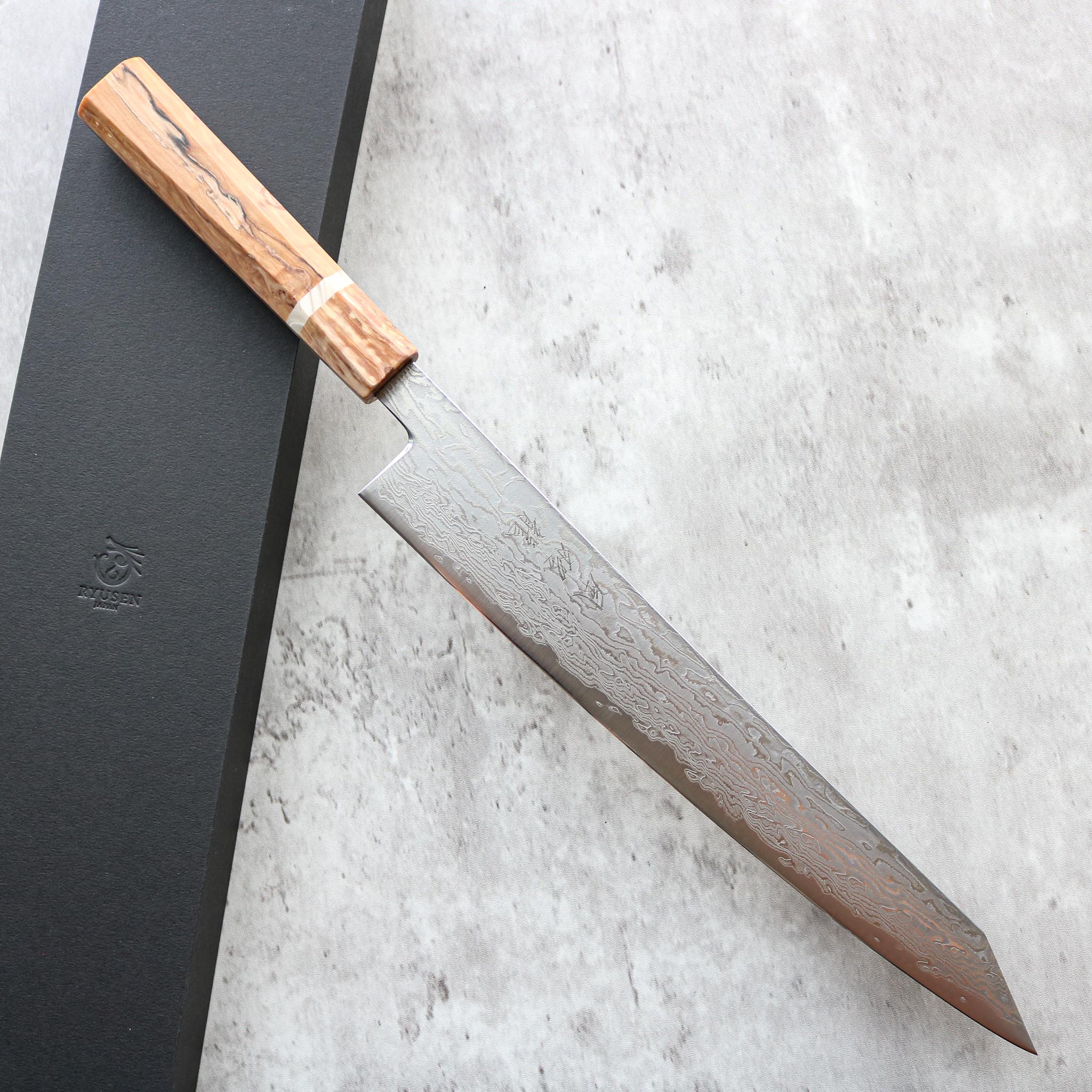
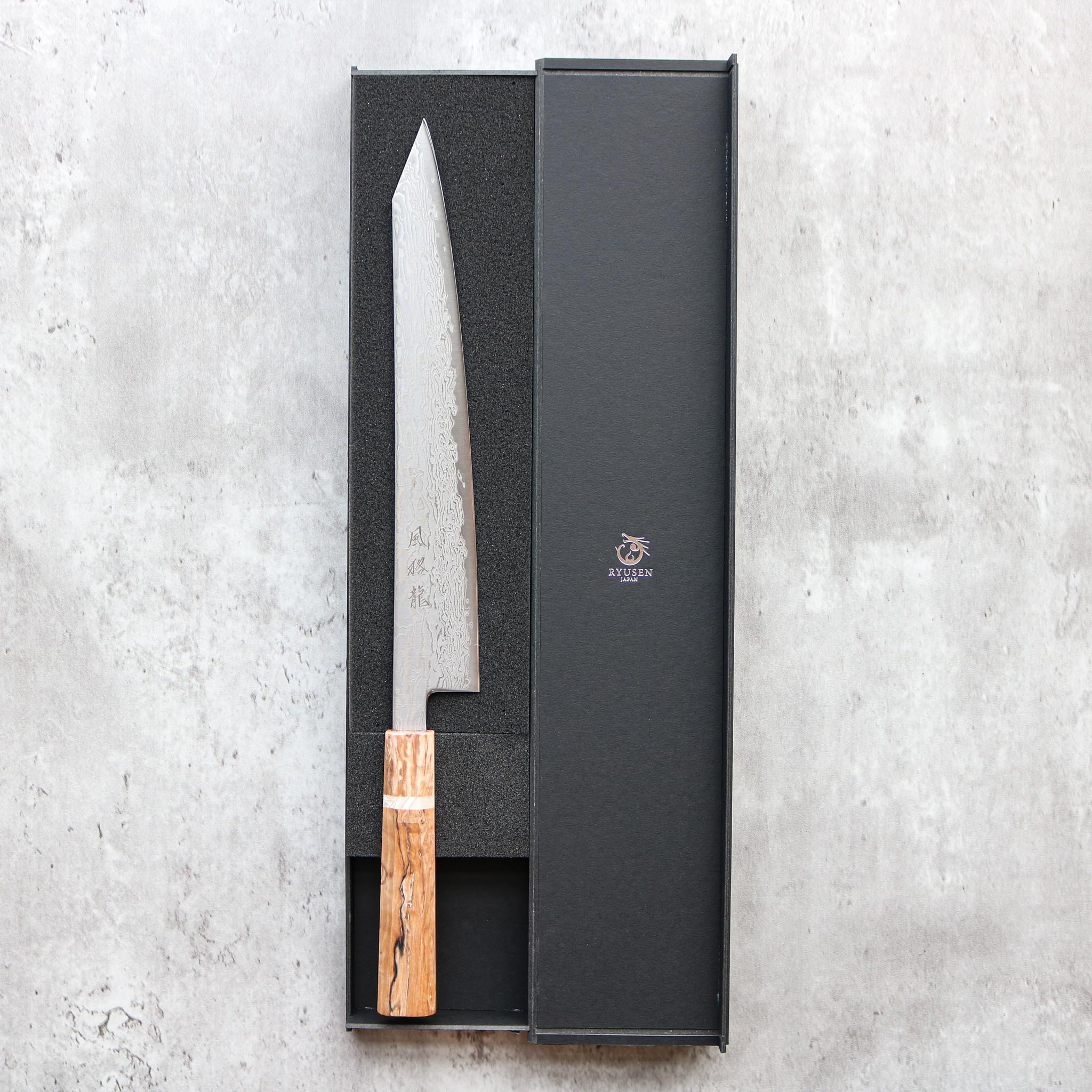
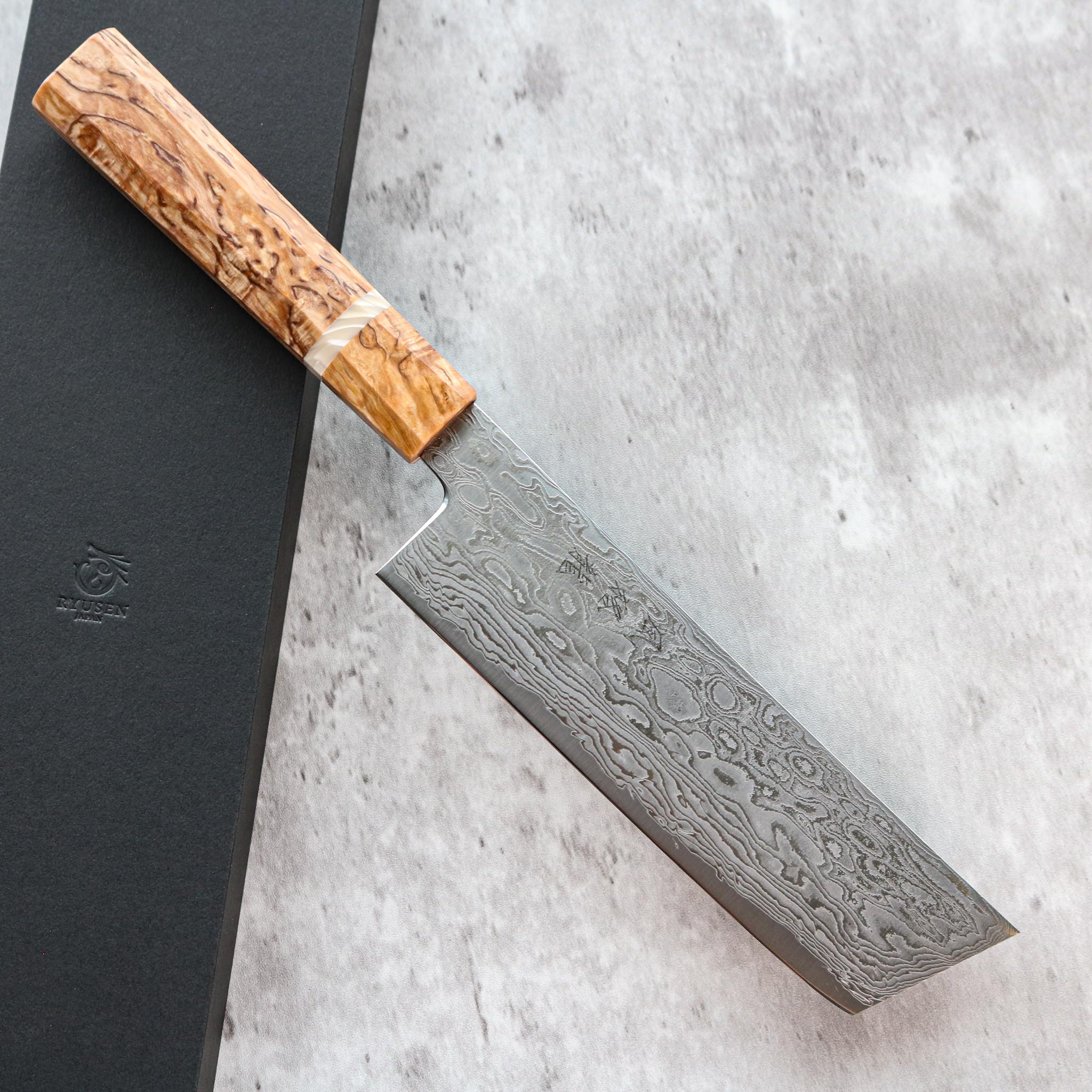
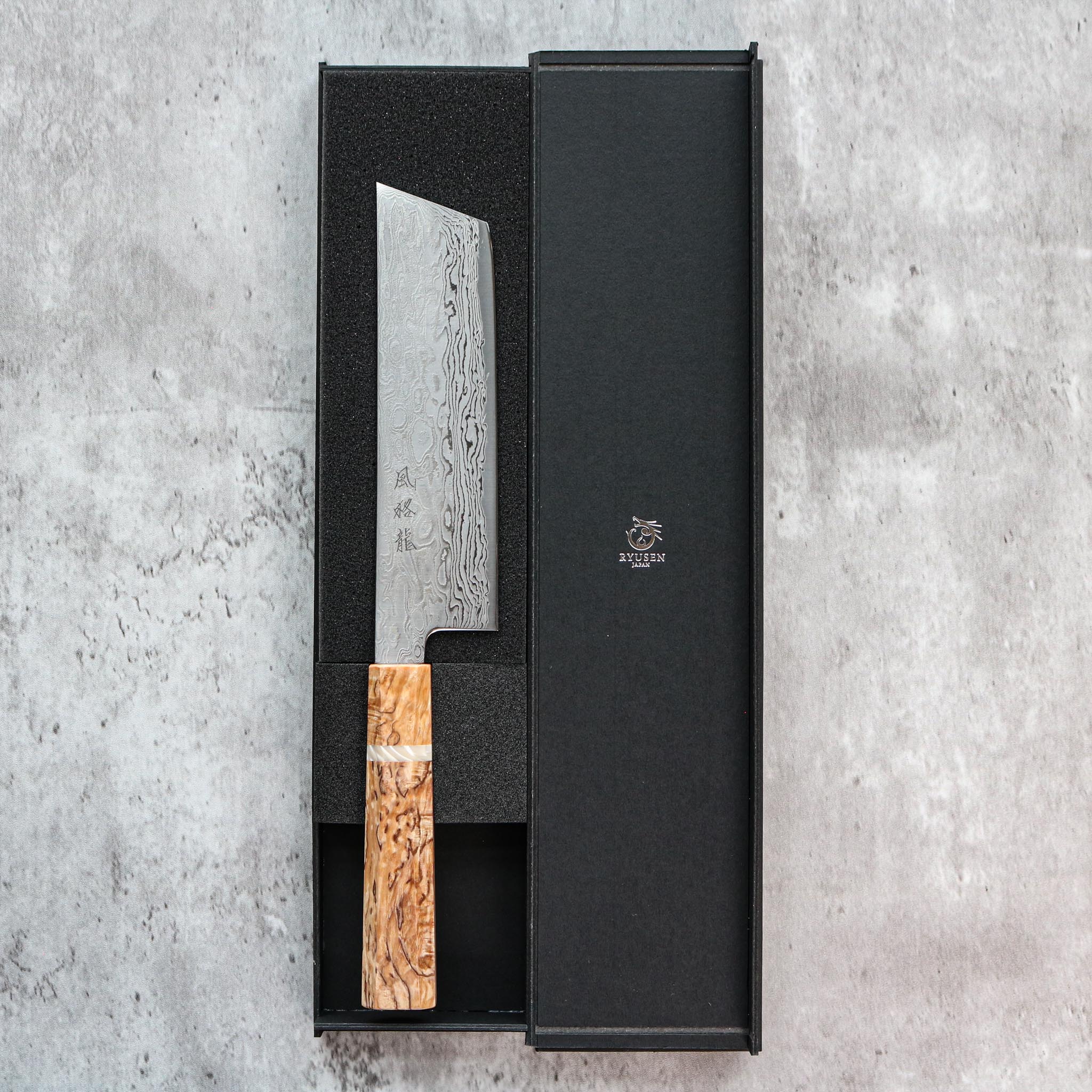
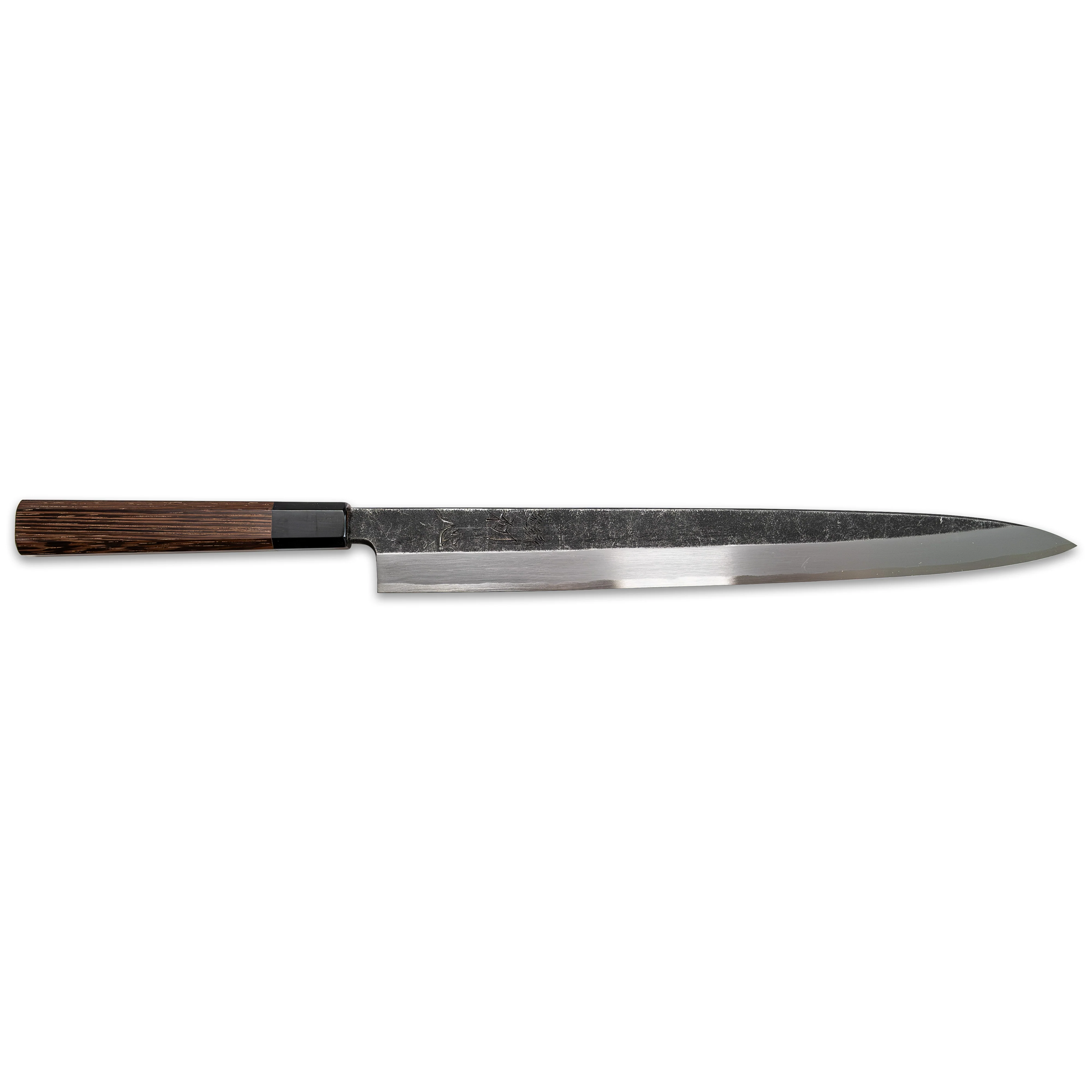
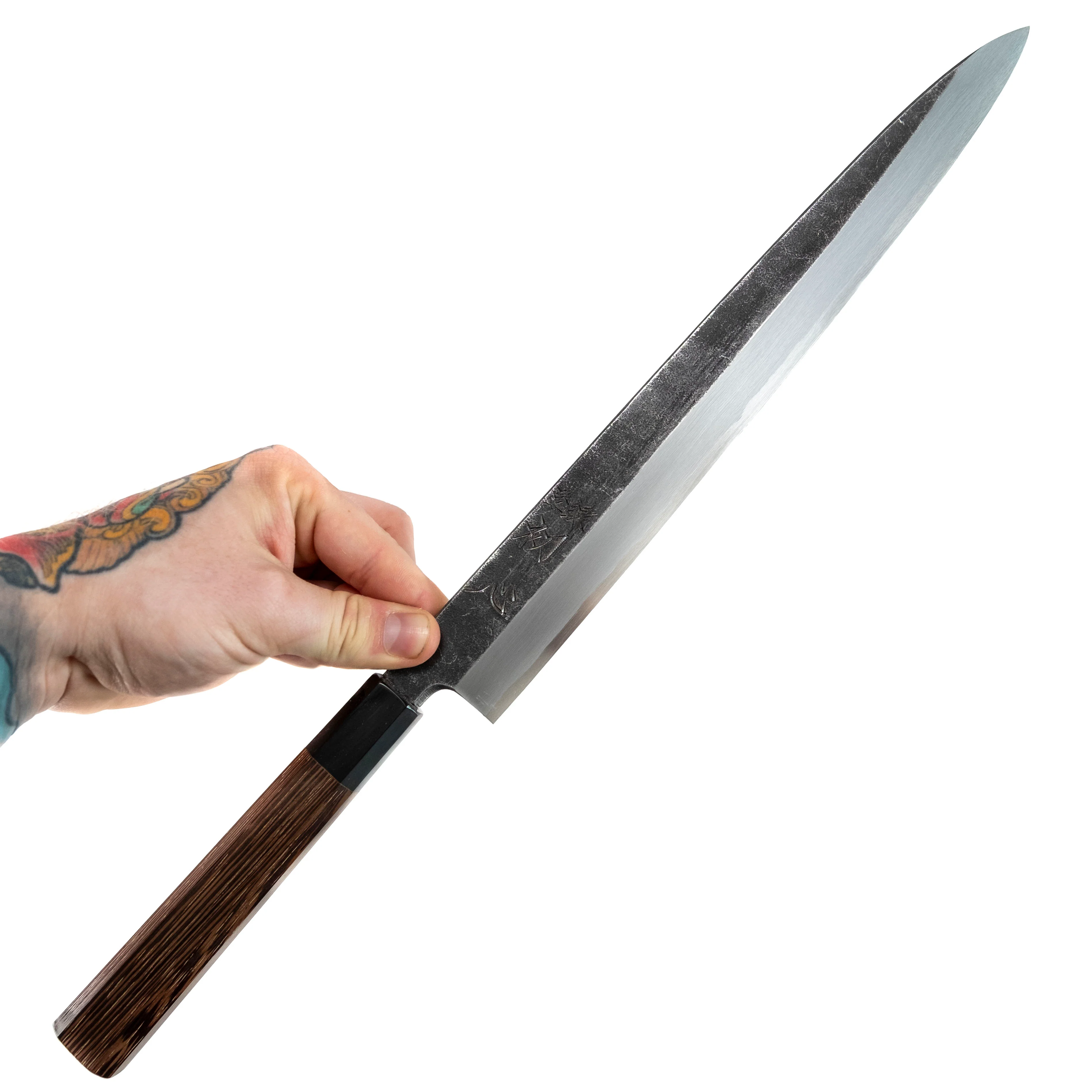
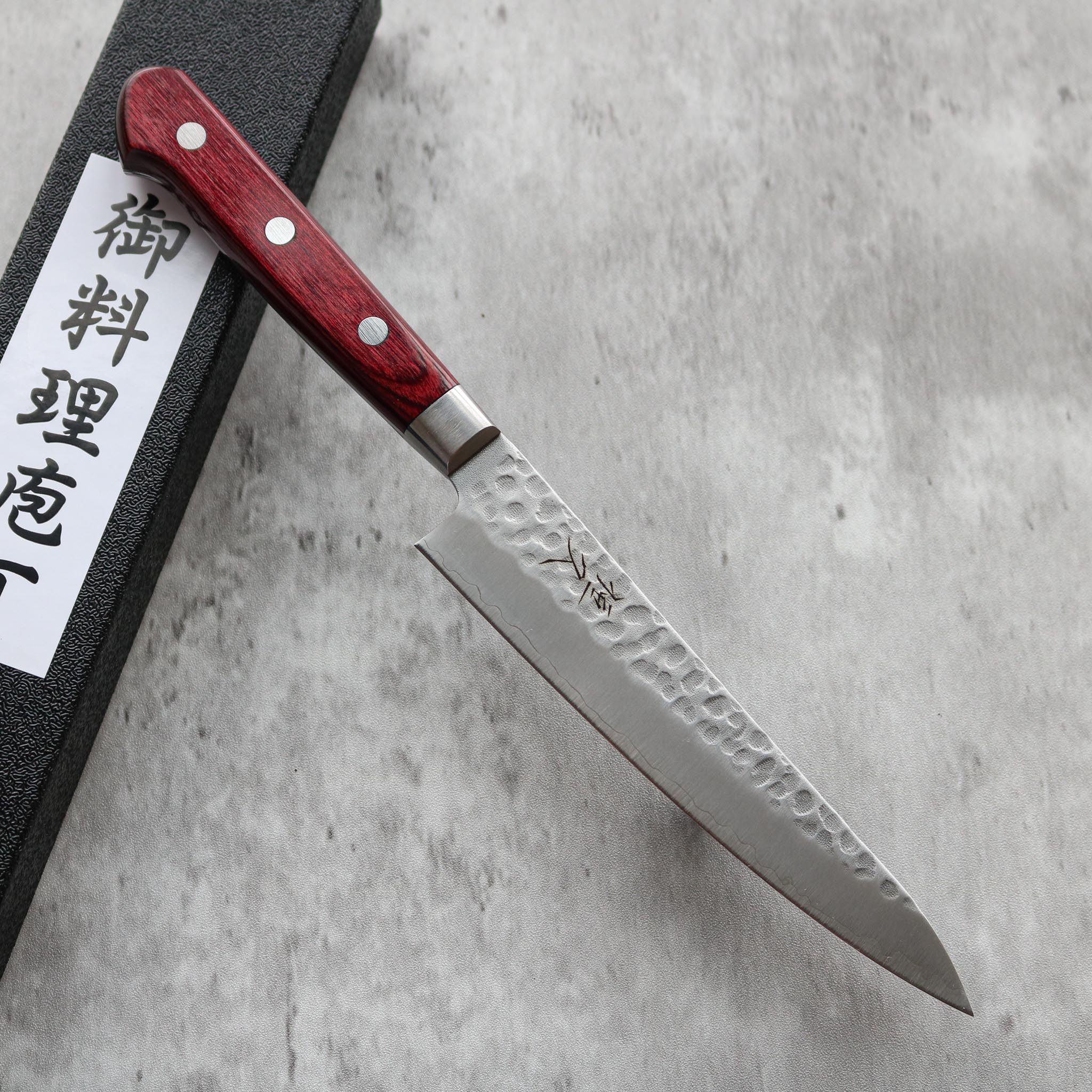
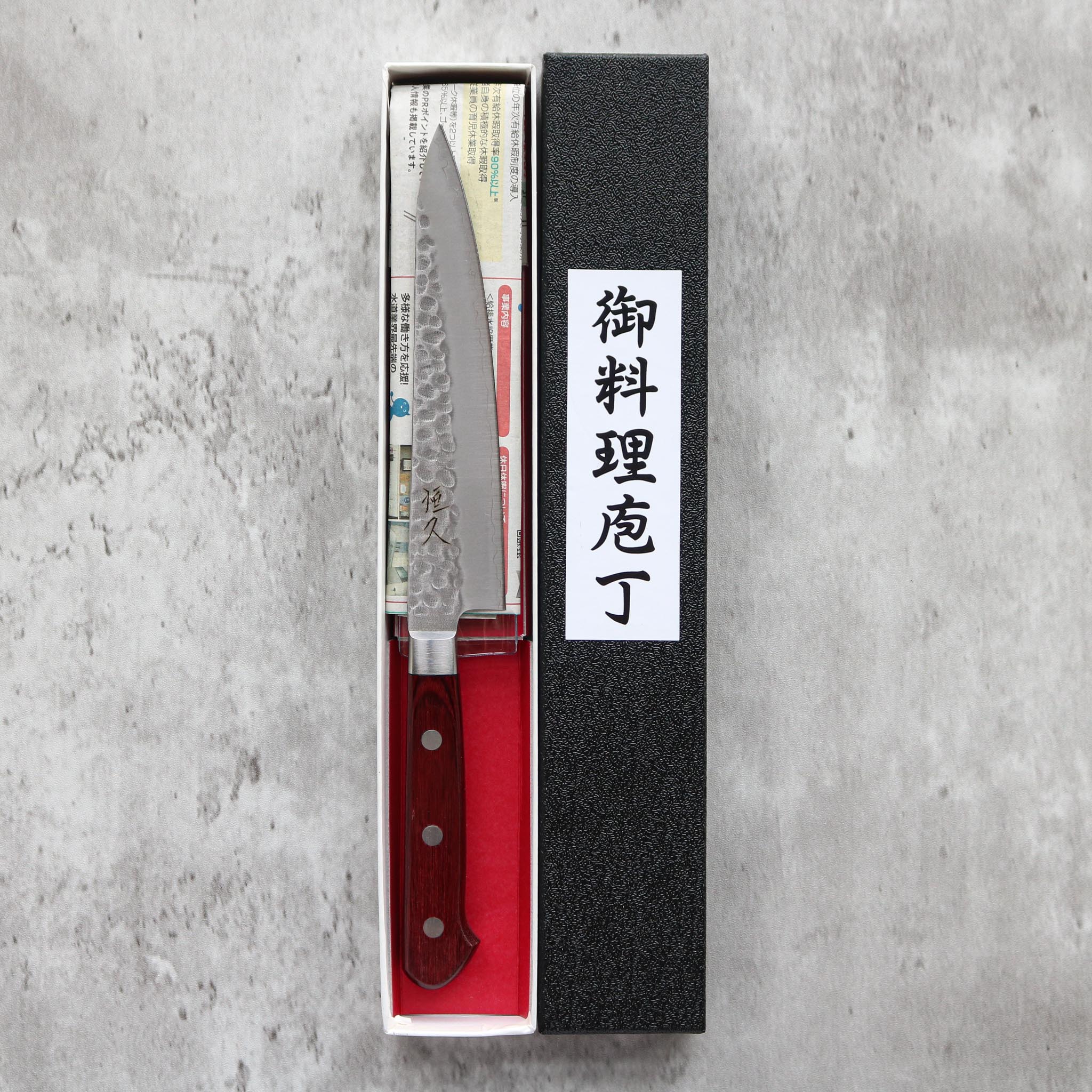
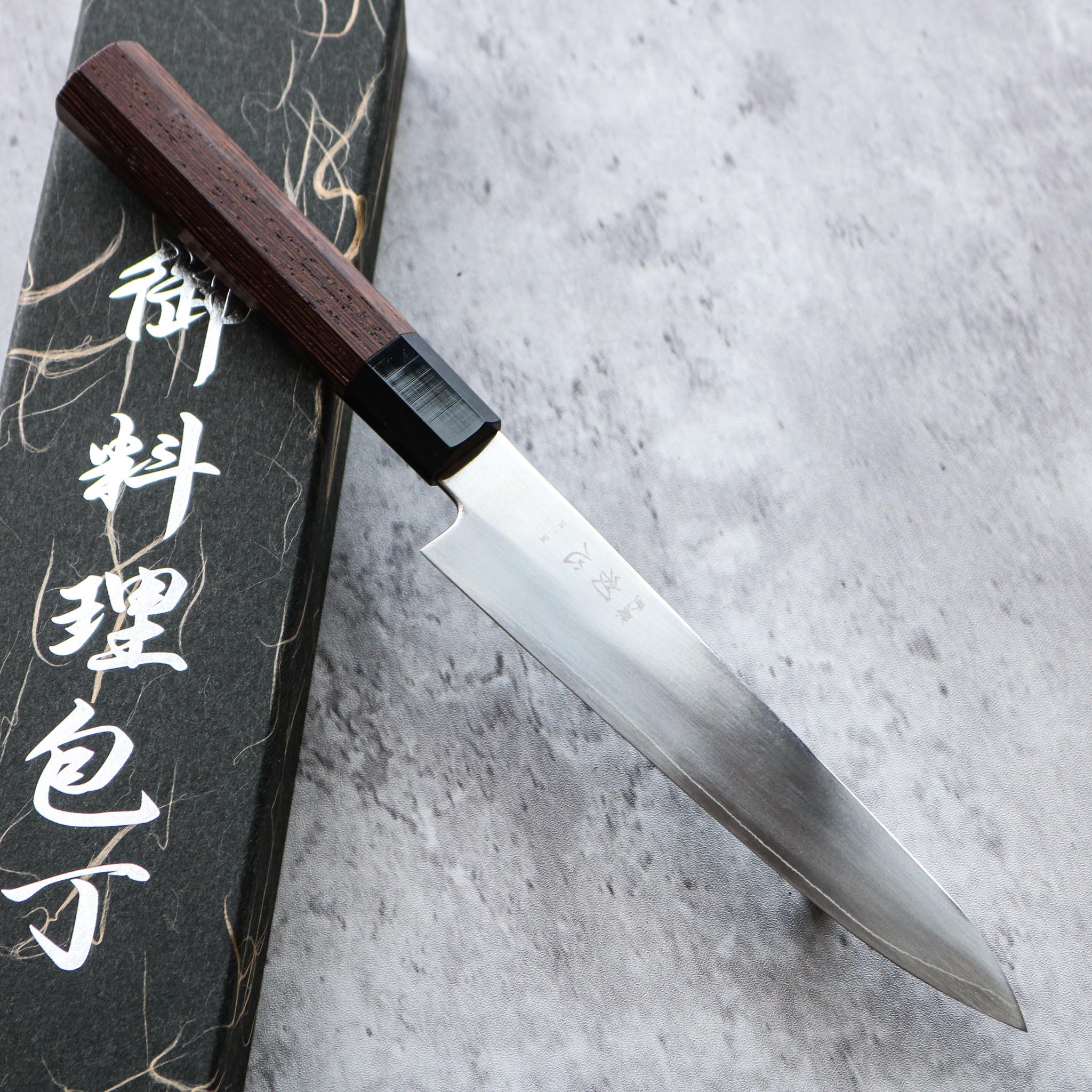
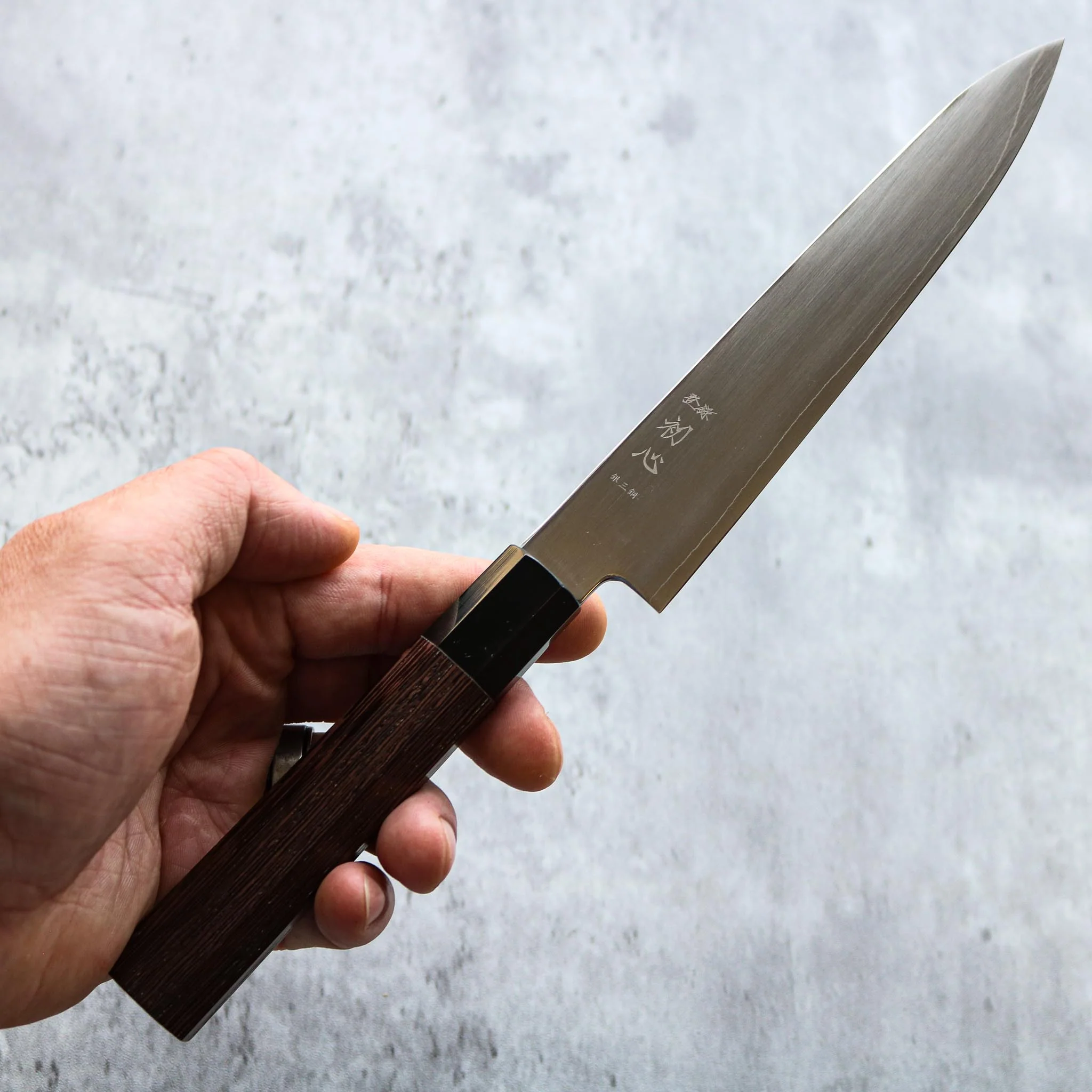
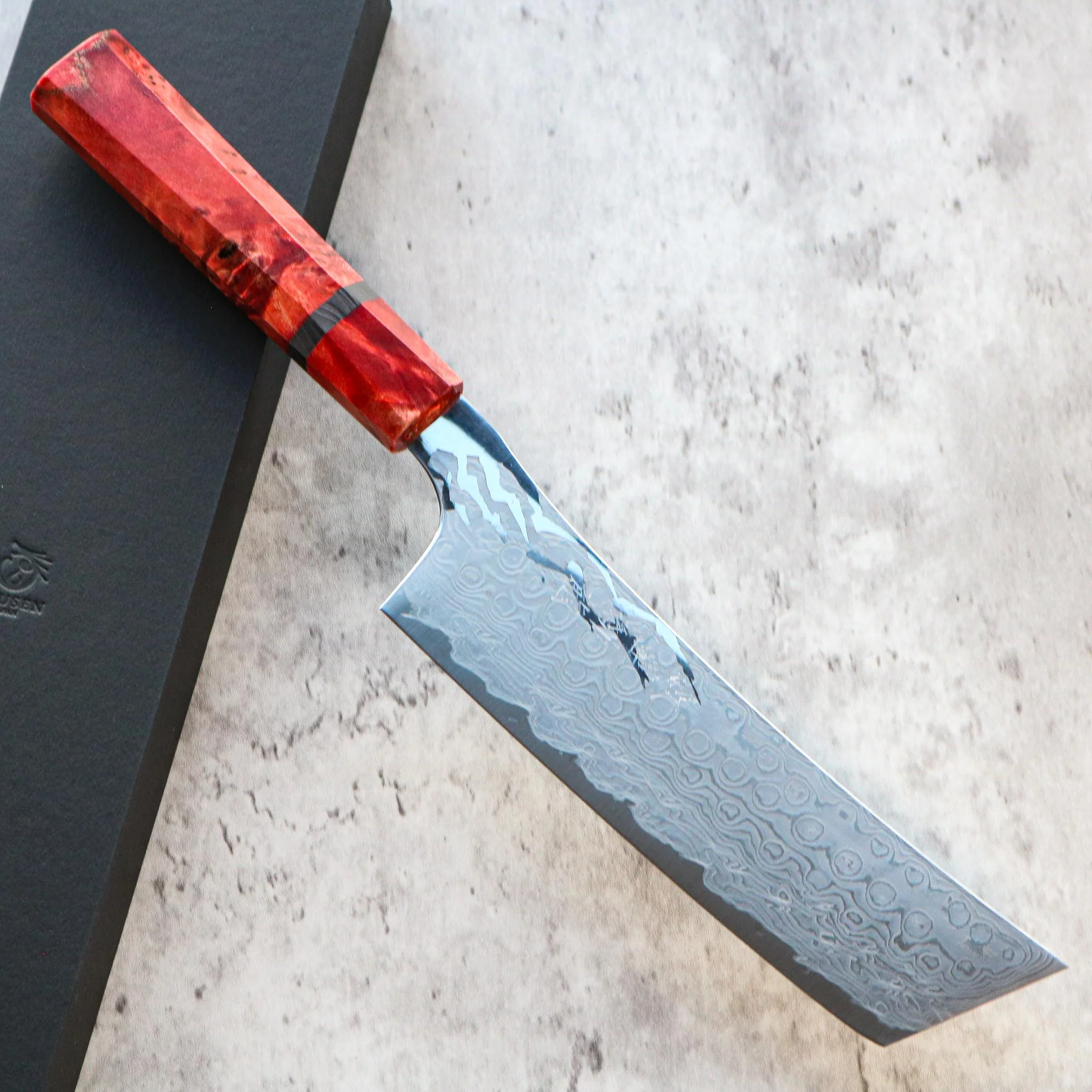
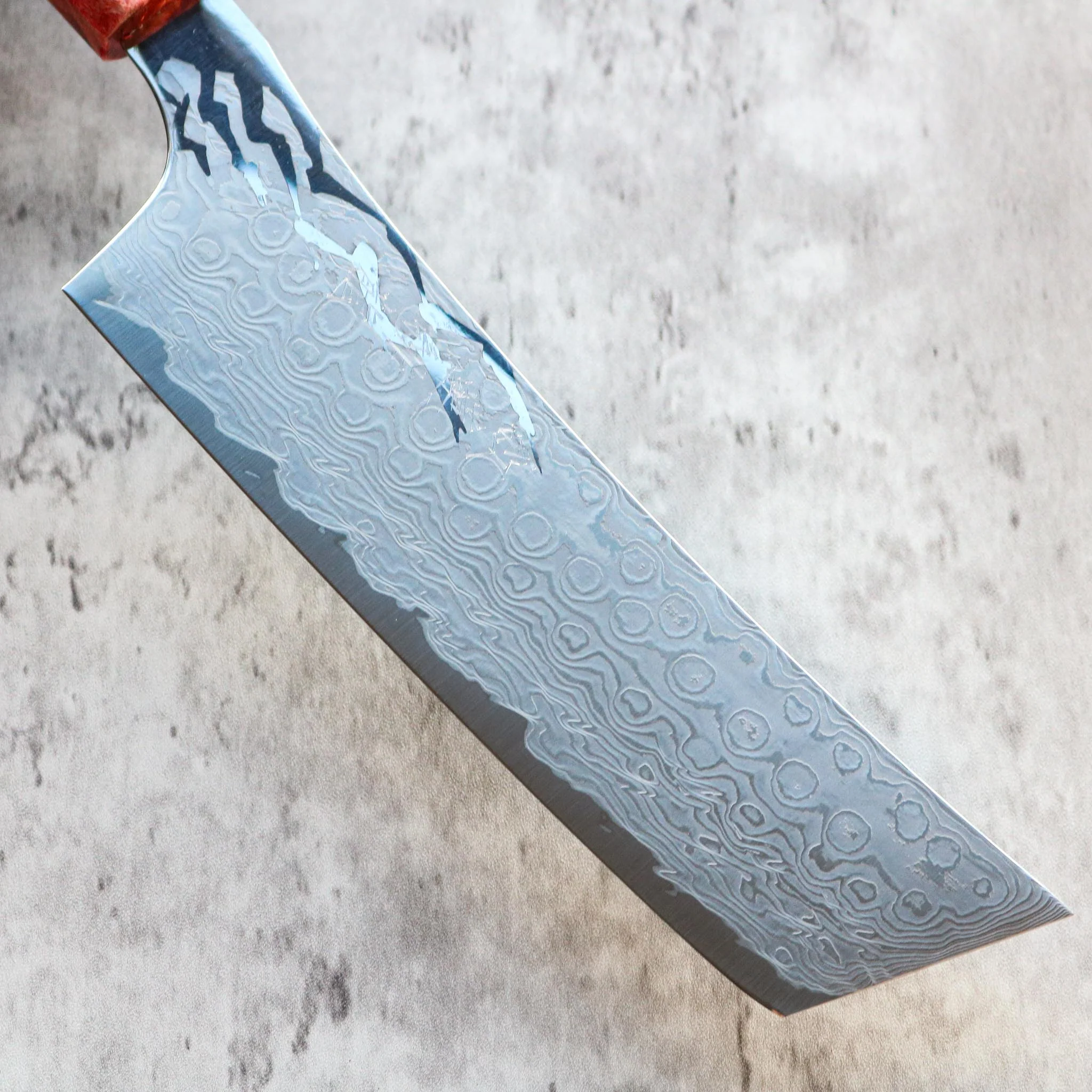
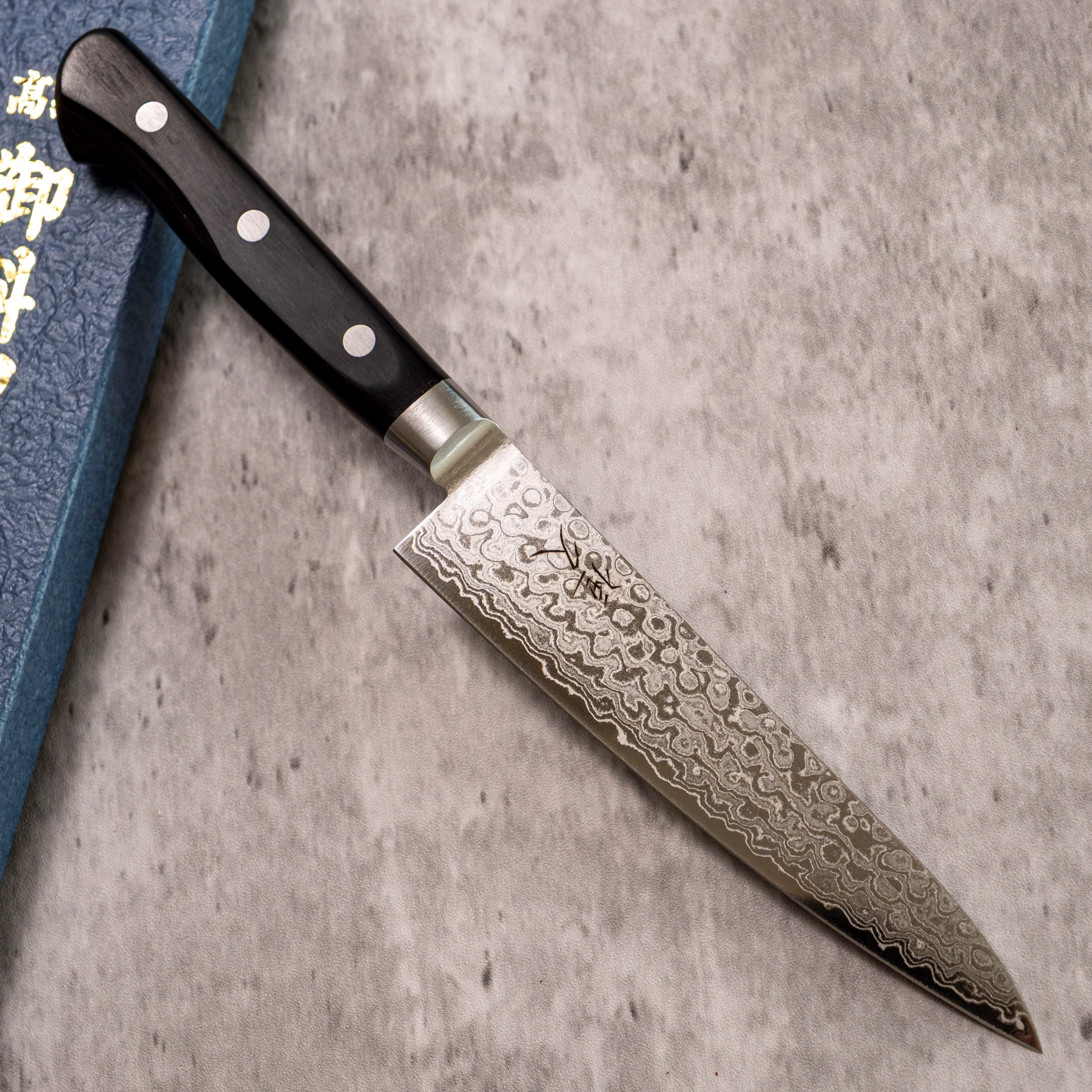
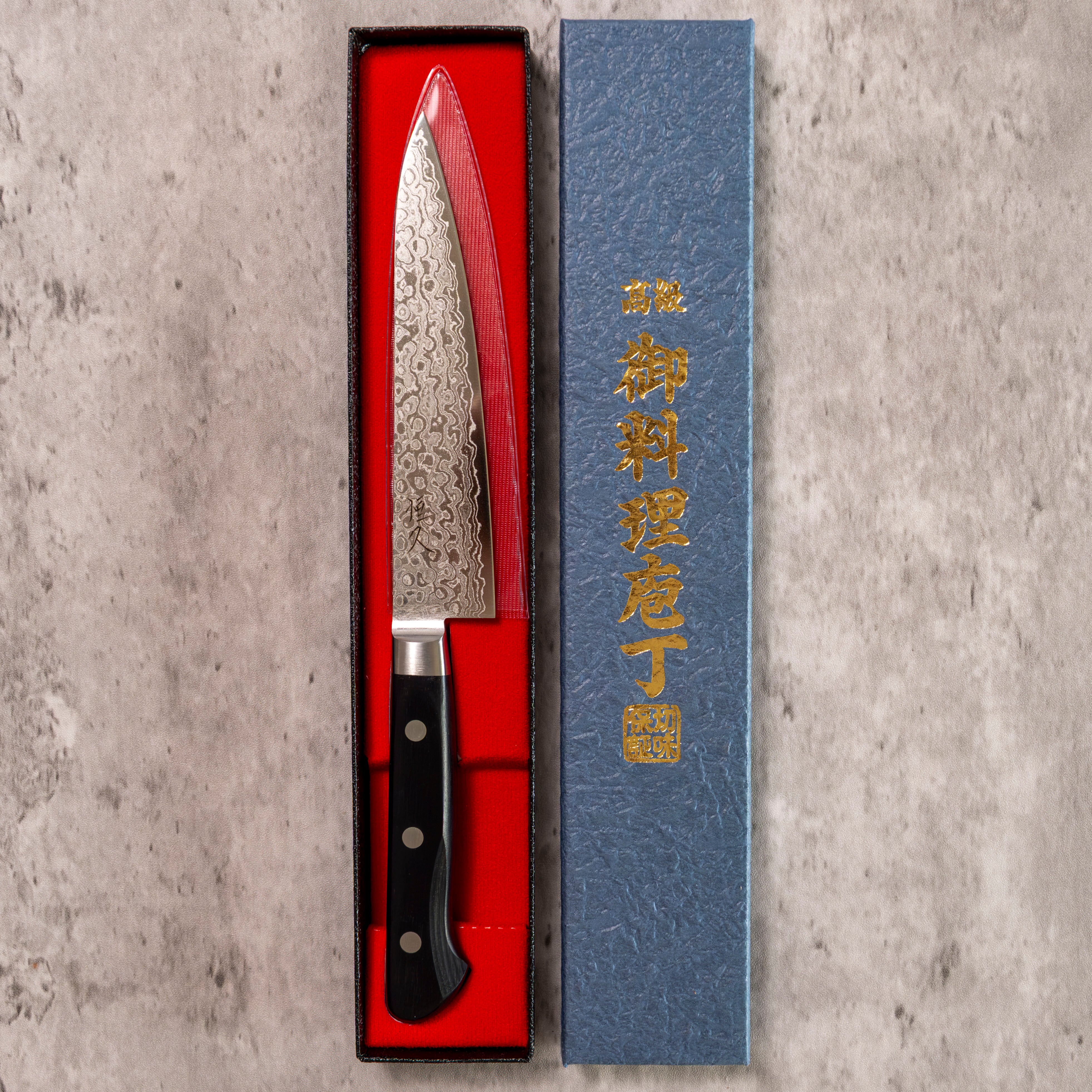
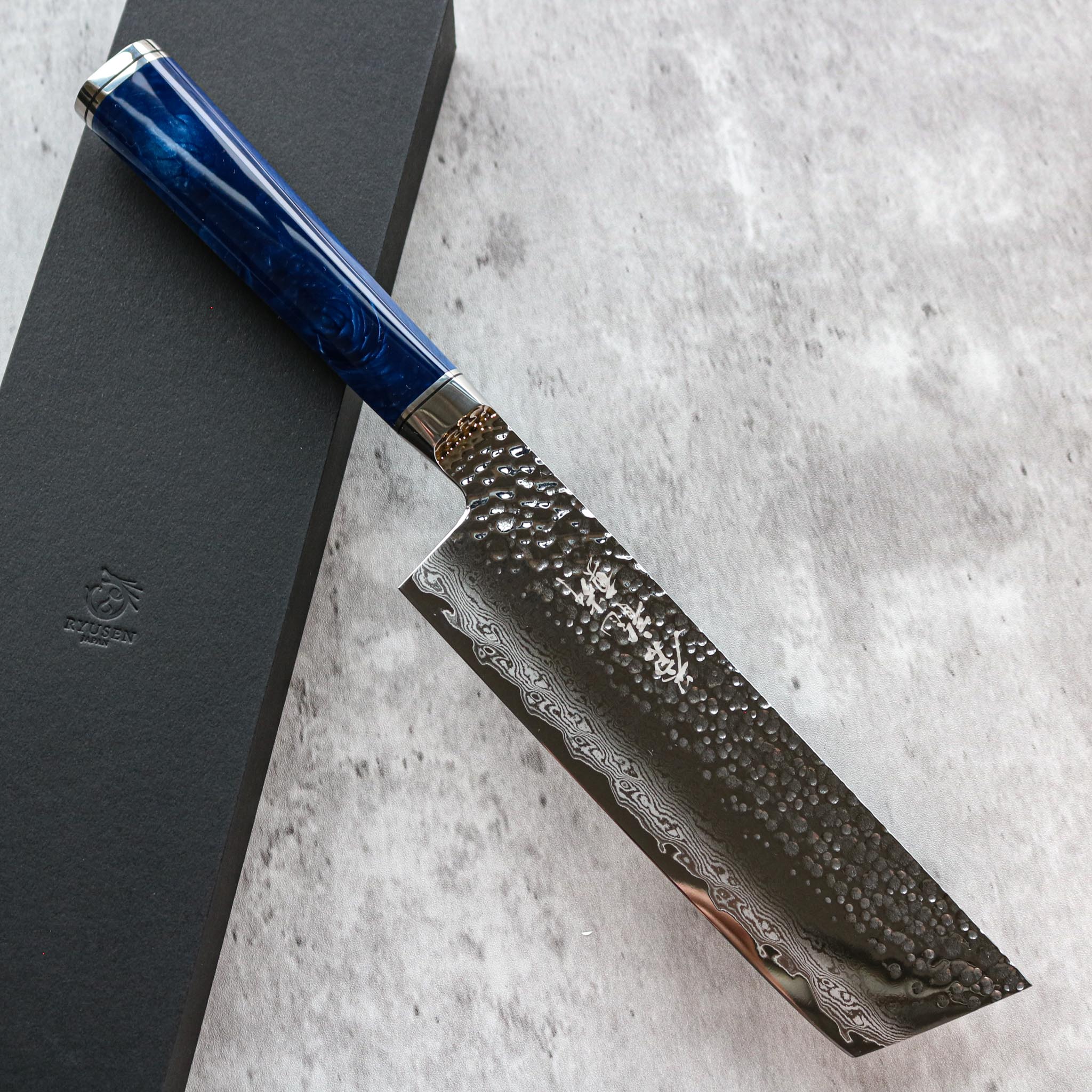
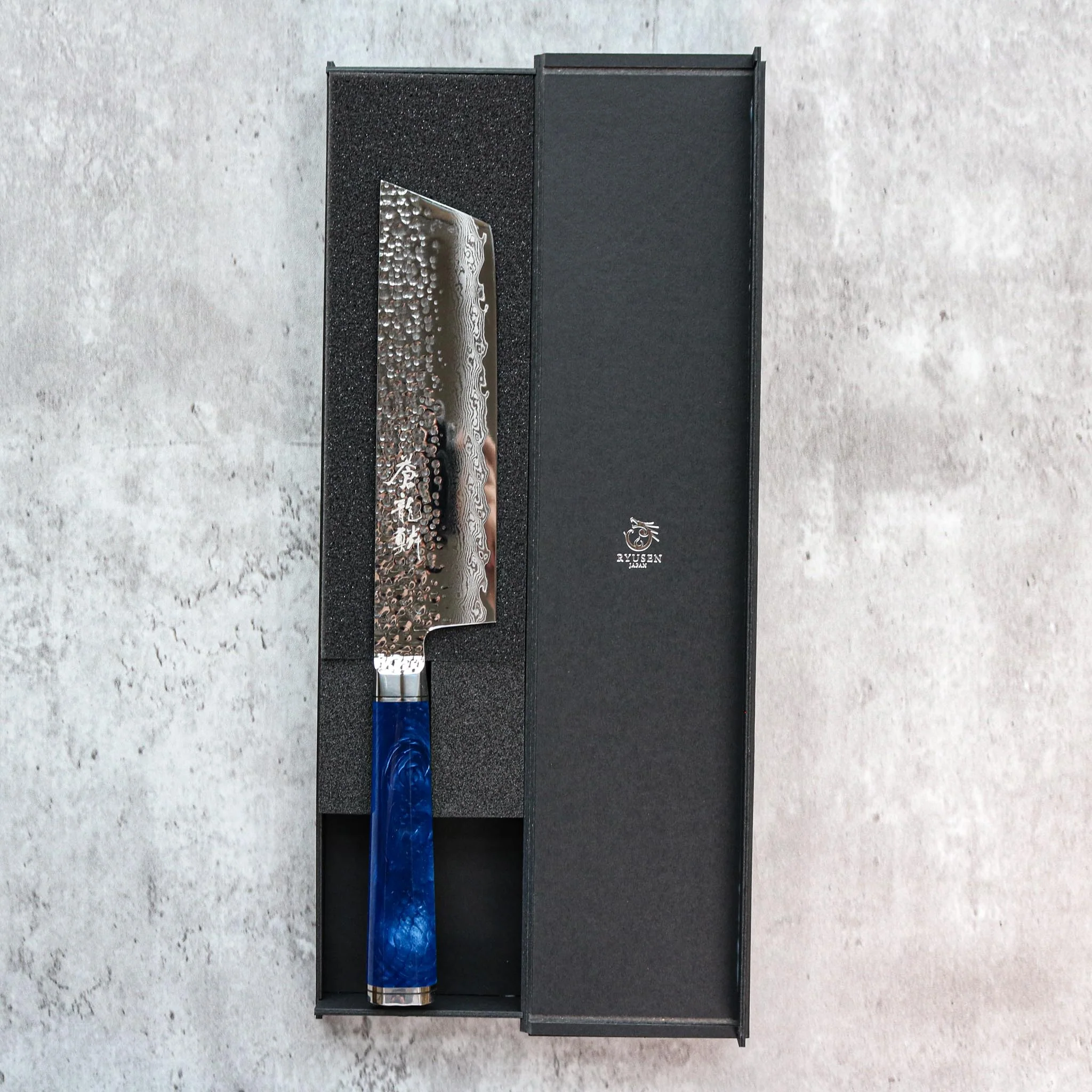
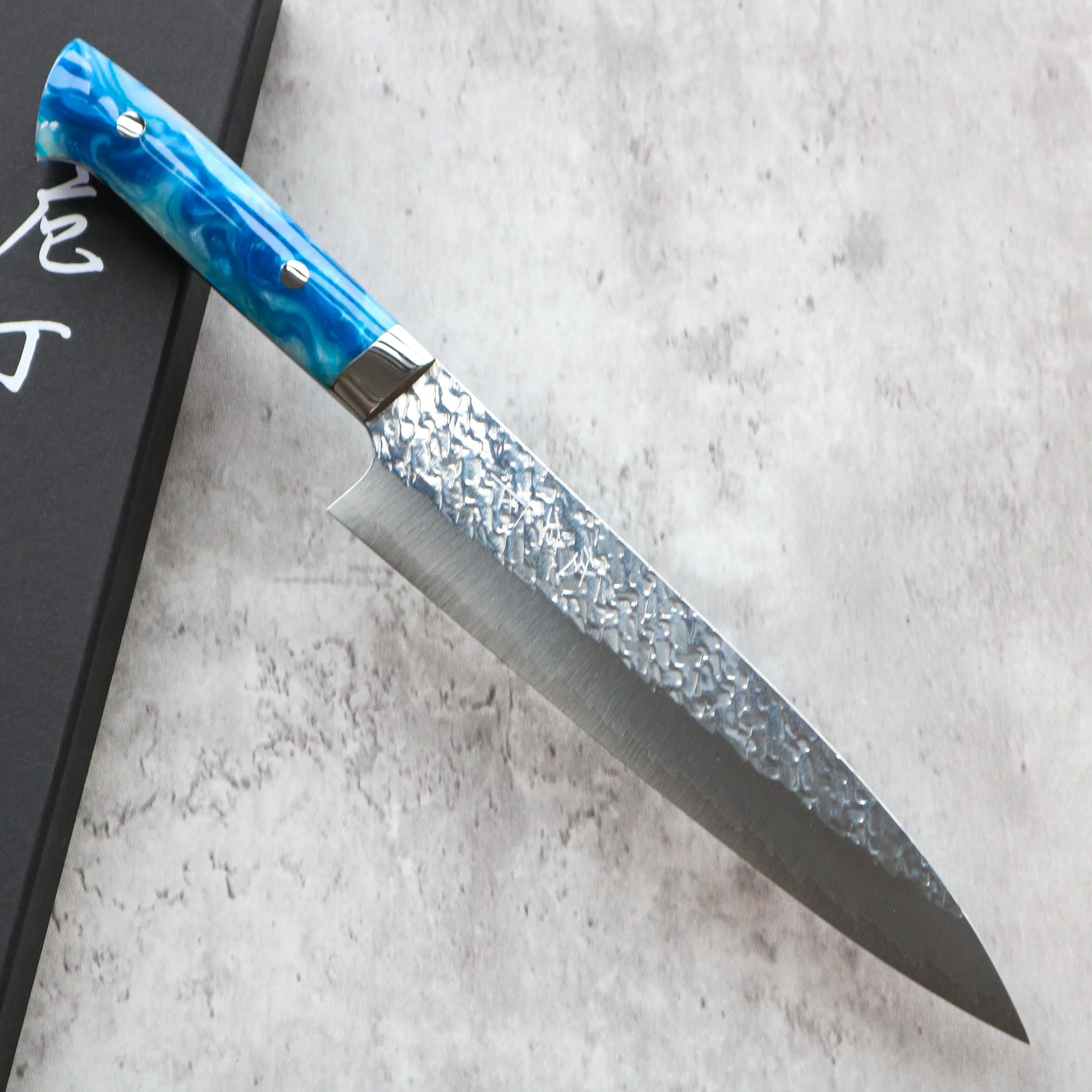
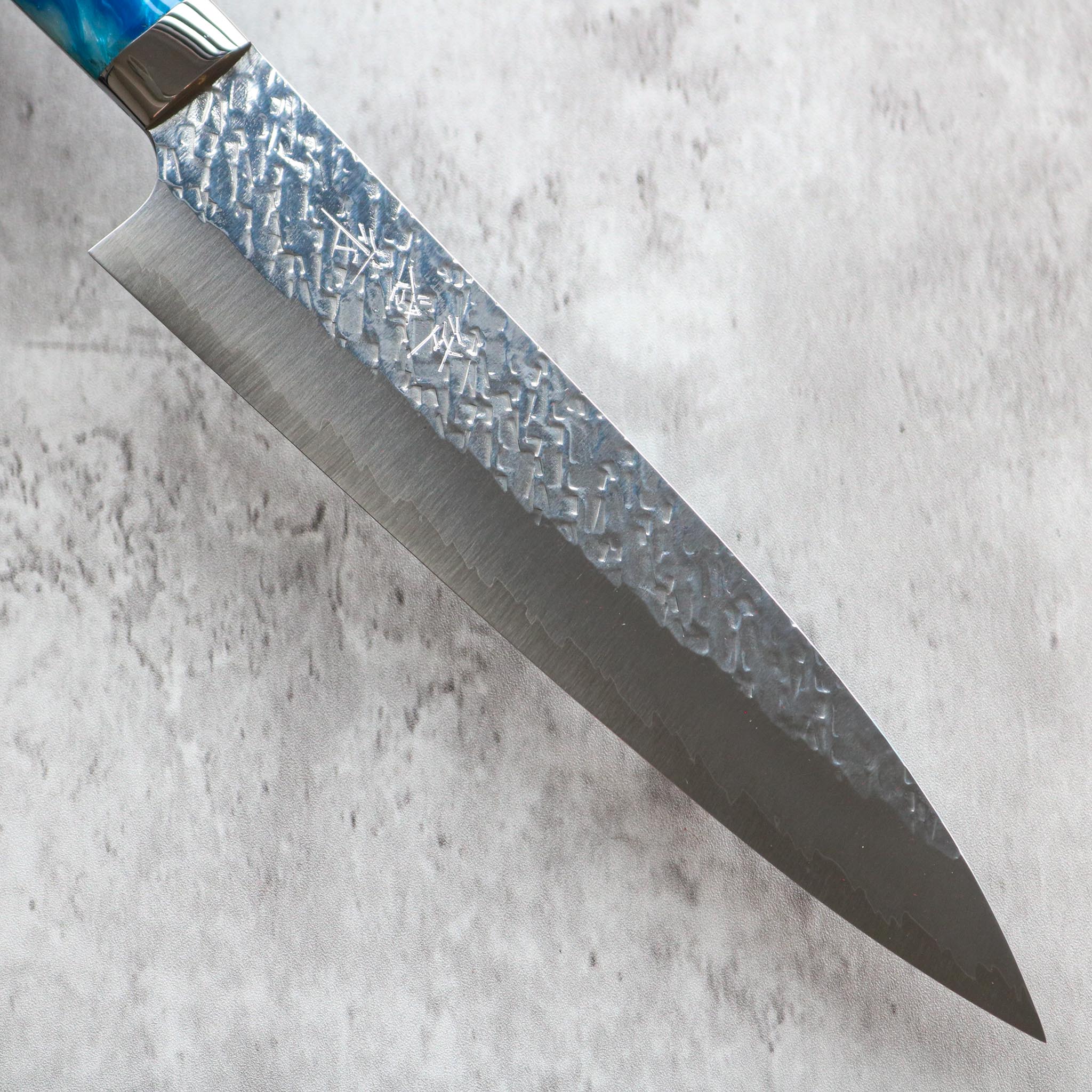
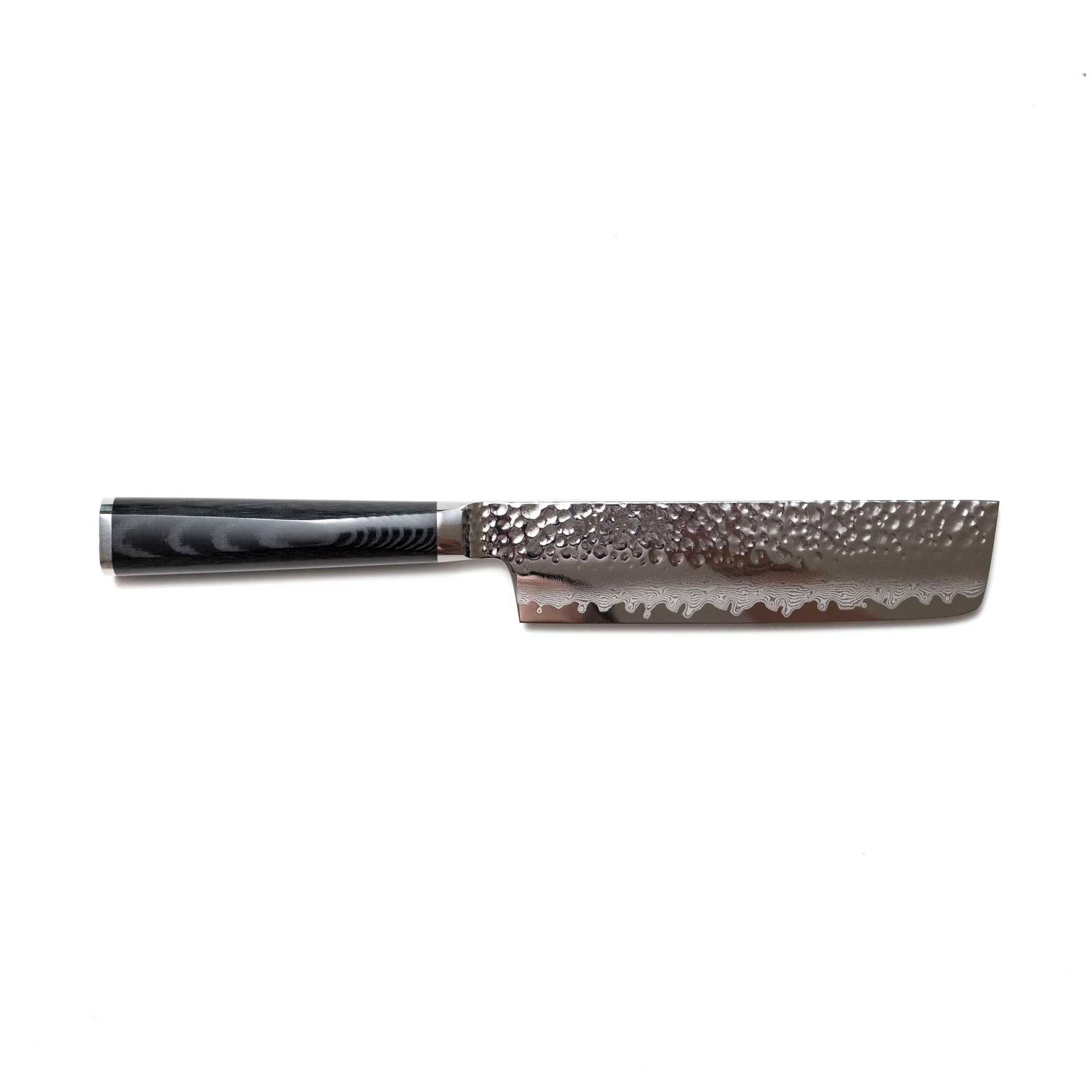
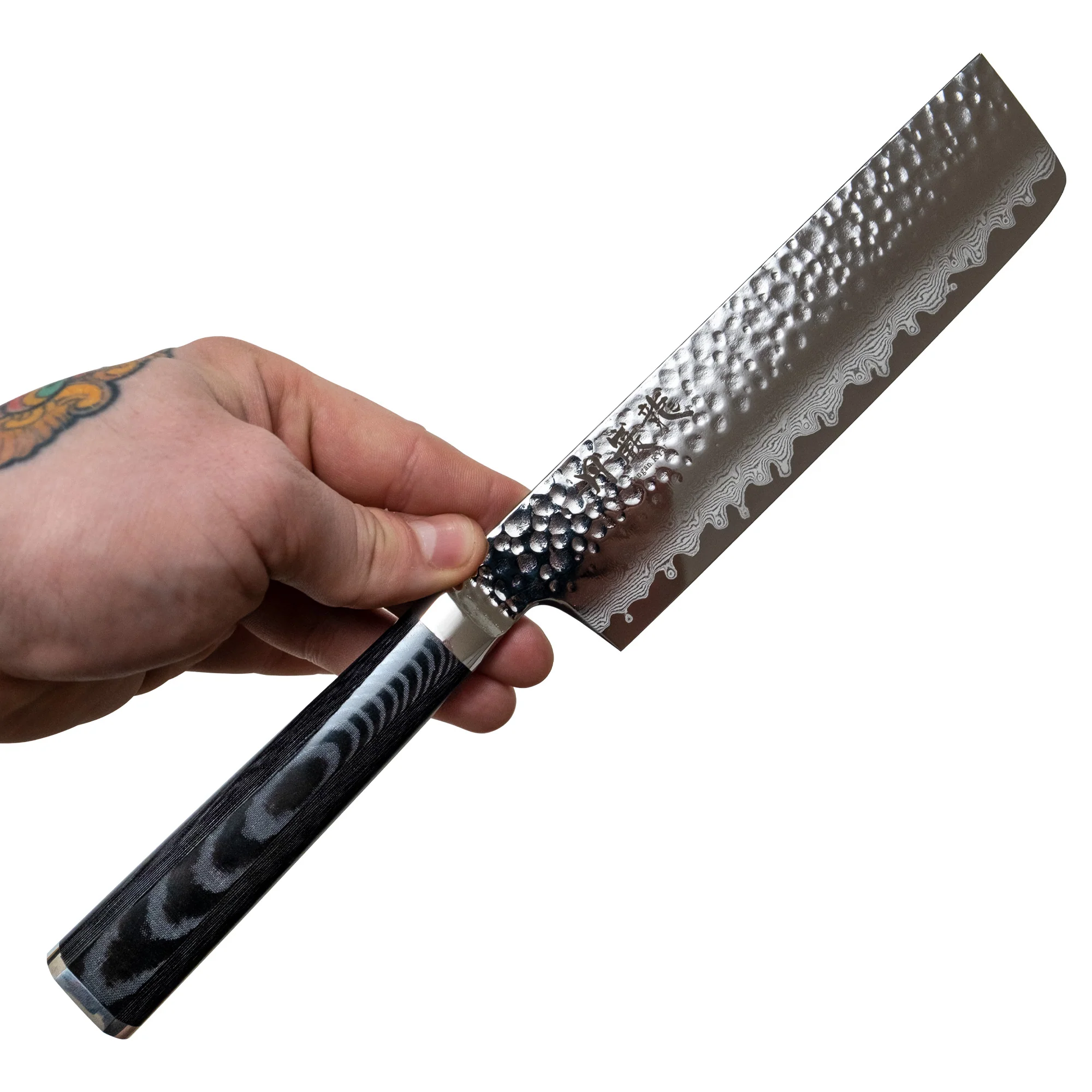
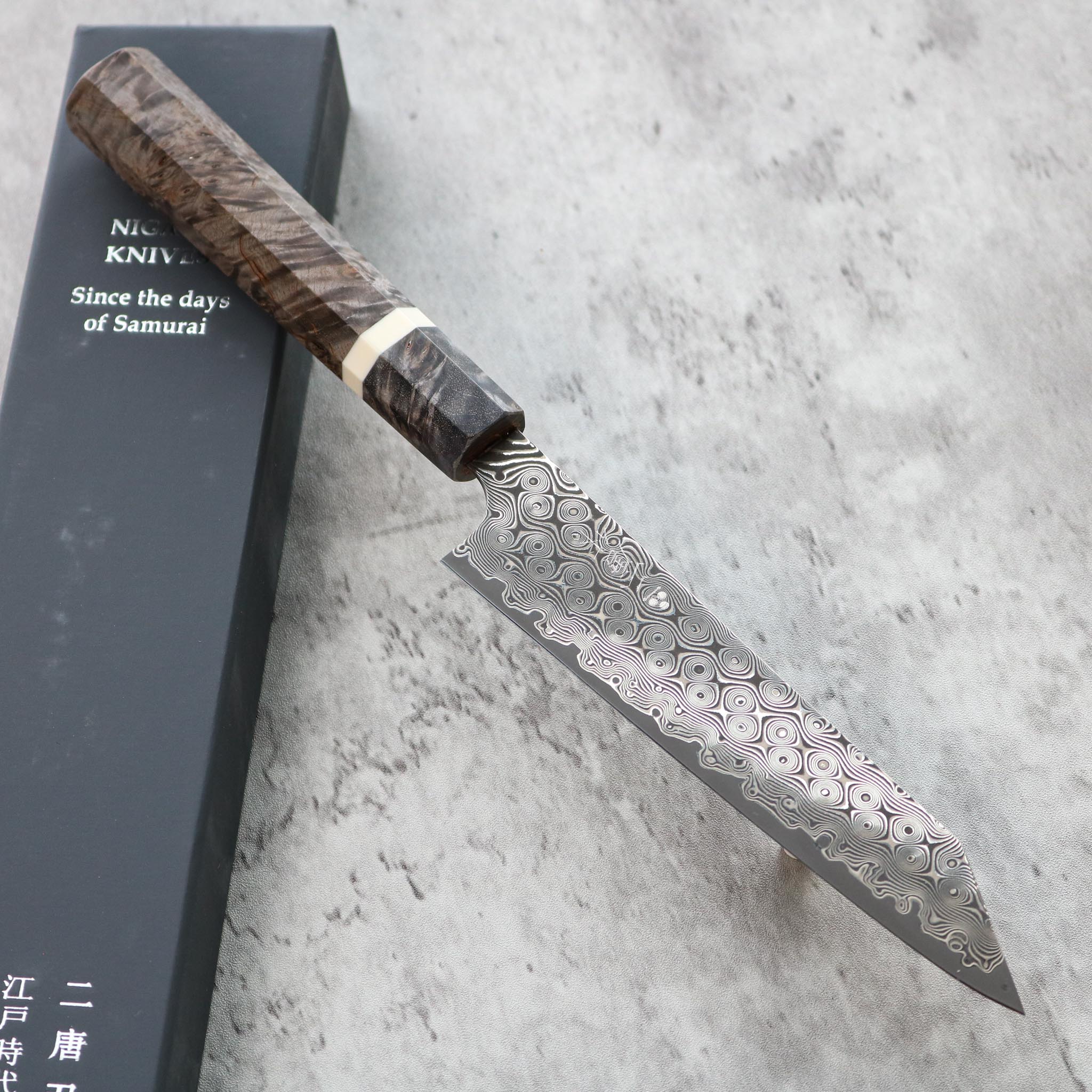
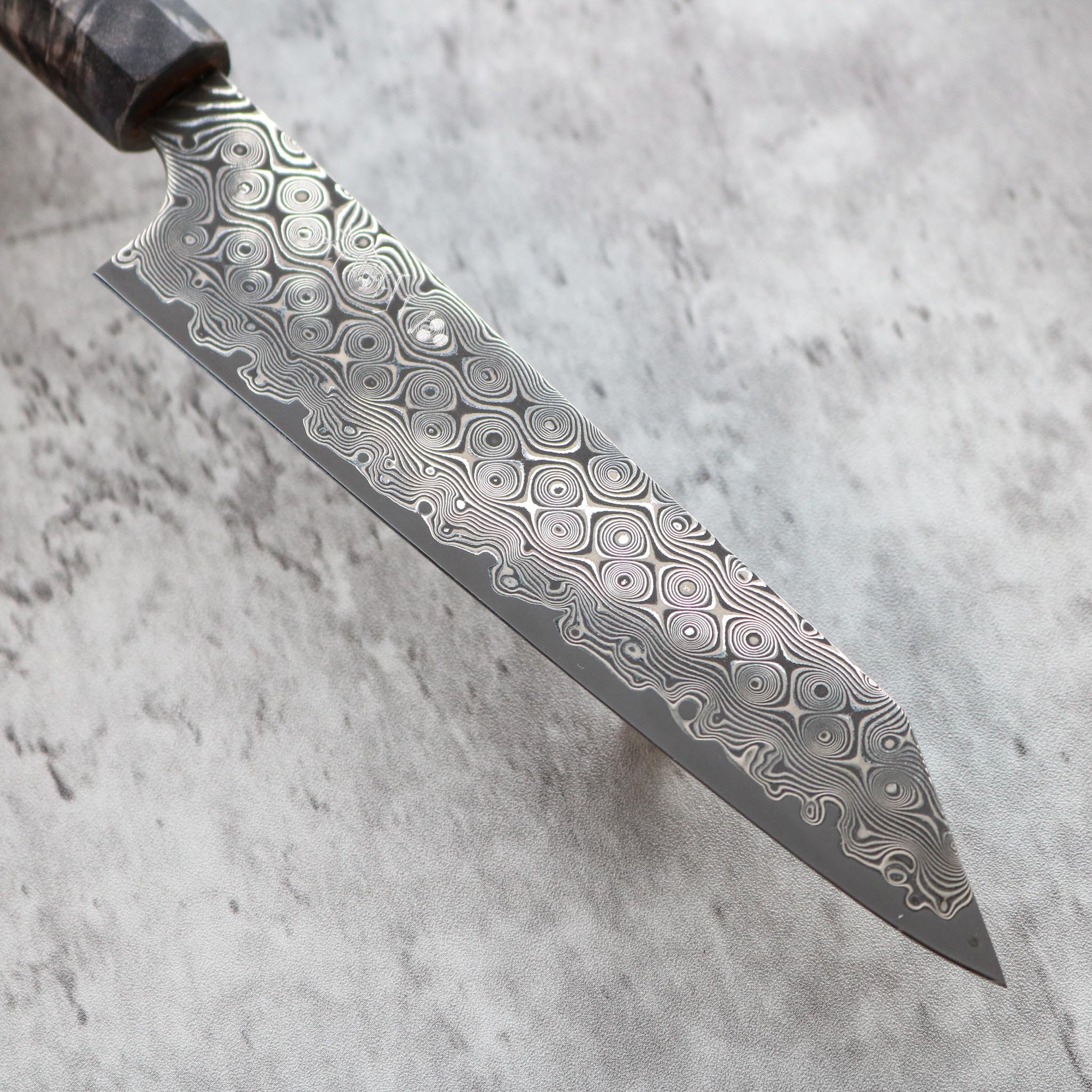
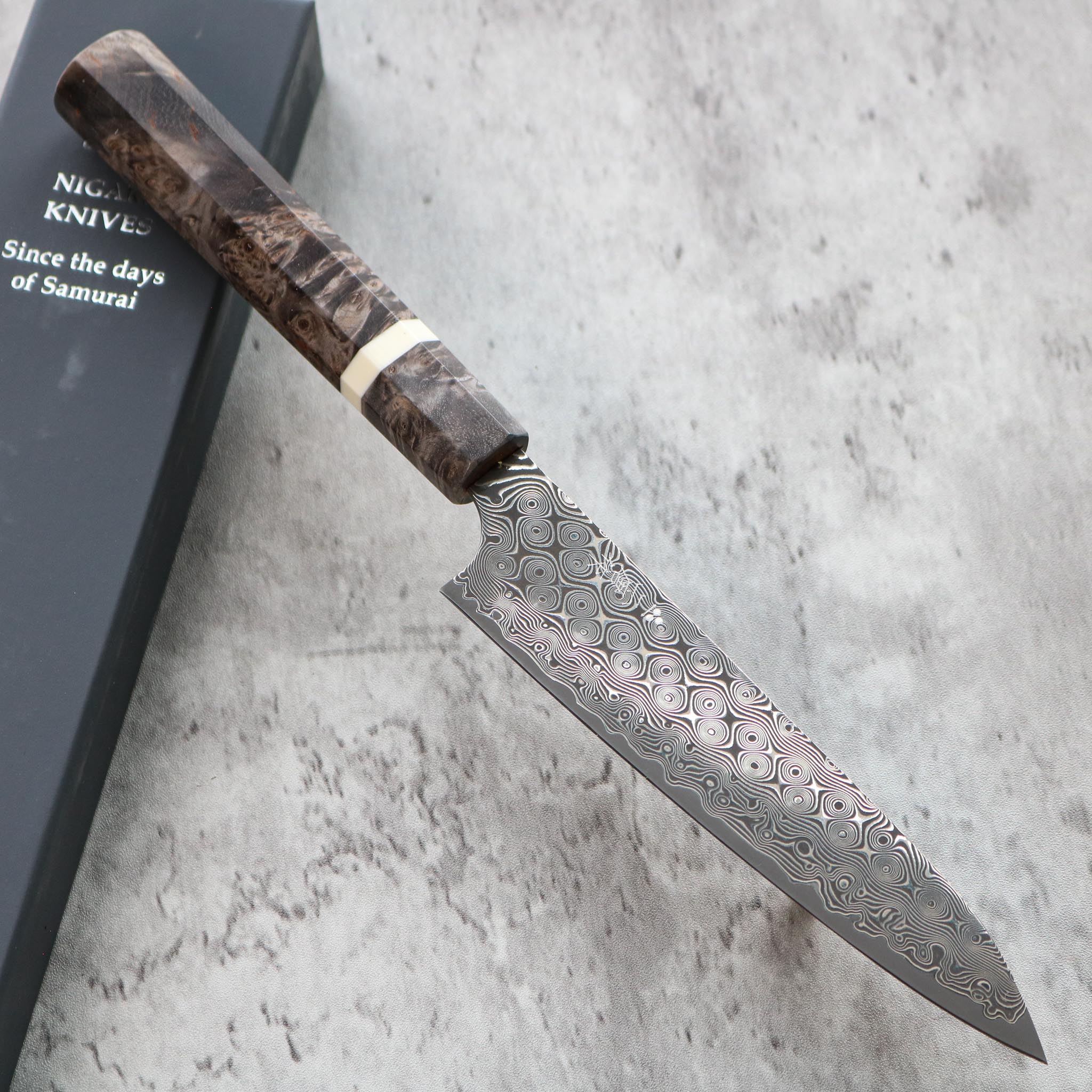
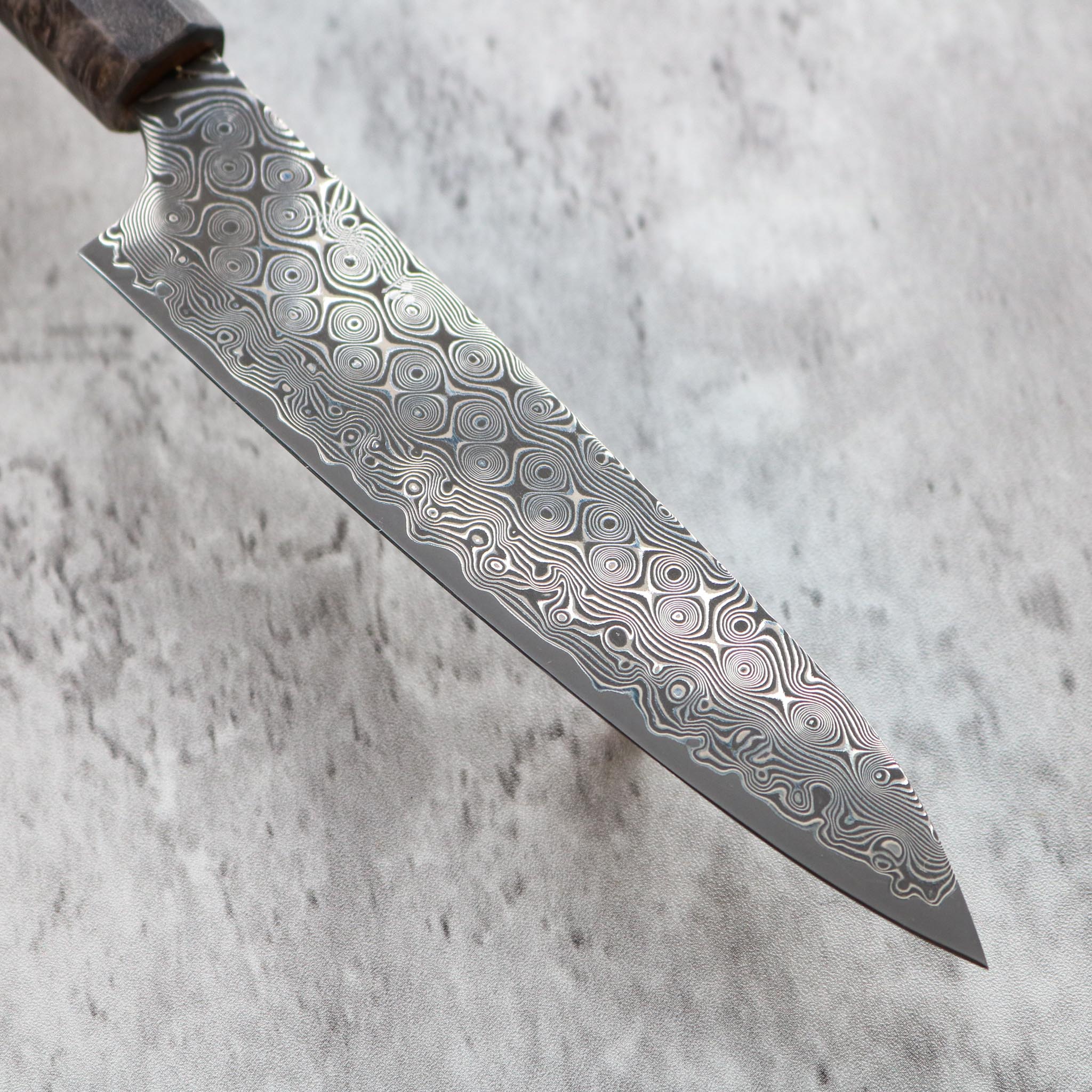
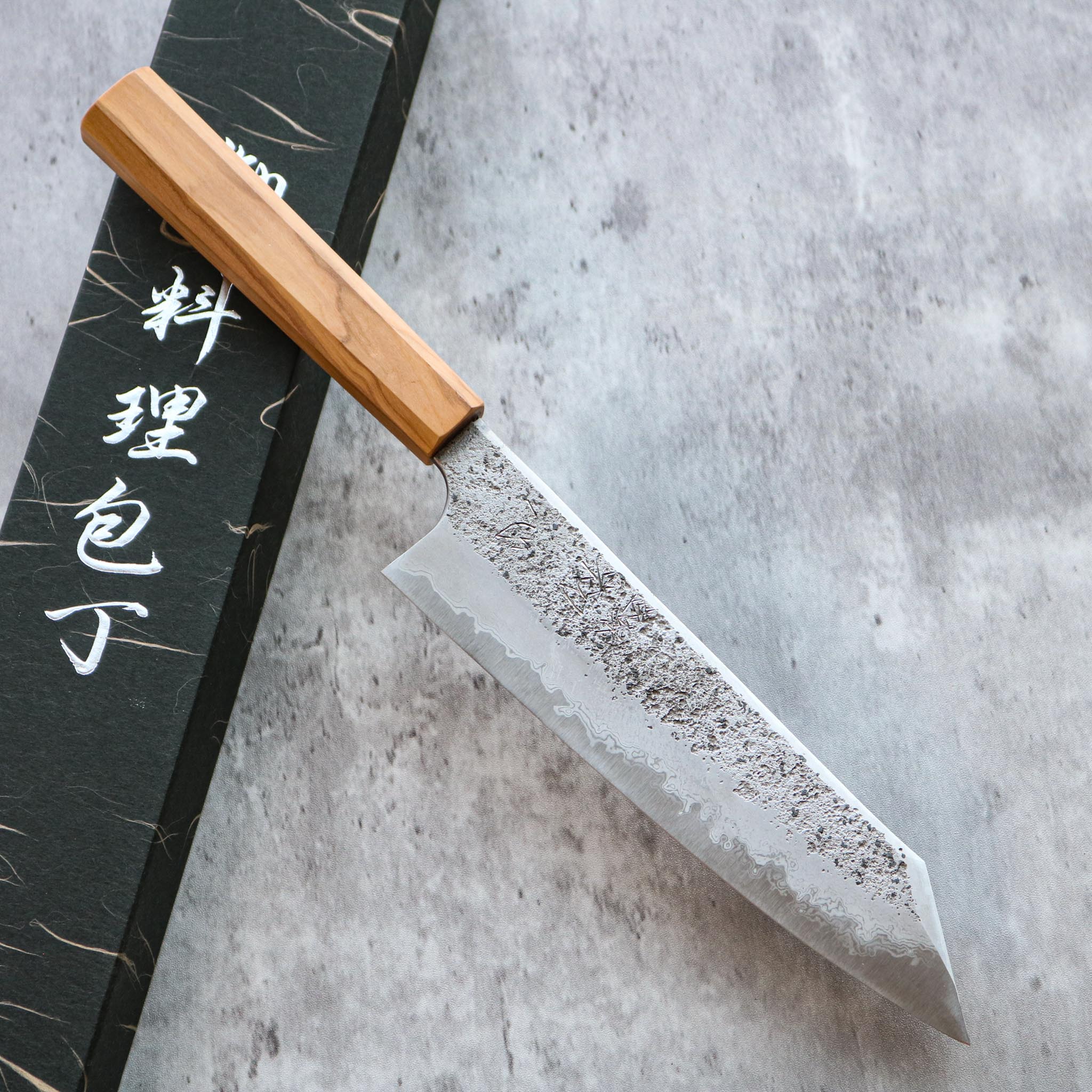
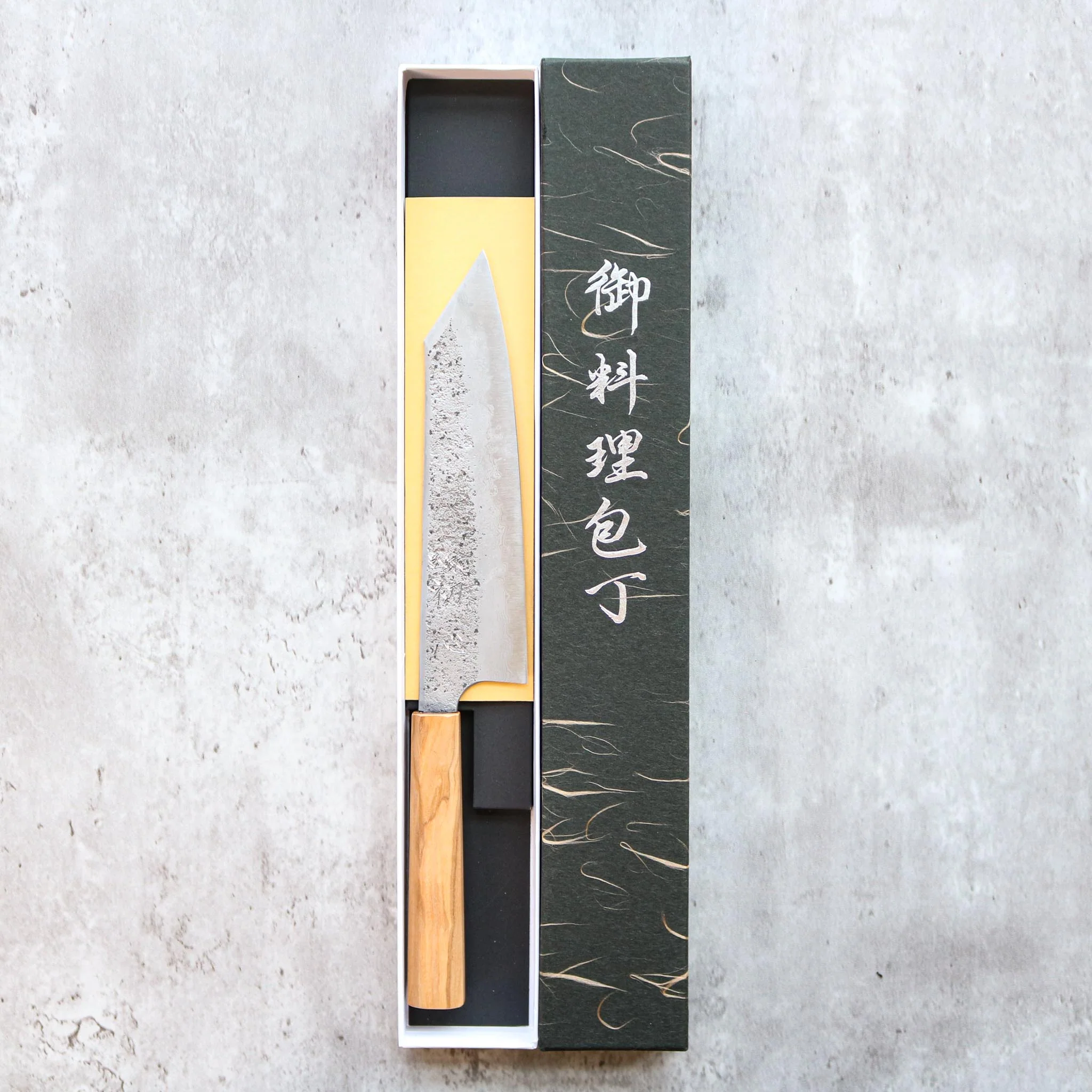
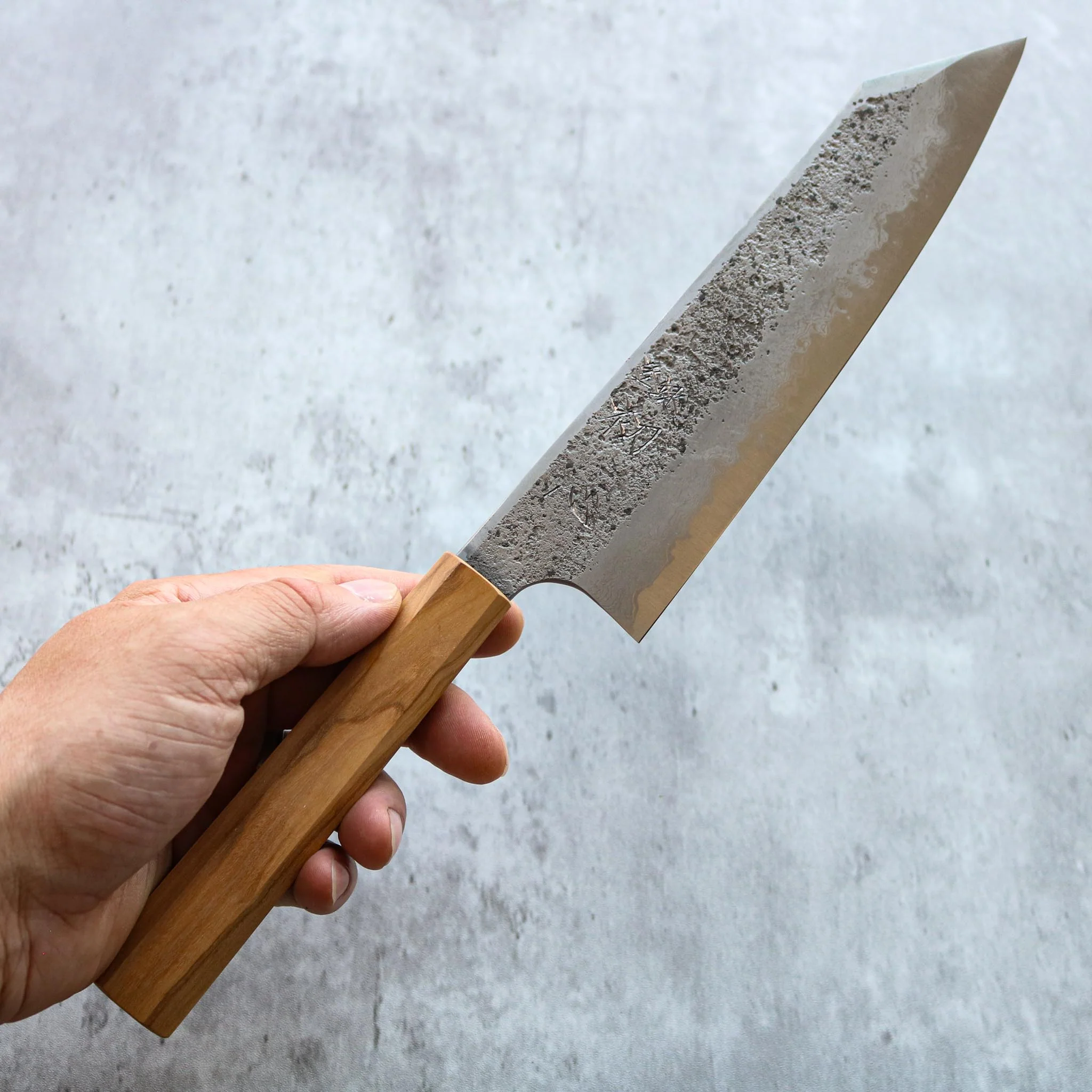
Nigara Hamono Ryusui Blue2 Kiritsuke Gyuto 195 mm
| Blade Length | 195 mm |
| Total Length | 345 mm |
| Steel | Aogami (Blue#2) |
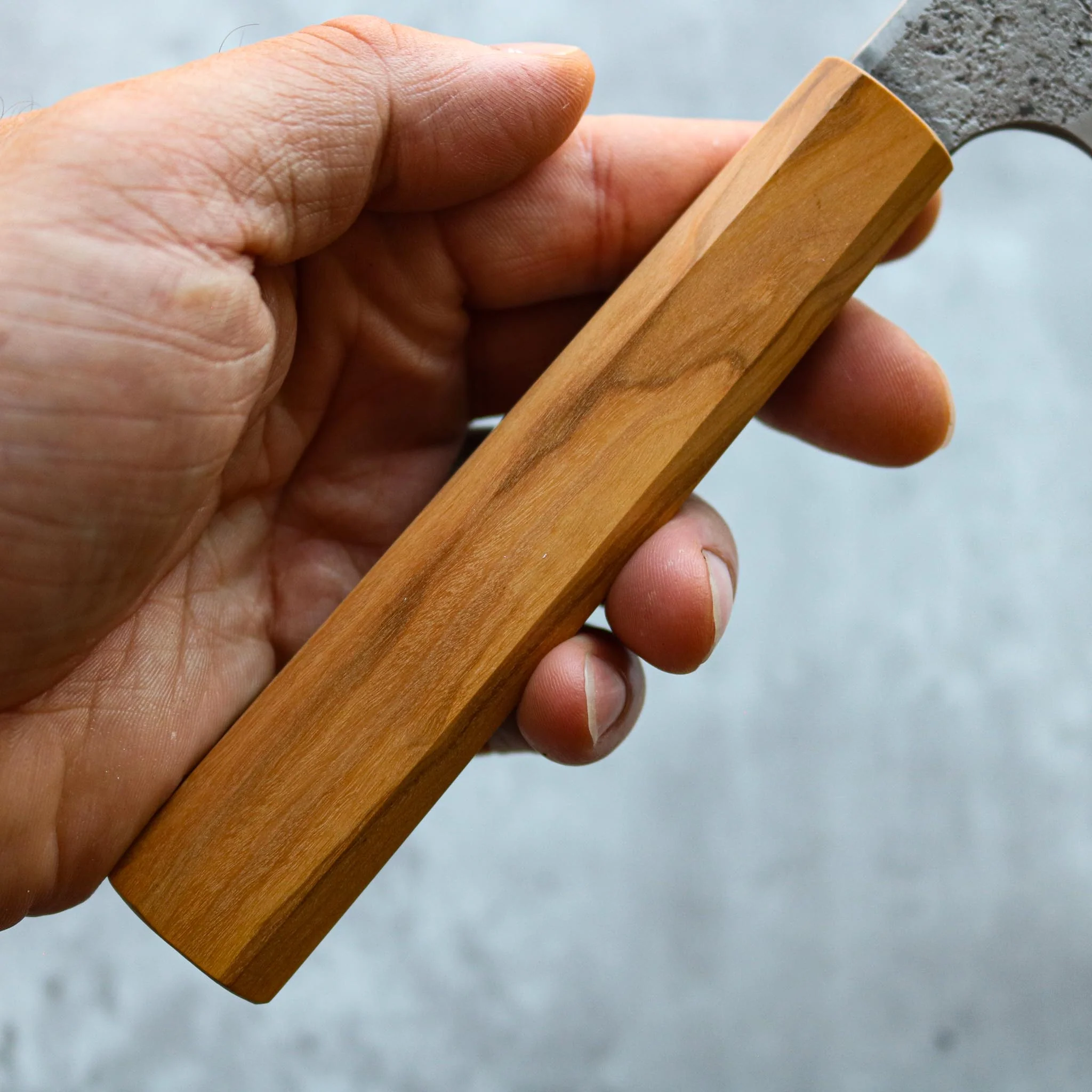
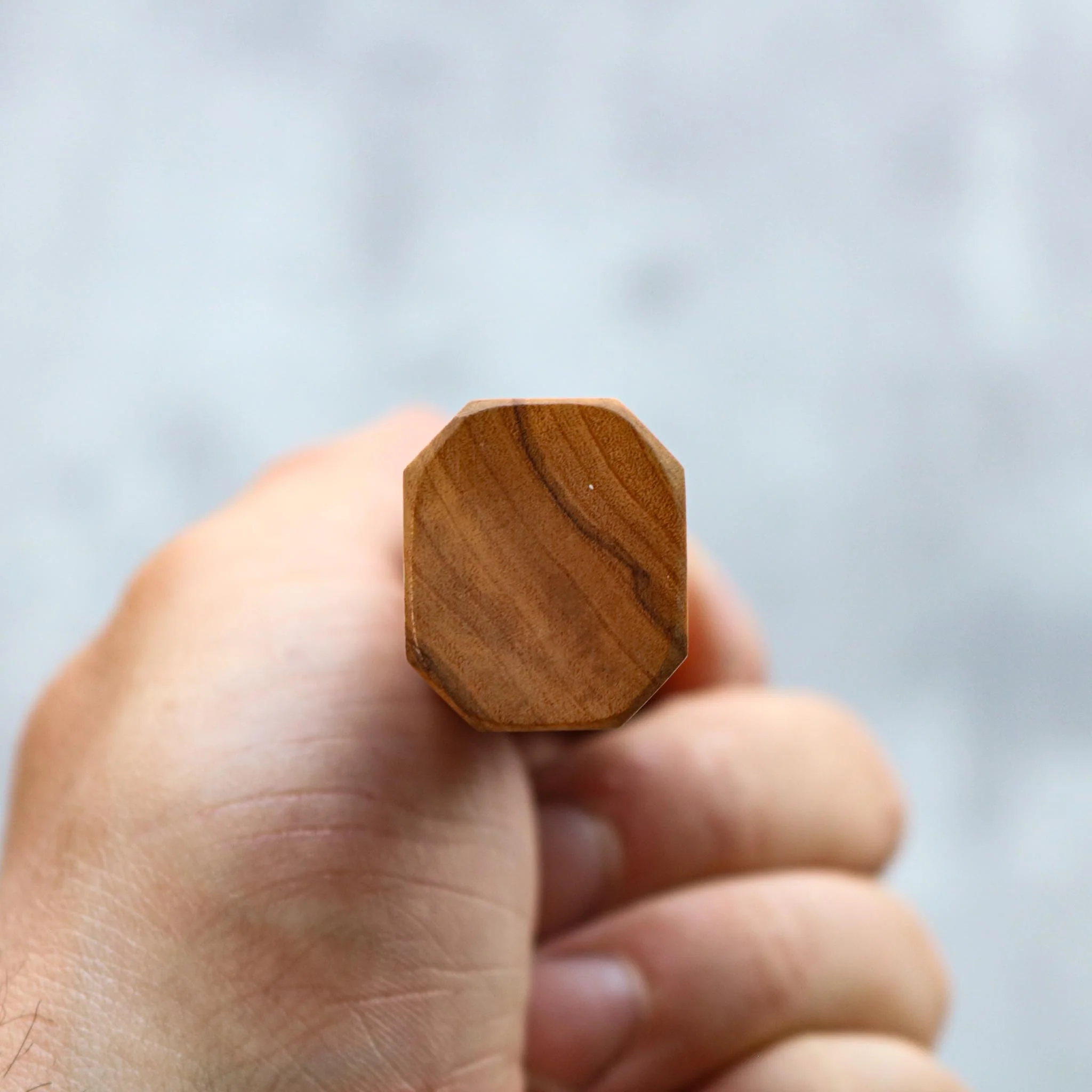
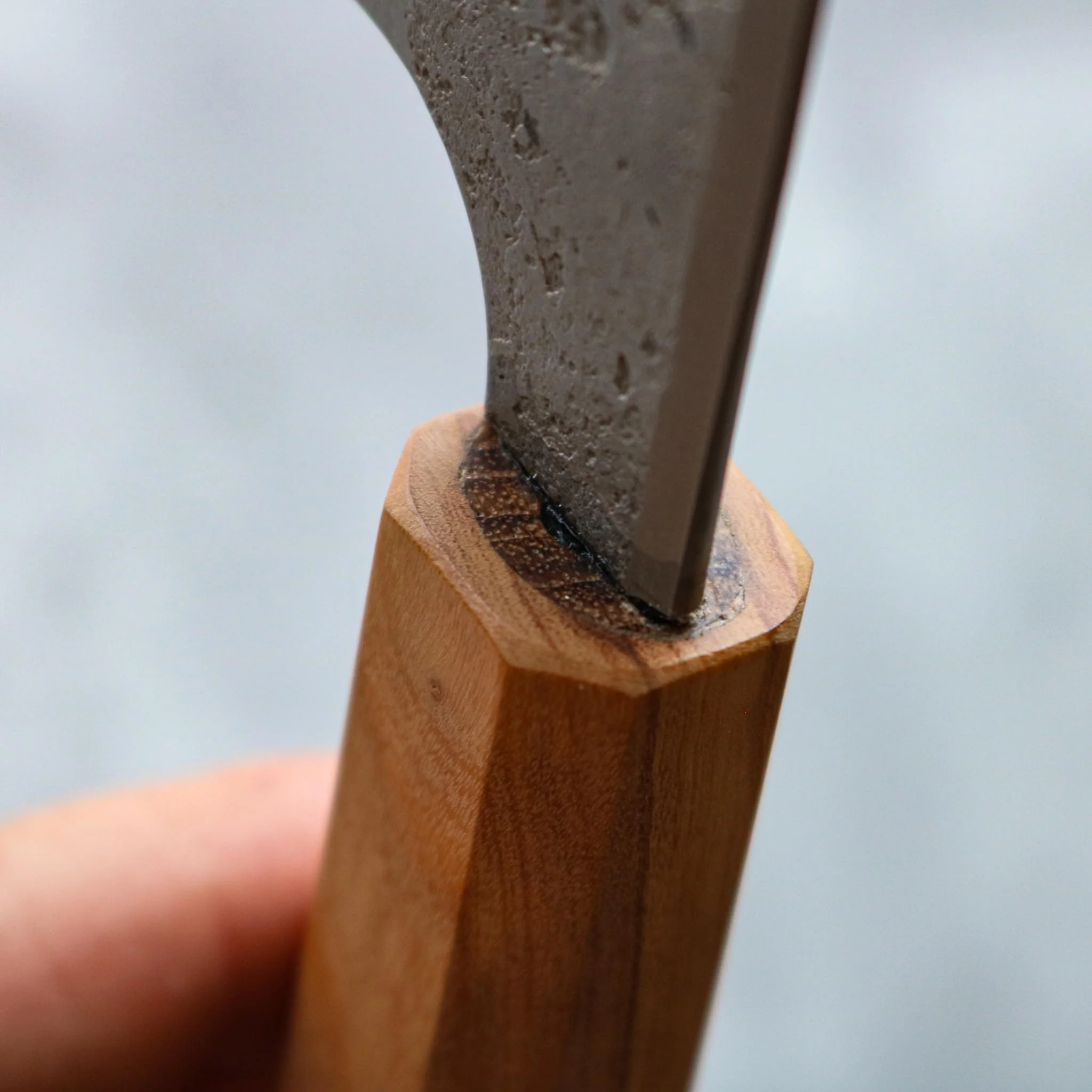
| Handle | Olive Wood |
| Ferrule | N/A |
| Rockwell | 62 |
| Height Spine to heel | 50 mm |
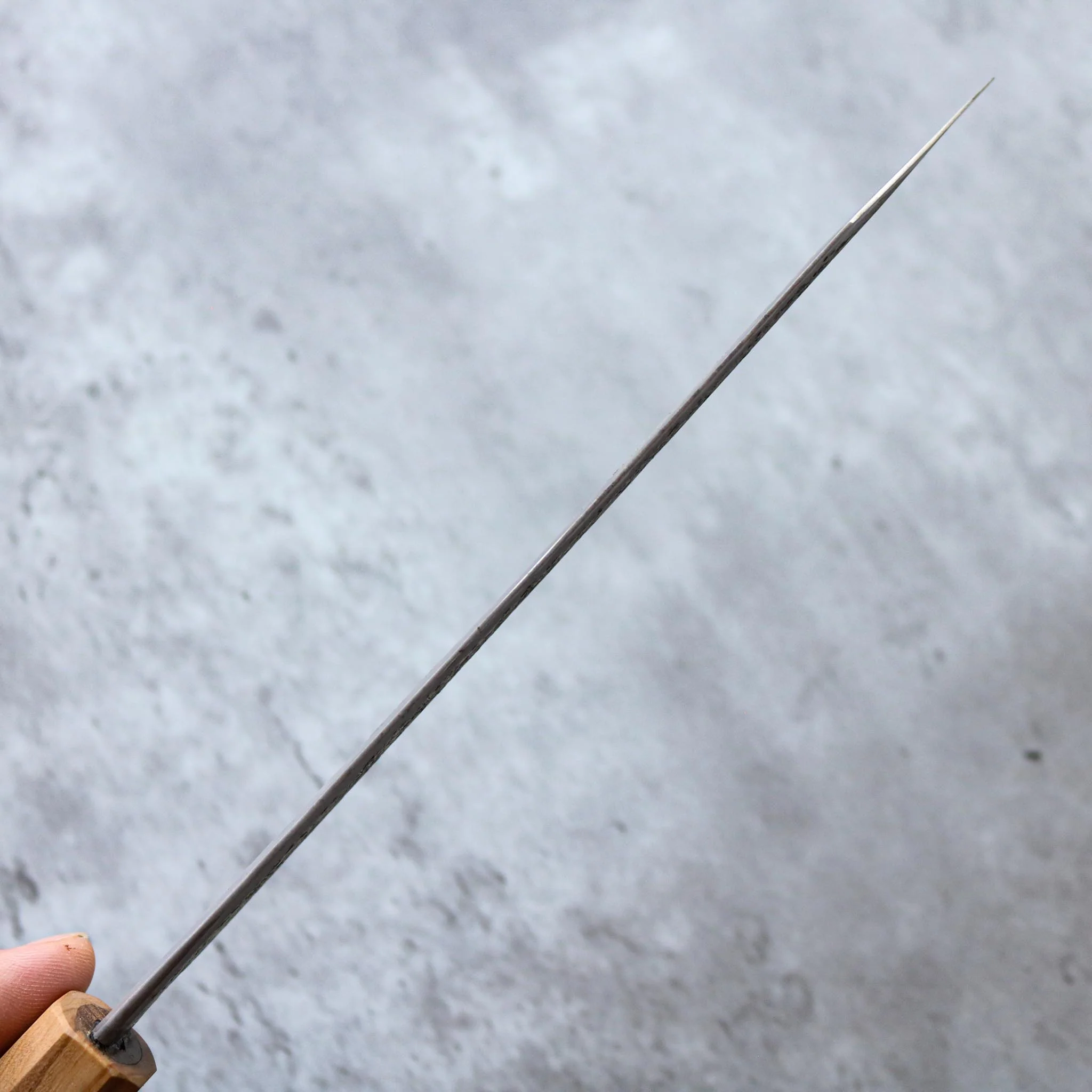
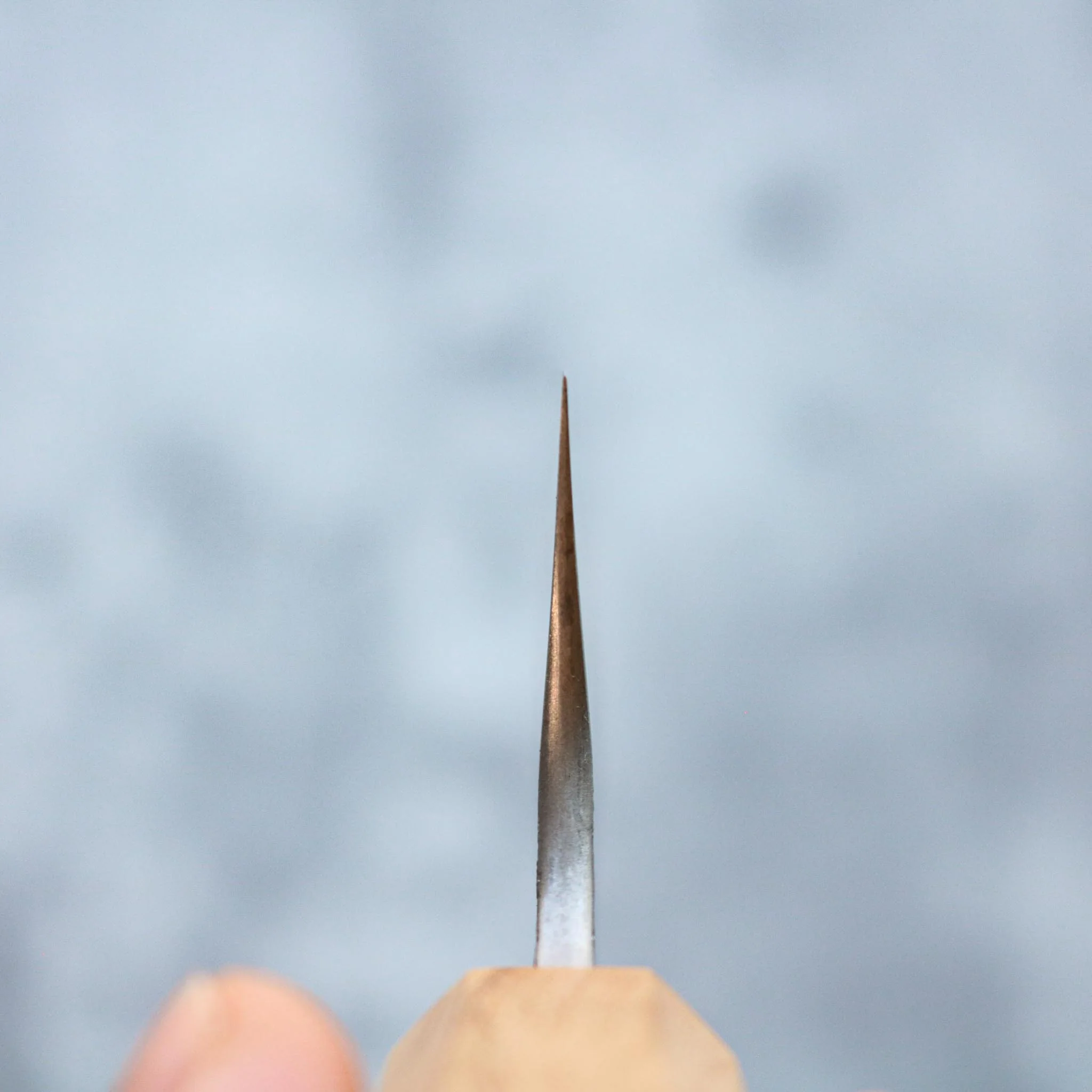
| Width at Spine | 2.4 mm |
| Weight | 161 grams |
| Bevel | Double (50/50) |
The Blacksmith
Nigara Hamono is located in Hirosaki city, Aomori Prefecture, on the west coast of the very northern tip of the main island of Honshu, Japan. Their family has a 350 year old history of making knives and swords and more recently has expanded into structural steel beams for use in construction. Tsuyoshi Yoshizawa stands as the 8th generation smith in the lineage of blacksmiths at Nigara Hamono and creates knives with his younger brother and two other craftsmen.
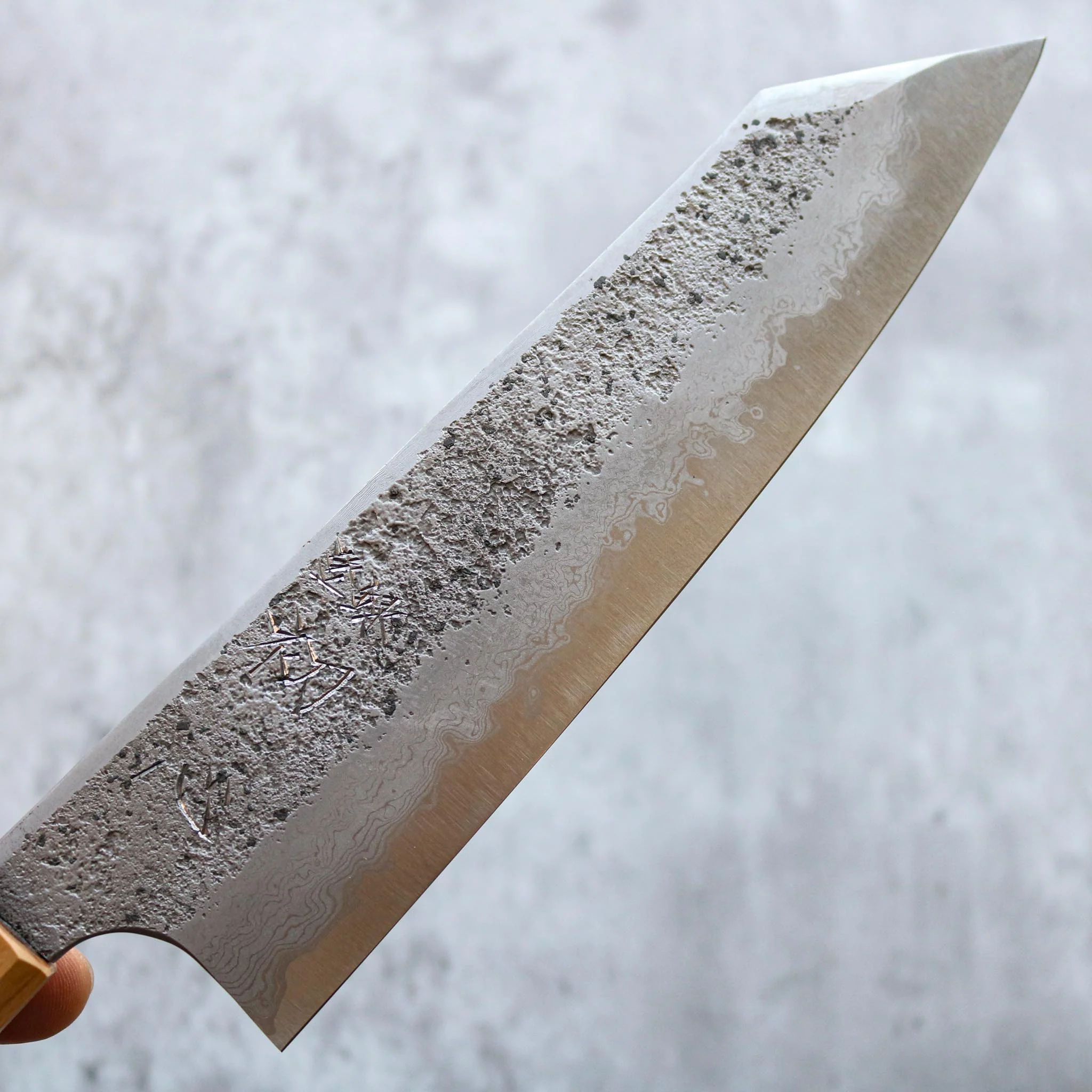
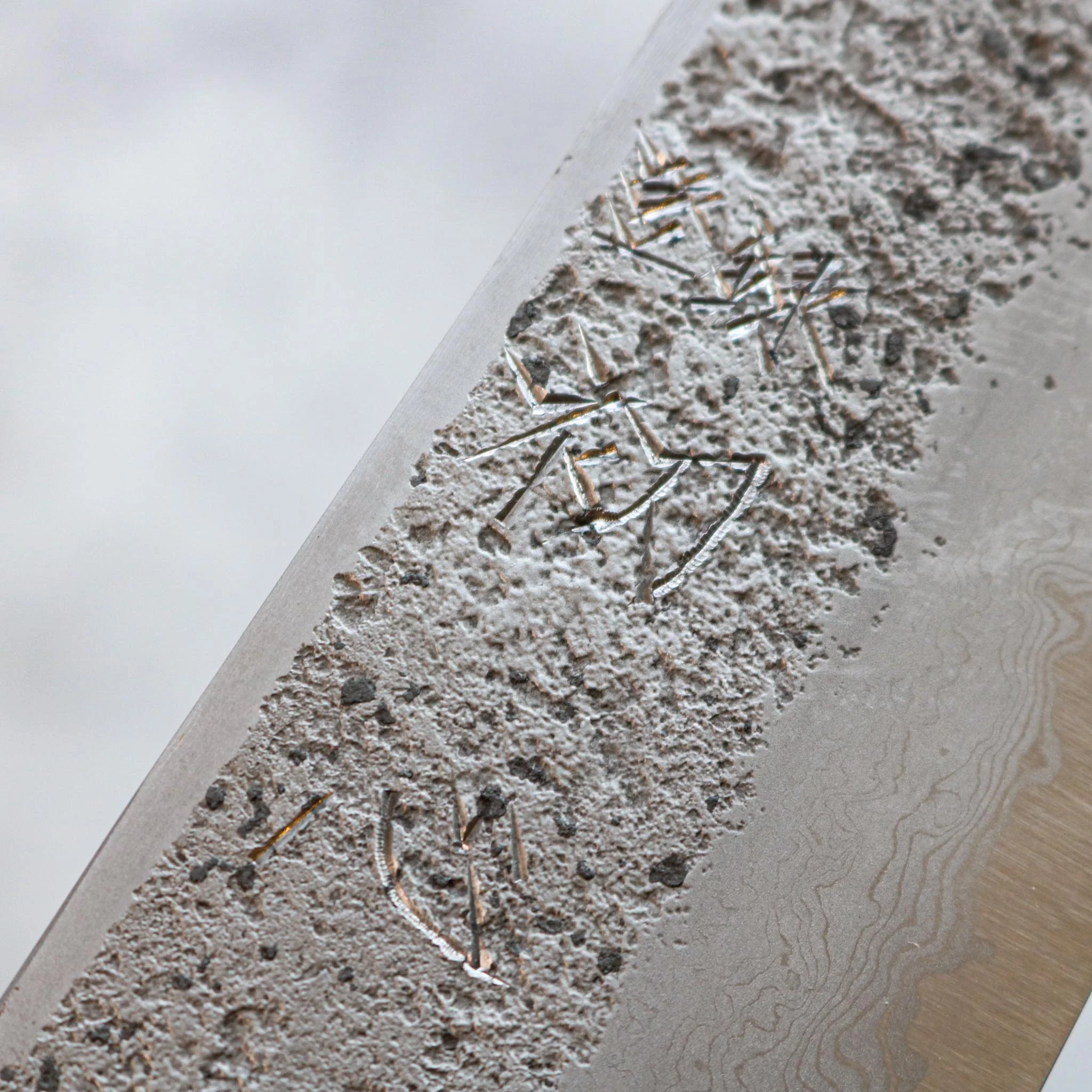
Nigara Hamono knives are characterized by their signature tsuchime pattern, as well as play with stainless damascus. These knives stand out for their aesthetic appeal, thinness behind the edge, and functionality, given they make their steel in house, and work primarily with high powdered stainless steels. They produce uniquely versatile profiles, ranging from very flat “kiritsuke nakiris” to aggressively curved “kiritsuke gyutos”.
The Knife
The Kiritsuke is very similar to the Gyuto but differs in the shape of the tip. They feature what is referred to as a "reverse tanto" or "k-tip" which gives the shape its unique and distinct aesthetic. They come in both double beveled and single beveled versions and historically have been reserved for use by only the head chef in restaurants - we won't tell anyone if you're not a head chef though! - The single beveled versions are said to be the most versatile shape available (though the Gyuto would give it a run for its money) as they are adept at butchery, slicing and vegetable prep once they are mastered. The double beveled versions are much more user friendly. This knife is double beveled and therefor functions much like any other chefs knife you may have used.
Knife Care (Iron Clad)
- This Knife is made from 3 layers of material; A layer of iron on each side protecting a layer of carbon steel at the core, in a process referred to as Sanmai or forge welding. Iron and carbon steel are both susceptible to rust and must be kept dry and clean at all time’s to avoid oxidation and discolouration.
- Simply wipe the knife with a damp cloth immediately after use.
- Wash with regular dish soap and warm water using a none abrasive sponge or cloth.
- Never put your knife in the dishwasher! The extreme heat will ruin the wooden handle.
- Highly acidic ingredients (Onions, Tomatoes, Citrus) Will cause rust and oxidation to happen faster, thus the user must ensure the knife is wiped clean immediately after working with such an ingredient.
- Should any rust form it can be removed using a rust eraser or a mixture of Baking soda and water to simply scrub it clean.
- Avoid Bones, Frozen foods, nuts and hard candies or anything other than fruits, vegetables and proteins.
Product Information
Product Information
Shipping & Returns
Shipping & Returns
Nigara Hamono Ryusui Blue2 Kiritsuke Gyuto 195 mm
Nigara Hamono Ryusui Blue2 Kiritsuke Gyuto 195 mm
| Blade Length | 195 mm |
| Total Length | 345 mm |
| Steel | Aogami (Blue#2) |
| Handle | Olive Wood |
| Ferrule | N/A |
| Rockwell | 62 |
| Height Spine to heel | 50 mm |
| Width at Spine | 2.4 mm |
| Weight | 161 grams |
| Bevel | Double (50/50) |
The Blacksmith
Nigara Hamono is located in Hirosaki city, Aomori Prefecture, on the west coast of the very northern tip of the main island of Honshu, Japan. Their family has a 350 year old history of making knives and swords and more recently has expanded into structural steel beams for use in construction. Tsuyoshi Yoshizawa stands as the 8th generation smith in the lineage of blacksmiths at Nigara Hamono and creates knives with his younger brother and two other craftsmen.
Nigara Hamono knives are characterized by their signature tsuchime pattern, as well as play with stainless damascus. These knives stand out for their aesthetic appeal, thinness behind the edge, and functionality, given they make their steel in house, and work primarily with high powdered stainless steels. They produce uniquely versatile profiles, ranging from very flat “kiritsuke nakiris” to aggressively curved “kiritsuke gyutos”.
The Knife
The Kiritsuke is very similar to the Gyuto but differs in the shape of the tip. They feature what is referred to as a "reverse tanto" or "k-tip" which gives the shape its unique and distinct aesthetic. They come in both double beveled and single beveled versions and historically have been reserved for use by only the head chef in restaurants - we won't tell anyone if you're not a head chef though! - The single beveled versions are said to be the most versatile shape available (though the Gyuto would give it a run for its money) as they are adept at butchery, slicing and vegetable prep once they are mastered. The double beveled versions are much more user friendly. This knife is double beveled and therefor functions much like any other chefs knife you may have used.
Knife Care (Iron Clad)
- This Knife is made from 3 layers of material; A layer of iron on each side protecting a layer of carbon steel at the core, in a process referred to as Sanmai or forge welding. Iron and carbon steel are both susceptible to rust and must be kept dry and clean at all time’s to avoid oxidation and discolouration.
- Simply wipe the knife with a damp cloth immediately after use.
- Wash with regular dish soap and warm water using a none abrasive sponge or cloth.
- Never put your knife in the dishwasher! The extreme heat will ruin the wooden handle.
- Highly acidic ingredients (Onions, Tomatoes, Citrus) Will cause rust and oxidation to happen faster, thus the user must ensure the knife is wiped clean immediately after working with such an ingredient.
- Should any rust form it can be removed using a rust eraser or a mixture of Baking soda and water to simply scrub it clean.
- Avoid Bones, Frozen foods, nuts and hard candies or anything other than fruits, vegetables and proteins.
Original: $392.73
-65%$392.73
$137.46Product Information
Product Information
Shipping & Returns
Shipping & Returns
Description
| Blade Length | 195 mm |
| Total Length | 345 mm |
| Steel | Aogami (Blue#2) |
| Handle | Olive Wood |
| Ferrule | N/A |
| Rockwell | 62 |
| Height Spine to heel | 50 mm |
| Width at Spine | 2.4 mm |
| Weight | 161 grams |
| Bevel | Double (50/50) |
The Blacksmith
Nigara Hamono is located in Hirosaki city, Aomori Prefecture, on the west coast of the very northern tip of the main island of Honshu, Japan. Their family has a 350 year old history of making knives and swords and more recently has expanded into structural steel beams for use in construction. Tsuyoshi Yoshizawa stands as the 8th generation smith in the lineage of blacksmiths at Nigara Hamono and creates knives with his younger brother and two other craftsmen.
Nigara Hamono knives are characterized by their signature tsuchime pattern, as well as play with stainless damascus. These knives stand out for their aesthetic appeal, thinness behind the edge, and functionality, given they make their steel in house, and work primarily with high powdered stainless steels. They produce uniquely versatile profiles, ranging from very flat “kiritsuke nakiris” to aggressively curved “kiritsuke gyutos”.
The Knife
The Kiritsuke is very similar to the Gyuto but differs in the shape of the tip. They feature what is referred to as a "reverse tanto" or "k-tip" which gives the shape its unique and distinct aesthetic. They come in both double beveled and single beveled versions and historically have been reserved for use by only the head chef in restaurants - we won't tell anyone if you're not a head chef though! - The single beveled versions are said to be the most versatile shape available (though the Gyuto would give it a run for its money) as they are adept at butchery, slicing and vegetable prep once they are mastered. The double beveled versions are much more user friendly. This knife is double beveled and therefor functions much like any other chefs knife you may have used.
Knife Care (Iron Clad)
- This Knife is made from 3 layers of material; A layer of iron on each side protecting a layer of carbon steel at the core, in a process referred to as Sanmai or forge welding. Iron and carbon steel are both susceptible to rust and must be kept dry and clean at all time’s to avoid oxidation and discolouration.
- Simply wipe the knife with a damp cloth immediately after use.
- Wash with regular dish soap and warm water using a none abrasive sponge or cloth.
- Never put your knife in the dishwasher! The extreme heat will ruin the wooden handle.
- Highly acidic ingredients (Onions, Tomatoes, Citrus) Will cause rust and oxidation to happen faster, thus the user must ensure the knife is wiped clean immediately after working with such an ingredient.
- Should any rust form it can be removed using a rust eraser or a mixture of Baking soda and water to simply scrub it clean.
- Avoid Bones, Frozen foods, nuts and hard candies or anything other than fruits, vegetables and proteins.