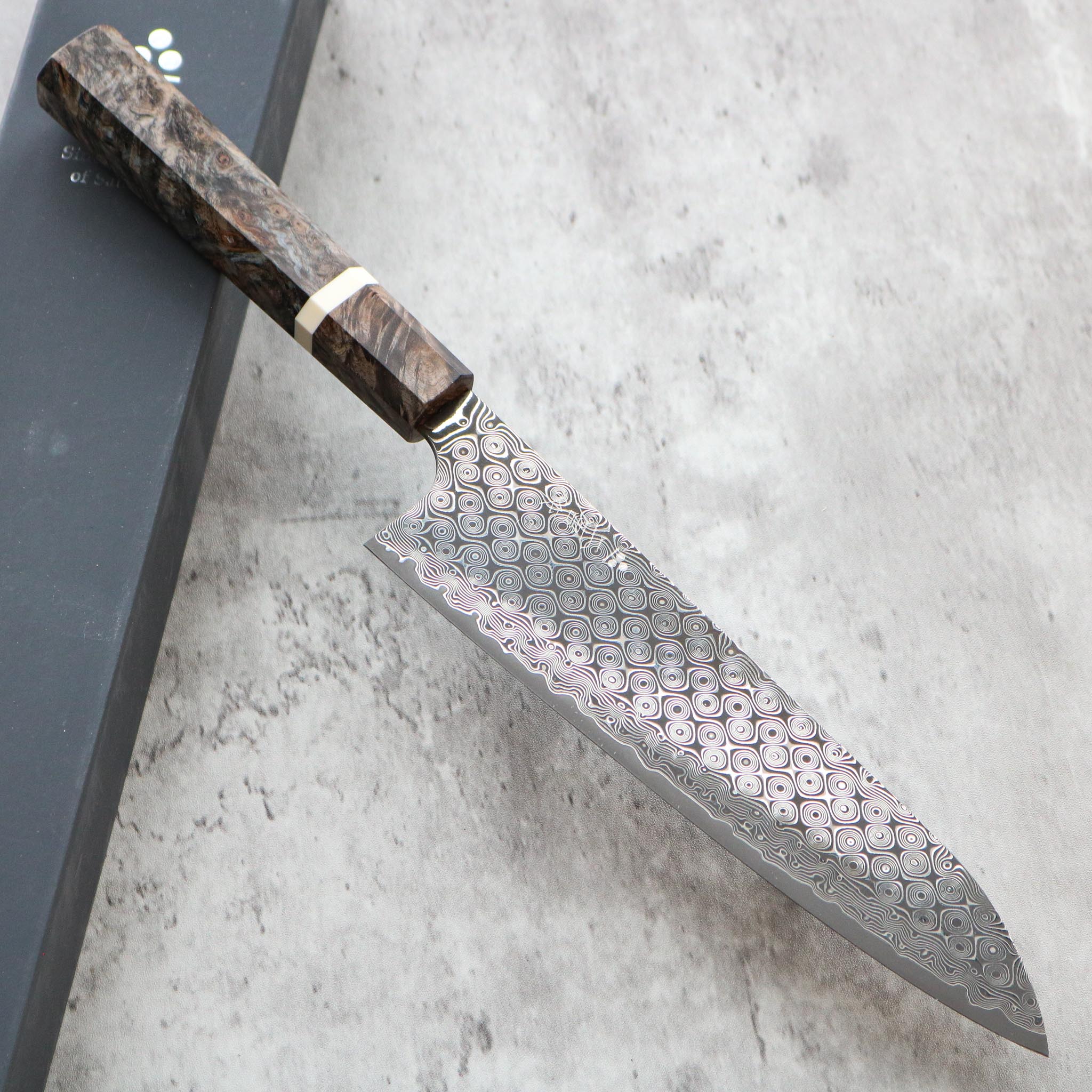
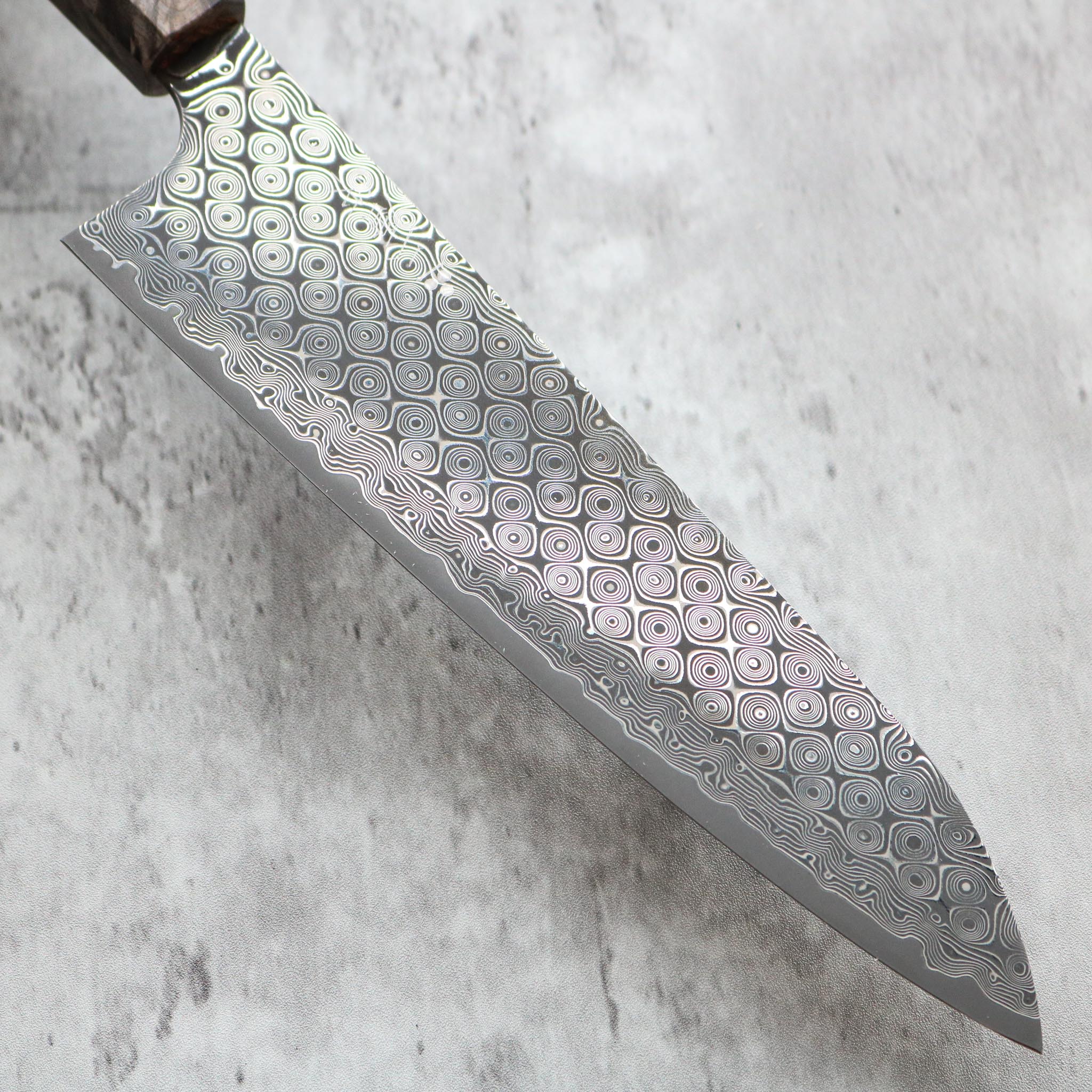
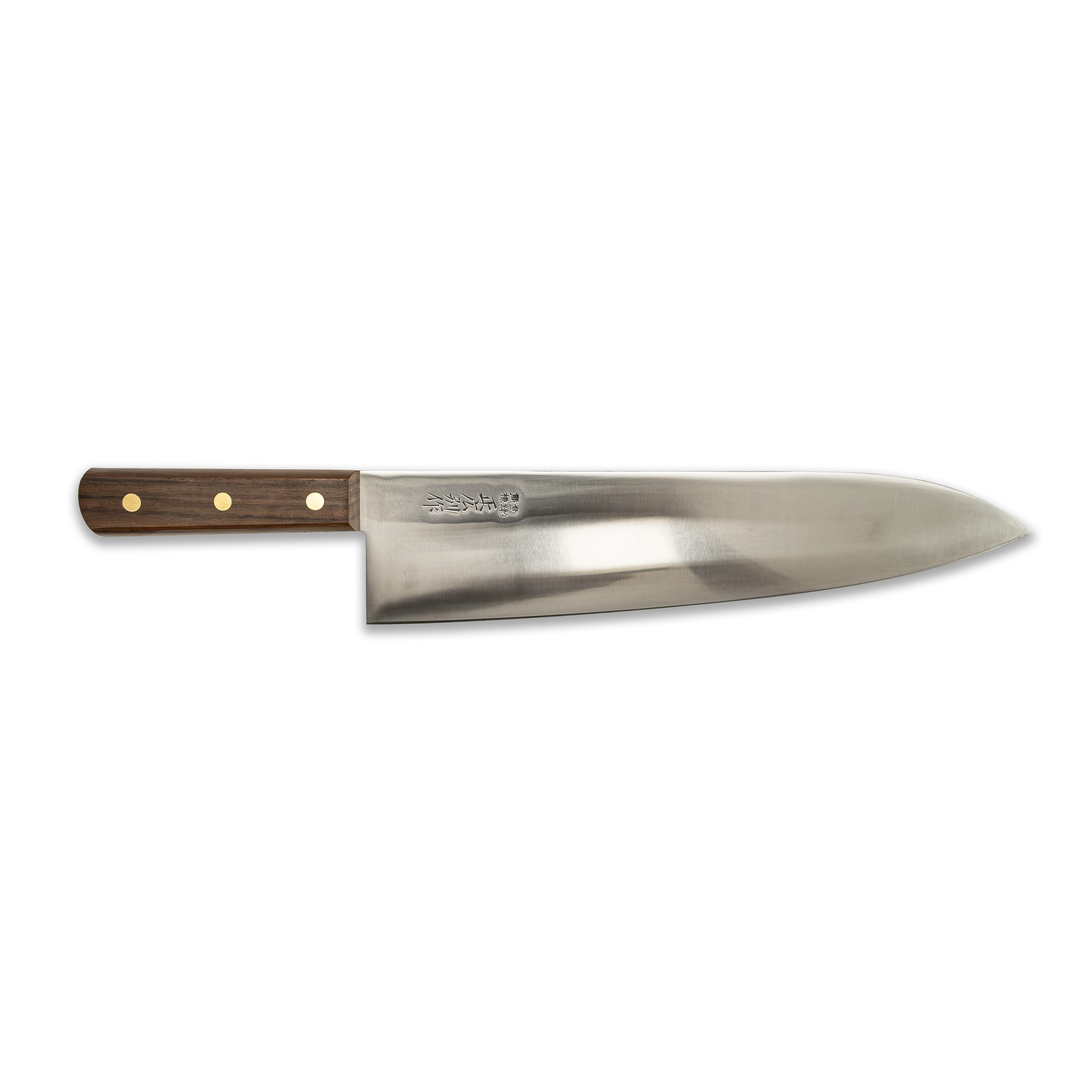
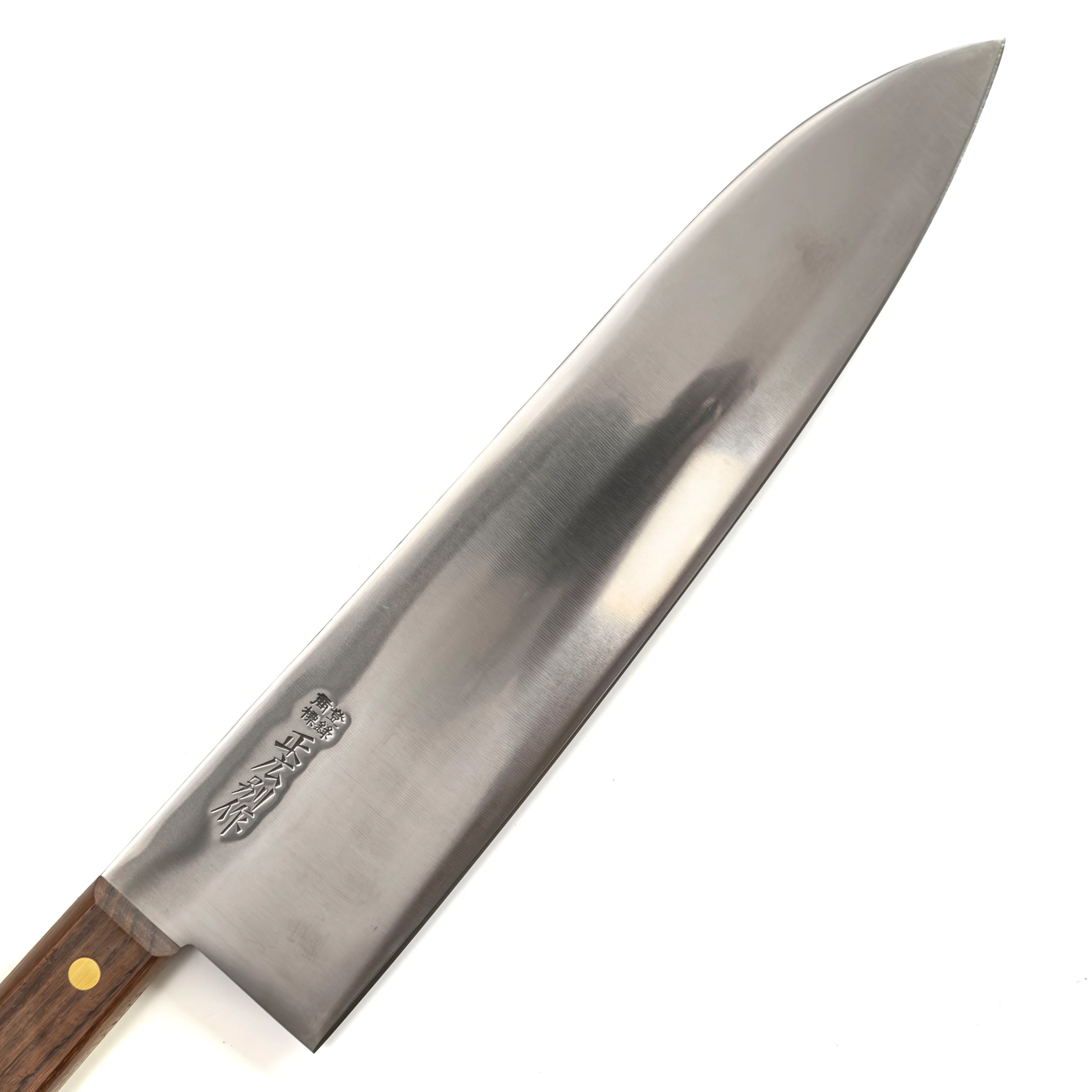
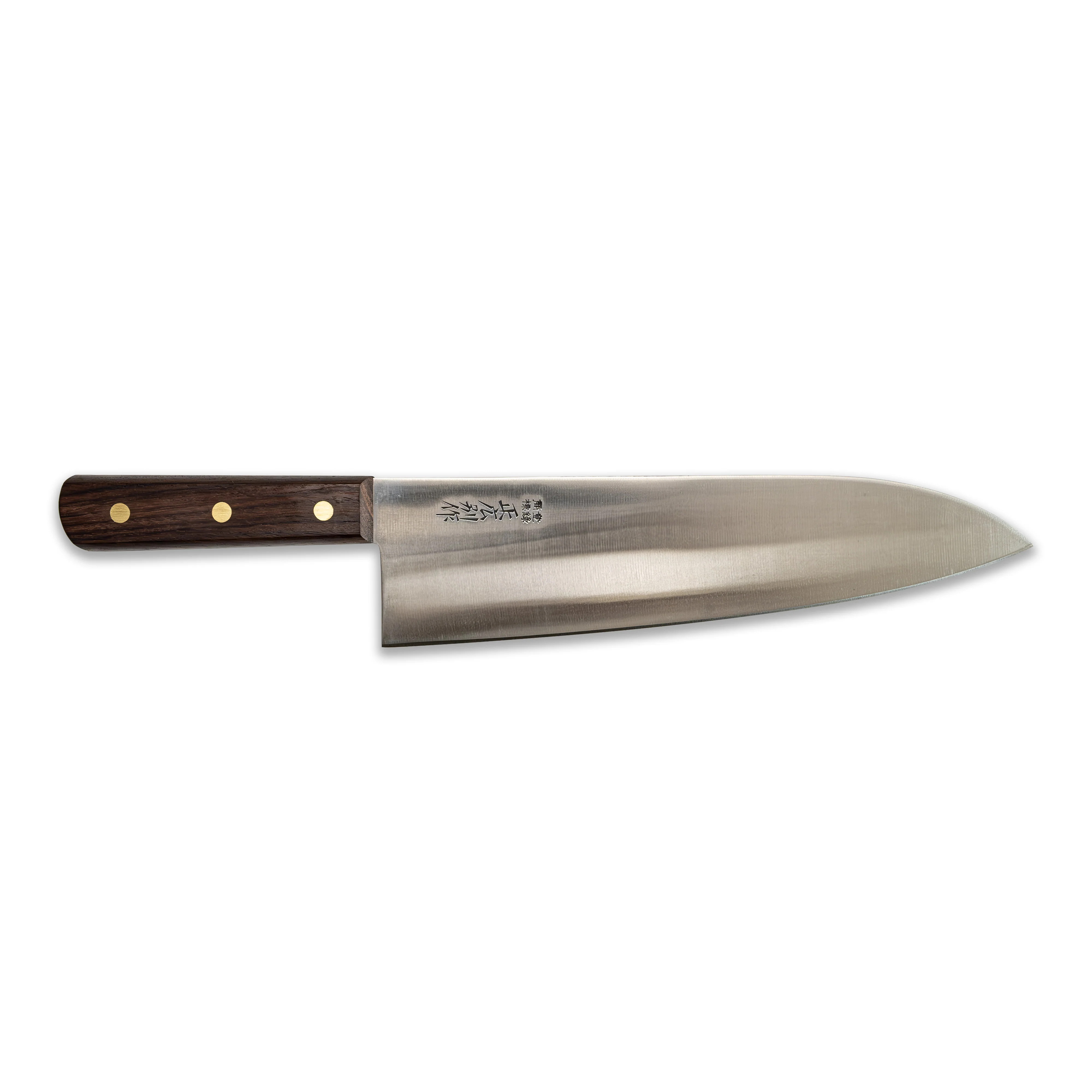
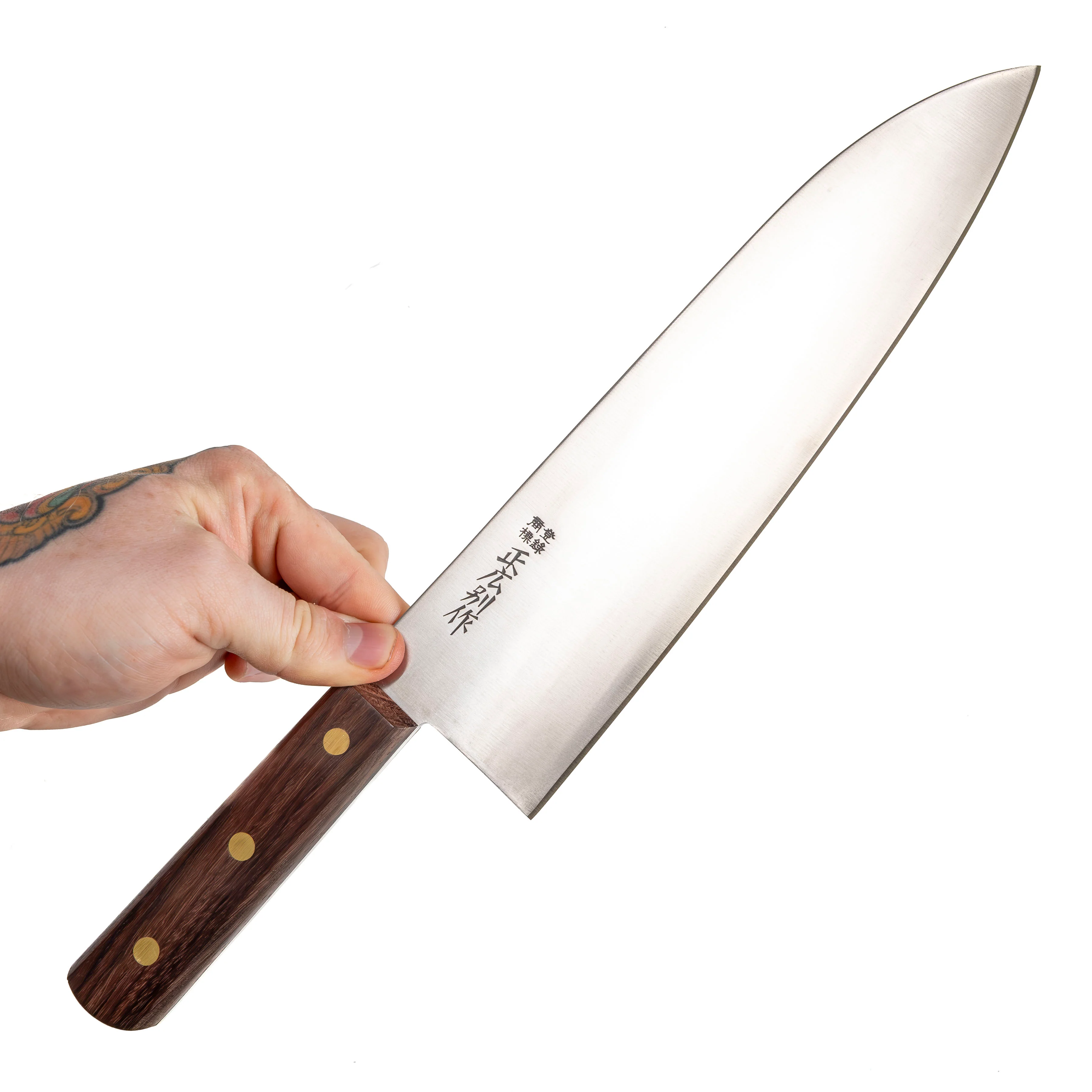
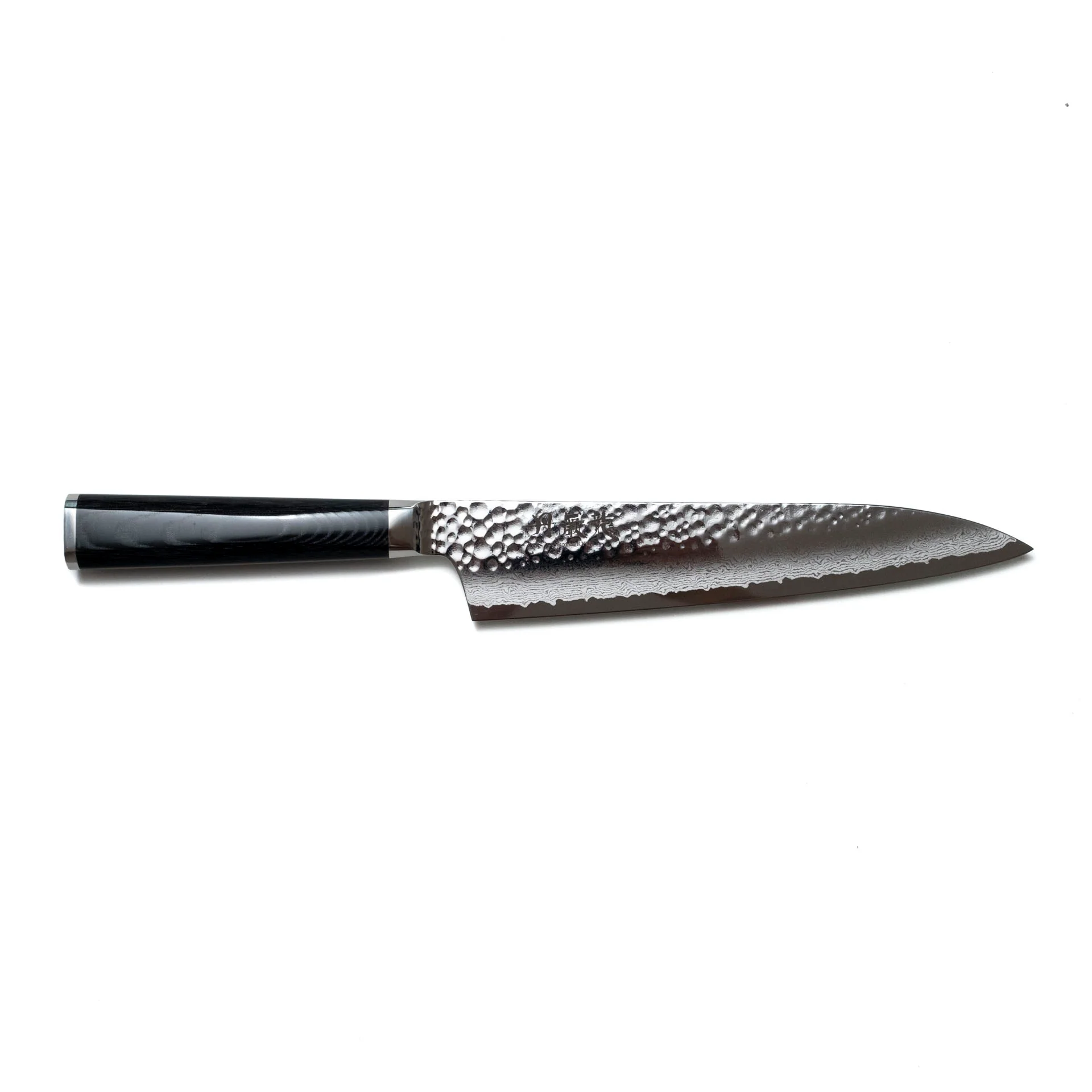
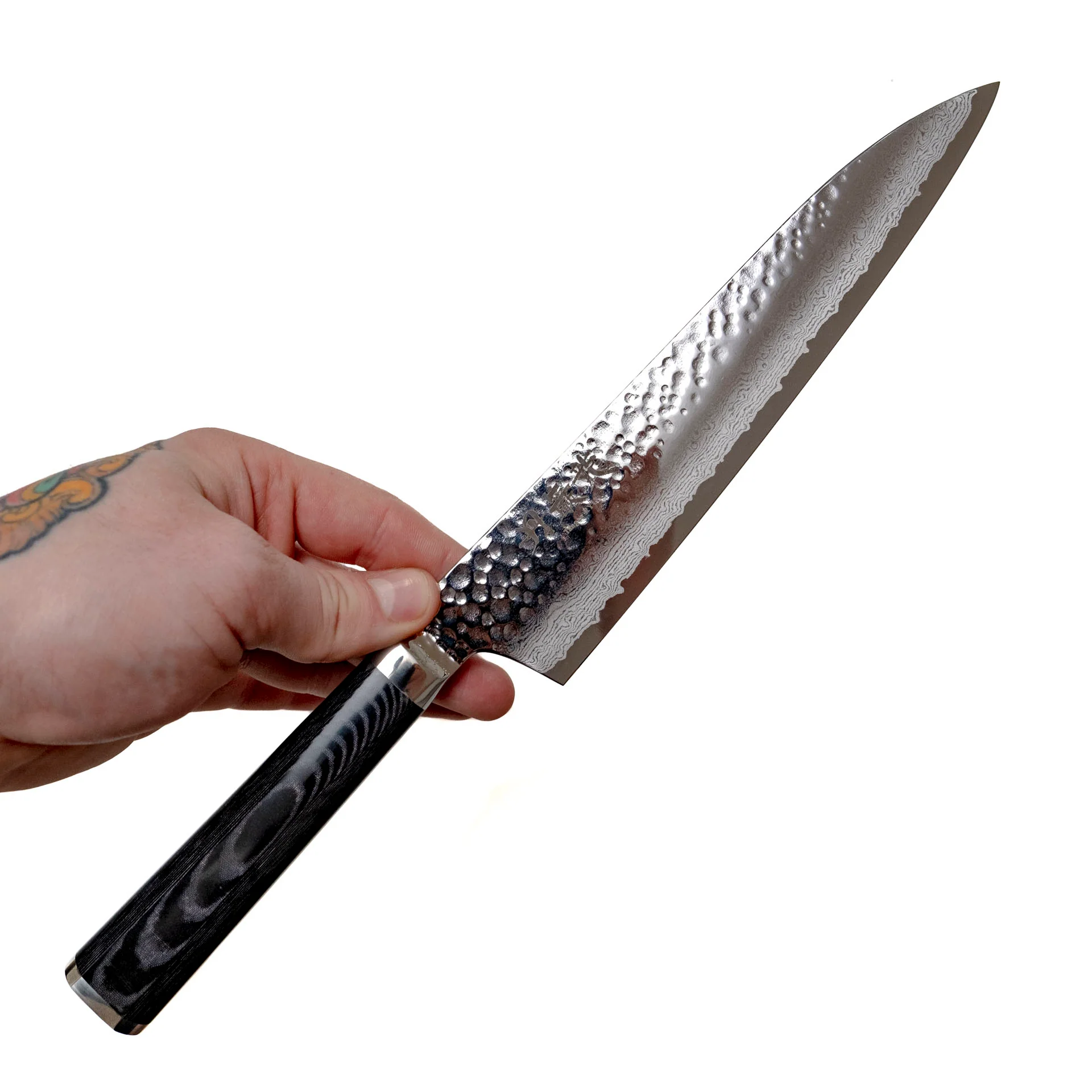
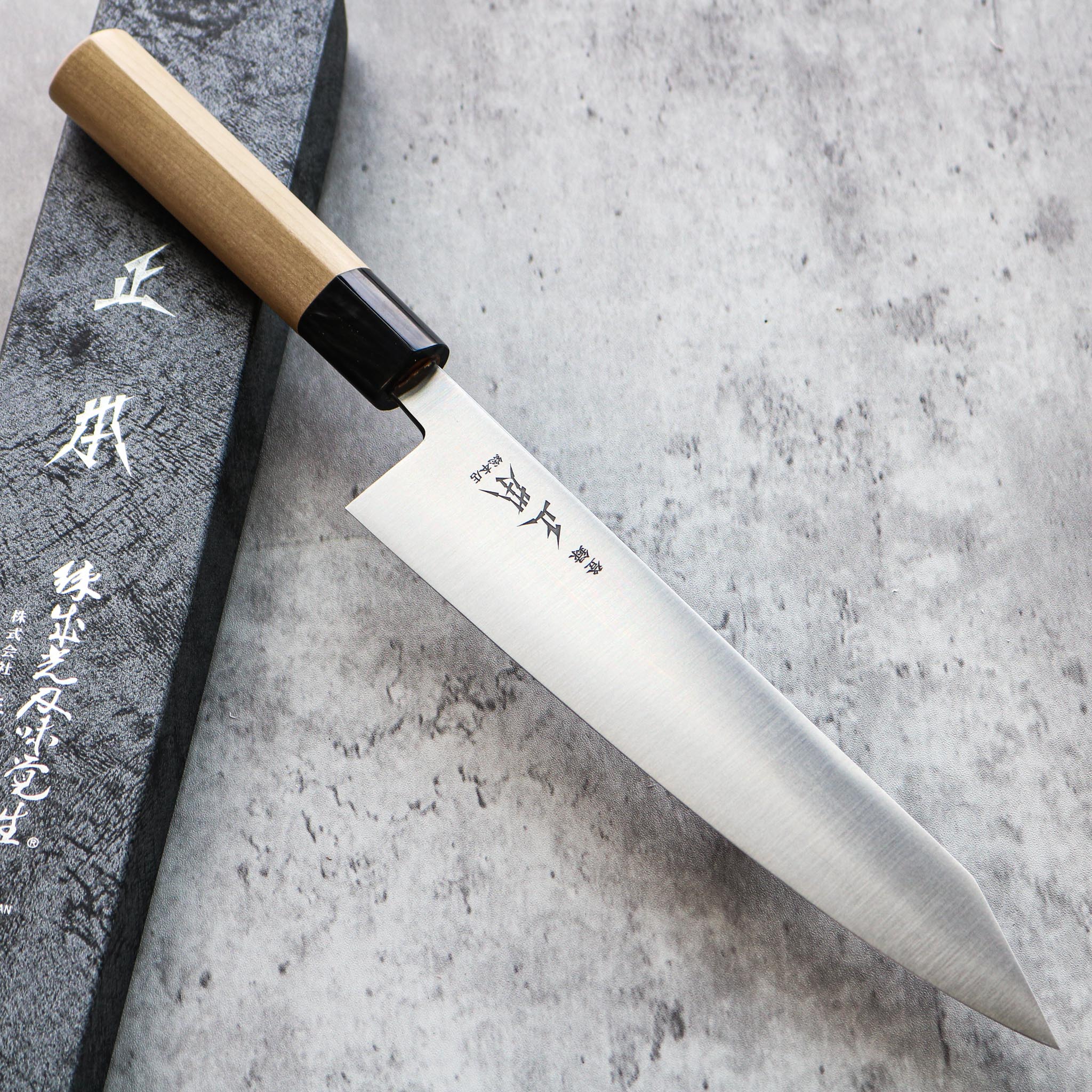
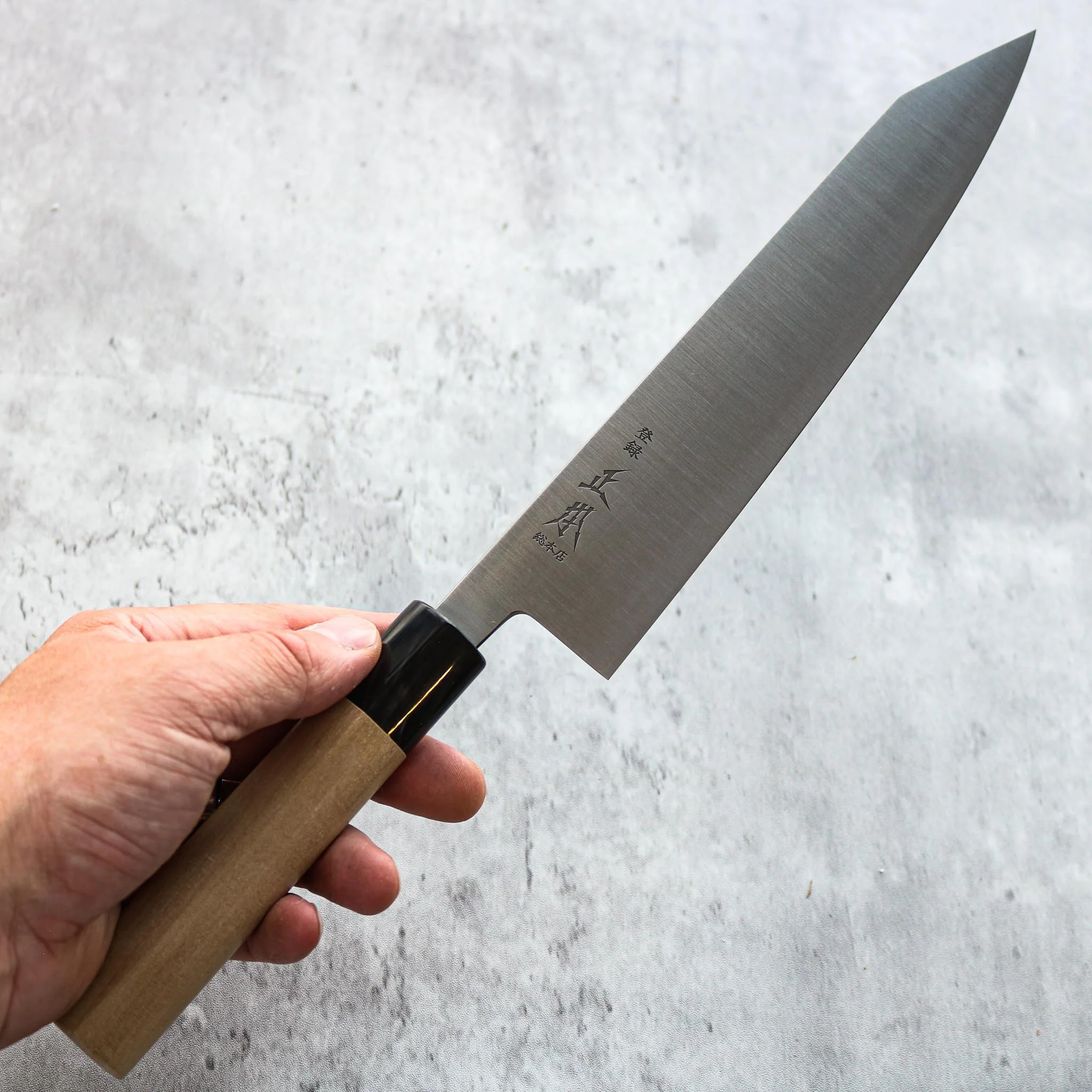
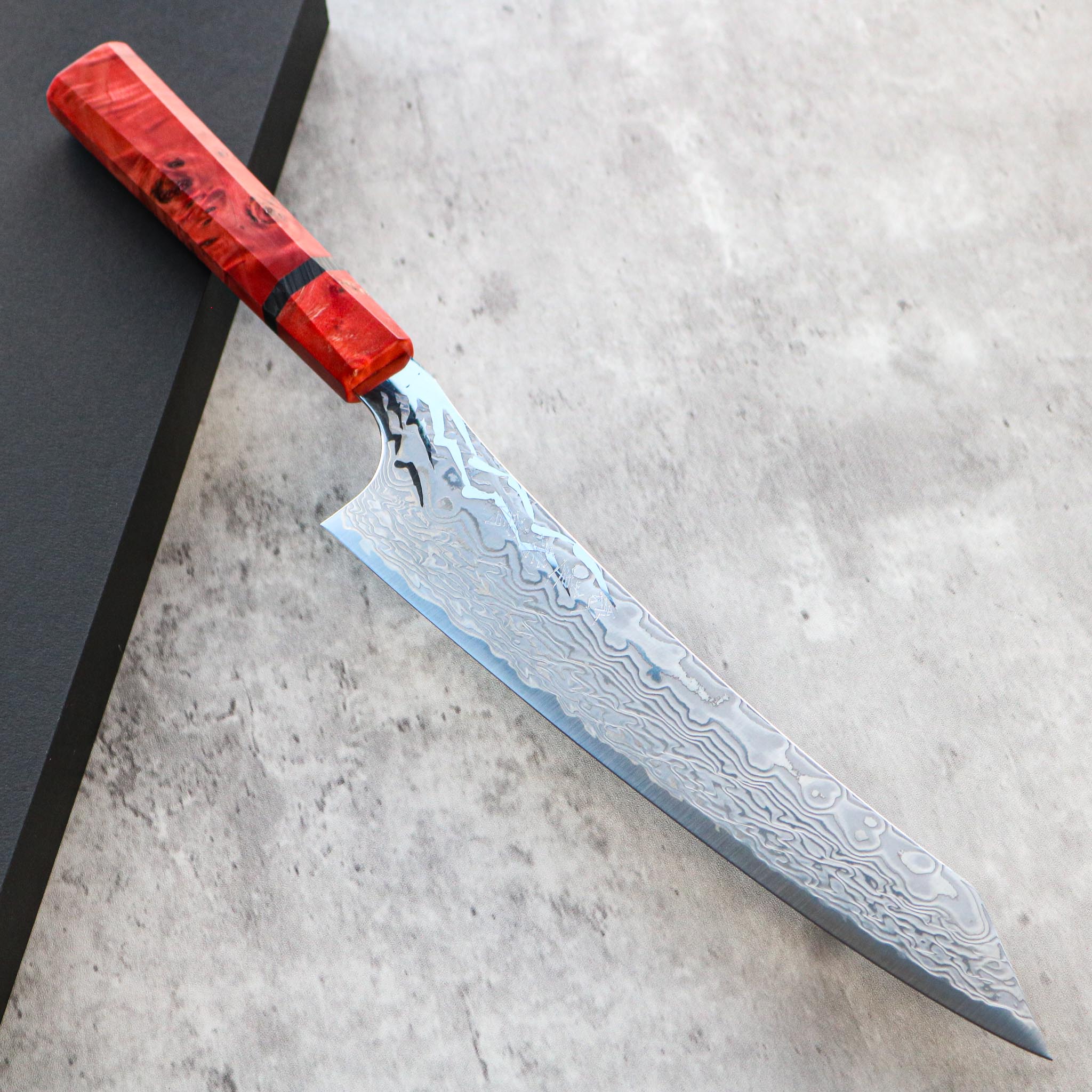
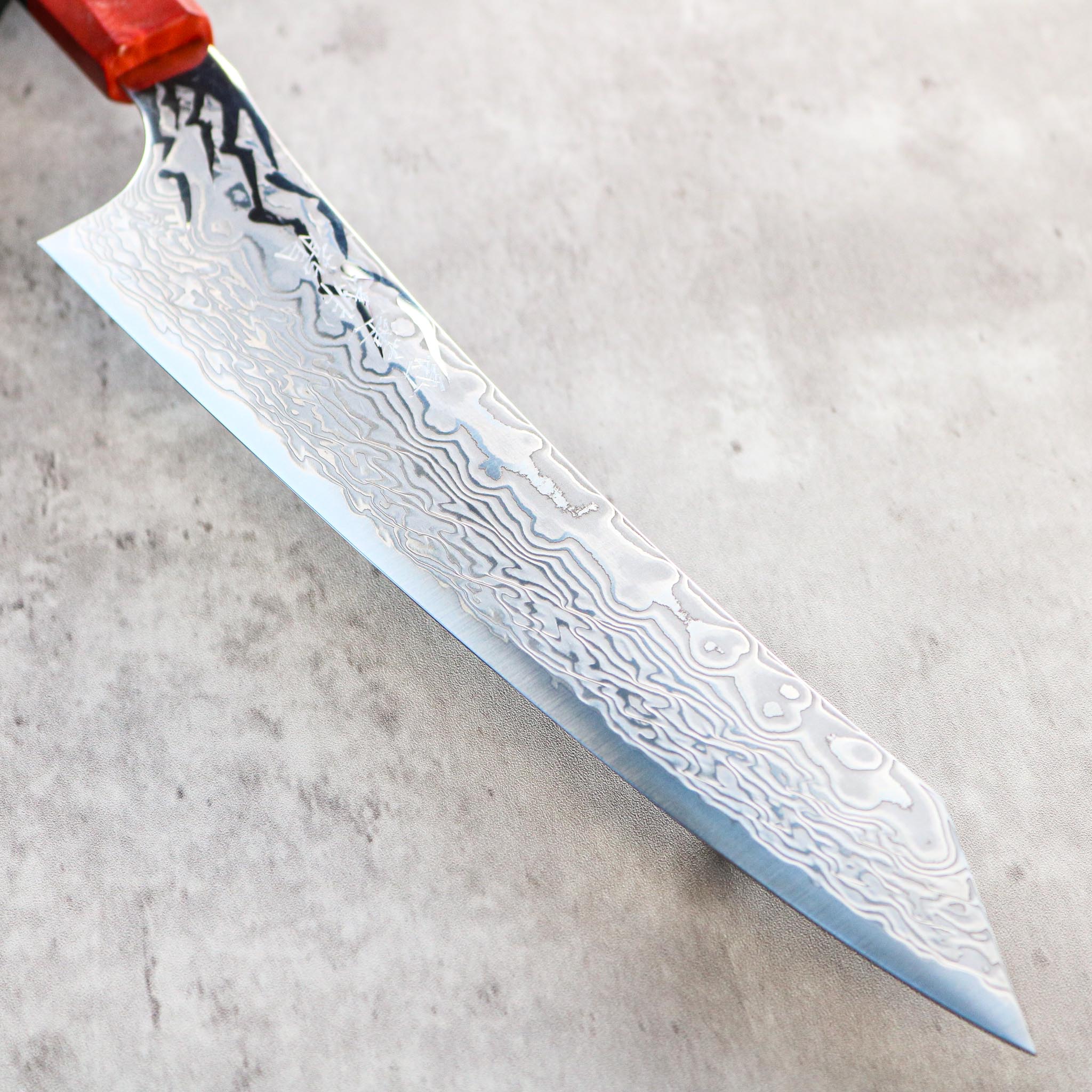
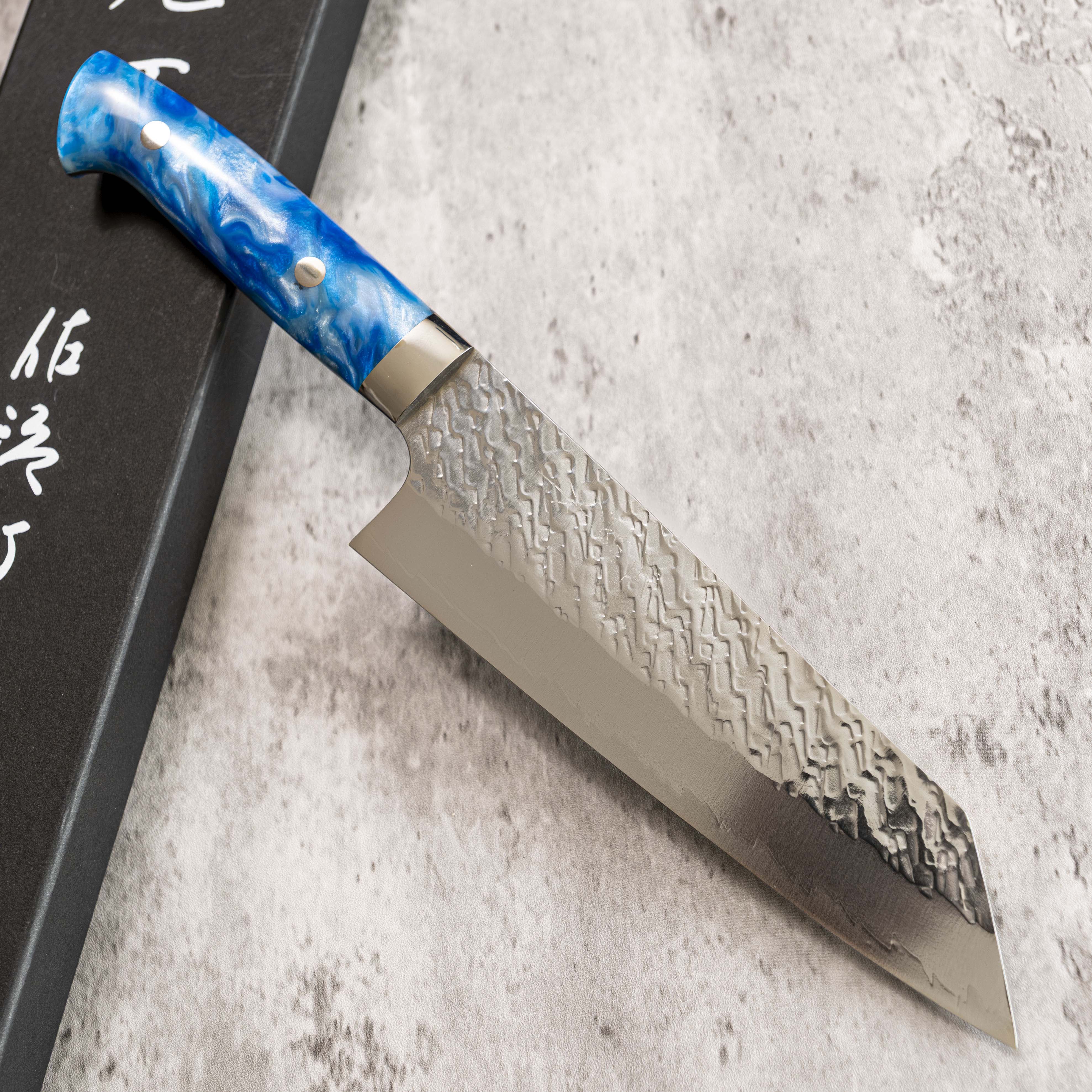
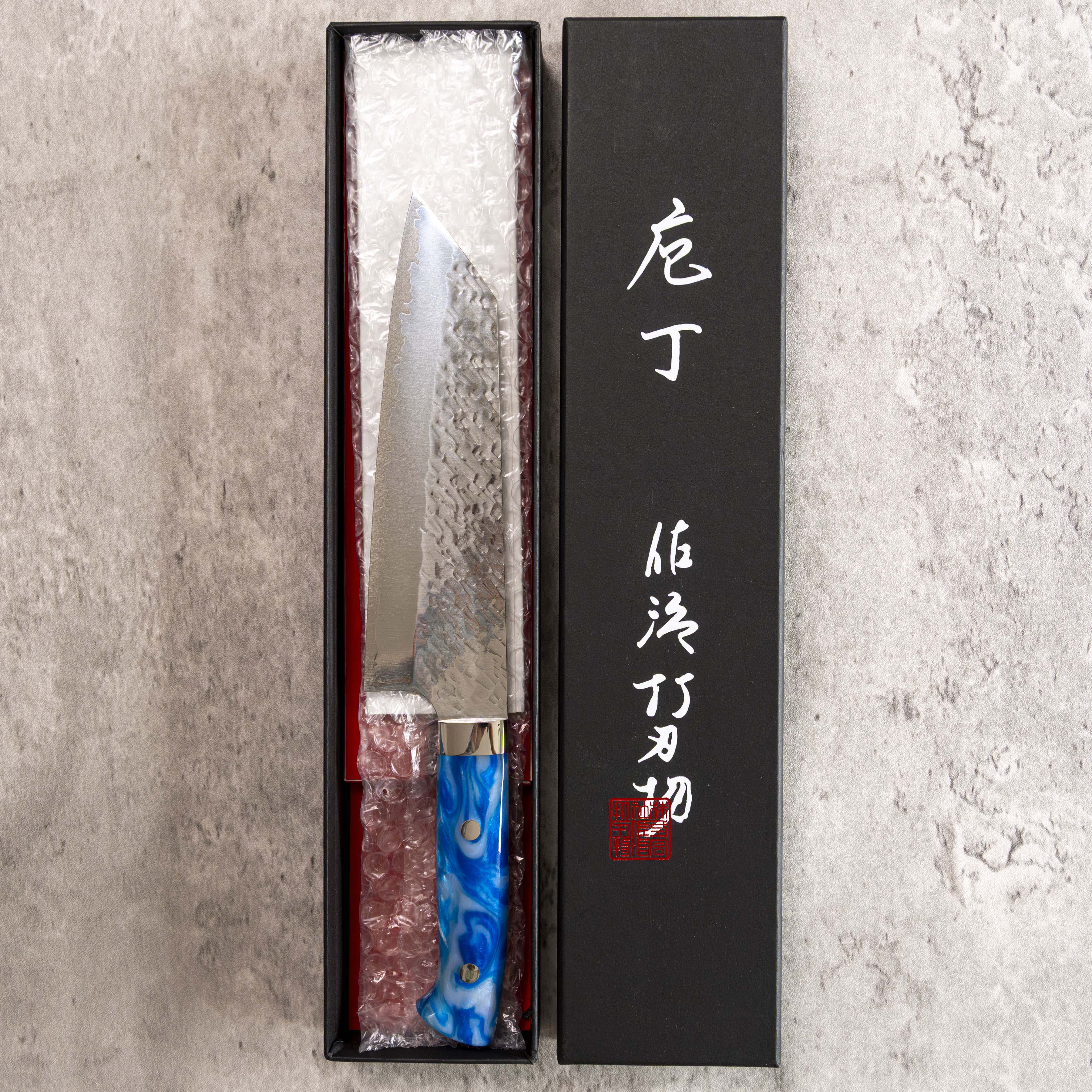
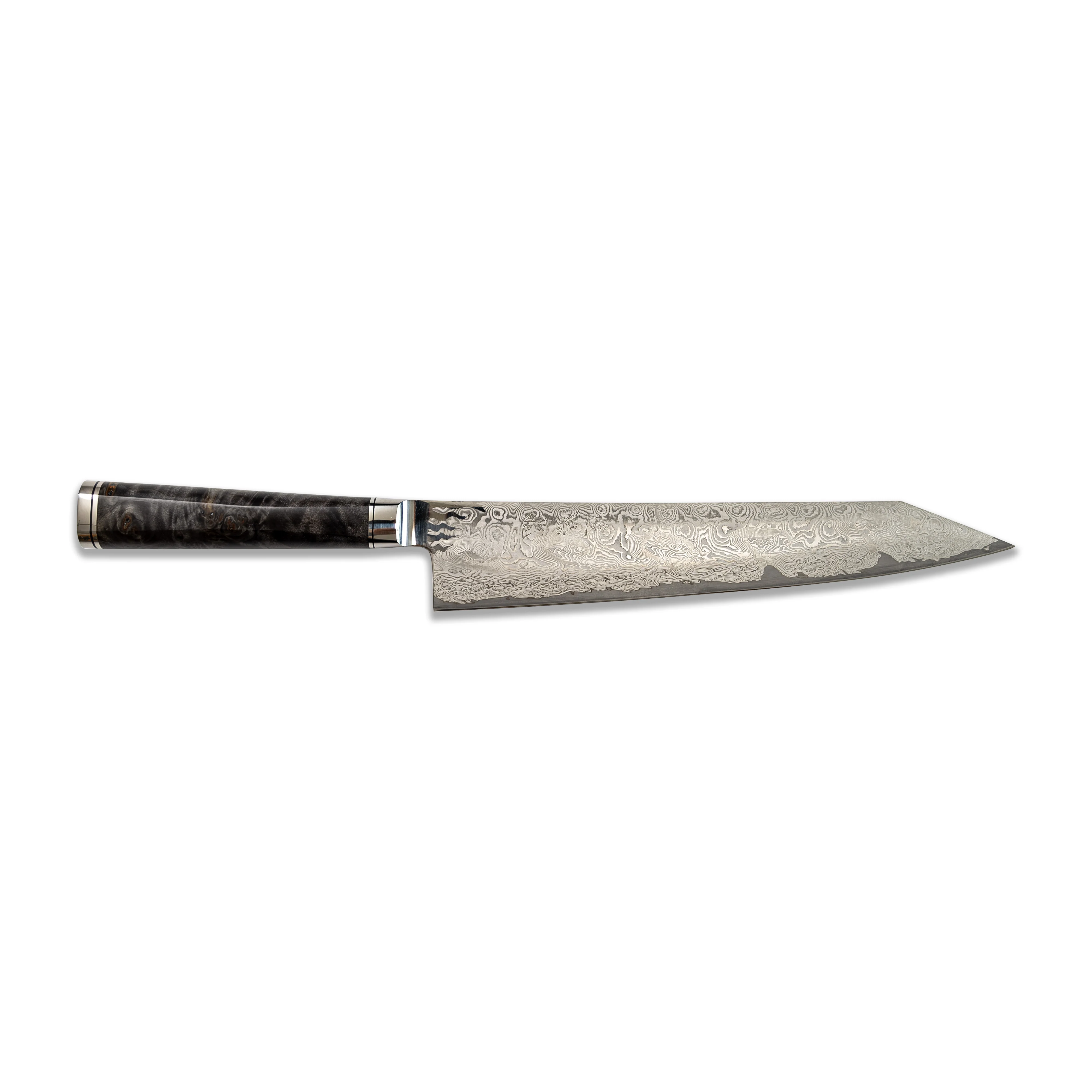
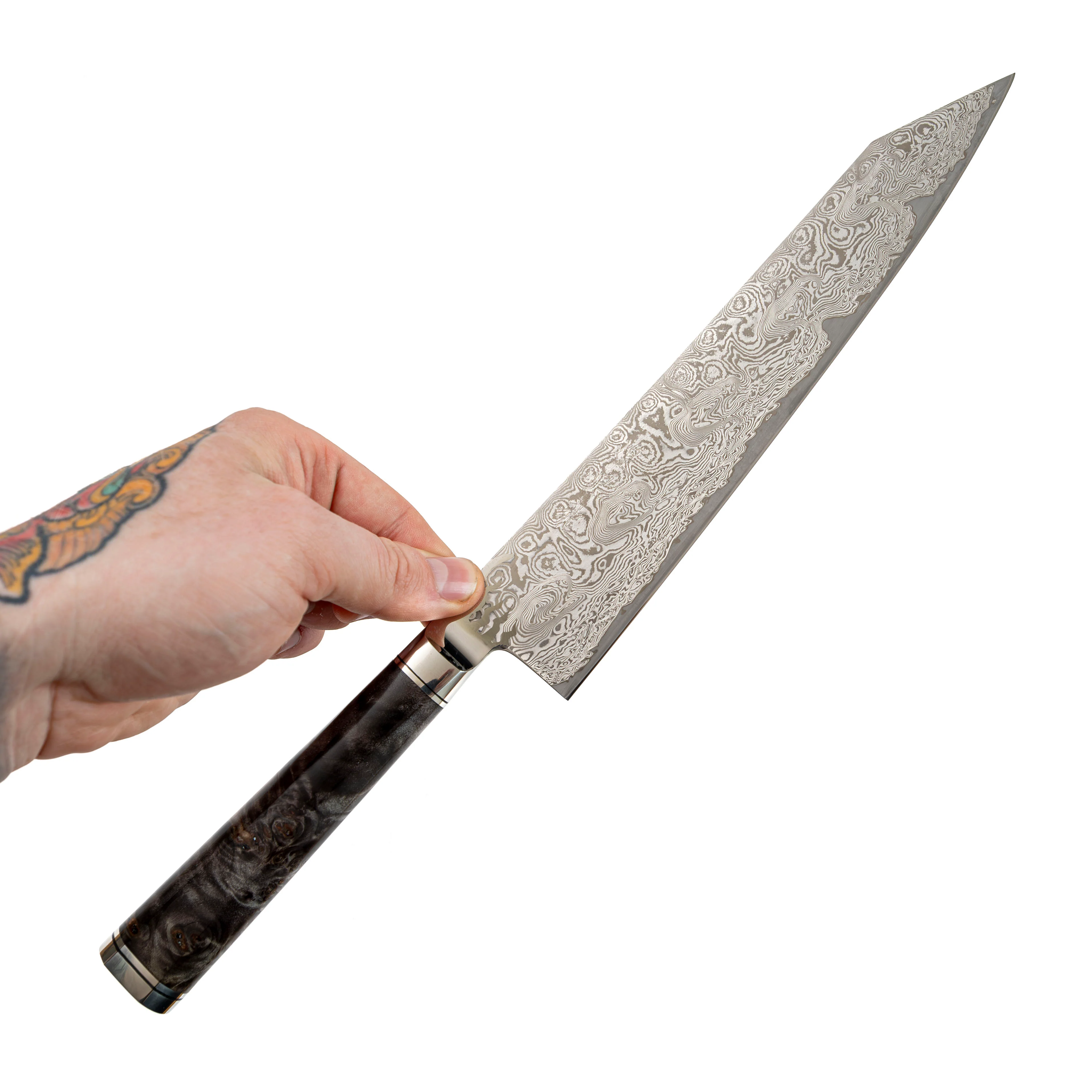
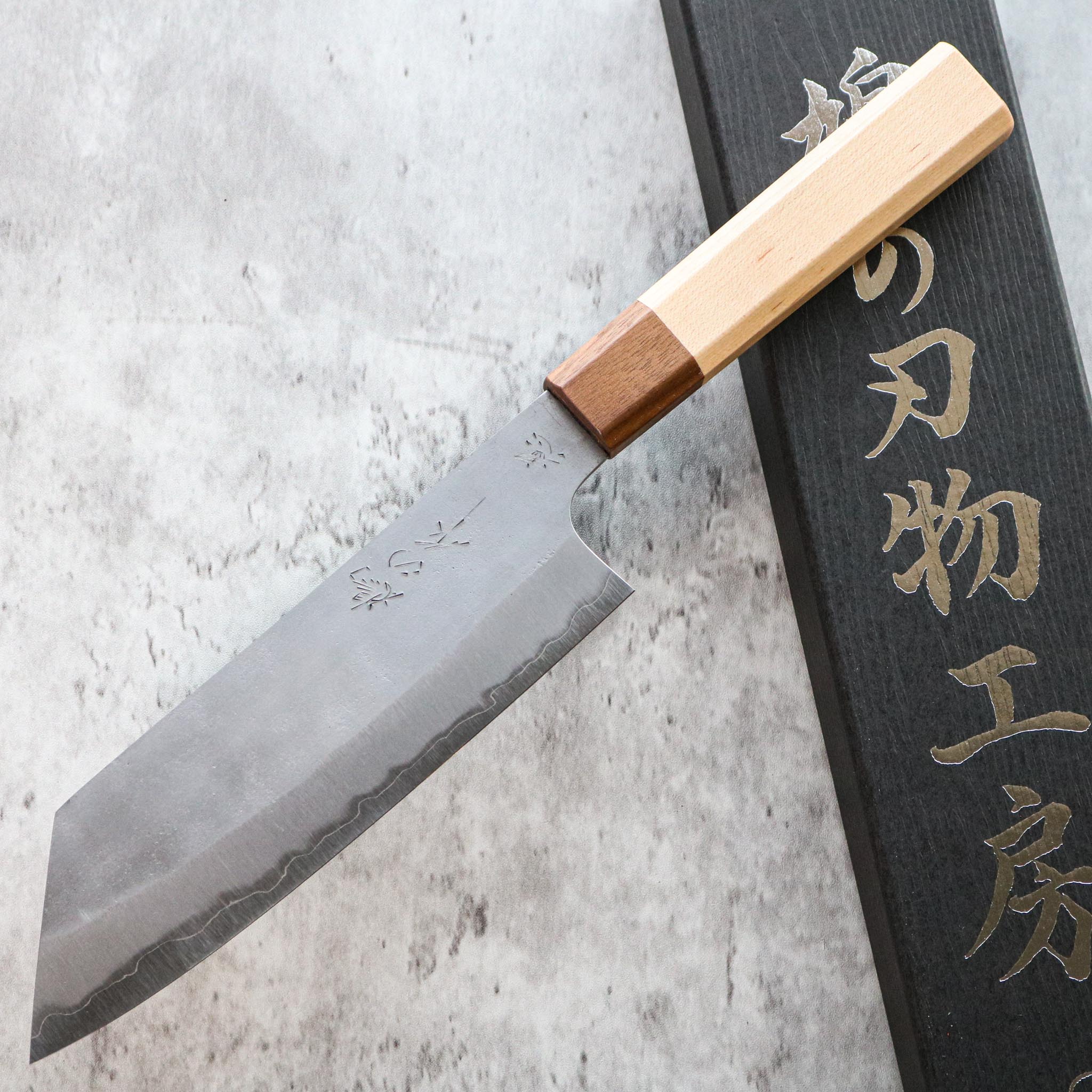
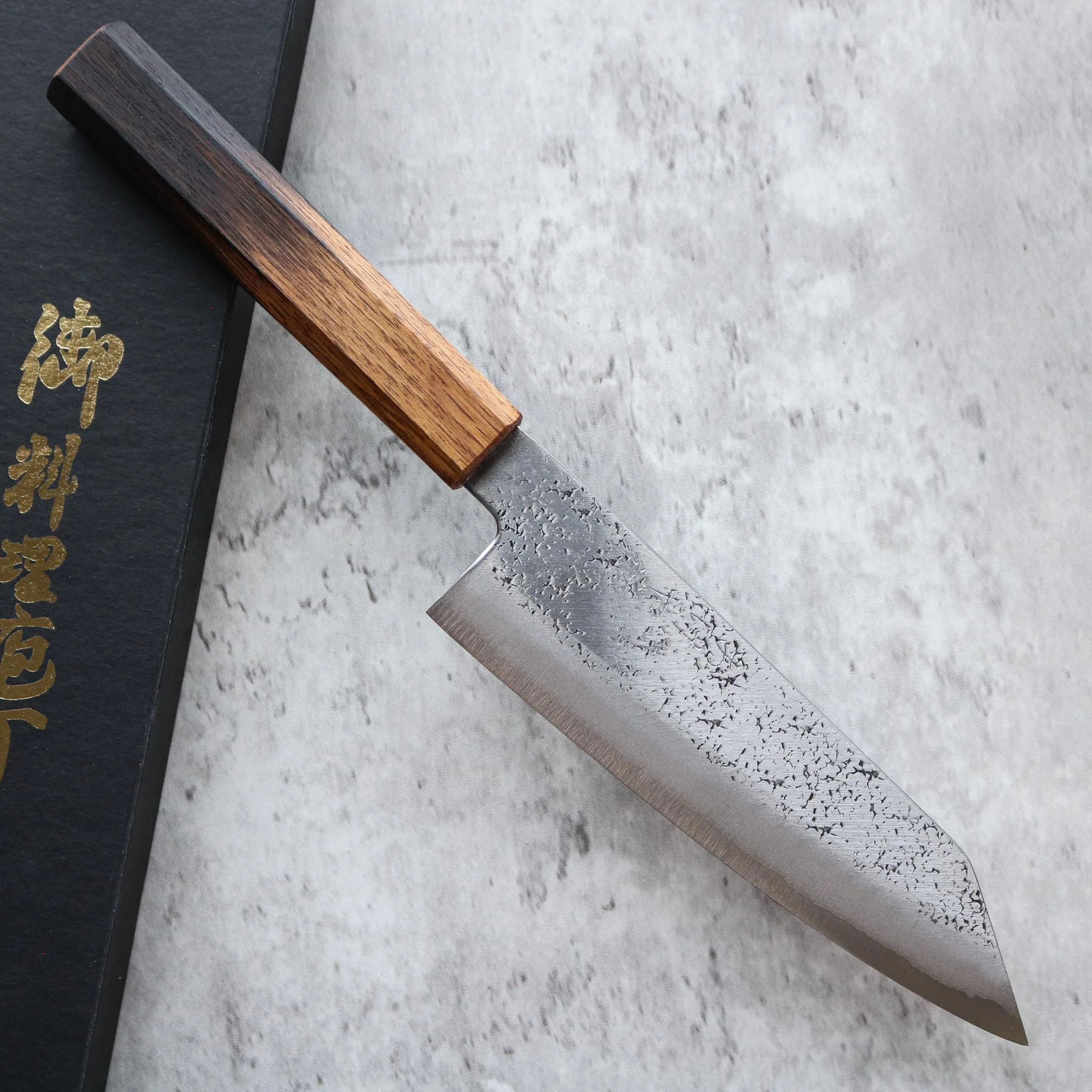
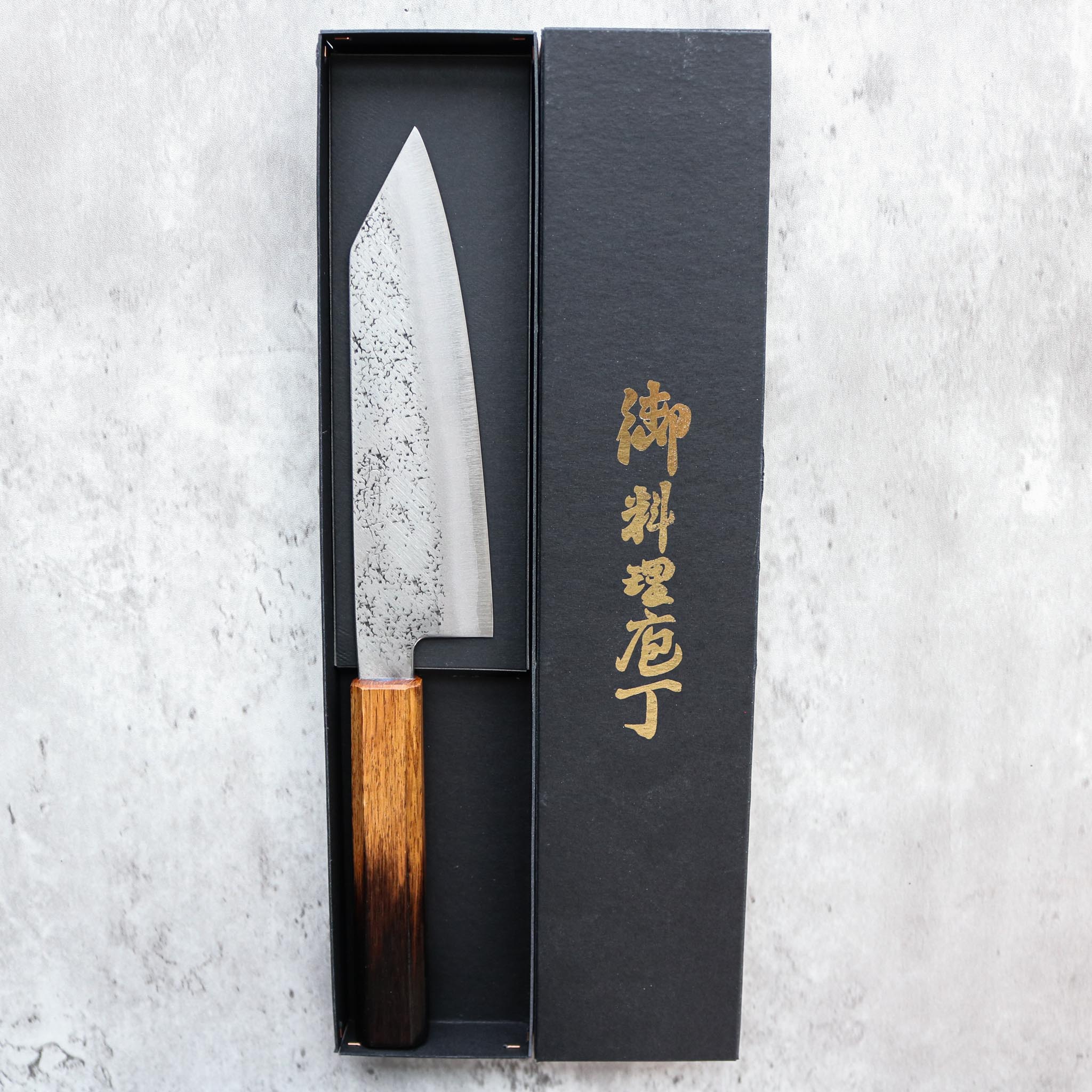
Okeya Blue Super Bunka 165 mm
| Length | 165 mm |
| Total Length | 305 mm |
| Steel |
Aogami Super (Stainless Clad) |
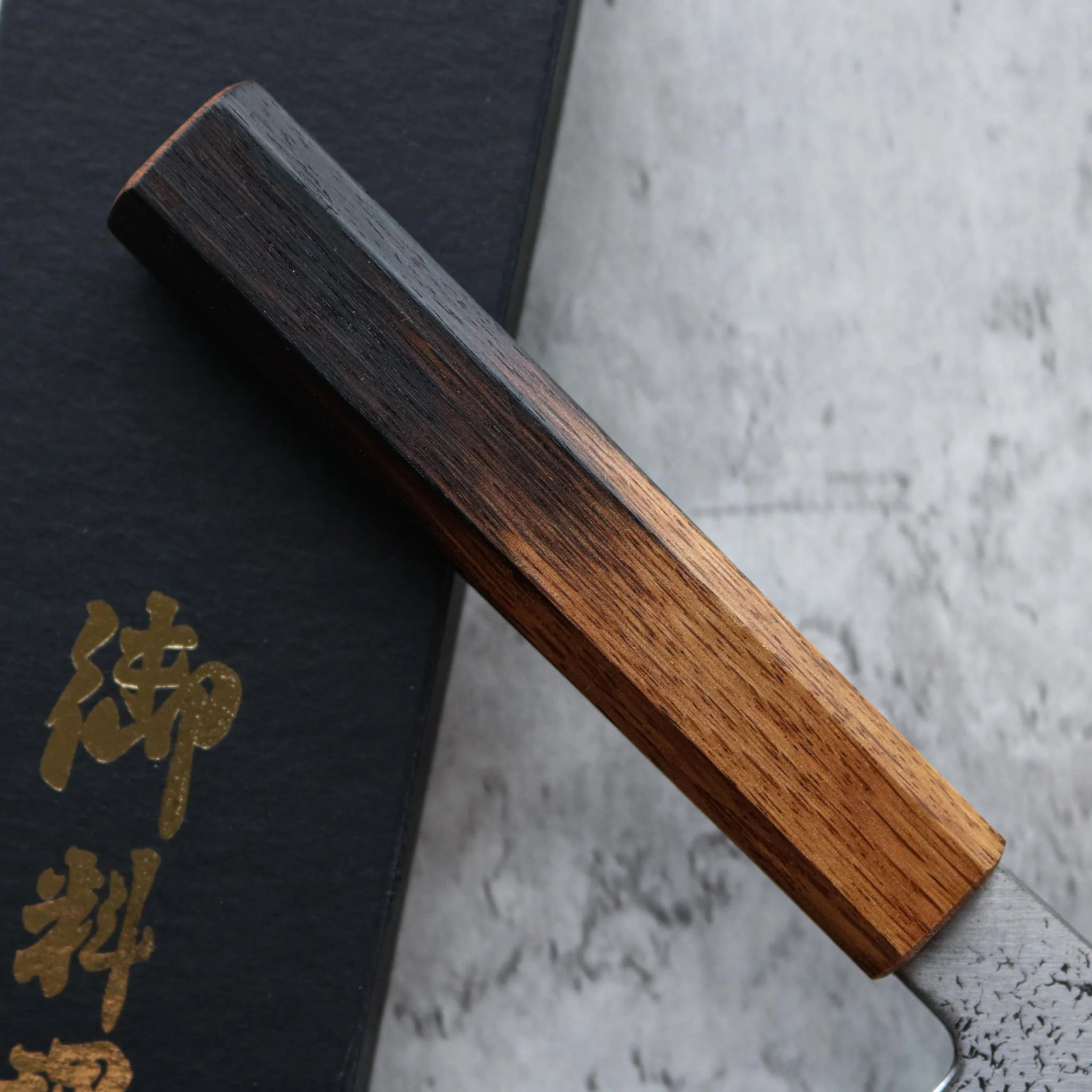
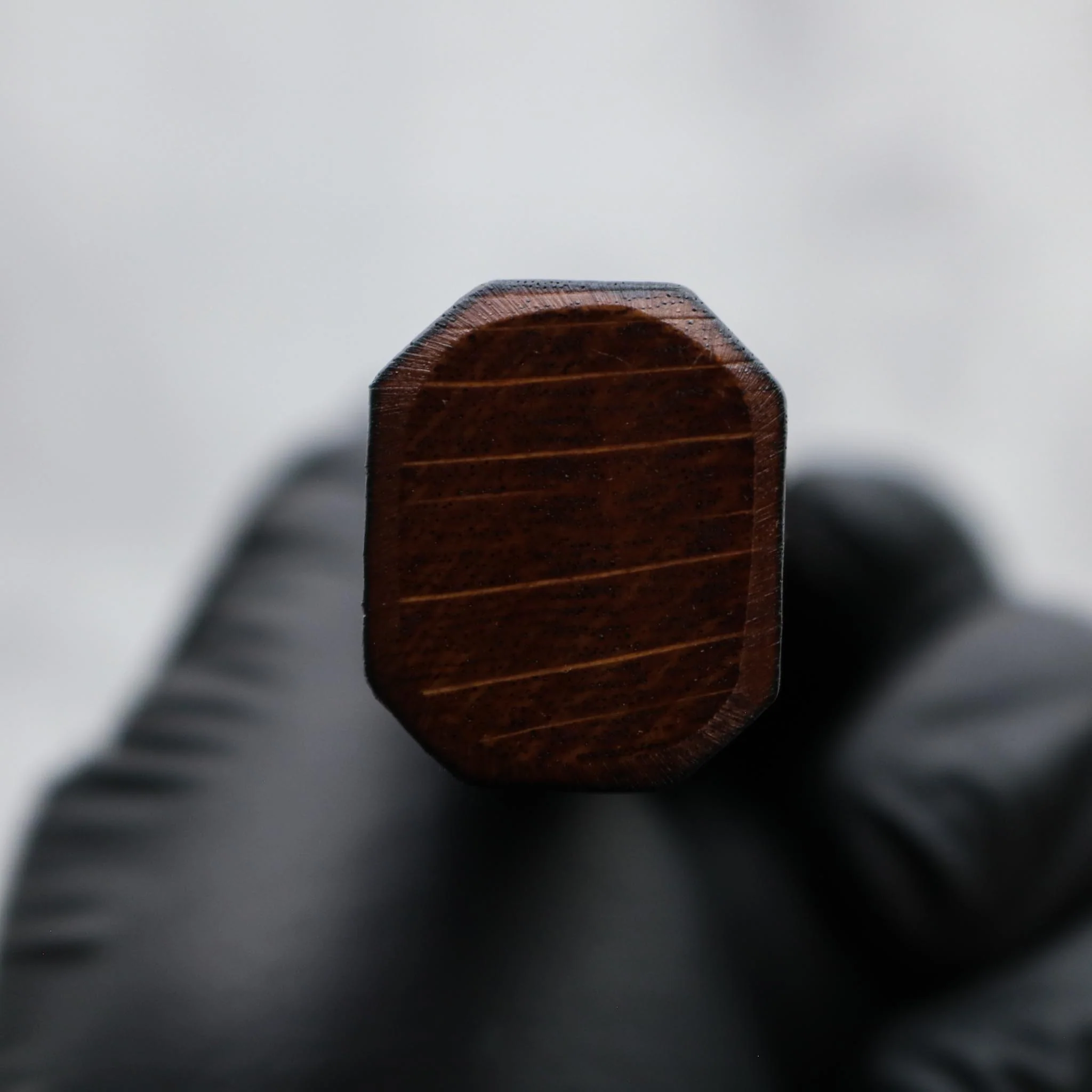
| Handle | Oak |
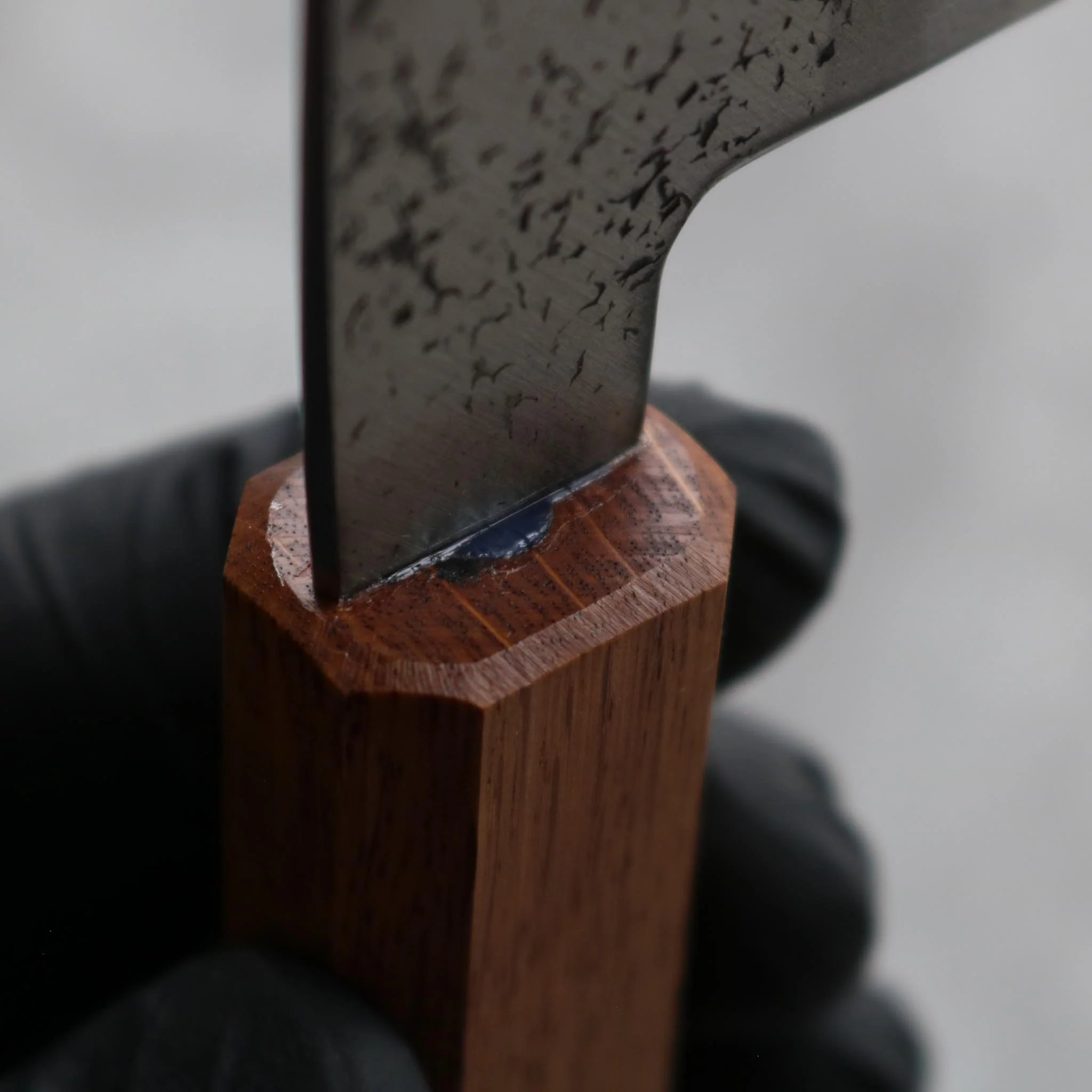
| Ferrule | N/A |
| Rockwell | 61-62 HRC |
| Height Spine to heel | 45 mm |
| Width at Spine | 2.0 mm |
| Weight | 127 grams |
| Bevel | Double (50/50) |
The Blacksmith
OKEYA HAMONO
Okeya Hamono is located in Miki City where the grandfather of current owner Akihoto Fujiwara began production of what are known as “Kogatana” knives. These are small, multipurpose knives that look like a mini katana and were generally used for crafts, whittling and cutting paper. Nowadays, Fujiwara-san and his son focus their attention on double beveled blades.
The Knife
THE BUNKA
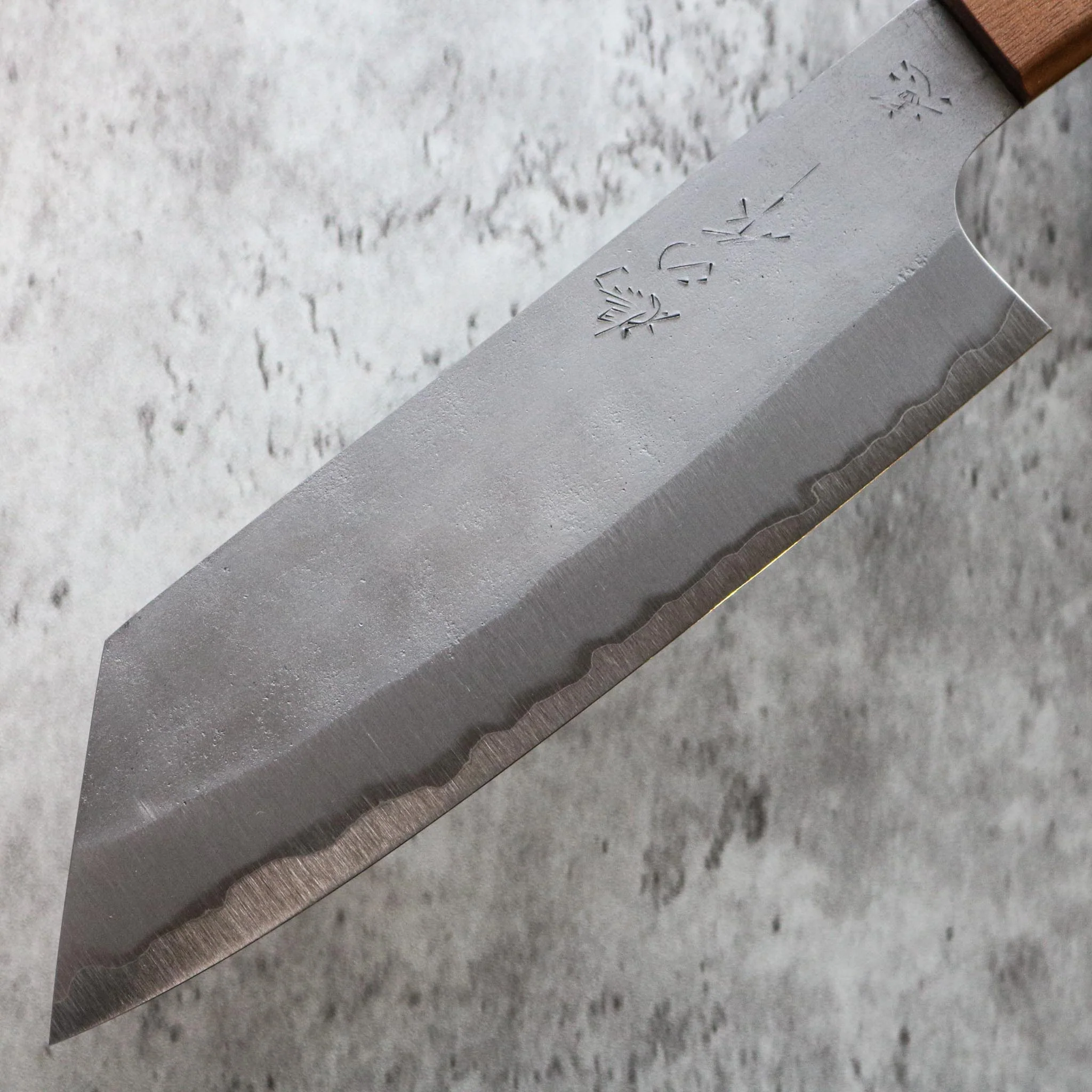
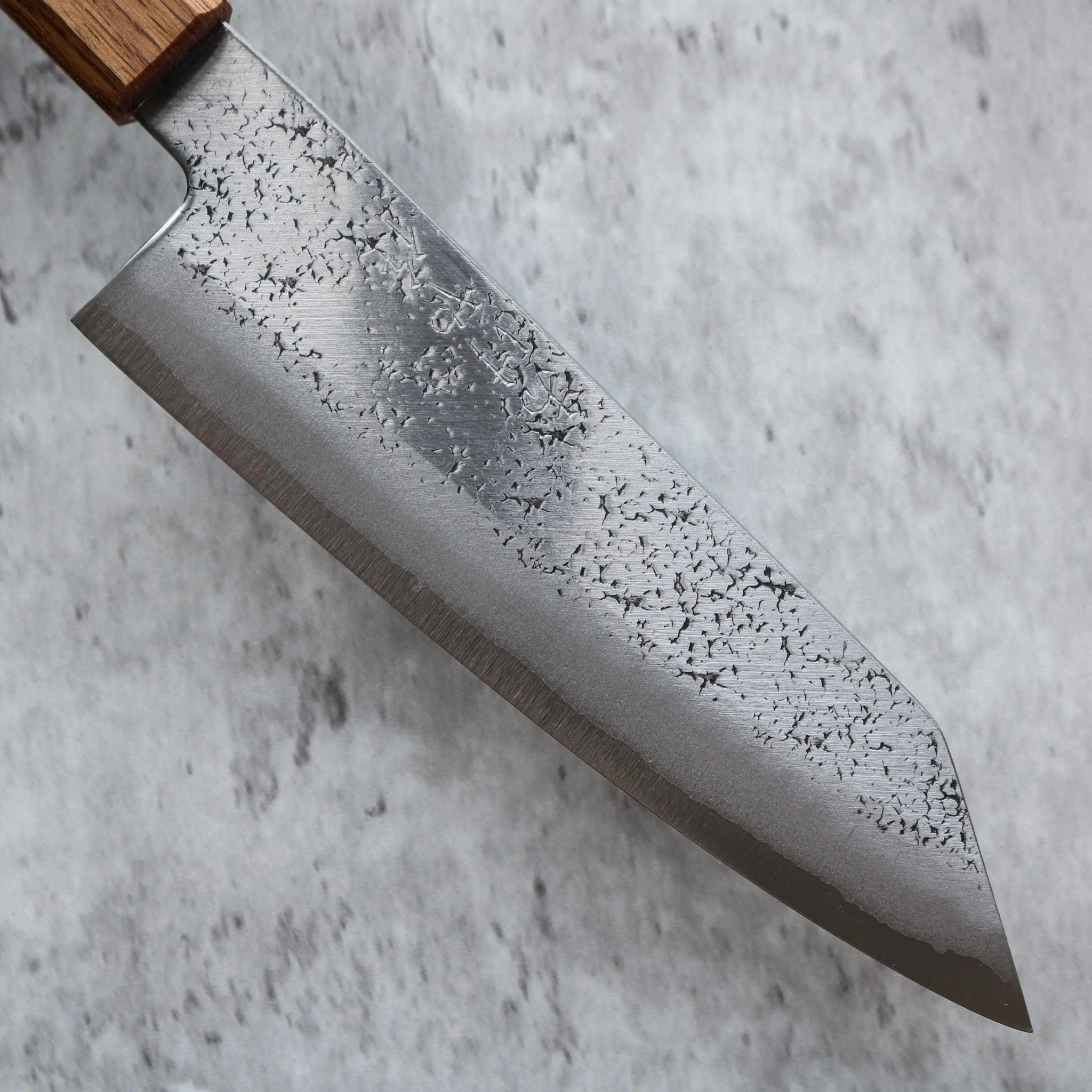
The Bunka is a mid-sized, all-purpose knife that is compact, nimble, and handles many tasks. It's a touch shorter than the Gyuto and Kiritsuke, making it easier to wield and less intimidating to use. The "reverse tanto" or "K-tip" gives the user more travel for their guide finger toward the tip of the knife, which is super handy for tasks that require precise tip work, like brunoise shallot or garlic. It's great at slicing smaller proteins and flying through any mid-sized vegetable.
Knife Care (Stainless Clad)
- This knife is made from 3 layers of steel using a technique called Sanmai (Forge welding). It involves laminating a piece of Carbon steel with two pieces of Stainless steel giving the knife all the benefits of the carbon steel (Edge retention, ease of sharpening, cutting feel) and the Ease of Maintenance from Stainless steel. 2-3 millimeters of the carbon steel is exposed at the edge of the knife and is susceptible to rust and discouloration if not properly maintained.
- Simply Wipe the knife with a damp cloth immediately after use to keep it from rusting or discouloring.
- Never put your knife in the Dishwasher. The extreme heat will ruin the wooden handle.
- Highly acidic ingredients (Onions, Tomatoes, Citrus) Will cause rust and oxidation to happen faster, thus the user must ensure the knife is wiped clean immediately after working with such an ingredient.
- Should any rust form it can be removed using a rust eraser or a mixture of Baking soda and water to simply scrub it clean.
Product Information
Product Information
Shipping & Returns
Shipping & Returns
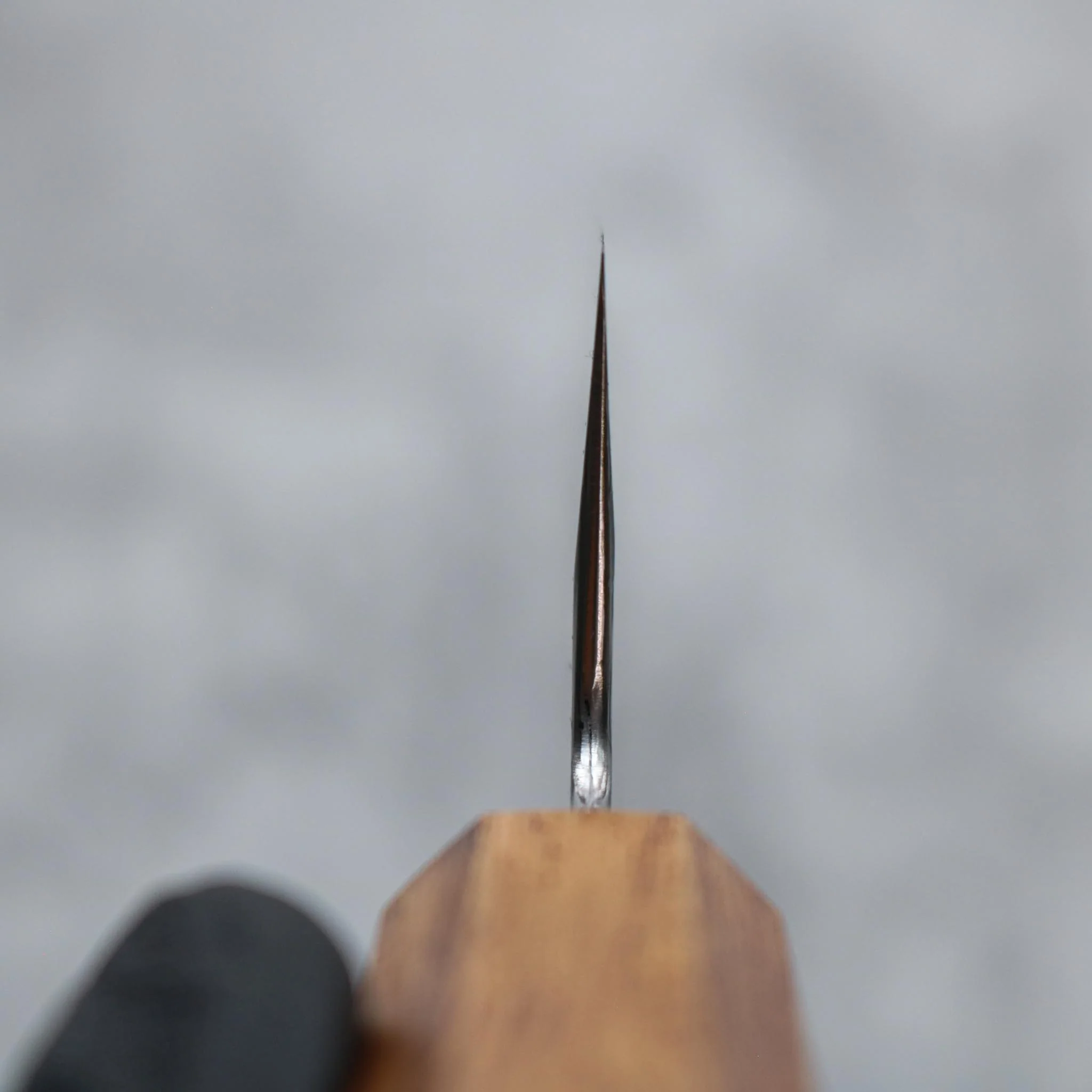
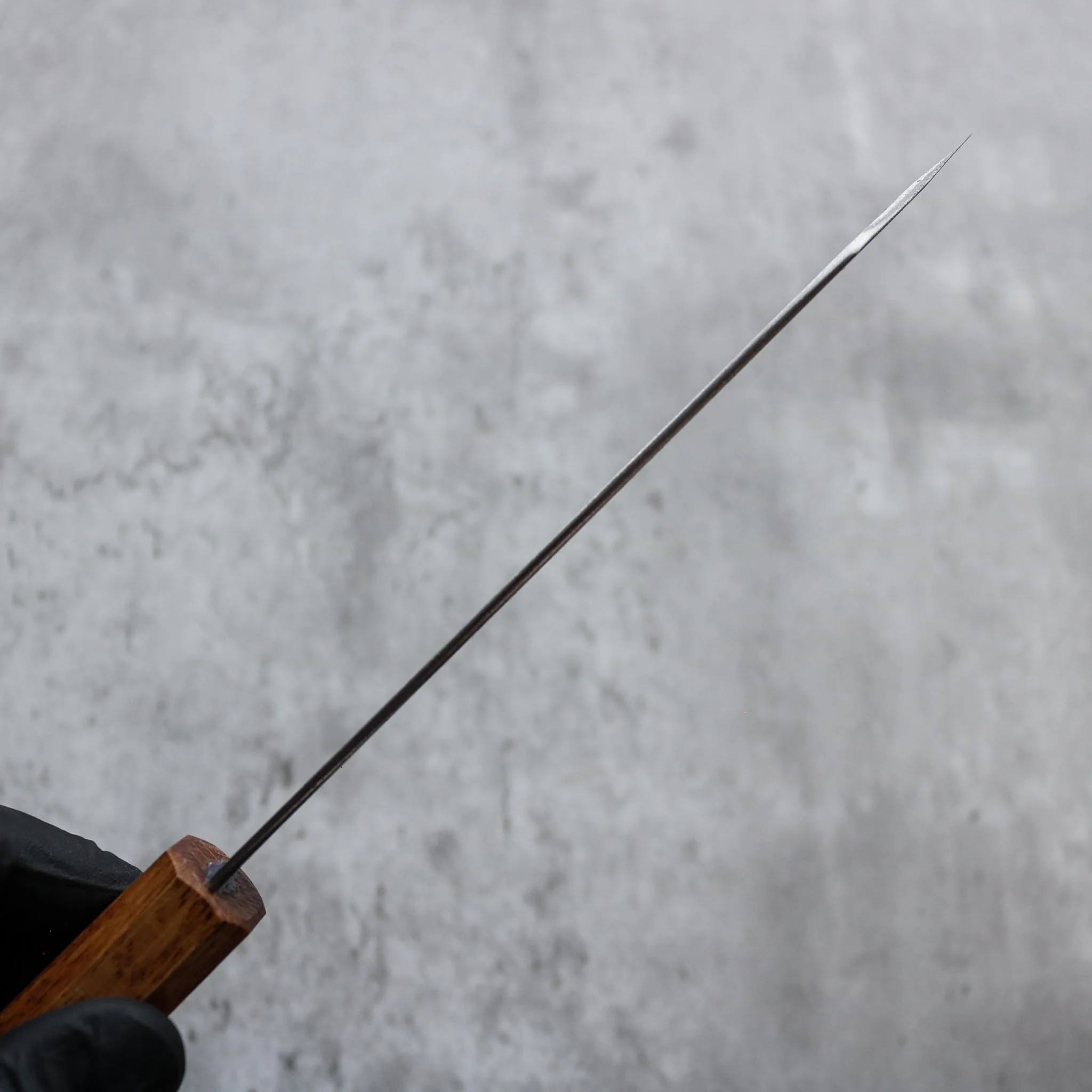
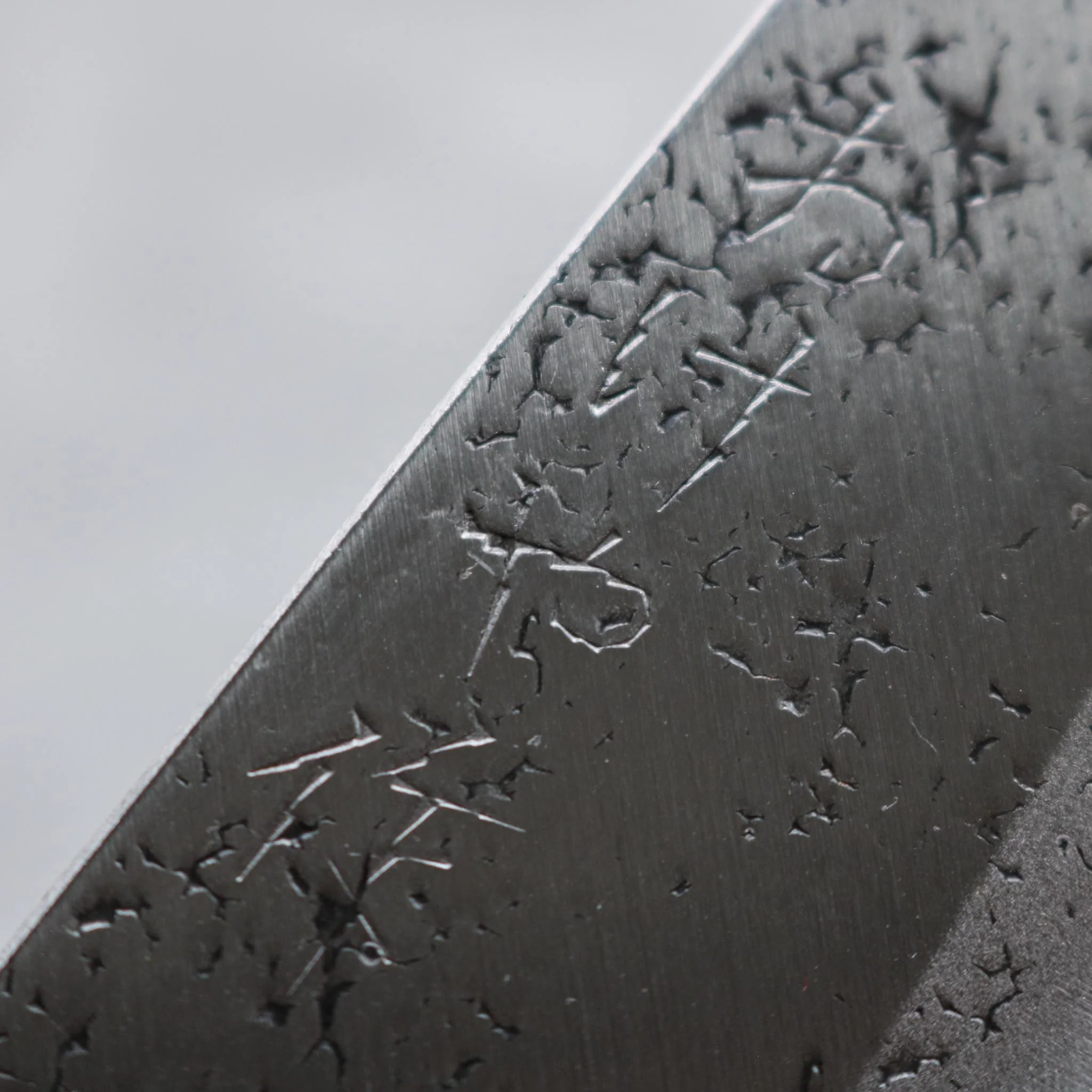
Okeya Blue Super Bunka 165 mm
Okeya Blue Super Bunka 165 mm
| Length | 165 mm |
| Total Length | 305 mm |
| Steel |
Aogami Super (Stainless Clad) |
| Handle | Oak |
| Ferrule | N/A |
| Rockwell | 61-62 HRC |
| Height Spine to heel | 45 mm |
| Width at Spine | 2.0 mm |
| Weight | 127 grams |
| Bevel | Double (50/50) |
The Blacksmith
OKEYA HAMONO
Okeya Hamono is located in Miki City where the grandfather of current owner Akihoto Fujiwara began production of what are known as “Kogatana” knives. These are small, multipurpose knives that look like a mini katana and were generally used for crafts, whittling and cutting paper. Nowadays, Fujiwara-san and his son focus their attention on double beveled blades.
The Knife
THE BUNKA
The Bunka is a mid-sized, all-purpose knife that is compact, nimble, and handles many tasks. It's a touch shorter than the Gyuto and Kiritsuke, making it easier to wield and less intimidating to use. The "reverse tanto" or "K-tip" gives the user more travel for their guide finger toward the tip of the knife, which is super handy for tasks that require precise tip work, like brunoise shallot or garlic. It's great at slicing smaller proteins and flying through any mid-sized vegetable.
Knife Care (Stainless Clad)
- This knife is made from 3 layers of steel using a technique called Sanmai (Forge welding). It involves laminating a piece of Carbon steel with two pieces of Stainless steel giving the knife all the benefits of the carbon steel (Edge retention, ease of sharpening, cutting feel) and the Ease of Maintenance from Stainless steel. 2-3 millimeters of the carbon steel is exposed at the edge of the knife and is susceptible to rust and discouloration if not properly maintained.
- Simply Wipe the knife with a damp cloth immediately after use to keep it from rusting or discouloring.
- Never put your knife in the Dishwasher. The extreme heat will ruin the wooden handle.
- Highly acidic ingredients (Onions, Tomatoes, Citrus) Will cause rust and oxidation to happen faster, thus the user must ensure the knife is wiped clean immediately after working with such an ingredient.
- Should any rust form it can be removed using a rust eraser or a mixture of Baking soda and water to simply scrub it clean.
Original: $239.63
-65%$239.63
$83.87Product Information
Product Information
Shipping & Returns
Shipping & Returns
Description
| Length | 165 mm |
| Total Length | 305 mm |
| Steel |
Aogami Super (Stainless Clad) |
| Handle | Oak |
| Ferrule | N/A |
| Rockwell | 61-62 HRC |
| Height Spine to heel | 45 mm |
| Width at Spine | 2.0 mm |
| Weight | 127 grams |
| Bevel | Double (50/50) |
The Blacksmith
OKEYA HAMONO
Okeya Hamono is located in Miki City where the grandfather of current owner Akihoto Fujiwara began production of what are known as “Kogatana” knives. These are small, multipurpose knives that look like a mini katana and were generally used for crafts, whittling and cutting paper. Nowadays, Fujiwara-san and his son focus their attention on double beveled blades.
The Knife
THE BUNKA
The Bunka is a mid-sized, all-purpose knife that is compact, nimble, and handles many tasks. It's a touch shorter than the Gyuto and Kiritsuke, making it easier to wield and less intimidating to use. The "reverse tanto" or "K-tip" gives the user more travel for their guide finger toward the tip of the knife, which is super handy for tasks that require precise tip work, like brunoise shallot or garlic. It's great at slicing smaller proteins and flying through any mid-sized vegetable.
Knife Care (Stainless Clad)
- This knife is made from 3 layers of steel using a technique called Sanmai (Forge welding). It involves laminating a piece of Carbon steel with two pieces of Stainless steel giving the knife all the benefits of the carbon steel (Edge retention, ease of sharpening, cutting feel) and the Ease of Maintenance from Stainless steel. 2-3 millimeters of the carbon steel is exposed at the edge of the knife and is susceptible to rust and discouloration if not properly maintained.
- Simply Wipe the knife with a damp cloth immediately after use to keep it from rusting or discouloring.
- Never put your knife in the Dishwasher. The extreme heat will ruin the wooden handle.
- Highly acidic ingredients (Onions, Tomatoes, Citrus) Will cause rust and oxidation to happen faster, thus the user must ensure the knife is wiped clean immediately after working with such an ingredient.
- Should any rust form it can be removed using a rust eraser or a mixture of Baking soda and water to simply scrub it clean.