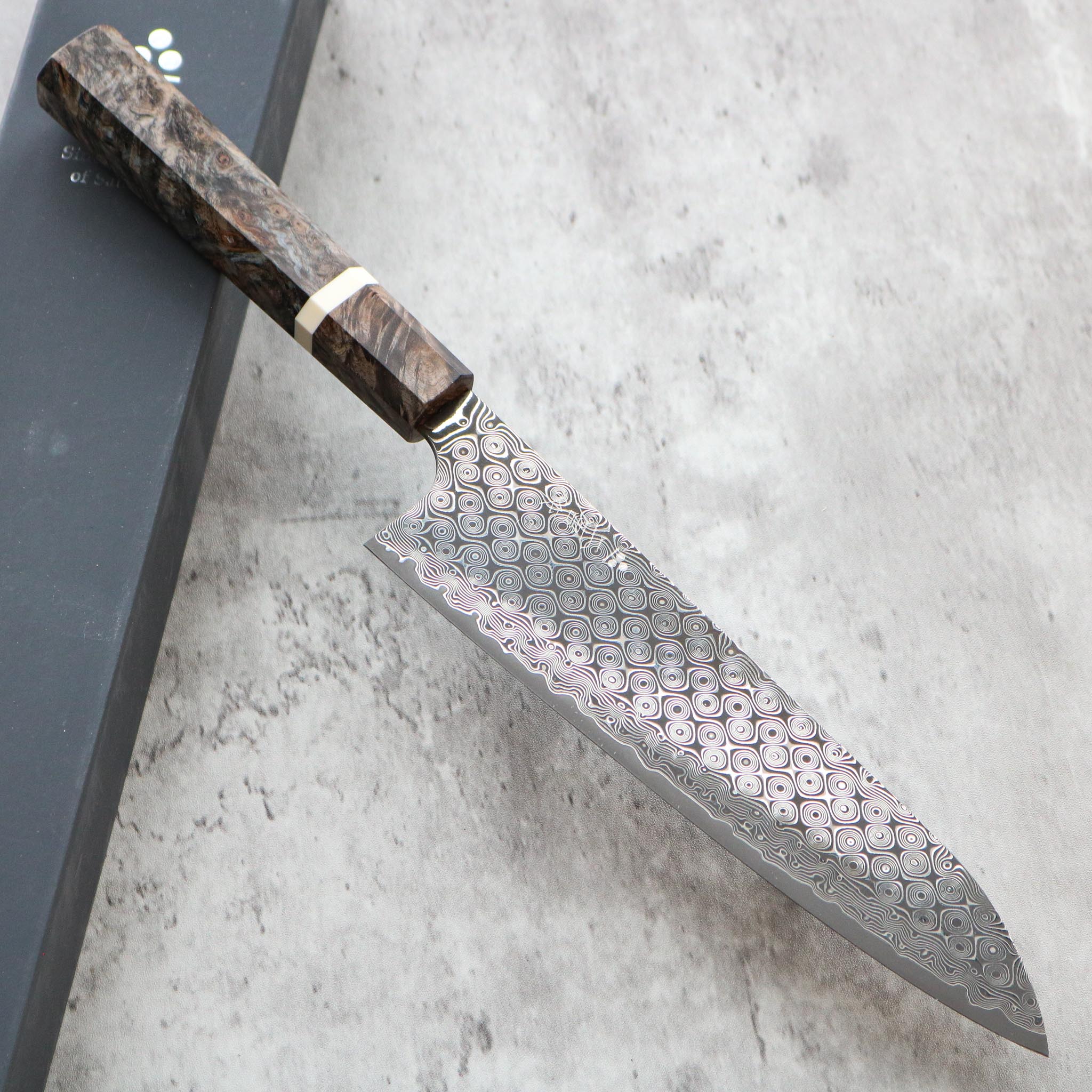
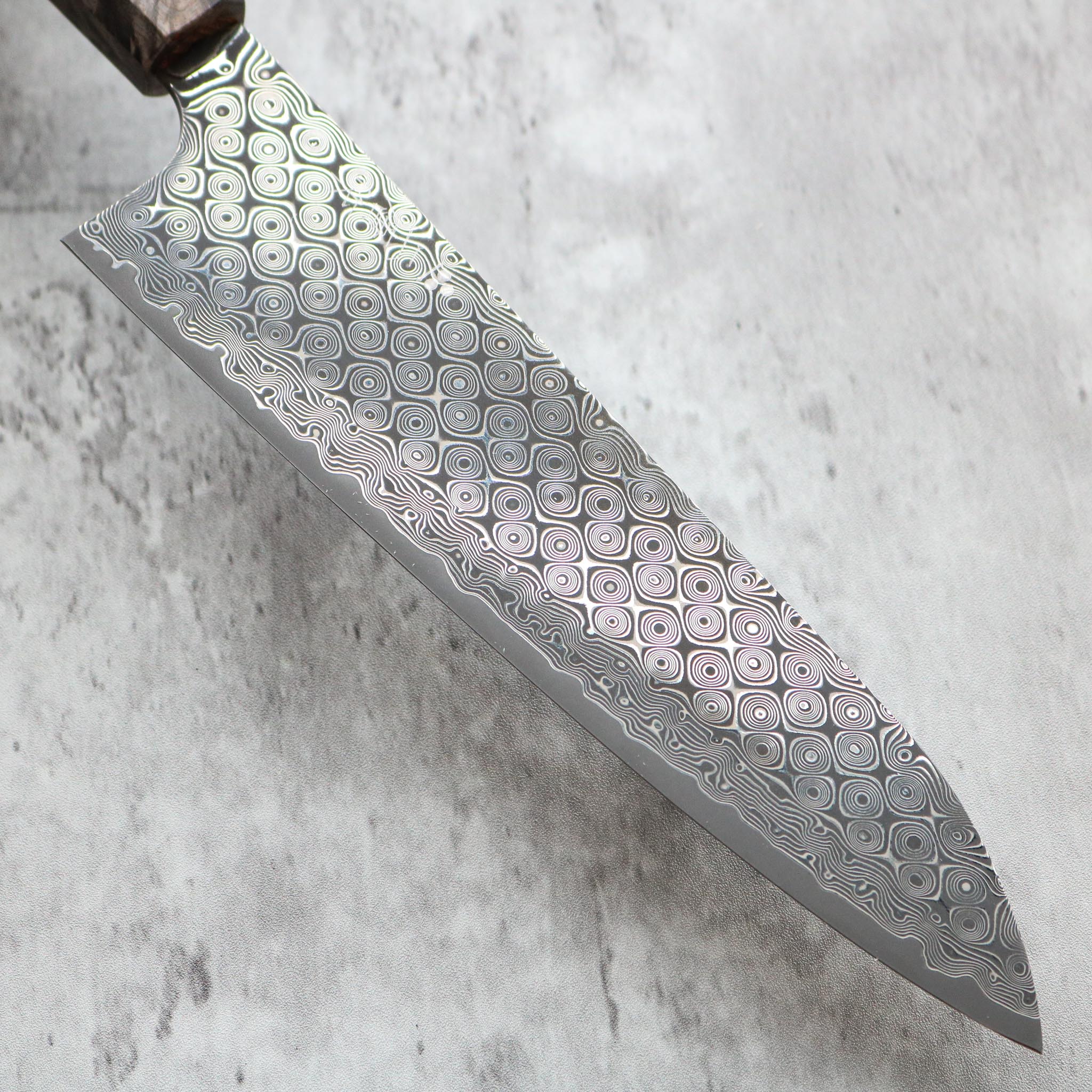
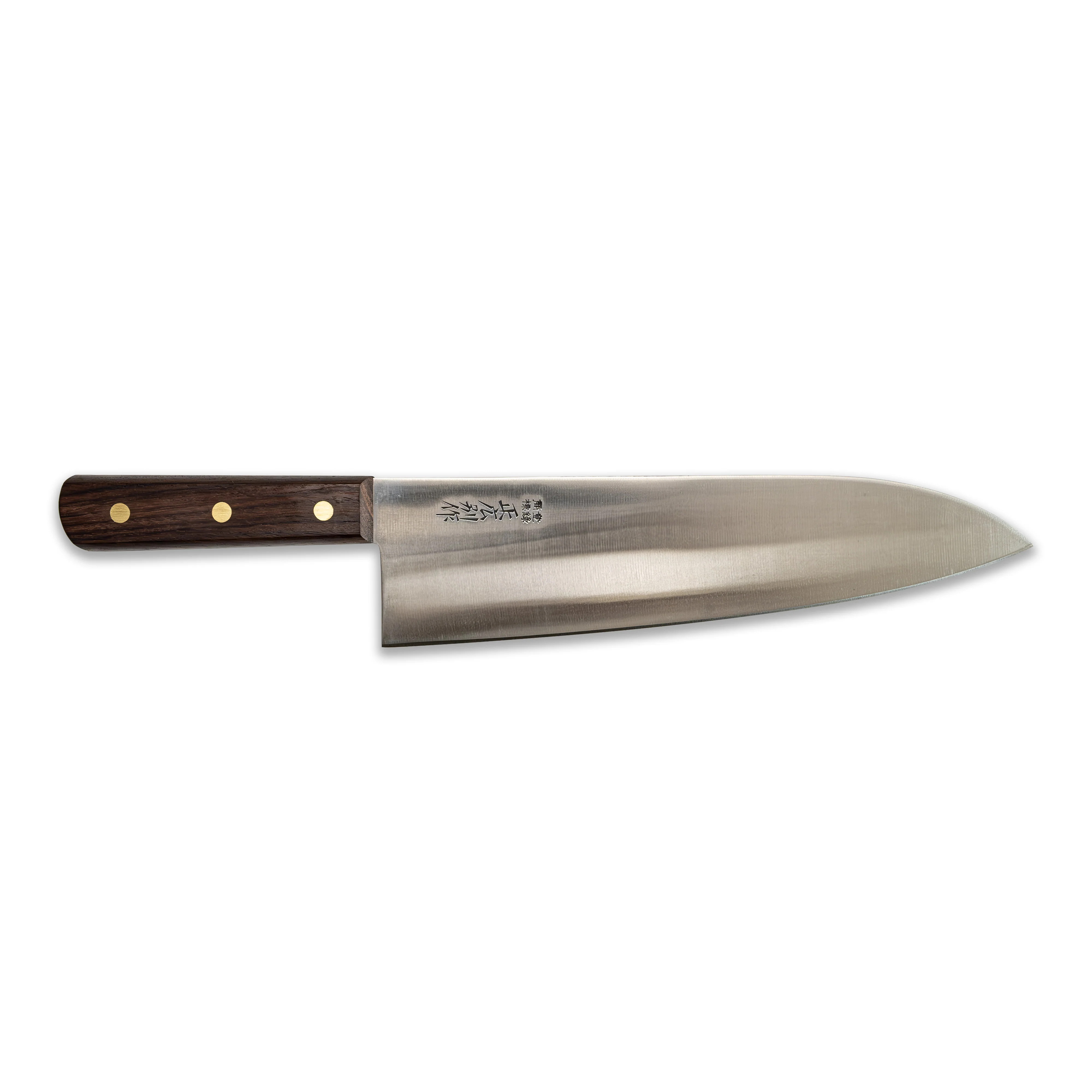
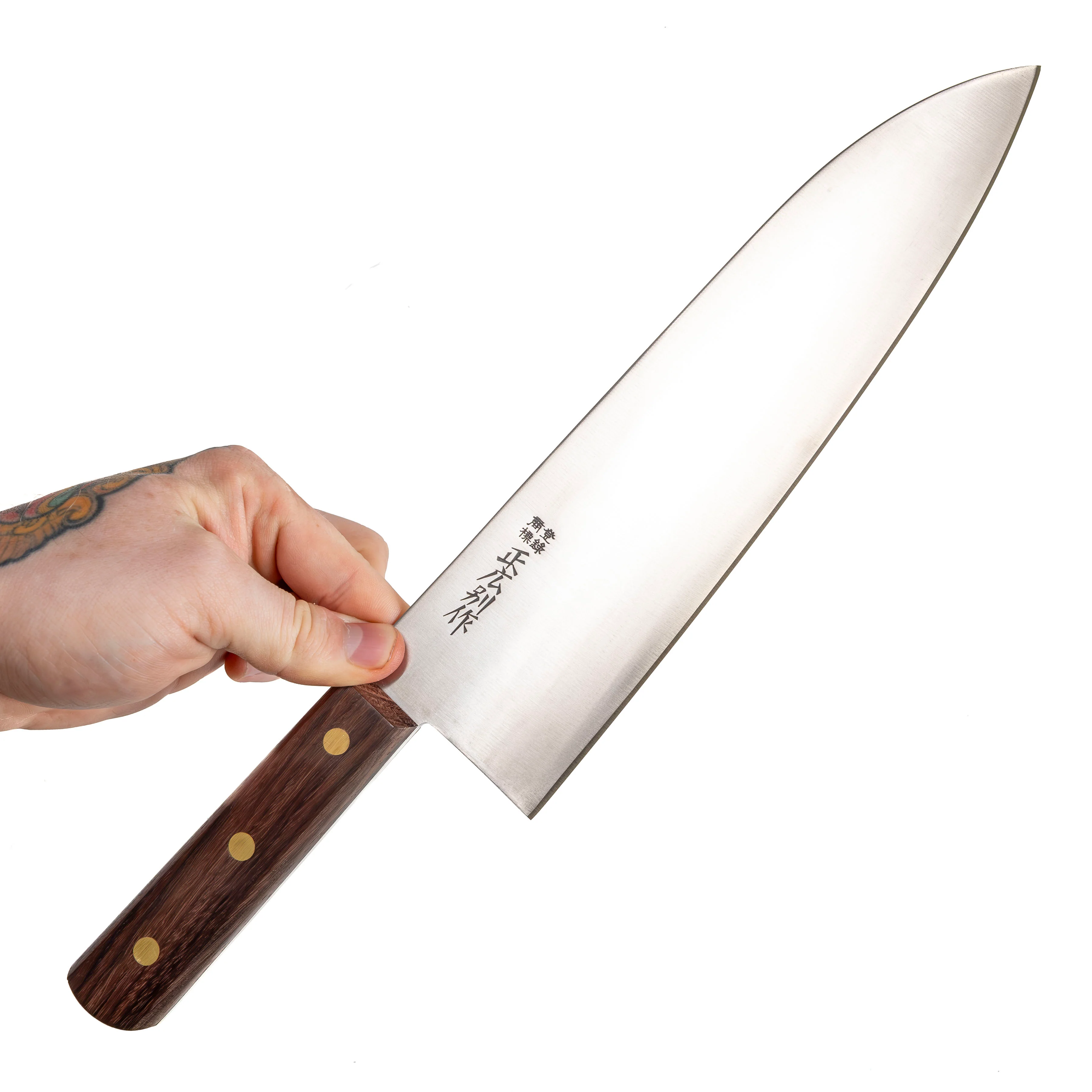
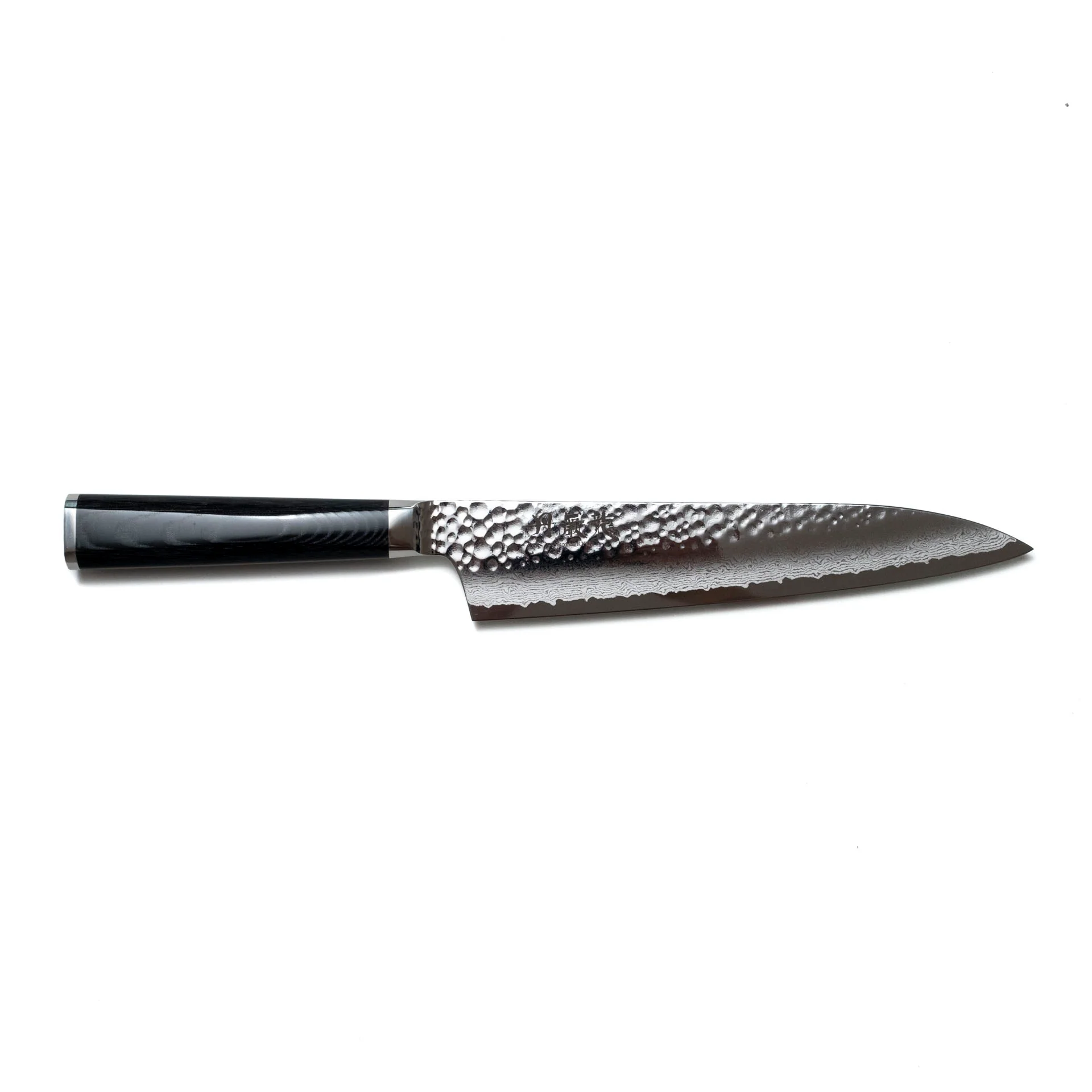
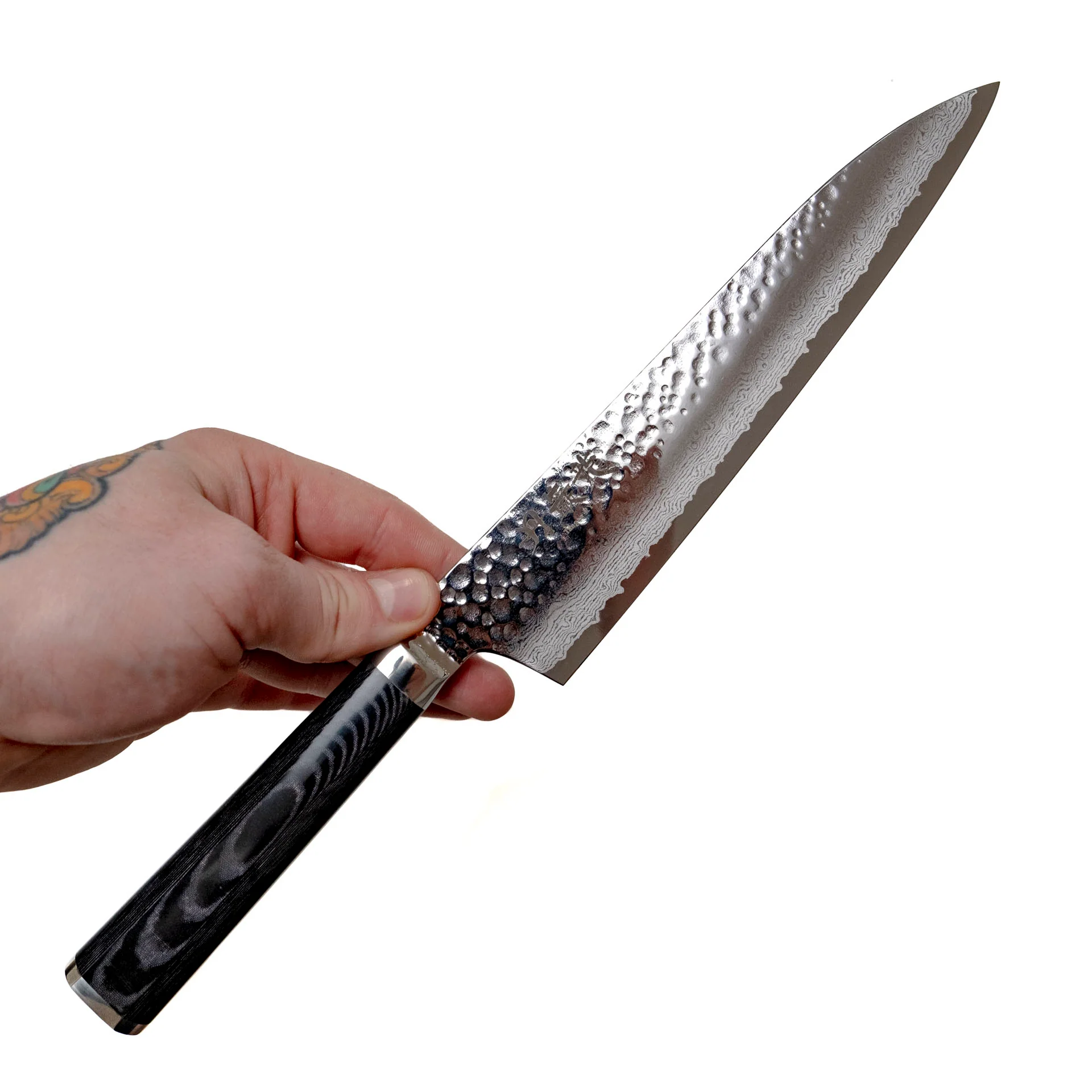
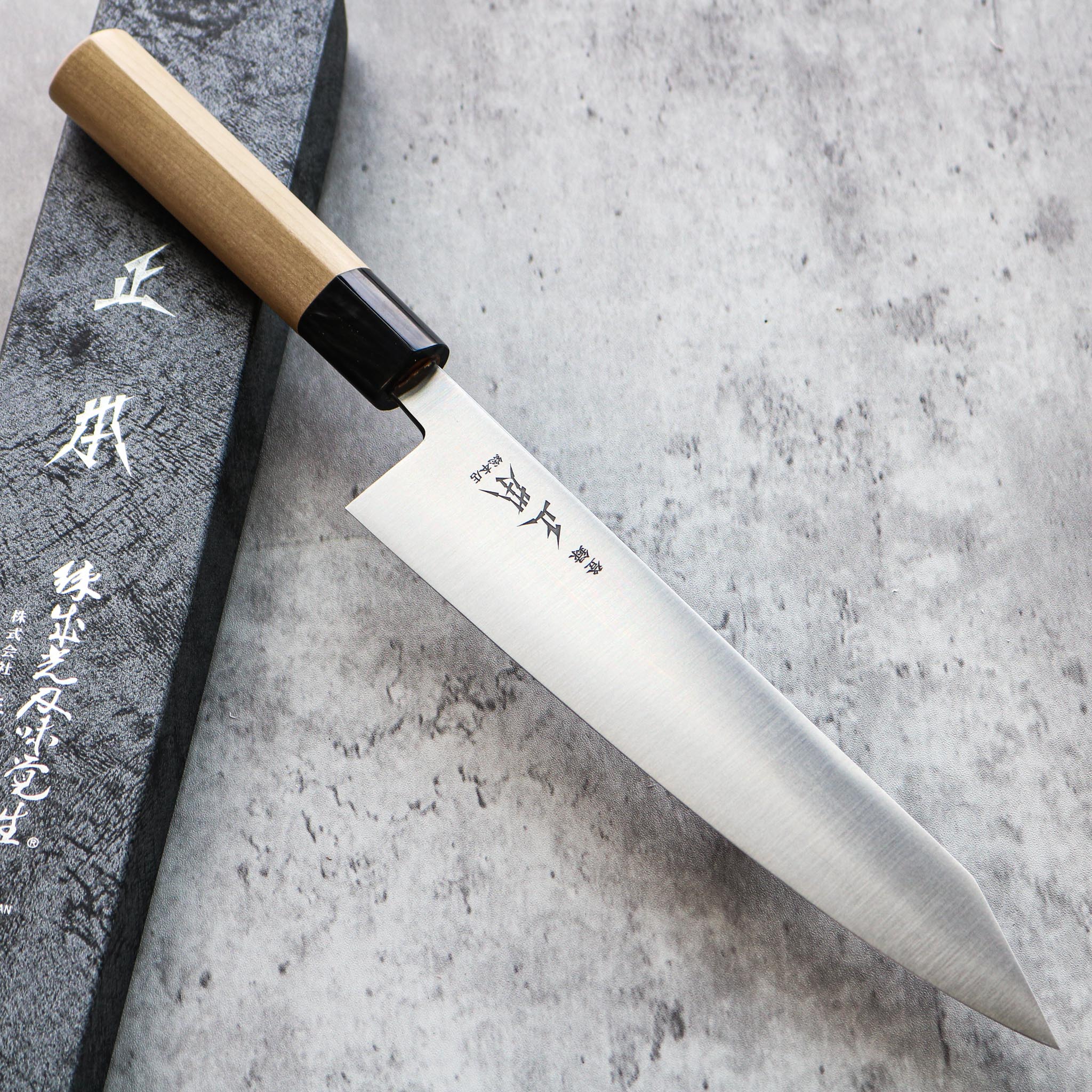
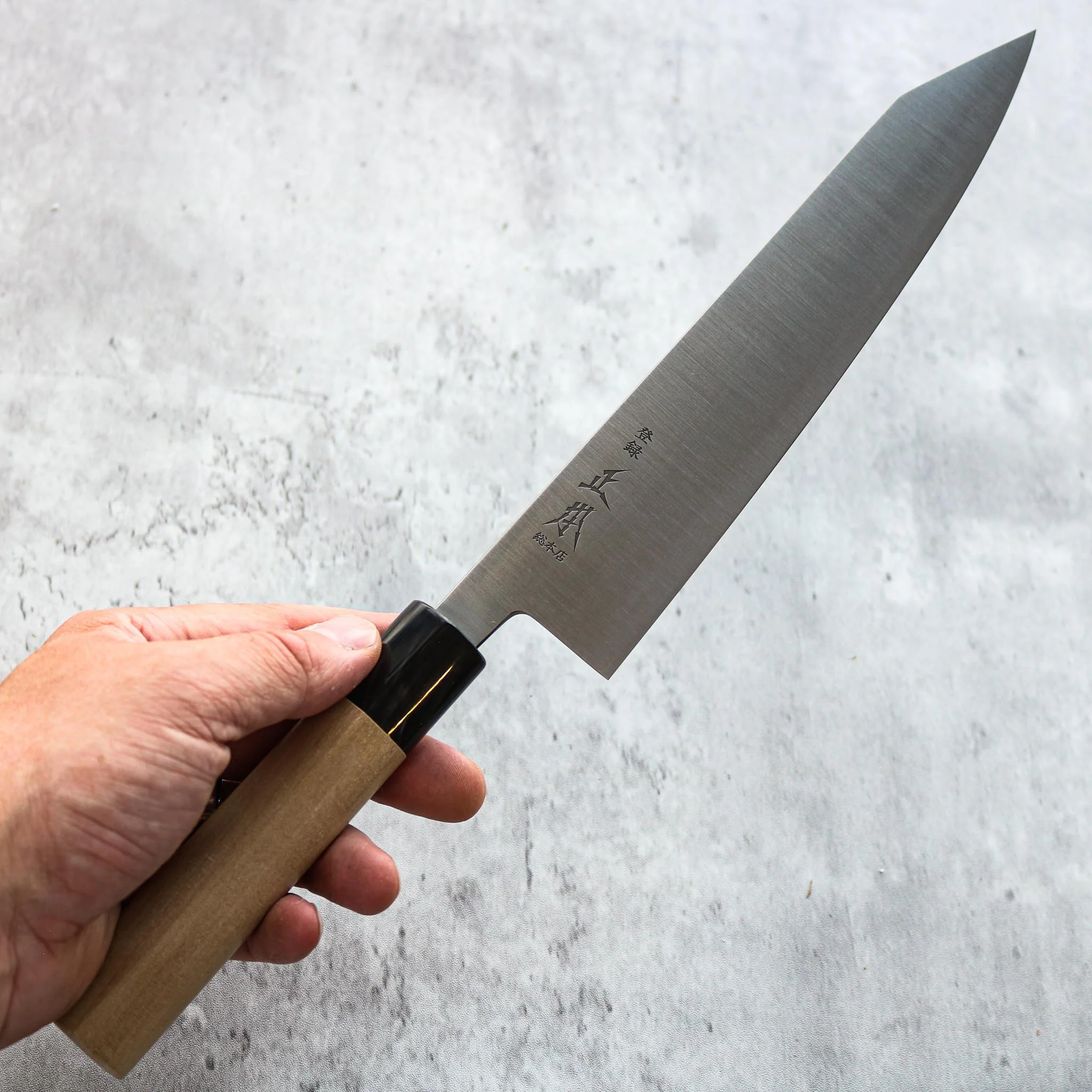
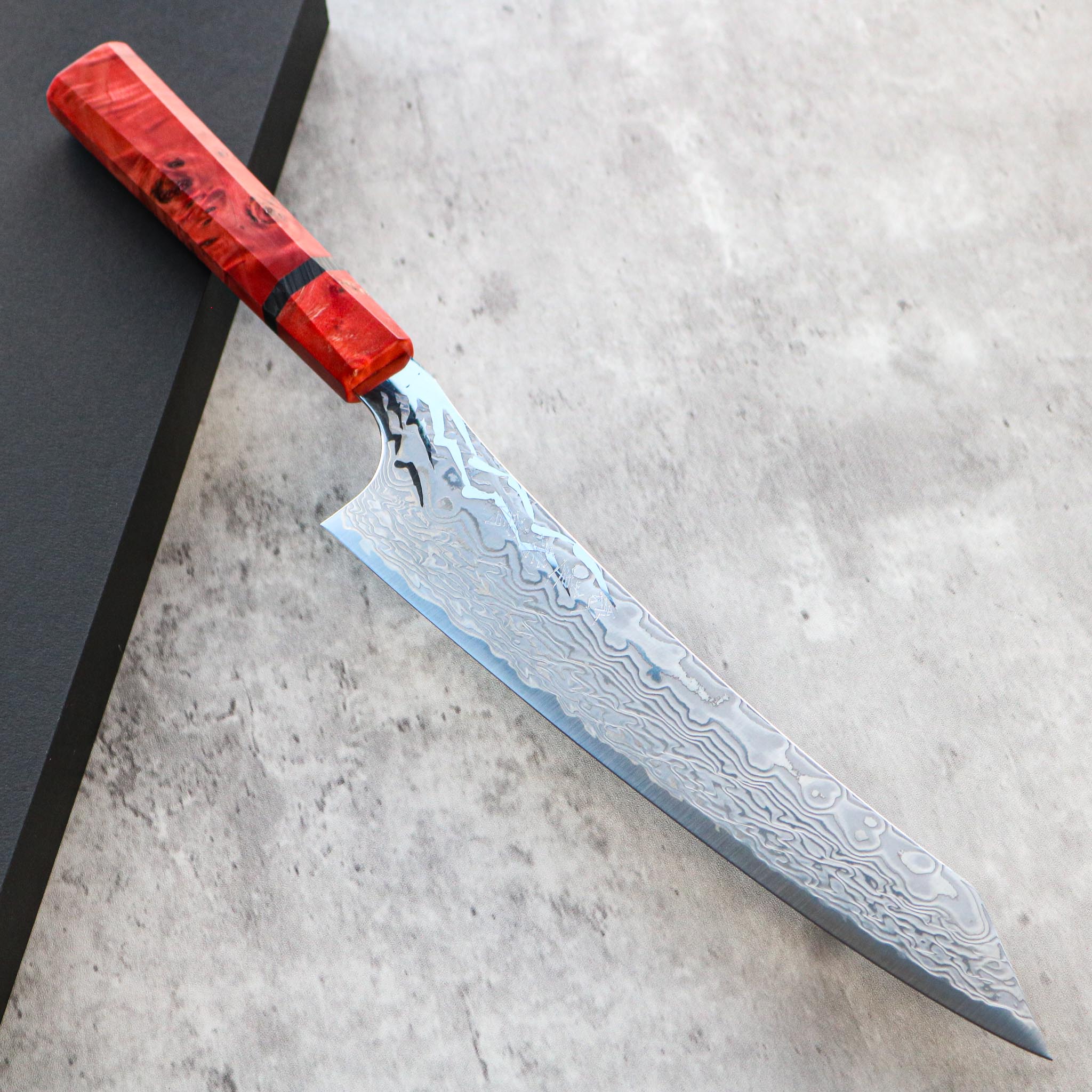
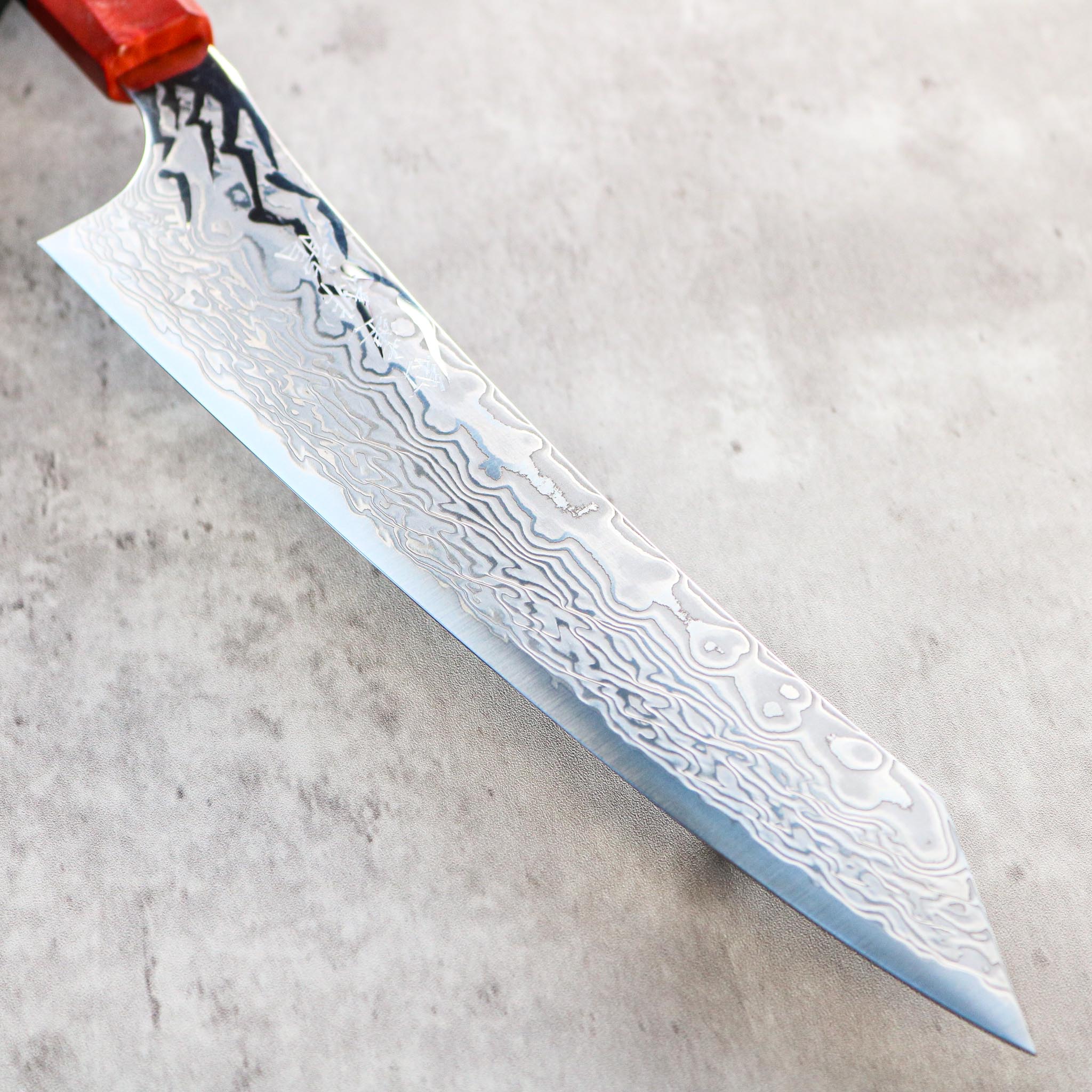
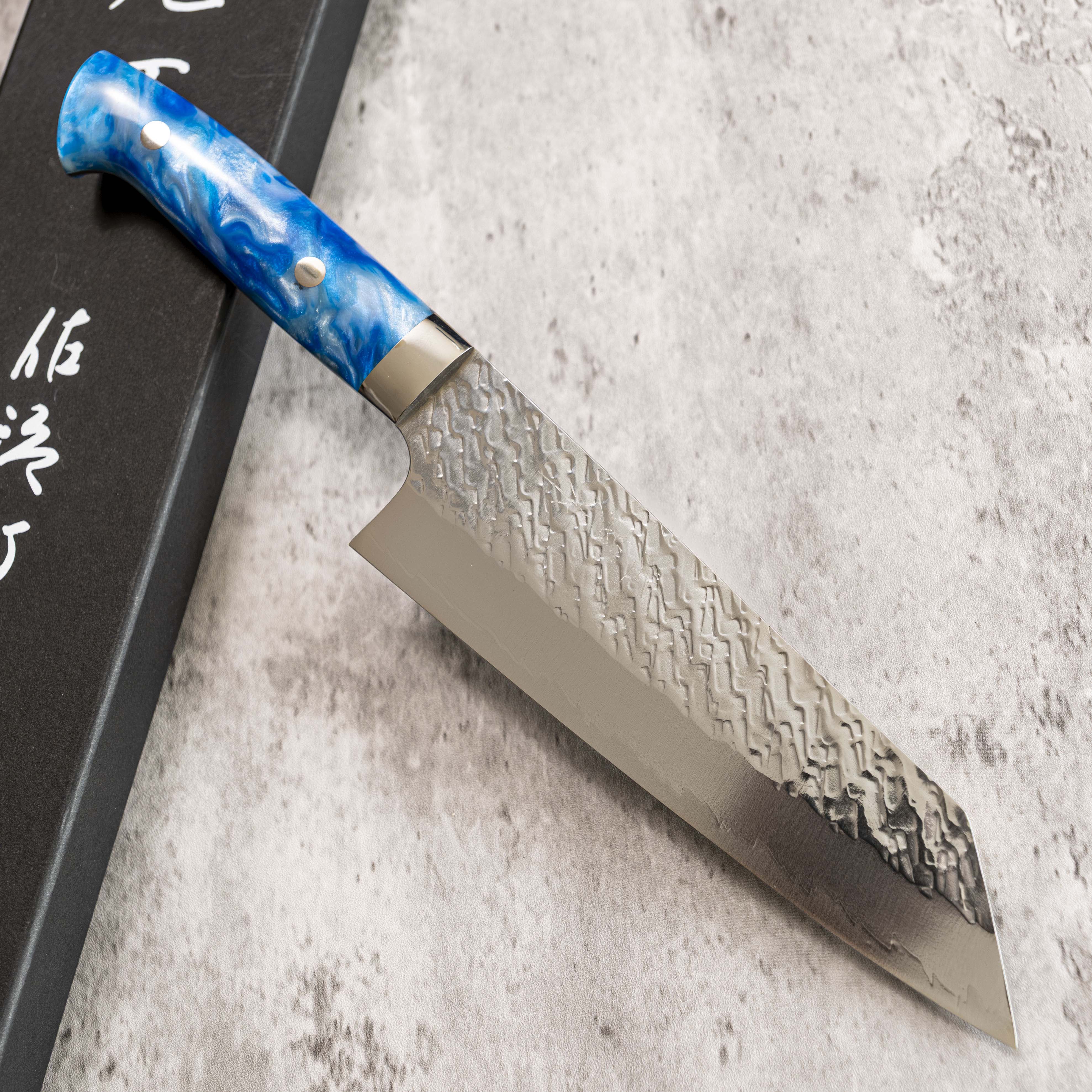
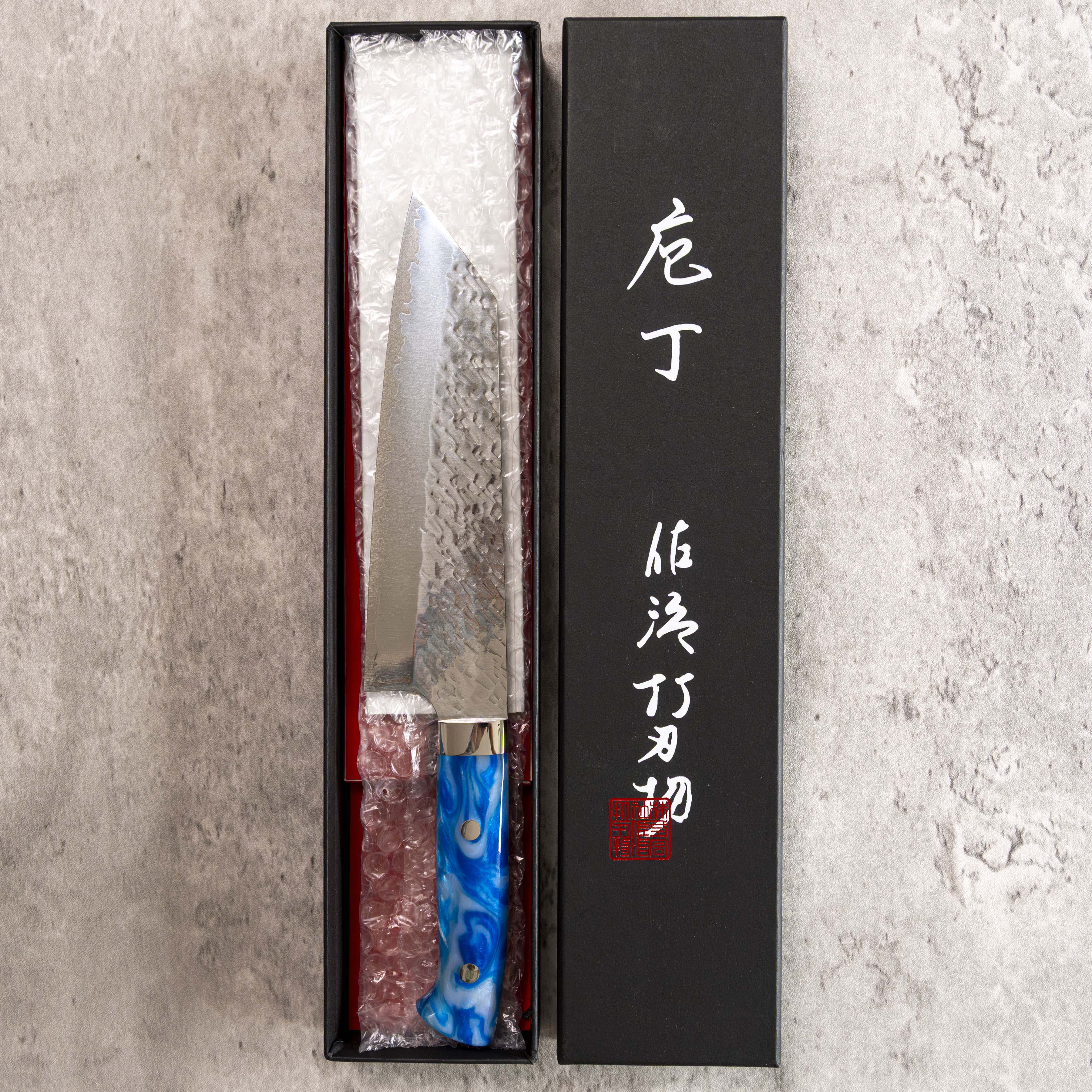
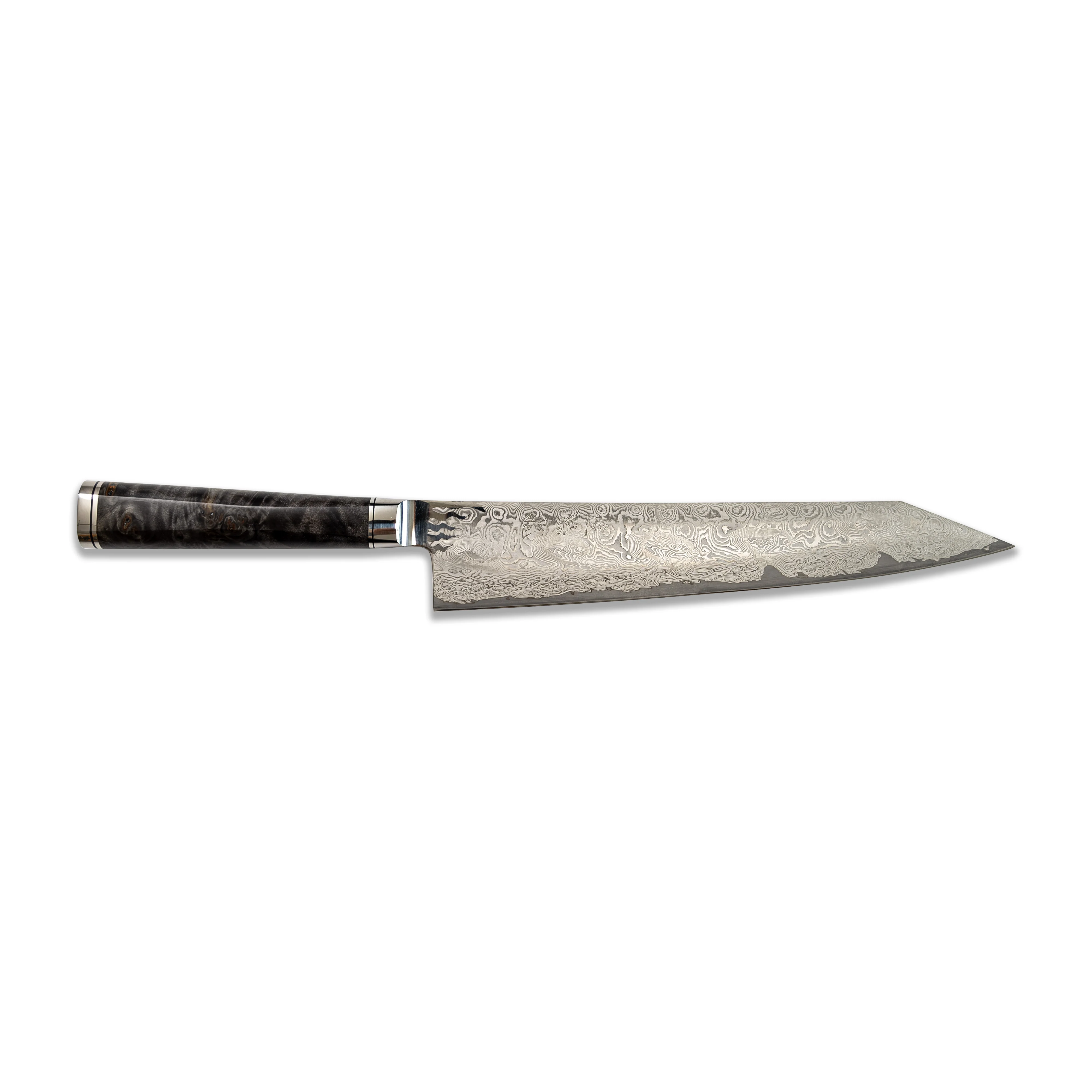
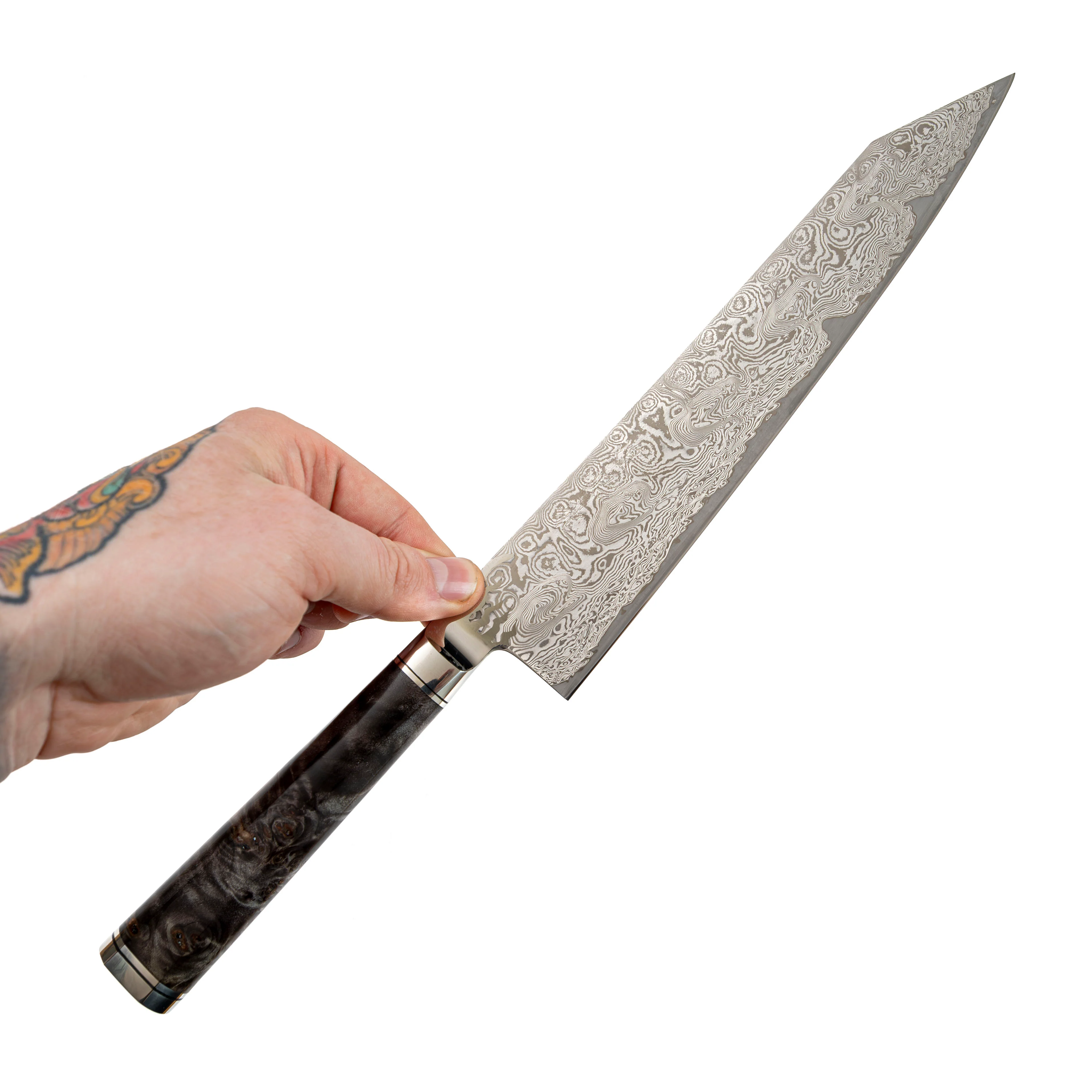
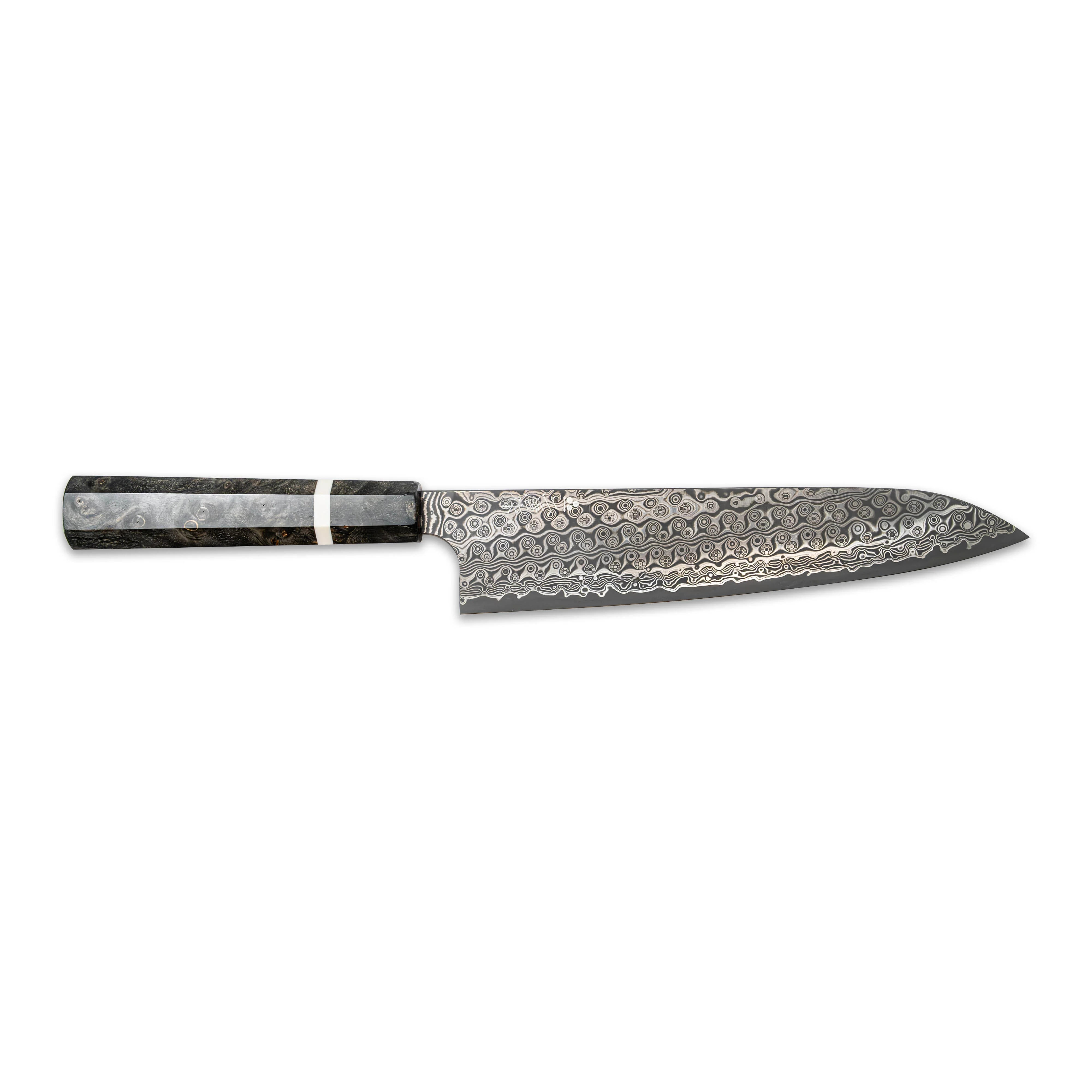
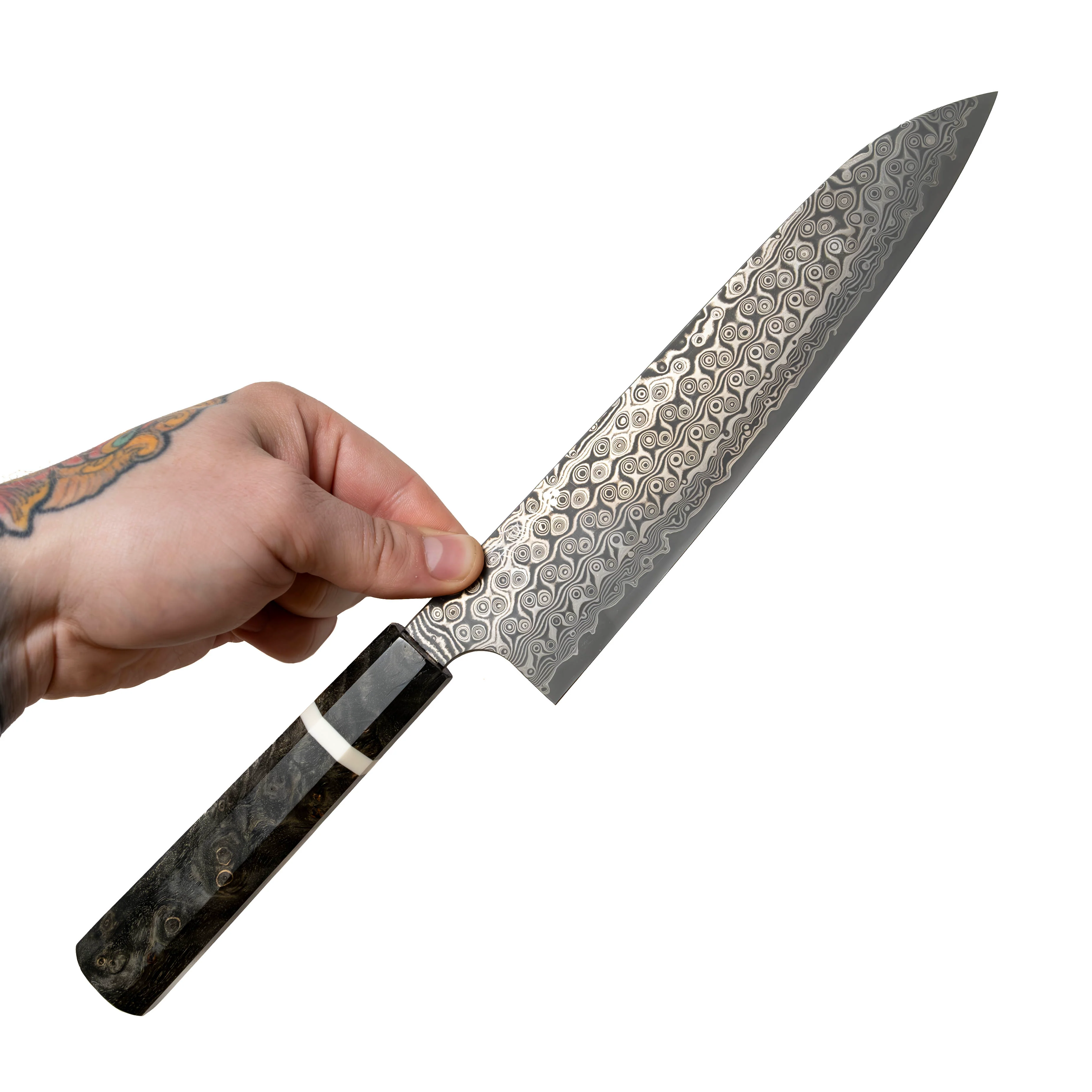
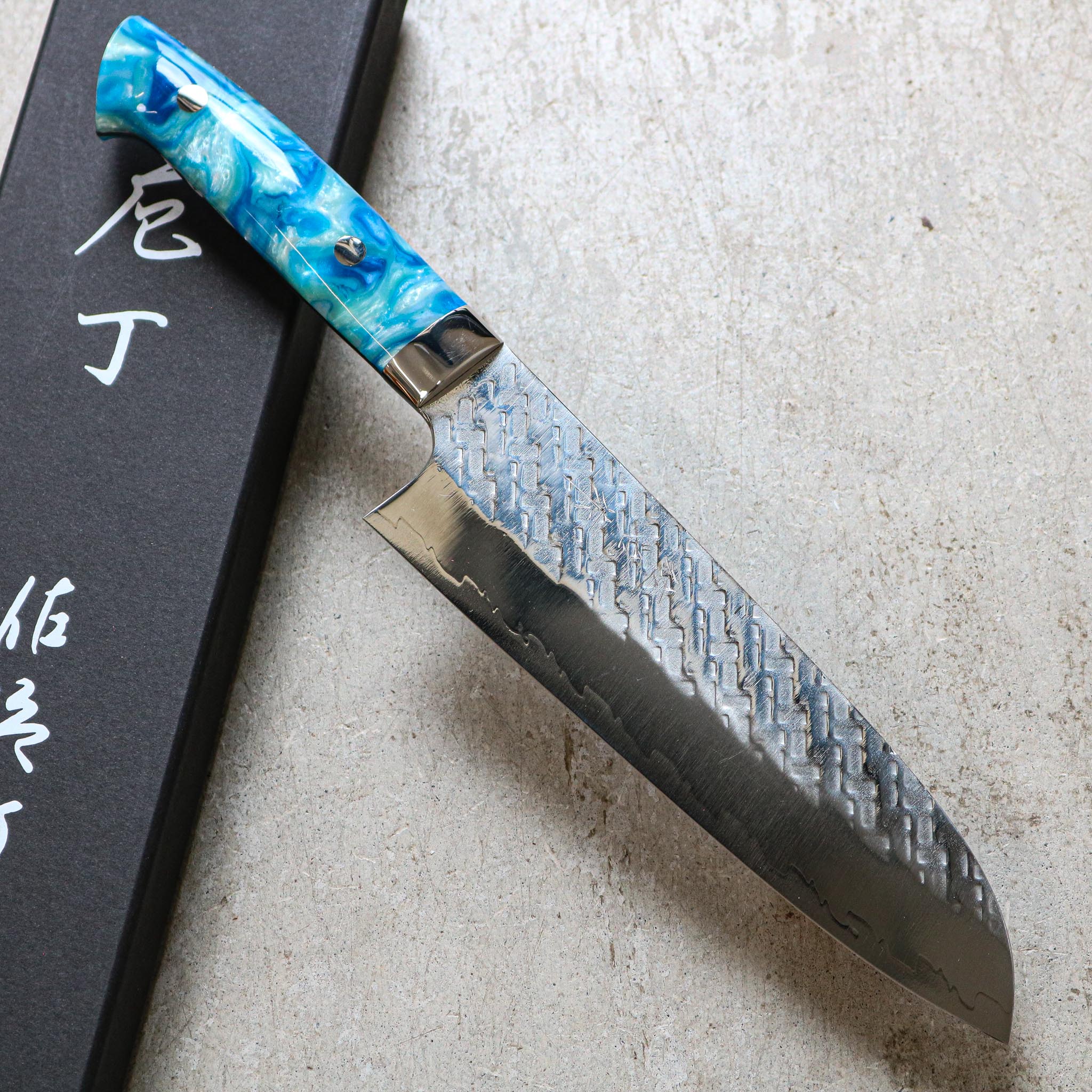
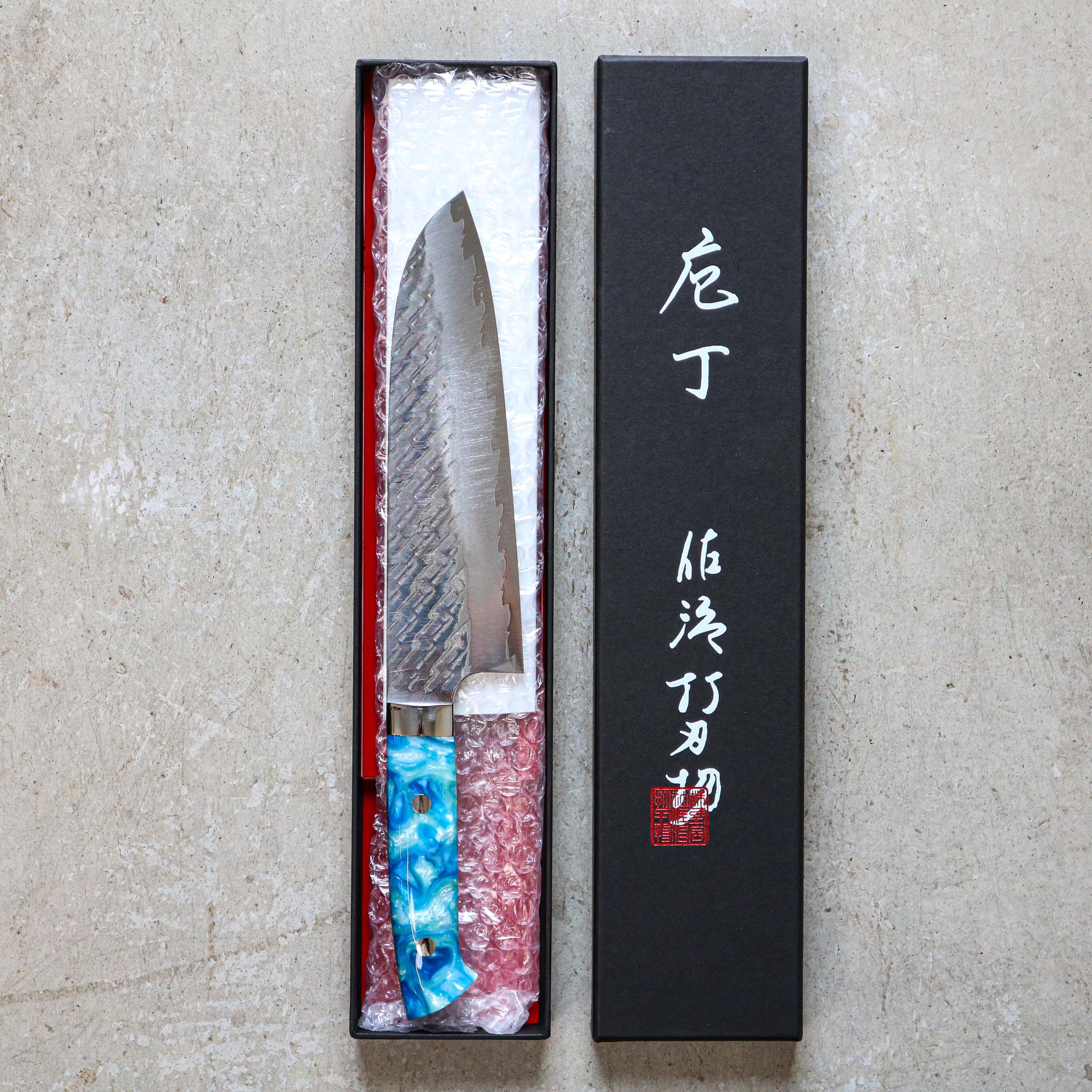
Takeshi Saji STRIX Santoku 180 mm
| Blade Length | 180 mm |
| Total Length | 315 mm |
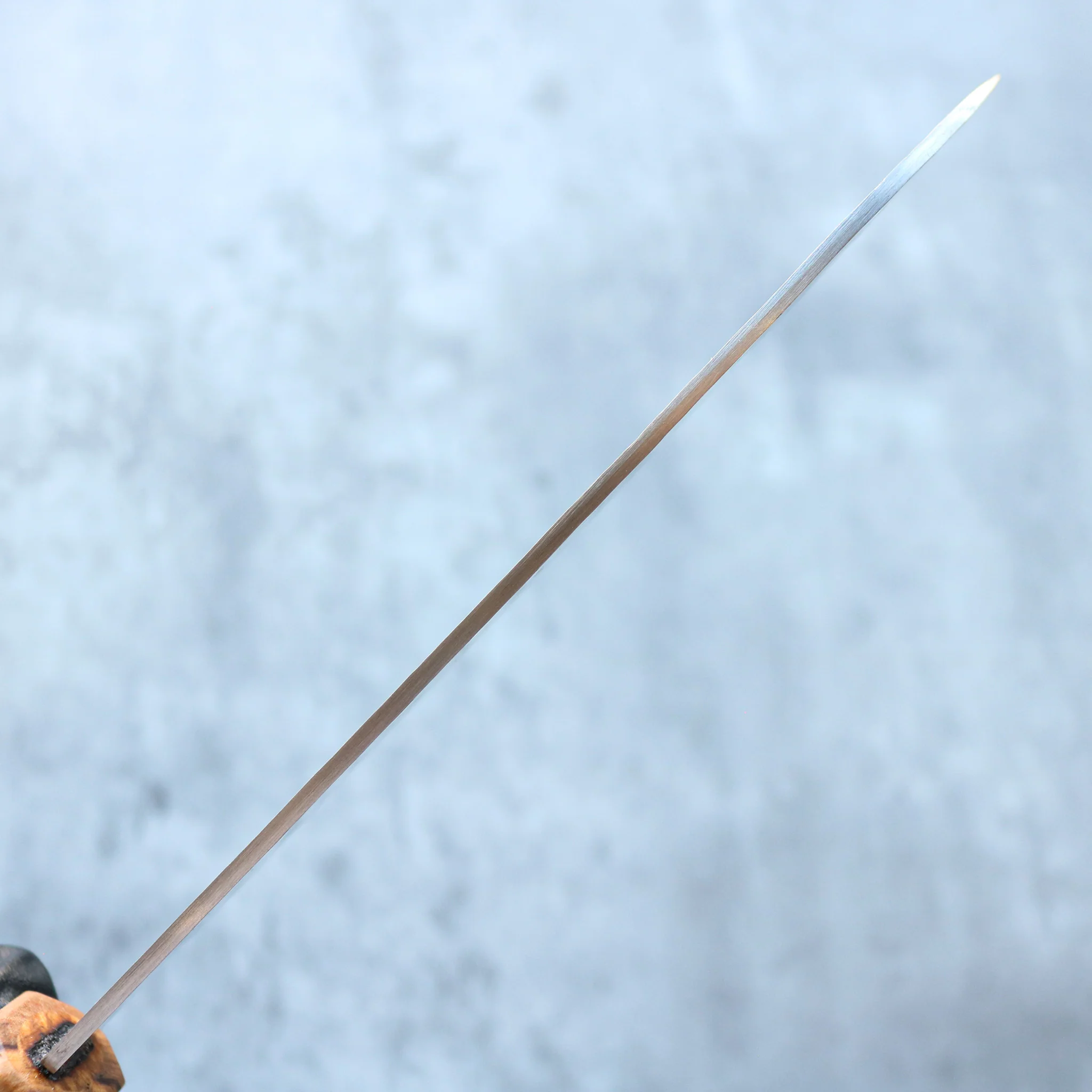
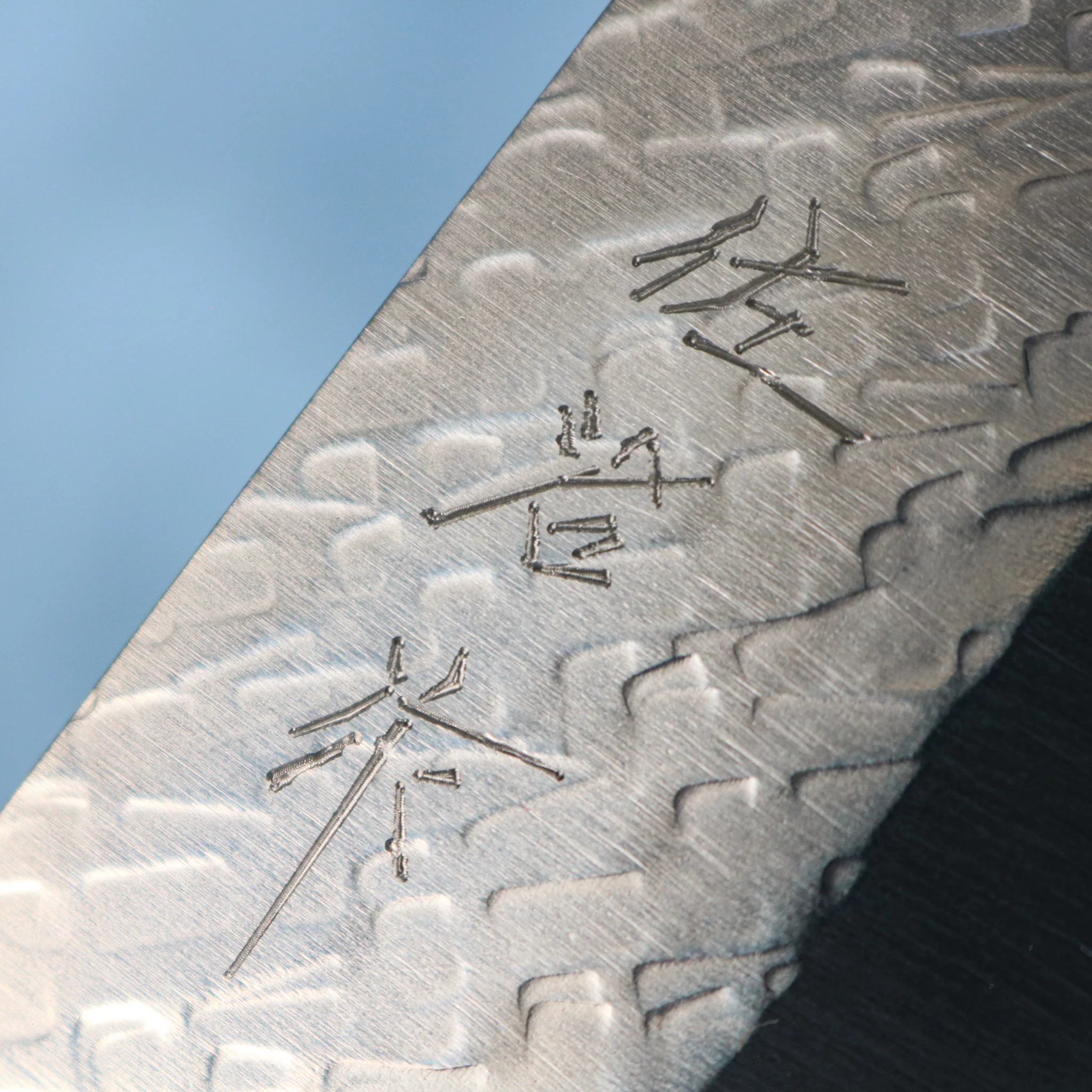
| Steel | STRIX (Stainless) |
| Handle |
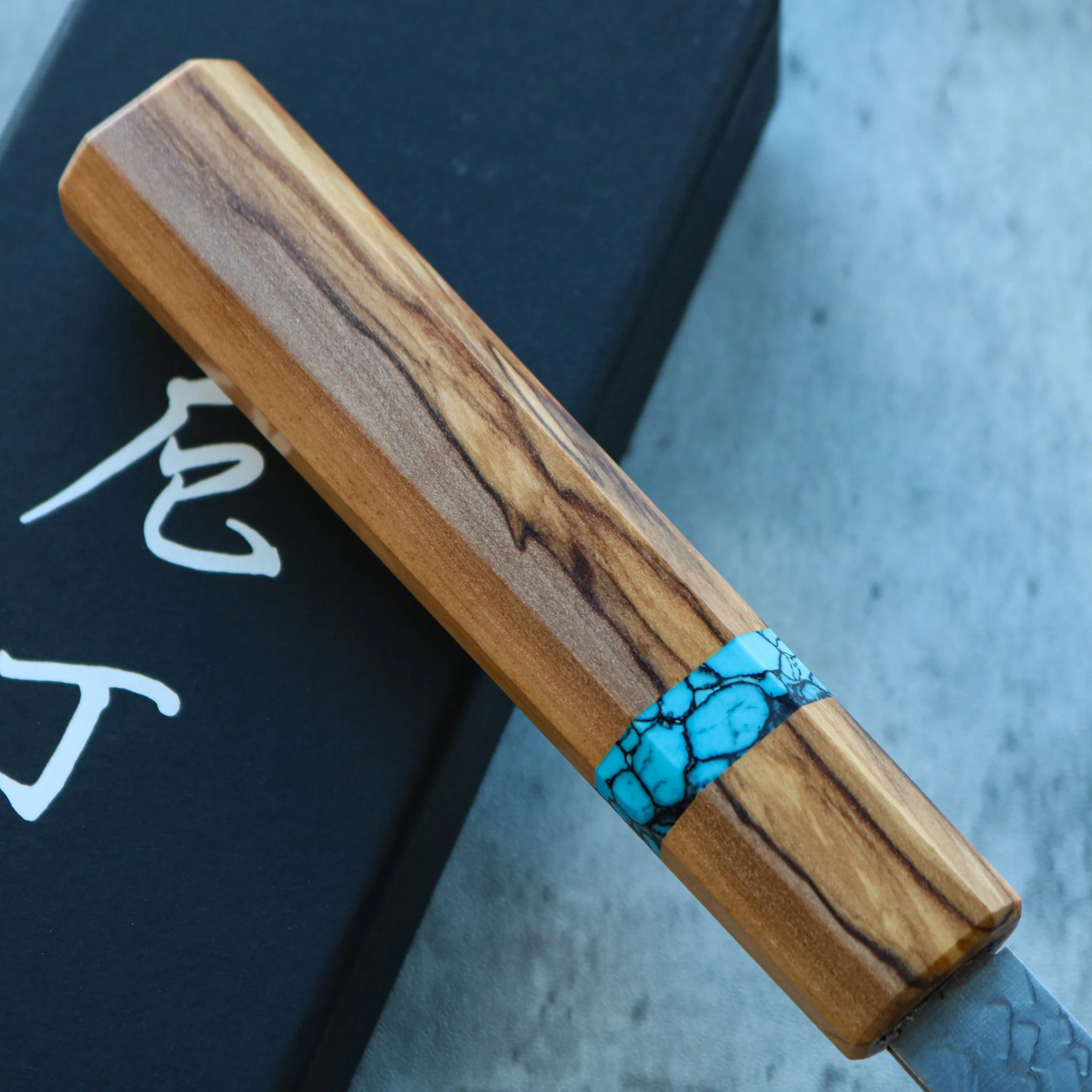
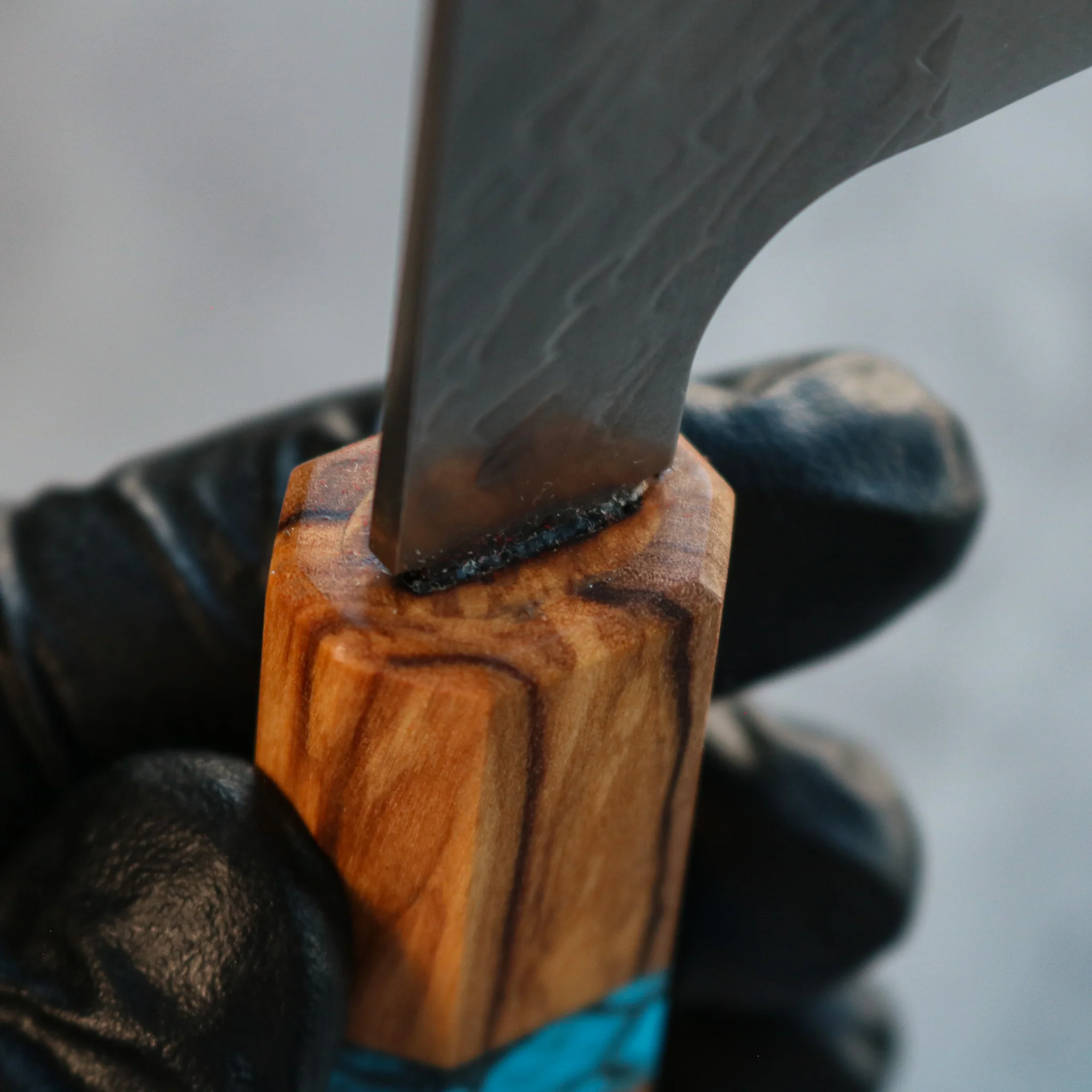
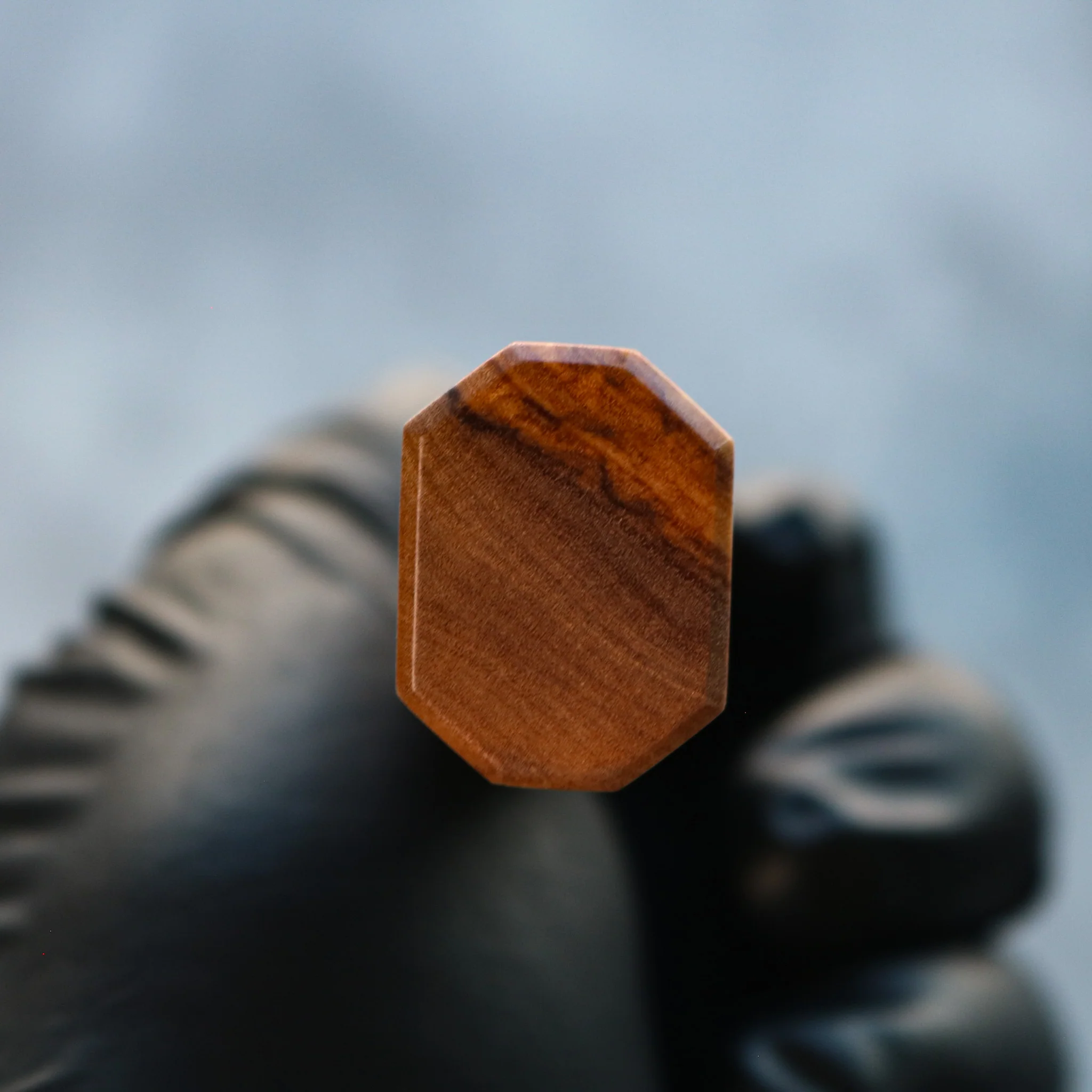
Olive/Turquoise
|
| Rockwell | 65 |
| Height Spine to heel | 50 mm |
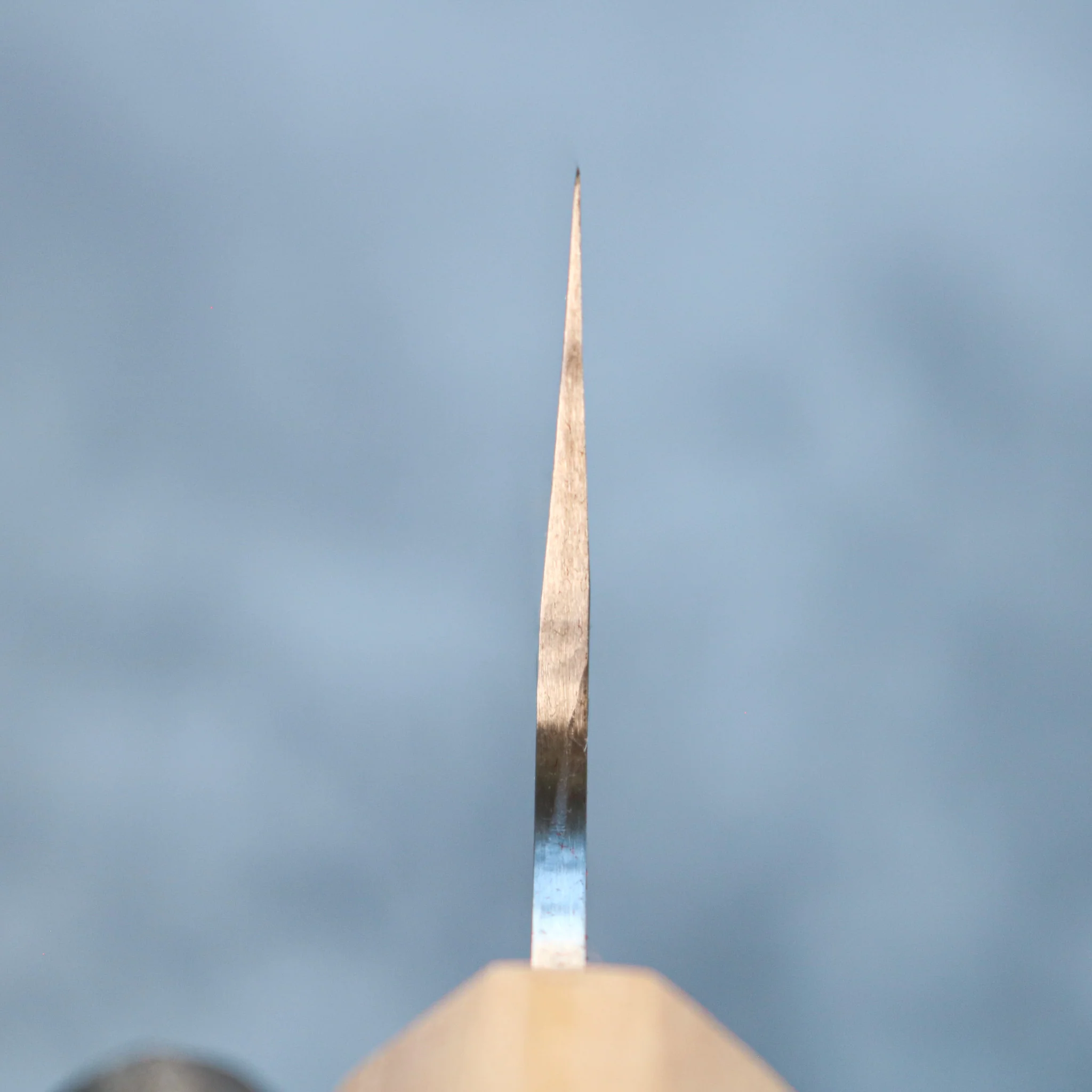
| Width at Spine | 2.4 mm |
| Weight | 153 g |
| Bevel | Double (50/50) |
The Blacksmith
Takeshi Saji is a master craftsman working out of the famed Takefu knife village, an co-op of incredible craftspeople renowned for it's kitchen knife production. In 1992 he was recognized by the Japanese government as a "Traditional Master Craftsman" and he was one of the founding members of the Takefu knife village. He hand forges each of his knives using the traditional methods passed down through the generations over the past 700 years.
Takefu Knife Village
The Takefu Knife Village is a cooperative workshop in the Echizen region of Japan. It is the home to a long list of blacksmiths that we work with and many young and upcoming apprentices learning the trade. The area has a 700 year long history of smithing with roots in agricultural tools turned cutlery powerhouse.
The Knife
The word "Santoku" translates to "three virtues" and refers to slicing, dicing, and chopping, or meat, fish, and vegetables, depending on who you ask. The name highlights the extreme versatility of the shape, which is why we recommend it most to home cooks. Santokus are typically in the 165 mm (6.5 inch) to 180 mm (8 inch) length range. They generally have a gentle curve that sweeps up toward the tip, so they can easily be used with an up and down chopping motion or a rocking motion.
Knife Care (Stainless Steel)
- Although this knife is made from stainless steel we do still encourage our customers to keep their knives as dry and clean as possible.
- NO DISHWASHER - the high heat will ruin the wooden handle.
- Wash and dry by hand using regular dish soap and warm water using a none abrasive sponge or cloth.
- Ensure the knife is dry before being put away for storage and ensure the edge of the knife is protected to avoid any unnecessary dulling.
- Avoid Bones, Frozen foods, nuts and hard candies or anything other than fruits, vegetables and proteins.
- Simply Wipe the knife with a damp cloth immediately after use to keep it from rusting or discouloring.
- Never put your knife in the Dishwasher. The extreme heat will ruin the wooden handle.
- Highly acidic ingredients (Onions, Tomatoes, Citrus) Will cause rust and oxidation to happen faster, thus the user must ensure the knife is wiped clean immediately after working with such an ingredient.
- Should any rust form it can be removed using a rust eraser or a mixture of Baking soda and water to simply scrub it clean.
Product Information
Product Information
Shipping & Returns
Shipping & Returns
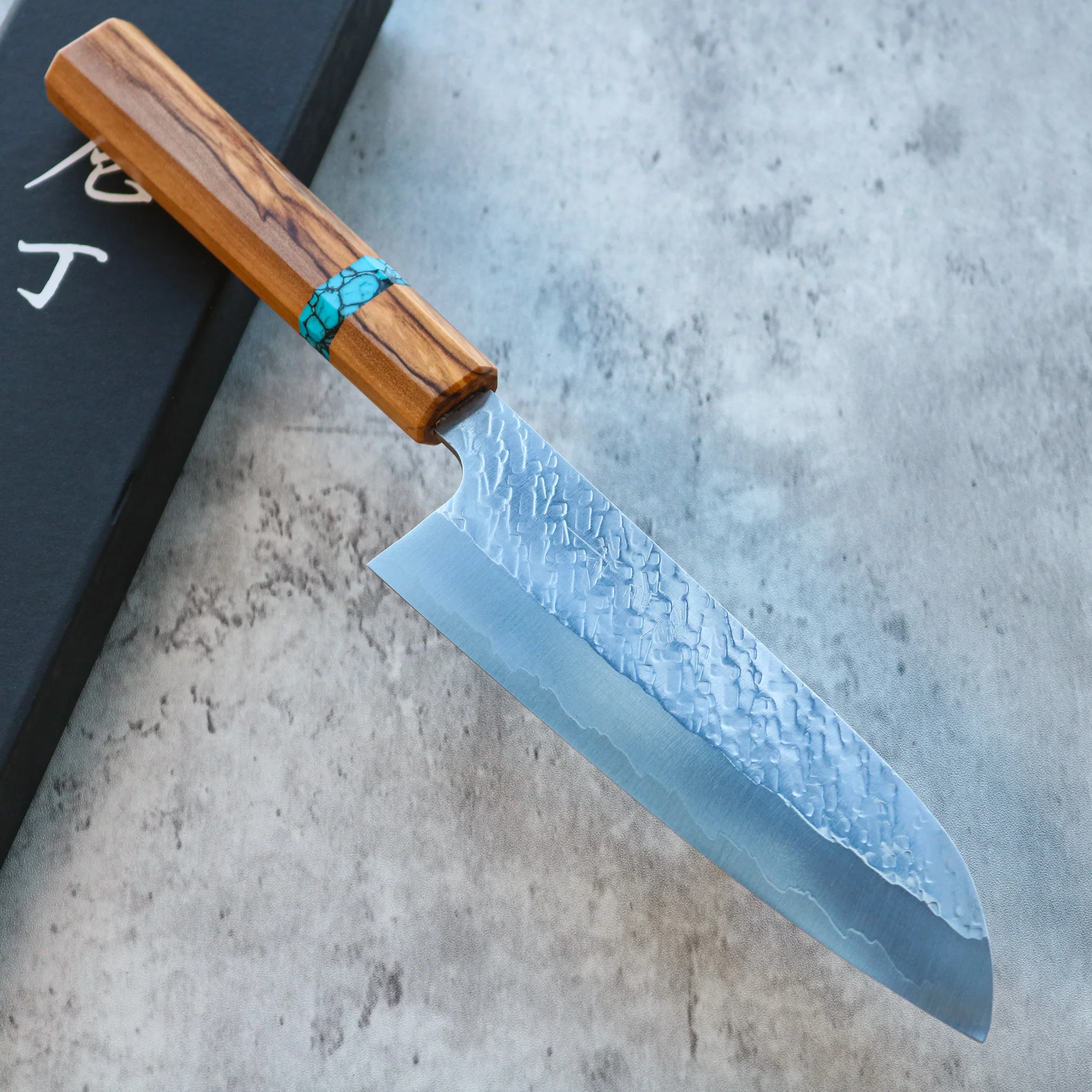
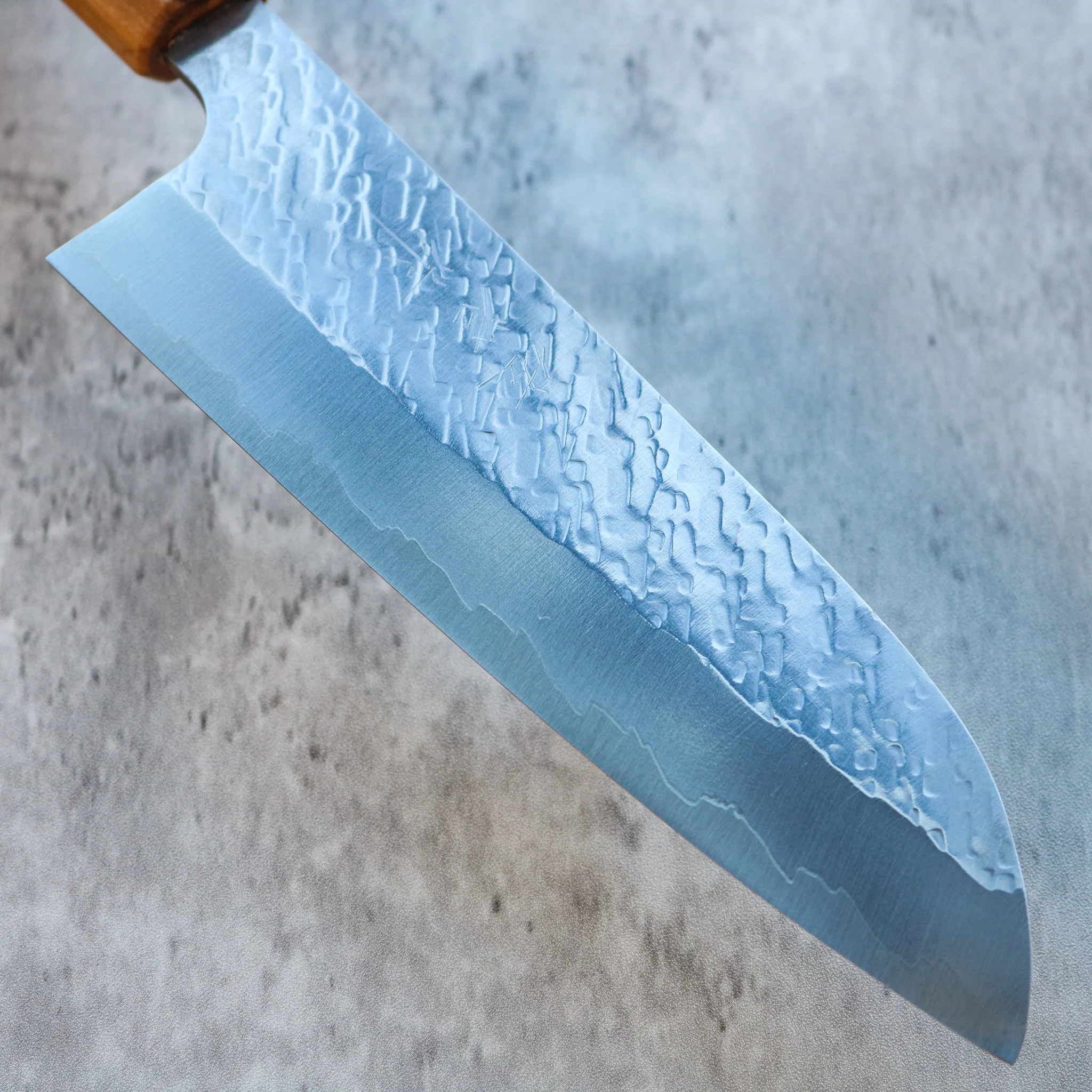
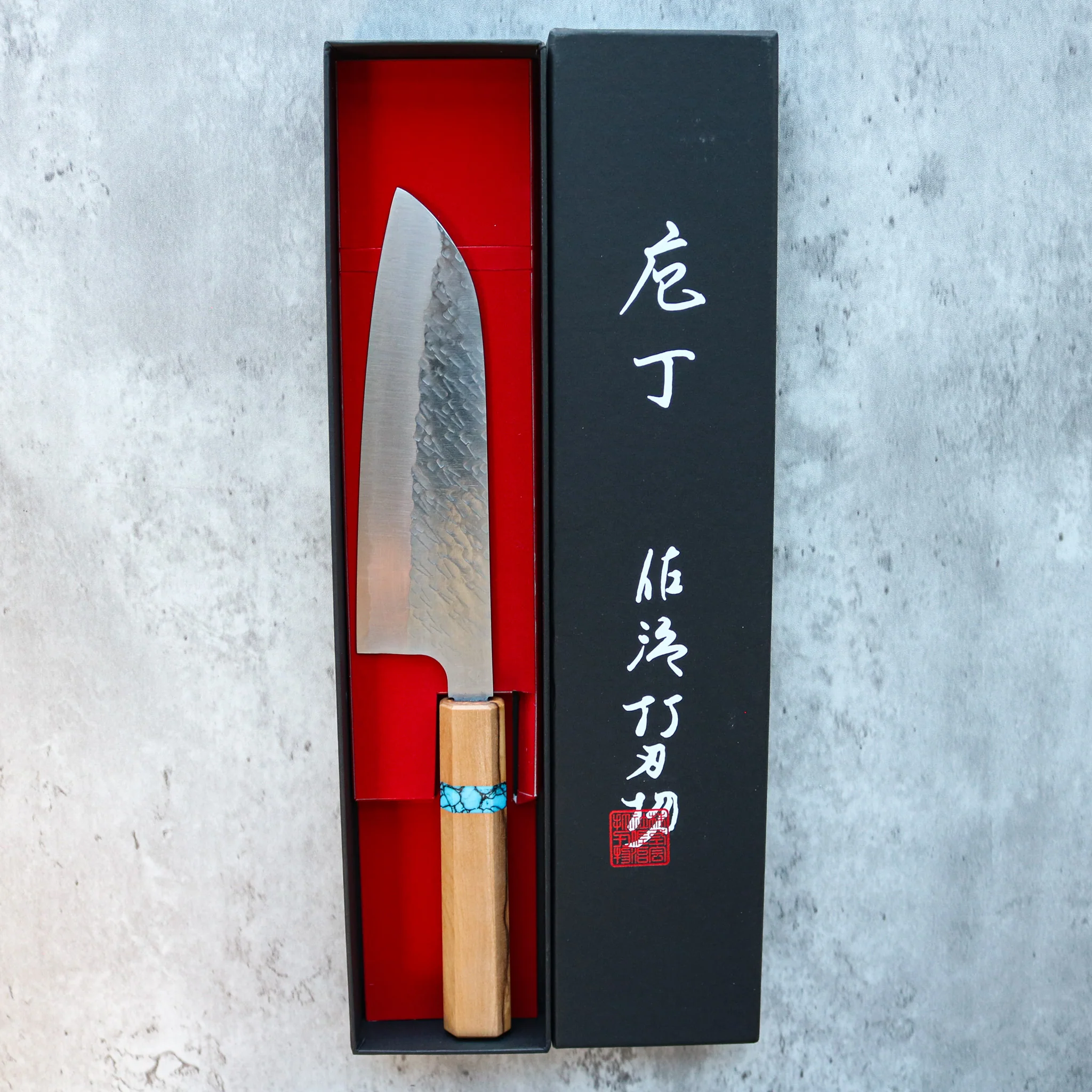
Takeshi Saji STRIX Santoku 180 mm
Takeshi Saji STRIX Santoku 180 mm
| Blade Length | 180 mm |
| Total Length | 315 mm |
| Steel | STRIX (Stainless) |
| Handle |
Olive/Turquoise
|
| Rockwell | 65 |
| Height Spine to heel | 50 mm |
| Width at Spine | 2.4 mm |
| Weight | 153 g |
| Bevel | Double (50/50) |
The Blacksmith
Takeshi Saji is a master craftsman working out of the famed Takefu knife village, an co-op of incredible craftspeople renowned for it's kitchen knife production. In 1992 he was recognized by the Japanese government as a "Traditional Master Craftsman" and he was one of the founding members of the Takefu knife village. He hand forges each of his knives using the traditional methods passed down through the generations over the past 700 years.
Takefu Knife Village
The Takefu Knife Village is a cooperative workshop in the Echizen region of Japan. It is the home to a long list of blacksmiths that we work with and many young and upcoming apprentices learning the trade. The area has a 700 year long history of smithing with roots in agricultural tools turned cutlery powerhouse.
The Knife
The word "Santoku" translates to "three virtues" and refers to slicing, dicing, and chopping, or meat, fish, and vegetables, depending on who you ask. The name highlights the extreme versatility of the shape, which is why we recommend it most to home cooks. Santokus are typically in the 165 mm (6.5 inch) to 180 mm (8 inch) length range. They generally have a gentle curve that sweeps up toward the tip, so they can easily be used with an up and down chopping motion or a rocking motion.
Knife Care (Stainless Steel)
- Although this knife is made from stainless steel we do still encourage our customers to keep their knives as dry and clean as possible.
- NO DISHWASHER - the high heat will ruin the wooden handle.
- Wash and dry by hand using regular dish soap and warm water using a none abrasive sponge or cloth.
- Ensure the knife is dry before being put away for storage and ensure the edge of the knife is protected to avoid any unnecessary dulling.
- Avoid Bones, Frozen foods, nuts and hard candies or anything other than fruits, vegetables and proteins.
- Simply Wipe the knife with a damp cloth immediately after use to keep it from rusting or discouloring.
- Never put your knife in the Dishwasher. The extreme heat will ruin the wooden handle.
- Highly acidic ingredients (Onions, Tomatoes, Citrus) Will cause rust and oxidation to happen faster, thus the user must ensure the knife is wiped clean immediately after working with such an ingredient.
- Should any rust form it can be removed using a rust eraser or a mixture of Baking soda and water to simply scrub it clean.
Original: $282.89
-65%$282.89
$99.01Product Information
Product Information
Shipping & Returns
Shipping & Returns
Description
| Blade Length | 180 mm |
| Total Length | 315 mm |
| Steel | STRIX (Stainless) |
| Handle |
Olive/Turquoise
|
| Rockwell | 65 |
| Height Spine to heel | 50 mm |
| Width at Spine | 2.4 mm |
| Weight | 153 g |
| Bevel | Double (50/50) |
The Blacksmith
Takeshi Saji is a master craftsman working out of the famed Takefu knife village, an co-op of incredible craftspeople renowned for it's kitchen knife production. In 1992 he was recognized by the Japanese government as a "Traditional Master Craftsman" and he was one of the founding members of the Takefu knife village. He hand forges each of his knives using the traditional methods passed down through the generations over the past 700 years.
Takefu Knife Village
The Takefu Knife Village is a cooperative workshop in the Echizen region of Japan. It is the home to a long list of blacksmiths that we work with and many young and upcoming apprentices learning the trade. The area has a 700 year long history of smithing with roots in agricultural tools turned cutlery powerhouse.
The Knife
The word "Santoku" translates to "three virtues" and refers to slicing, dicing, and chopping, or meat, fish, and vegetables, depending on who you ask. The name highlights the extreme versatility of the shape, which is why we recommend it most to home cooks. Santokus are typically in the 165 mm (6.5 inch) to 180 mm (8 inch) length range. They generally have a gentle curve that sweeps up toward the tip, so they can easily be used with an up and down chopping motion or a rocking motion.
Knife Care (Stainless Steel)
- Although this knife is made from stainless steel we do still encourage our customers to keep their knives as dry and clean as possible.
- NO DISHWASHER - the high heat will ruin the wooden handle.
- Wash and dry by hand using regular dish soap and warm water using a none abrasive sponge or cloth.
- Ensure the knife is dry before being put away for storage and ensure the edge of the knife is protected to avoid any unnecessary dulling.
- Avoid Bones, Frozen foods, nuts and hard candies or anything other than fruits, vegetables and proteins.
- Simply Wipe the knife with a damp cloth immediately after use to keep it from rusting or discouloring.
- Never put your knife in the Dishwasher. The extreme heat will ruin the wooden handle.
- Highly acidic ingredients (Onions, Tomatoes, Citrus) Will cause rust and oxidation to happen faster, thus the user must ensure the knife is wiped clean immediately after working with such an ingredient.
- Should any rust form it can be removed using a rust eraser or a mixture of Baking soda and water to simply scrub it clean.