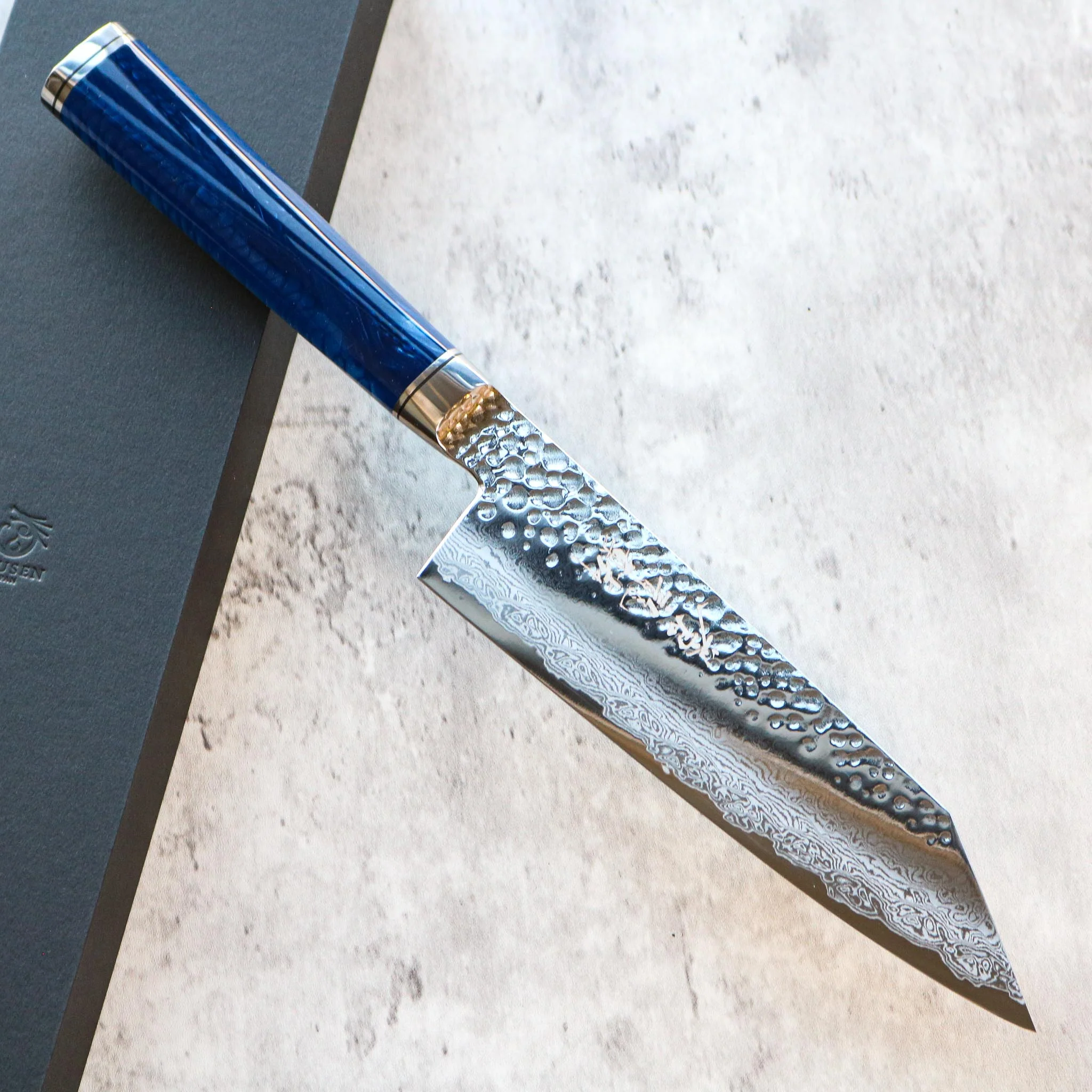
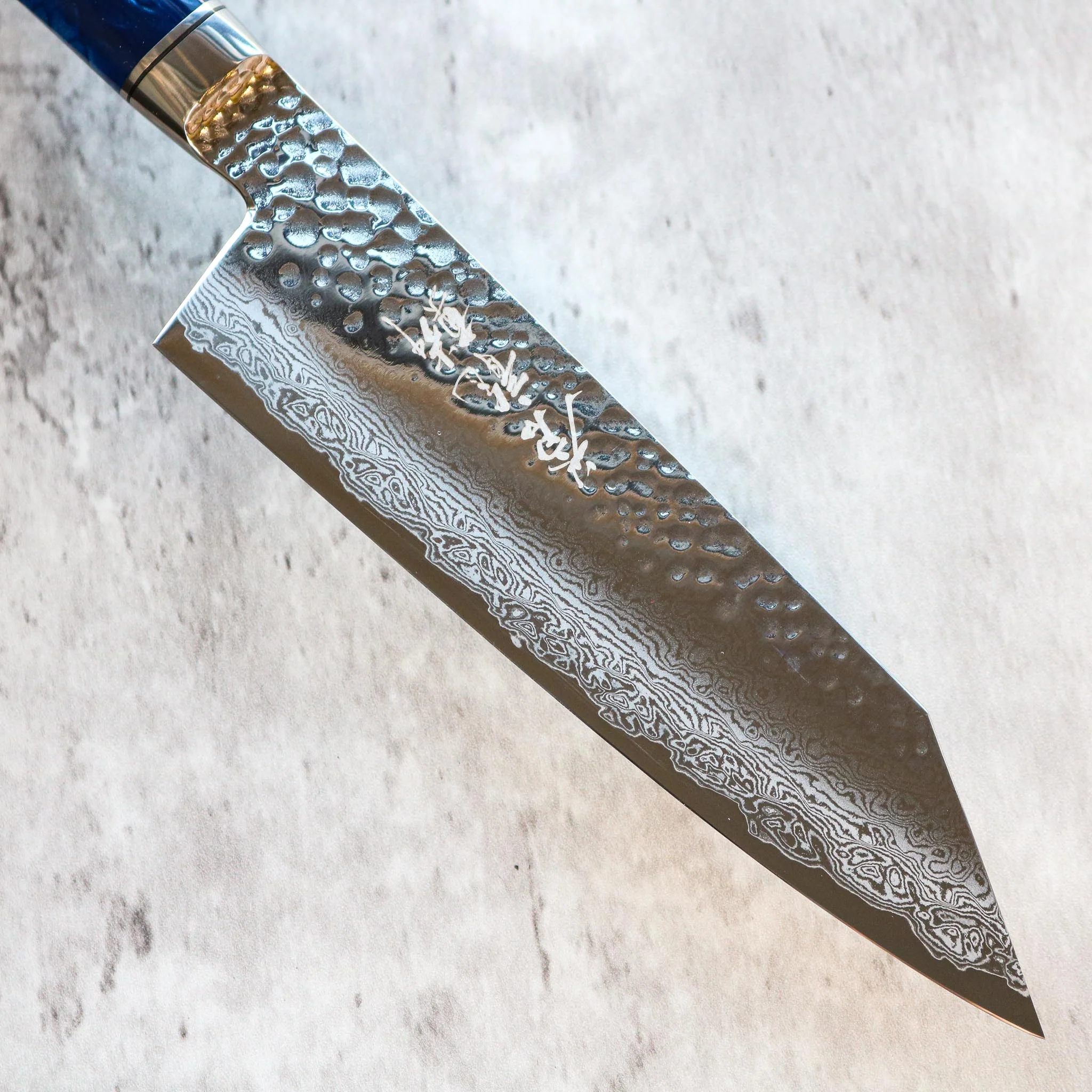
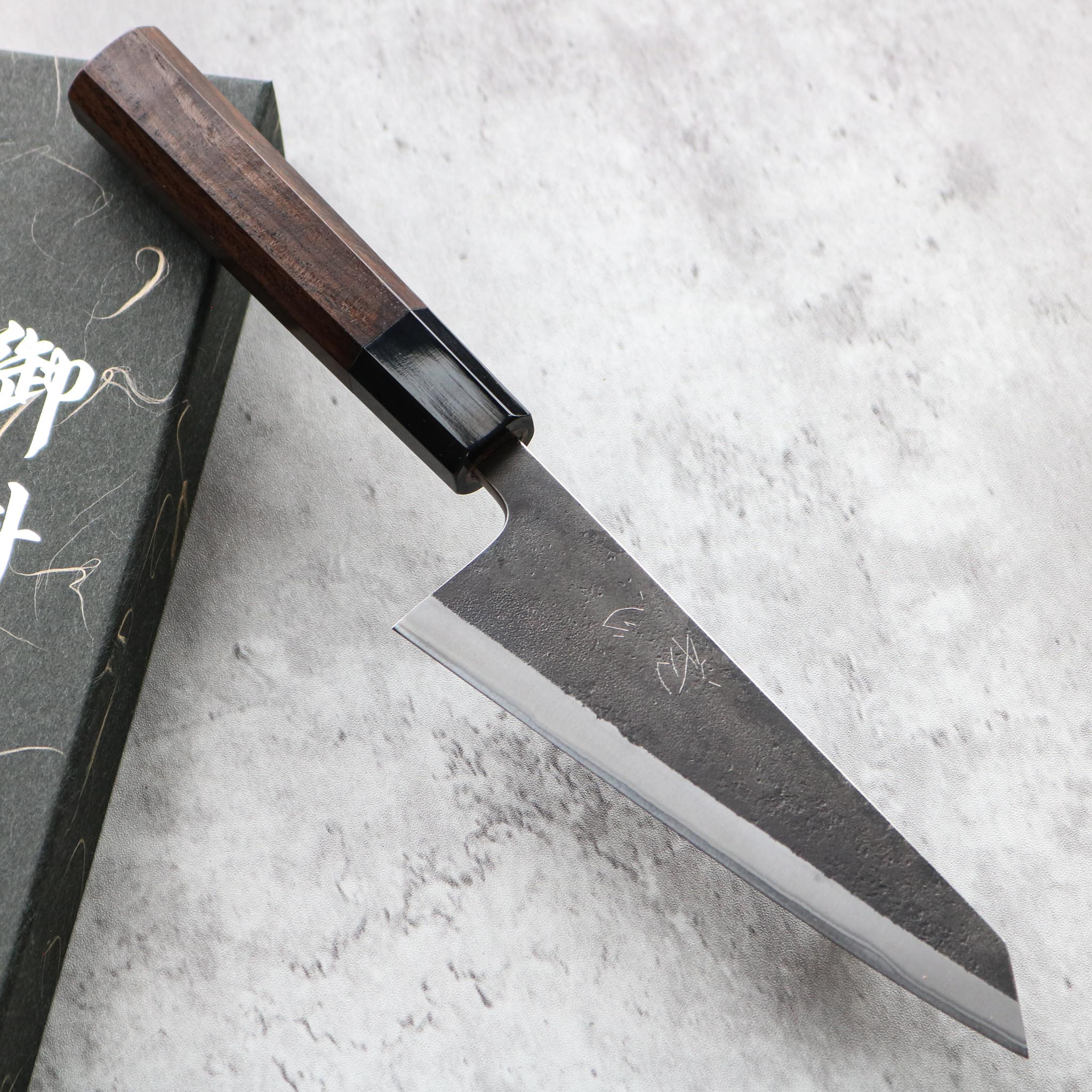
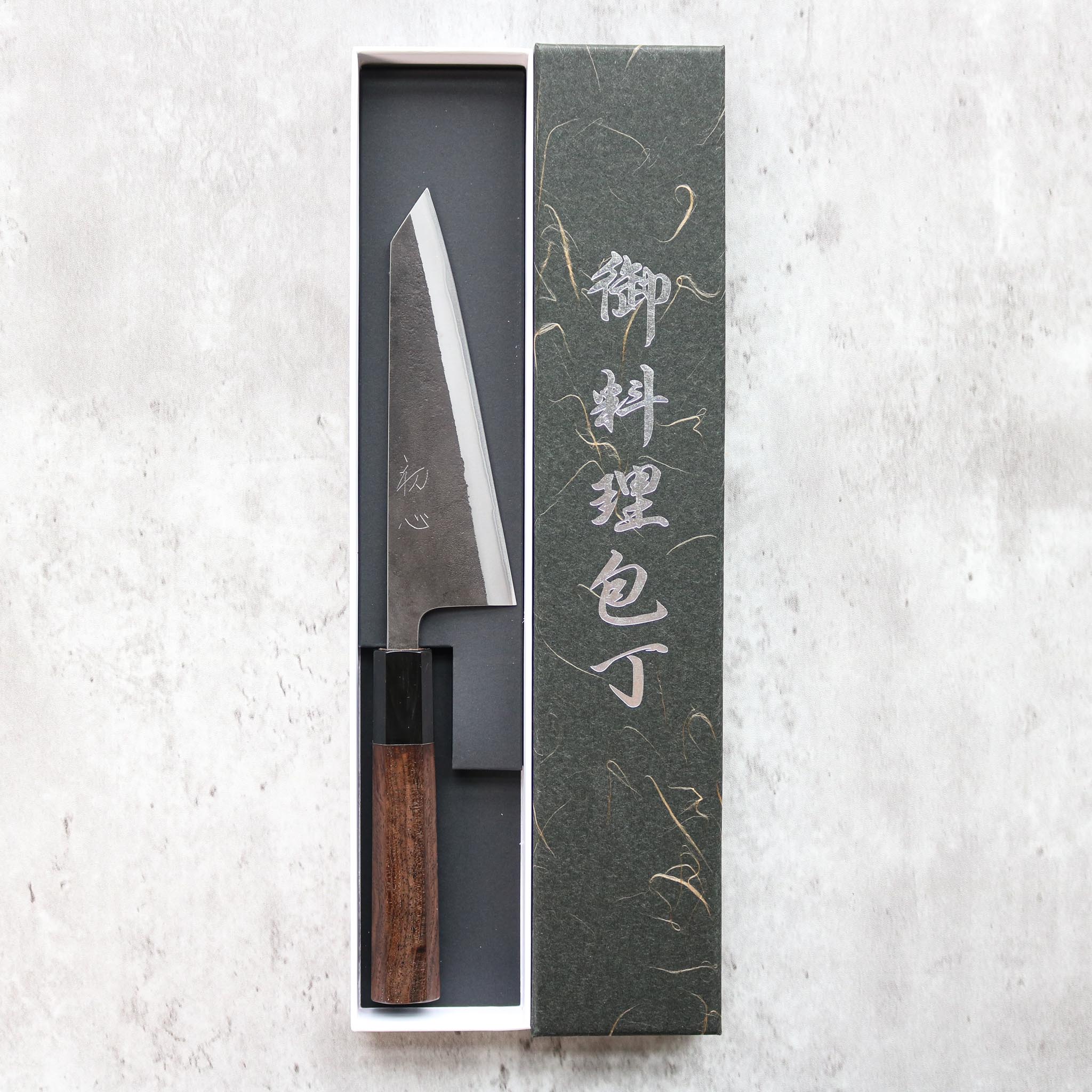
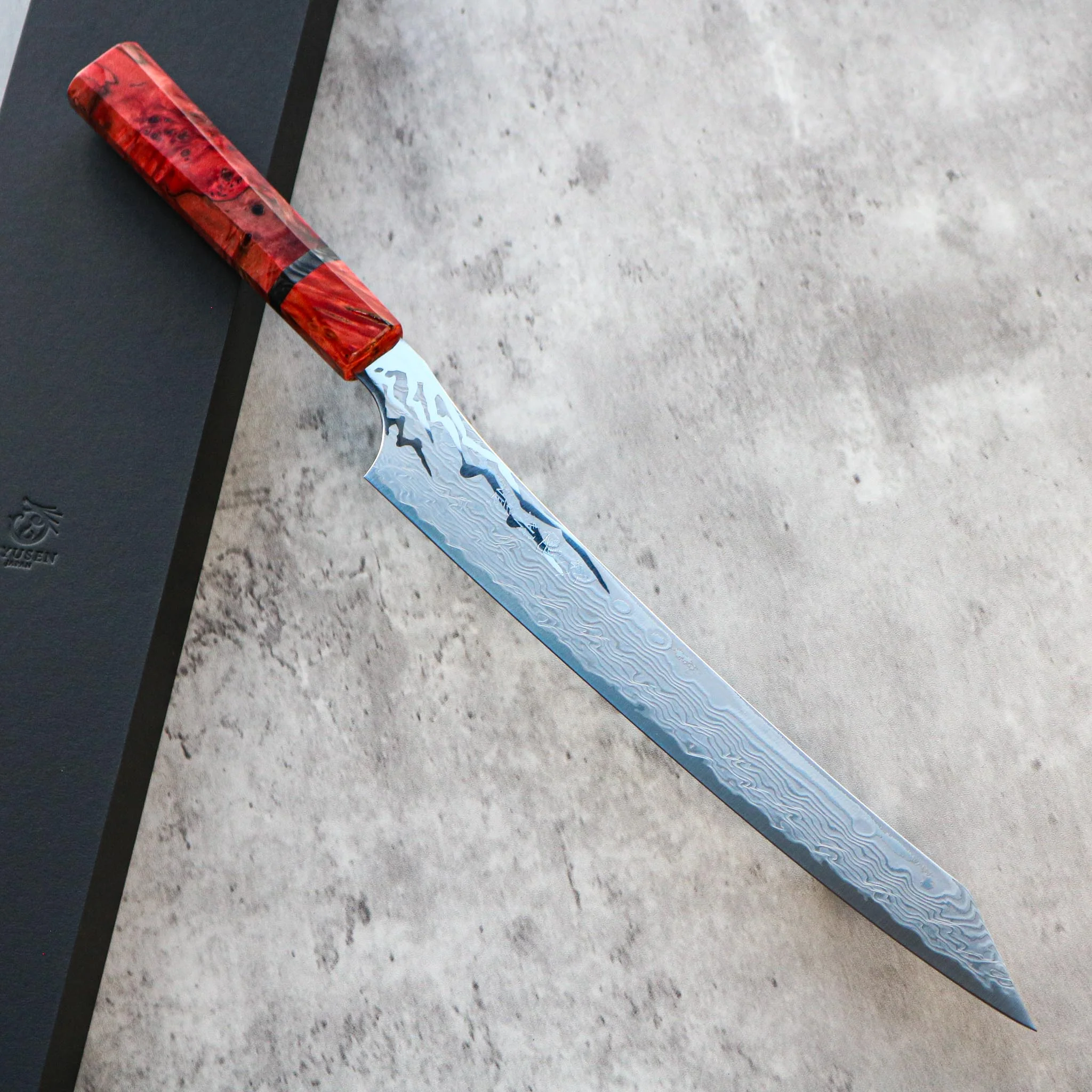
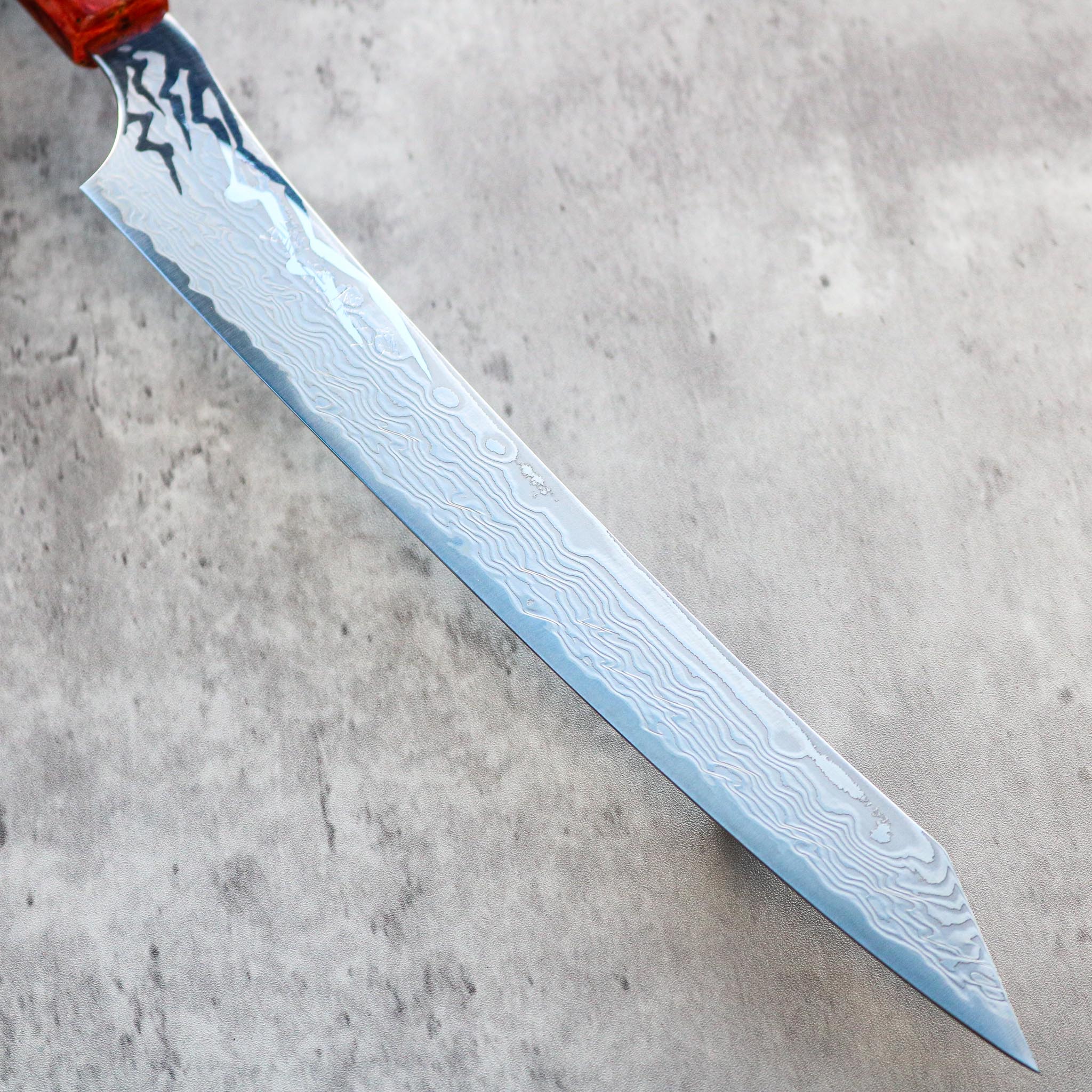
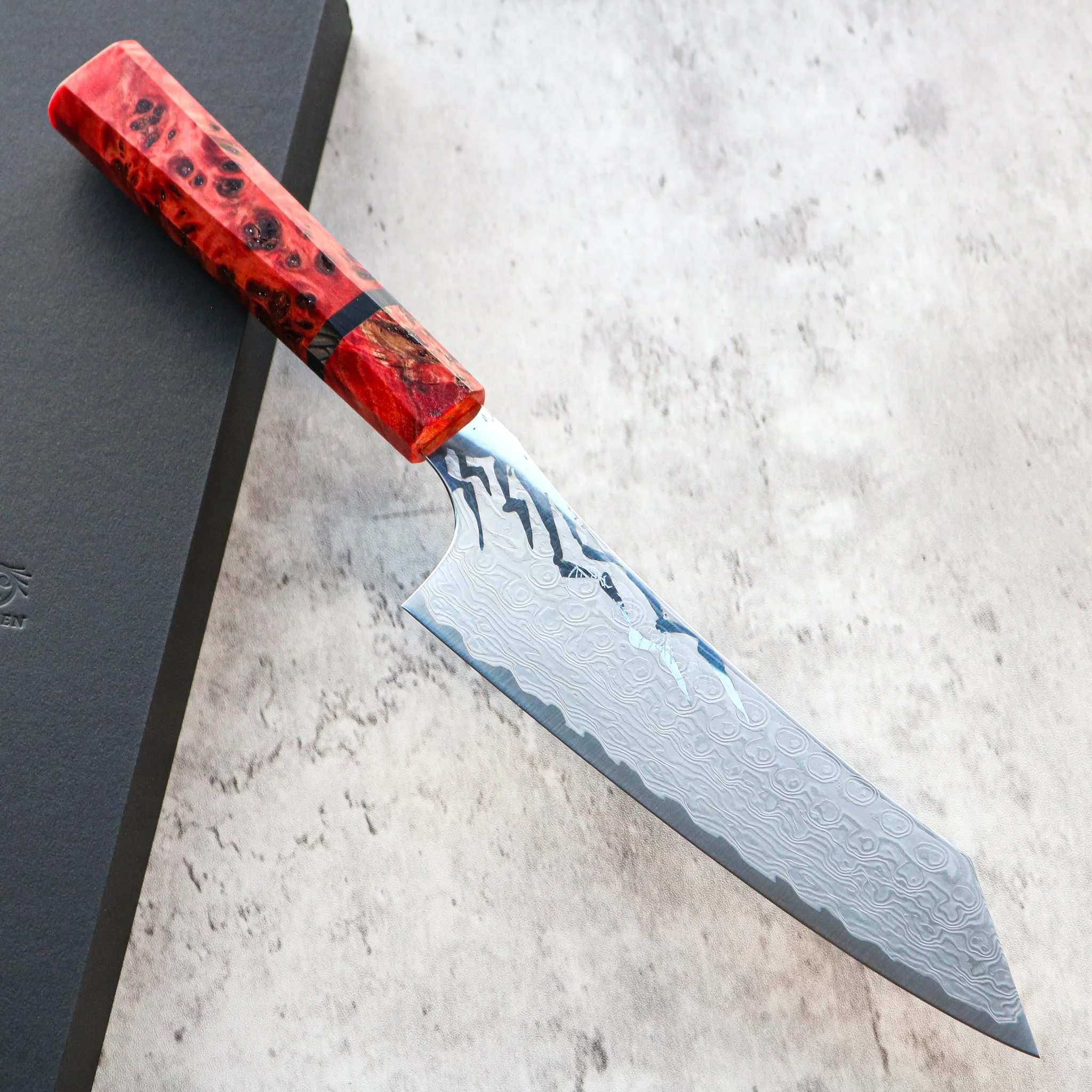
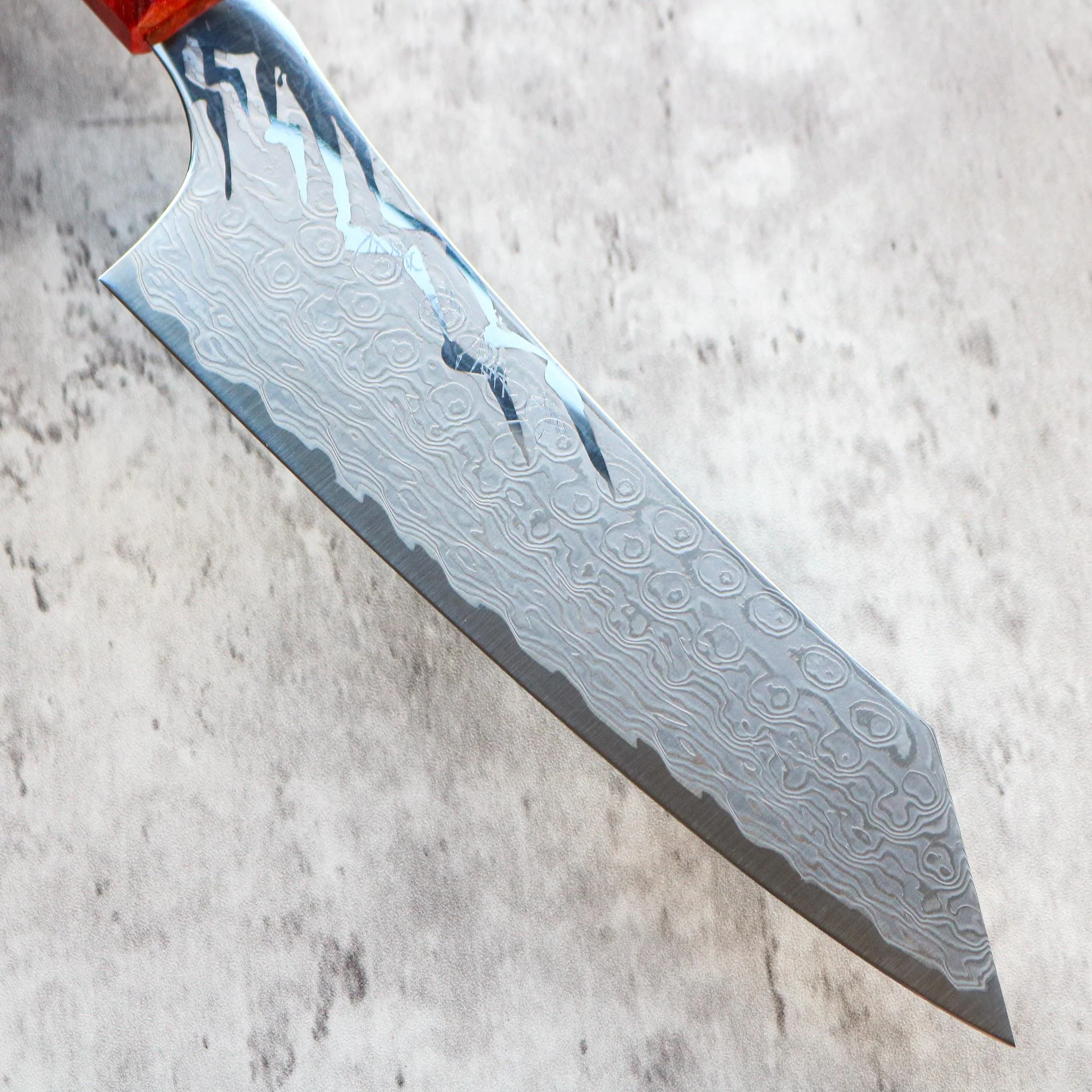
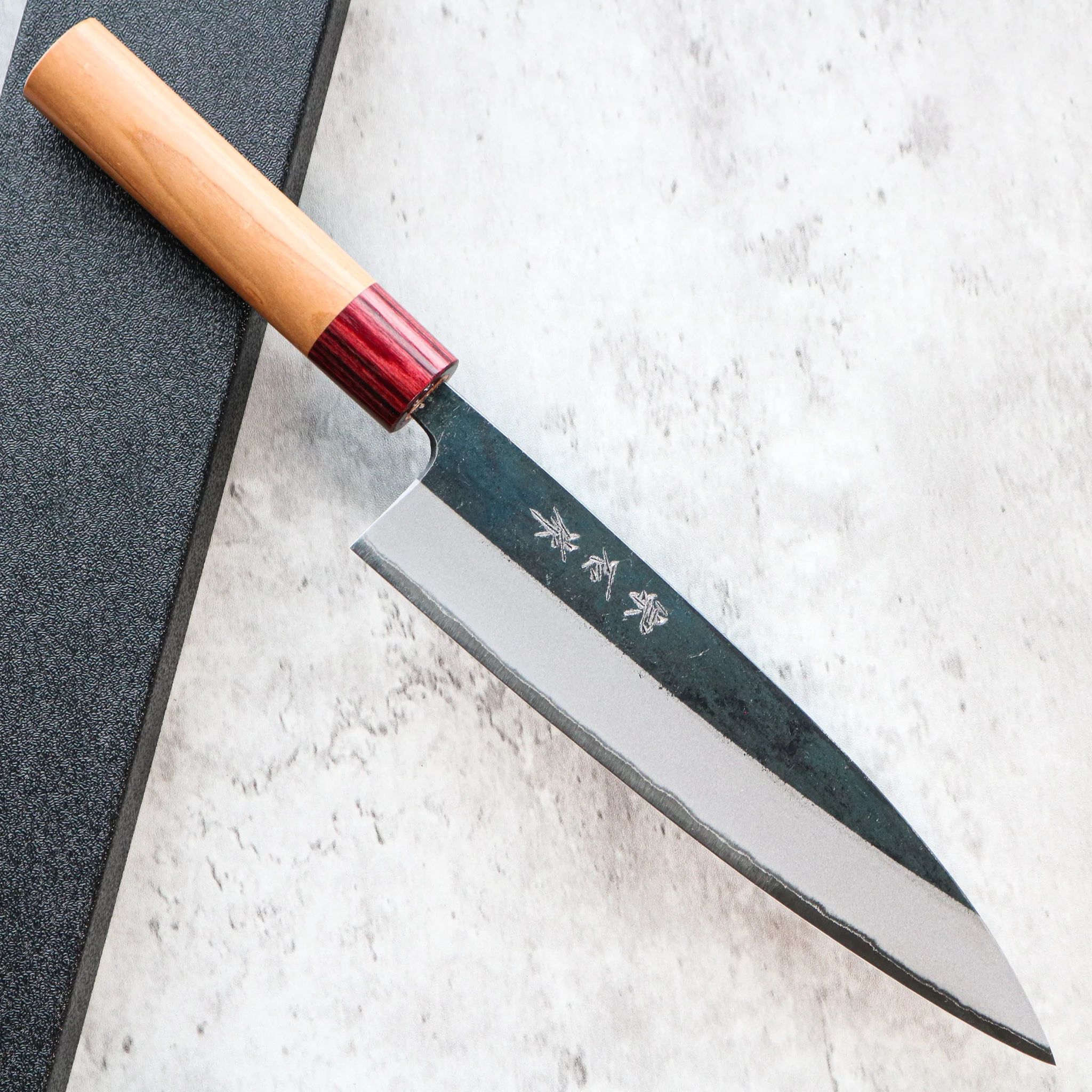
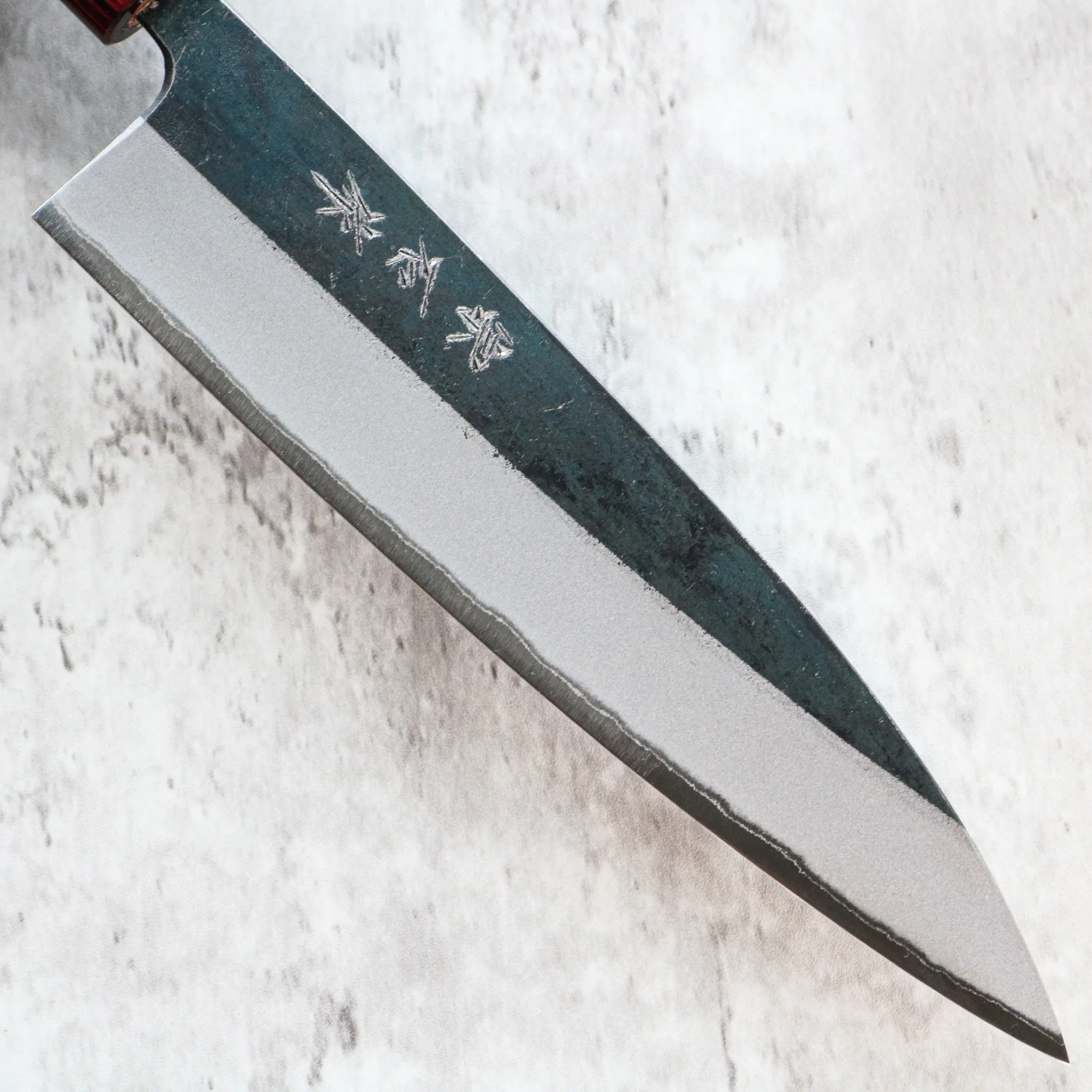
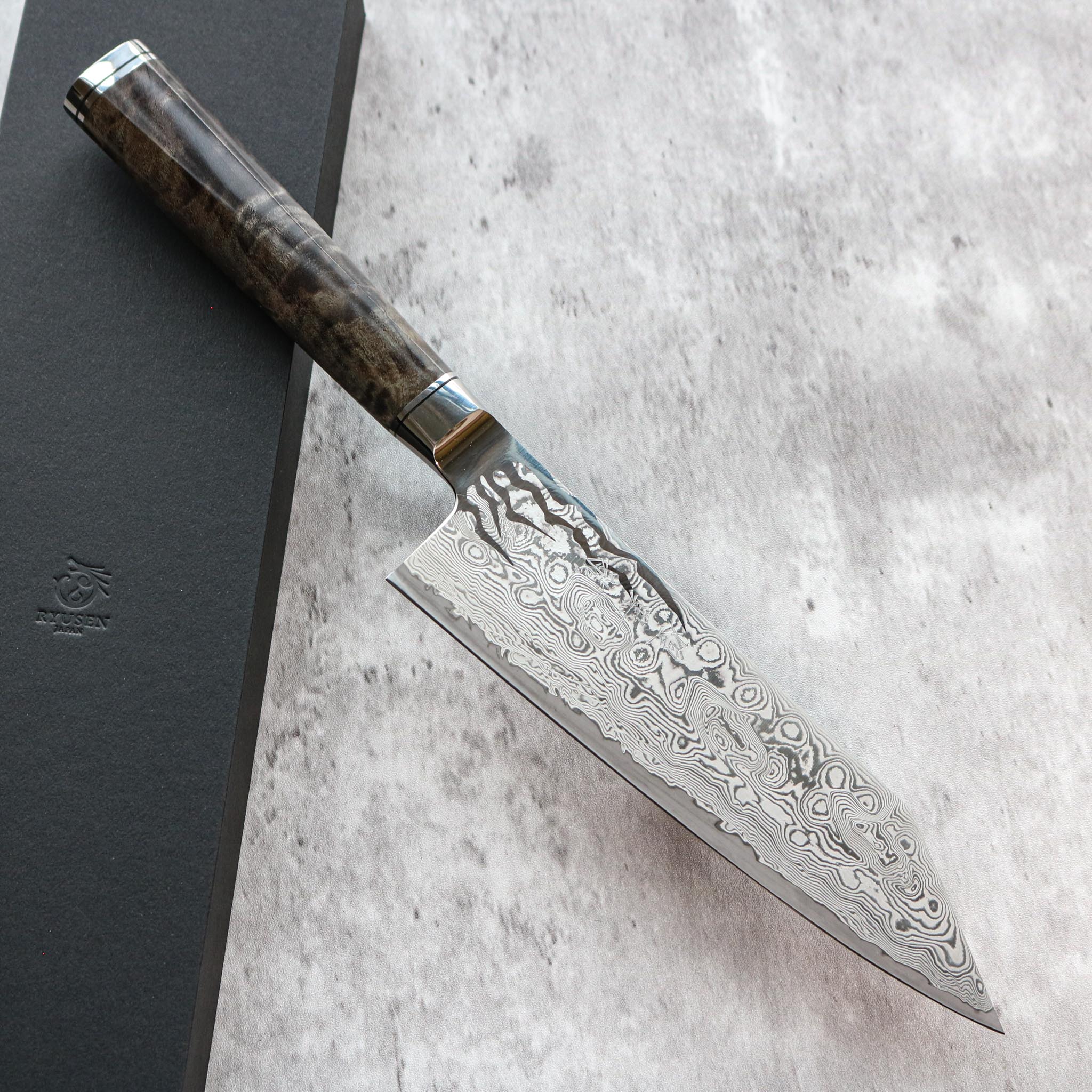
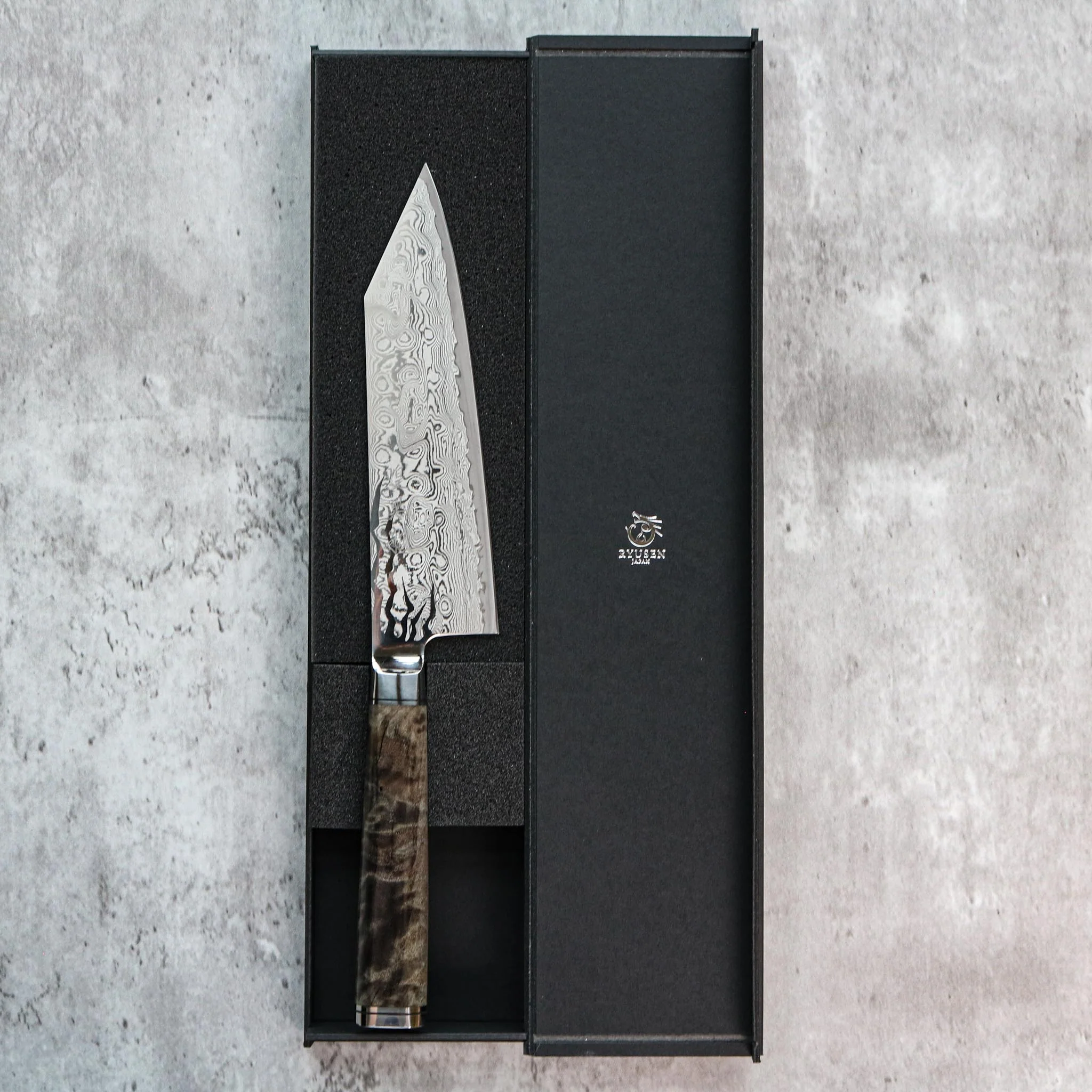
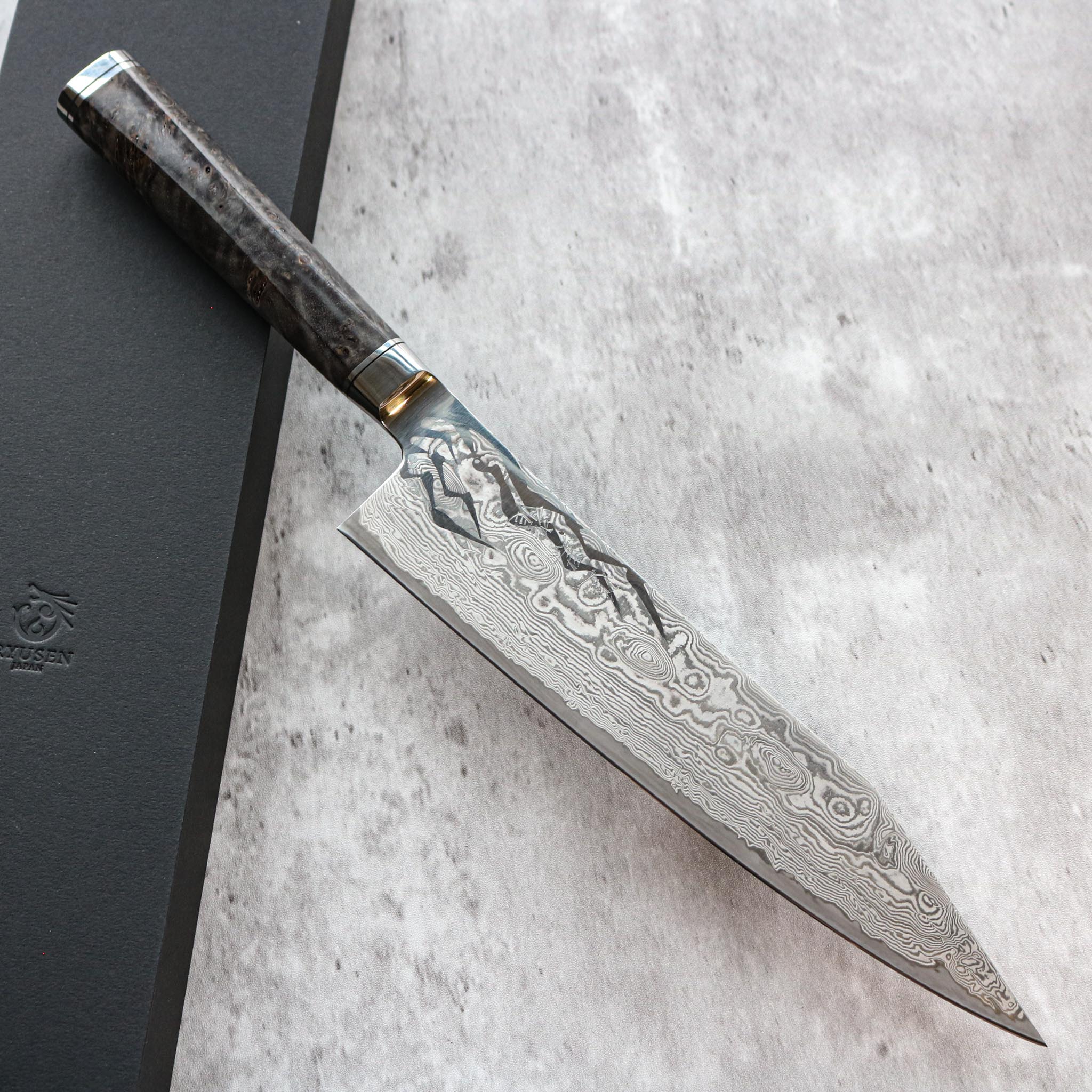
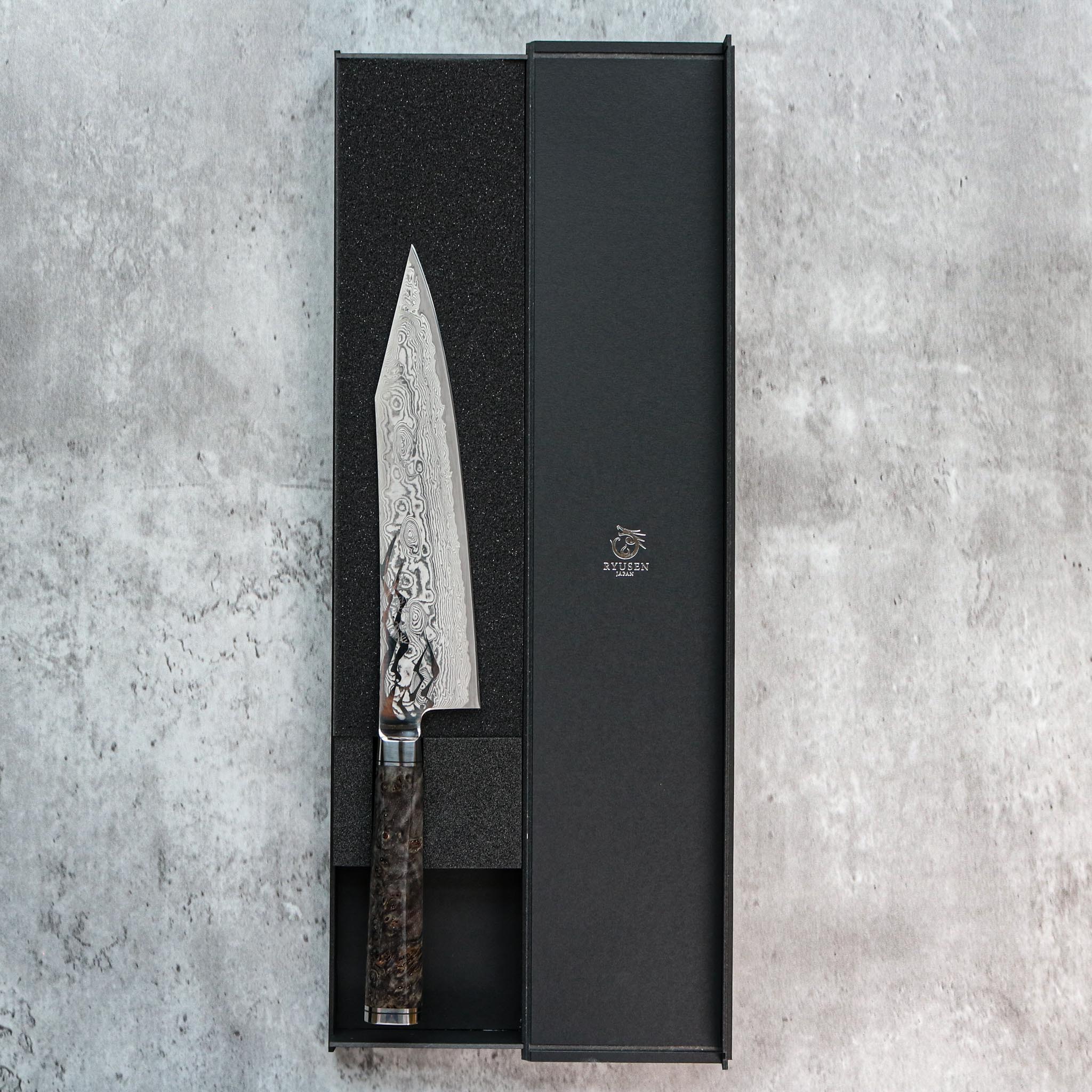
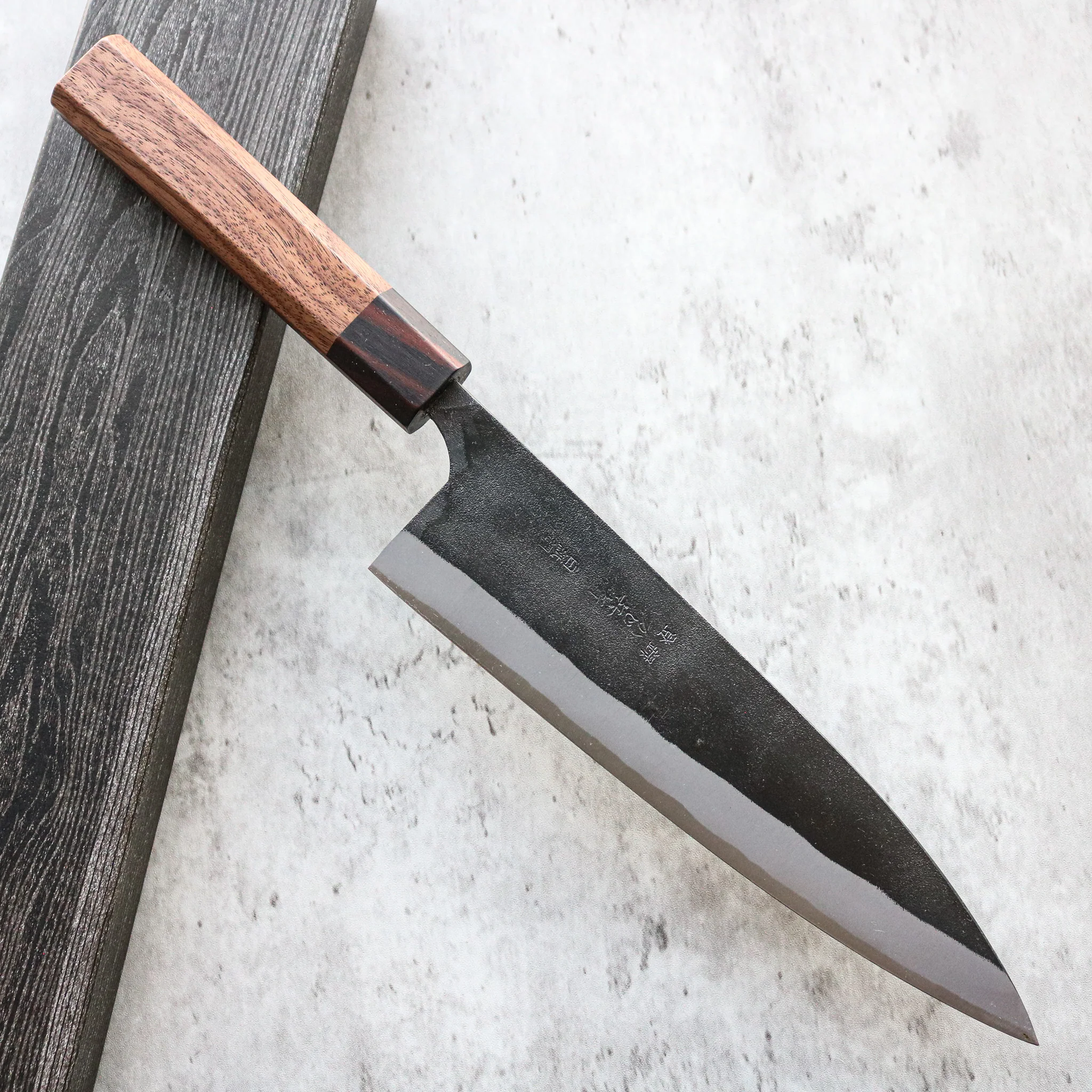
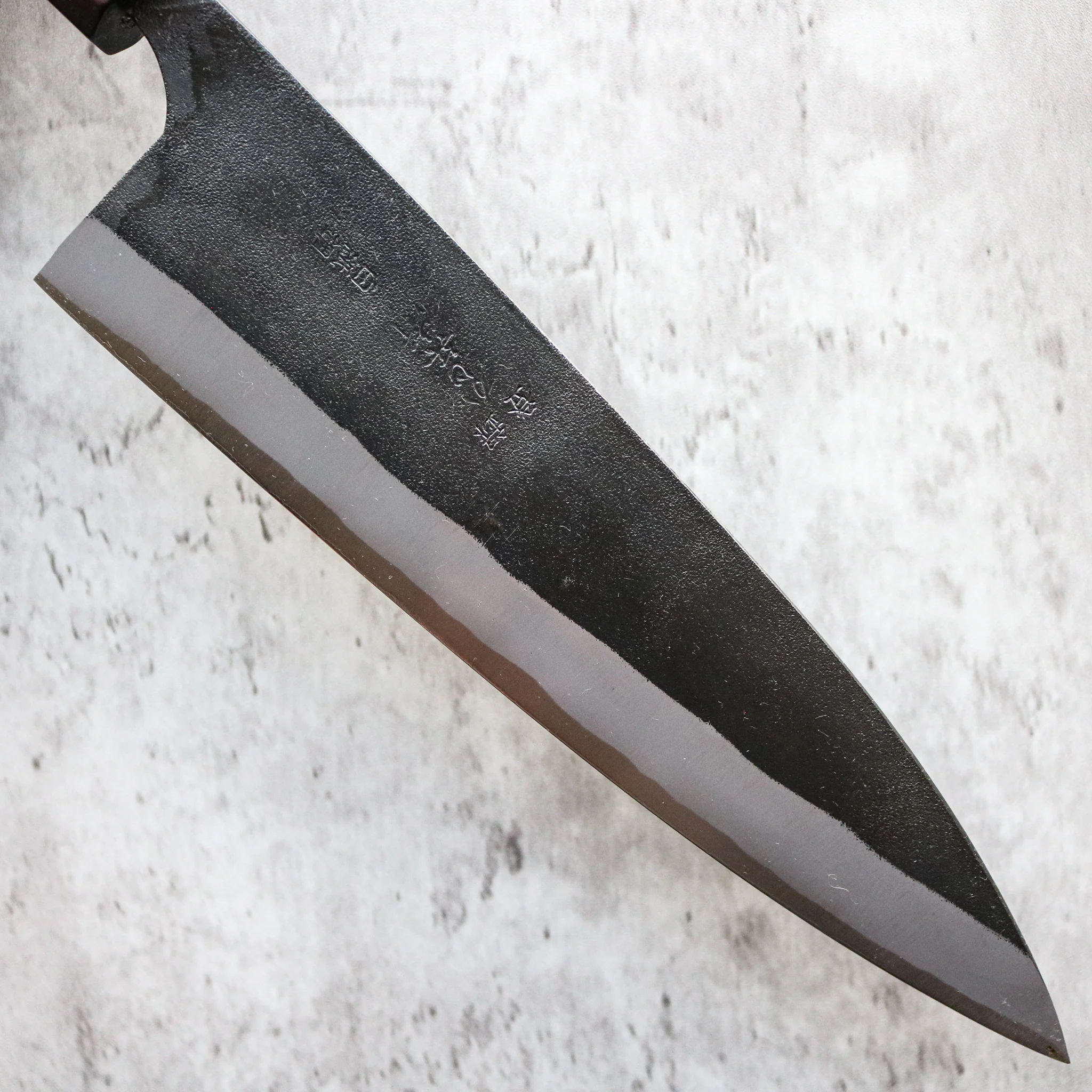
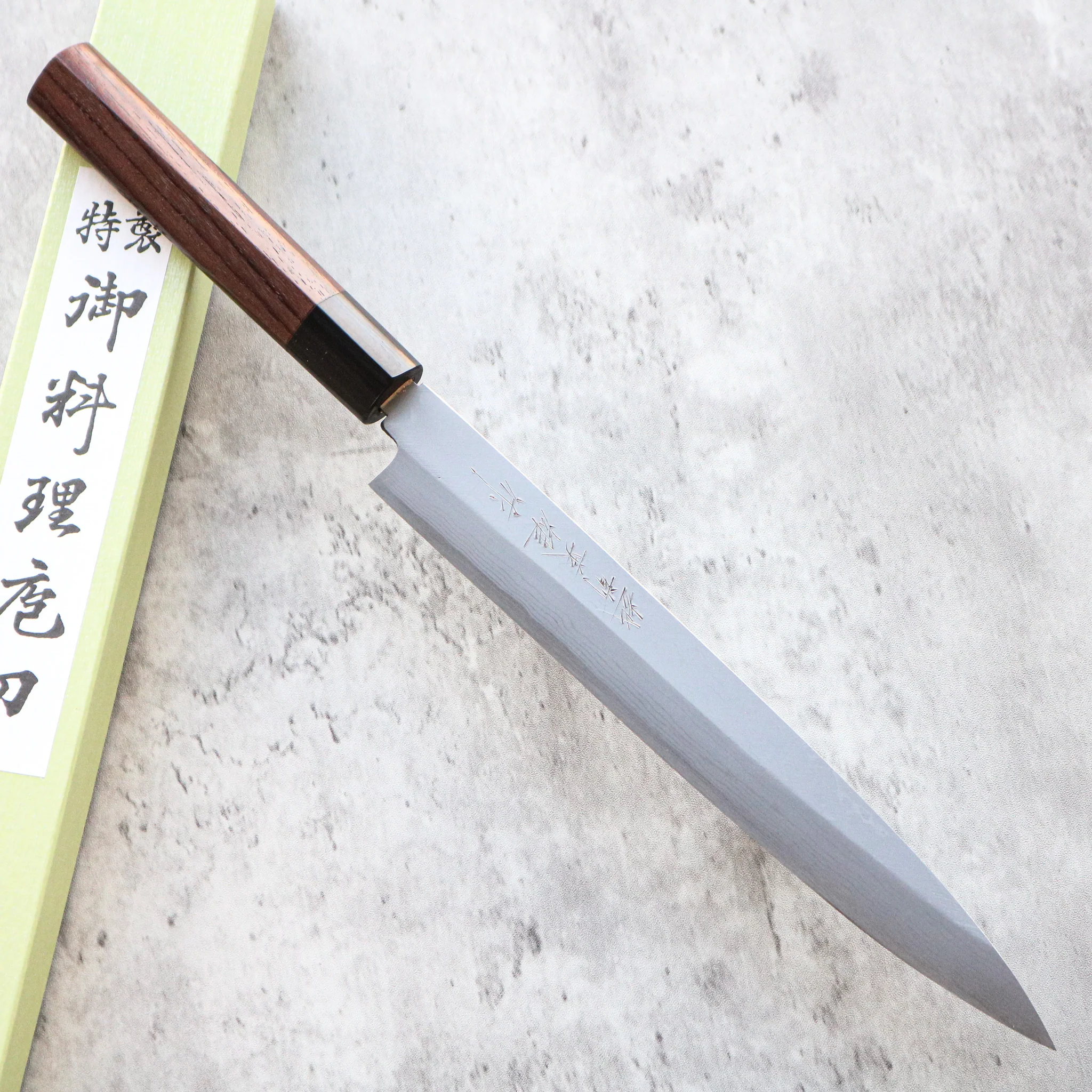
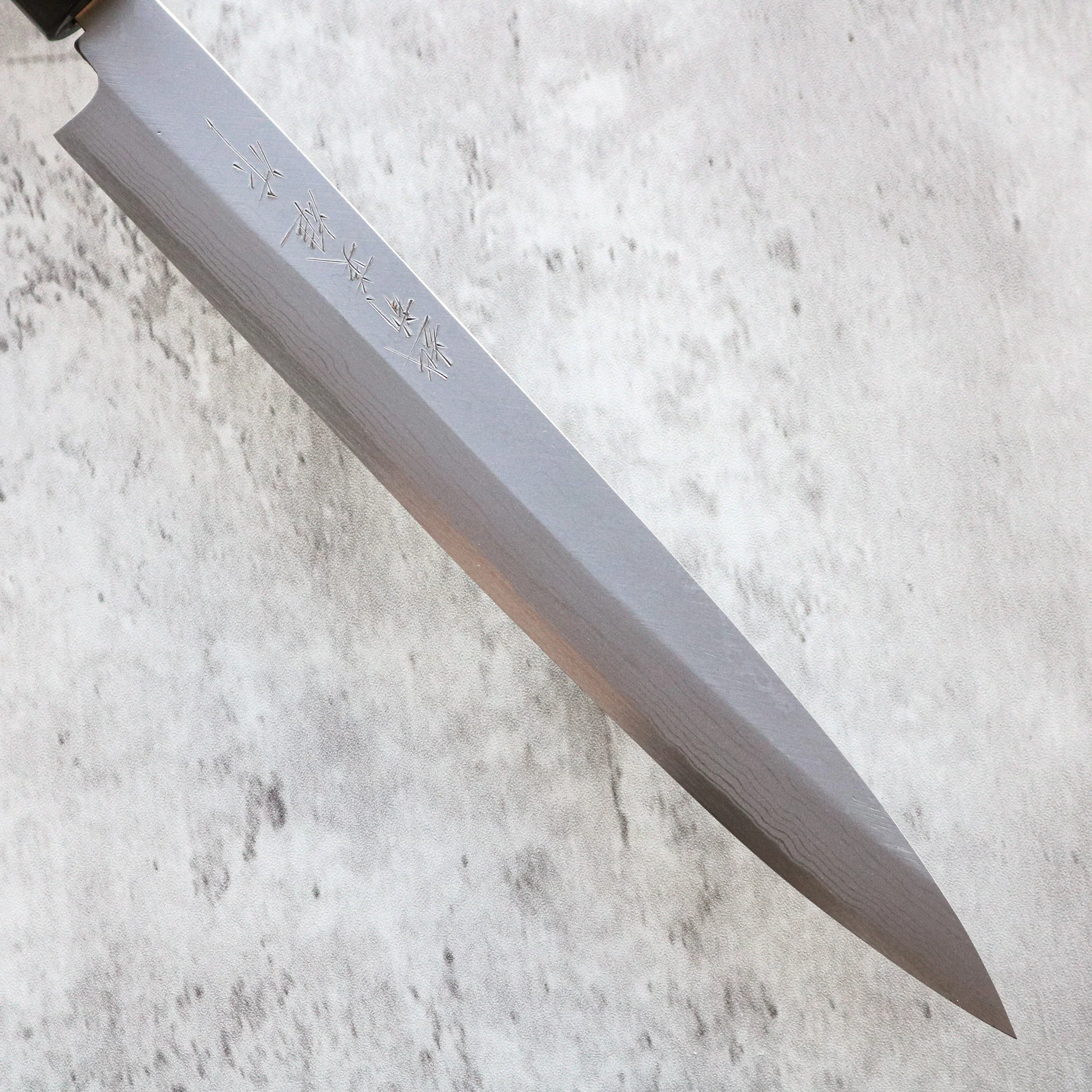
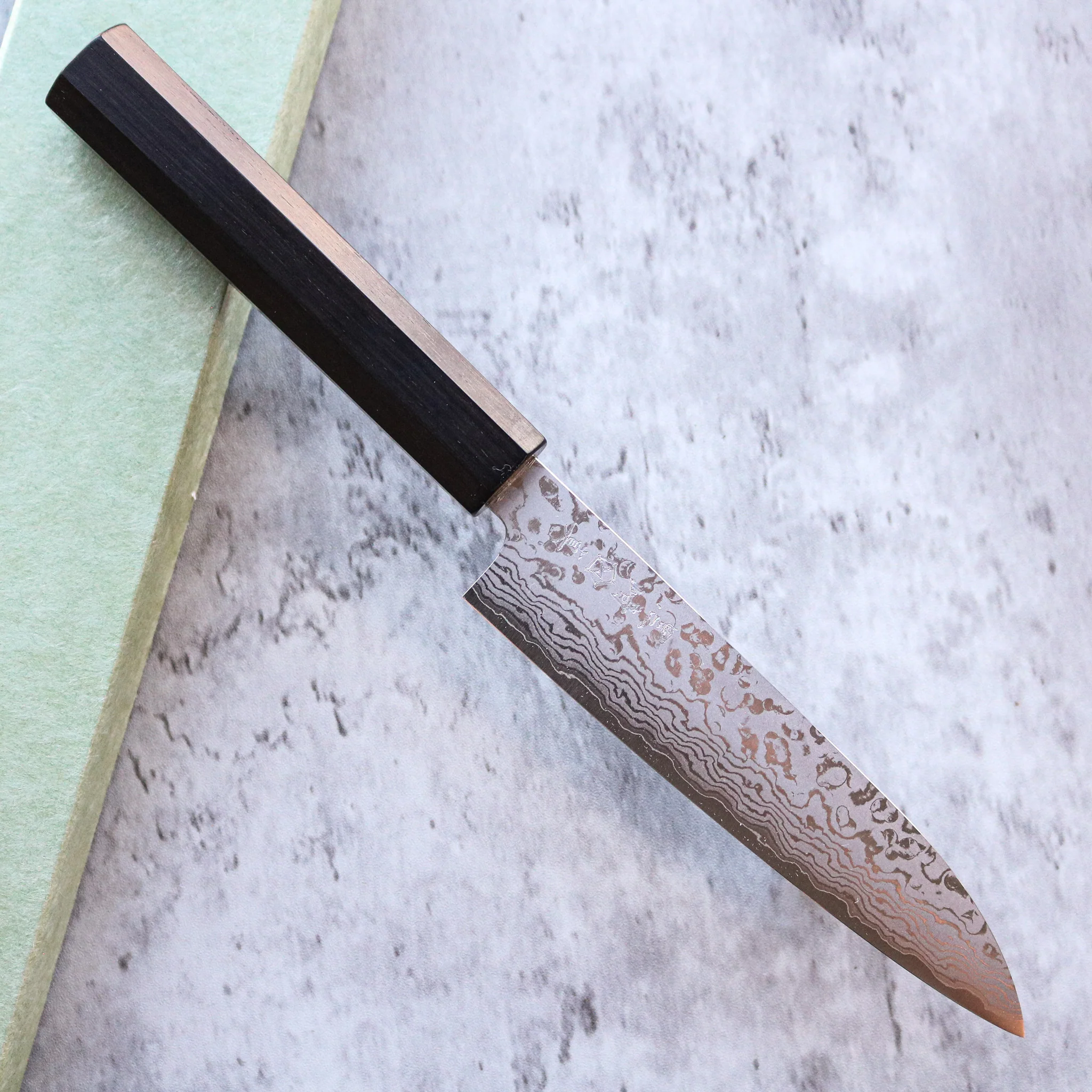
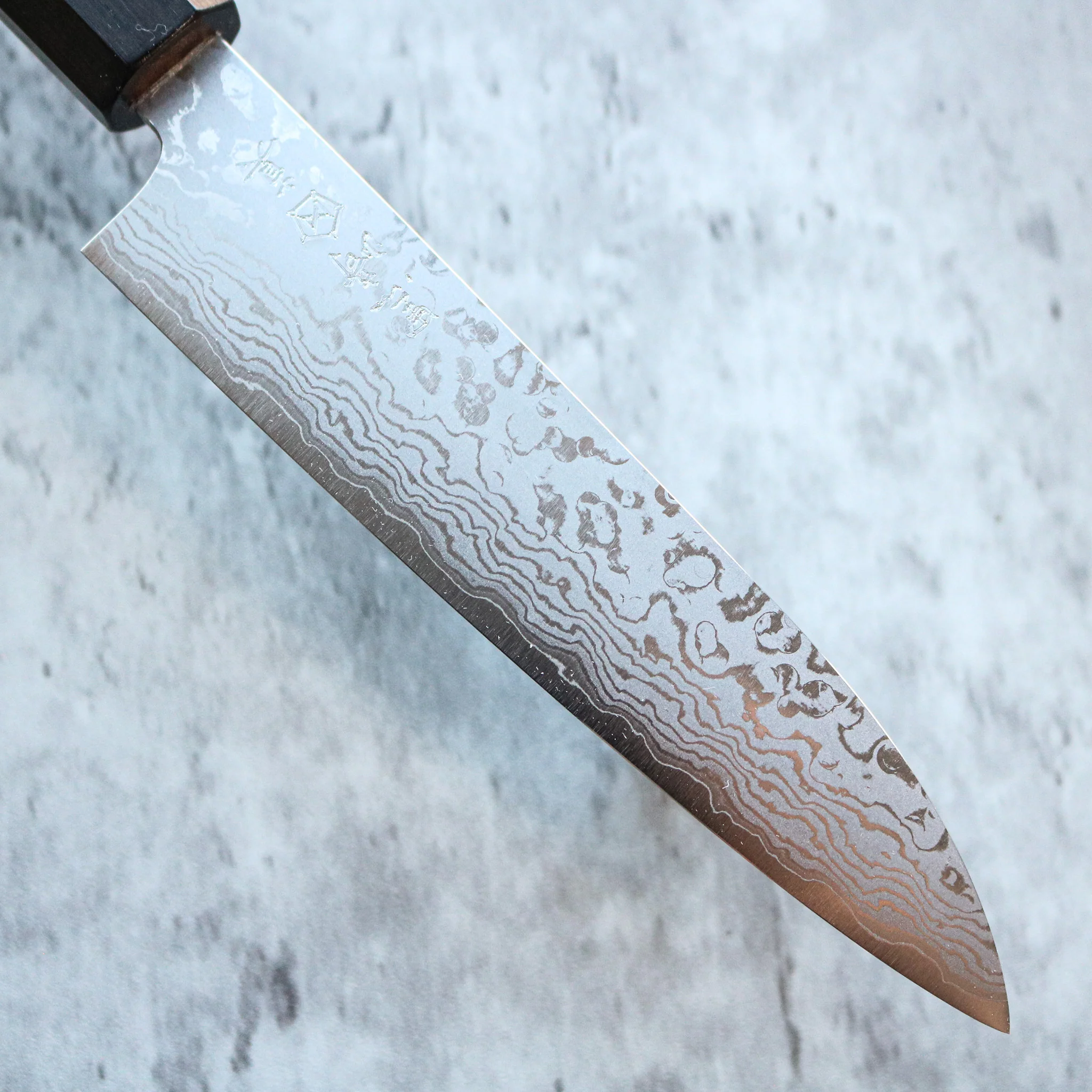
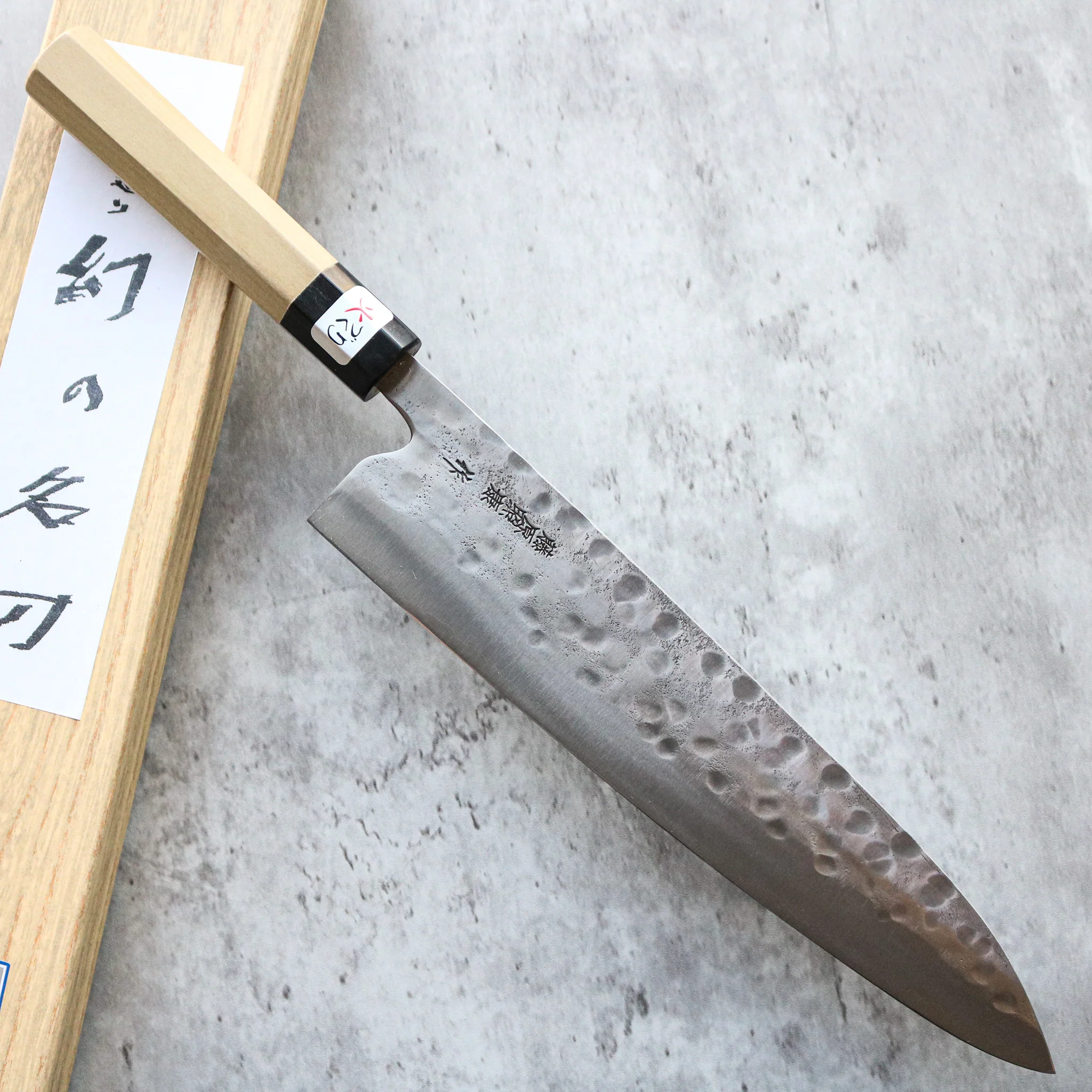
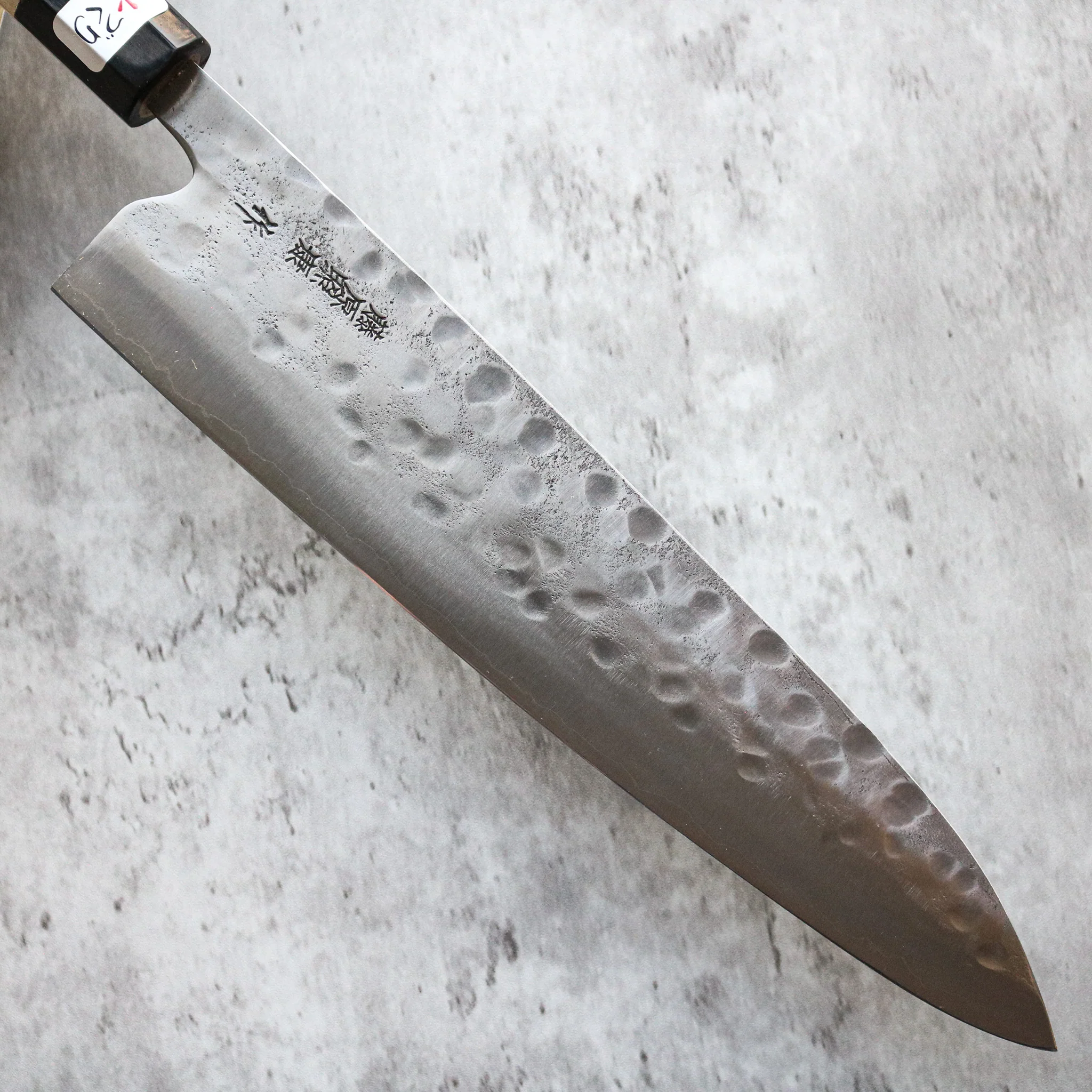
Teruyasu Fujiwara Denka Honesuki 150 mm
| Blade Length | 165 mm |
| Total Length | 302 mm |
| Steel | Aogomi Super |
| Handle | Magnolia |
| Ferrule | Buffalo Horn |
| Rockwell | 65 |
| Height Spine to heel | 51 mm |
| Width at Spine | 2.89 mm |
| Weight | 121 grams |
| Bevel | Double |
Teruyasu Fujiwara
"I want to create amazing and inspirational knives that appeal to the hearts of the users." Well, Fujiwara-san, I think it's safe to say you have done just that!
The Knife
The Honesuki is designed specifically for poultry butchery, but can be used for a wide variety of butchery tasks. The "reverse tanto" or "K-tip" is ideal for getting in and around joints and bones. Though we do not recommend cutting through bone with any Japanese knife, the honesuki’s thickness in the spine and behind the edge makes it less likely to suffer damage if you nick a bone by accident. If you're looking for a knife that can handle butchery and vegetable prep, consider a petty. If you're looking for a knife specific to fish butchery, consider a deba.
Knife Care (Stainless Clad)
- Never twist or torque your knife on a cutting board or in an ingredient, this WILL cause your knife to chip. Use your knife in an up and down, forward and backward cutting motion.
- This knife is made from 3 layers of steel using a technique called Sanmai (Forge welding). It involves laminating a piece of Carbon steel with two pieces of Stainless steel giving the knife all the benefits of the carbon steel (Edge retention, ease of sharpening, cutting feel) and the Ease of Maintenance from Stainless steel. 2-3 millimeters of the carbon steel is exposed at the edge of the knife and is susceptible to rust and discouloration if not properly maintained.
- Simply Wipe the knife with a damp cloth immediately after use to keep it from rusting or discouloring.
- Wash with regular dish soap and warm water using a none abrasive sponge or cloth.
- Never put your knife in the Dishwasher. The extreme heat will ruin the wooden handle.
- Highly acidic ingredients (Onions, Tomatoes, Citrus) Will cause rust and oxidation to happen faster, thus the user must ensure the knife is wiped clean immediately after working with such an ingredient.
- Should any rust form it can be removed using a rust eraser or a mixture of Baking soda and water to simply scrub it clean.
- Avoid Bones, Frozen foods, nuts and hard candies or anything other than fruits, vegetables and proteins.
Product Information
Product Information
Shipping & Returns
Shipping & Returns
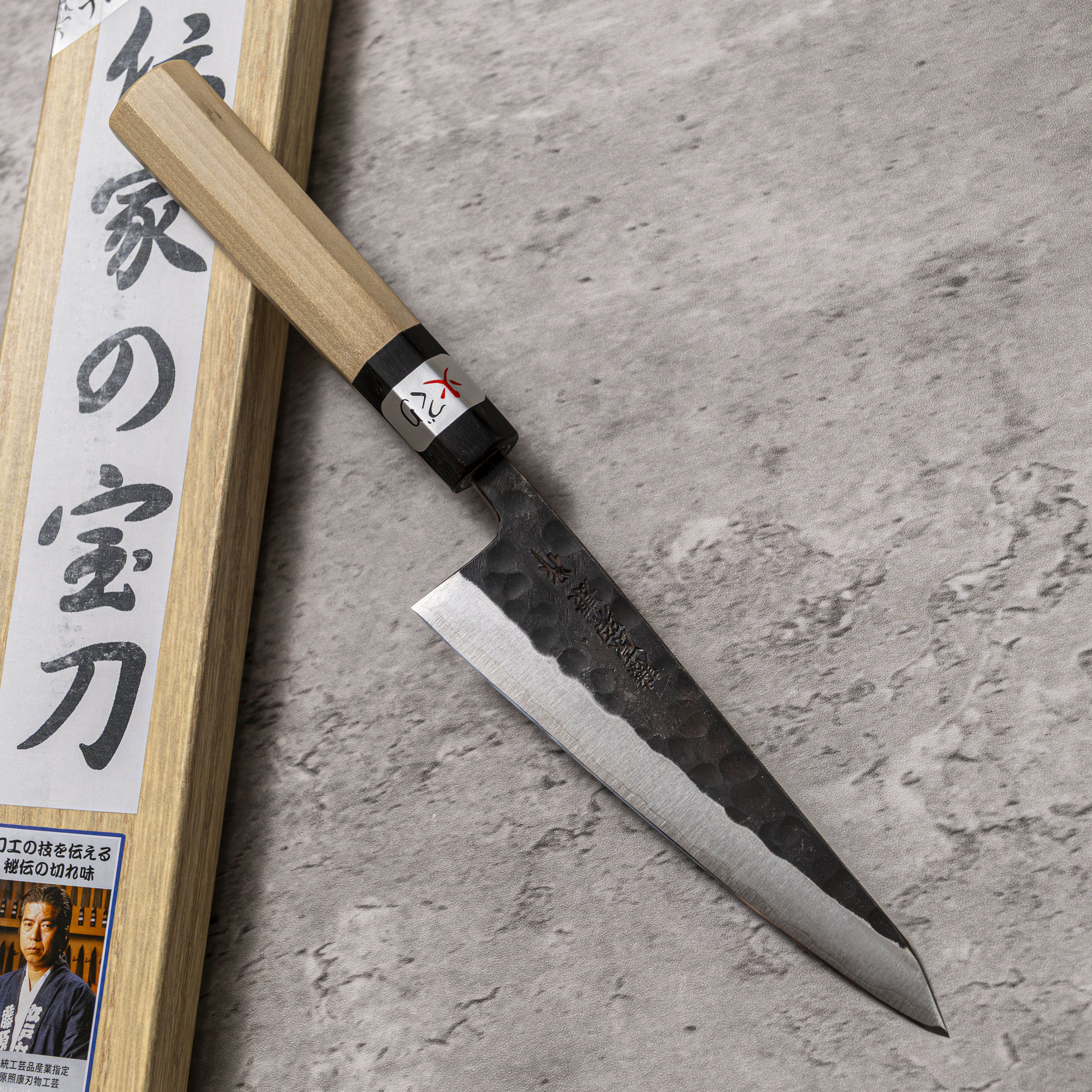
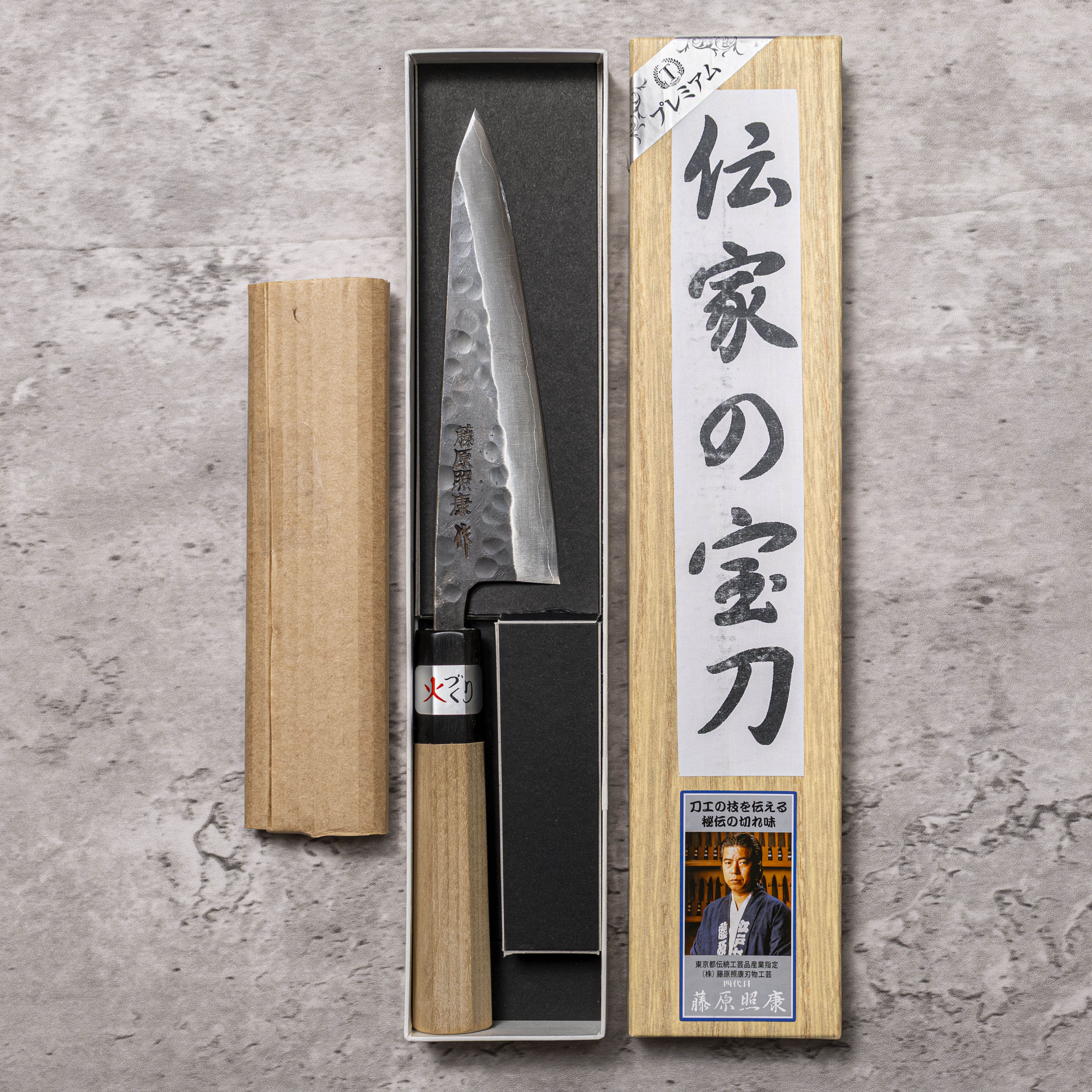


Teruyasu Fujiwara Denka Honesuki 150 mm
Teruyasu Fujiwara Denka Honesuki 150 mm
| Blade Length | 165 mm |
| Total Length | 302 mm |
| Steel | Aogomi Super |
| Handle | Magnolia |
| Ferrule | Buffalo Horn |
| Rockwell | 65 |
| Height Spine to heel | 51 mm |
| Width at Spine | 2.89 mm |
| Weight | 121 grams |
| Bevel | Double |
Teruyasu Fujiwara
"I want to create amazing and inspirational knives that appeal to the hearts of the users." Well, Fujiwara-san, I think it's safe to say you have done just that!
The Knife
The Honesuki is designed specifically for poultry butchery, but can be used for a wide variety of butchery tasks. The "reverse tanto" or "K-tip" is ideal for getting in and around joints and bones. Though we do not recommend cutting through bone with any Japanese knife, the honesuki’s thickness in the spine and behind the edge makes it less likely to suffer damage if you nick a bone by accident. If you're looking for a knife that can handle butchery and vegetable prep, consider a petty. If you're looking for a knife specific to fish butchery, consider a deba.
Knife Care (Stainless Clad)
- Never twist or torque your knife on a cutting board or in an ingredient, this WILL cause your knife to chip. Use your knife in an up and down, forward and backward cutting motion.
- This knife is made from 3 layers of steel using a technique called Sanmai (Forge welding). It involves laminating a piece of Carbon steel with two pieces of Stainless steel giving the knife all the benefits of the carbon steel (Edge retention, ease of sharpening, cutting feel) and the Ease of Maintenance from Stainless steel. 2-3 millimeters of the carbon steel is exposed at the edge of the knife and is susceptible to rust and discouloration if not properly maintained.
- Simply Wipe the knife with a damp cloth immediately after use to keep it from rusting or discouloring.
- Wash with regular dish soap and warm water using a none abrasive sponge or cloth.
- Never put your knife in the Dishwasher. The extreme heat will ruin the wooden handle.
- Highly acidic ingredients (Onions, Tomatoes, Citrus) Will cause rust and oxidation to happen faster, thus the user must ensure the knife is wiped clean immediately after working with such an ingredient.
- Should any rust form it can be removed using a rust eraser or a mixture of Baking soda and water to simply scrub it clean.
- Avoid Bones, Frozen foods, nuts and hard candies or anything other than fruits, vegetables and proteins.
Original: $802.80
-65%$802.80
$280.98Product Information
Product Information
Shipping & Returns
Shipping & Returns
Description
| Blade Length | 165 mm |
| Total Length | 302 mm |
| Steel | Aogomi Super |
| Handle | Magnolia |
| Ferrule | Buffalo Horn |
| Rockwell | 65 |
| Height Spine to heel | 51 mm |
| Width at Spine | 2.89 mm |
| Weight | 121 grams |
| Bevel | Double |
Teruyasu Fujiwara
"I want to create amazing and inspirational knives that appeal to the hearts of the users." Well, Fujiwara-san, I think it's safe to say you have done just that!
The Knife
The Honesuki is designed specifically for poultry butchery, but can be used for a wide variety of butchery tasks. The "reverse tanto" or "K-tip" is ideal for getting in and around joints and bones. Though we do not recommend cutting through bone with any Japanese knife, the honesuki’s thickness in the spine and behind the edge makes it less likely to suffer damage if you nick a bone by accident. If you're looking for a knife that can handle butchery and vegetable prep, consider a petty. If you're looking for a knife specific to fish butchery, consider a deba.
Knife Care (Stainless Clad)
- Never twist or torque your knife on a cutting board or in an ingredient, this WILL cause your knife to chip. Use your knife in an up and down, forward and backward cutting motion.
- This knife is made from 3 layers of steel using a technique called Sanmai (Forge welding). It involves laminating a piece of Carbon steel with two pieces of Stainless steel giving the knife all the benefits of the carbon steel (Edge retention, ease of sharpening, cutting feel) and the Ease of Maintenance from Stainless steel. 2-3 millimeters of the carbon steel is exposed at the edge of the knife and is susceptible to rust and discouloration if not properly maintained.
- Simply Wipe the knife with a damp cloth immediately after use to keep it from rusting or discouloring.
- Wash with regular dish soap and warm water using a none abrasive sponge or cloth.
- Never put your knife in the Dishwasher. The extreme heat will ruin the wooden handle.
- Highly acidic ingredients (Onions, Tomatoes, Citrus) Will cause rust and oxidation to happen faster, thus the user must ensure the knife is wiped clean immediately after working with such an ingredient.
- Should any rust form it can be removed using a rust eraser or a mixture of Baking soda and water to simply scrub it clean.
- Avoid Bones, Frozen foods, nuts and hard candies or anything other than fruits, vegetables and proteins.