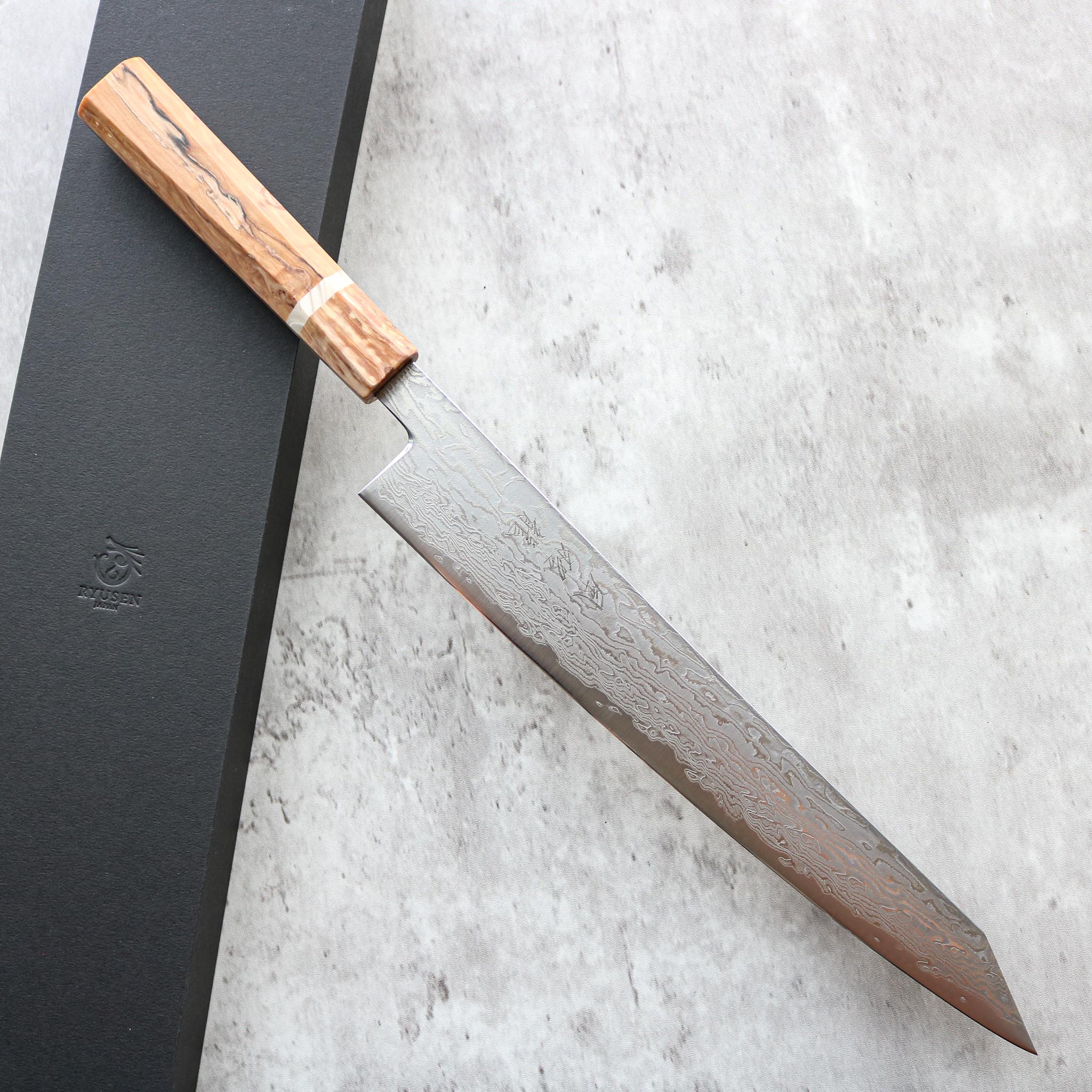
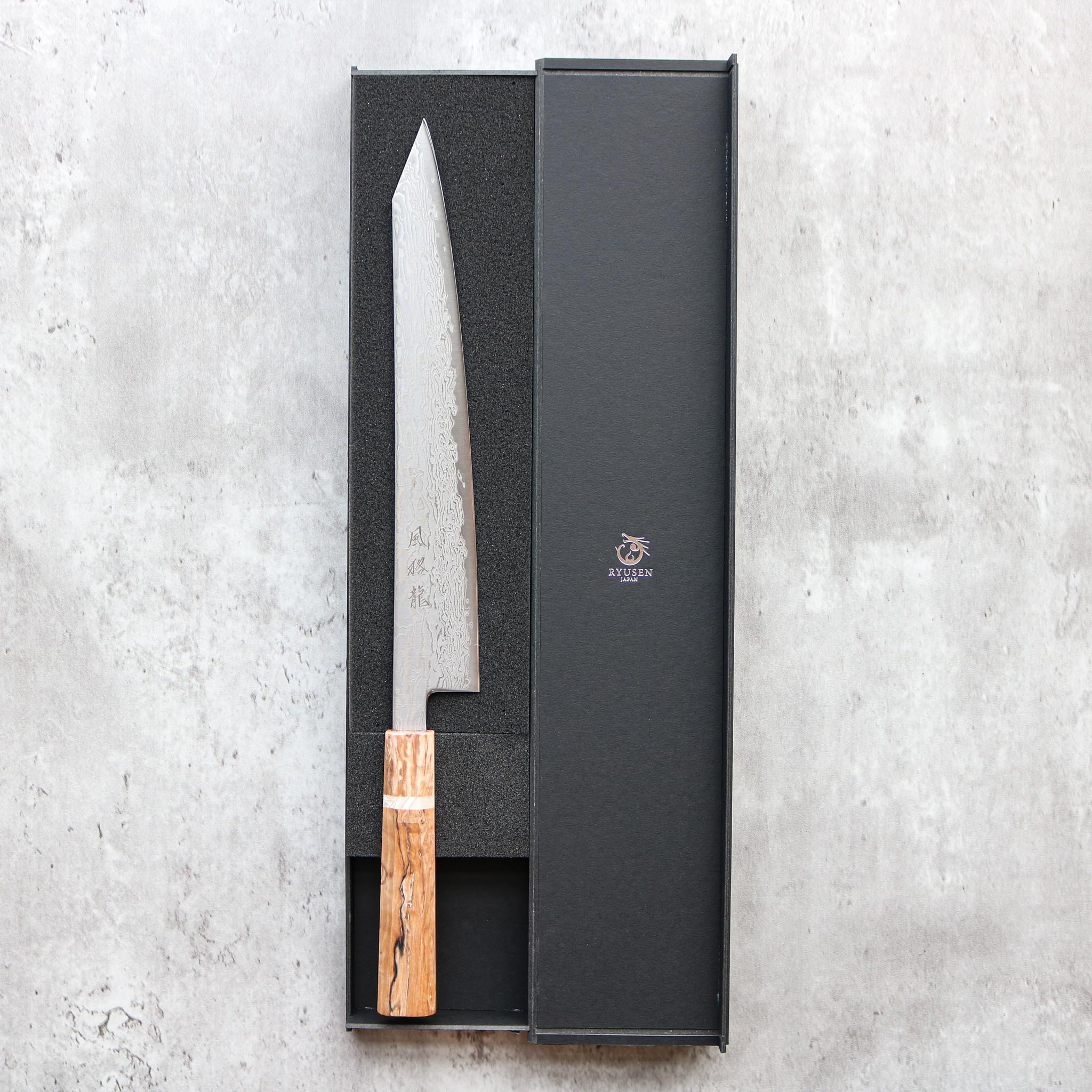
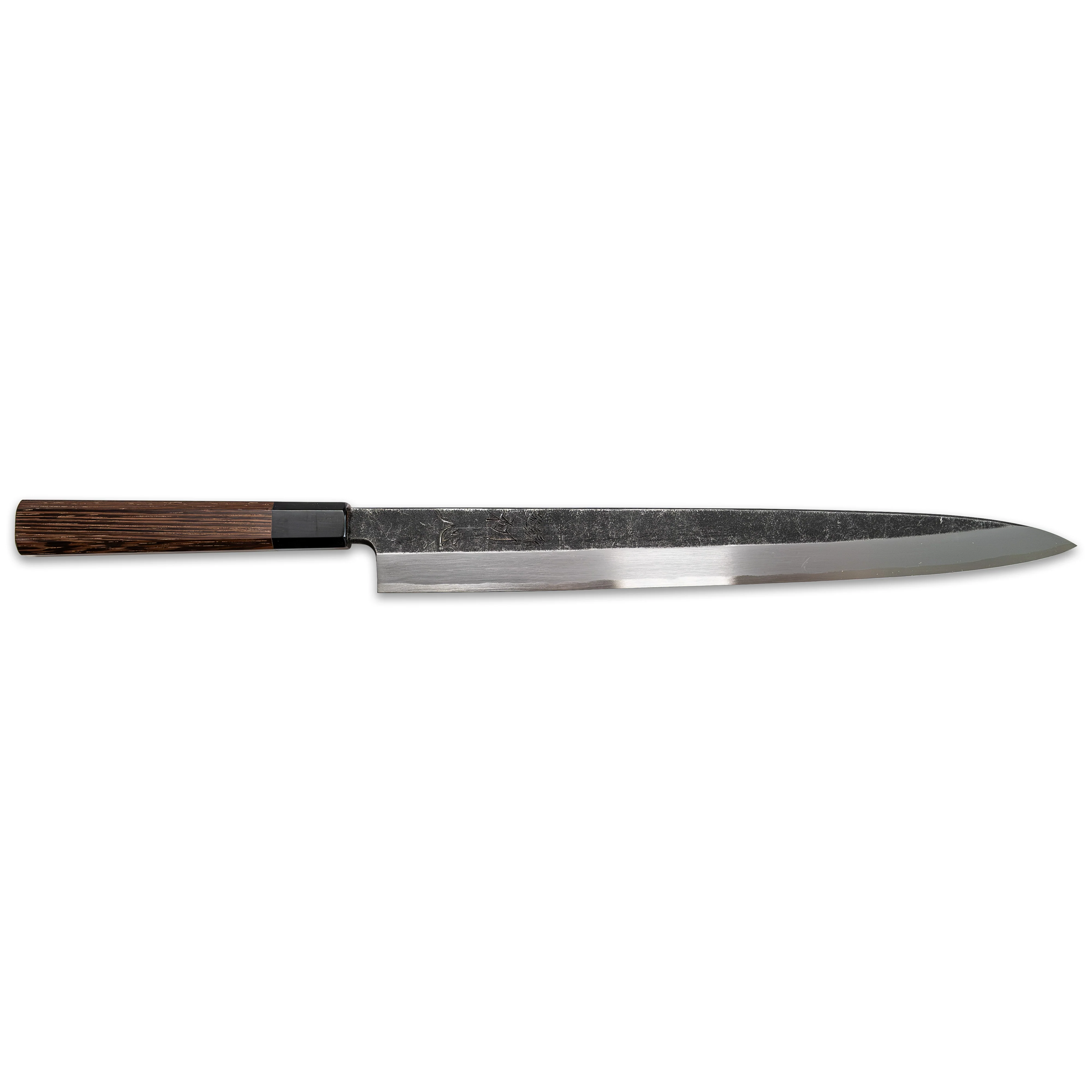
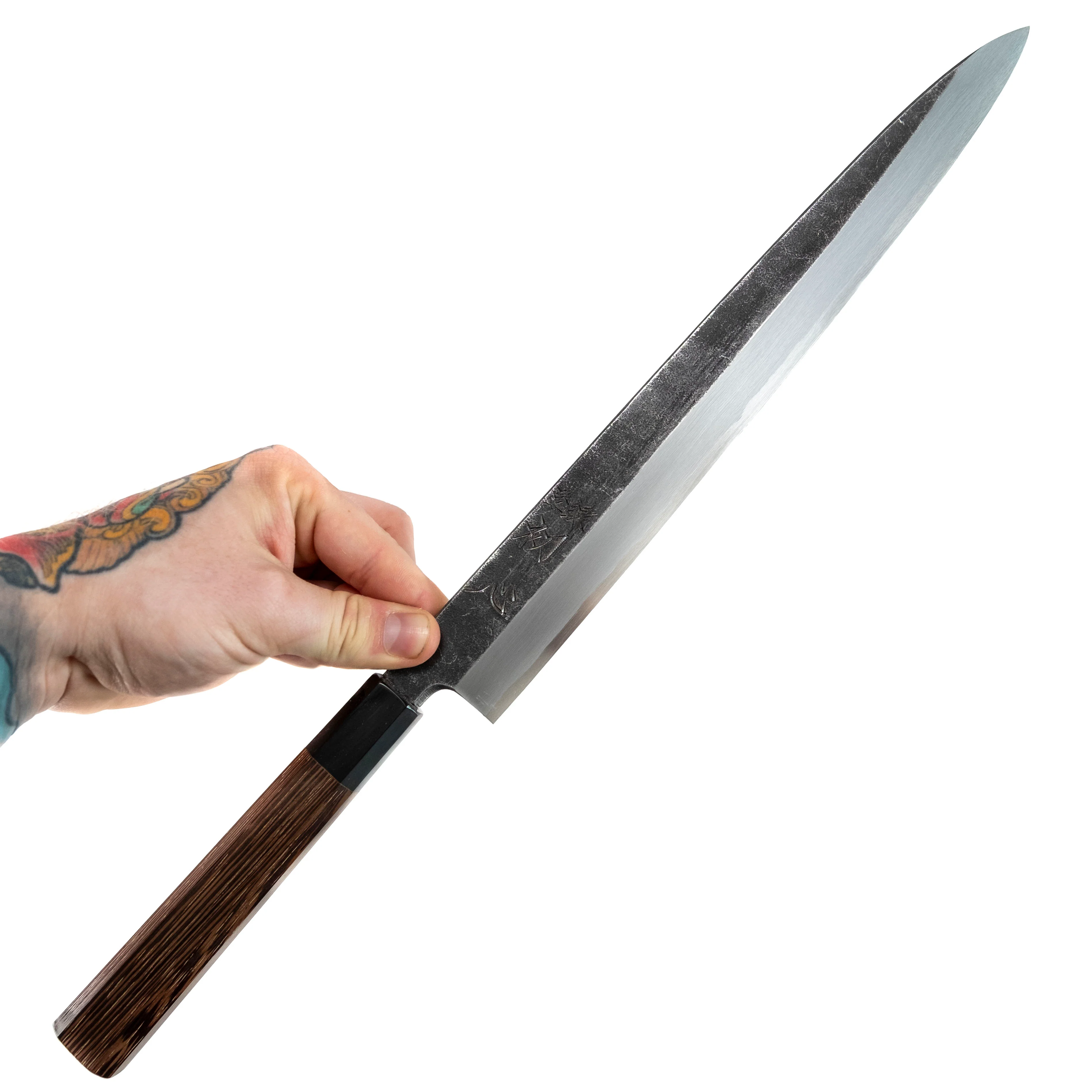
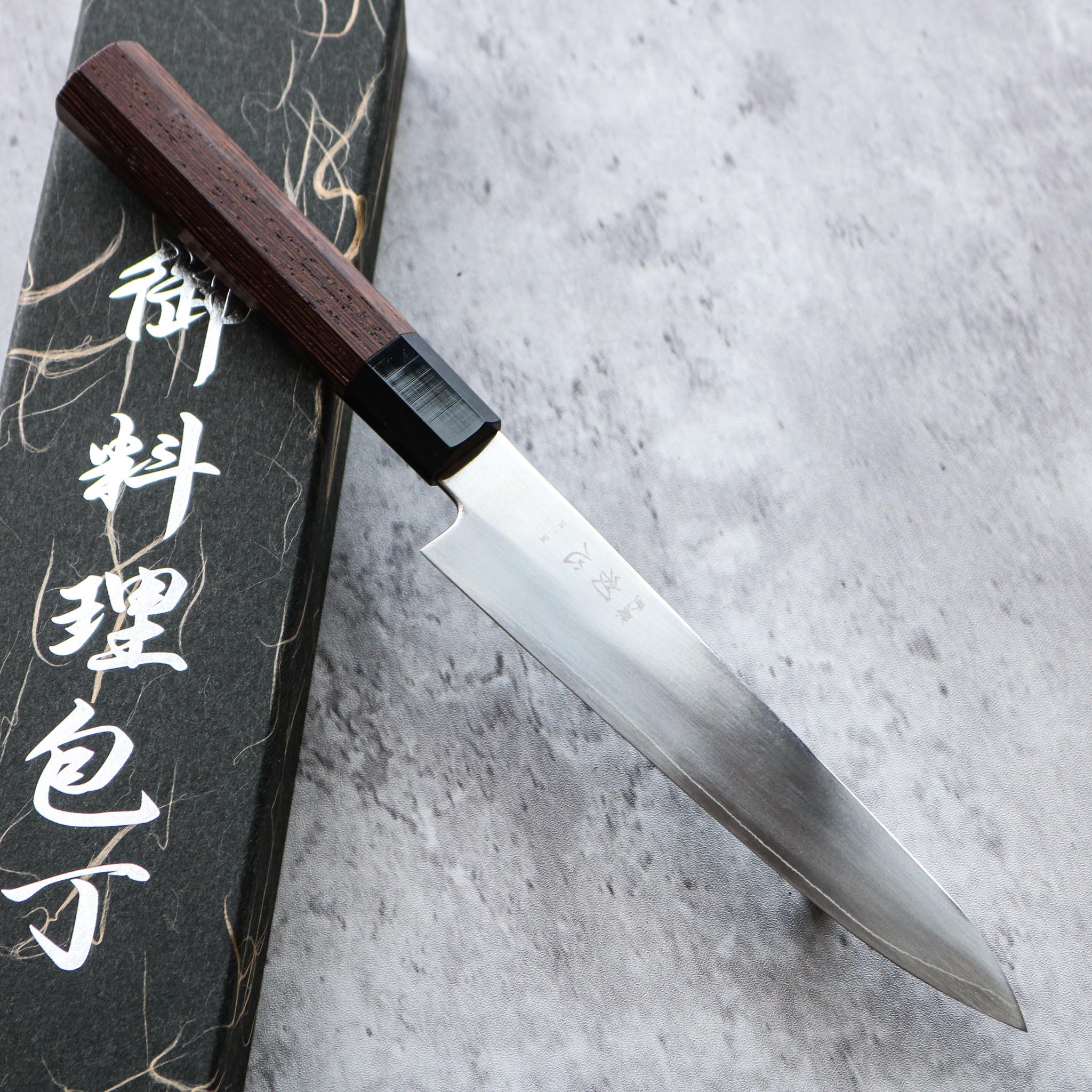
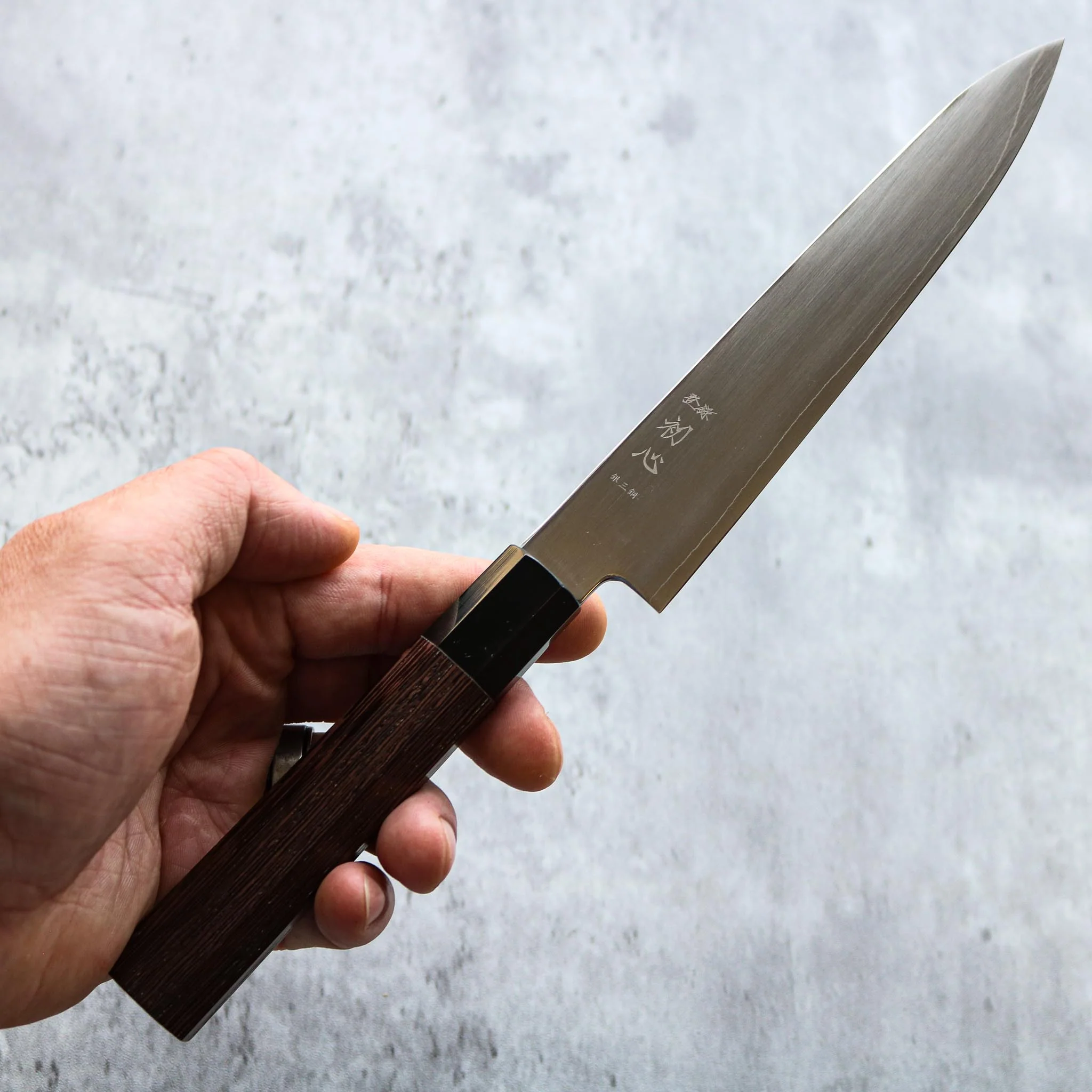
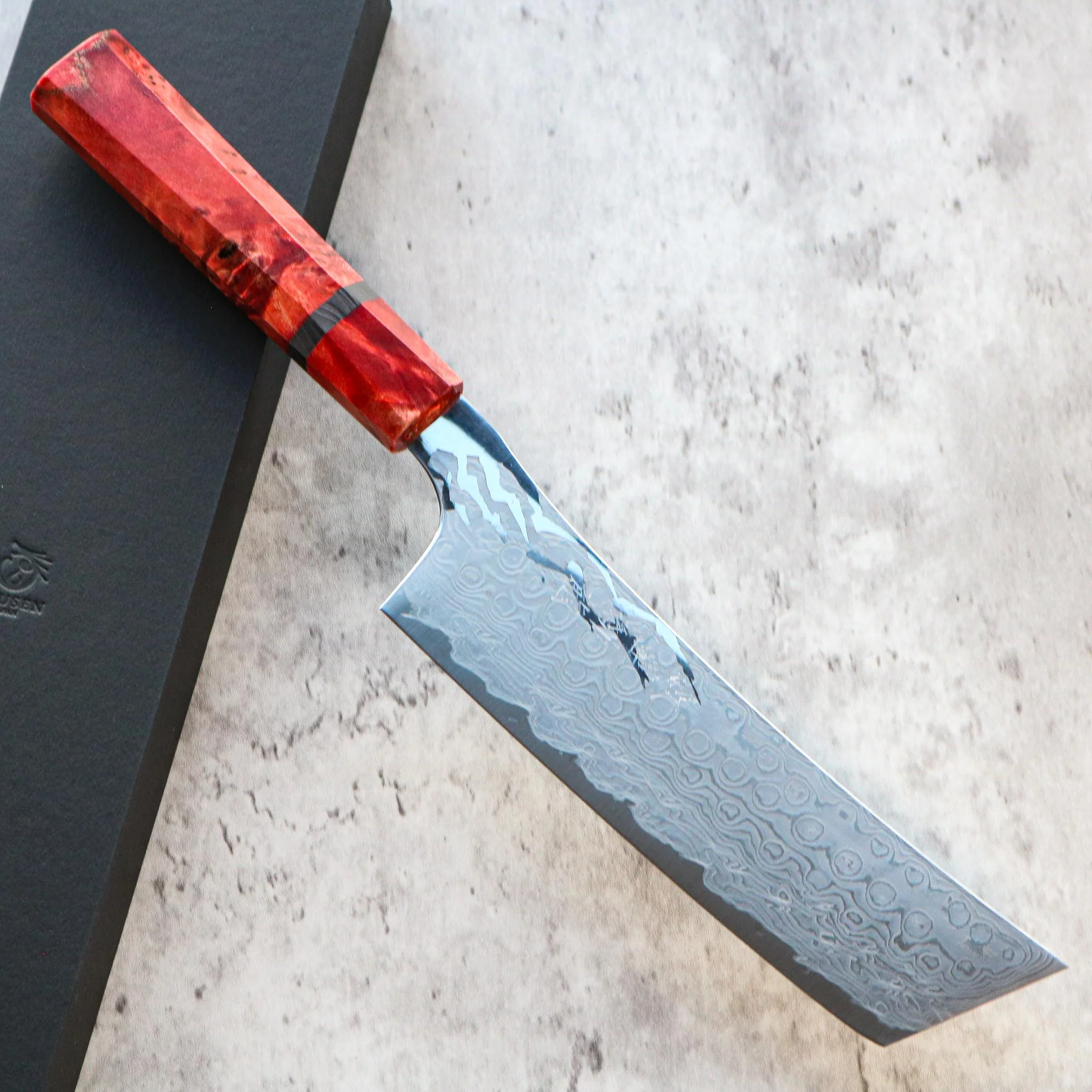
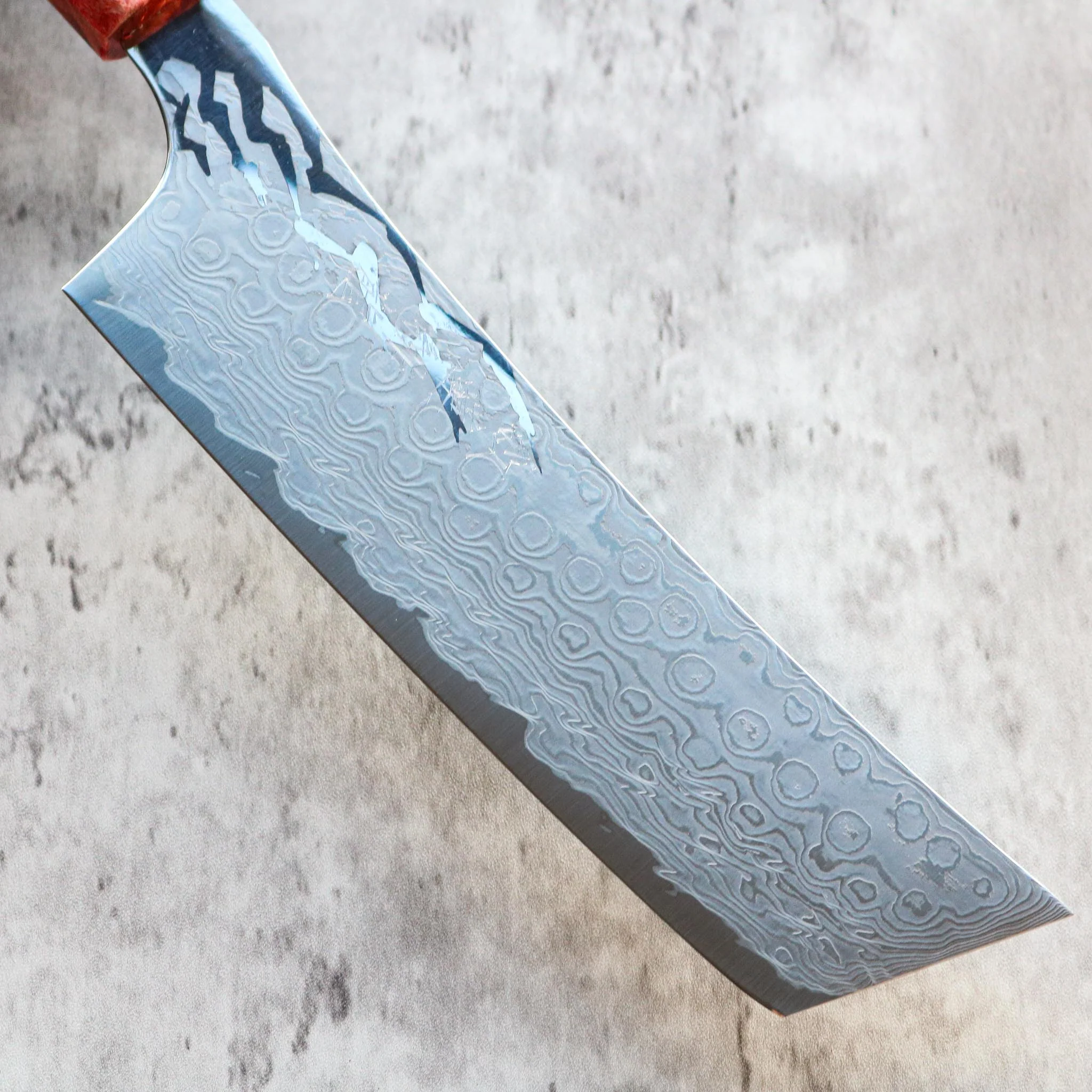
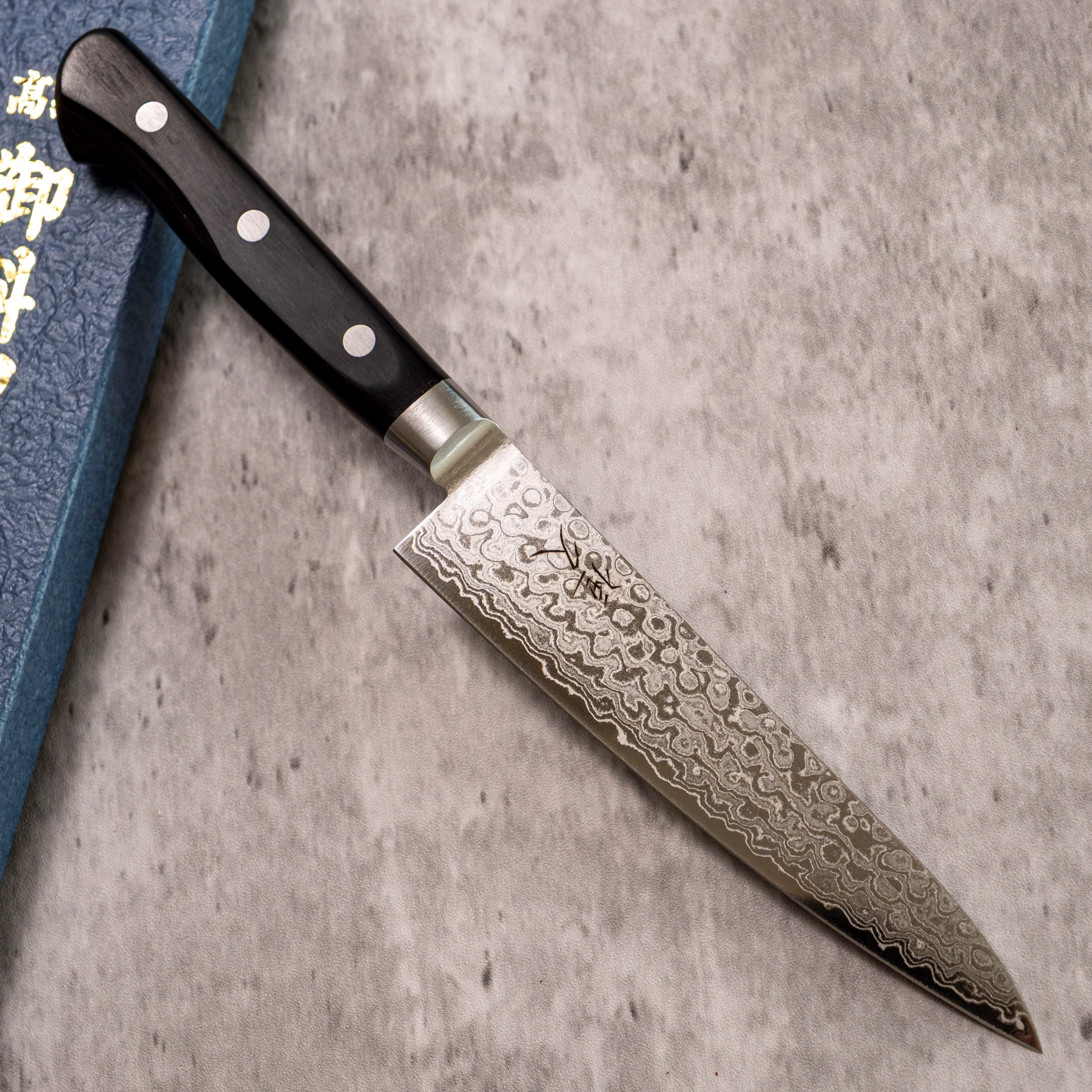
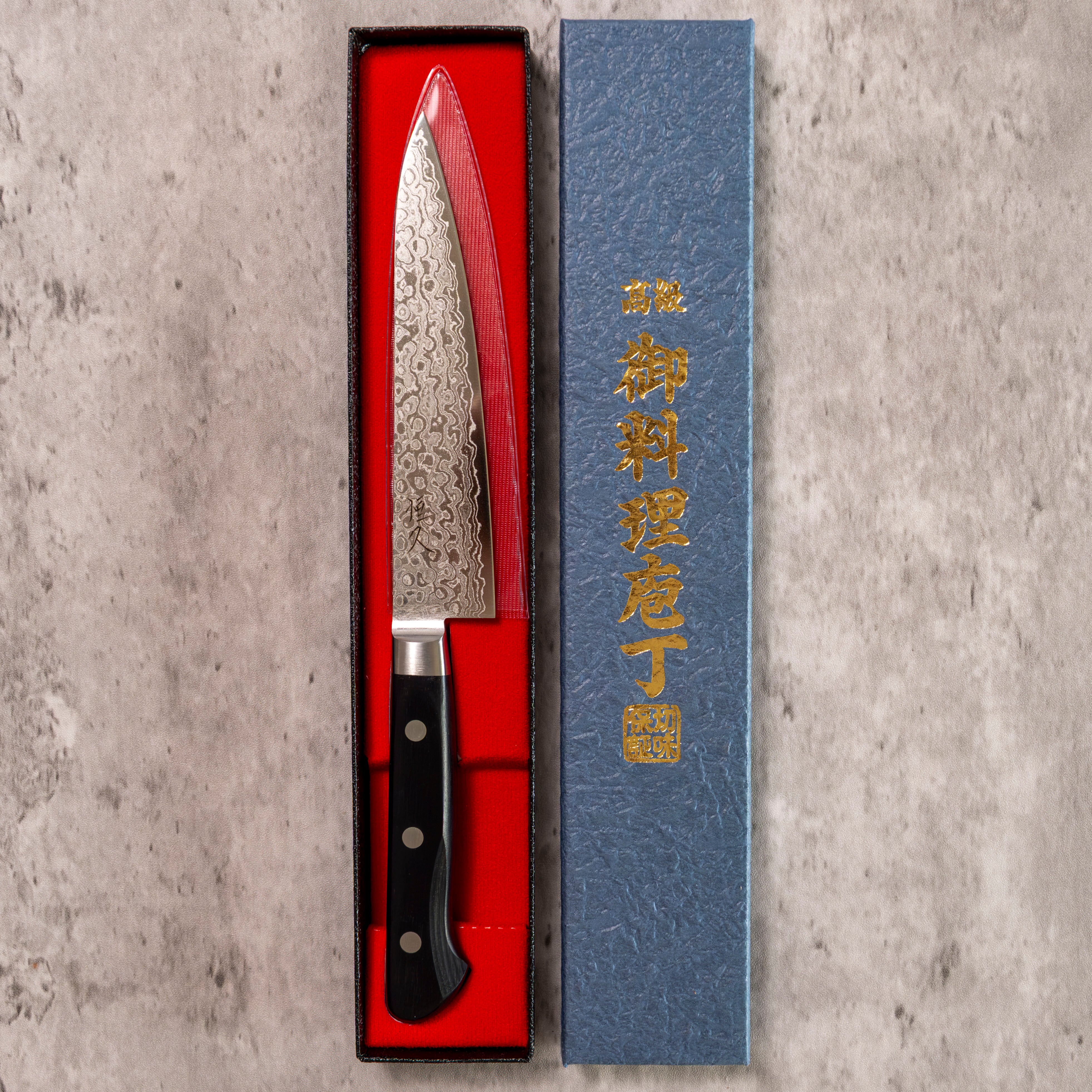
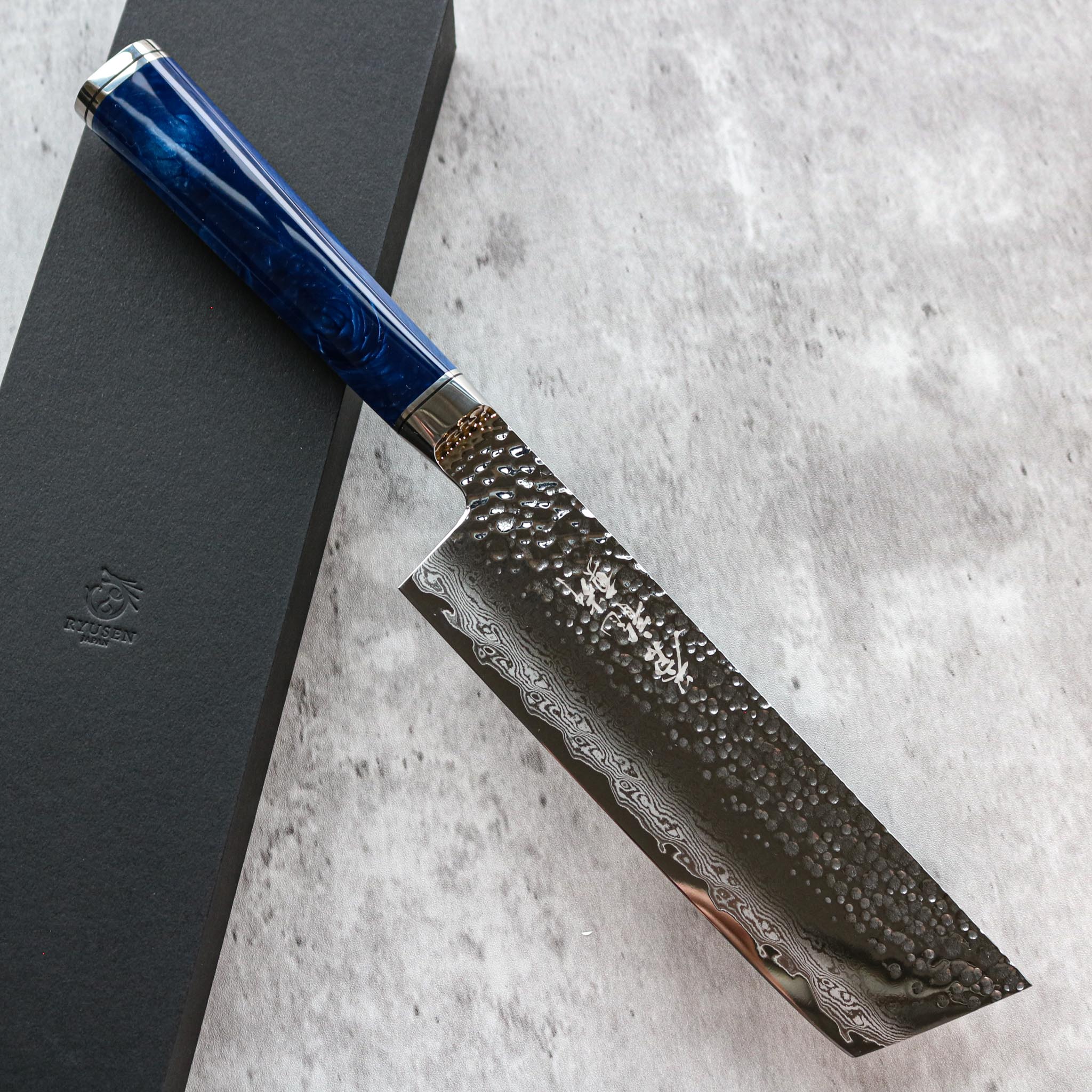
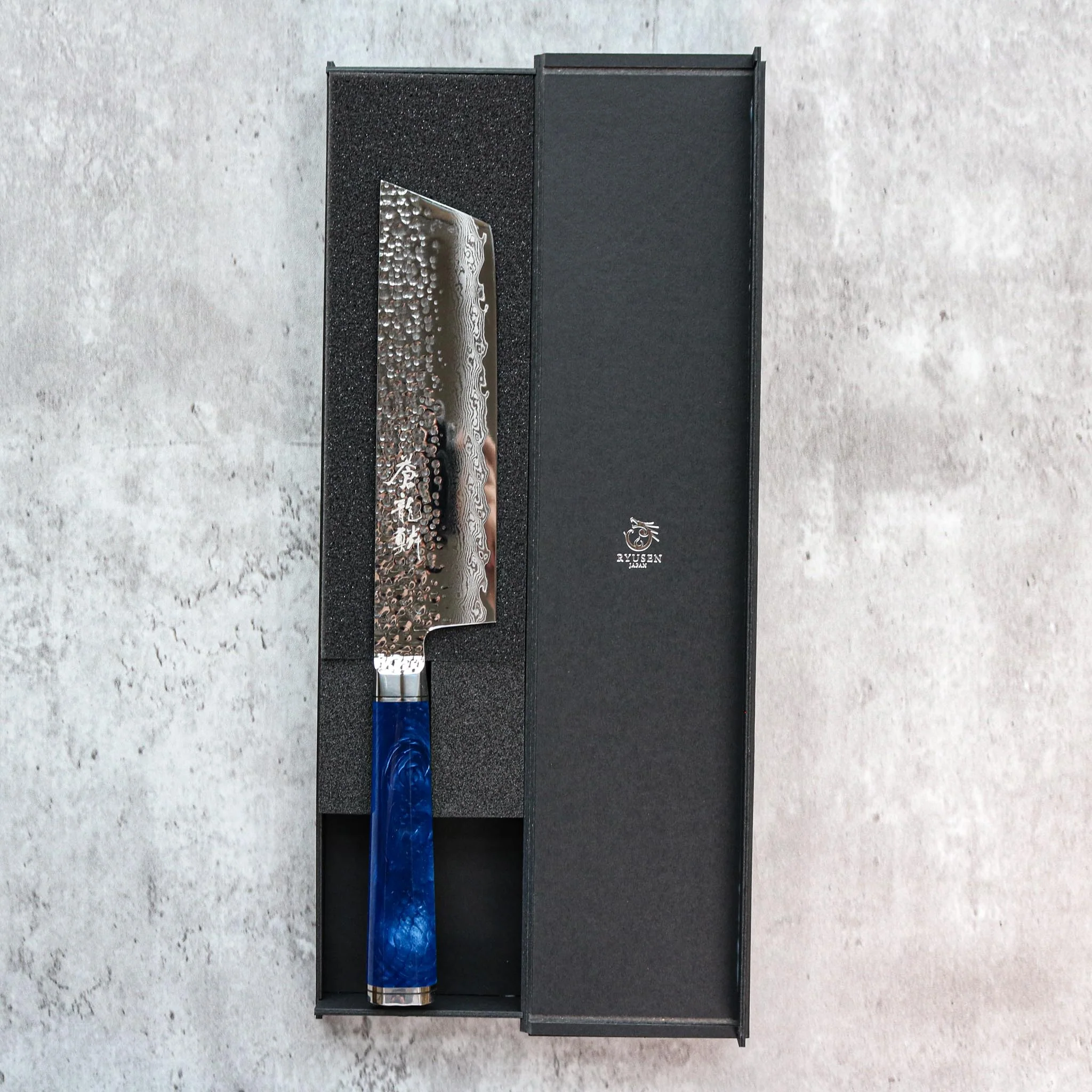
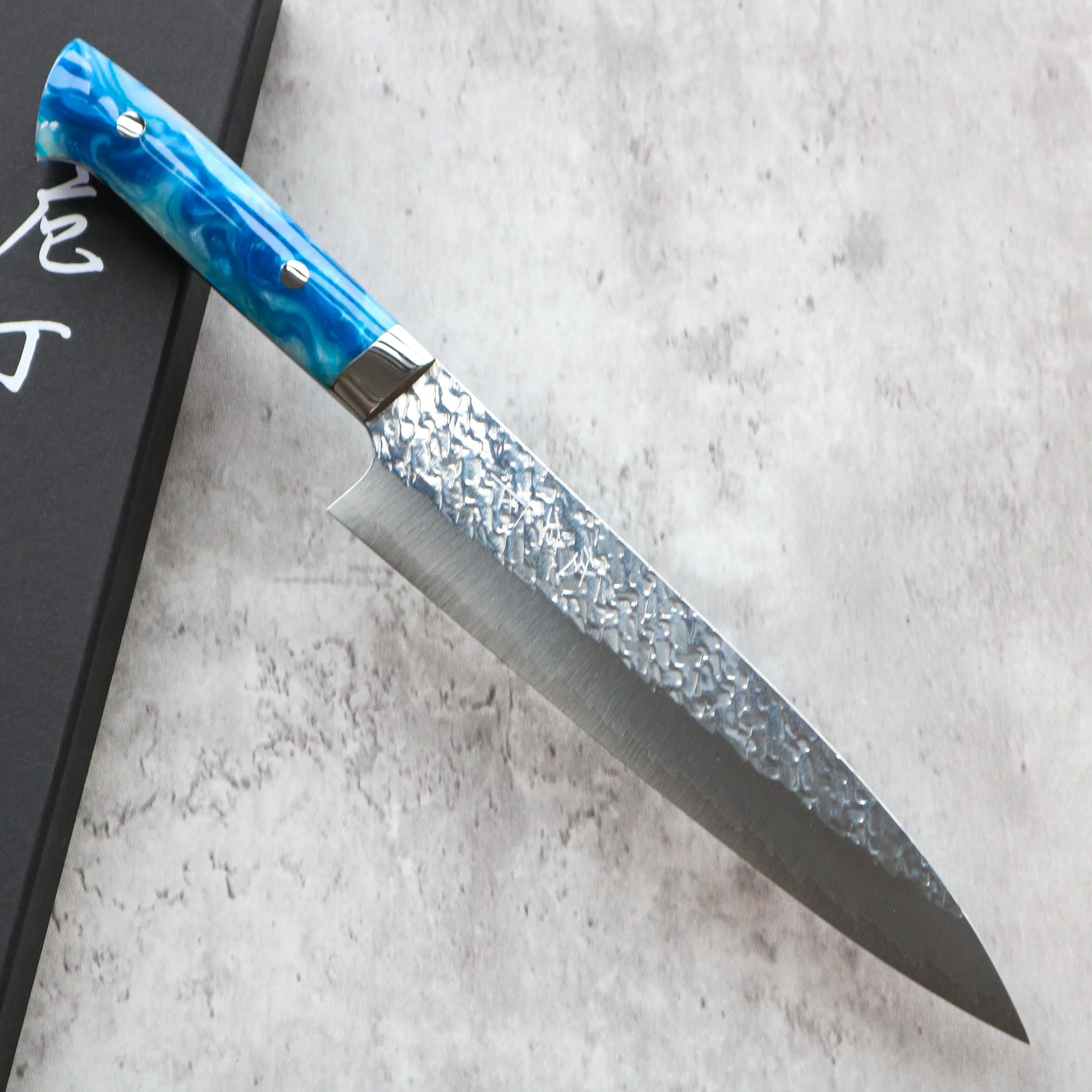
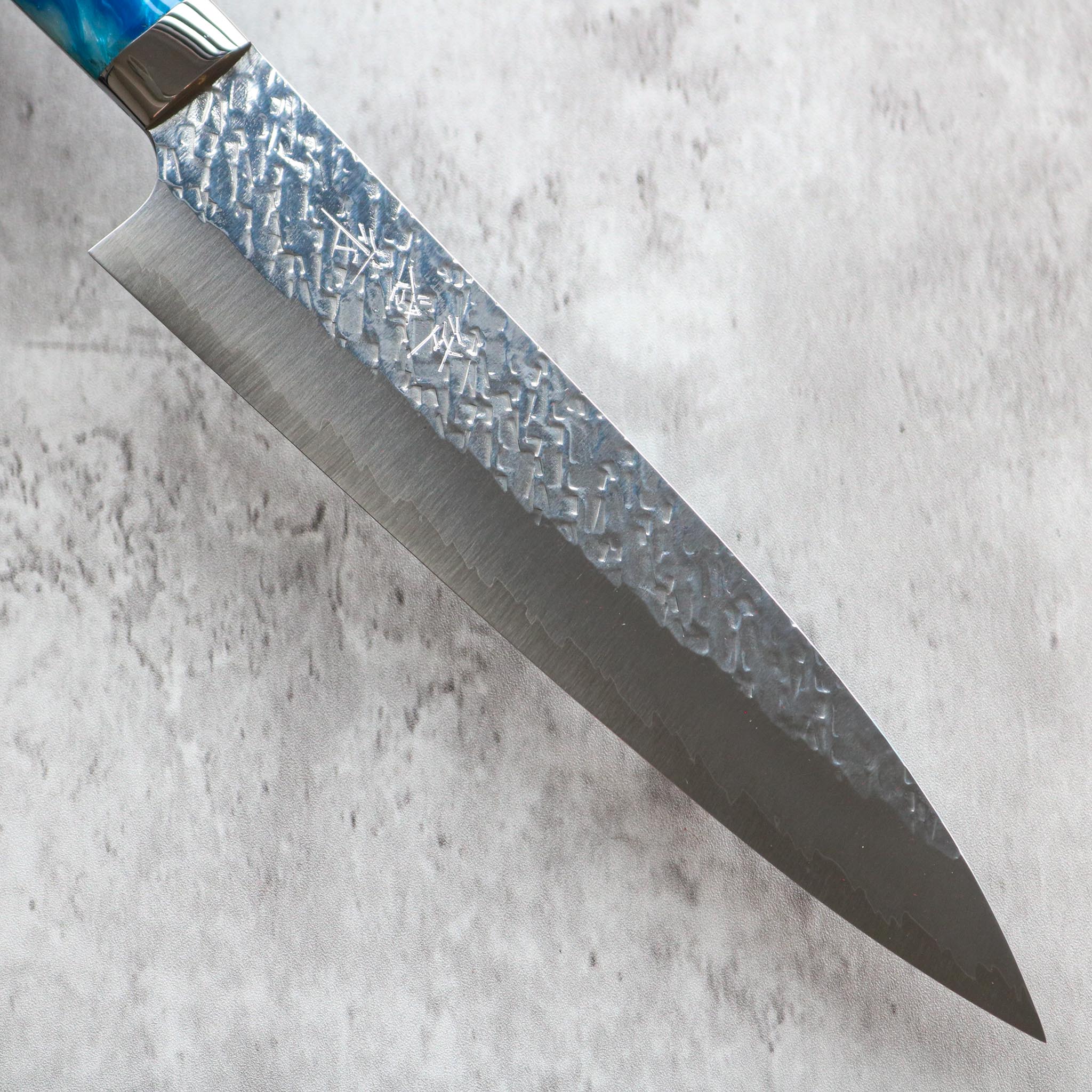
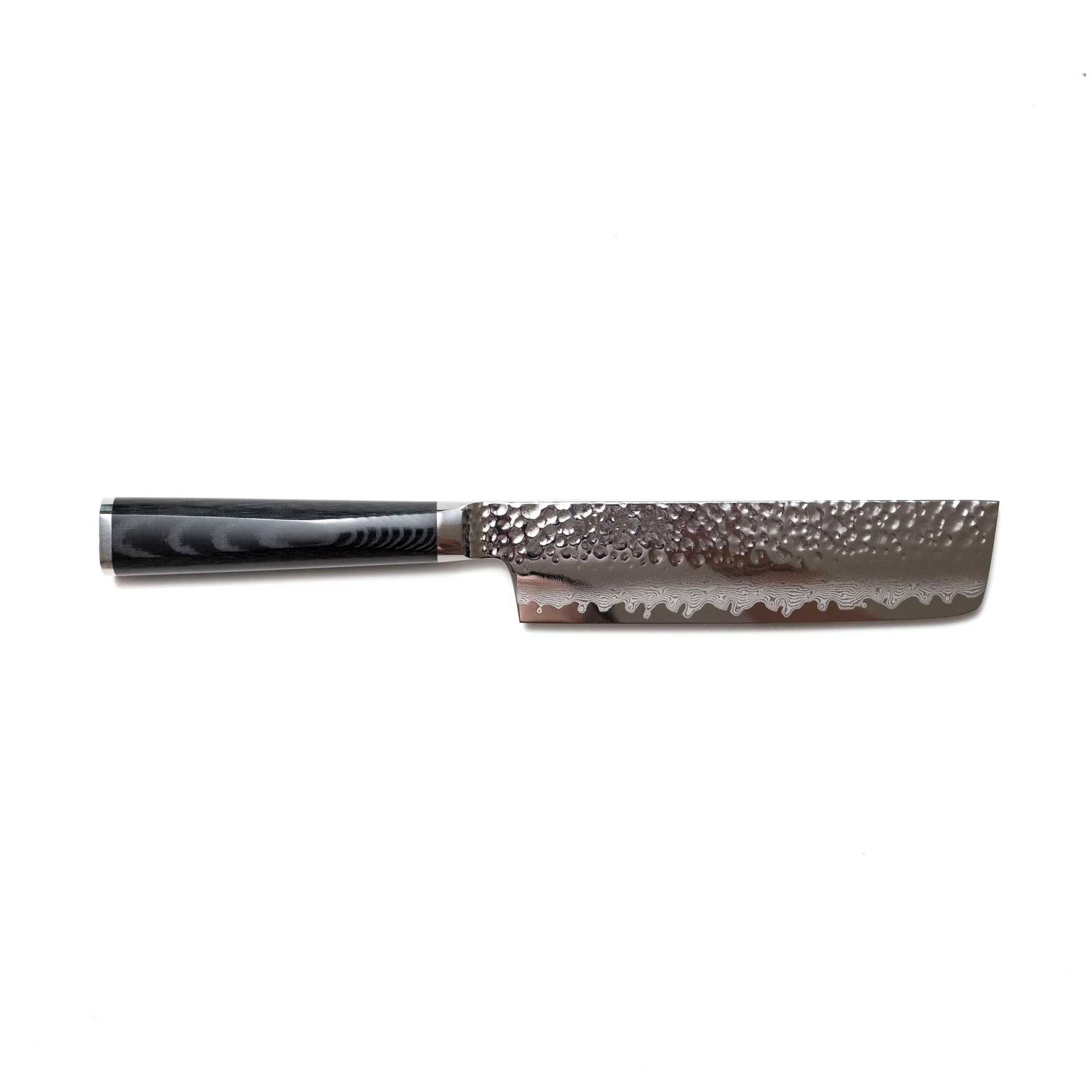
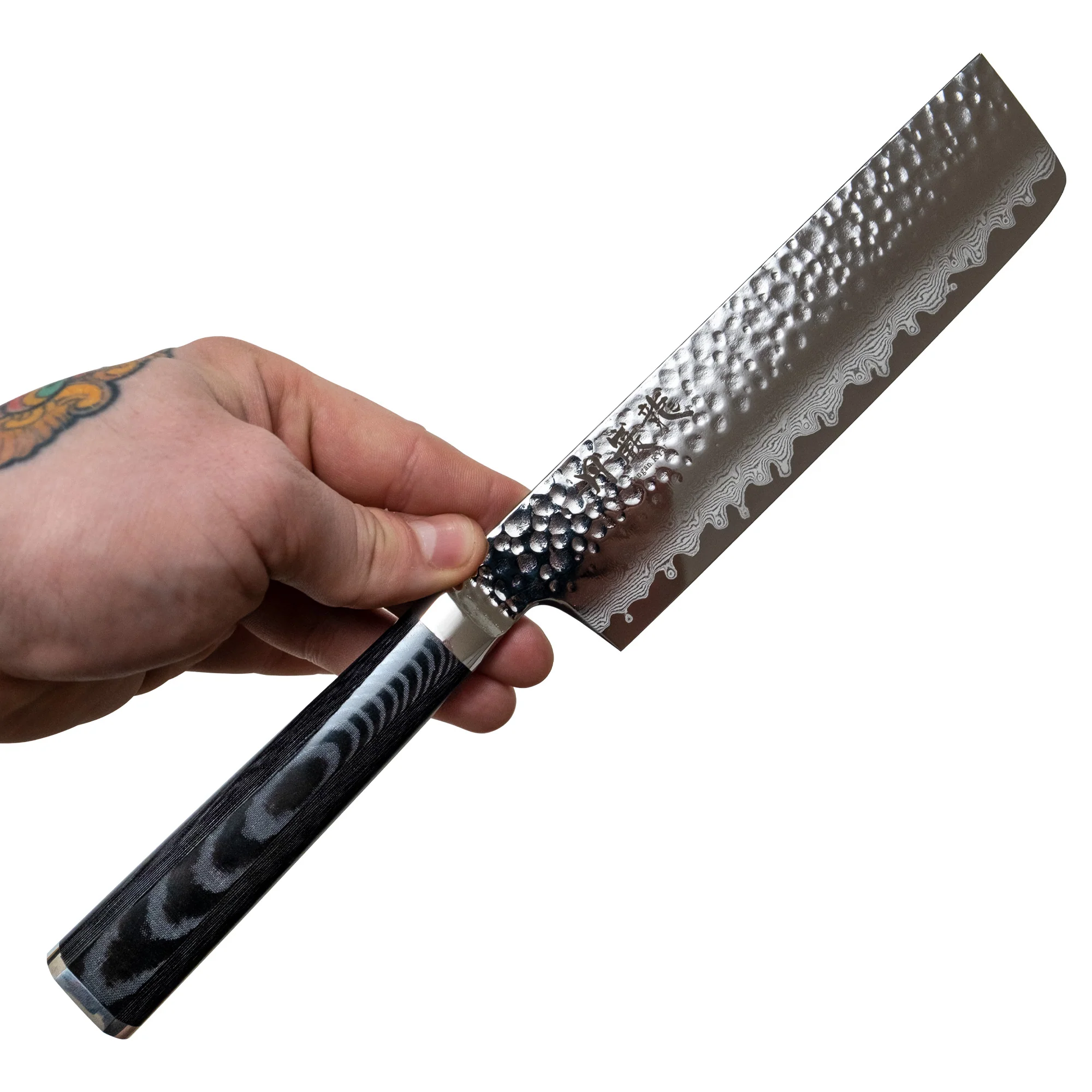
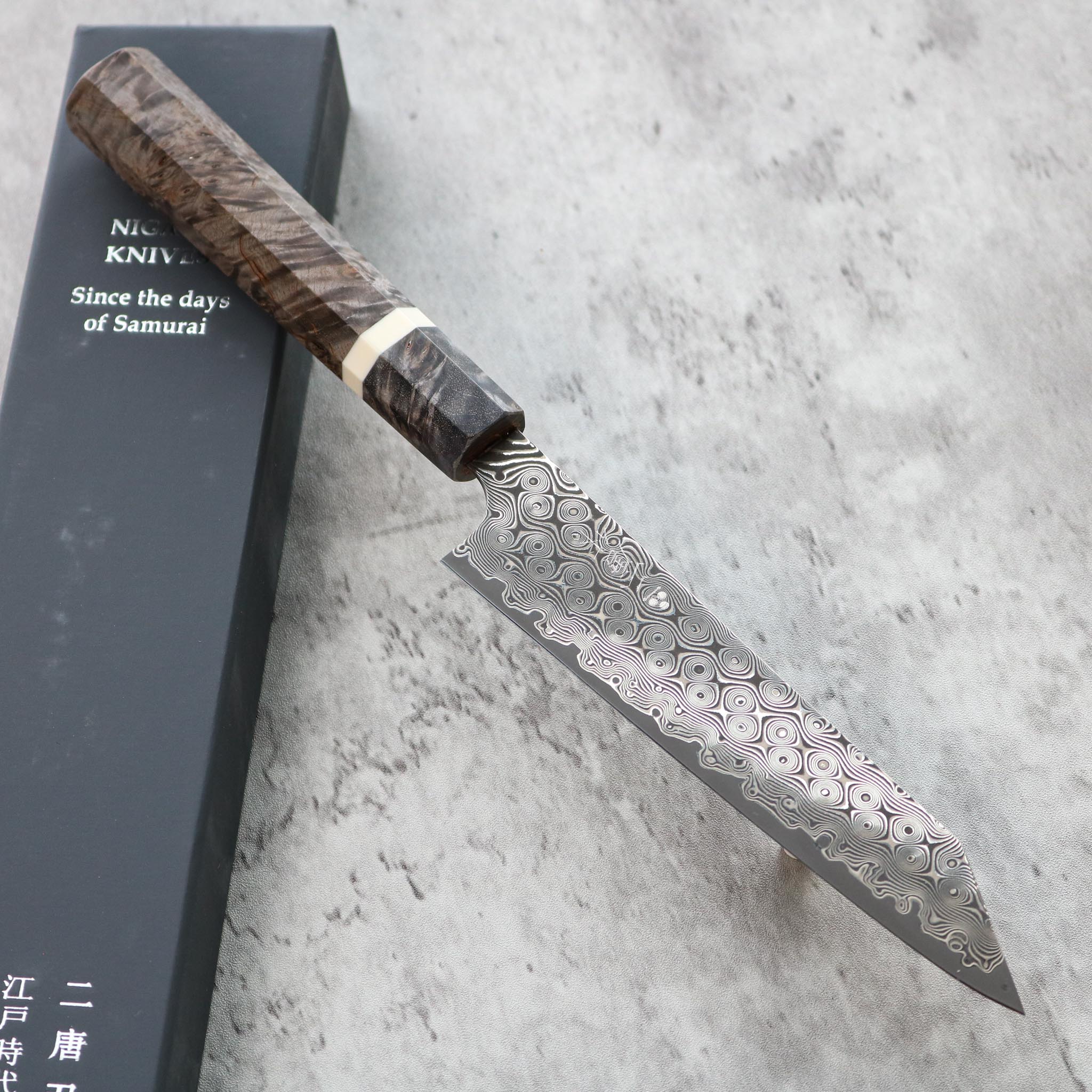
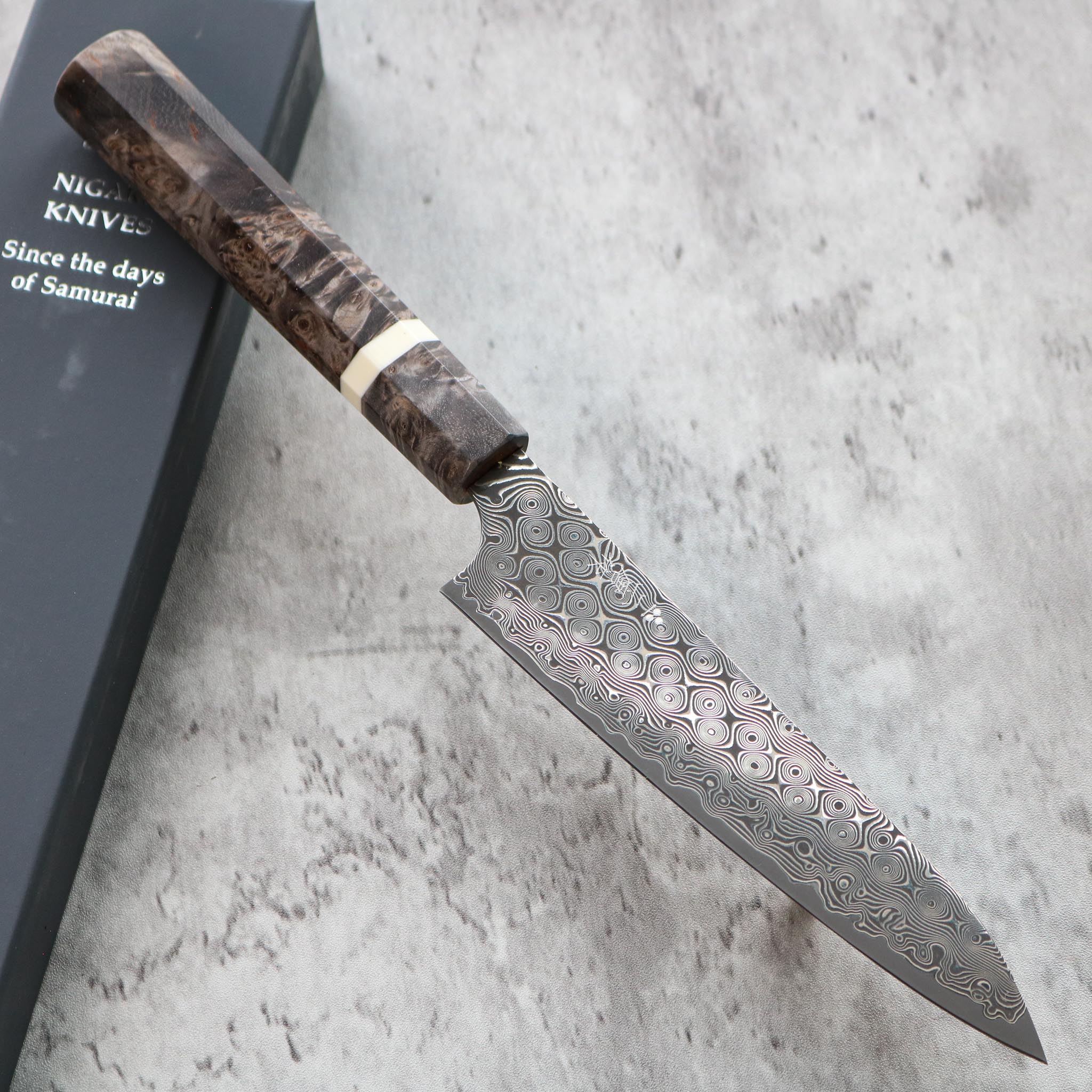
Yoshimi Kato Kurouchi Sujihiki 270 mm
| Length | 210 mm |
| Total Length | 425 mm |
| Steel | Aogami (Blue) Super |
| Handle | Oak |
| Ferrule | Black pakka wood |
| Rockwell | 62-64 |
| Height Spine to heel | 41 mm |
| Width at Spine | 3.4 mm |
| Weight | 162 grams |
| Bevel | Double (50/50) |
Yoshimi Kato
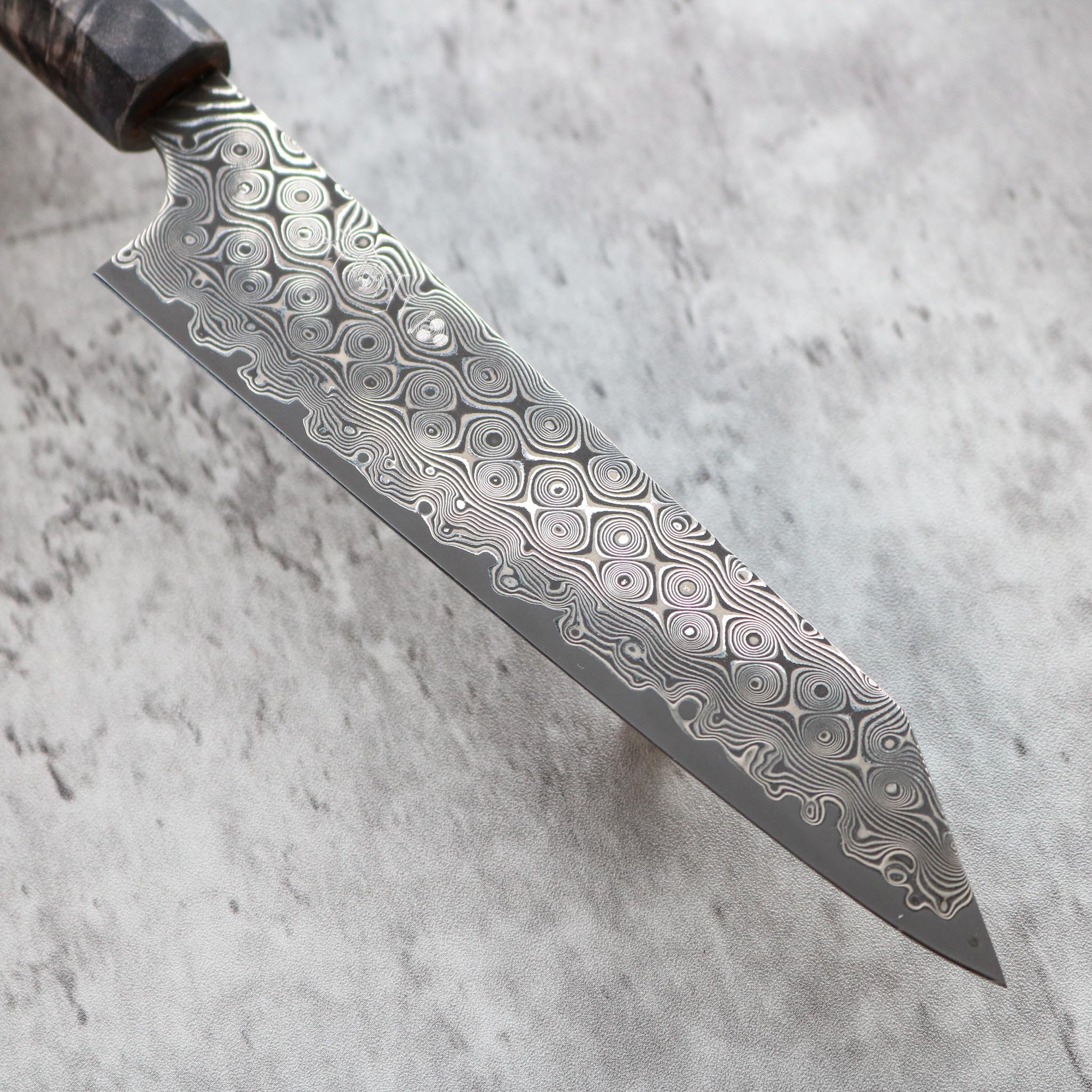
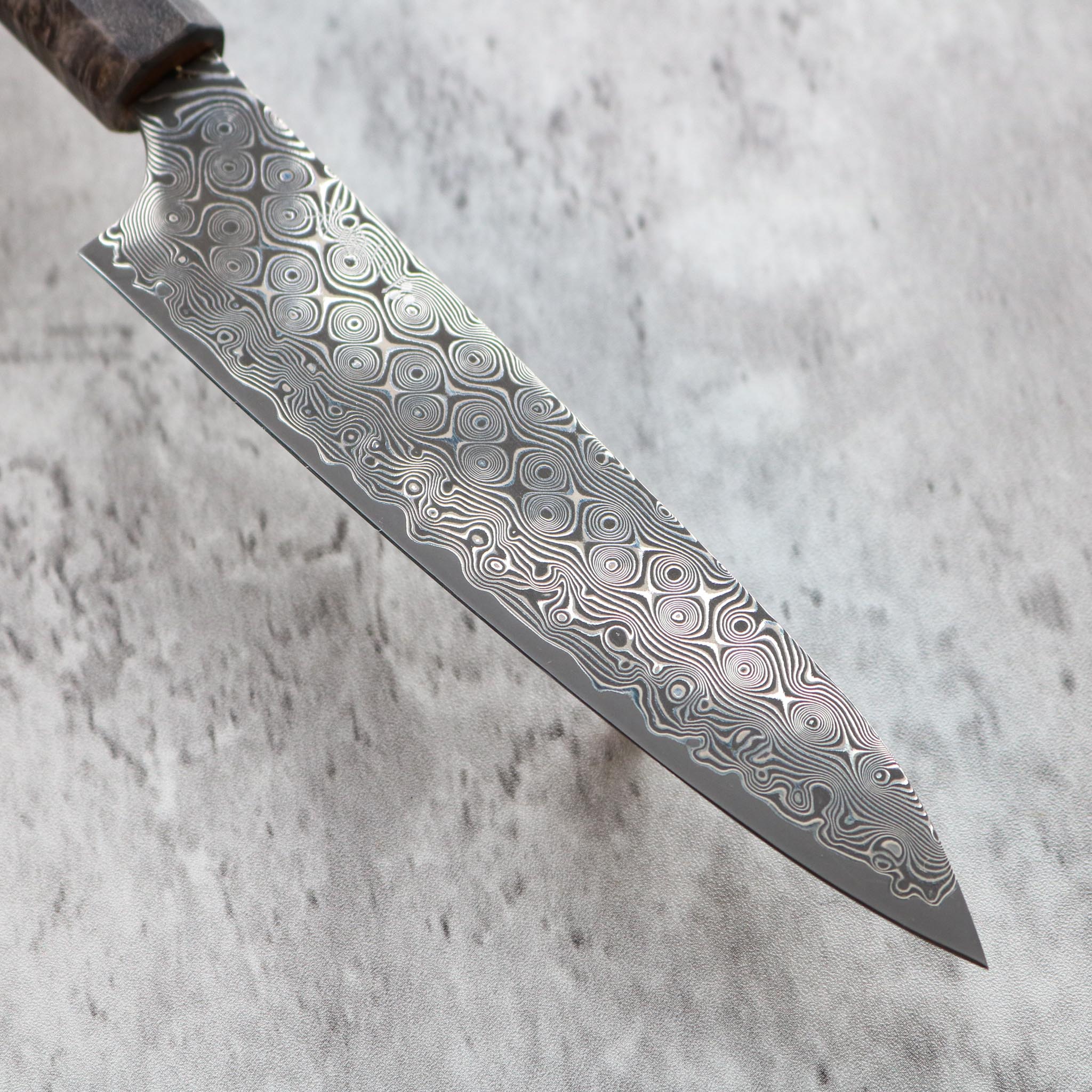
Yoshimi Kato works out of the Takefu Knife Village and took over the Family business from his father in 2013. His Father Hiroshi Kato-san started the shop in the late 1960's and was inaugurated as the 4th Chairman of the Takefu Knife village in 1994. Making incredible knives runs in the family obviously and we're very excited to have these incredibly sharp knives in our shop. They have one of the most beautiful damascus patterns we have ever seen and are sharpened by famous knife sharpener Makoto Kurosaki; brother of one of our favorite knifemakers Yu Kurosaki.
Takefu Knife Village
The Takefu Knife Village is a cooperative workshop in the Echizen region of Japan. It is the home to a long list of blacksmiths that we work with and many young and upcoming apprentices learning the trade. The area has a 700 year long history of smithing with roots in agricultural tools turned cutlery powerhouse.
The Knife
The word "Sujihiki" translates to "flesh slicer". The long, slender blade allows the user to make long drawing strokes, which makes it incredibly adept at slicing and reduces the amount of sawing needed to get through ingredients. They are most commonly in the 240 mm (10 inches) to 300 mm (12 inches) range. The Sujihiki has a very specific use case, so if you're looking for a knife that is capable of slicing and chopping vegetables, we would recommend a Gyuto or Kiritsuke.
Knife Care (Stainless Clad)
- This knife is made from 3 layers of steel using a technique called Sanmai (Forge welding). It involves laminating a piece of Carbon steel with two pieces of Stainless steel giving the knife all the benefits of the carbon steel (Edge retention, ease of sharpening, cutting feel) and the Ease of Maintenance from Stainless steel. 2-3 millimeters of the carbon steel is exposed at the edge of the knife and is susceptible to rust and discouloration if not properly maintained.
- Simply Wipe the knife with a damp cloth immediately after use to keep it from rusting or discouloring.
- Never put your knife in the Dishwasher. The extreme heat will ruin the wooden handle.
- Highly acidic ingredients (Onions, Tomatoes, Citrus) Will cause rust and oxidation to happen faster, thus the user must ensure the knife is wiped clean immediately after working with such an ingredient.
- Should any rust form it can be removed using a rust eraser or a mixture of Baking soda and water to simply scrub it clean.
Product Information
Product Information
Shipping & Returns
Shipping & Returns
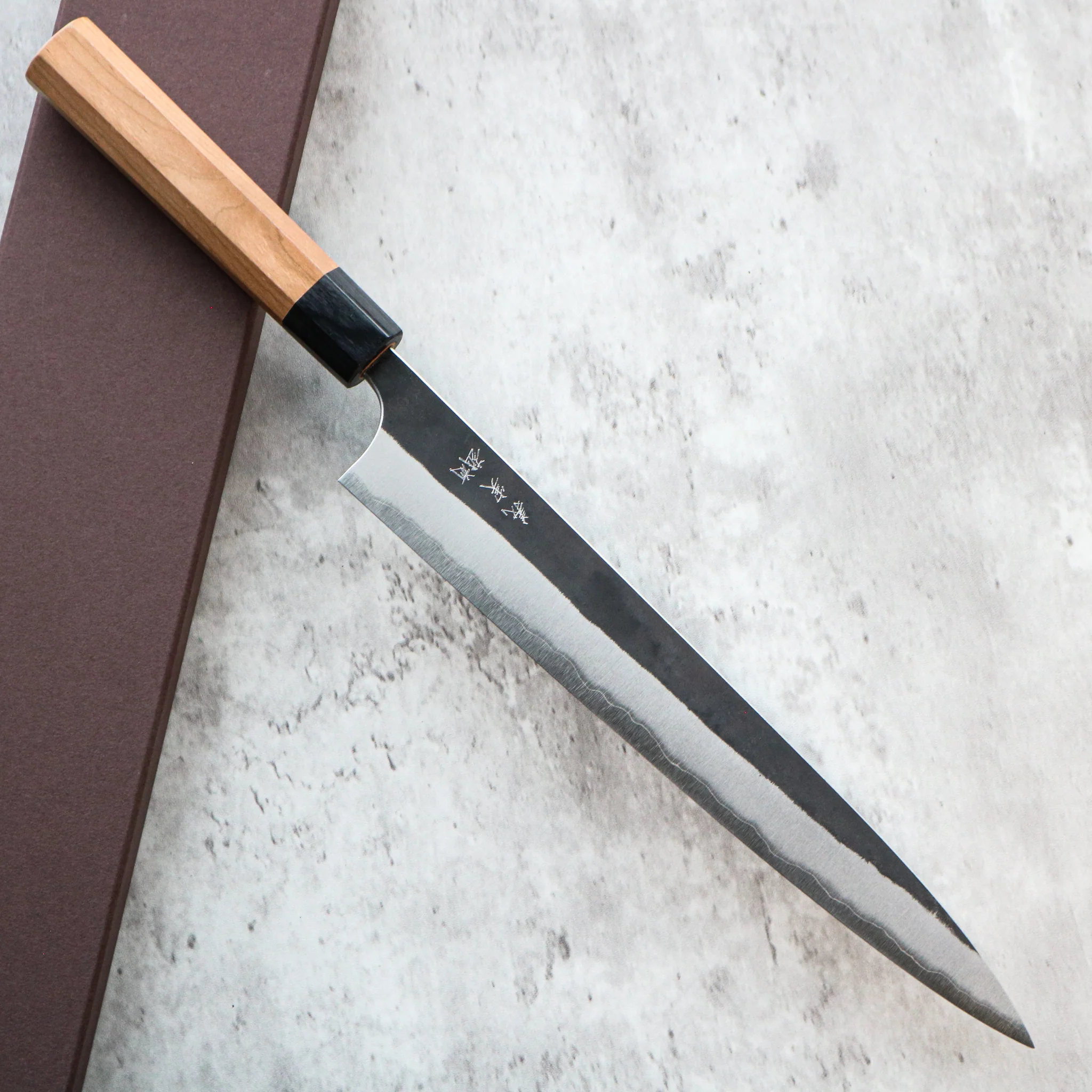
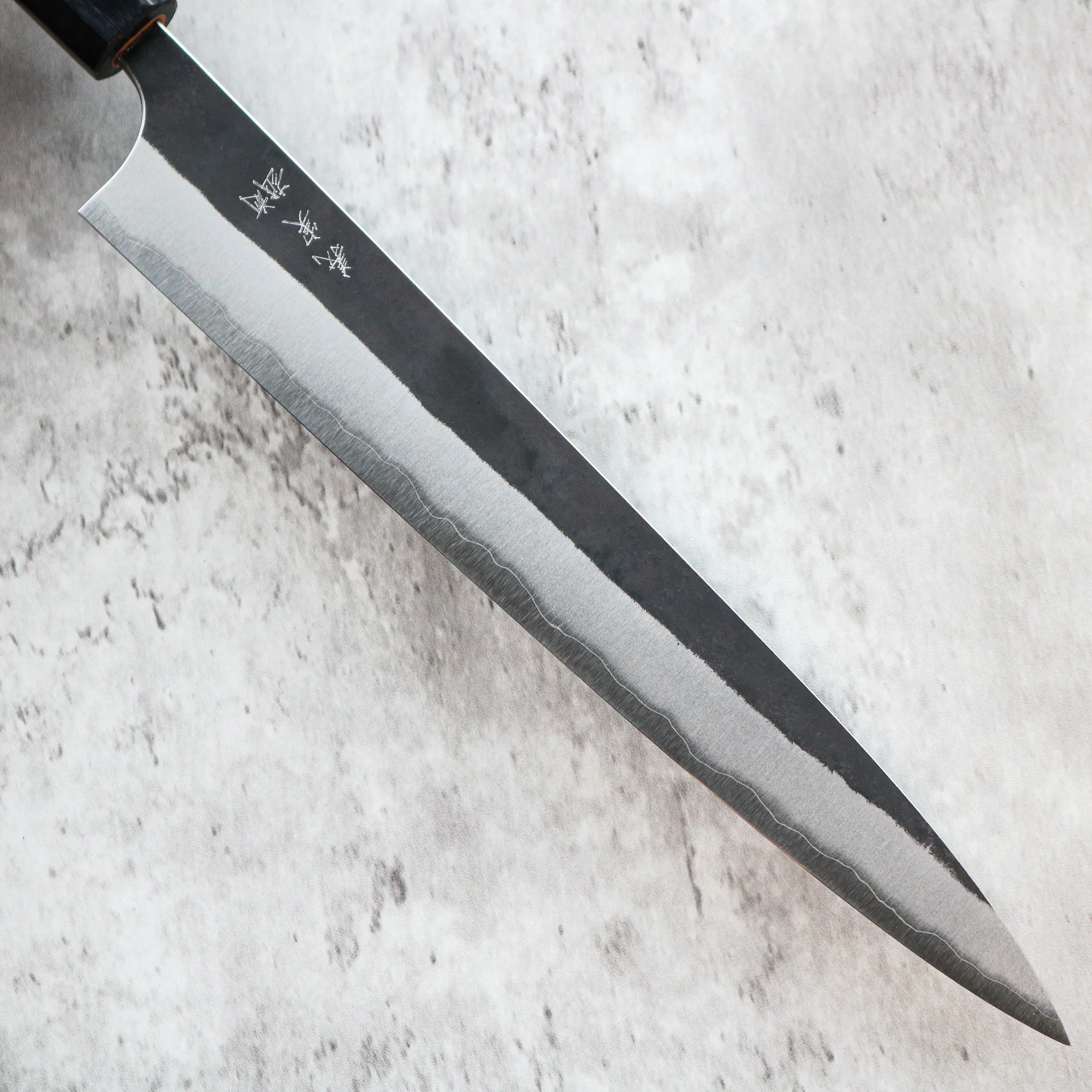


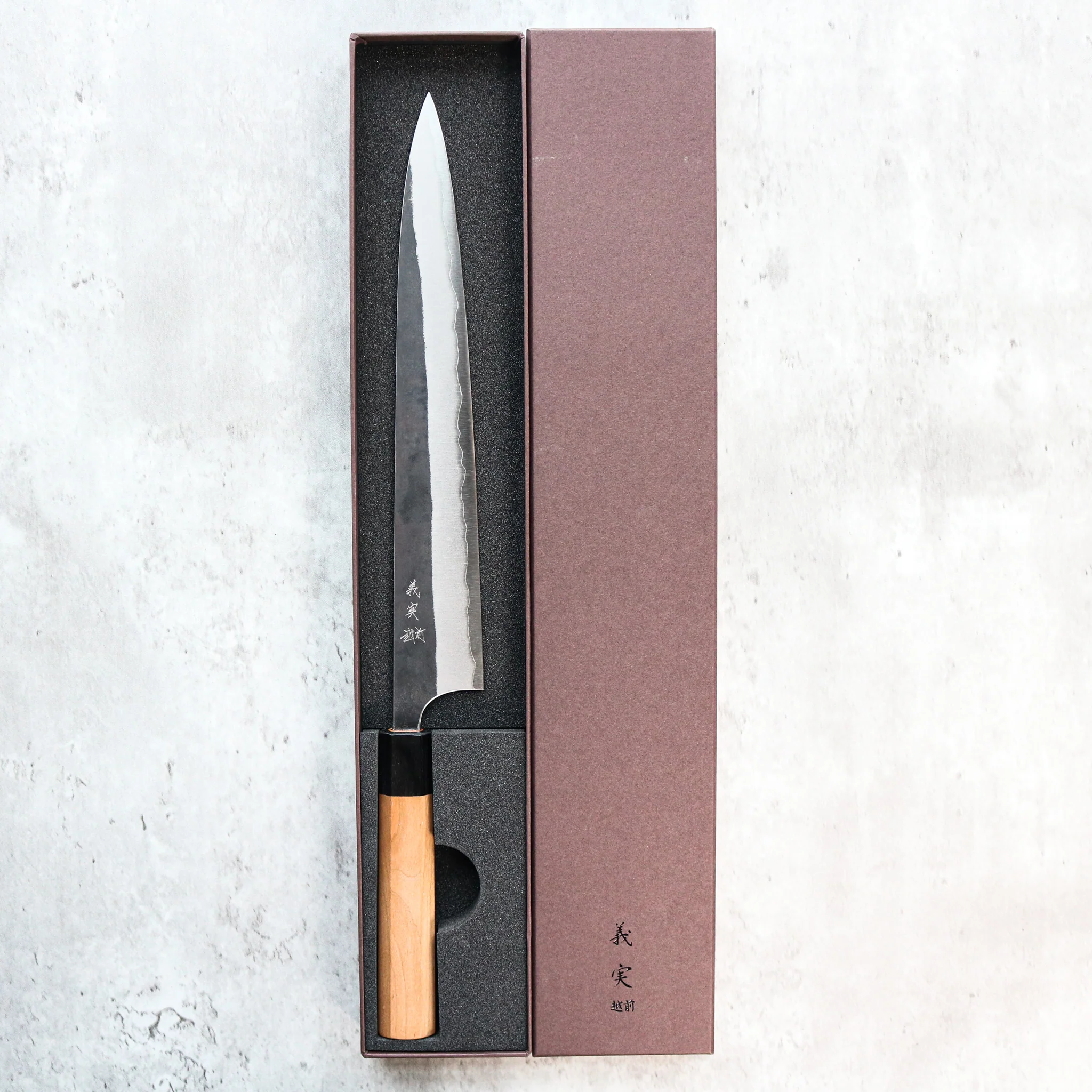

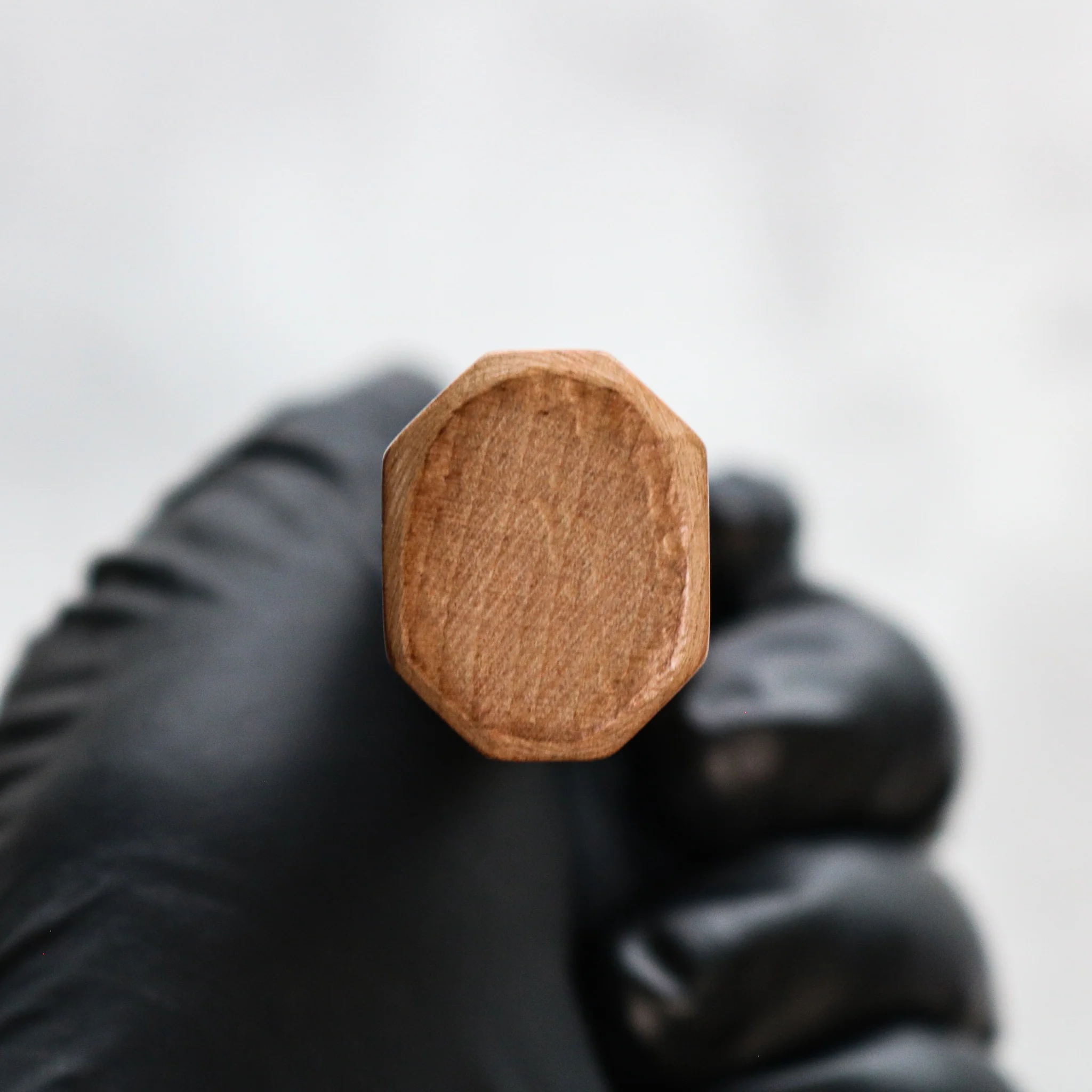

Yoshimi Kato Kurouchi Sujihiki 270 mm
Yoshimi Kato Kurouchi Sujihiki 270 mm
| Length | 210 mm |
| Total Length | 425 mm |
| Steel | Aogami (Blue) Super |
| Handle | Oak |
| Ferrule | Black pakka wood |
| Rockwell | 62-64 |
| Height Spine to heel | 41 mm |
| Width at Spine | 3.4 mm |
| Weight | 162 grams |
| Bevel | Double (50/50) |
Yoshimi Kato
Yoshimi Kato works out of the Takefu Knife Village and took over the Family business from his father in 2013. His Father Hiroshi Kato-san started the shop in the late 1960's and was inaugurated as the 4th Chairman of the Takefu Knife village in 1994. Making incredible knives runs in the family obviously and we're very excited to have these incredibly sharp knives in our shop. They have one of the most beautiful damascus patterns we have ever seen and are sharpened by famous knife sharpener Makoto Kurosaki; brother of one of our favorite knifemakers Yu Kurosaki.
Takefu Knife Village
The Takefu Knife Village is a cooperative workshop in the Echizen region of Japan. It is the home to a long list of blacksmiths that we work with and many young and upcoming apprentices learning the trade. The area has a 700 year long history of smithing with roots in agricultural tools turned cutlery powerhouse.
The Knife
The word "Sujihiki" translates to "flesh slicer". The long, slender blade allows the user to make long drawing strokes, which makes it incredibly adept at slicing and reduces the amount of sawing needed to get through ingredients. They are most commonly in the 240 mm (10 inches) to 300 mm (12 inches) range. The Sujihiki has a very specific use case, so if you're looking for a knife that is capable of slicing and chopping vegetables, we would recommend a Gyuto or Kiritsuke.
Knife Care (Stainless Clad)
- This knife is made from 3 layers of steel using a technique called Sanmai (Forge welding). It involves laminating a piece of Carbon steel with two pieces of Stainless steel giving the knife all the benefits of the carbon steel (Edge retention, ease of sharpening, cutting feel) and the Ease of Maintenance from Stainless steel. 2-3 millimeters of the carbon steel is exposed at the edge of the knife and is susceptible to rust and discouloration if not properly maintained.
- Simply Wipe the knife with a damp cloth immediately after use to keep it from rusting or discouloring.
- Never put your knife in the Dishwasher. The extreme heat will ruin the wooden handle.
- Highly acidic ingredients (Onions, Tomatoes, Citrus) Will cause rust and oxidation to happen faster, thus the user must ensure the knife is wiped clean immediately after working with such an ingredient.
- Should any rust form it can be removed using a rust eraser or a mixture of Baking soda and water to simply scrub it clean.
Original: $416.03
-65%$416.03
$145.61Product Information
Product Information
Shipping & Returns
Shipping & Returns
Description
| Length | 210 mm |
| Total Length | 425 mm |
| Steel | Aogami (Blue) Super |
| Handle | Oak |
| Ferrule | Black pakka wood |
| Rockwell | 62-64 |
| Height Spine to heel | 41 mm |
| Width at Spine | 3.4 mm |
| Weight | 162 grams |
| Bevel | Double (50/50) |
Yoshimi Kato
Yoshimi Kato works out of the Takefu Knife Village and took over the Family business from his father in 2013. His Father Hiroshi Kato-san started the shop in the late 1960's and was inaugurated as the 4th Chairman of the Takefu Knife village in 1994. Making incredible knives runs in the family obviously and we're very excited to have these incredibly sharp knives in our shop. They have one of the most beautiful damascus patterns we have ever seen and are sharpened by famous knife sharpener Makoto Kurosaki; brother of one of our favorite knifemakers Yu Kurosaki.
Takefu Knife Village
The Takefu Knife Village is a cooperative workshop in the Echizen region of Japan. It is the home to a long list of blacksmiths that we work with and many young and upcoming apprentices learning the trade. The area has a 700 year long history of smithing with roots in agricultural tools turned cutlery powerhouse.
The Knife
The word "Sujihiki" translates to "flesh slicer". The long, slender blade allows the user to make long drawing strokes, which makes it incredibly adept at slicing and reduces the amount of sawing needed to get through ingredients. They are most commonly in the 240 mm (10 inches) to 300 mm (12 inches) range. The Sujihiki has a very specific use case, so if you're looking for a knife that is capable of slicing and chopping vegetables, we would recommend a Gyuto or Kiritsuke.
Knife Care (Stainless Clad)
- This knife is made from 3 layers of steel using a technique called Sanmai (Forge welding). It involves laminating a piece of Carbon steel with two pieces of Stainless steel giving the knife all the benefits of the carbon steel (Edge retention, ease of sharpening, cutting feel) and the Ease of Maintenance from Stainless steel. 2-3 millimeters of the carbon steel is exposed at the edge of the knife and is susceptible to rust and discouloration if not properly maintained.
- Simply Wipe the knife with a damp cloth immediately after use to keep it from rusting or discouloring.
- Never put your knife in the Dishwasher. The extreme heat will ruin the wooden handle.
- Highly acidic ingredients (Onions, Tomatoes, Citrus) Will cause rust and oxidation to happen faster, thus the user must ensure the knife is wiped clean immediately after working with such an ingredient.
- Should any rust form it can be removed using a rust eraser or a mixture of Baking soda and water to simply scrub it clean.